Many men taking finasteride for hair loss eventually ask a practical question. Is it safe to drink alcohol while using the medication?
For most healthy adults, moderate alcohol consumption is not formally prohibited while taking finasteride. There is no well established direct interaction showing that alcohol immediately blocks finasteride’s effectiveness or creates a dangerous chemical reaction in the body.
But that does not mean alcohol is irrelevant.
Both alcohol and finasteride can influence hormones, mood, sexual function, liver metabolism, and general wellbeing. In some individuals, combining the two may worsen side effects or make symptoms harder to interpret.
The safest answer is more nuanced than a simple yes or no.
How finasteride works
Finasteride reduces levels of dihydrotestosterone, or DHT, by blocking the enzyme 5 alpha reductase type 2.
DHT contributes to androgenetic alopecia, also called male pattern hair loss. Lowering DHT can help slow miniaturisation of scalp hair follicles and maintain hair density over time.
Finasteride does not work like a stimulant or sedative. It does not directly interact with alcohol in the same way that some psychiatric medicines or sleeping tablets can.
Still, the body systems affected by alcohol and finasteride overlap in several important ways.
Is there a direct drug interaction between finasteride and alcohol?
At present, there is no strong evidence of a major direct pharmacological interaction between standard alcohol intake and finasteride.
Most prescribing information does not list alcohol as formally contraindicated during treatment.
This means moderate drinking is unlikely to create an immediate toxic reaction purely because finasteride is present.
However, absence of a major interaction does not automatically mean the combination is harmless for every individual.
Can alcohol worsen finasteride side effects?
Possibly.
Alcohol itself can contribute to symptoms that overlap with reported finasteride side effects. These may include:
- Reduced libido.
- Erectile difficulties.
- Fatigue.
- Mood changes.
- Poor sleep.
- Anxiety.
- Depressive symptoms.
- Reduced concentration.
Because of this overlap, alcohol may complicate how patients experience or interpret symptoms during treatment.
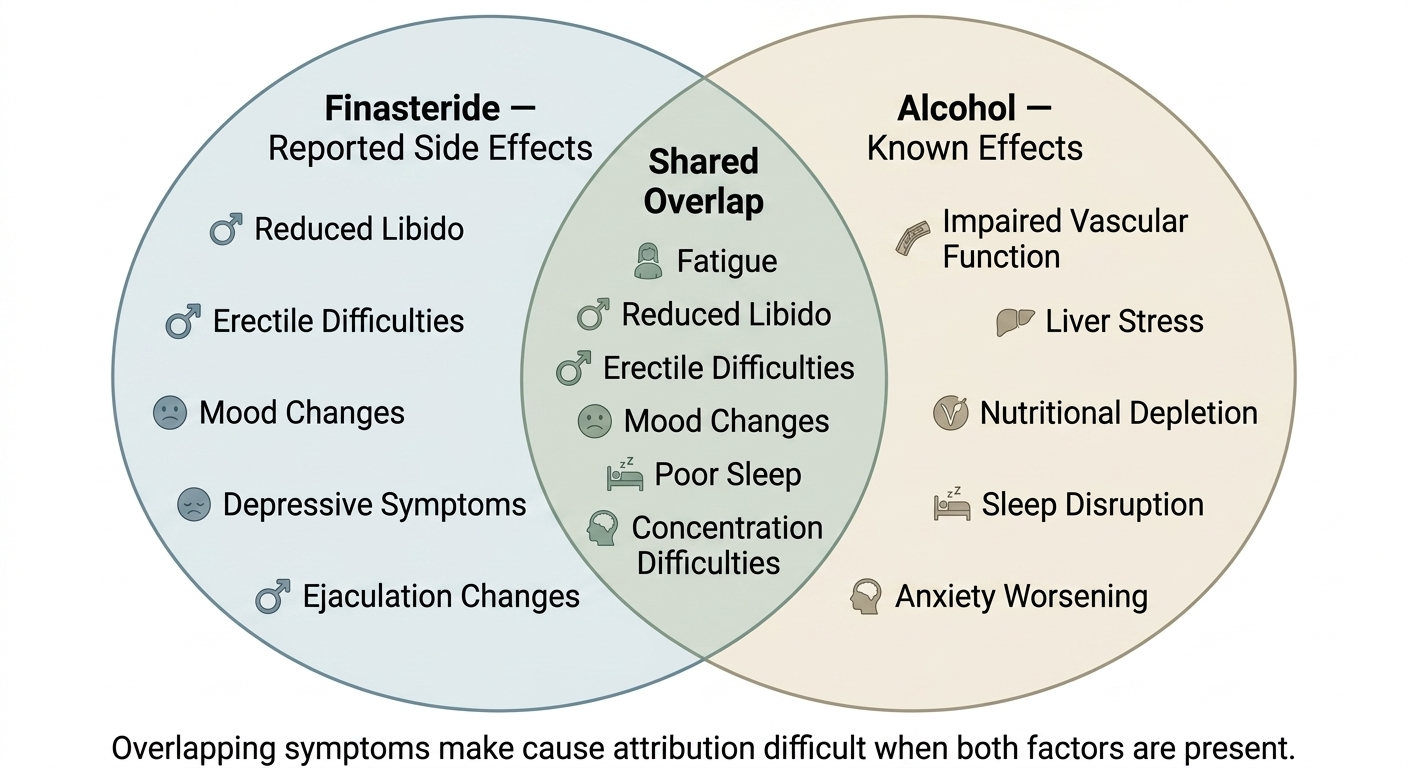
For example, a man drinking heavily while taking finasteride may develop erectile dysfunction related to alcohol, vascular health, stress, poor sleep, or psychological factors rather than finasteride alone. In practice, separating causes can become difficult.
Alcohol and sexual function
This is one of the most important practical considerations.
Finasteride can cause sexual side effects in some men. Alcohol can also impair sexual performance, especially in larger amounts or with chronic heavy use.
Excess alcohol intake may affect erections through effects on the nervous system, hormones, blood vessels, sleep quality, and mental health.
When both factors are present together, symptoms may feel more noticeable.
Not every man experiences problems, but men already concerned about libido or erectile function may wish to monitor alcohol intake more carefully during treatment.
Can alcohol affect hair loss itself?
Yes, indirectly.
Alcohol is not considered a primary cause of androgenetic alopecia, but heavy or chronic drinking can contribute to broader health issues that affect hair quality and shedding.
Possible contributing factors include:
- Poor nutrition.
- Vitamin deficiencies.
- Liver disease.
- Stress.
- Hormonal disruption.
- Inflammation.
- Poor sleep.
Acute illness associated with heavy alcohol use can sometimes trigger telogen effluvium, a form of diffuse hair shedding caused by physiological stress.
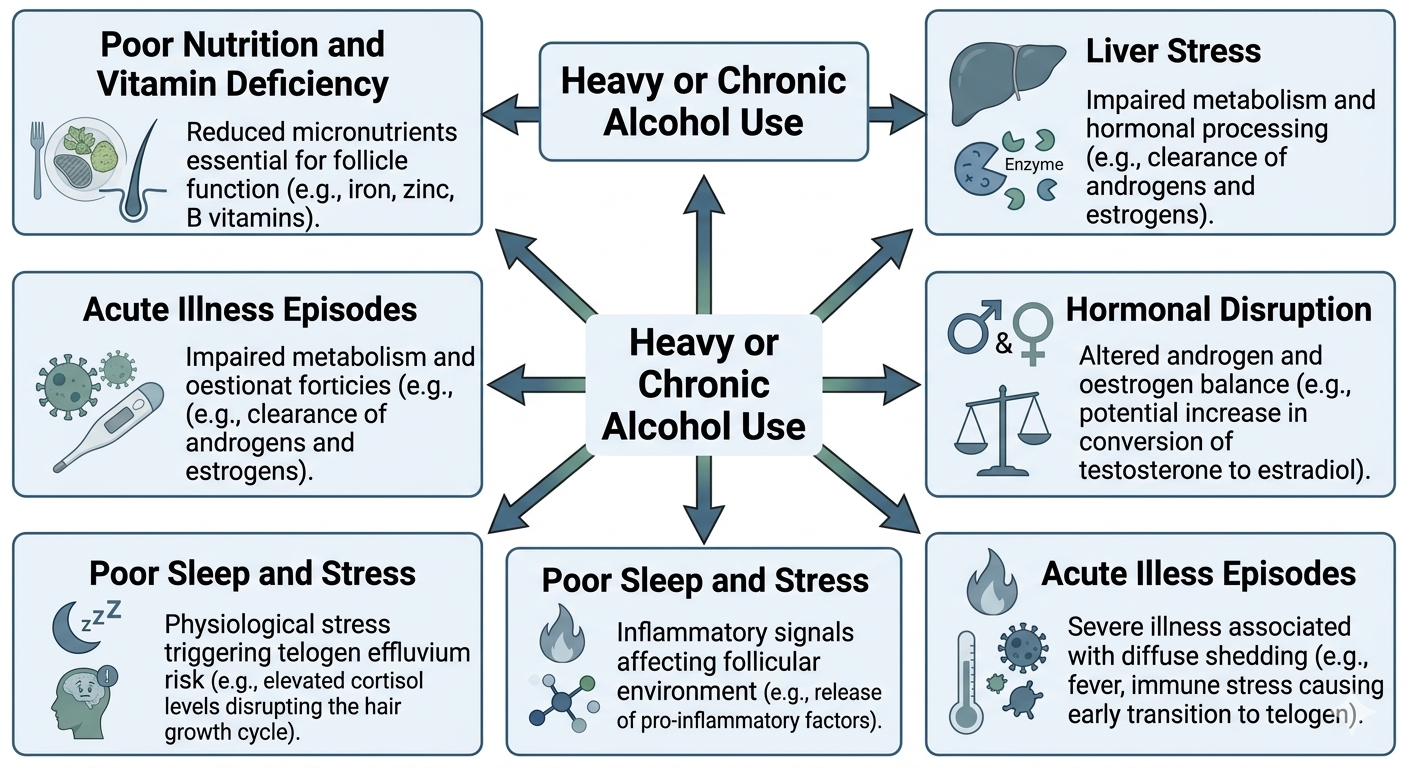
So even outside the finasteride discussion, alcohol and hair health are not completely unrelated.
Does alcohol reduce finasteride effectiveness?
There is no strong evidence that moderate alcohol consumption directly blocks finasteride’s ability to reduce DHT.
However, alcohol related lifestyle factors may still affect overall treatment satisfaction. For example, poor sleep, nutritional deficiencies, smoking, or chronic stress associated with heavy alcohol use may worsen general appearance and wellbeing even if finasteride itself continues working biologically.
What about liver health?
Finasteride is metabolised in the liver.
For most healthy individuals, this does not create major problems. Serious liver complications associated with finasteride appear uncommon.
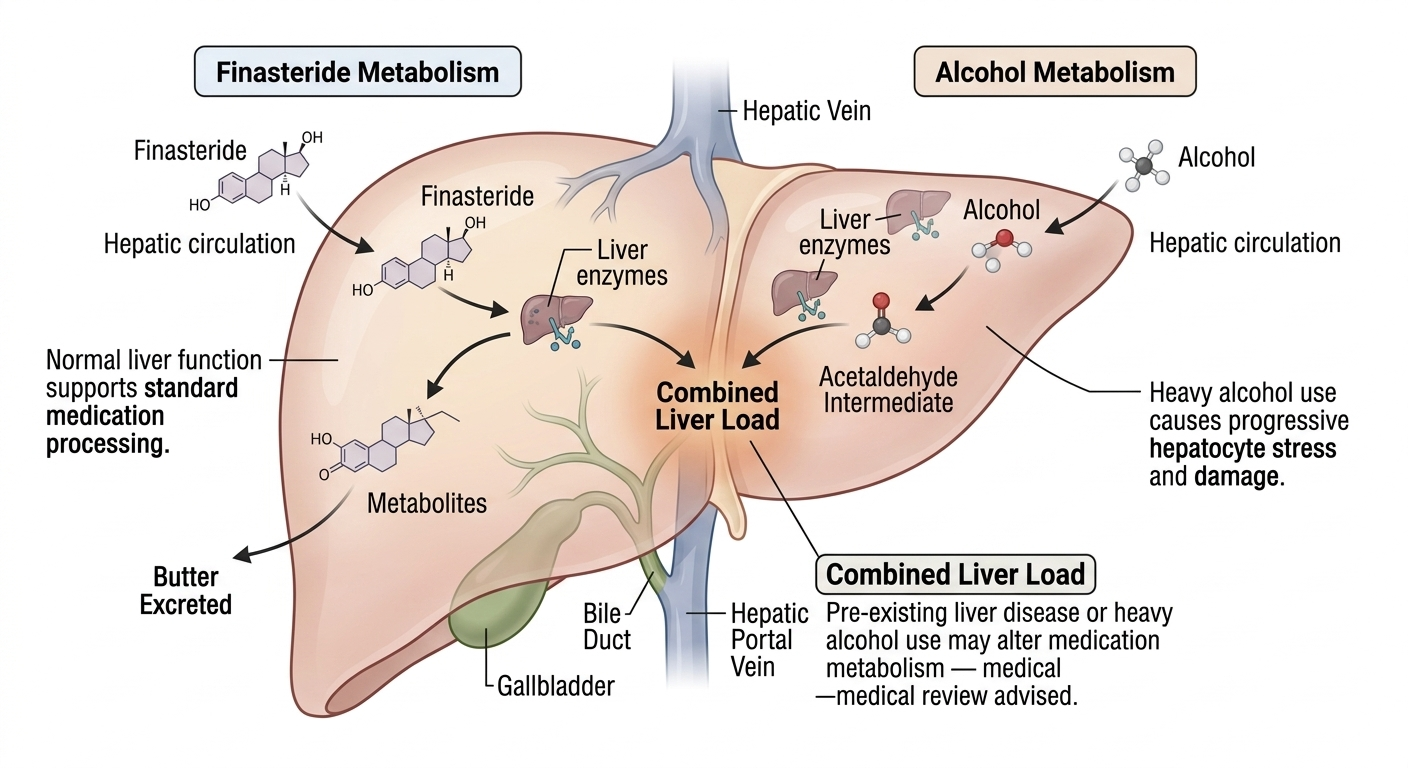
However, heavy alcohol consumption can damage the liver over time. Men with existing liver disease, alcohol dependency, or abnormal liver function should discuss medication safety carefully with a doctor before starting finasteride.
When the liver is already under strain, medication metabolism can become more complicated.
Can alcohol affect mood during finasteride treatment?
Potentially.
Mood related symptoms associated with finasteride remain an area of ongoing medical discussion and safety monitoring. Some men report anxiety, low mood, emotional blunting, or depressive symptoms during treatment.
Alcohol can also significantly affect mood and mental health.
While some people initially experience relaxation after drinking, alcohol may worsen anxiety, sleep quality, irritability, and depression over time, especially with repeated heavy use.
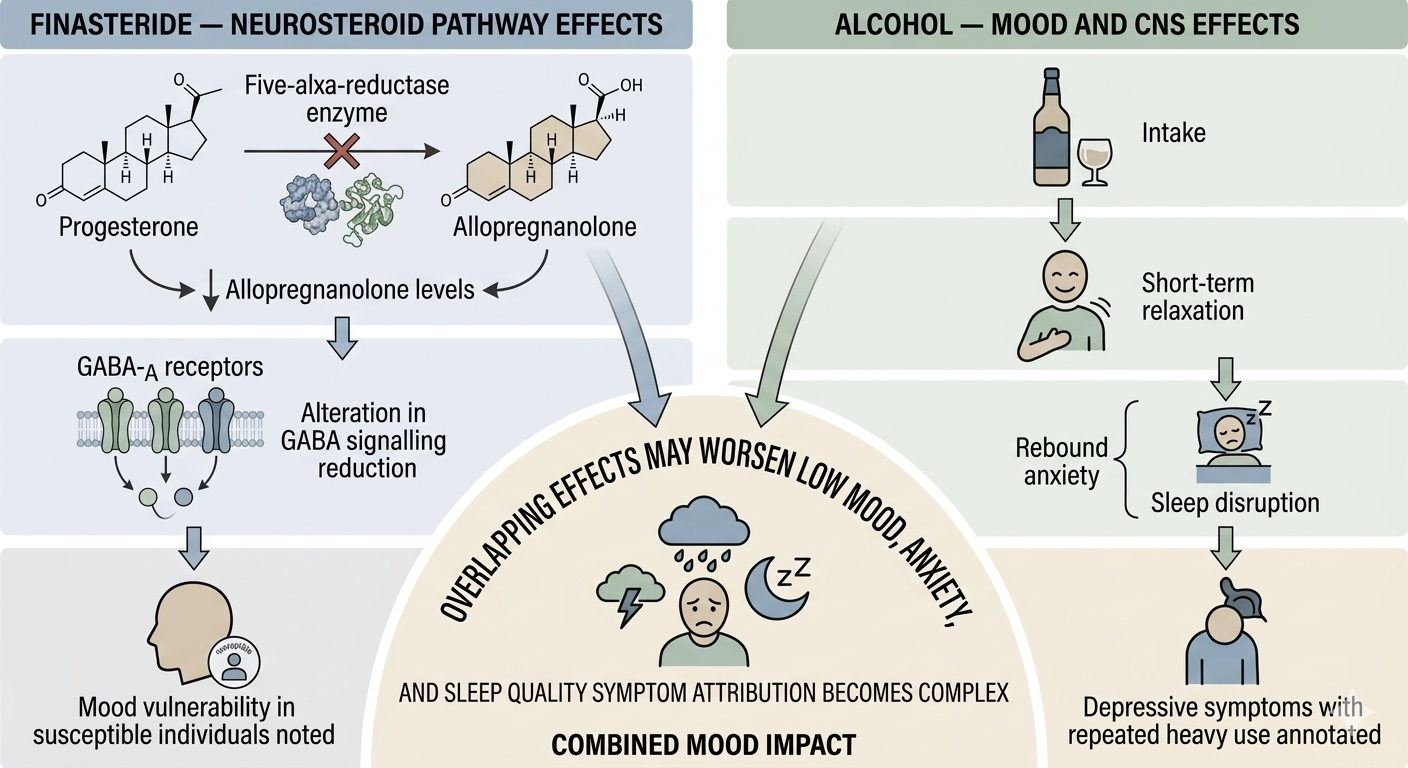
This overlap matters because mood symptoms occurring during finasteride treatment may have multiple contributing causes.
What about binge drinking?
Heavy episodic drinking deserves more caution than occasional moderate alcohol intake.
Binge drinking places stress on multiple body systems and can temporarily affect hormone balance, sexual function, hydration, sleep, cardiovascular health, and mood.
Men who notice worsening side effects after alcohol use may wish to reduce intake and observe whether symptoms improve.
Is occasional social drinking usually acceptable?
For many healthy men, occasional moderate alcohol consumption while taking finasteride is unlikely to cause major medical problems.
But moderation matters.
Guidelines around alcohol intake vary between countries, and no amount of alcohol is completely risk free from a general health perspective. The safest approach is usually sensible, limited consumption rather than assuming medication somehow protects against alcohol related harm.
Should some men be more cautious?
Yes.
Extra caution may be appropriate for men with:
- A history of depression or anxiety.
- Previous alcohol misuse.
- Liver disease.
- Sexual dysfunction.
- Fertility concerns.
- Chronic medical conditions.
- Heavy regular alcohol intake.
In these situations, both alcohol and finasteride deserve more careful discussion with a healthcare professional.
Can stopping alcohol improve side effects?
Possibly in some cases.
If a man experiences fatigue, poor erections, sleep disturbance, mood changes, or low libido while taking finasteride, reducing alcohol intake may improve symptoms regardless of whether finasteride is partly contributing.
This does not prove alcohol was the only cause, but lifestyle factors often interact with medication experiences.
Does alcohol increase the risk of post finasteride syndrome?
There is currently no clear evidence proving alcohol directly causes or worsens so called post finasteride syndrome.
However, because both alcohol misuse and chronic stress can affect mental and sexual health, heavy alcohol use may complicate recovery or symptom interpretation in men already distressed about persistent symptoms.
Research in this area remains limited.
Practical advice for men taking finasteride
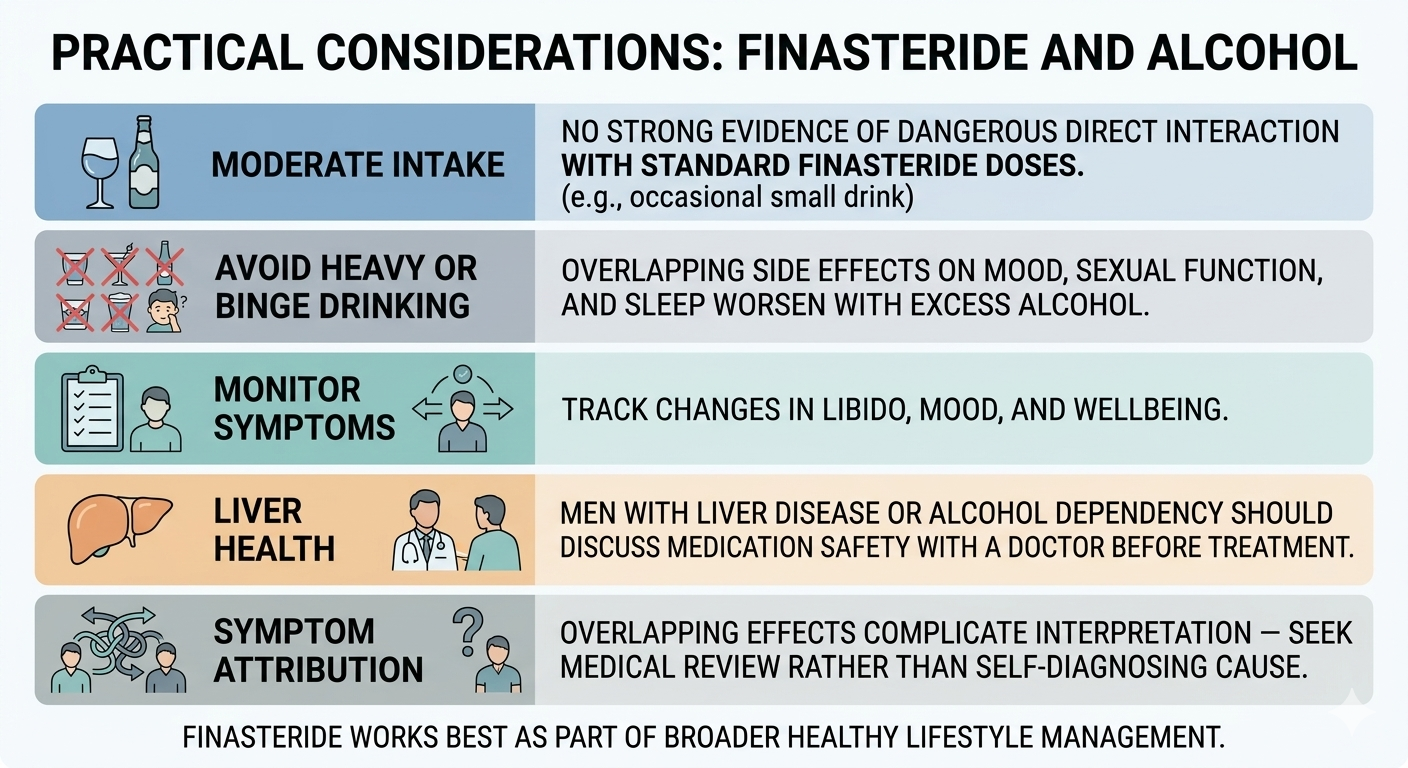
For most men, the safest practical approach is straightforward:
- Drink moderately if you choose to drink.
- Avoid excessive or binge alcohol use.
- Monitor changes in sexual function, mood, or wellbeing.
- Do not ignore persistent symptoms.
- Maintain realistic expectations about both hair treatment and alcohol related health effects.
Avoid relying on internet myths claiming either complete safety or catastrophic danger.
The practical conclusion
There is no strong evidence that moderate alcohol consumption creates a dangerous direct interaction with finasteride. Many men drink occasionally while taking the medication without obvious problems.
However, alcohol can overlap with finasteride related concerns involving sexual function, mood, sleep, and general health. Heavy drinking may worsen symptoms, complicate interpretation of side effects, and negatively affect overall wellbeing.
Finasteride remains an evidence based treatment for androgenetic alopecia, but treatment decisions work best when considered within the context of broader lifestyle and health habits rather than in isolation.
Author: Dr. Priya Goswami
Medical review: Dr. Denis Broun
Next step
If you notice coverage changes without increased shedding, confirm what process is occurring.
Take the Hair Assessment to have a physician review your pattern, identify whether miniaturization is present, and determine appropriate staging and next steps.
Add Comment