Walk into any pharmacy or search online for hair loss, and you’ll quickly find hundreds of supplements claiming to make hair thicker, stronger and faster growing.
Some promise visible results in weeks. Others claim to nourish follicles from within using proprietary blends of vitamins and plant extracts.
The marketing is persuasive.
The science is more complicated.
Hair follicles certainly need nutrients to function normally. But that does not mean everyone with hair loss needs supplements. In many cases, the underlying problem has little to do with nutrition.
Understanding the difference can save both money and disappointment.
Hair cannot grow well without adequate nutrition
Hair is one of the body’s fastest-growing tissues.
To produce healthy hair, follicles require:
- Protein
- Iron
- Zinc
- Essential fatty acids
- Certain vitamins
- Adequate calories
If the body lacks these building blocks, hair production may slow and shedding may increase.
This is why nutritional deficiencies can sometimes contribute to hair loss.
The important point is that supplements work best when they correct a deficiency, not when they are taken simply because hair is thinning.
Which nutrients have the strongest evidence?
Some nutrients have clear biological roles in hair growth.
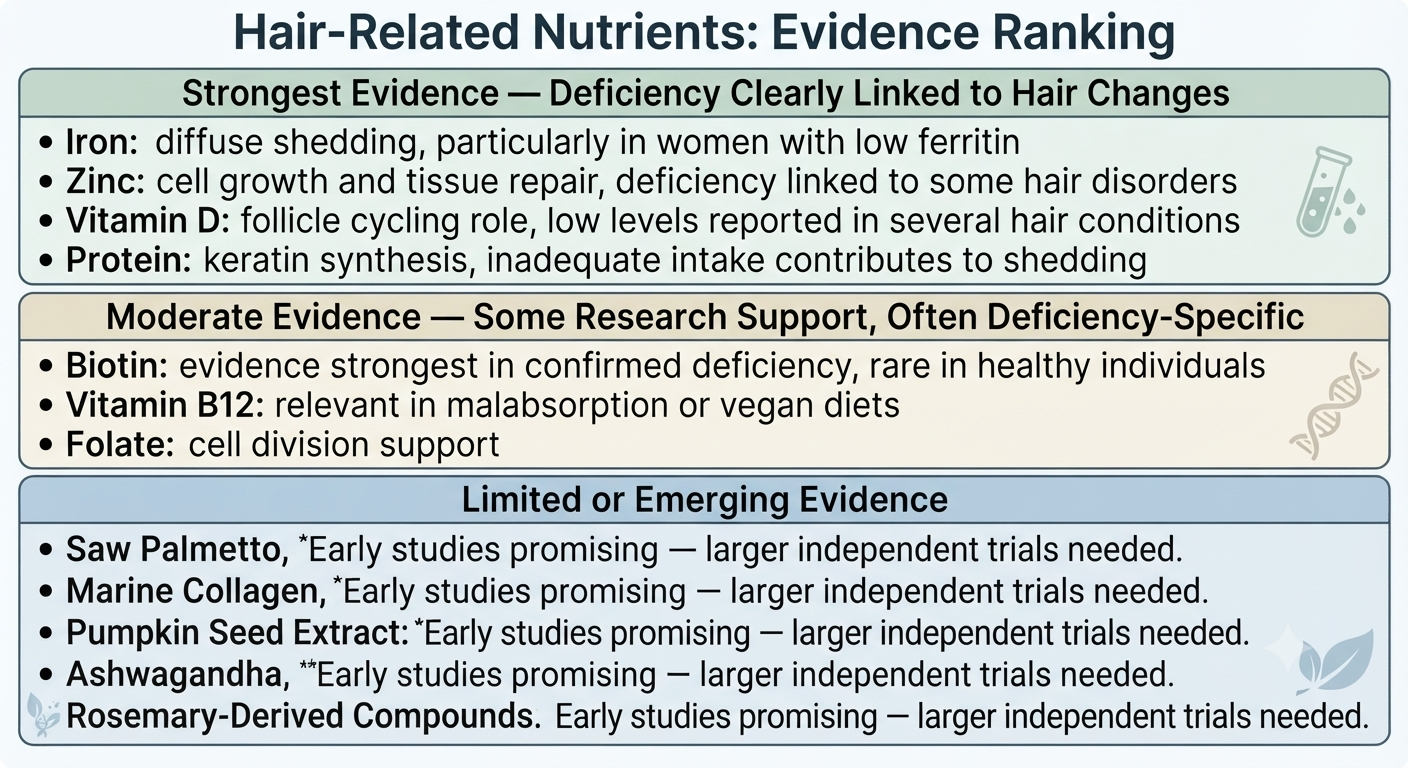
Iron
Iron deficiency is one of the most commonly investigated nutritional causes of diffuse hair shedding, particularly in women.
If blood tests confirm low iron stores, treating the deficiency may improve hair growth over time.
Zinc
Zinc supports normal cell growth and tissue repair.
Low zinc levels have been linked with some forms of hair loss, although supplementation is usually recommended only when deficiency has been confirmed.
Vitamin D
Vitamin D plays a role in normal hair follicle cycling.
Low levels have been reported in several hair disorders, but researchers are still investigating exactly how supplementation affects hair growth in different conditions.
Protein
Hair fibres are made primarily of keratin, a structural protein.
Very low protein intake, restrictive diets and rapid weight loss can all contribute to increased hair shedding.
Improving overall dietary protein intake may help when inadequate nutrition is the underlying cause.
What about biotin?
Biotin is probably the most famous hair supplement ingredient.
Despite its popularity, true biotin deficiency is uncommon in healthy people eating a balanced diet.
Research has shown that people with confirmed biotin deficiency may experience improvements when the deficiency is corrected.
However, there is limited evidence that additional biotin improves hair growth in individuals who already have normal levels.
High-dose biotin can also interfere with certain laboratory blood tests, making accurate diagnosis of some medical conditions more difficult.
Herbal ingredients are still being studied
Many supplements include botanical ingredients such as:
- Saw palmetto
- Marine collagen
- Pumpkin seed extract
- Ashwagandha
- Curcumin
- Rosemary-derived compounds
Some early studies have reported encouraging findings for selected ingredients.
However, much of the evidence remains limited by small study sizes, short follow-up periods or industry funding.
This does not necessarily mean these ingredients are ineffective.
It means the current scientific evidence is not yet as strong as that supporting established medical treatments for common forms of hair loss.
Can too many vitamins be harmful?
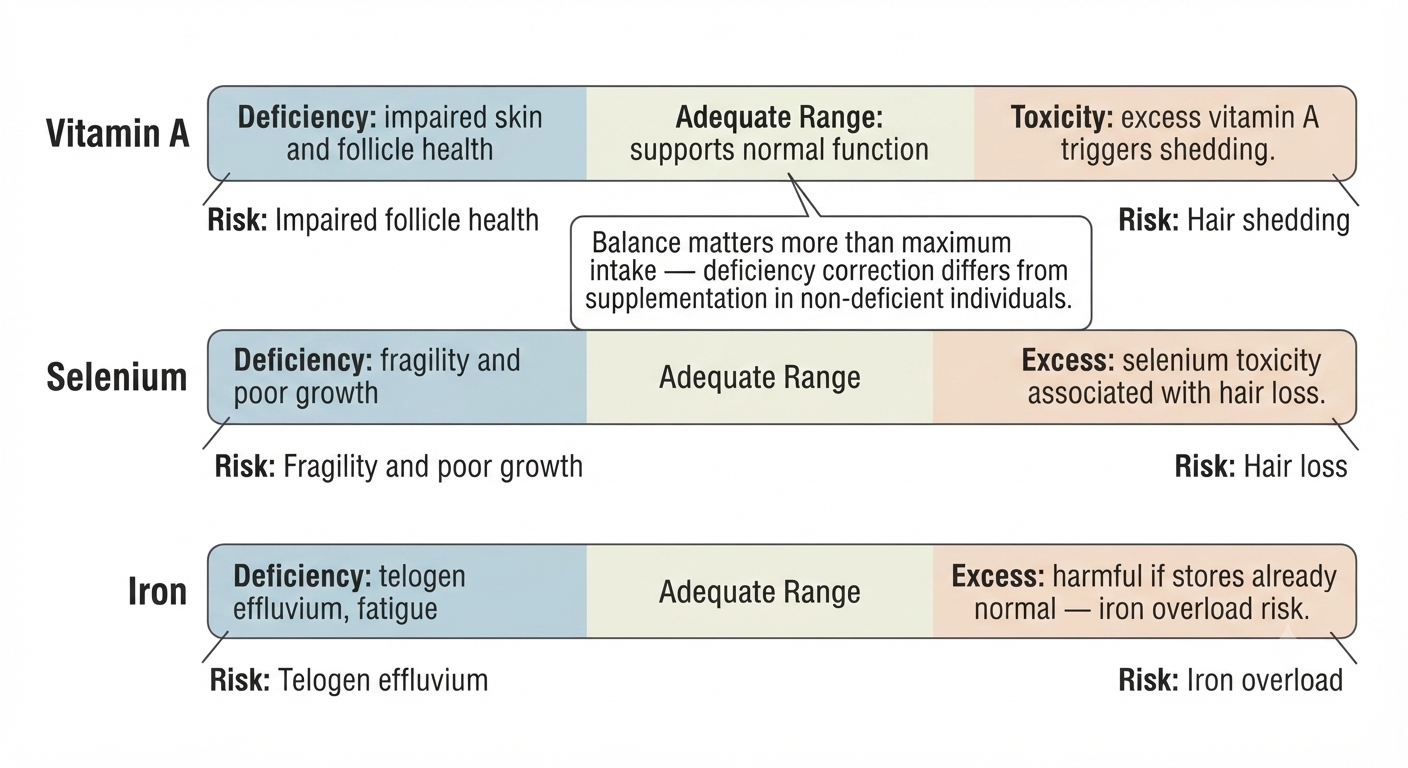
More is not always better.
Several nutrients can become harmful when taken in excessive amounts.
For example:
- Excess vitamin A has been associated with hair shedding.
- Excess selenium may contribute to hair loss.
- Unnecessary iron supplementation can be harmful if iron stores are already normal.
This is one reason why self-prescribing multiple supplements without medical advice is not always a good idea.
Why supplements cannot treat every type of hair loss
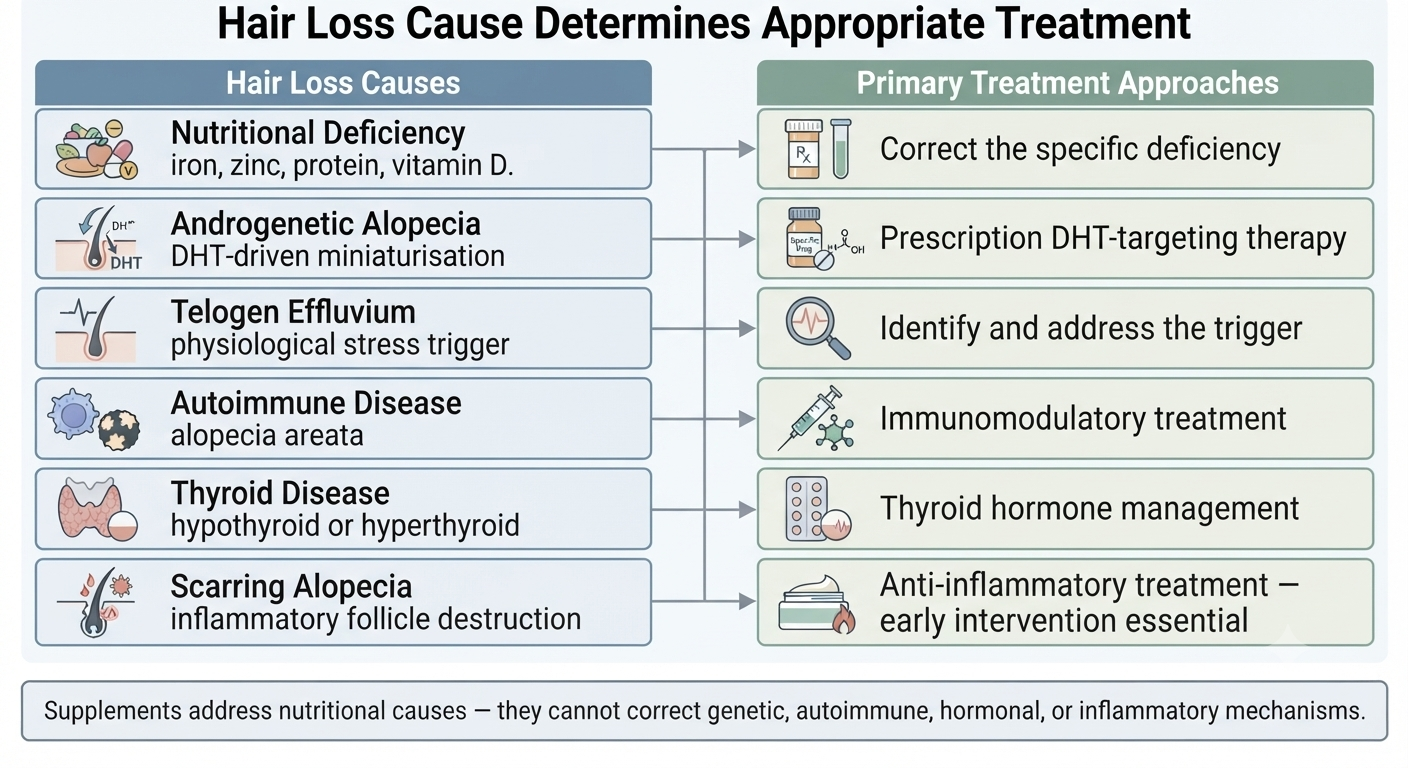
Hair loss has many possible causes, including:
- Androgenetic alopecia
- Telogen effluvium
- Autoimmune disorders
- Thyroid disease
- Scalp inflammation
- Certain medications
- Nutritional deficiencies
Only some of these conditions are related to nutrition.
Taking supplements cannot correct genetic hormone sensitivity, autoimmune disease or scarring disorders affecting the scalp.
Choosing the right treatment begins with understanding which condition is actually present.
How should you choose a supplement?
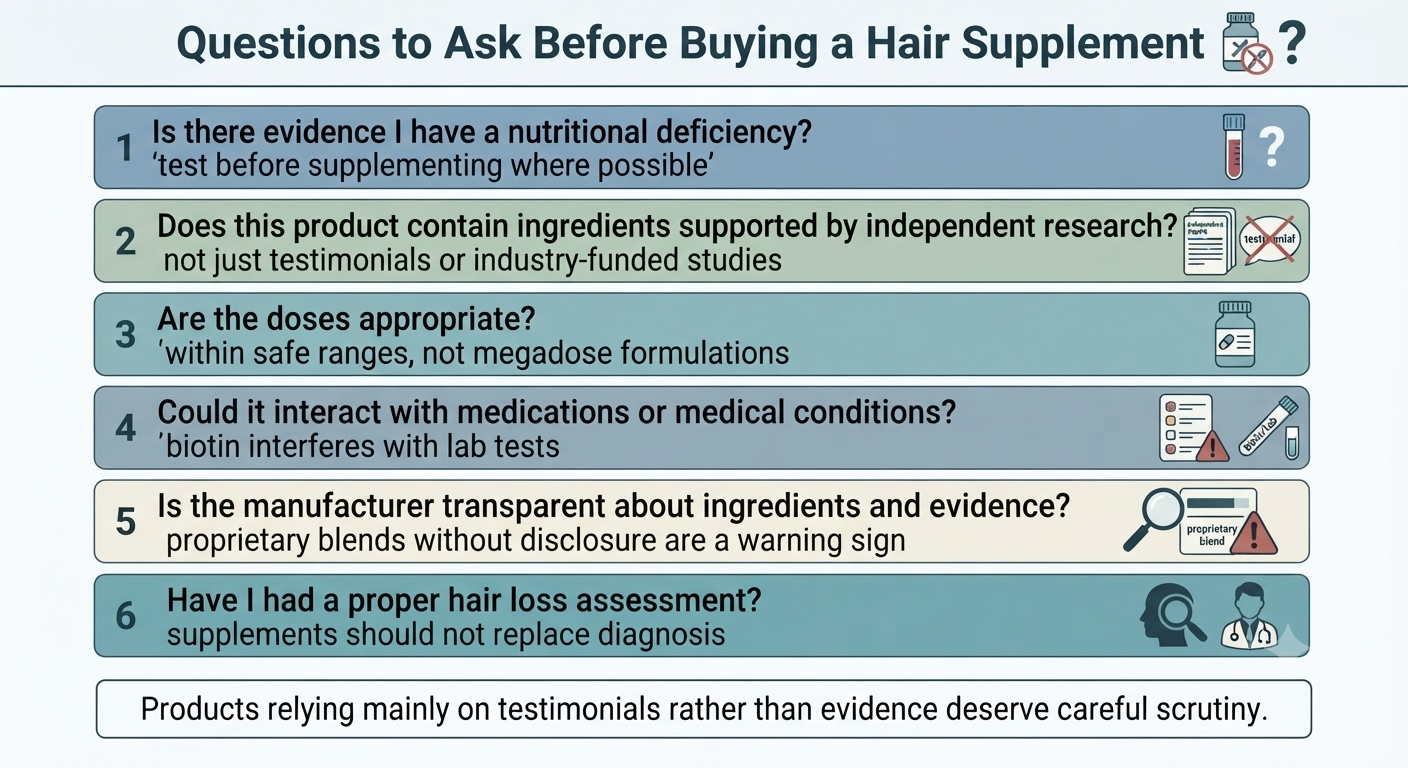
Before buying any product, it is worth asking a few simple questions.
- Is there evidence that I have a nutritional deficiency?
- Does this product contain ingredients supported by independent research?
- Are the doses appropriate?
- Could it interact with other medicines or medical conditions?
- Is the manufacturer transparent about its ingredients?
Products that rely mainly on testimonials rather than scientific evidence deserve careful consideration.
Looking at the bigger picture
Hair health depends on much more than one tablet.
Sleep, stress, overall nutrition, medical conditions, hormonal influences and genetics all affect how hair grows.
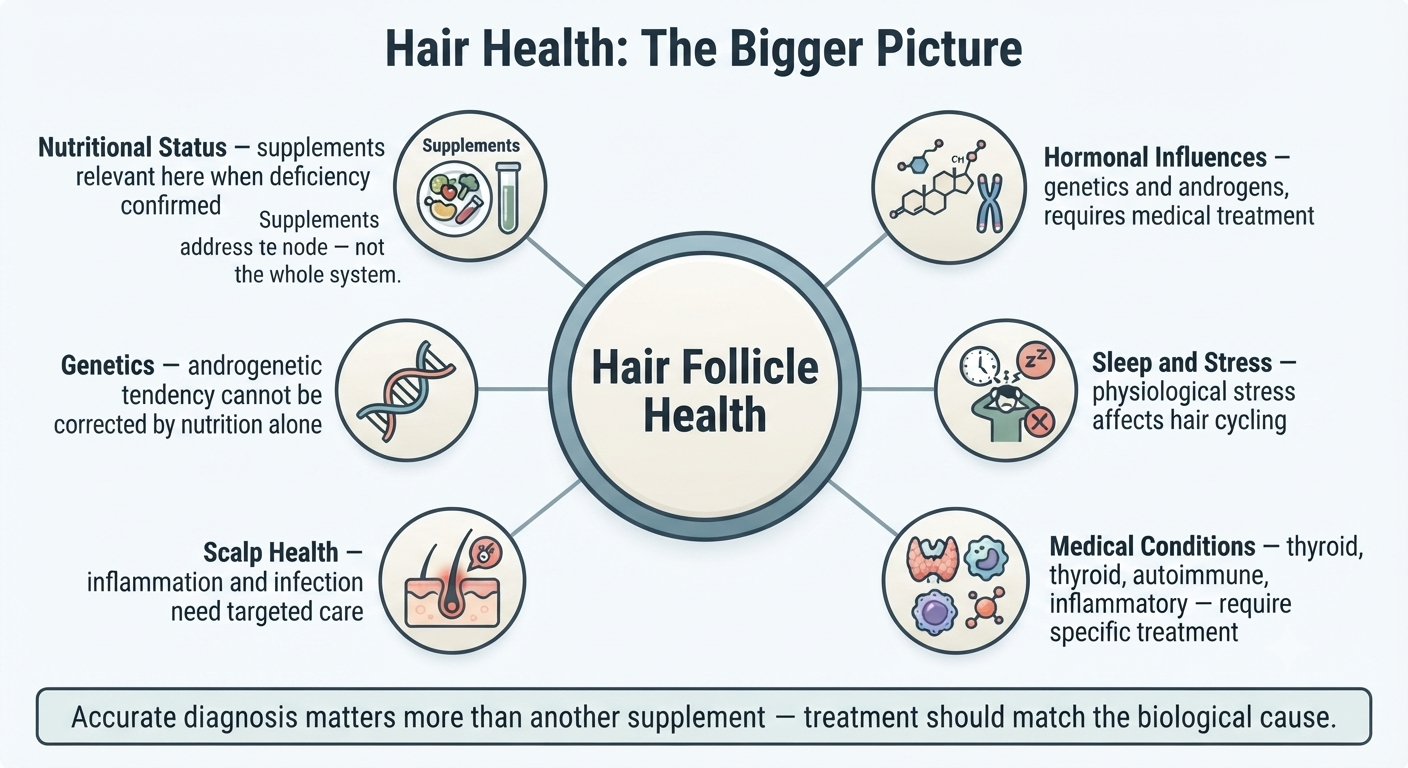
Supplements may have an important role for some people, particularly when a genuine deficiency has been identified.
For many others, the most effective approach begins with an accurate diagnosis rather than another bottle promising dramatic results.
Author: Dr. Priya Goswami
Medical review: Dr. Denis Broun
Next step
If you notice coverage changes without increased shedding, confirm what process is occurring.
Take the Hair Assessment to have a physician review your pattern, identify whether miniaturization is present, and determine appropriate staging and next steps.
Add Comment