Walk into any pharmacy and you’ll find shelves full of shampoos claiming to reduce hair fall.
Some promise thicker hair.
Others claim to reactivate dormant follicles or stimulate rapid growth.
The labels can make it seem as though the right shampoo is all you need.
In reality, shampoos can play an important role in scalp care, but they are rarely a complete treatment for hair loss.
Understanding which ingredients have evidence behind them makes choosing a product much easier.
What can a shampoo realistically do?
A shampoo has two main jobs:
- Clean the scalp and hair
- Maintain a healthy scalp environment
Because shampoos are rinsed off after a short time, they usually have limited opportunity to influence the biology of the hair follicle.
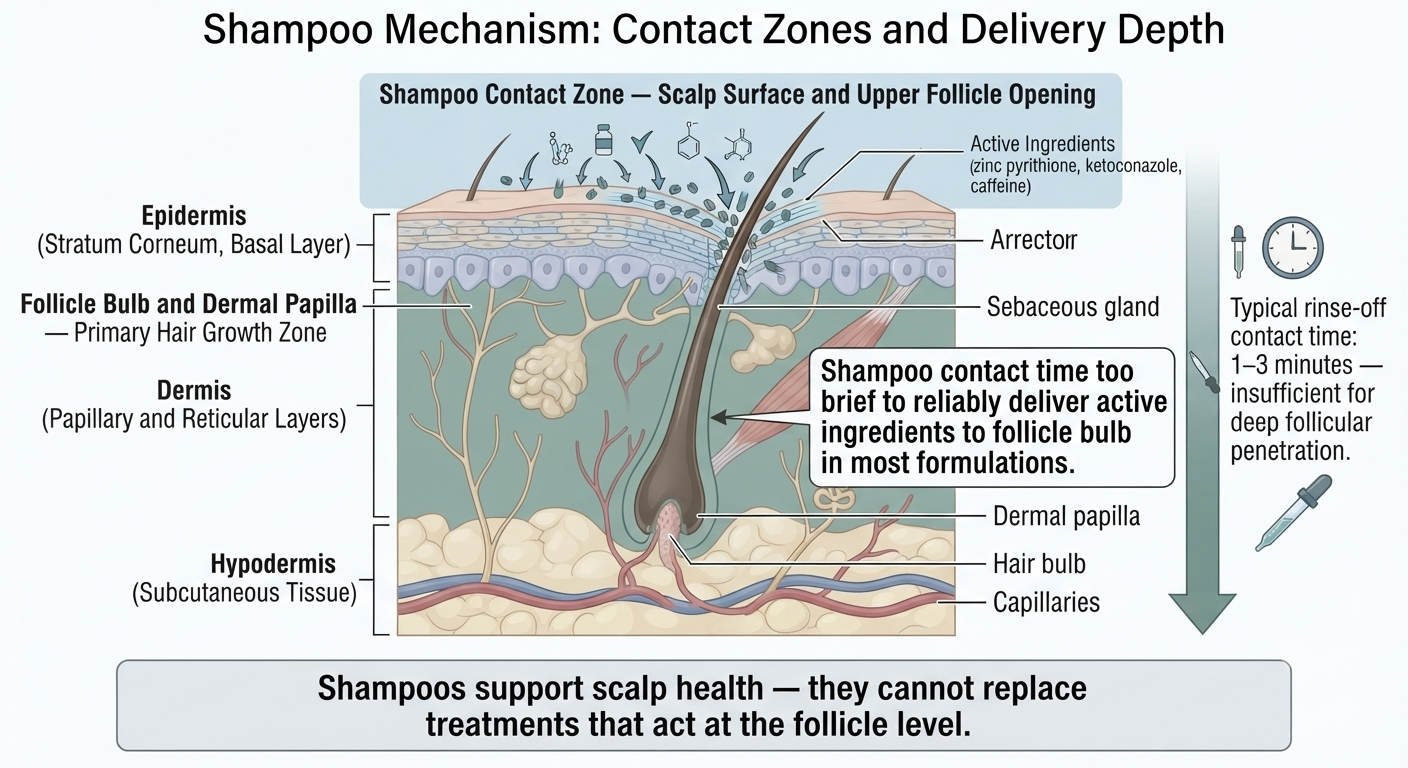
For most forms of hair loss, their effect is supportive rather than curative.
Ingredients that have evidence
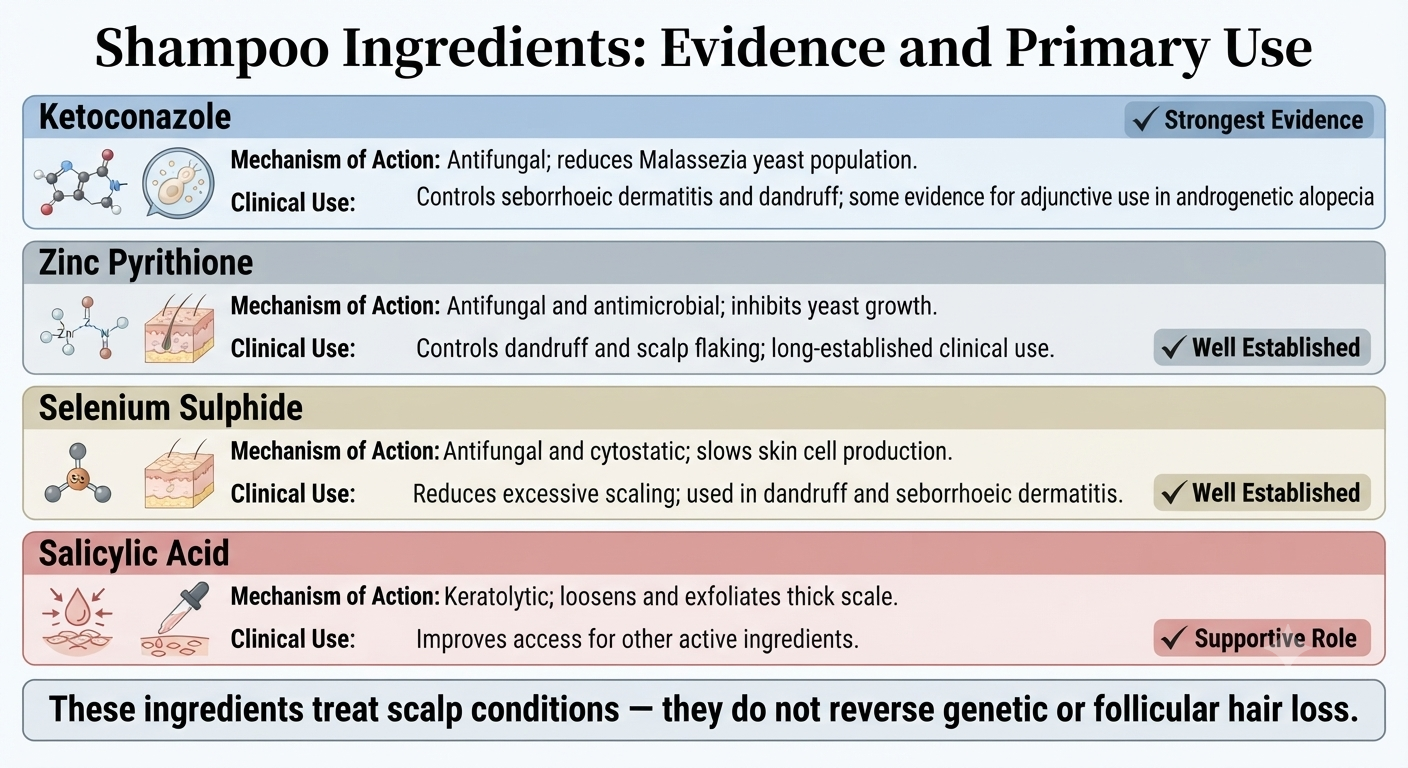
Some shampoo ingredients have recognised medical uses.
Antifungal agents
Ingredients such as ketoconazole are commonly used in medicated shampoos to help manage conditions including seborrhoeic dermatitis and dandruff.
By reducing inflammation and controlling excess growth of Malassezia yeast, they may improve scalp health and reduce shedding associated with inflammatory scalp conditions.
Zinc pyrithione
Zinc pyrithione has long been used to help control dandruff.
It reduces flaking and may improve symptoms such as itching and irritation in some people.
Selenium sulphide
Selenium sulphide is another medicated ingredient used for dandruff and seborrhoeic dermatitis.
It helps reduce excessive scaling and supports management of certain scalp disorders.
Salicylic acid
Salicylic acid helps loosen thick scales from the scalp.
It is particularly useful when scaling prevents other treatments from reaching the skin effectively.
Ingredients that improve the hair shaft
Many shampoos contain ingredients designed to improve how hair looks and feels.
These may include:
- Conditioning agents
- Silicones
- Hydrolysed proteins
- Ceramides
These ingredients can:
- Reduce friction
- Improve shine
- Make hair easier to manage
- Reduce breakage
They improve the cosmetic appearance of the hair but do not directly increase hair growth.
What about caffeine, biotin and botanical extracts?
Many commercial shampoos contain ingredients such as:
- Caffeine
- Biotin
- Plant extracts
- Peptides
Laboratory research has suggested that some of these compounds may influence hair follicles under experimental conditions.
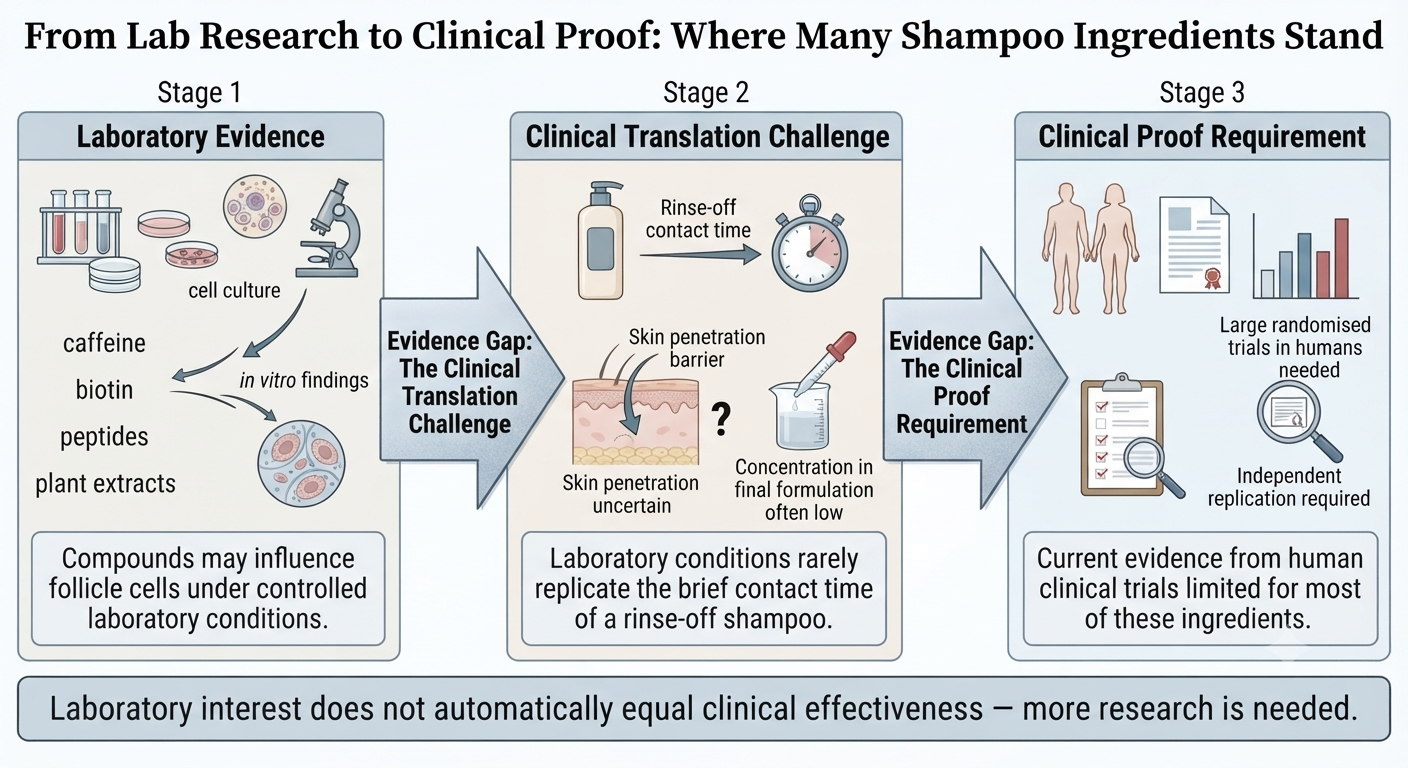
However, clinical evidence demonstrating meaningful improvements in hair growth when delivered through a rinse-off shampoo remains limited.
More research is needed before firm conclusions can be drawn.
What should you avoid?
A shampoo should cleanse without causing unnecessary irritation.
If a product causes:
- Persistent itching
- Burning
- Redness
- Excessive dryness
it may not be suitable for your scalp.
People with sensitive skin or eczema may benefit from fragrance-free or gentler formulations recommended by a healthcare professional.
Match the shampoo to the scalp problem
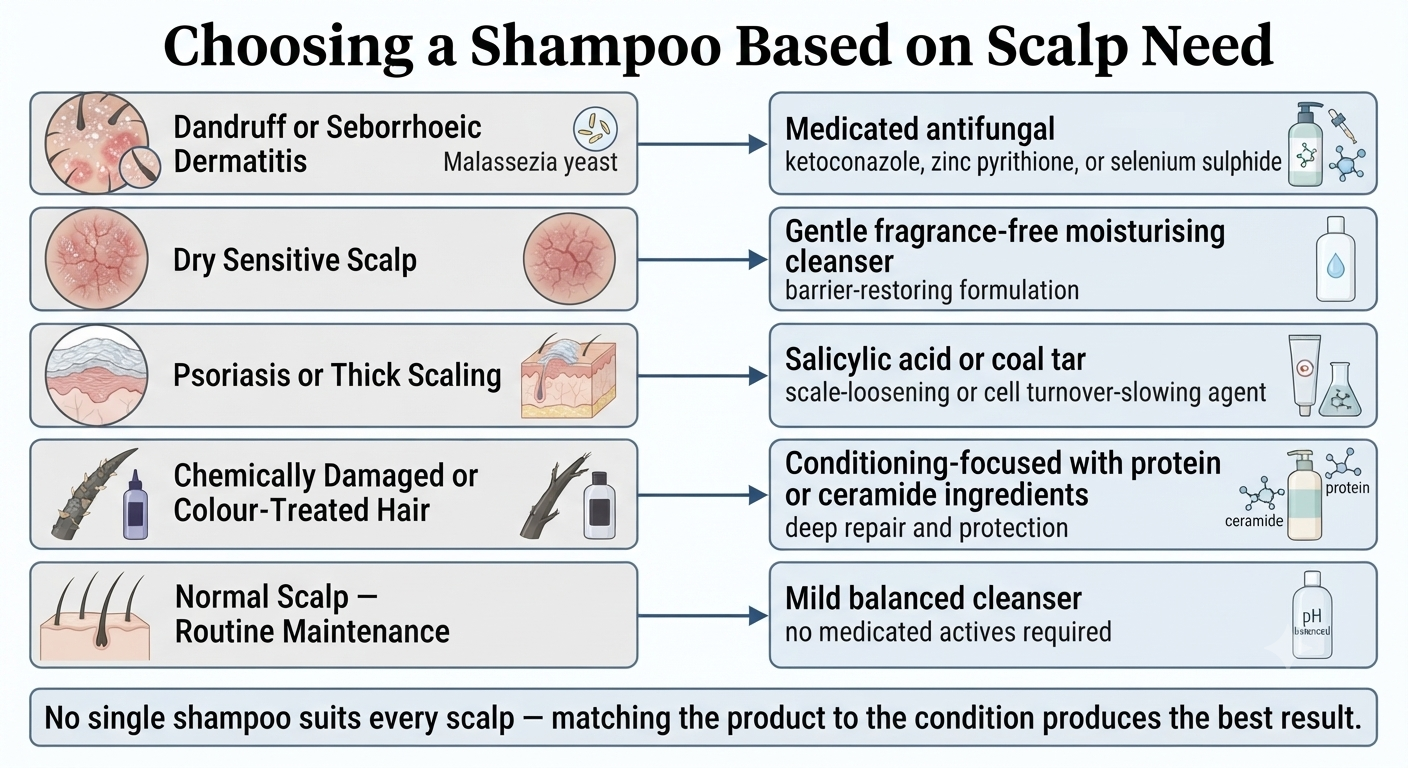
The best shampoo depends on the underlying issue.
For example:
- Dandruff may benefit from a medicated antifungal shampoo.
- A dry, sensitive scalp may require a gentle moisturising cleanser.
- Hair damaged by colouring or heat styling may benefit from conditioning ingredients.
There is no single shampoo that is ideal for every person experiencing hair fall.
When shampoo is not enough
Hair loss caused by conditions such as:
- Androgenetic alopecia
- Alopecia areata
- Nutritional deficiencies
- Thyroid disorders
requires assessment and treatment directed at the underlying cause.
Changing shampoo alone is unlikely to reverse these conditions.
If hair loss continues despite good scalp care, medical evaluation is advisable.
Focus on scalp health, not marketing claims
A good shampoo supports a healthy scalp, removes excess oil and debris, and helps manage conditions that may contribute to increased shedding.
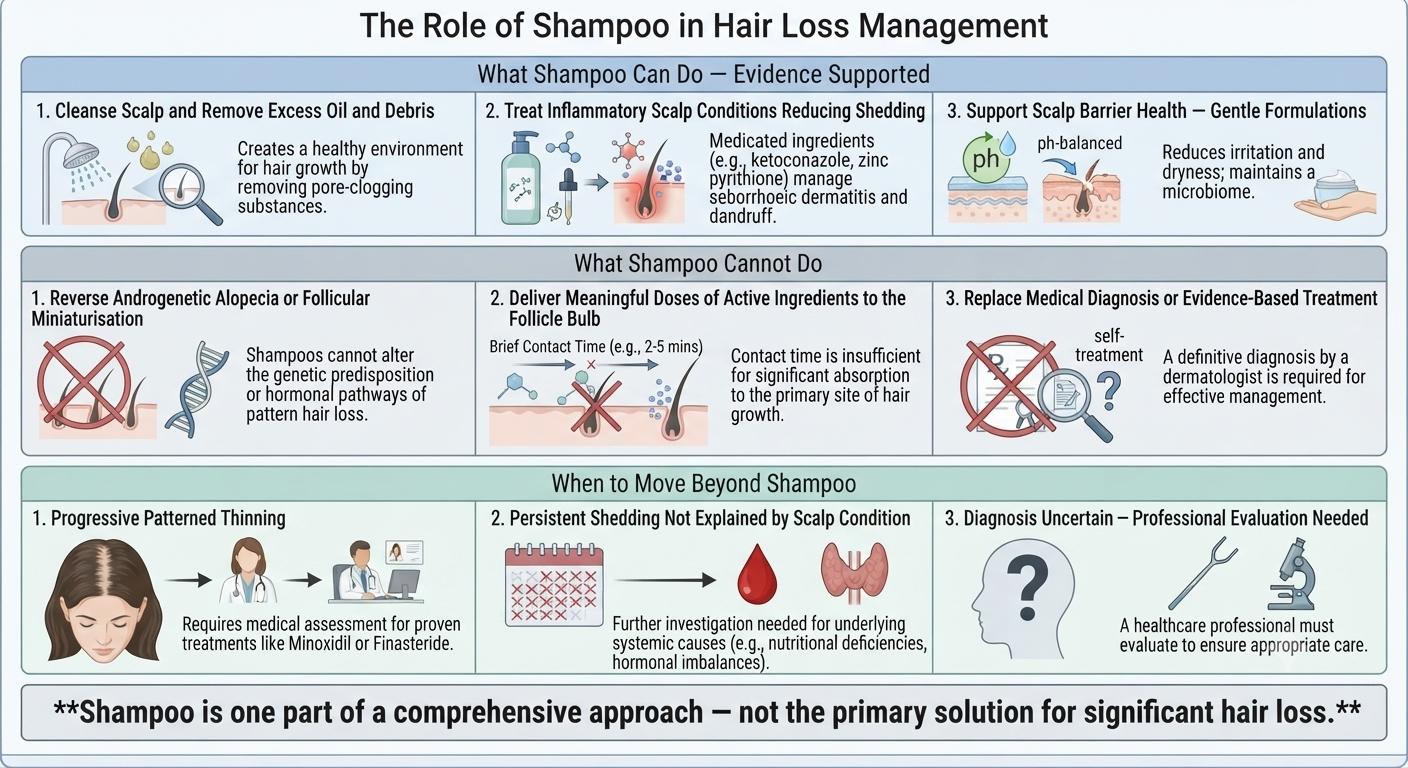
Some medicated ingredients have well-established clinical uses, while many cosmetic ingredients mainly improve the appearance and feel of the hair rather than its growth. Choosing a shampoo based on your scalp’s needs, rather than the promises on the bottle, is the most evidence-based approach. For persistent or progressive hair loss, shampoo should be viewed as one part of a comprehensive treatment plan rather than the primary solution.
Author: Dr. Priya Goswami
Medical review: Dr. Denis Broun
Next step
If you notice coverage changes without increased shedding, confirm what process is occurring.
Take the Hair Assessment to have a physician review your pattern, identify whether miniaturization is present, and determine appropriate staging and next steps.

Add Comment