Many women notice hair loss gradually.
The ponytail becomes thinner.
The parting looks wider.
More hair appears in the shower or on the hairbrush.
It is tempting to search for a single product that promises to solve the problem.
Unfortunately, hair loss in women is rarely that simple.
Two women with similar-looking thinning may have completely different underlying conditions and therefore need very different treatments.
Hair loss is a symptom, not a diagnosis
The first question should never be, “Which treatment should I use?”
It should be, “Why is my hair falling out?”
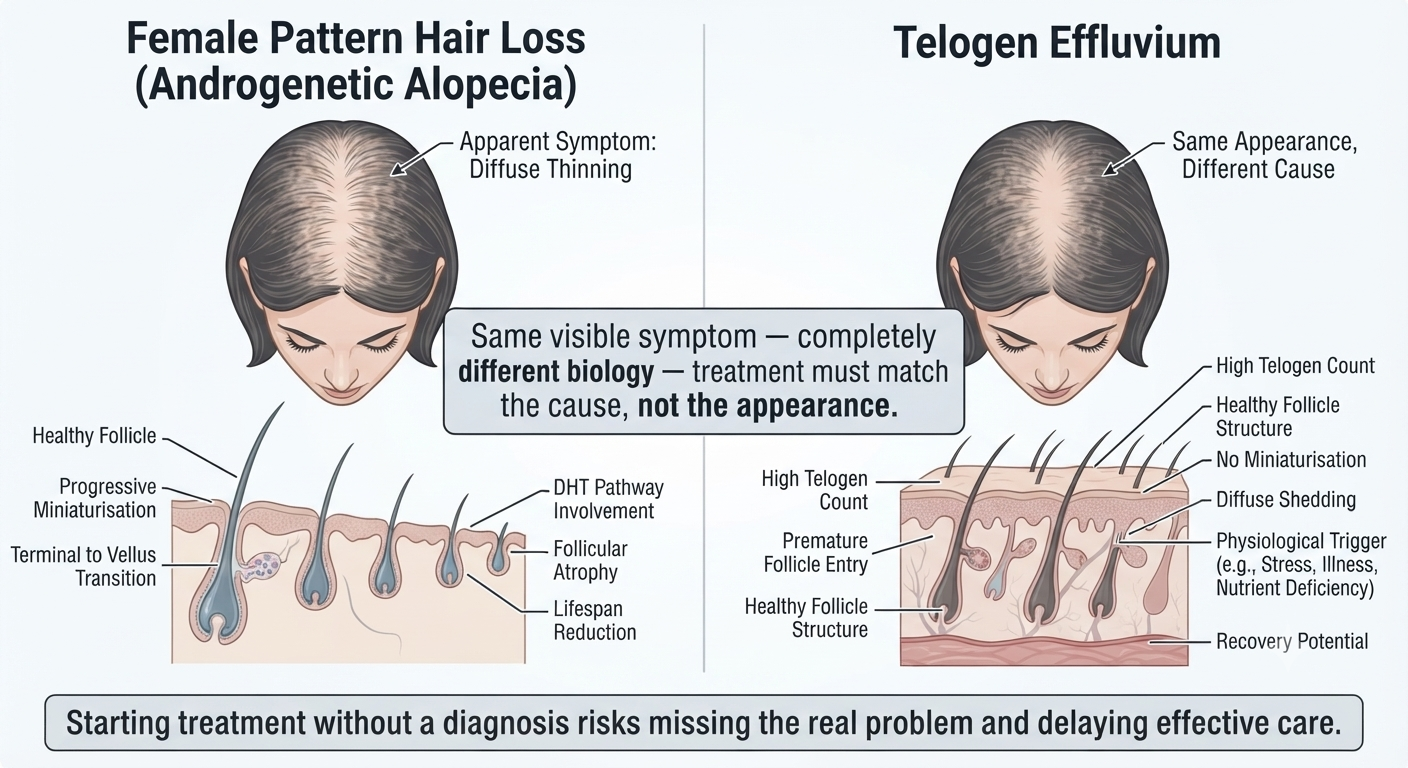
Hair loss can result from several different conditions, including:
- Female pattern hair loss
- Telogen effluvium
- Alopecia areata
- Traction alopecia
- Thyroid disorders
- Nutritional deficiencies
- Inflammatory scalp diseases
Each affects the hair follicle in a different way.
Female pattern hair loss
Female pattern hair loss usually develops gradually.
Common features include:
- A widening parting
- Reduced density over the top of the scalp
- Preservation of the frontal hairline in many women
- Progressive thinning over several years
Early diagnosis is important because treatment is generally more effective while many follicles remain active.
Temporary shedding requires a different approach
Not all hair loss is permanent.
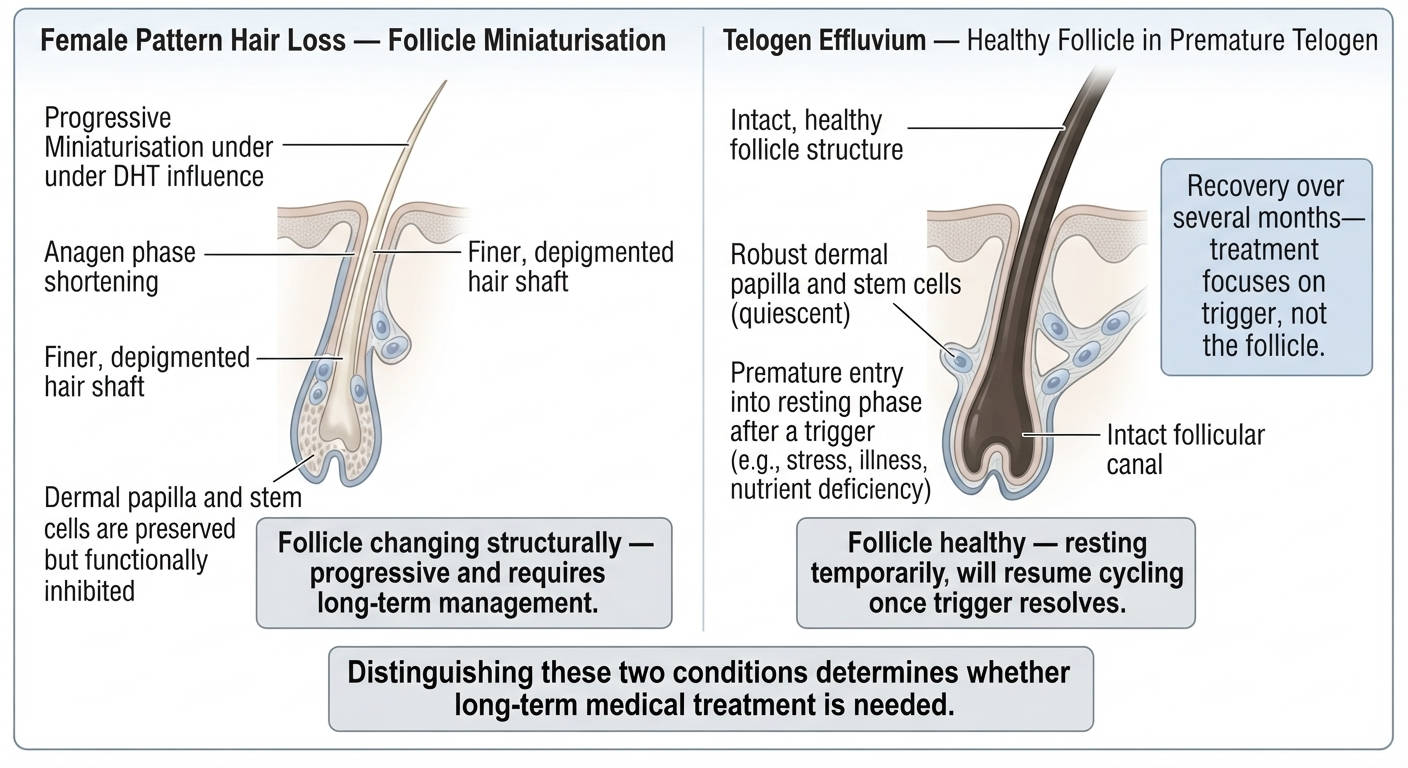
Telogen effluvium often develops after:
- Childbirth
- Major illness
- Surgery
- Significant emotional stress
- Rapid weight loss
In these situations, the hair follicles usually remain healthy.
Once the trigger has resolved, many women experience gradual recovery over several months.
Hormones can influence hair growth
Hormonal changes affect many aspects of the hair cycle.
Some women first notice thinning:
- Around menopause
- After pregnancy
- During treatment for hormonal conditions
Hormones are only one part of the picture, but they are often an important consideration when planning treatment.
Medical history matters
The same treatment is not suitable for every woman.
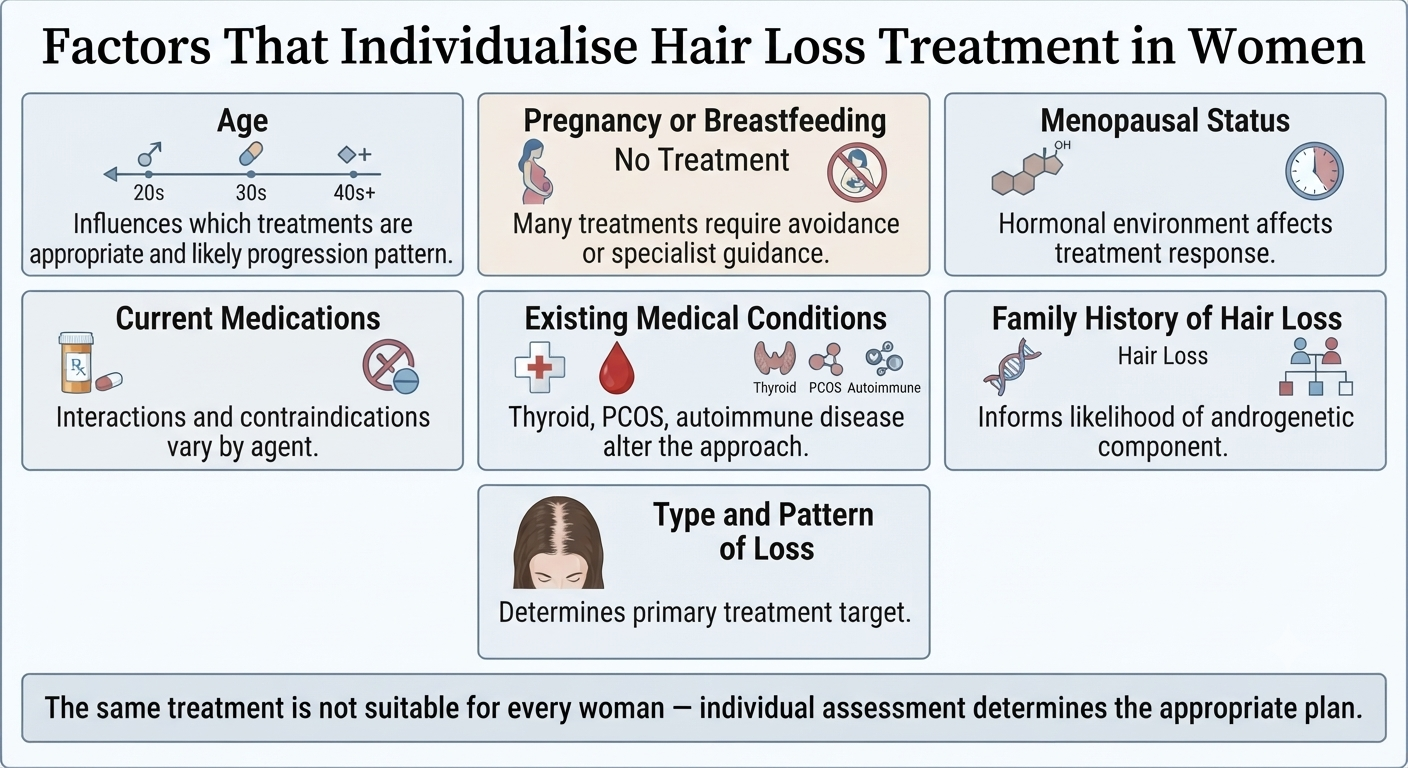
Factors that influence treatment decisions include:
- Age
- Pregnancy or breastfeeding
- Menopausal status
- Current medications
- Existing medical conditions
- Family history of hair loss
These factors help determine which options are appropriate and which should be avoided.
The scalp should not be overlooked
Healthy follicles depend on a healthy scalp.
Conditions such as:
- Seborrhoeic dermatitis
- Psoriasis
- Eczema
- Folliculitis
may contribute to discomfort, increased shedding or reduced hair quality.
Treating scalp inflammation is often an important part of improving overall hair health.
Lifestyle also plays a role
Although lifestyle does not usually cause female pattern hair loss, it can influence overall hair quality.
Helpful habits include:
- Eating a balanced diet
- Managing medical conditions
- Avoiding excessive heat and chemical treatments
- Minimising hairstyles that place prolonged tension on the hair
- Looking after scalp health
These measures support healthy hair but should not replace appropriate medical assessment when significant hair loss is present.
Patience is essential
Hair grows slowly.
Most evidence-based treatments require several months before meaningful improvement becomes visible.
It is common for progress to be assessed after six months, with a more complete evaluation after twelve months.
Stopping treatment too early may lead to unnecessary disappointment.
When should you seek medical advice?
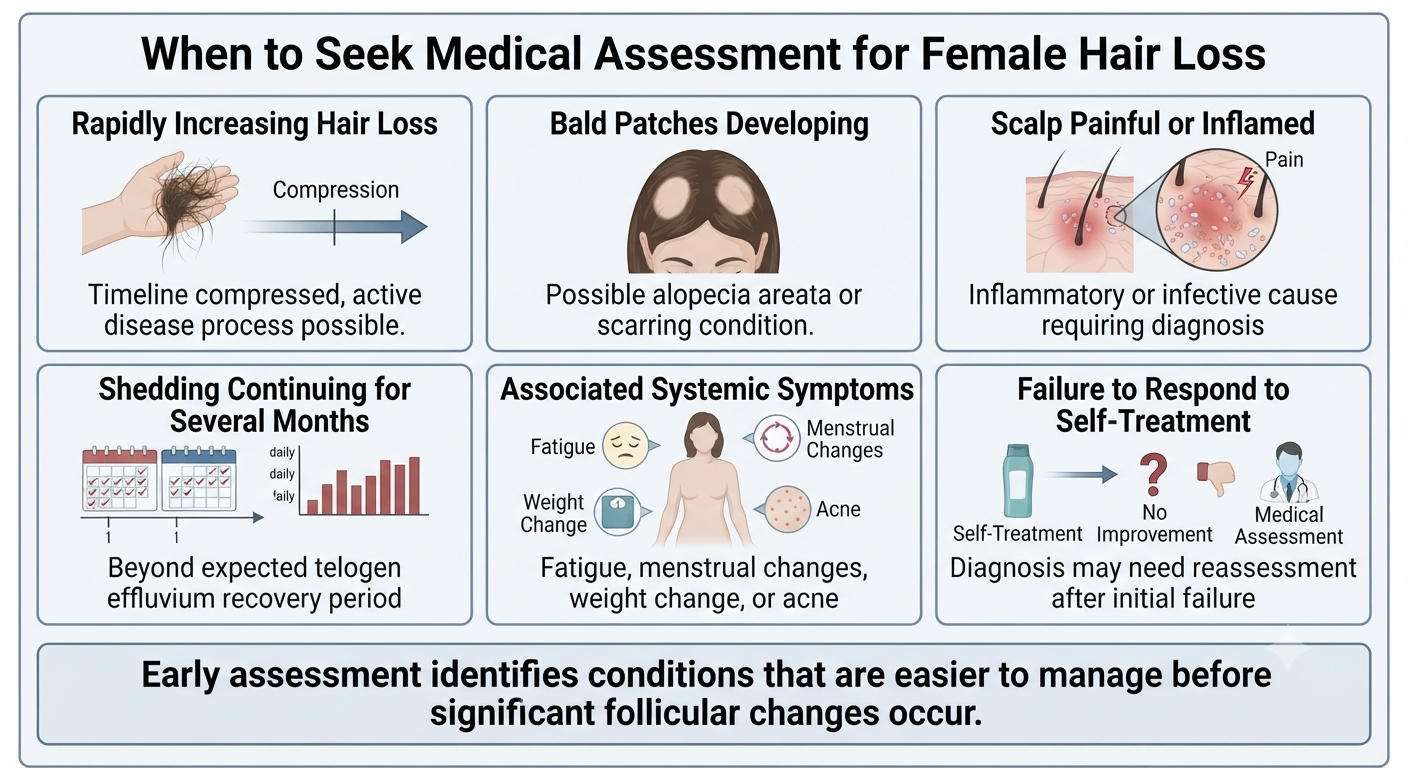
Professional assessment is advisable if:
- Hair loss is increasing rapidly.
- Bald patches develop.
- The scalp becomes painful or inflamed.
- Hair shedding continues for several months.
- Thinning is accompanied by other symptoms such as fatigue, menstrual changes or unexplained weight changes.
Early assessment can help identify conditions that are easier to manage before significant follicular changes occur.
Treatment begins with the correct diagnosis
There is no universal treatment for hair loss in women because there is no single cause.
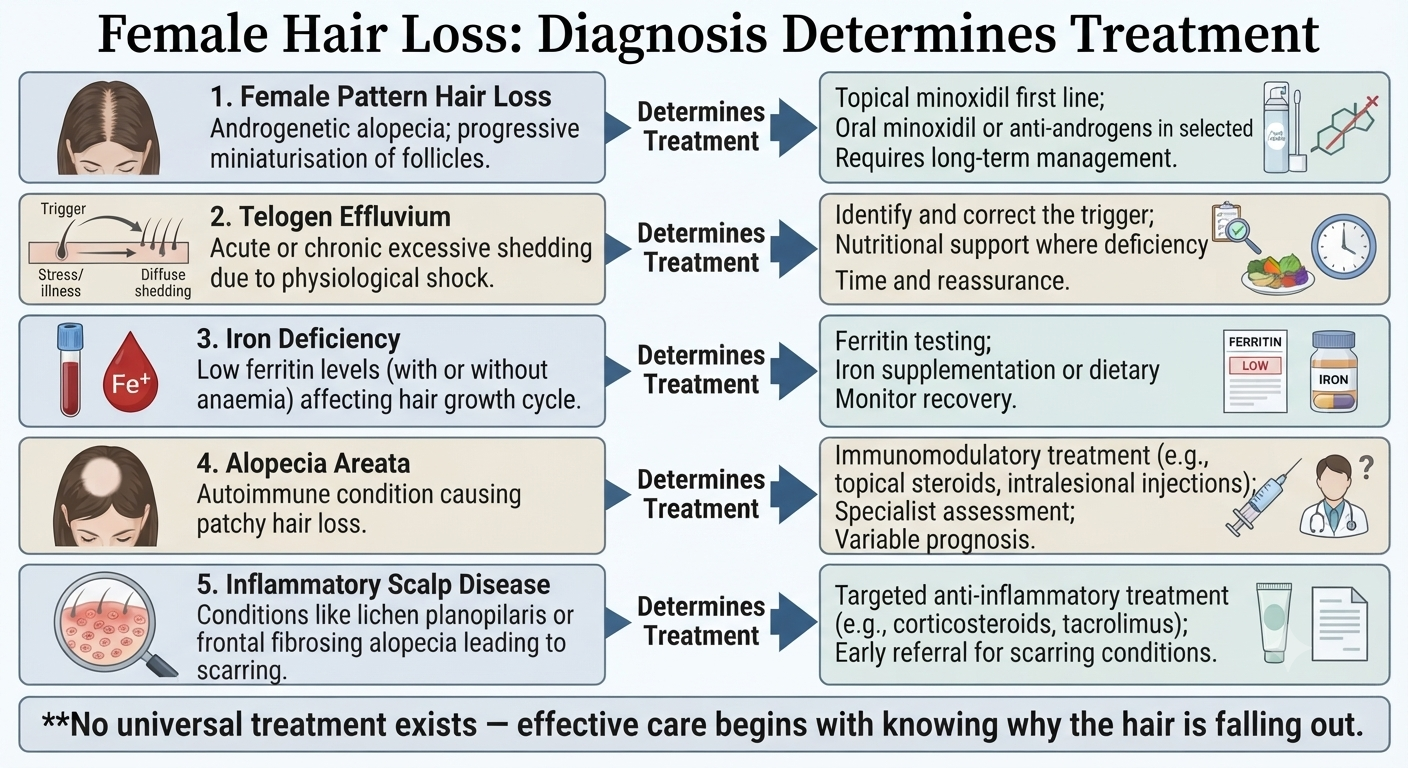
What works well for one person may be ineffective or inappropriate for another. An accurate diagnosis, careful assessment of individual circumstances and realistic expectations form the foundation of successful treatment. By identifying the underlying cause first, treatment can be tailored to the woman rather than simply to the symptom of hair loss.
Author: Dr. Priya Goswami
Medical review: Dr. Denis Broun
Next step
If you notice coverage changes without increased shedding, confirm what process is occurring.
Take the Hair Assessment to have a physician review your pattern, identify whether miniaturization is present, and determine appropriate staging and next steps.
Add Comment