An itchy scalp is easy to dismiss.
Many people assume it is simply dandruff or dry skin.
Sometimes it is.
Sometimes the underlying problem is scalp eczema.
Although eczema mainly affects the skin, it can also influence how your hair looks and feels. The good news is that most hair changes linked to scalp eczema are temporary when the condition is recognised and treated appropriately.
What is scalp eczema?
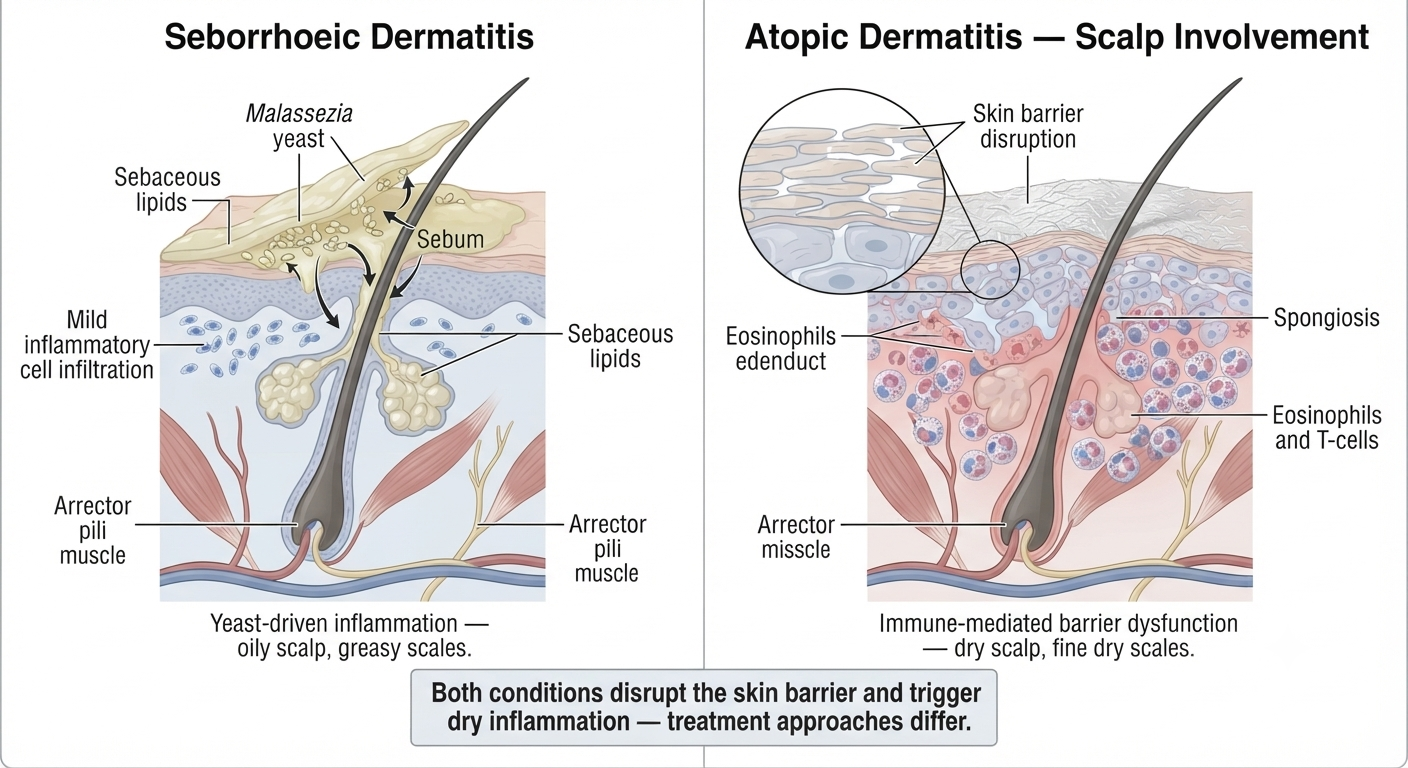
Scalp eczema refers to inflammation affecting the skin of the scalp.
The two most common forms are:
- Seborrhoeic dermatitis
- Atopic dermatitis affecting the scalp
Both conditions disrupt the skin barrier and trigger inflammation.
They are not contagious and cannot be passed from one person to another.
What symptoms does it cause?
Scalp eczema may cause:
- Persistent itching
- Redness
- Dry or greasy scales
- Flaking
- Irritated skin
- A feeling of soreness or burning
Symptoms often vary over time, with periods of improvement followed by flare-ups.
Does scalp eczema cause hair loss?
Usually, not directly.
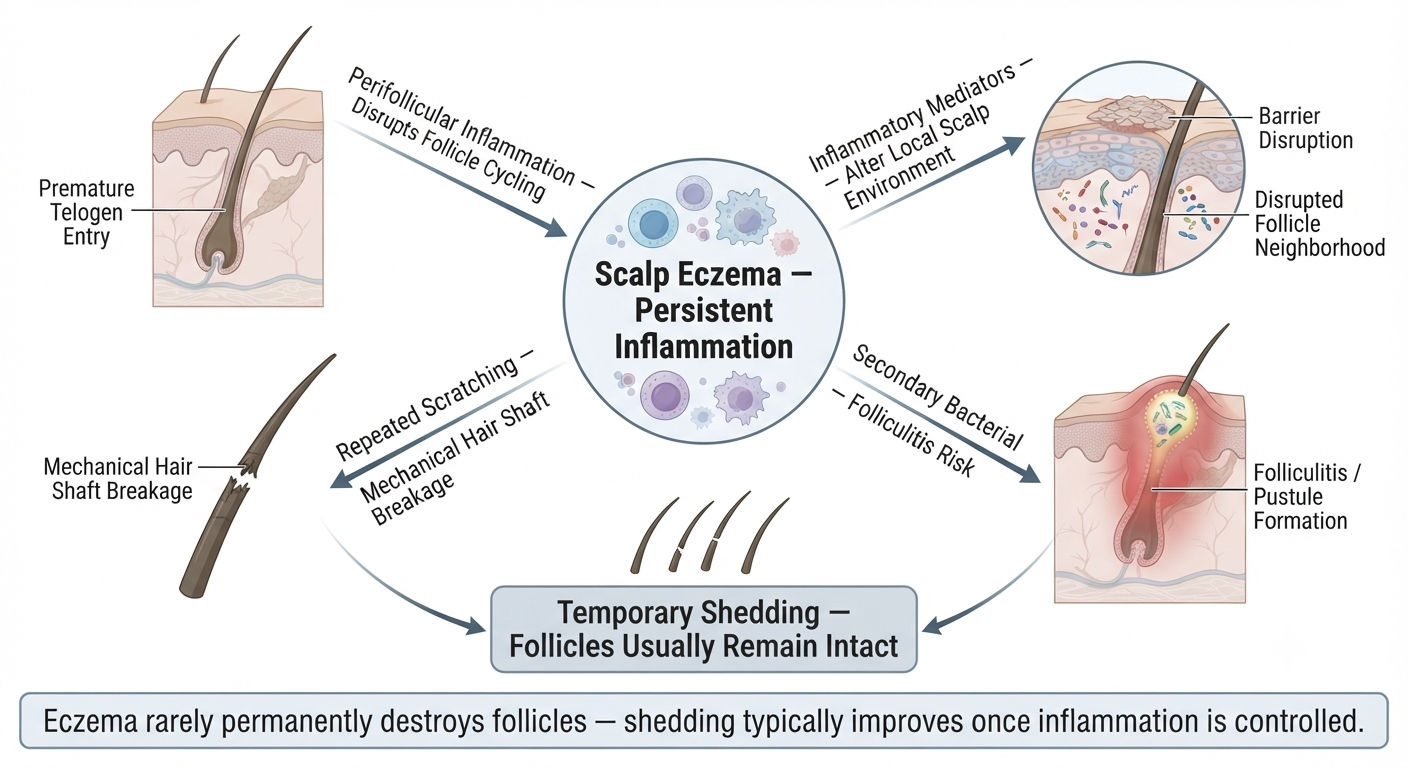
The inflammation itself rarely destroys healthy hair follicles.
However, eczema may contribute to temporary hair shedding in several ways.
These include:
- Ongoing inflammation around follicles
- Frequent scratching
- Mechanical breakage of the hair
- Secondary bacterial infection in some cases
When the scalp recovers, hair growth often returns to its previous pattern.
Why does inflammation matter?
Healthy follicles function best in a healthy scalp.
Inflammation can disturb the normal hair cycle and increase the number of hairs entering the resting phase.
This may lead to increased shedding several weeks or months after a severe flare-up.
Importantly, this type of shedding is often reversible once the inflammation is controlled.
What can trigger scalp eczema?
Triggers differ between individuals but may include:
- Emotional stress
- Cold or dry weather
- Certain hair care products
- Fragrances or preservatives
- Skin irritation
- Existing eczema elsewhere on the body
For seborrhoeic dermatitis, an inflammatory response to the naturally occurring yeast Malassezia is thought to play an important role.
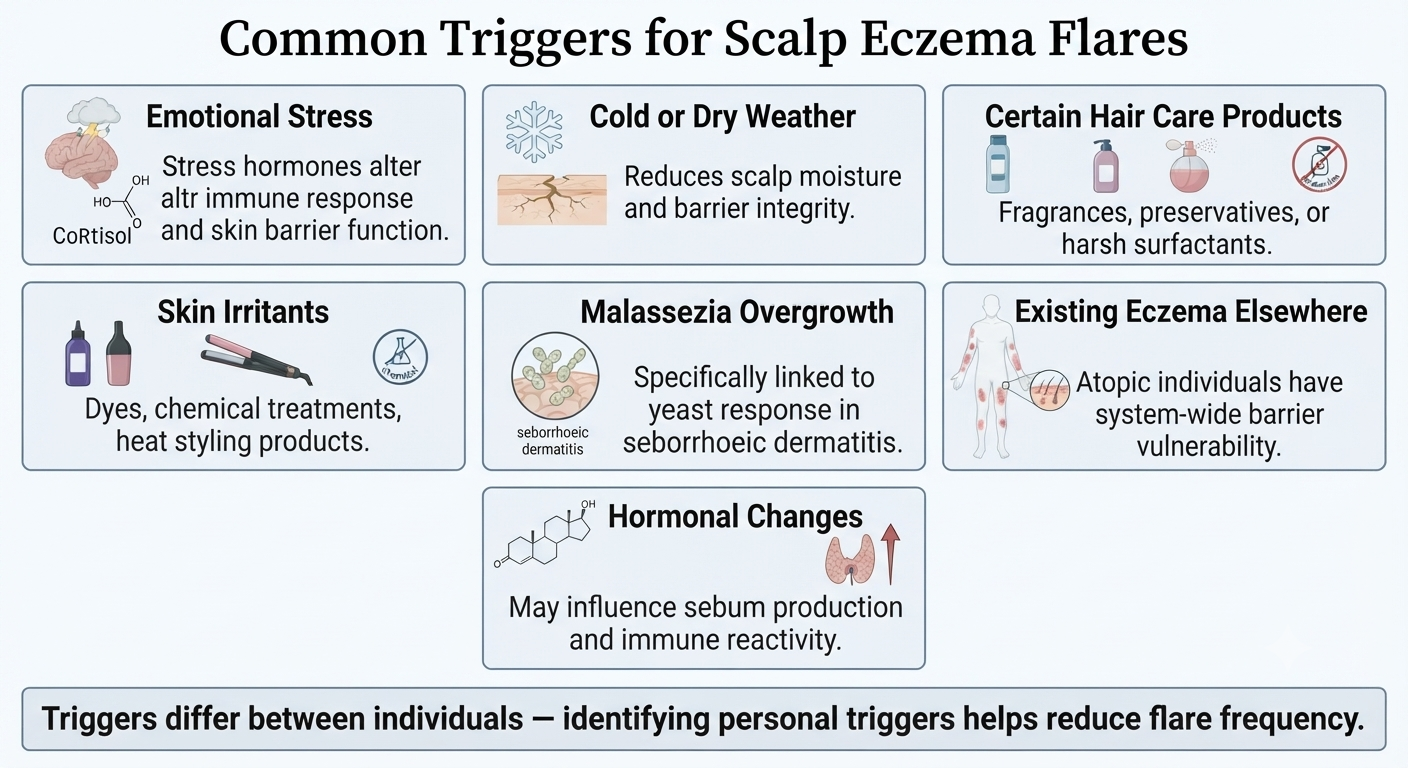
The yeast itself is a normal part of the scalp microbiome, but some people develop an exaggerated inflammatory response to it.
How is scalp eczema diagnosed?
Diagnosis is usually based on:
- A medical history
- Examination of the scalp
- The appearance and distribution of scaling
- Associated skin changes elsewhere on the body
Additional tests are not usually required unless another scalp condition is suspected.
How is it treated?
Treatment aims to reduce inflammation and restore normal scalp health.
Depending on the diagnosis and severity, management may include:
- Medicated shampoos
- Anti-inflammatory topical treatments
- Moisturising products that support the skin barrier
- Avoiding known personal triggers
- Gentle scalp care
The specific treatment plan depends on the type of eczema and should be guided by a healthcare professional.
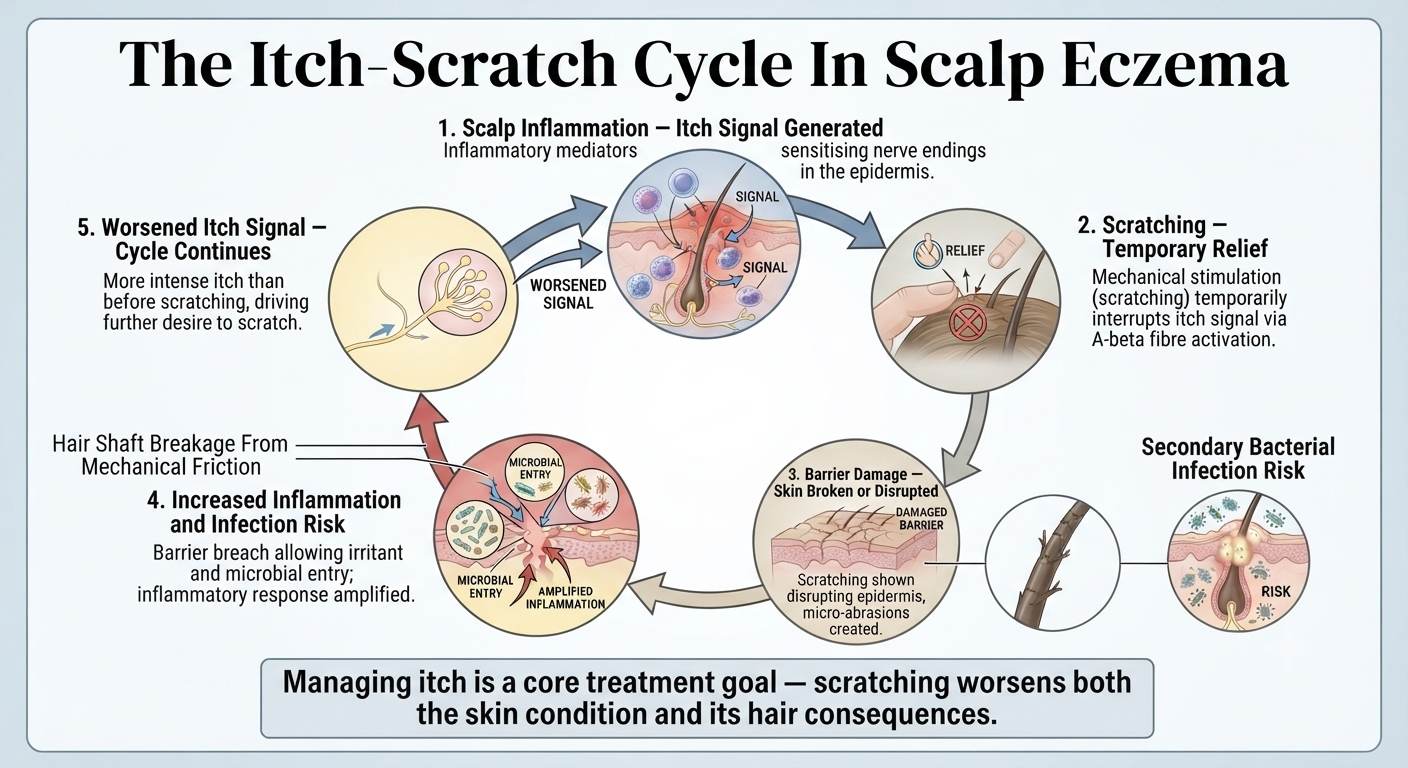
Can scratching make things worse?
Yes.
Persistent scratching may:
- Damage the skin barrier
- Increase inflammation
- Cause small breaks in the skin
- Increase the risk of infection
- Lead to additional hair breakage
Managing itch is therefore an important part of treatment.
When should you seek medical advice?
Medical assessment is advisable if:
- The scalp remains inflamed despite over-the-counter treatments.
- Hair shedding becomes significant.
- The scalp becomes painful.
- There is pus, crusting or bleeding.
- Large patches of hair loss develop.
- Symptoms repeatedly return despite treatment.
Not every flaky scalp is eczema, and an accurate diagnosis is important before starting treatment.
Healthy scalp, healthier hair
Scalp eczema is primarily a skin condition, but its effects can extend to the hair when inflammation becomes persistent or severe.
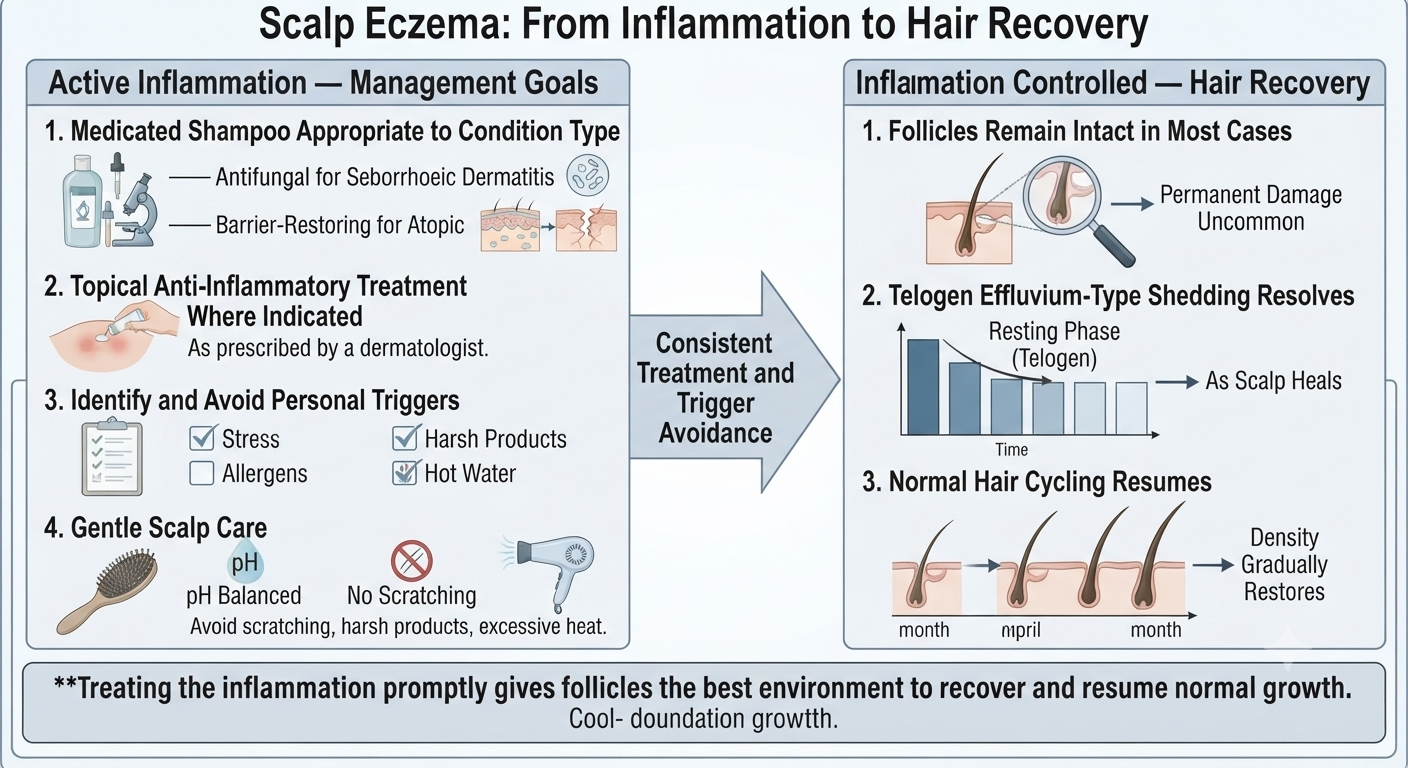
In most cases, the follicles remain healthy, and any associated hair shedding improves once the scalp returns to a healthier state. Treating the inflammation promptly, avoiding unnecessary irritation and maintaining good scalp care provide the best opportunity for both symptom control and healthy hair growth.
Author: Dr. Priya Goswami
Medical review: Dr. Denis Broun
Next step
If you notice coverage changes without increased shedding, confirm what process is occurring.
Take the Hair Assessment to have a physician review your pattern, identify whether miniaturization is present, and determine appropriate staging and next steps.
Add Comment