Hairline changes are often one of the earliest visible signs of progressive hair thinning.
For many individuals, the shift happens slowly:
- the temples recede slightly
- the frontal edge loses density
- corners become more visible
- styling patterns begin to change
Because these changes usually develop over many years, they may go unnoticed until old photographs reveal the difference clearly.
The gradual movement of the hairline reflects long-term biological changes occurring within scalp follicles.
The frontal scalp is especially sensitive
Certain scalp regions are more vulnerable to progressive thinning than others.
The frontal hairline and temples are particularly sensitive to:
- genetic influences
- hormonal signalling
- follicle miniaturisation
This is why hairline recession commonly begins in these areas first.
Hairline follicles shrink progressively
In androgenetic alopecia, follicles near the hairline gradually become smaller over repeated growth cycles.
This process leads to:
- shorter hairs
- finer hairs
- reduced pigment
- decreased scalp coverage
Over time, some hairs become so fine that they contribute very little visible density.
Miniaturisation happens slowly
Hairline changes rarely occur suddenly.
Each follicle cycles independently through:
- growth phases
- transition phases
- resting phases
As miniaturisation progresses gradually, the hairline slowly loses definition rather than disappearing abruptly.
Temple recession often appears first
The temples commonly show the earliest visible changes.
This may appear as:
- mild corner recession
- increased spacing between hairs
- softer frontal density
- more scalp visibility under light
In many people, temple changes begin years before more extensive thinning develops.
Hair diameter decreases before hairs disappear
One of the first changes is reduction in shaft thickness rather than immediate hair loss.
Miniaturised hairs:
- occupy less space
- provide weaker coverage
- reflect light differently
This makes the hairline appear less dense even while many follicles are still active.
Hairlines naturally mature with age
Not all hairline movement represents pathological hair loss.
Many adults experience a gradual “maturing” of the hairline with age.
This may involve:
- slight temple recession
- subtle reshaping of the frontal edge
- stabilisation without major progression
The distinction between a mature hairline and progressive thinning depends largely on ongoing miniaturisation and continued density reduction.
Hairline asymmetry is common
Hairline recession often develops unevenly.
One temple may recede more quickly than the other due to:
- natural follicular variation
- genetic distribution patterns
- differences in local follicle sensitivity
Mild asymmetry is extremely common.
Hairstyles can temporarily conceal changes
Early hairline thinning may remain hidden through:
- forward styling
- increased hair length
- textured cuts
- volumising products
As thinning progresses, however, these strategies often become less effective because follicular density continues declining underneath.
Lighting strongly affects visibility
Hairline thinning often appears worse:
- under direct sunlight
- beneath overhead lighting
- in photographs
- when hair is wet
Bright light increases scalp contrast and exposes reduced frontal density more clearly.
Stress can temporarily exaggerate hairline changes
Temporary shedding conditions such as telogen effluvium may increase visible thinning near the frontal scalp.
This can make the hairline appear:
- thinner
- less defined
- more transparent
In some cases, density partially improves once normal cycling resumes.
Inflammation and scalp conditions may contribute
Scalp inflammation can sometimes worsen visible hairline thinning.
Conditions affecting the scalp barrier may influence:
- follicle health
- shaft quality
- breakage rates
- local shedding patterns
Persistent redness, itching, scaling, or tenderness may require separate medical evaluation.
The brain adapts to slow progression
Because hairline changes occur gradually, daily visual adaptation makes progression difficult to detect.
Many people only recognise significant change after:
- comparing old photographs
- noticing altered styling needs
- observing increased scalp visibility
The slow pace of follicular miniaturisation often delays recognition for years.
Hairline evolution reflects follicle biology
Hairline changes develop gradually because follicles slowly alter their growth behaviour across repeated hair cycles.
As susceptible follicles miniaturise, hairs become progressively finer, shorter, and less capable of providing scalp coverage. Over time, this creates the appearance of recession and reduced frontal density.
The process is usually slow, progressive, and shaped by a combination of genetics, ageing, hormonal influences, and long-term follicular change.
Author: Dr. Priya Goswami
Medical review: Dr. Denis Broun
———
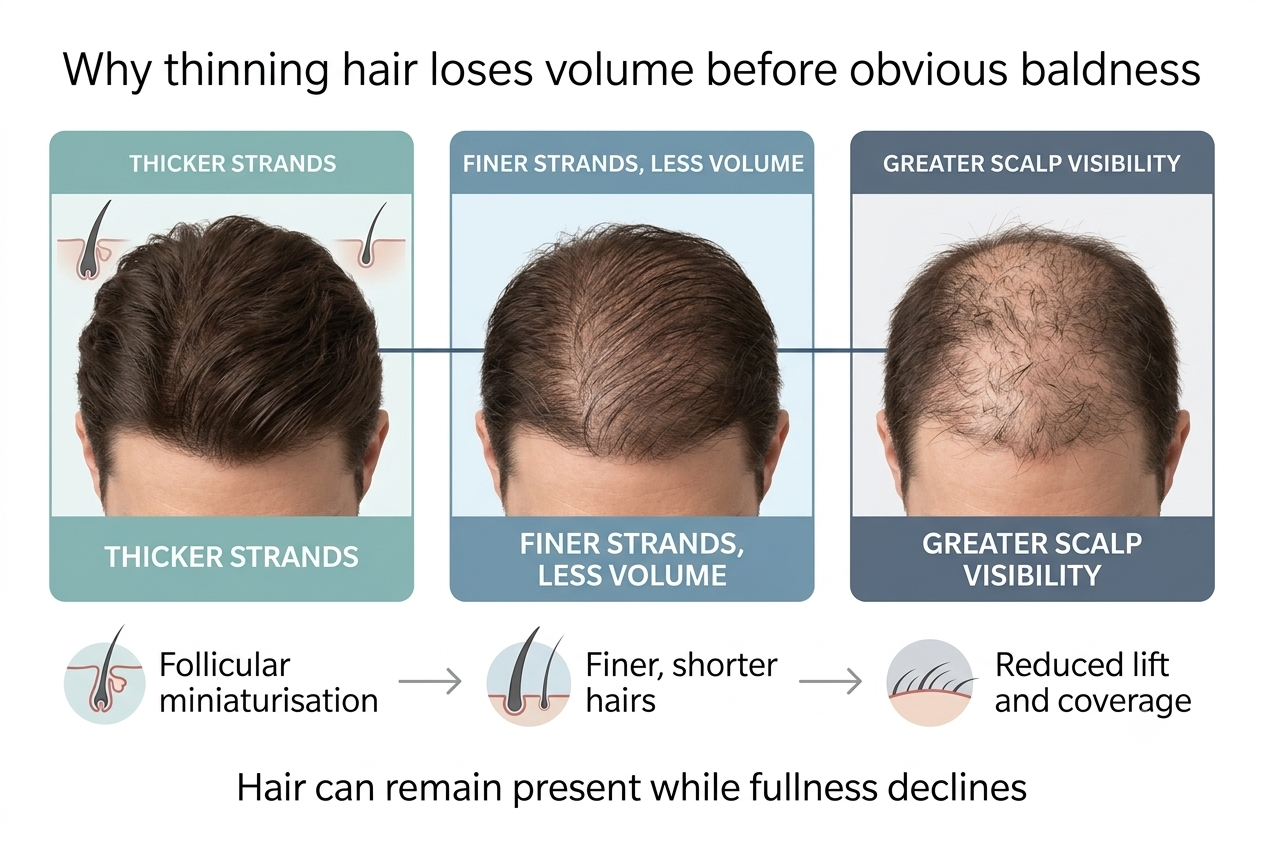
- Why thinning hair loses volume before baldness appears
Many people notice reduced hair volume long before they notice obvious bald spots.
Hair may begin to feel:
- flatter
- lighter
- less dense
- harder to style
- thinner at the roots
This early loss of fullness often represents one of the first visible signs of progressive hair thinning.
In many common forms of hair loss, the follicles continue producing hair for years before complete follicular inactivity occurs. During this period, the hair gradually loses thickness and coverage, causing volume reduction before visible baldness develops.
Hair volume depends on more than hair count
The appearance of fullness is influenced by several factors, including:
- shaft thickness
- hair density
- curl pattern
- strand stiffness
- growth direction
- scalp contrast
A person can therefore lose substantial visible volume even while retaining many active follicles.
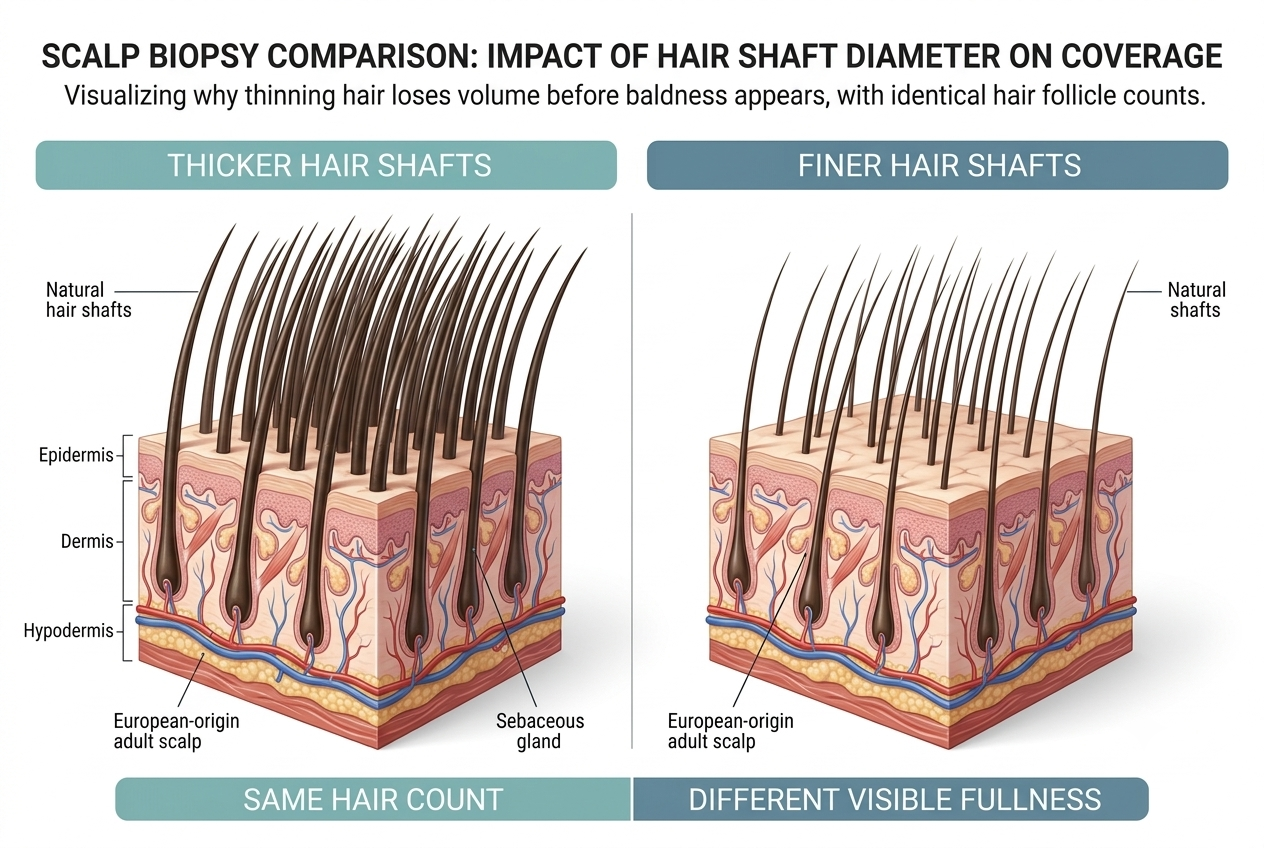
Hair shafts gradually become thinner
One of the earliest biological changes in androgenetic alopecia is follicle miniaturisation.
Affected follicles begin producing:
- finer hairs
- shorter hairs
- weaker fibres
These thinner strands occupy less physical space on the scalp.
As a result, overall fullness decreases gradually.
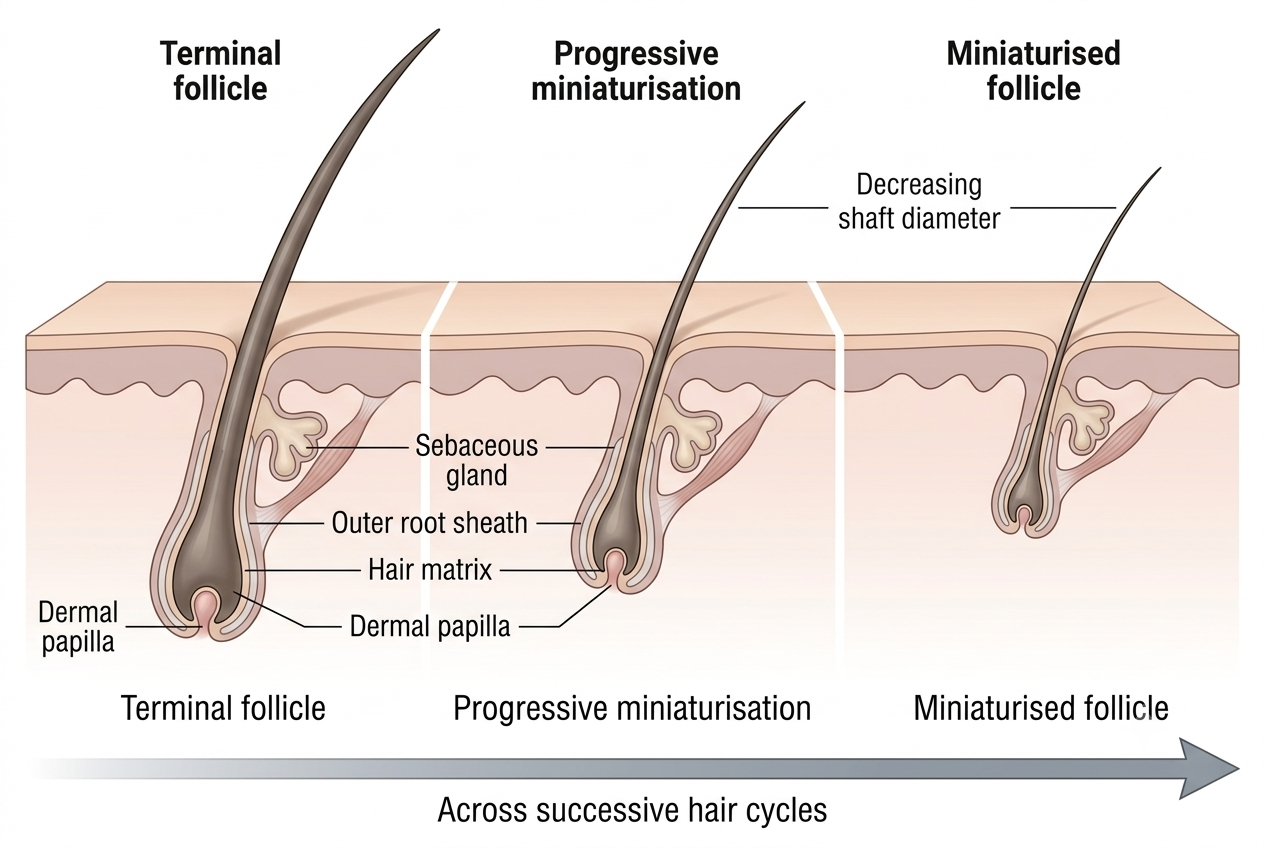
Diameter loss affects coverage dramatically
Hair thickness has a major influence on visual density.
Even small reductions in shaft diameter can significantly reduce:
- scalp coverage
- shadow formation
- volume perception
Because thicker hairs overlap more effectively, miniaturised hairs provide much less visual fullness.
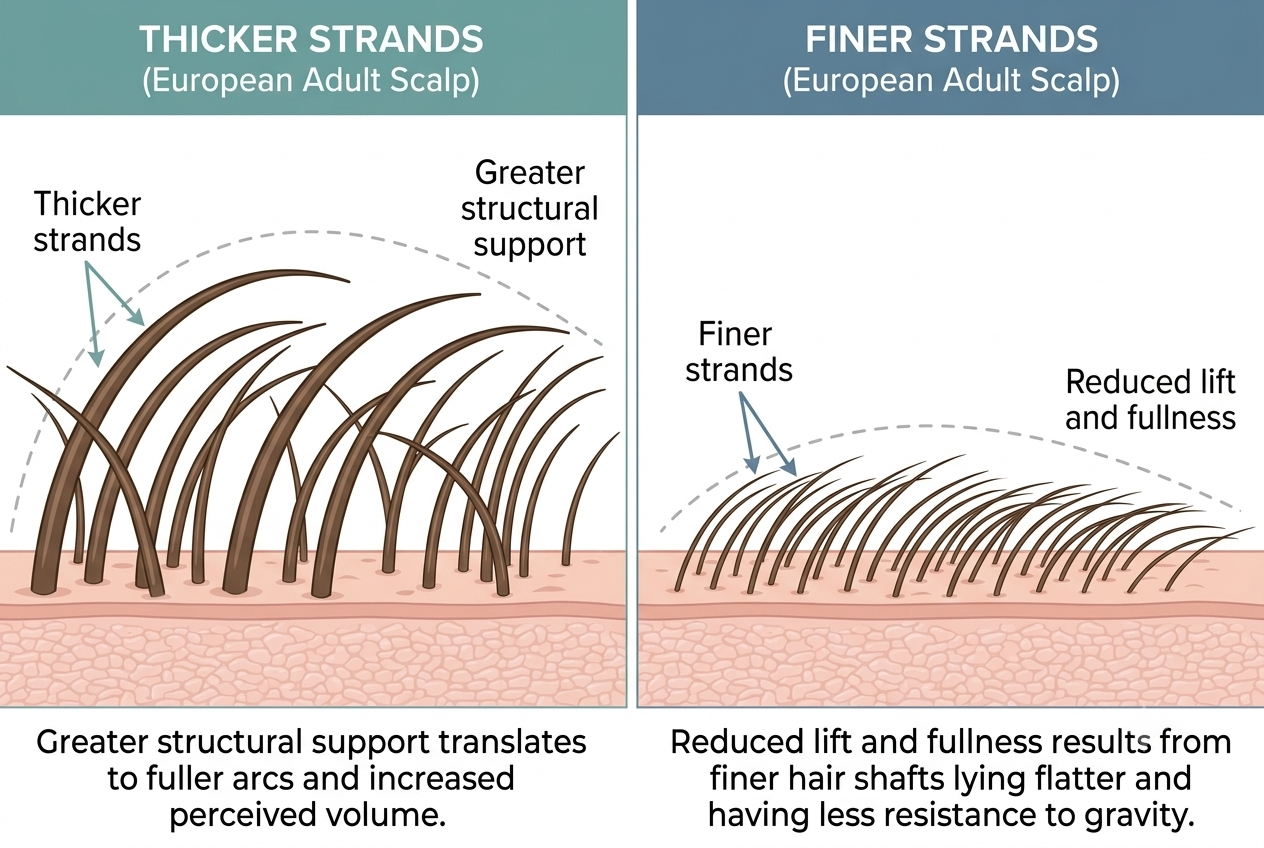
Miniaturised hairs collapse more easily
Healthy terminal hairs help maintain lift and structure.
Finer hairs:
- bend more easily
- flatten against the scalp
- separate more readily
This causes thinning hair to lose body and movement before true bald areas appear.
Hair becomes harder to style
Reduced volume often changes how hair behaves during styling.
People commonly notice:
- hairstyles no longer holding shape
- less lift at the roots
- increased scalp visibility
- reduced texture
These changes frequently occur gradually over several years.
The scalp becomes easier to see
As volume decreases:
- more light reaches the scalp
- part lines widen
- crown visibility increases
This is especially noticeable:
- under bright lighting
- after washing
- when hair is wet
- in photographs
The scalp may appear increasingly visible even when hair remains present across most areas.
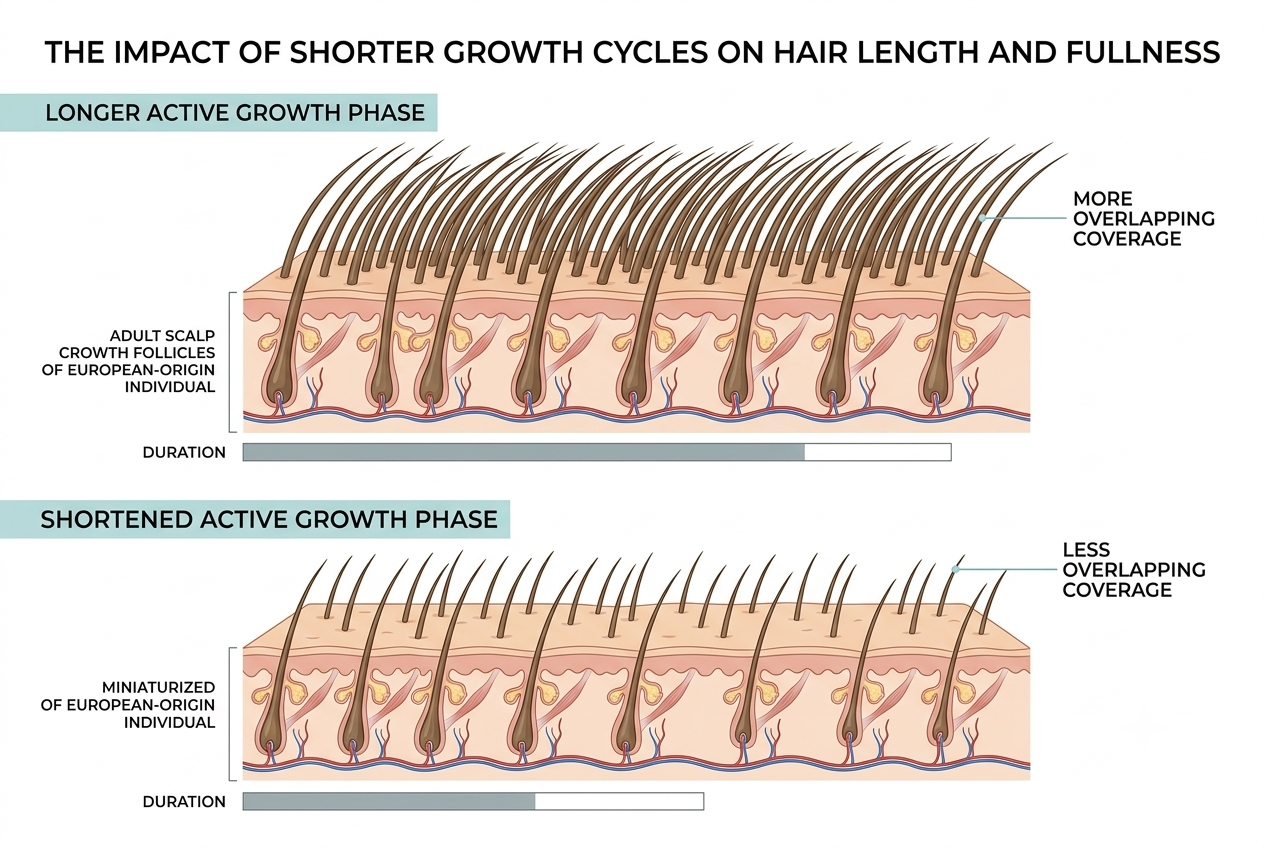
Growth phases shorten over time
Healthy scalp follicles remain in active growth for years.
As follicles miniaturise:
- growth phases shorten
- hairs stop growing sooner
- maximum strand length decreases
Shorter hairs contribute less layering and fullness, further reducing apparent volume.
Curl and texture may weaken
Hair texture often changes alongside volume loss.
Miniaturised follicles may produce hairs that are:
- softer
- straighter
- less structured
- less resilient
This can reduce natural lift and make the hair appear flatter overall.
Density reduction develops unevenly
Not all follicles miniaturise at the same speed.
Some regions retain stronger density while others progressively thin.
This uneven change often creates:
- flatter crown areas
- thinning temples
- widened central parts
- inconsistent texture
before obvious bald patches emerge.
Volume loss can occur without major shedding
Many people expect hair loss to involve dramatic shedding.
However, progressive thinning often develops through gradual shaft miniaturisation rather than sudden hair disappearance.
Follicles continue cycling, but replacement hairs become progressively finer with each cycle.
Ageing also contributes
Natural ageing affects hair volume independently of genetic hair loss.
With age:
- shaft diameter may decline
- growth slows
- scalp oil distribution changes
- fibre strength decreases
These changes can amplify the appearance of reduced fullness.
Hair products may temporarily mask changes
Volumising products can temporarily improve the appearance of density by:
- increasing strand separation
- lifting roots
- thickening the hair surface
However, these cosmetic effects do not alter the underlying follicular process.
Volume changes often precede visible baldness
Visible baldness usually develops later in the thinning process.
Before that stage, many follicles still produce hair, but the hairs are too fine and sparse to create normal fullness.
This explains why reduced volume is often one of the earliest and most noticeable symptoms of progressive hair thinning.
Fullness declines before follicles disappear
Thinning hair loses volume before baldness appears because follicles gradually produce finer, weaker hairs long before they stop functioning completely.
As shaft diameter decreases and scalp coverage weakens, hair becomes flatter, less dense, and more transparent under light. These progressive changes reduce visual fullness even while many hairs remain present.
For many individuals, declining volume represents the earliest visible sign of ongoing follicular miniaturisation.
Author: Dr. Priya Goswami
Medical review: Dr. Denis Broun
Next step
If you notice coverage changes without increased shedding, confirm what process is occurring.
Take the Hair Assessment to have a physician review your pattern, identify whether miniaturization is present, and determine appropriate staging and next steps.
Add Comment