When people begin researching treatments for male pattern hair loss, they often encounter the same question.
Should you use finasteride?
Should you use minoxidil?
Or should you use both together?
The answer depends on your diagnosis, your stage of hair loss and your treatment goals.
For many people with androgenetic alopecia, combination therapy offers greater potential than using either treatment on its own. That does not mean it is automatically the right choice for everyone.
The two treatments work differently
Although both treatments are used for androgenetic alopecia, they target different parts of the problem.
Finasteride primarily reduces the production of DHT, helping protect susceptible follicles from continued miniaturisation.
Minoxidil works directly at the follicle level by encouraging hairs to remain in the active growth phase for longer and by increasing the size of miniaturised follicles.
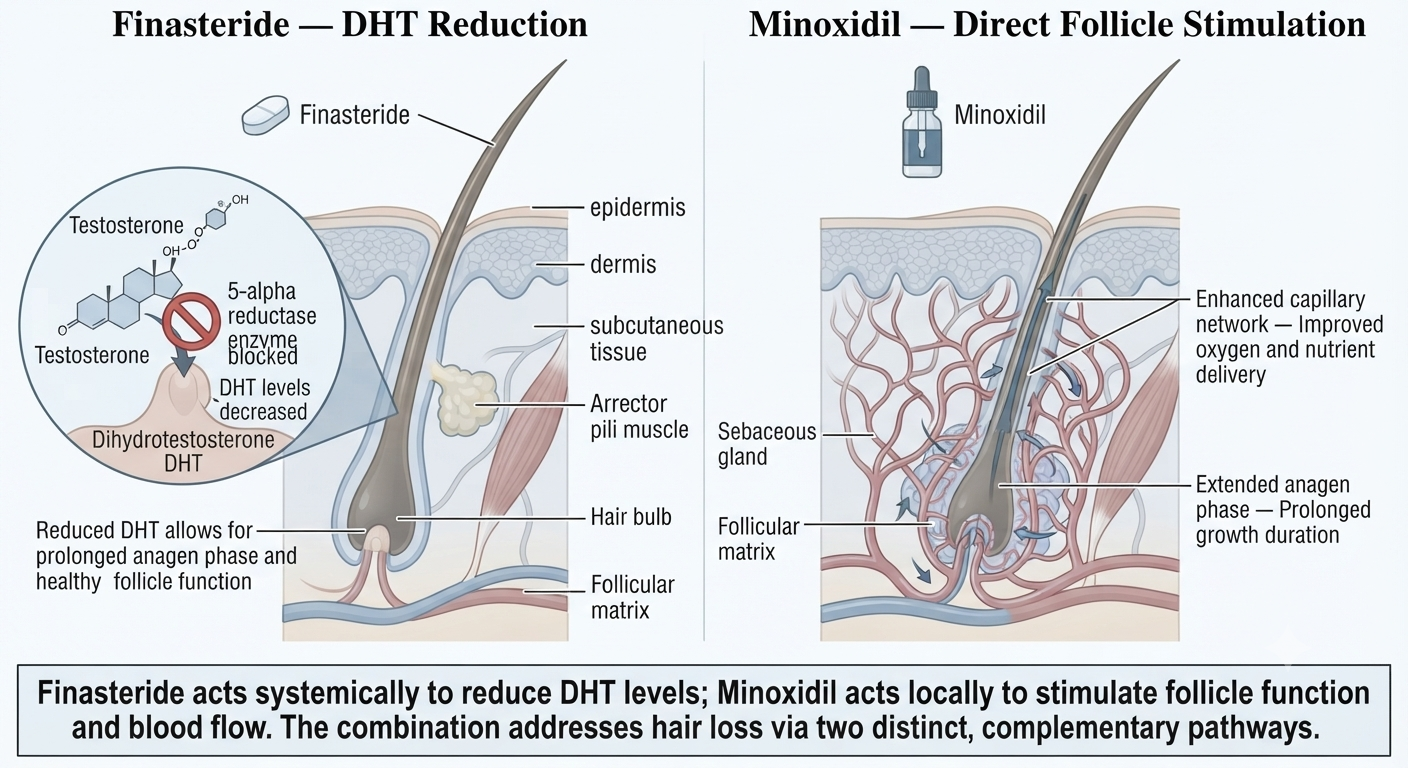
Because their mechanisms differ, their effects may complement one another.
What does the research show?
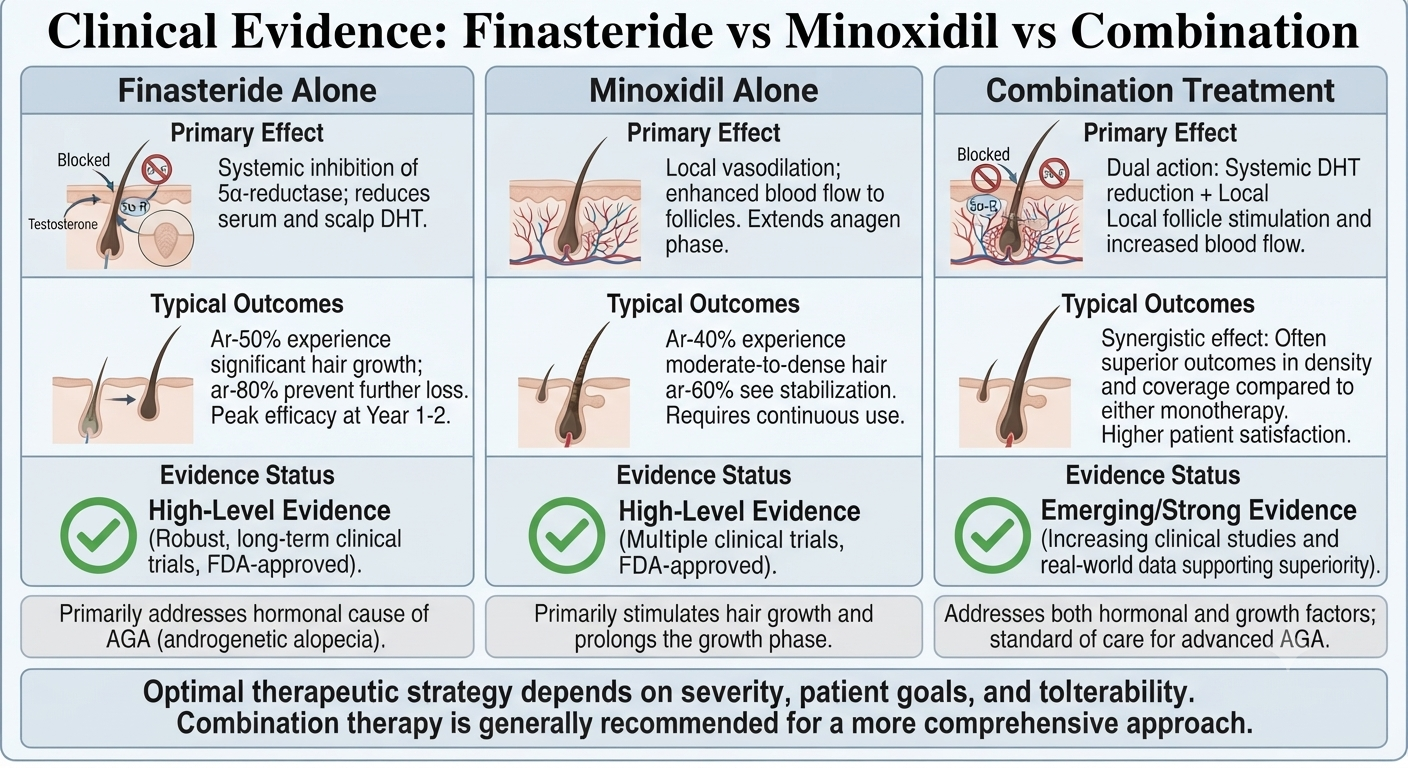
Multiple clinical studies have compared:
- Finasteride alone
- Minoxidil alone
- Combination treatment
Overall, the evidence suggests that patients receiving both treatments often experience:
- Greater increases in hair density
- Improved hair counts
- Better preservation of existing hair
- Higher overall satisfaction in many studies
The benefit is not dramatic for every individual, but the combination generally performs better than either treatment alone in appropriately selected patients.
Who is most likely to benefit?
Combination therapy is commonly considered for people who:
- Have confirmed androgenetic alopecia
- Are in the early or moderate stages of hair loss
- Want to maximise preservation of existing hair
- Understand that treatment requires long-term commitment
Earlier intervention often produces better outcomes because more functioning follicles remain available to respond.
Does everyone need both treatments?
No.
Treatment should be individualised.
Some people achieve satisfactory results with a single therapy.
Others may begin with one treatment and add another later if further improvement is desired or if hair loss continues to progress.
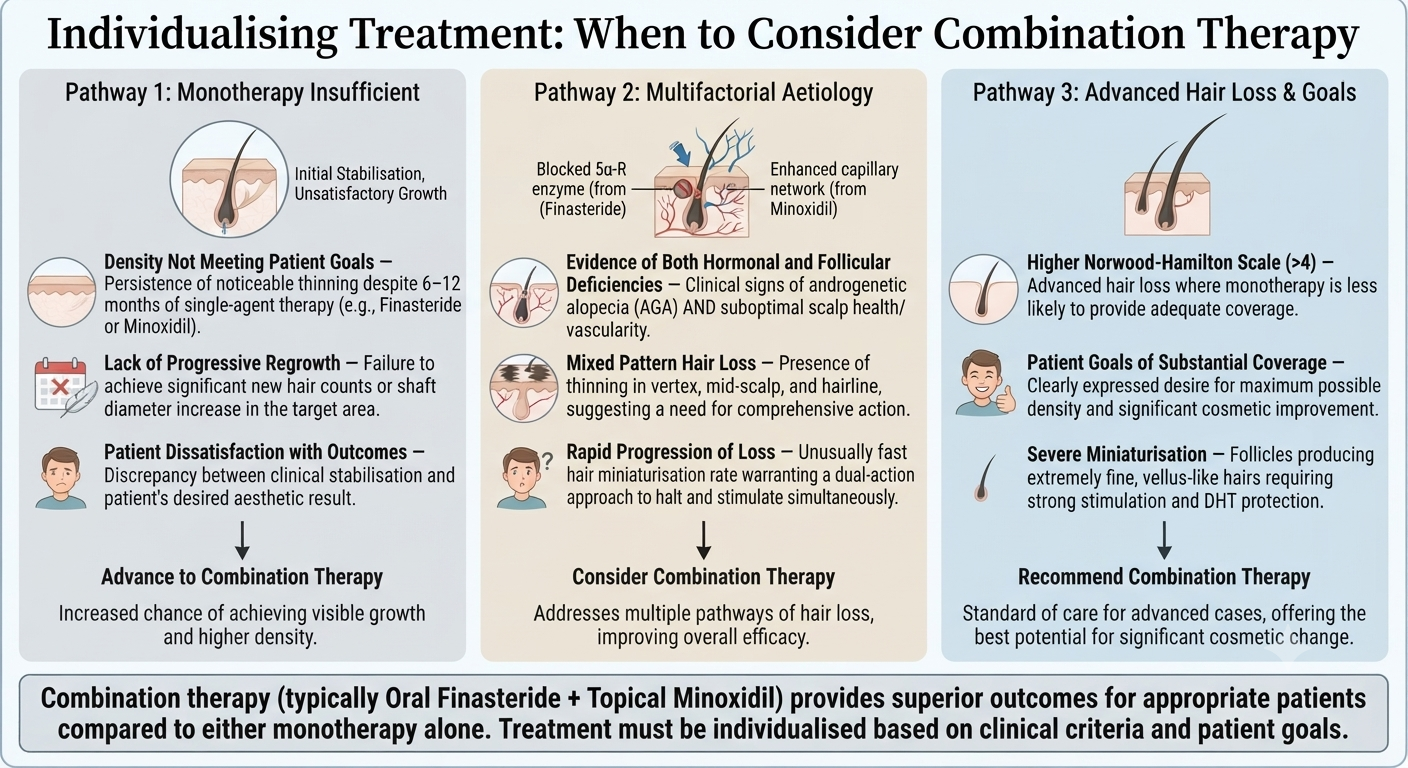
The most appropriate approach depends on factors such as:
- Age
- Pattern of hair loss
- Medical history
- Personal preferences
- Tolerance of treatment
There is no universal starting point that suits every patient.
How long does combination therapy take to work?
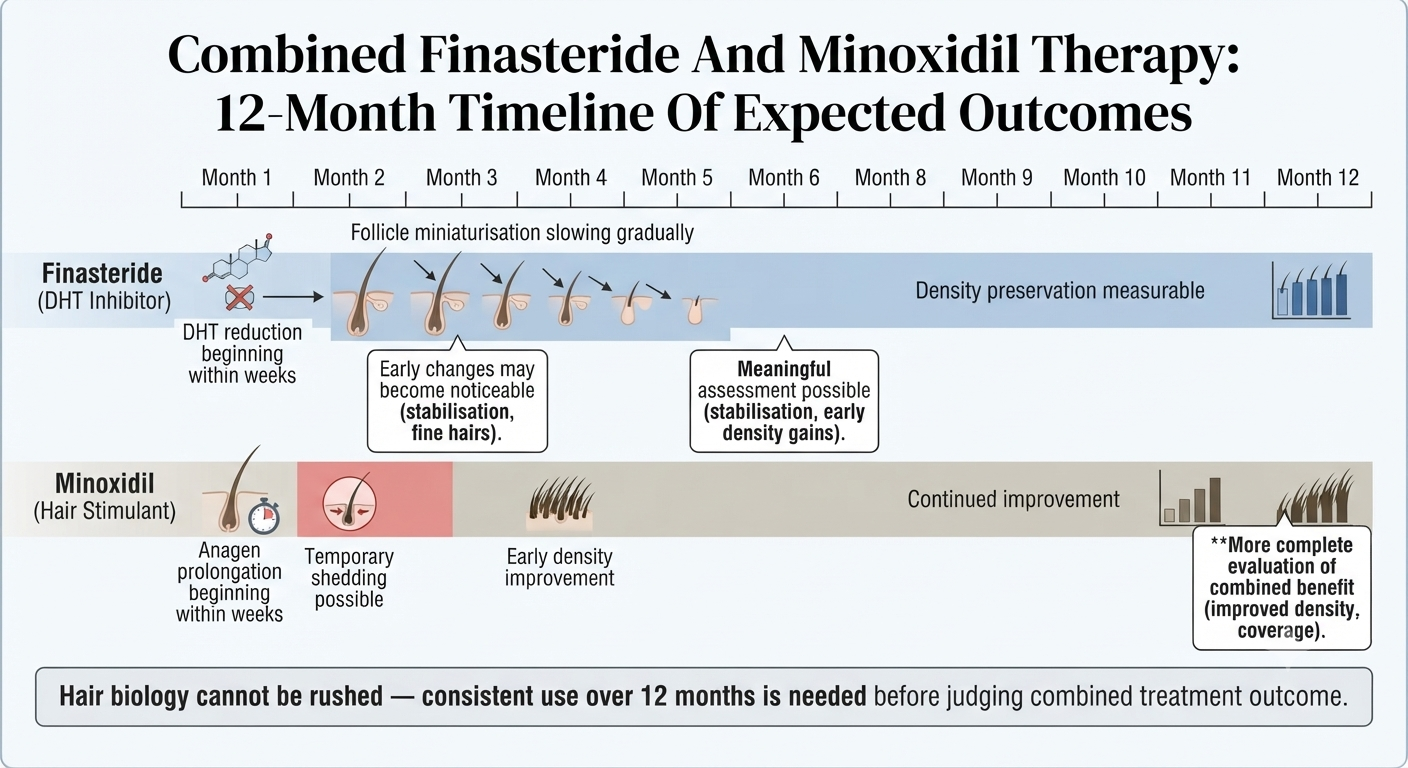
Neither treatment produces immediate results.
Most people require:
- Three to four months before early changes become noticeable
- Around six months before meaningful assessment
- Approximately twelve months for a more complete evaluation
Because hair grows slowly, patience remains essential even when both treatments are used together.
Are there disadvantages?
Every medical treatment has potential limitations.
For combination therapy, these may include:
- The need for consistent long-term use
- Cost over time
- Remembering multiple treatments
- Potential adverse effects associated with each medicine
Not everyone experiences side effects, but they should form part of the discussion before treatment begins.
What if treatment is stopped?
Both treatments help manage androgenetic alopecia rather than permanently eliminating it.
If treatment is discontinued, the underlying process usually resumes.
Over time, many of the gains achieved during treatment are gradually lost as susceptible follicles return to their natural course.
This is why long-term maintenance is usually discussed during treatment planning.
Measuring success realistically
The goal of combination therapy is not always dramatic regrowth.
Success may include:
- Slower progression of hair loss
- Increased hair thickness
- Improved density
- Better cosmetic coverage
- Preservation of existing follicles
These improvements often become clearer through standardised photographs than through daily observation in the mirror.
Looking at the whole picture
Finasteride and minoxidil address different aspects of androgenetic alopecia, which helps explain why using them together may produce better outcomes than either treatment alone.
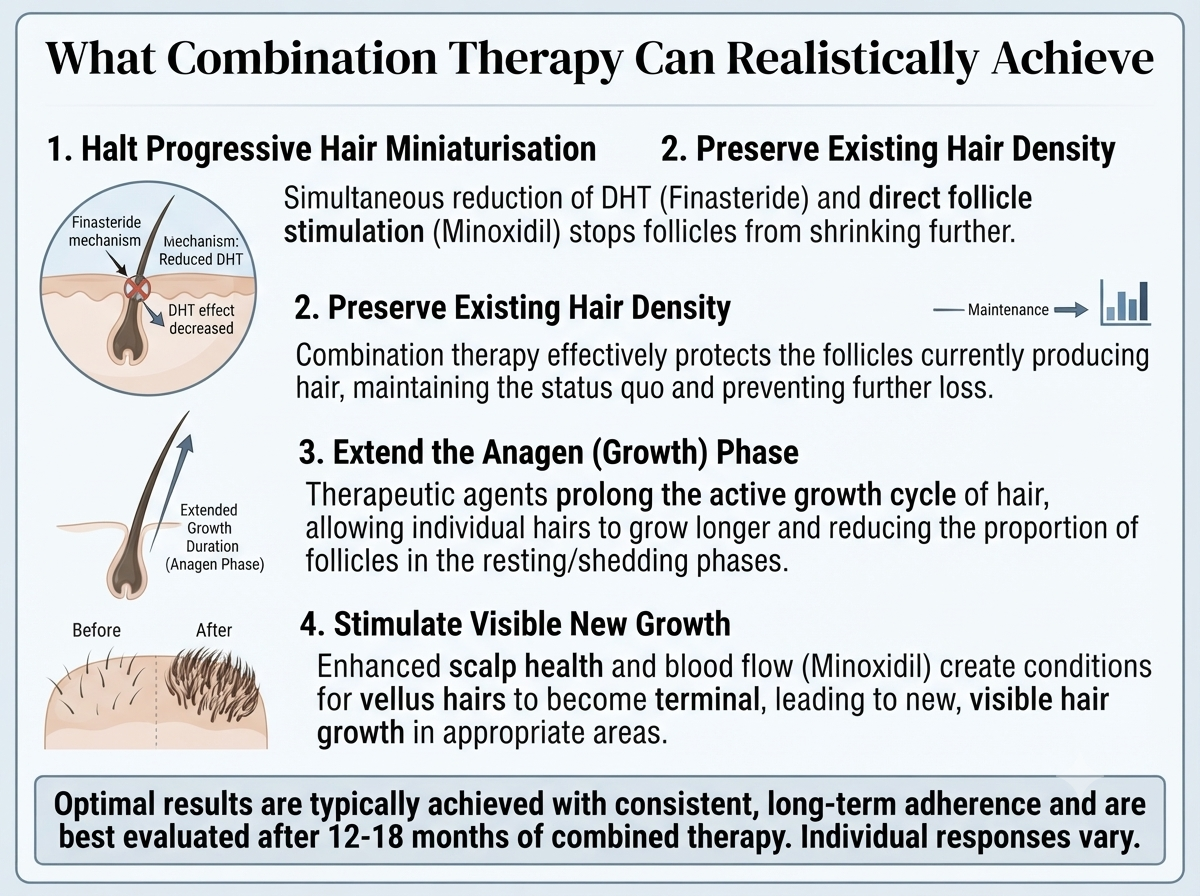
However, combination therapy is not automatically necessary for every individual, nor does it guarantee complete restoration of lost hair. The most appropriate treatment plan begins with an accurate diagnosis, realistic expectations and a discussion of the potential benefits and limitations of each option. For many people, preserving existing hair is just as important as encouraging new growth, and combination therapy may help achieve both goals when used appropriately.
Author: Dr. Priya Goswami
Medical review: Dr. Denis Broun
Next step
If you notice coverage changes without increased shedding, confirm what process is occurring.
Take the Hair Assessment to have a physician review your pattern, identify whether miniaturization is present, and determine appropriate staging and next steps.
Add Comment