Hair is often described as a reflection of overall health.
There is some truth in that.
Hair follicles need a steady supply of nutrients to grow healthy hair. When the body is short of essential nutrients, it prioritises vital organs over hair growth. As a result, the hair cycle may slow down or more hairs may enter the shedding phase.
That said, diet is not the explanation for every case of hair loss.
If your hair loss is primarily genetic, eating perfectly will not prevent it. But poor nutrition can make many hair problems worse and may contribute to excessive shedding.
Hair is built from protein
Hair is made primarily from a protein called keratin.
Without enough dietary protein, the body may reduce hair production to conserve resources for more important biological functions.
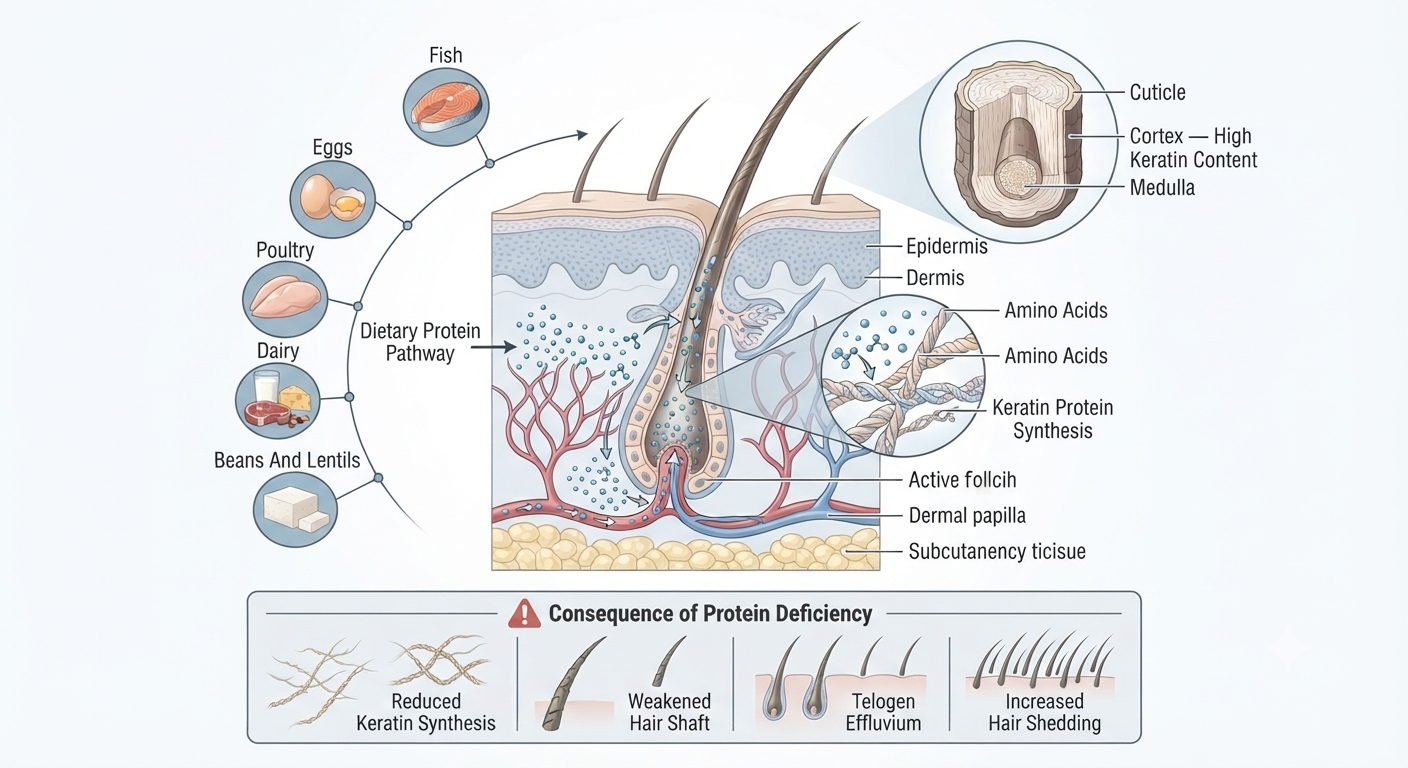
Good sources of protein include:
- Fish
- Eggs
- Poultry
- Lean meat
- Dairy products
- Beans
- Lentils
- Tofu
Most people eating a balanced diet meet their protein needs, but restrictive diets may increase the risk of deficiency.
Iron helps nourish the follicle
Iron plays an important role in transporting oxygen throughout the body.
Low iron stores, particularly when accompanied by anaemia, have been associated with increased hair shedding in some individuals.
People at higher risk of iron deficiency include:
- Women with heavy menstrual bleeding
- Vegetarians and vegans who do not plan their diet carefully
- People with certain digestive disorders
- Individuals following very restrictive diets
Iron supplements should only be taken when deficiency has been confirmed, as excessive iron can also be harmful.
Zinc, vitamin D and B vitamins
Several micronutrients contribute to normal follicle function.
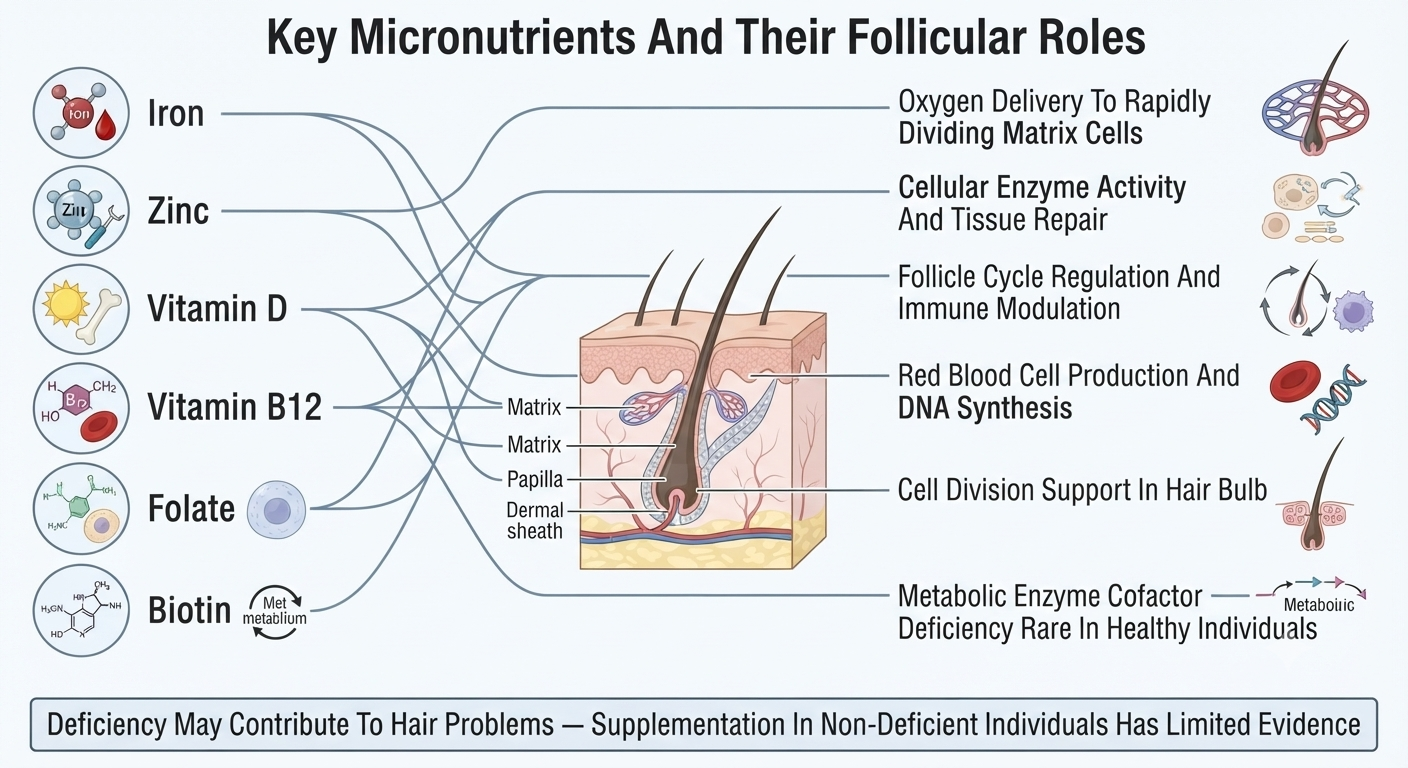
These include:
- Zinc
- Vitamin D
- Vitamin B12
- Folate
- Biotin
- Selenium
Deficiencies may contribute to hair problems in susceptible individuals.
However, there is little evidence that taking high-dose supplements improves hair growth when levels are already normal.
More is not necessarily better.
Healthy fats also have a role
Essential fatty acids contribute to healthy skin and scalp function.
Foods that provide beneficial fats include:
- Oily fish
- Nuts
- Seeds
- Olive oil
- Avocados
These foods support overall health and may help maintain the scalp’s normal barrier function, although they are not specific treatments for hair loss.
Can crash diets trigger shedding?
Yes.
Rapid weight loss and severe calorie restriction are well-recognised triggers for telogen effluvium, a temporary form of increased hair shedding.
The shedding often begins two to three months after the nutritional stress occurs.
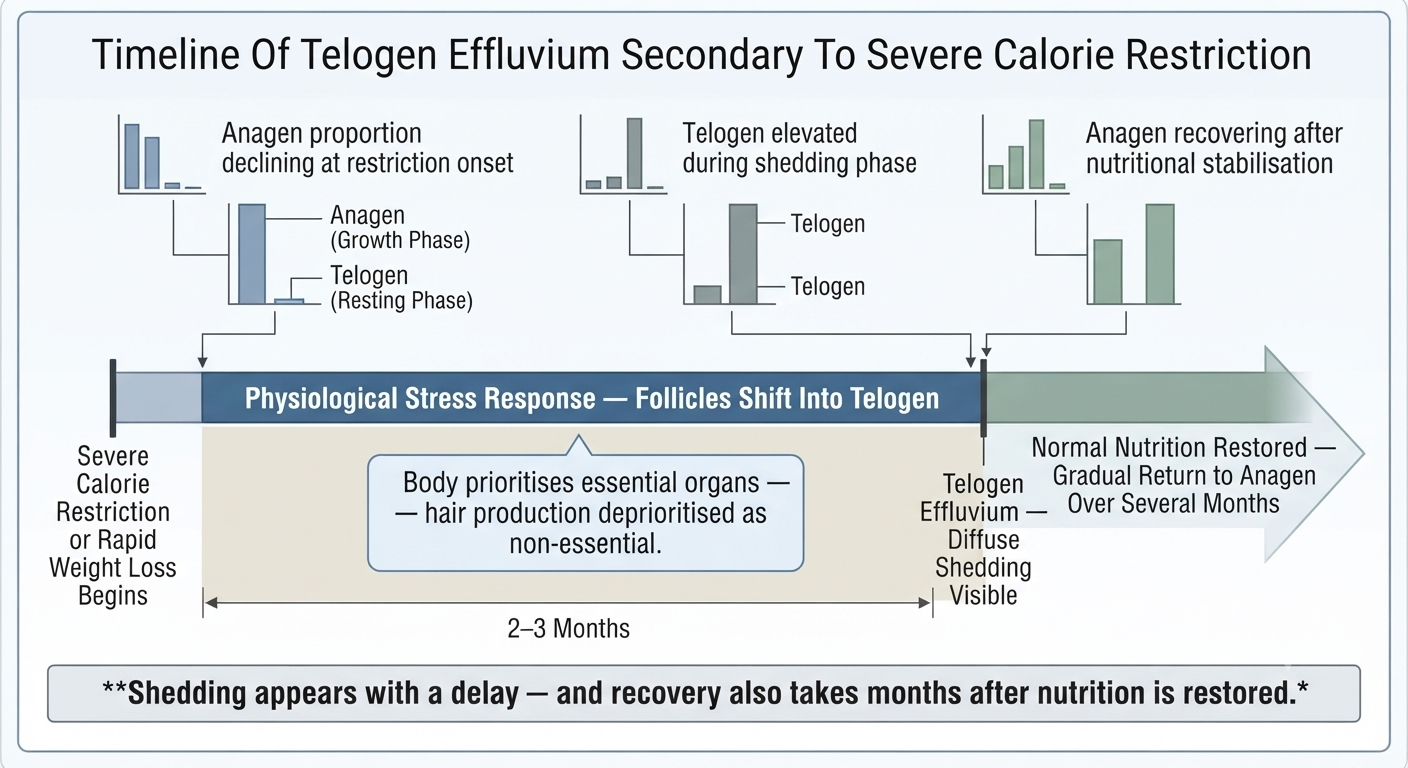
Fortunately, once normal nutrition is restored, many people gradually recover over several months.
What about supplements marketed for hair growth?
Many products promise thicker, faster-growing hair.
The evidence is mixed.
Supplements may be appropriate when a genuine deficiency has been identified.
For people with normal nutritional status, however, current research provides limited evidence that routine supplementation significantly improves hair growth.
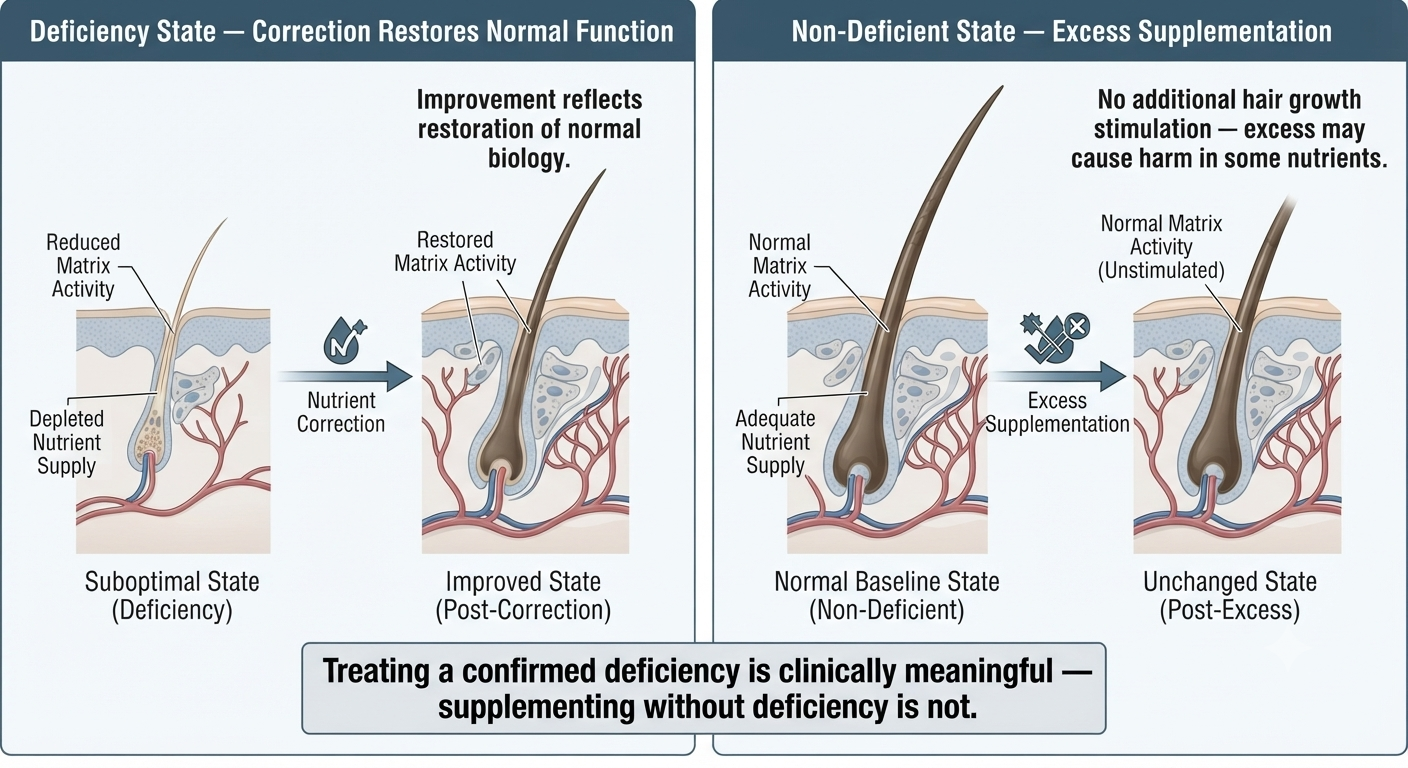
Treating an underlying deficiency is very different from taking supplements “just in case.”
Foods that support healthy hair
Rather than focusing on individual nutrients, most experts recommend an overall balanced eating pattern.
A hair-friendly diet typically includes:
- Adequate protein
- A variety of fruit and vegetables
- Whole grains
- Healthy fats
- Legumes
- Nuts and seeds
- Sufficient fluid intake
This approach supports not only the hair but overall health as well.
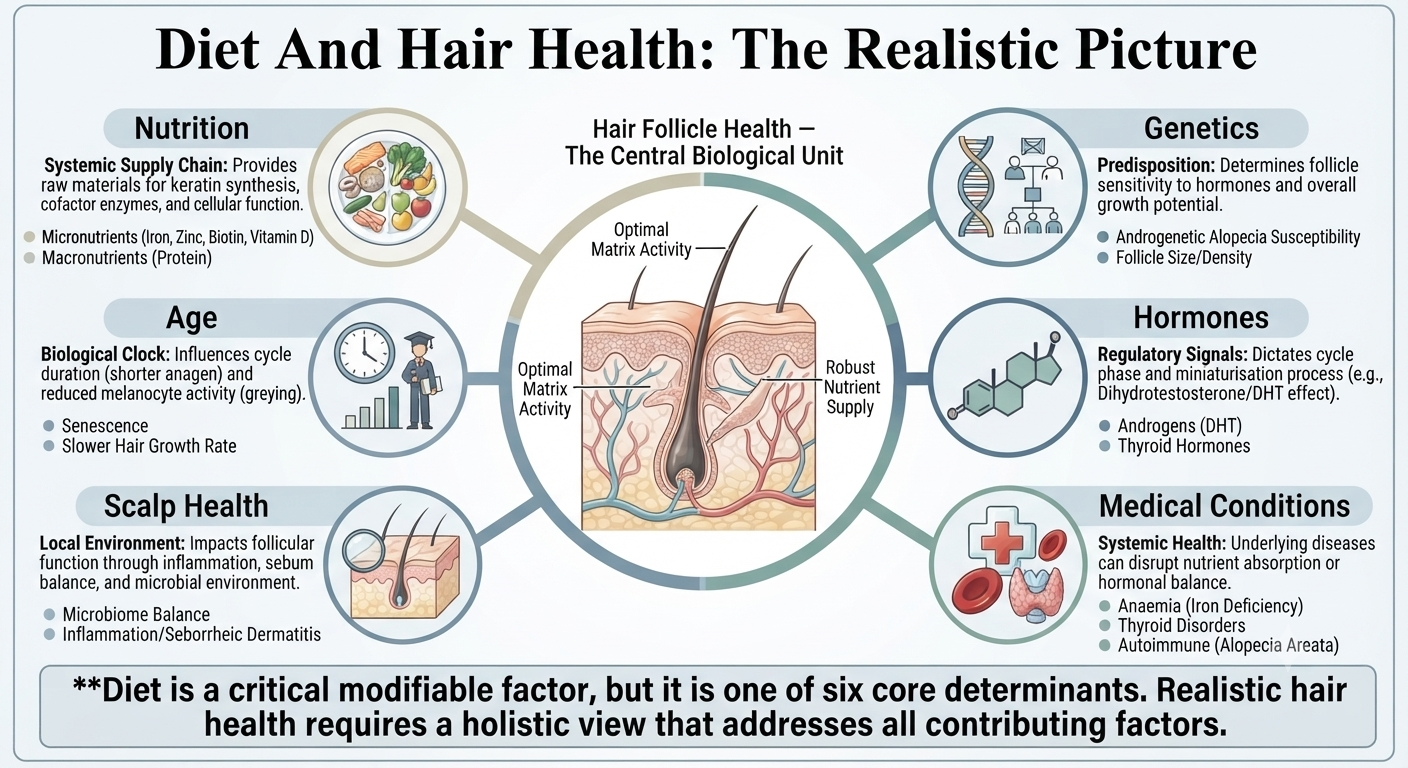
Diet is only one piece of the puzzle
Hair growth depends on many interacting factors.
These include:
- Genetics
- Hormones
- Age
- Scalp health
- Medical conditions
- Medications
- Nutrition
Even the healthiest diet cannot completely overcome inherited androgenetic alopecia, but poor nutrition can make existing problems more noticeable.
Supporting your follicles from within
A healthy diet provides the building blocks that hair follicles need to function normally, but it is not a cure for every form of hair loss.
For people with nutritional deficiencies, correcting those deficiencies may reduce shedding and improve hair quality. For those with genetic or medical causes of hair loss, nutrition should be viewed as supportive rather than curative. The best outcomes usually come from combining a balanced diet with an accurate diagnosis and evidence-based treatment tailored to the underlying cause.
Author: Dr. Priya Goswami
Medical review: Dr. Denis Broun
Next step
If you notice coverage changes without increased shedding, confirm what process is occurring.
Take the Hair Assessment to have a physician review your pattern, identify whether miniaturization is present, and determine appropriate staging and next steps.
Add Comment