A hair transplant does not end when you leave the clinic.
In many ways, the recovery begins at that moment.
The first ten days are the most important part of healing because the newly transplanted follicles are settling into their new location. During this time, careful aftercare helps protect the grafts while the scalp repairs itself.
Knowing what normally happens each day can reduce unnecessary anxiety and help you recognise when something may need medical attention.
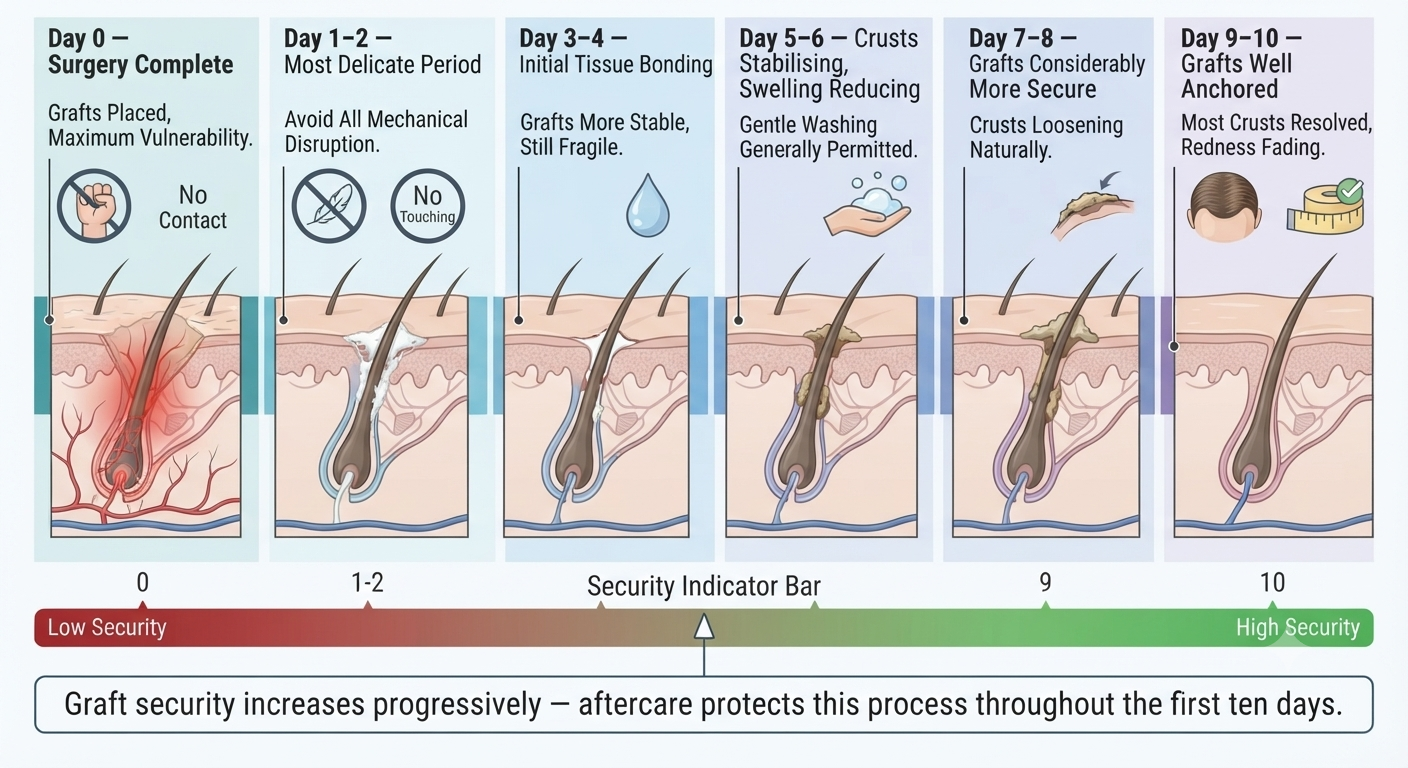
Day 0: The day of surgery
Immediately after the procedure, the scalp usually feels numb because of the local anaesthetic.
You may notice:
- Tiny graft sites across the treated area
- Mild bleeding that settles quickly
- Tightness or tenderness
- A dressing over the donor area, depending on the surgical technique
Most patients return home the same day.
Your surgical team will provide detailed instructions about washing, sleeping and medication.
Day 1
The transplanted grafts are still delicate.
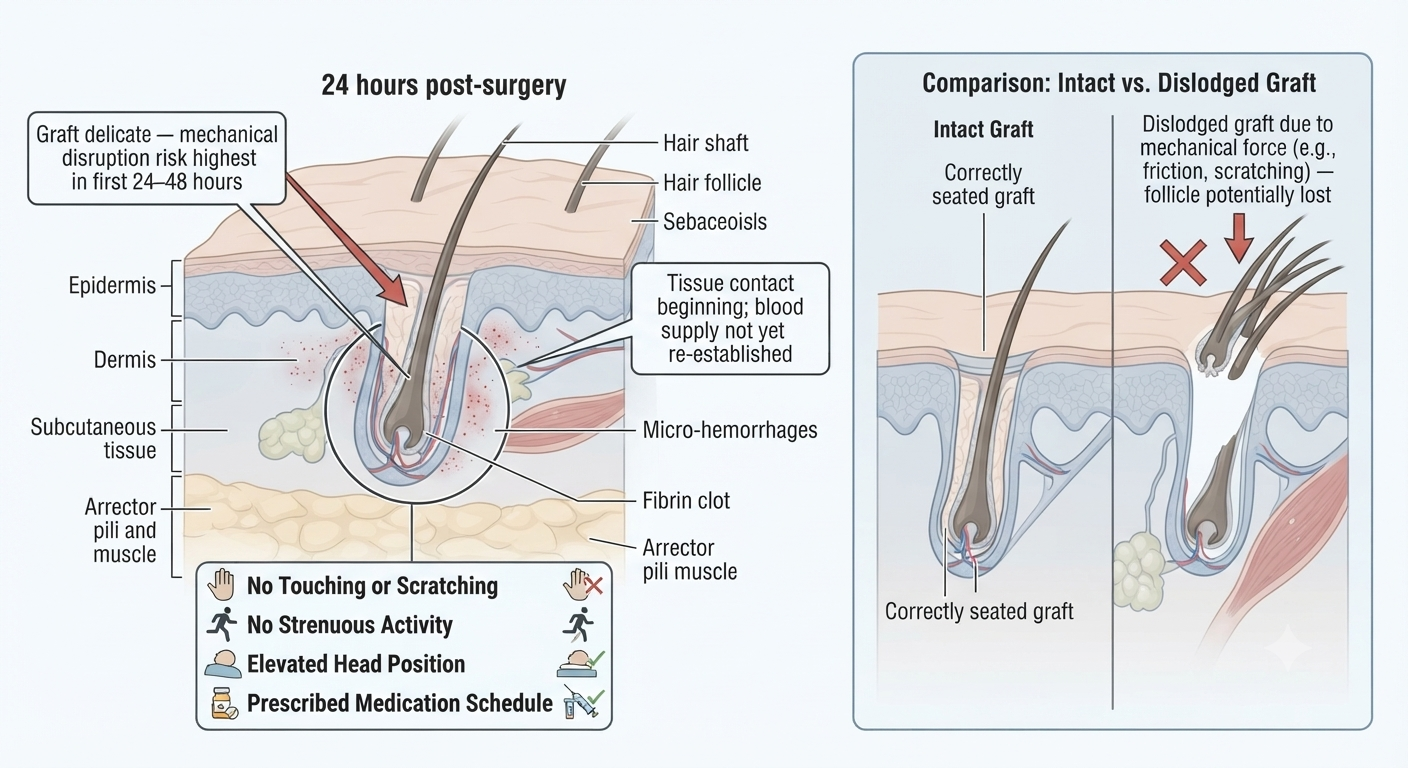
During the first 24 hours, it is important to:
- Avoid touching or scratching the scalp.
- Sleep with your head elevated if advised.
- Avoid strenuous physical activity.
- Follow the prescribed medication schedule.
Mild swelling has often not yet reached its peak.
Days 2 and 3
Swelling commonly becomes more noticeable during this period, particularly around the forehead and eyes.
This is a normal response to surgery.
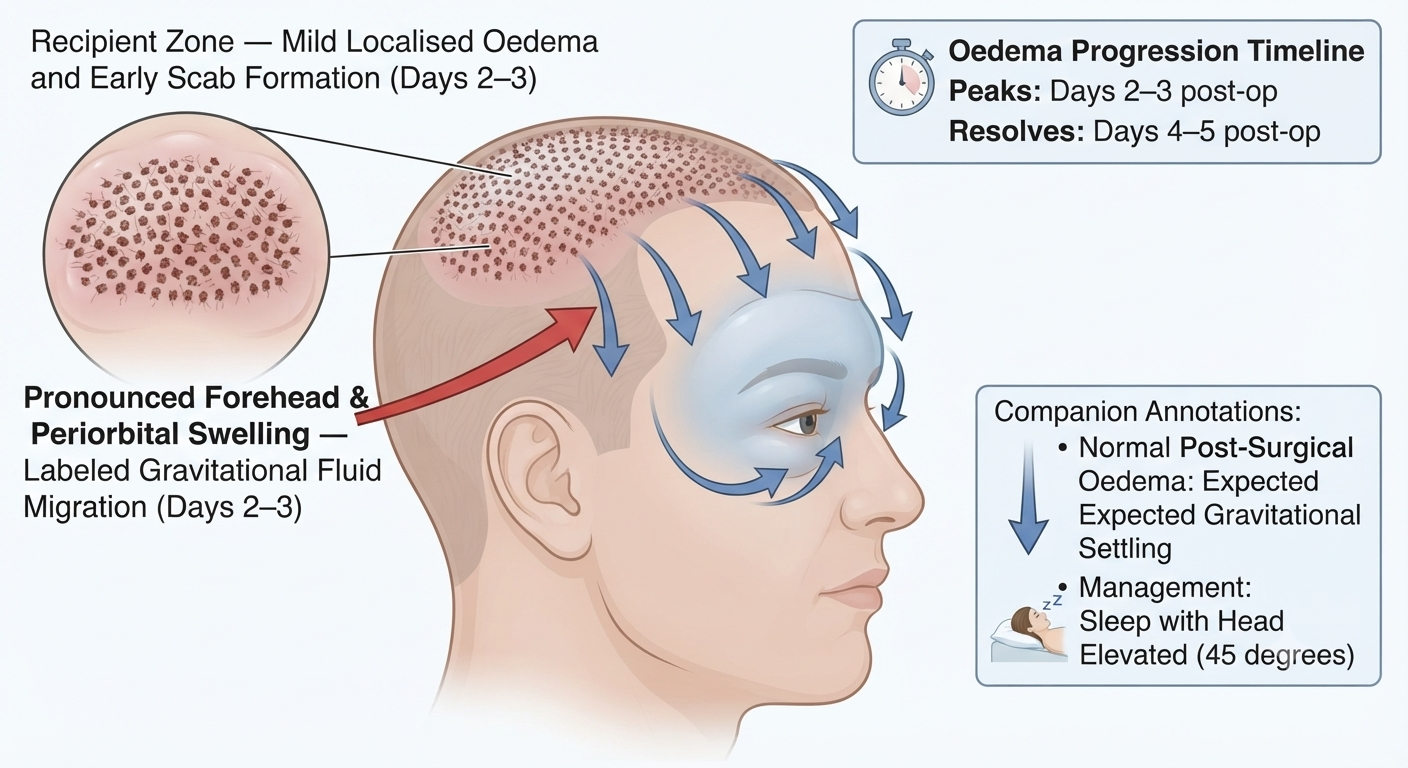
You may also notice:
- Mild redness
- Small crusts beginning to form
- Slight itching as healing starts
Unless instructed otherwise, avoid picking at any scabs.
The grafts are becoming more secure but are not yet firmly anchored.
Days 4 to 6
By now, most grafts remain in place despite gentle washing.
Scabs become more obvious and may make the transplanted area appear darker than expected.
Many patients also experience:
- Reduced swelling
- Less tenderness
- Mild itching
- Gradual improvement in comfort
The scalp often looks less inflamed each day.
Days 7 and 8
Healing continues steadily.
Many crusts begin loosening naturally during gentle washing.
The transplanted follicles are now considerably more stable than during the first few days.
Most patients can gradually return to light daily activities, provided they continue following their surgeon’s advice.
Days 9 and 10
By the end of the first ten days:
- Most scabs have fallen away naturally.
- Redness is beginning to fade.
- The grafts are generally well secured within the scalp.
- Washing becomes easier.
Although the scalp looks much better, the overall cosmetic result is still at a very early stage.
Hair growth has not yet begun.
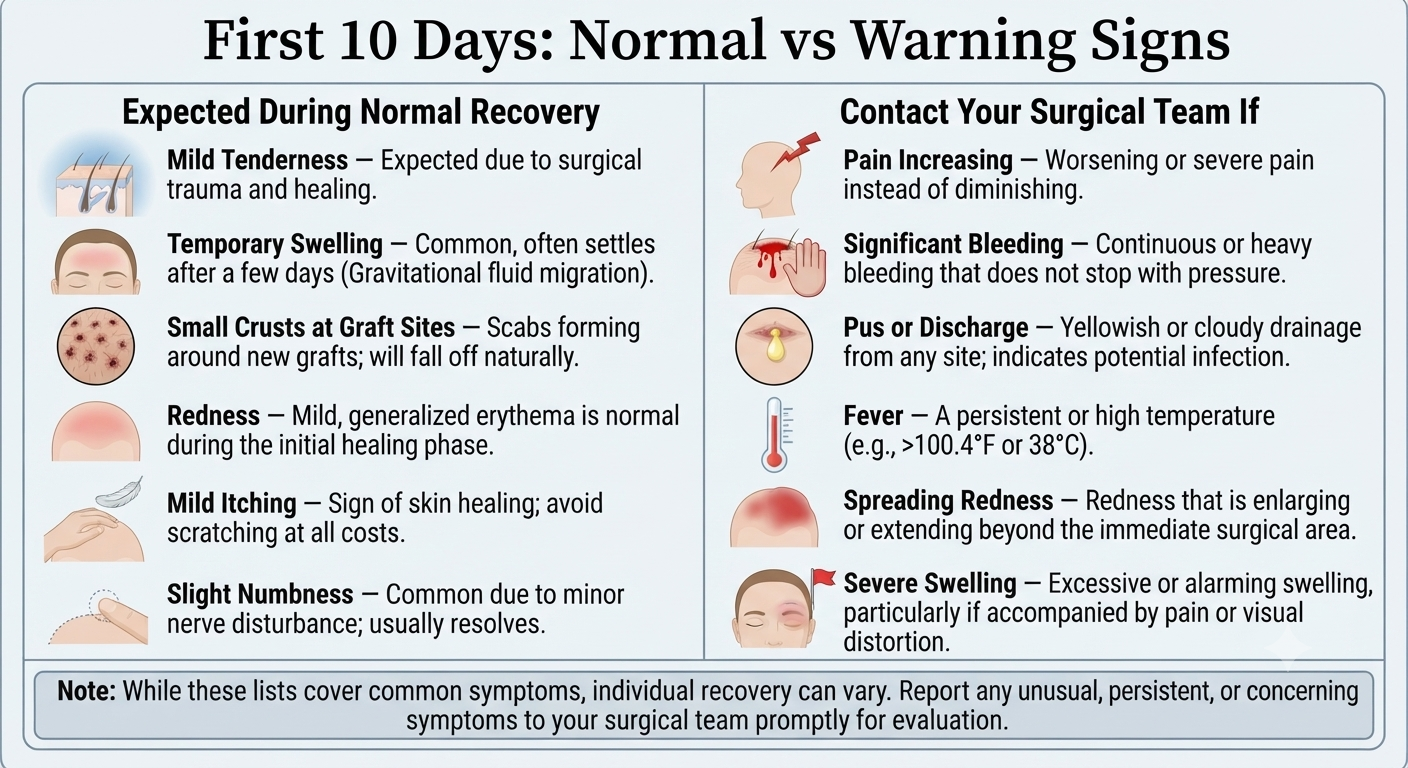
What symptoms are considered normal?
The following are usually expected during early recovery:
- Mild tenderness
- Temporary swelling
- Small crusts
- Redness
- Itching
- Slight numbness in some areas
These symptoms generally improve gradually over the first two weeks.
What should prompt medical advice?
You should contact your surgical team if you develop:
- Increasing rather than improving pain
- Significant bleeding
- Pus or foul-smelling discharge
- Fever
- Rapidly spreading redness
- Severe swelling that worsens after several days
These features are not typical of uncomplicated healing and should be assessed promptly.
What happens after the first 10 days?
Many patients expect hair to begin growing immediately.
Instead, the opposite often happens.
During the following few weeks, many transplanted hairs enter a resting phase and the visible hair shafts fall out.
This temporary shedding is normal.
The follicles remain beneath the skin and usually begin producing new hair several months later.
Meaningful growth often becomes noticeable between three and six months, with continued improvement for up to twelve to eighteen months.
Patience is part of the procedure
The first ten days after a hair transplant are focused on healing rather than visible cosmetic improvement.
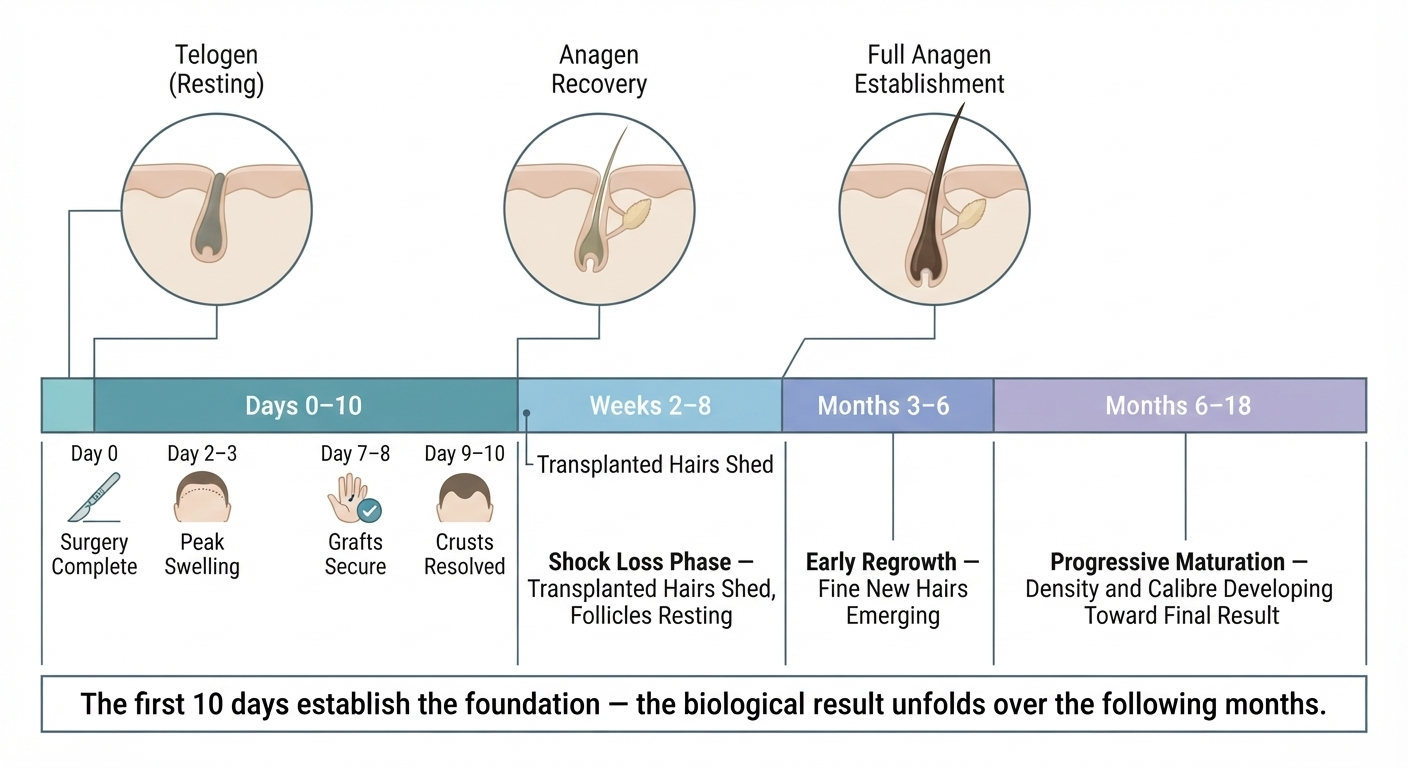
Protecting the grafts, following aftercare instructions and allowing the scalp to recover provide the foundation for future hair growth. While the appearance changes quickly during the first two weeks, the biological process of producing new hair takes much longer. Understanding that timeline helps set realistic expectations and reduces unnecessary concern during the early stages of recovery.
Author: Dr. Priya Goswami
Medical review: Dr. Denis Broun
Next step
If you notice coverage changes without increased shedding, confirm what process is occurring.
Take the Hair Assessment to have a physician review your pattern, identify whether miniaturization is present, and determine appropriate staging and next steps.
Add Comment