Many people expect hair to grow quickly.
After a haircut, a disappointing treatment result or a hair transplant, it’s natural to wonder why progress feels so slow.
The answer is simple.
Hair grows steadily, but it grows far more slowly than most people imagine.
Knowing what is normal can help you decide whether your hair is following a healthy pattern or whether something deserves closer attention.
What is the normal growth rate?
For most healthy adults, scalp hair grows by approximately:
- 1 to 1.25 centimetres each month
- Around 12 to 15 centimetres each year
This is an average rather than a fixed rule.
Some people naturally grow hair a little faster, while others grow it more slowly.
Small differences are usually normal.
Hair grows in cycles, not continuously
Each follicle follows its own cycle.
The three main stages are:
- Anagen: the active growth phase
- Catagen: a short transition phase
- Telogen: the resting phase before shedding
Because every follicle is at a different stage, your entire scalp does not grow or shed hair at the same time.
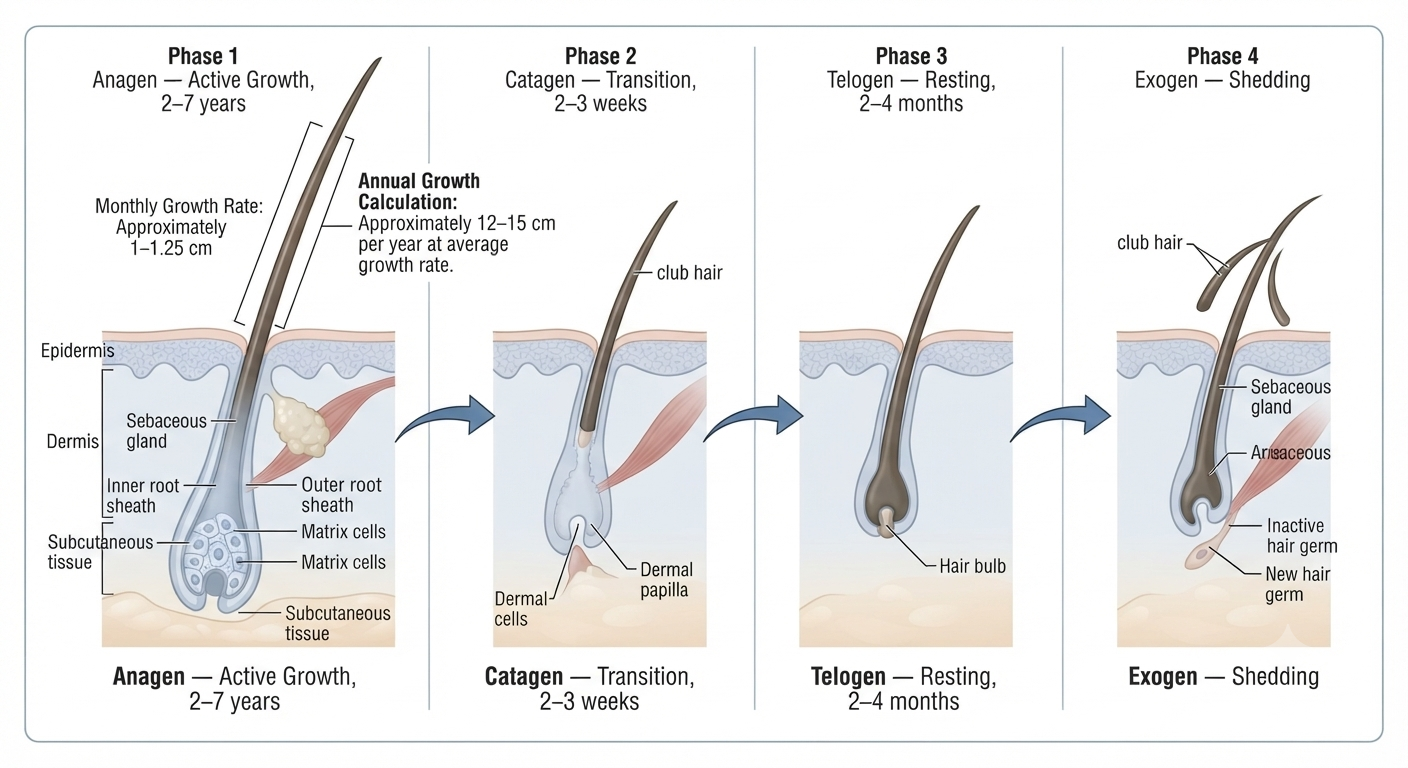
This staggered cycle helps maintain consistent hair coverage.
Why do some people think their hair has stopped growing?
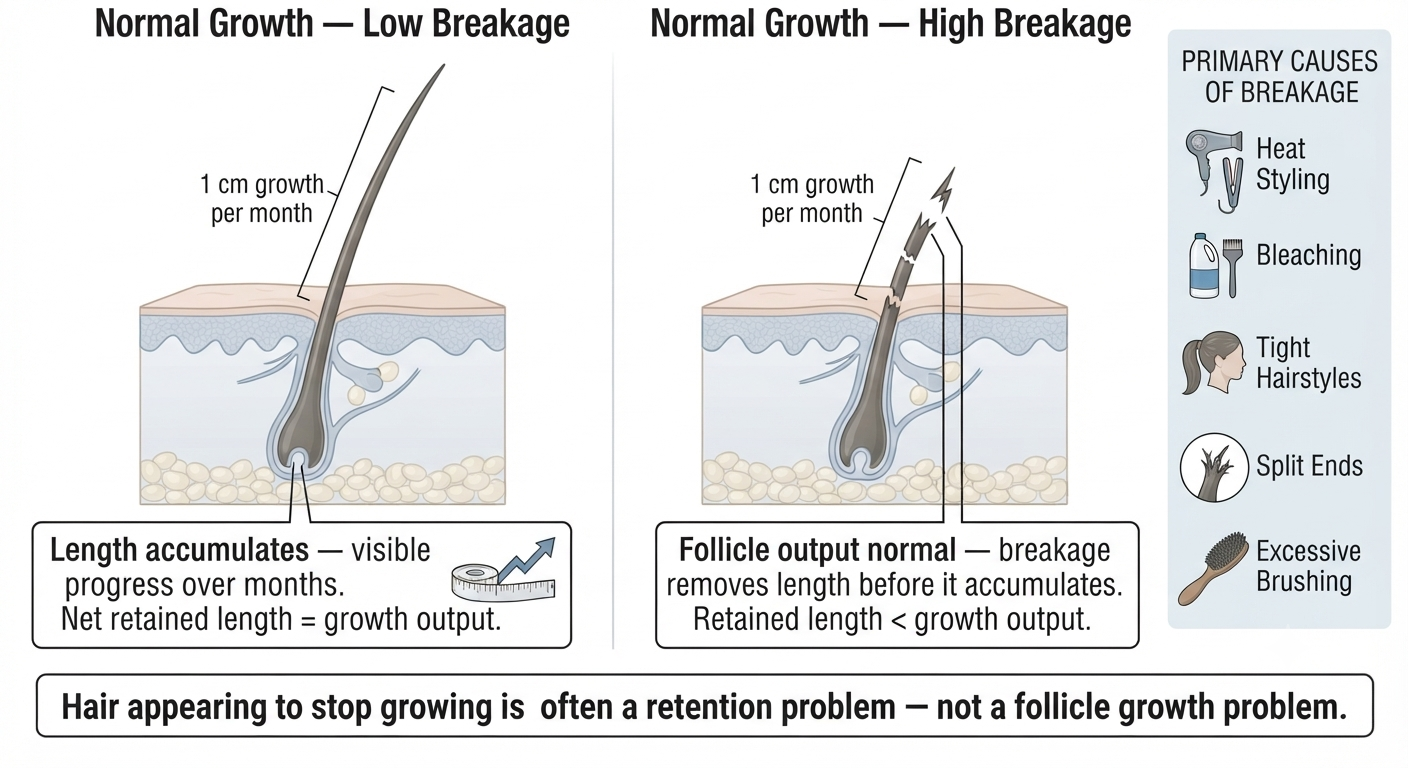
In many cases, the hair is still growing.
The problem is that it breaks before additional length becomes visible.
Common causes of breakage include:
- Frequent heat styling
- Chemical treatments
- Bleaching
- Tight hairstyles
- Excessive brushing
- Split ends
In these situations, improving hair care may increase the visible length over time without changing the actual growth rate.
What influences hair growth?
Several factors affect how efficiently hair follicles function.
These include:
- Genetics
- Age
- Overall health
- Hormonal balance
- Adequate nutrition
- Scalp health
These influences explain why growth rates differ from one person to another.
Does hair grow faster in summer?
Some studies suggest slight seasonal variation in hair growth, with modest increases during warmer months.
However, these differences are small and unlikely to be noticeable in everyday life.
Seasonal changes should not be expected to produce dramatic differences in hair length.
Can illness slow hair growth?
Yes.
Illness does not usually stop hair growth immediately, but it can affect the hair cycle.
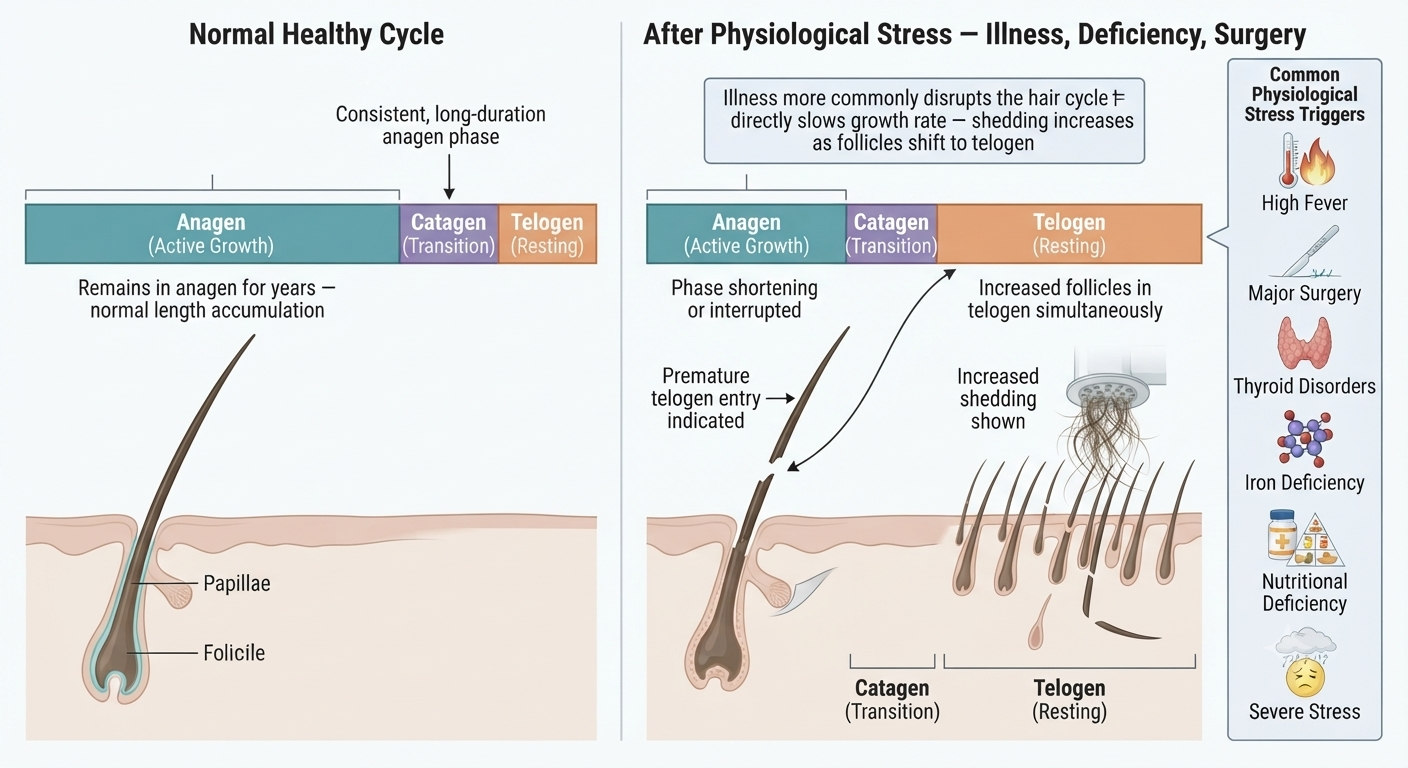
Conditions that may influence growth include:
- High fever
- Major surgery
- Thyroid disorders
- Iron deficiency
- Significant nutritional deficiencies
- Severe psychological stress
These events more commonly increase hair shedding than reduce the actual growth rate.
How can you measure growth accurately?
Looking in the mirror every day rarely provides useful information.
Instead:
- Measure the same strand or section every month.
- Take photographs in consistent lighting.
- Avoid comparing hair immediately after a haircut with hair that has been styled differently.
- Give changes at least three to six months to become apparent.
Hair grows slowly enough that weekly comparisons are usually misleading.
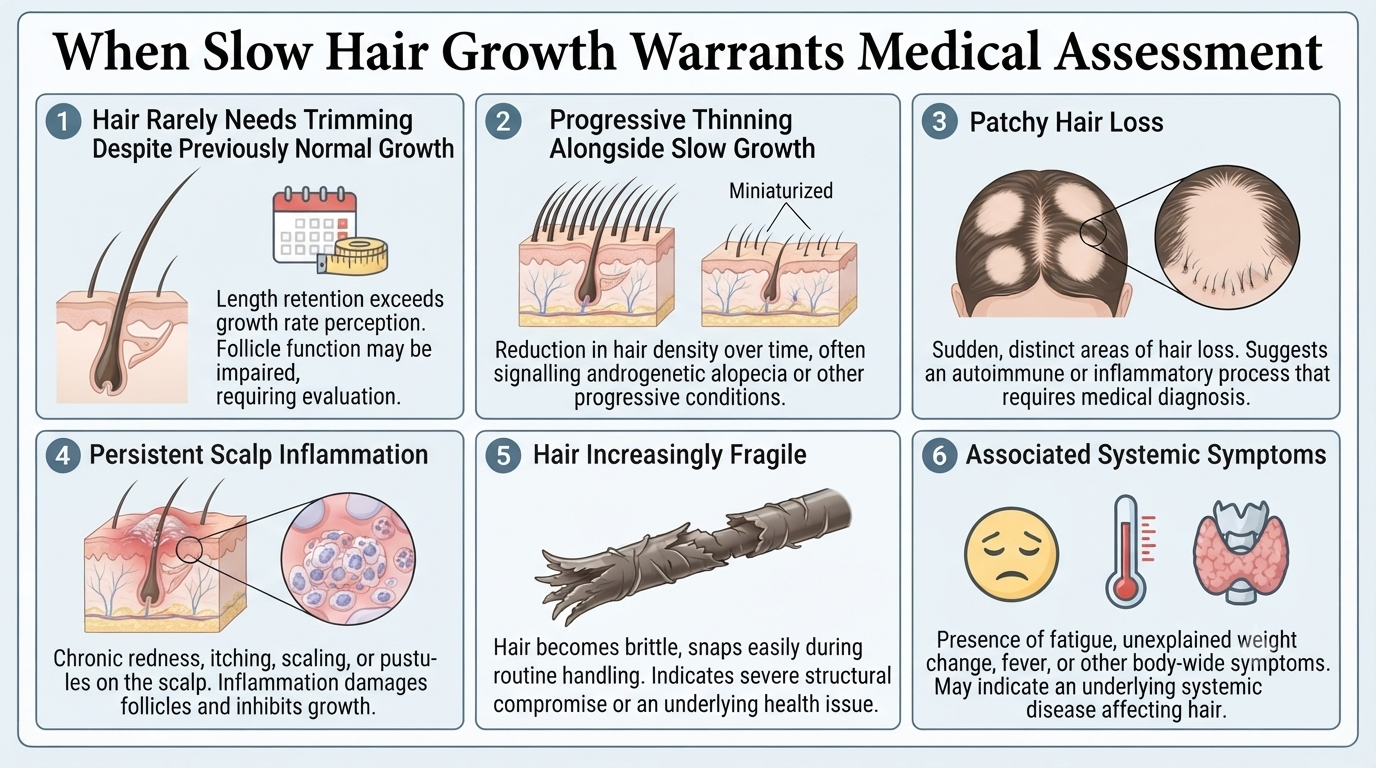
When is slow growth concerning?
A healthcare professional should assess the situation if you notice:
- Hair that rarely needs trimming despite previous normal growth
- Progressive thinning alongside slow growth
- Patchy hair loss
- Persistent scalp inflammation
- Hair becoming increasingly fragile
- Other symptoms such as fatigue, weight changes or changes in skin and nails
These findings may suggest an underlying medical condition rather than naturally slow growth.
Can you make hair grow faster?
Many products claim to accelerate hair growth dramatically.
Current evidence does not support the idea that any shampoo, oil or cosmetic product can substantially increase the natural monthly growth rate in healthy hair.
The most effective strategy is usually to support healthy follicles by:
- Maintaining good overall health
- Eating a balanced diet
- Protecting the hair shaft from damage
- Treating any underlying medical condition affecting the scalp or follicles
For people with certain forms of hair loss, evidence-based medical treatments may improve follicle function, but they do not typically transform the natural speed of hair growth.
Understanding progress takes time
Healthy hair grows slowly but consistently.
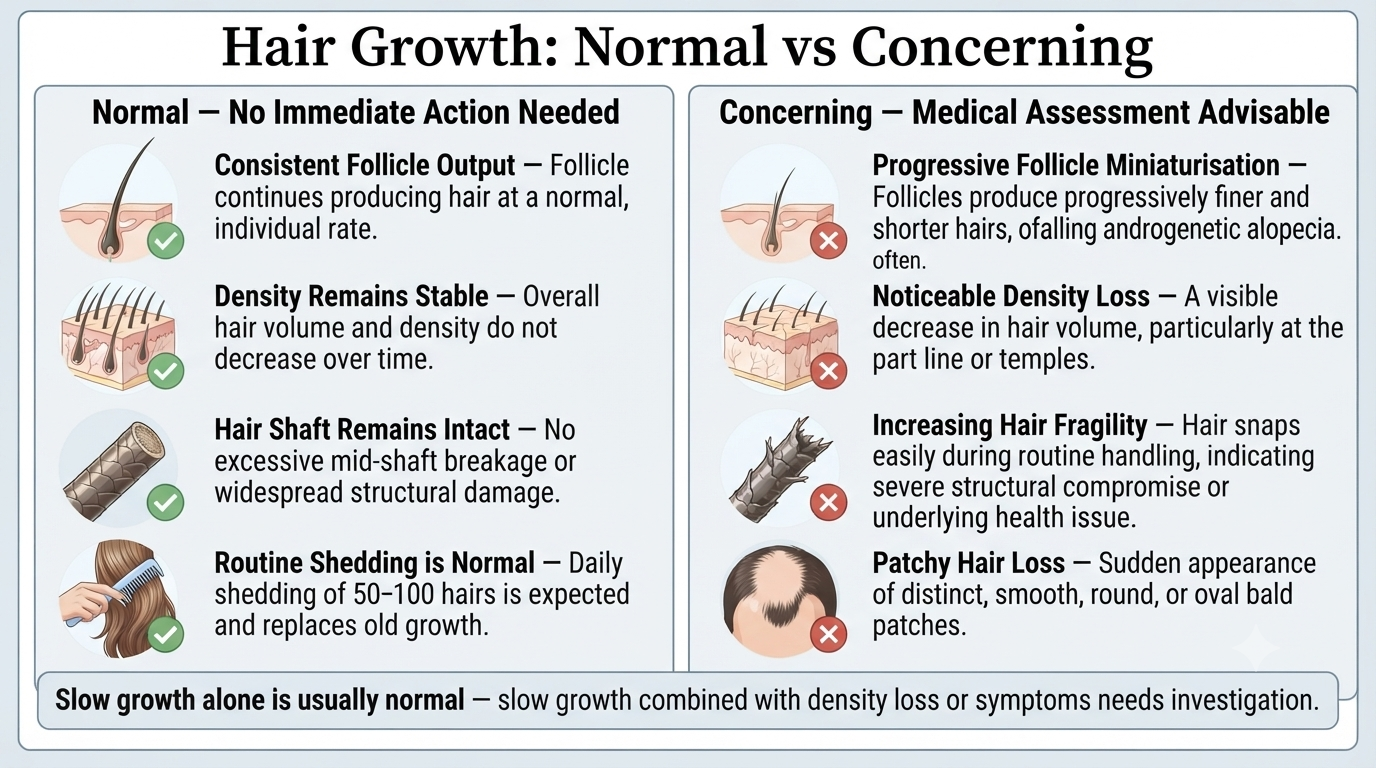
For most people, around one centimetre of growth each month is entirely normal. Because this process is gradual, improvements in hair length, density or treatment response are best judged over several months rather than a few weeks.
If growth appears unusually slow or is accompanied by excessive shedding or progressive thinning, an accurate medical assessment can help determine whether the problem lies with the hair cycle, the follicles or another underlying health condition.
Author: Dr. Priya Goswami
Medical review: Dr. Denis Broun
Next step
If you notice coverage changes without increased shedding, confirm what process is occurring.
Take the Hair Assessment to have a physician review your pattern, identify whether miniaturization is present, and determine appropriate staging and next steps.
Add Comment