When hair becomes dry, brittle or full of split ends, most people start looking for a product that promises to repair it.
The shelves are full of shampoos, masks and serums claiming to rebuild damaged hair.
Some can make a noticeable difference.
None can turn severely damaged hair back into completely new hair.
The important question is not whether hair can look better.
It is understanding when damage can be managed and when it is time to replace damaged hair with healthy new growth.
Hair damage happens gradually
Healthy hair is protected by an outer layer called the cuticle.
This layer helps retain moisture and protects the inner structure of the hair shaft.
Repeated stress gradually wears that protection away.
Common causes include:
- Frequent bleaching
- Hair colouring
- Heat styling
- Chemical straightening
- Excessive brushing
- Tight hairstyles
- Sun exposure
- Chlorinated or salt water
As the cuticle becomes damaged, the inner layers of the hair become increasingly exposed.
What does “repair” really mean?
In everyday language, repair suggests restoring something to its original condition.
Hair care products cannot do this in the same way living tissues heal.
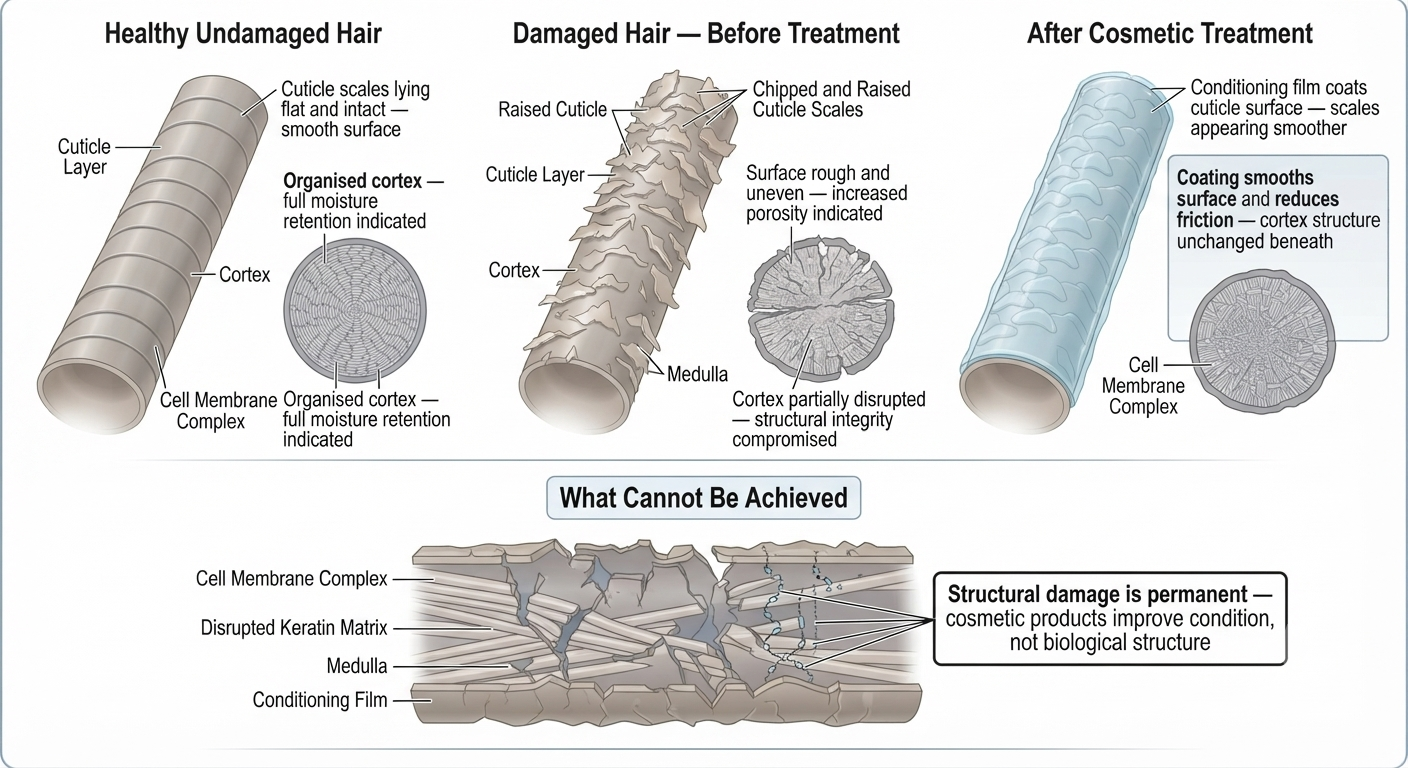
Instead, they work by:
- Smoothing rough cuticles
- Filling microscopic surface defects
- Reducing friction between hair fibres
- Improving flexibility
- Reducing further breakage
The hair often feels softer, smoother and stronger, but the original structure has not been permanently rebuilt.
When cosmetic repair is enough
If damage is mild, consistent hair care may noticeably improve the appearance of the hair.
This often includes:
- Regular conditioning
- Deep conditioning treatments
- Heat protection before styling
- Gentle detangling
- Reducing chemical treatments
For many people, these measures restore shine and improve manageability even though the hair itself has not biologically healed.
When replacement becomes the better option
Some damage cannot be meaningfully improved.
Examples include:
- Extensive split ends
- Severe breakage
- Hair that has become extremely porous
- Hair weakened by repeated bleaching
In these situations, trimming away the damaged sections usually provides the healthiest long-term outcome.
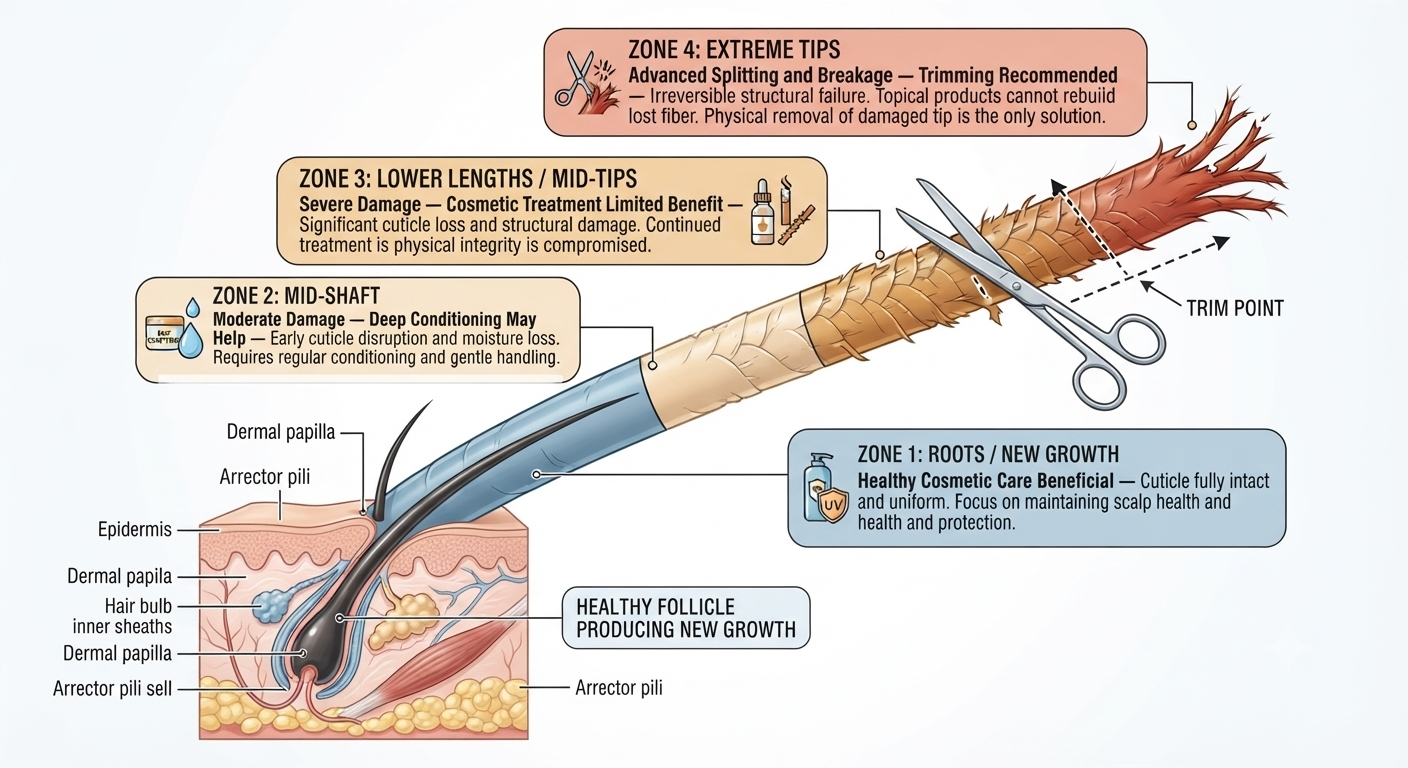
As new hair grows from healthy follicles, it gradually replaces the older damaged hair.
New hair starts at the follicle
It is important to remember that the follicle remains alive beneath the skin.
If the follicle is healthy, it continues producing new hair regardless of the condition of the older hair shaft.
This means future hair quality depends largely on protecting the new growth as it emerges.
How to reduce future damage
Preventing damage is usually easier than managing it later.
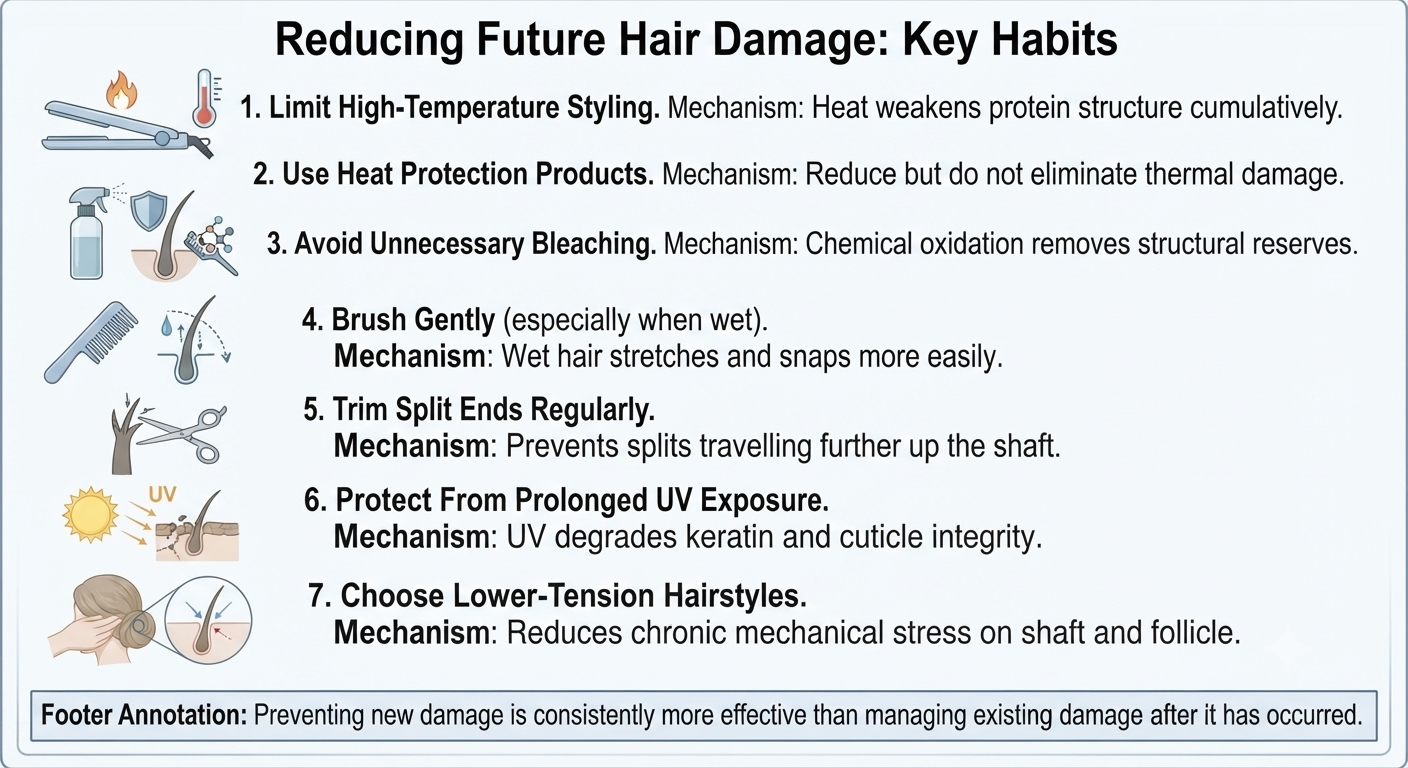
Helpful habits include:
- Limiting high-temperature styling
- Using heat protection products
- Avoiding unnecessary bleaching
- Brushing gently, especially when hair is wet
- Trimming split ends regularly
- Protecting hair from prolonged UV exposure
- Choosing hairstyles that place less tension on the hair
Small changes in daily care often have a greater long-term impact than changing products frequently.
Is breakage the same as hair loss?
No.
Hair breakage occurs when the hair shaft snaps.
Hair loss occurs when the hair is shed from the follicle.
Both reduce hair volume, but they have different causes and require different approaches.
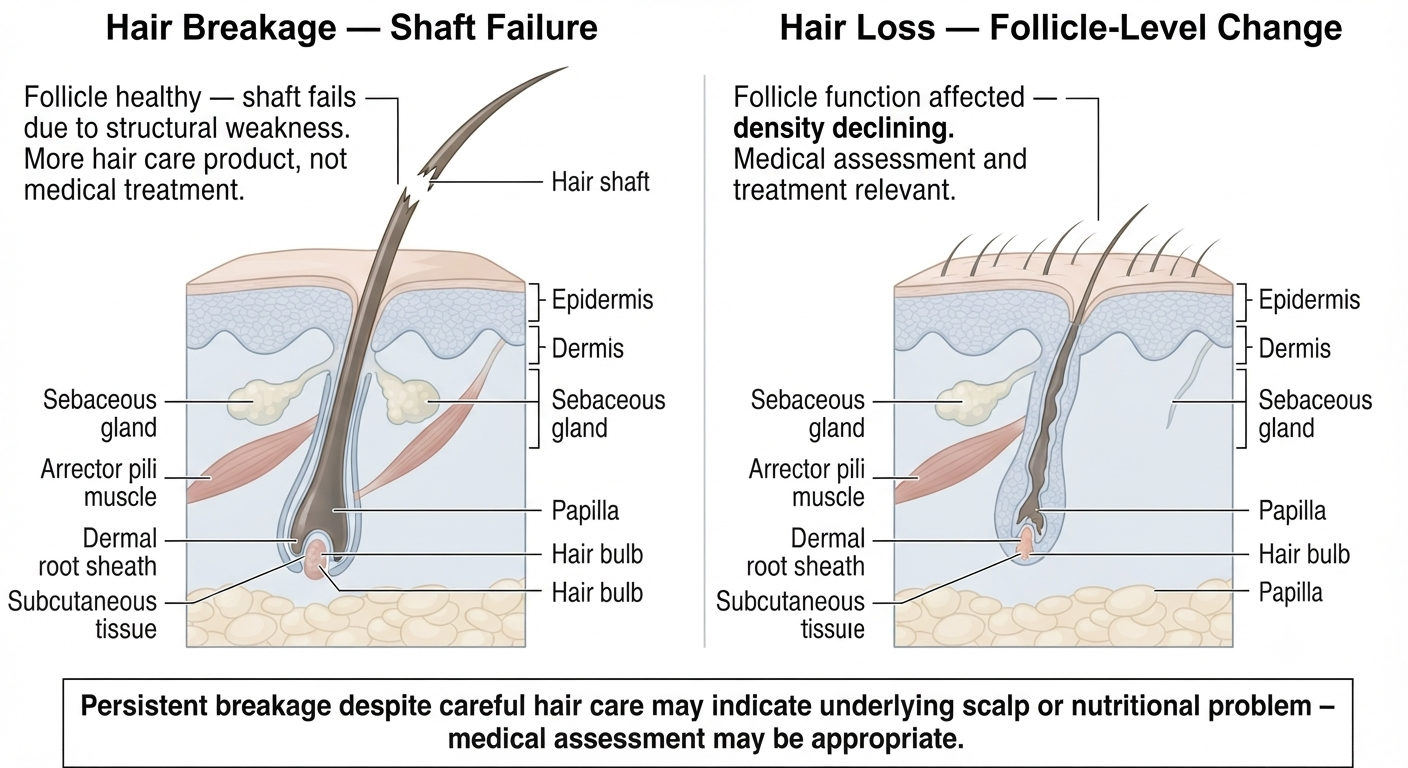
Someone experiencing persistent breakage despite careful hair care may benefit from medical assessment to exclude underlying scalp or nutritional problems.
Building realistic expectations
Healthy-looking hair is usually the result of consistent care rather than a single treatment.
Conditioners, masks and specialised repair products can improve appearance, reduce breakage and protect the hair from additional damage.
They cannot permanently reverse structural injury that has already occurred.
Understanding this difference helps avoid disappointment and encourages decisions that support healthier hair over the long term.
A practical way forward
Managing damaged hair is often about deciding when to repair and when to replace.
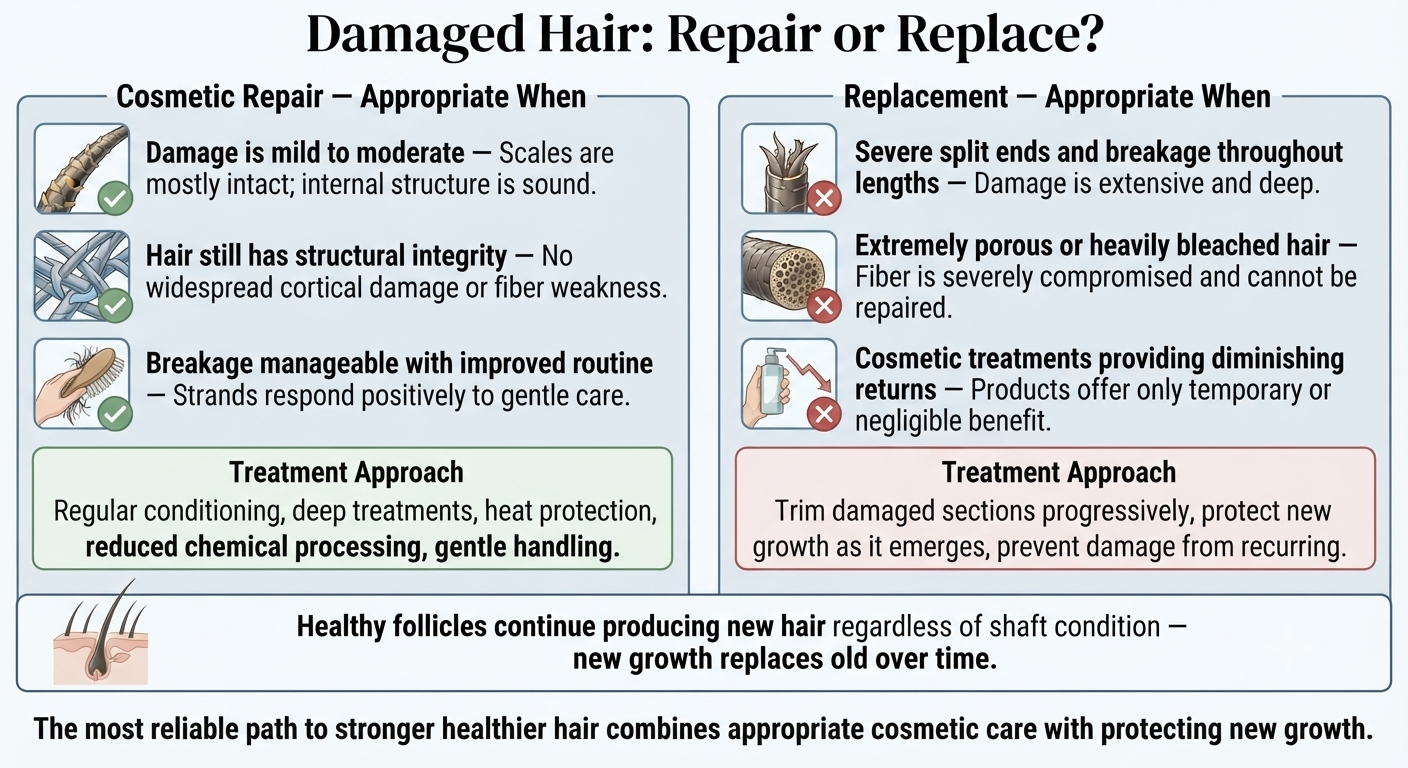
Cosmetic treatments have an important role in protecting and improving existing hair, particularly when damage is mild or moderate. Once severe structural damage has occurred, however, trimming away the affected sections while protecting healthy new growth offers the most reliable path to stronger, healthier hair.
Author: Dr. Priya Goswami
Medical review: Dr. Denis Broun
Next step
If you notice coverage changes without increased shedding, confirm what process is occurring.
Take the Hair Assessment to have a physician review your pattern, identify whether miniaturization is present, and determine appropriate staging and next steps.
Add Comment