Many products promise to “repair damaged hair.”
Some even claim to reverse years of damage after only a few uses.
The reality is more complicated.
Damaged hair can often look and feel healthier with the right care. But once the hair shaft has been physically damaged, it cannot heal in the way that living skin does.
Understanding this difference makes it much easier to choose products with realistic expectations.
Hair is no longer living once it leaves the scalp
Every hair begins as a living structure inside the follicle.
Once it emerges through the skin, however, the visible hair shaft is made of dead keratin.
This is why cutting your hair does not hurt.
It also explains why damaged hair cannot regenerate itself.
Instead, treatments work by improving the condition of the existing hair shaft rather than repairing it biologically.
What causes hair damage?
Hair damage usually develops gradually through repeated stress.
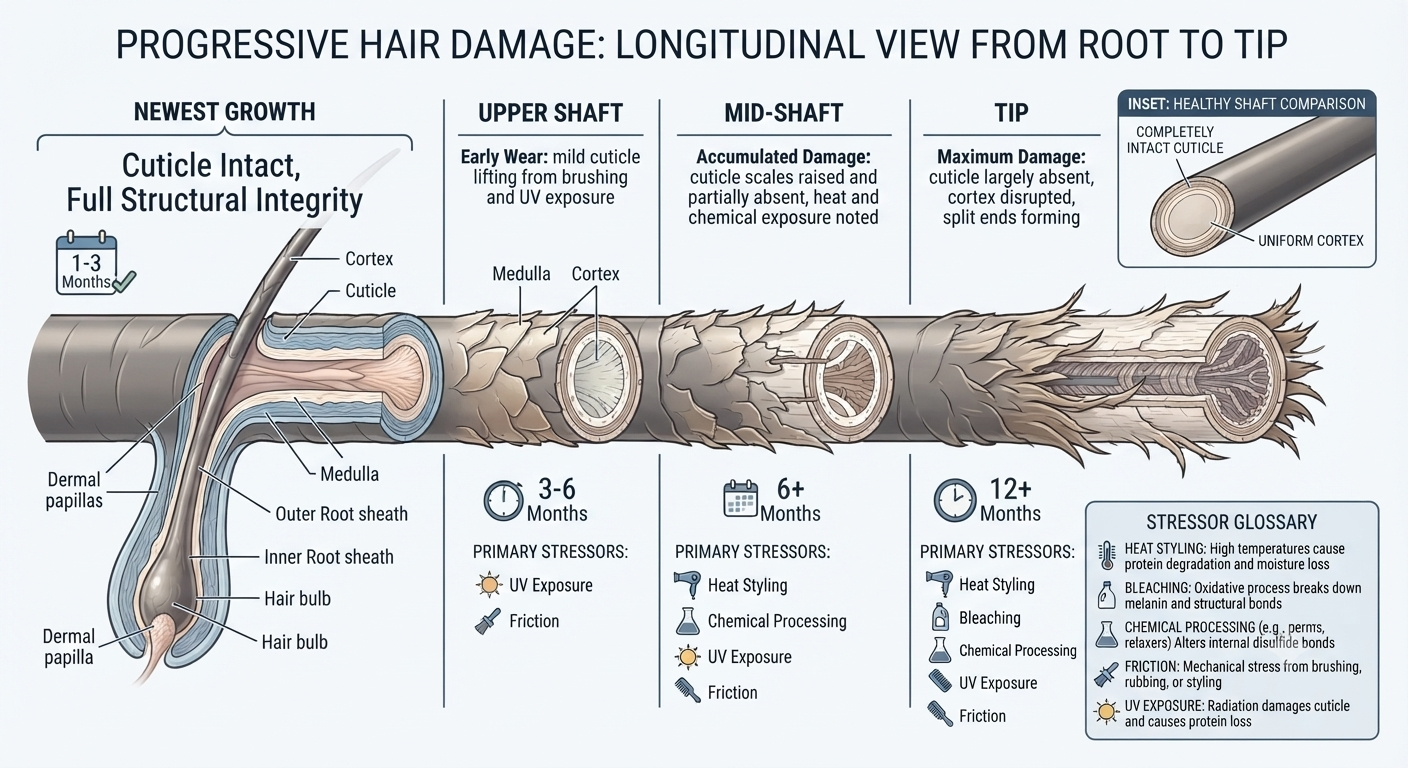
Common causes include:
- Frequent heat styling
- Hair bleaching
- Permanent colouring
- Chemical straightening or relaxing
- Excessive brushing
- Tight hairstyles
- UV exposure
- Chlorinated or salt water
- Repeated friction from towels or pillowcases
One damaging event may have little effect, but repeated exposure gradually weakens the hair fibre.
What does damaged hair look like?
Signs of hair damage include:
- Dryness
- Dull appearance
- Frizz
- Split ends
- Increased breakage
- Rough texture
- Hair that tangles easily
- Loss of elasticity
These changes affect the hair shaft rather than the follicle beneath the scalp.
Can damaged hair be repaired?
The answer depends on what is meant by “repair.”
Many products can improve:
- Smoothness
- Shine
- Manageability
- Resistance to breakage
- Surface appearance
However, they do this by coating or temporarily reinforcing the hair shaft.
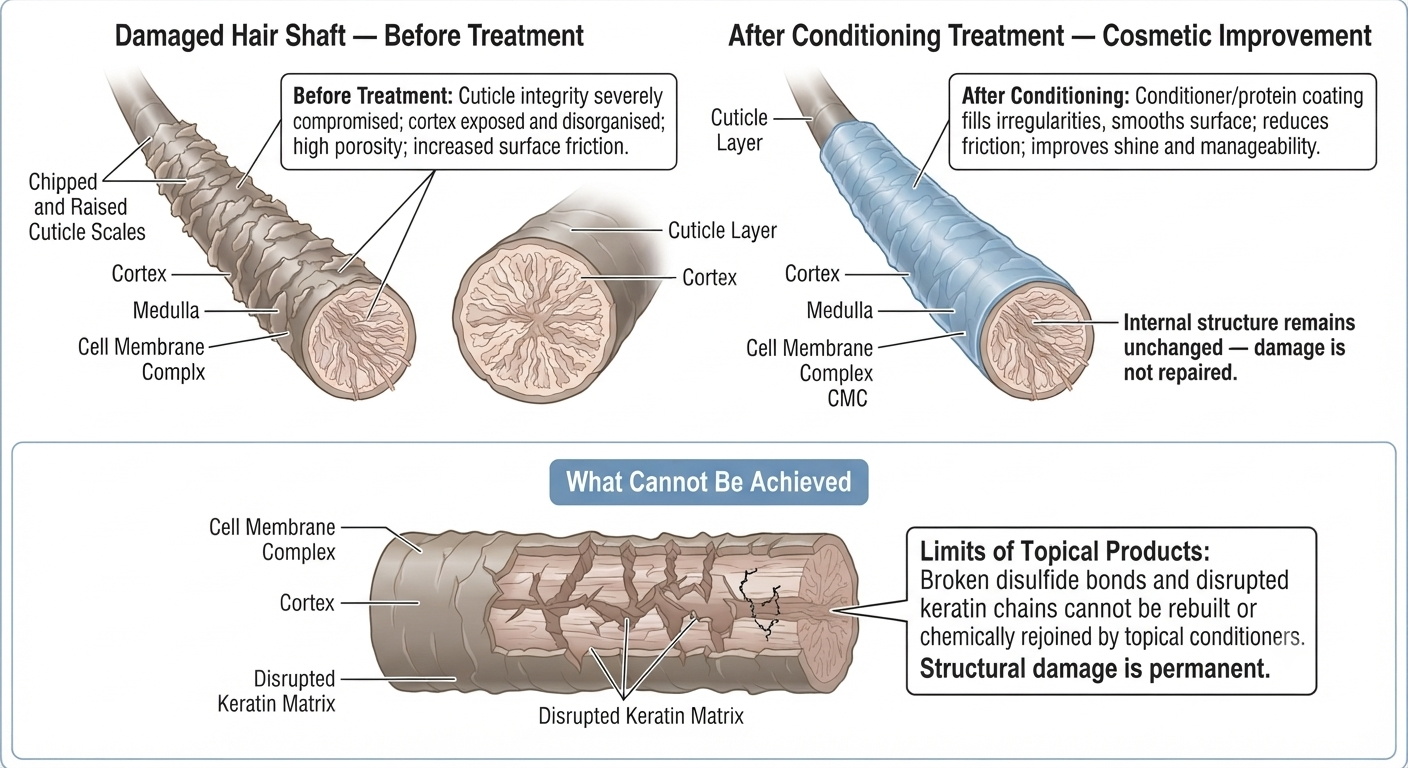
They do not permanently rebuild the original internal structure of severely damaged hair.
Which ingredients may help?
Several ingredients have been shown to improve the condition of damaged hair.
These include:
- Conditioning agents
- Silicones that reduce friction
- Hydrolysed proteins
- Ceramides
- Certain bonding technologies designed to reinforce weakened hair fibres
These products may reduce breakage and improve appearance, particularly when used consistently.
Results vary depending on the degree of existing damage.
Why split ends cannot be sealed permanently
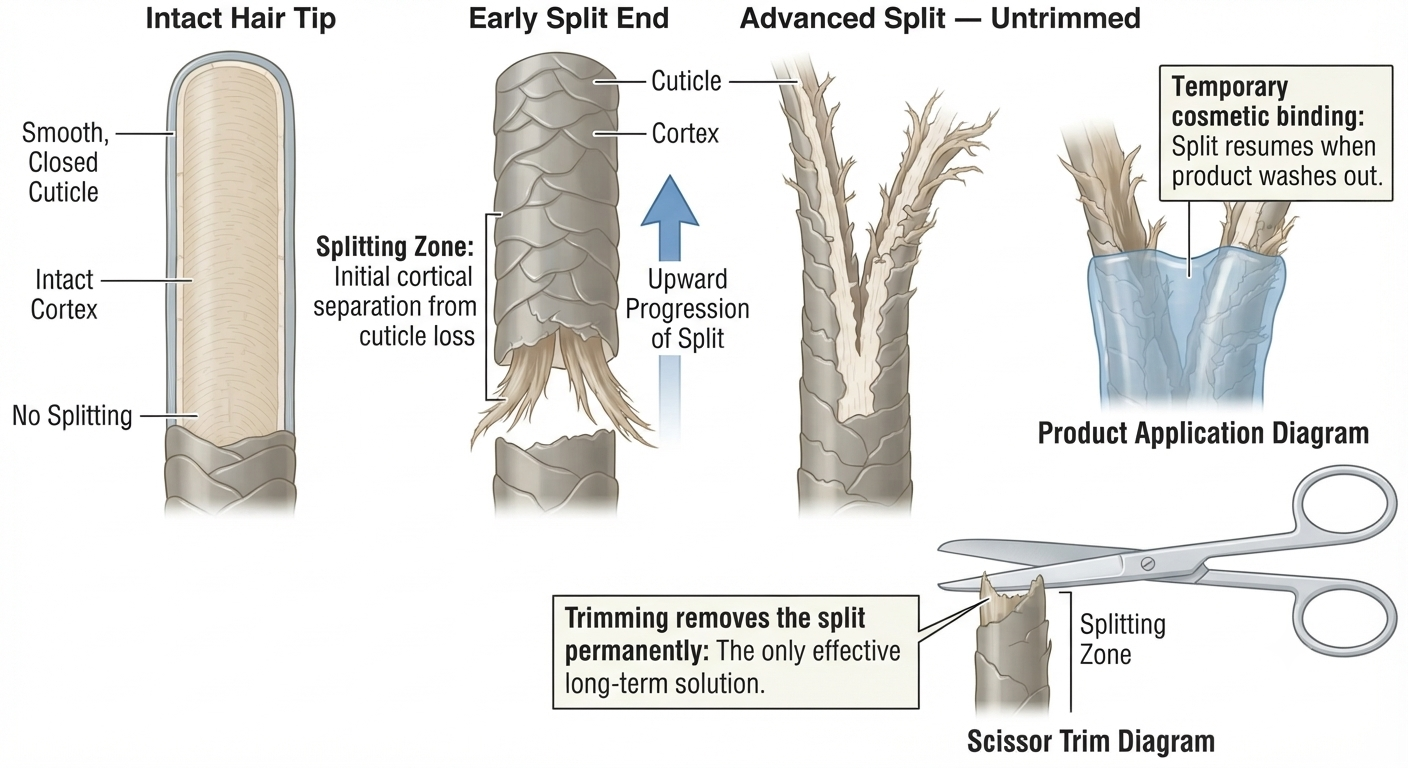
Split ends are one of the clearest examples of irreversible hair damage.
Some products temporarily bind split fibres together, making them less visible.
Eventually, however, the split usually progresses further up the hair shaft.
The only permanent solution is trimming the affected ends.
Is it hair damage or hair loss?
People sometimes confuse hair breakage with hair loss.
The two problems are different.
Hair damage usually causes:
- Short broken hairs
- Uneven lengths
- Frayed ends
- Reduced hair quality
Hair loss involves fewer hairs growing from the follicles.
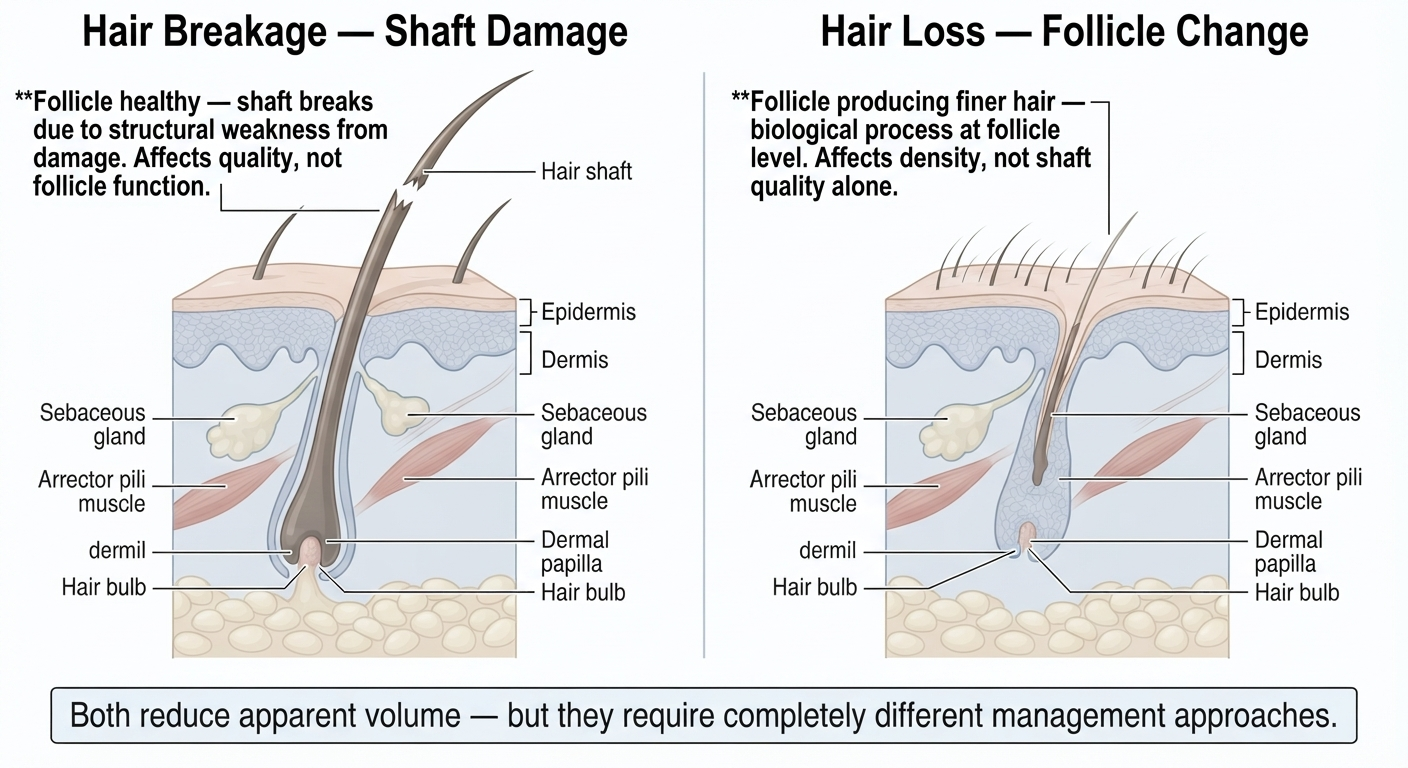
Both conditions may reduce overall hair volume, but they require different approaches.
How can you prevent further damage?
Healthy hair care habits can reduce future injury.
Helpful measures include:
- Limiting heat styling where possible
- Using heat protection products
- Avoiding excessive chemical processing
- Brushing gently
- Trimming split ends regularly
- Protecting hair from prolonged sun exposure
- Choosing hairstyles that minimise tension
Preventing new damage is generally more effective than trying to restore severely damaged hair.
When should you seek advice?
Professional assessment may be worthwhile if:
- Hair breaks easily despite gentle care.
- Breakage is accompanied by significant hair shedding.
- The scalp is inflamed or painful.
- Hair texture changes suddenly without an obvious cause.
- Hair continues worsening despite appropriate care.
Occasionally, an underlying medical condition may contribute to increased hair fragility.
Caring for hair with realistic expectations
Damaged hair is not beyond help, but it is important to understand what hair care products can and cannot achieve.
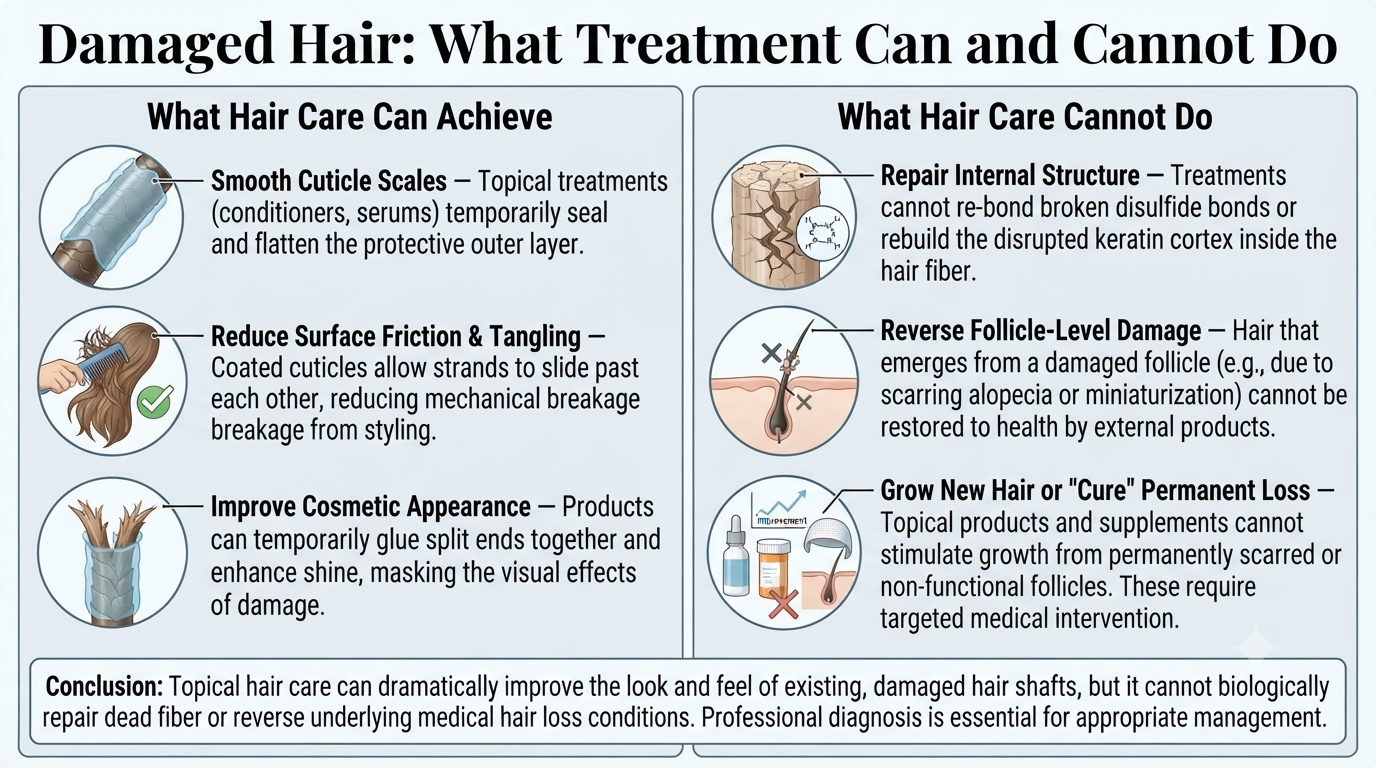
Conditioners and specialised treatments can improve smoothness, reduce breakage and make hair appear healthier, but they cannot permanently reverse structural damage that has already occurred.
The best long-term strategy combines gentle hair care, prevention of further damage and regular trimming while allowing healthy new hair to grow from the follicle.
Author: Dr. Priya Goswami
Medical review: Dr. Denis Broun
Next step
If you notice coverage changes without increased shedding, confirm what process is occurring.
Take the Hair Assessment to have a physician review your pattern, identify whether miniaturization is present, and determine appropriate staging and next steps.
Add Comment