Finding hair in your shower drain can be unsettling.
Seeing strands on your pillow or in your hairbrush often leads to the same conclusion.
“I’m losing my hair.”
Sometimes that’s true.
Sometimes it isn’t.
Hair shedding and hair loss are related, but they are not the same thing. Knowing the difference can help you understand whether what you’re seeing is part of the normal hair cycle or a sign of an underlying condition.
Hair shedding is part of normal biology
Every hair follicle follows its own growth cycle.
A hair grows for several years, rests for a short period and is then shed before a new hair begins to grow from the same follicle.
This cycle happens continuously across the scalp.
As a result, losing some hair every day is completely normal.
For most healthy adults, shedding around 50 to 100 hairs each day falls within the expected range.
What is hair shedding?
Hair shedding refers to hairs leaving the scalp after completing their normal life cycle.
The follicle itself remains healthy.
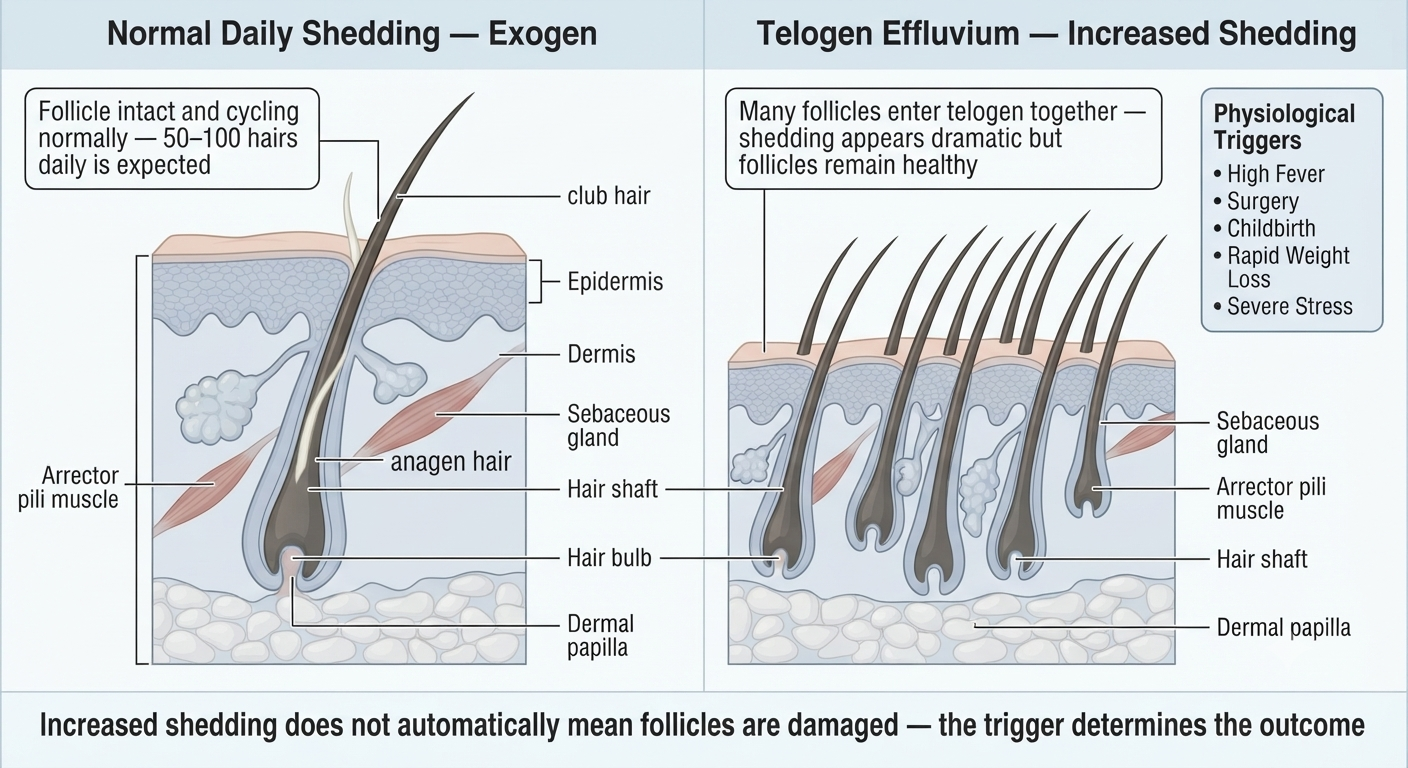
It simply begins producing a new hair.
Temporary increases in shedding can happen after events such as:
- High fever
- Major surgery
- Childbirth
- Significant emotional stress
- Rapid weight loss
- Certain medications
- Severe illness
This condition is commonly known as telogen effluvium.
Although the amount of shedding can seem dramatic, the follicles usually remain capable of producing new hair.
What is hair loss?
Hair loss means there is a reduction in overall hair density because the follicles are no longer functioning normally.
This may happen because follicles become progressively smaller, are damaged by inflammation or stop producing visible hairs altogether.
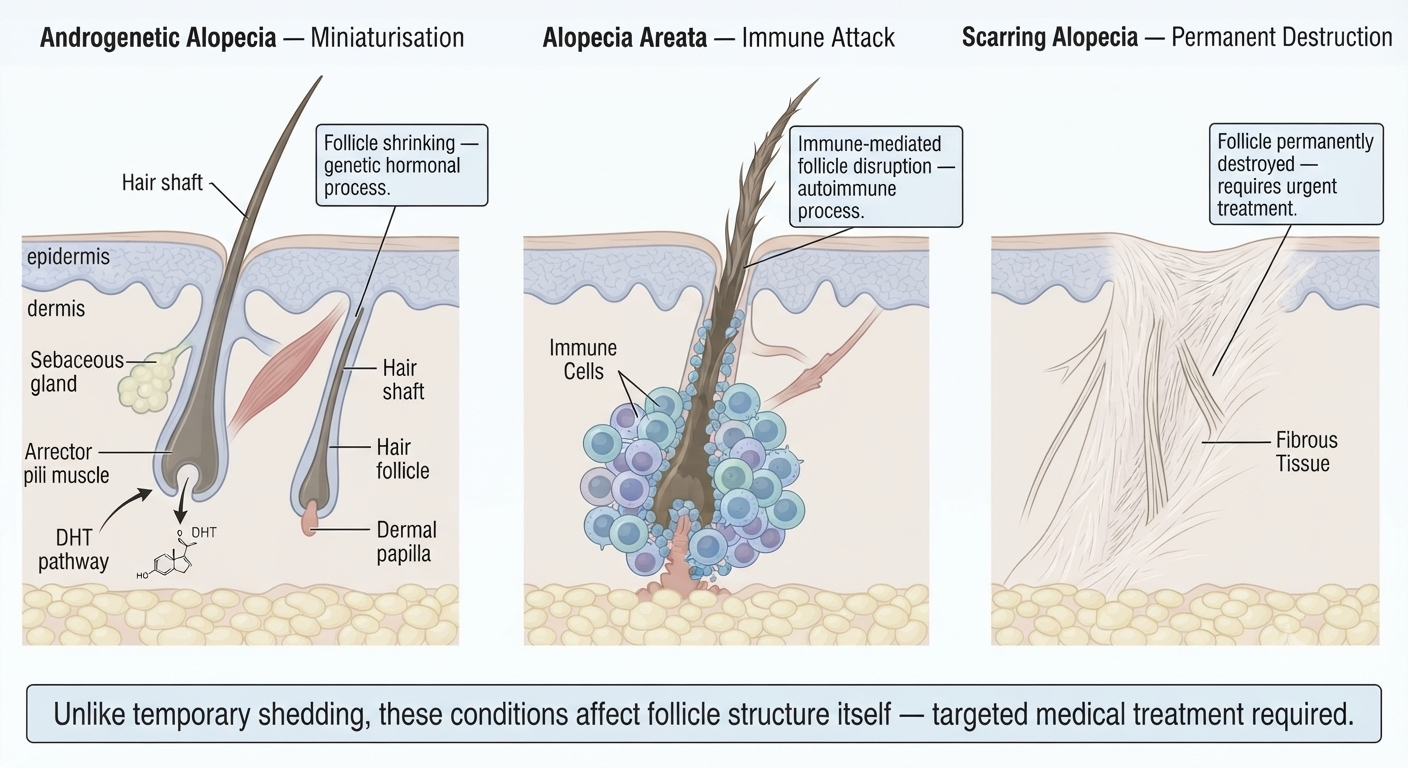
Examples include:
- Androgenetic alopecia
- Alopecia areata
- Scarring alopecias
- Some inflammatory scalp diseases
Unlike temporary shedding, these conditions often require targeted medical treatment.
How can you tell the difference?
The pattern often provides important clues.
Hair shedding typically causes:
- Increased hairs in the shower or brush
- Diffuse thinning across the scalp
- A relatively unchanged hairline
Hair loss caused by androgenetic alopecia more commonly produces:
- Receding temples
- Thinning at the crown
- Progressive widening of the part in women
- Gradual reduction in hair density over months or years
The two processes can also occur together.
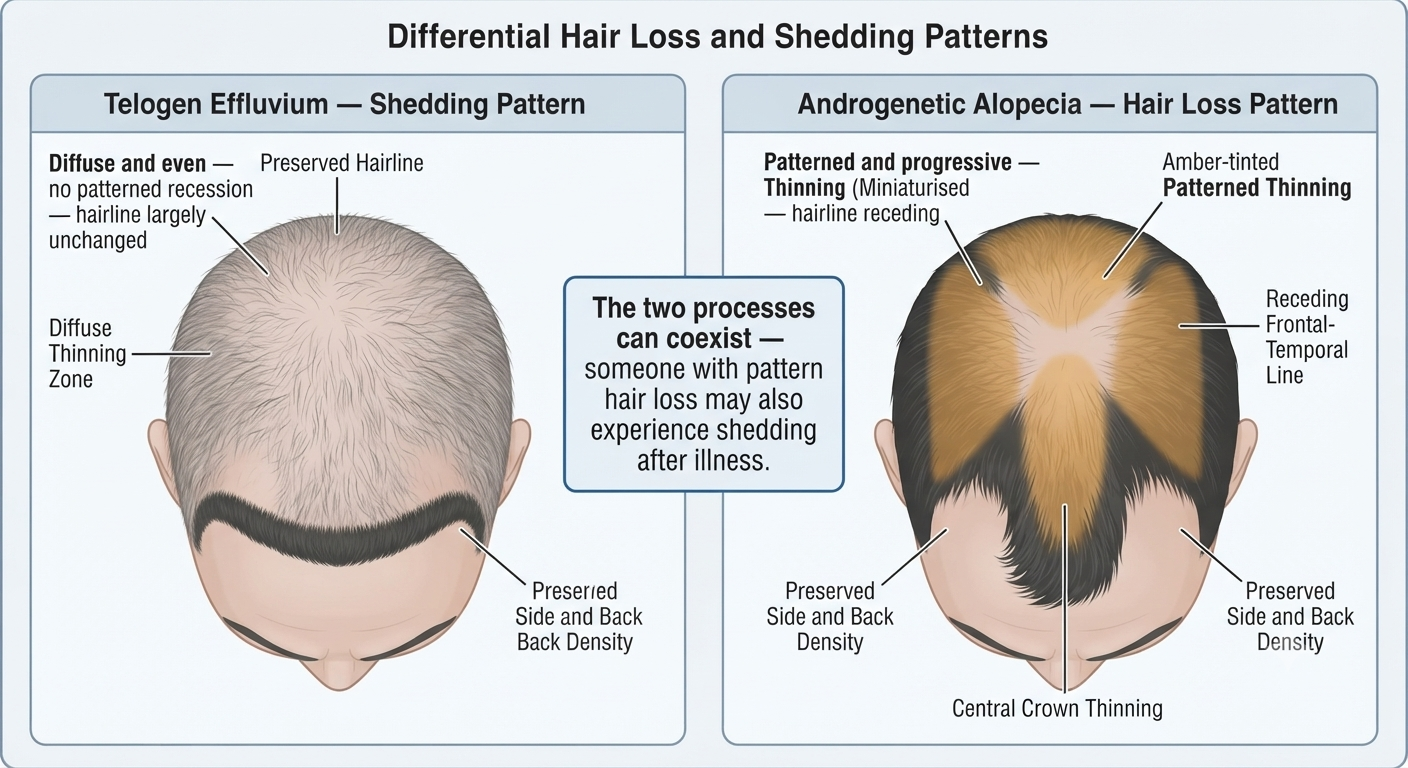
Someone with male or female pattern hair loss may experience temporary shedding after an illness, making the thinning appear worse.
Does more shedding always mean permanent loss?
No.
Temporary shedding can involve hundreds of hairs each day while the follicles remain healthy.
Once the underlying trigger has resolved, many people gradually regain their previous hair density.
Because hair grows slowly, recovery often takes several months.
Can normal shedding become abnormal?
Yes.
If shedding continues for many months or is accompanied by progressive thinning, further assessment is advisable.
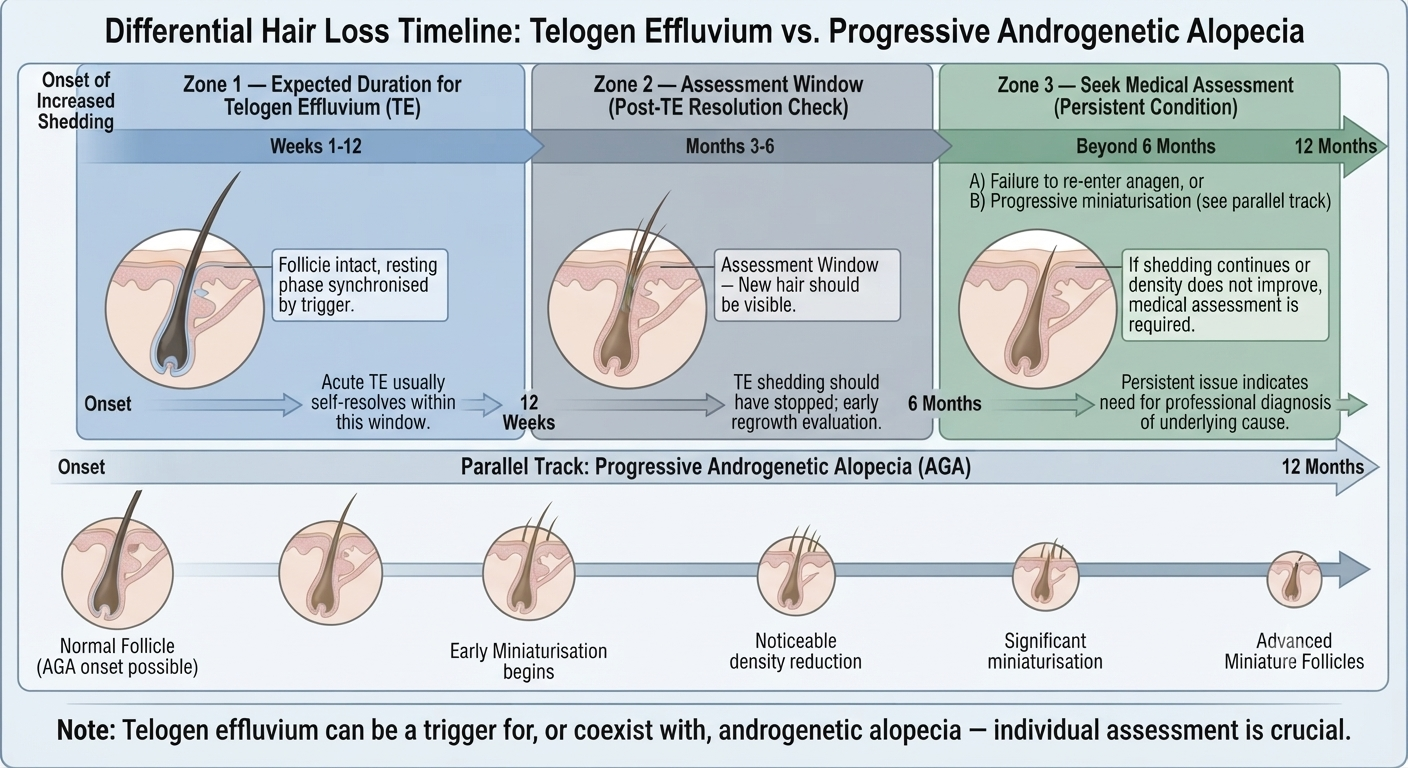
Persistent shedding may indicate:
- Ongoing nutritional deficiencies
- Thyroid disease
- Chronic illness
- Medication effects
- An underlying hair disorder
The longer abnormal shedding continues, the more important it becomes to identify the cause.
How do doctors investigate the problem?
Assessment usually begins with a detailed history.
A healthcare professional may ask about:
- When the shedding began
- Recent illnesses or major life events
- Medications
- Diet
- Family history of hair loss
- Changes in the scalp
The scalp is then examined to look for patterns of thinning, inflammation or signs of other hair disorders.
Additional blood tests or other investigations may be recommended if an underlying medical condition is suspected.
Why making the correct diagnosis matters
Treating temporary shedding as though it were permanent hair loss may expose someone to unnecessary treatments.
Equally, assuming progressive androgenetic alopecia is “just shedding” may delay intervention while follicles continue to miniaturise.
Understanding which process is occurring helps guide the most appropriate management plan.
Looking beyond the hairbrush
Seeing more hair than usual in the shower can understandably cause concern, but it does not automatically mean permanent hair loss is developing.
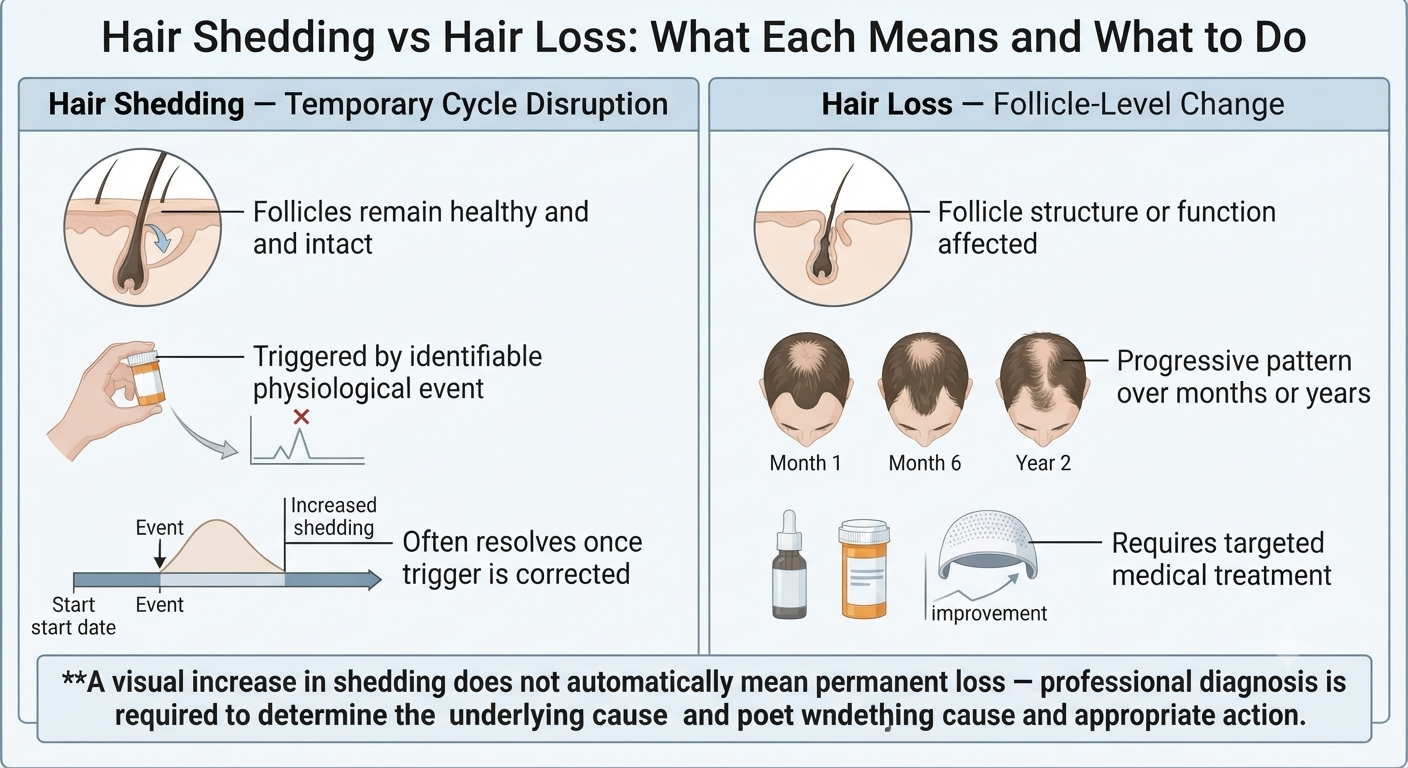
Hair shedding is often temporary and reflects a disruption of the normal growth cycle rather than irreversible follicle damage. True hair loss involves changes to the follicles themselves and usually requires a different approach.
Recognising the difference is the first step towards choosing the right treatment and setting realistic expectations for recovery.
Author: Dr. Priya Goswami
Medical review: Dr. Denis Broun
Next step
If you notice coverage changes without increased shedding, confirm what process is occurring.
Take the Hair Assessment to have a physician review your pattern, identify whether miniaturization is present, and determine appropriate staging and next steps.
Add Comment