When hair starts becoming thinner, many people immediately look for a new shampoo or treatment.
Few stop to think about their haircut.
Yet the way hair is cut can have a noticeable effect on how full it appears.
The key is understanding that there is no single “best haircut” for thinning hair.
A style that works well for one person may highlight thinning in another.
The right choice depends on why the hair is thinning in the first place.
Start with the diagnosis
Hair thinning is a symptom, not a diagnosis.
Common causes include:
- Androgenetic alopecia (male or female pattern hair loss)
- Telogen effluvium
- Traction alopecia
- Inflammatory scalp conditions
- Nutritional or hormonal disorders
Each affects hair density differently.
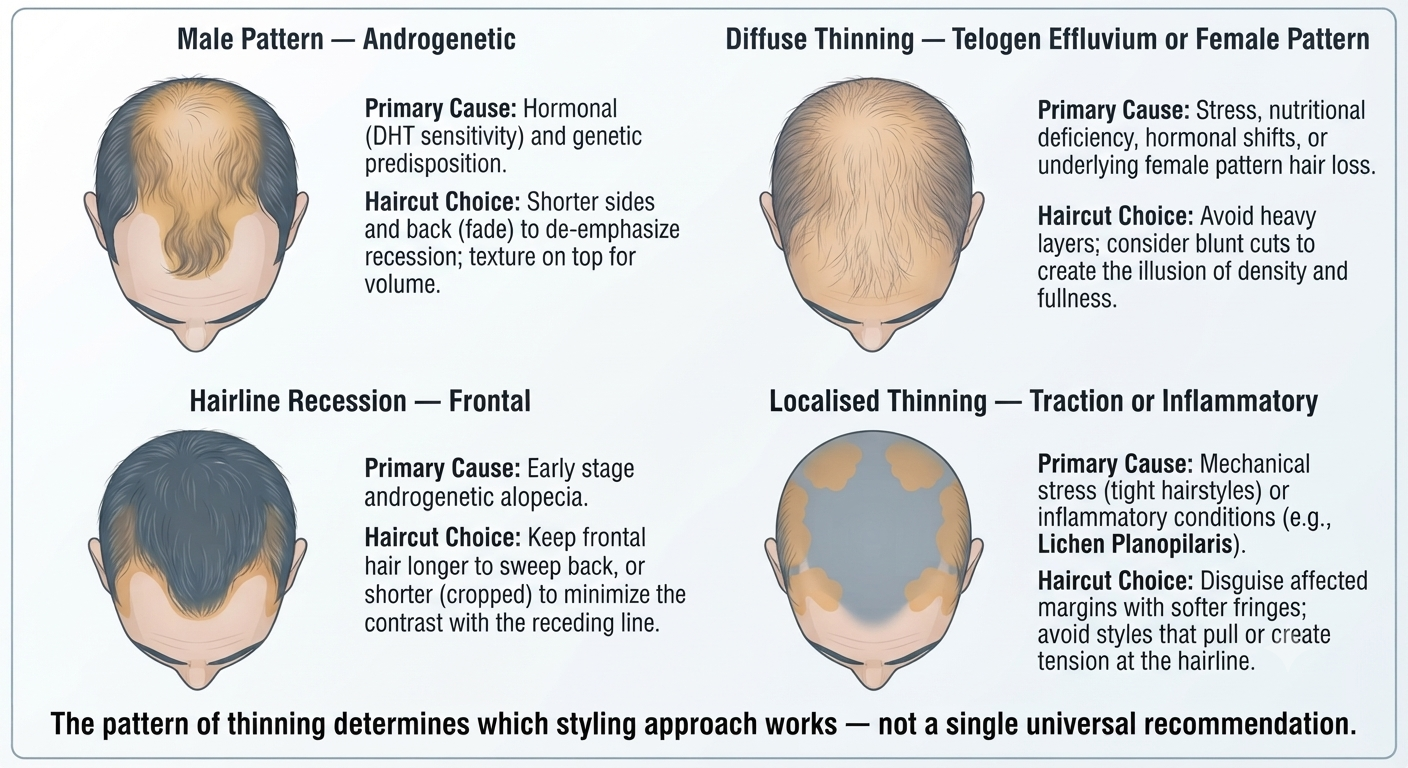
A haircut should complement the pattern of thinning rather than simply follow current fashion.
If you have male pattern hair loss
Male pattern hair loss usually affects:
- The temples
- The frontal hairline
- The crown
For many men, shorter styles work well because they reduce the contrast between dense and thinning areas.
Styles with gentle texture can also make the hair appear fuller.
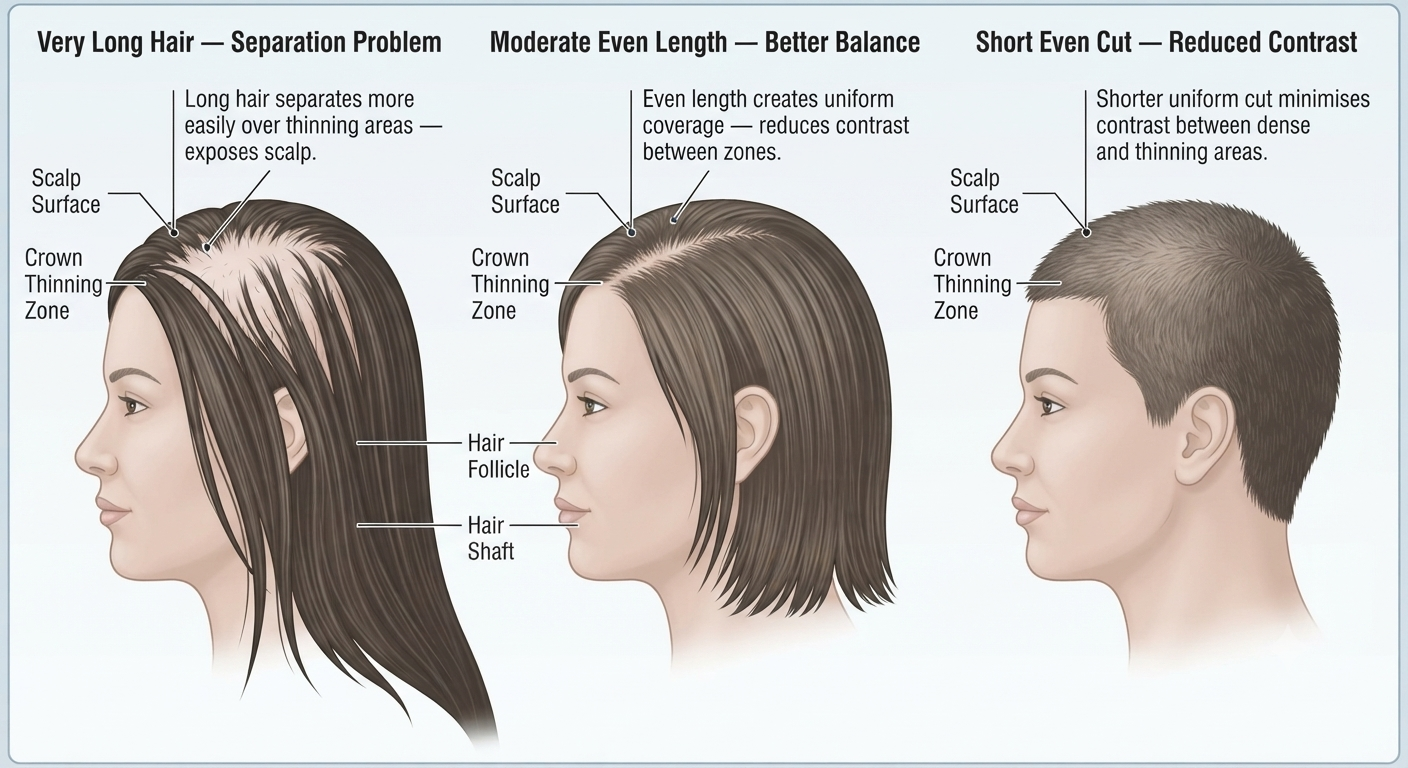
Very long hair often separates more easily, exposing the scalp and drawing attention to thinning.
If the thinning is diffuse
Diffuse thinning means hair density has reduced across much of the scalp rather than in one specific area.
In this situation, maintaining a moderate length often works better than either very short or very long styles.
Adding subtle texture can create movement without making the scalp more visible.
Heavy layering should be approached cautiously if overall density is already reduced.
Haircuts for thinning at the crown
When thinning is mainly at the crown:
- Keeping the surrounding hair relatively even in length often creates a more balanced appearance.
- Excessively long hair may separate over the crown.
- Very short cuts can reduce the contrast between the crown and surrounding areas.
The aim is usually to create uniformity rather than disguise the thinning completely.
What about the hairline?
Receding hairlines are difficult to hide with styling alone.
Trying to comb hair forward or across the scalp often produces an unnatural appearance, particularly in windy or wet conditions.
A hairstyle that works with the natural hairline generally looks more convincing than one designed to conceal it.
Are fades helpful?
A well-executed fade can work well for some men with early thinning.
By gradually reducing the length at the sides and back, attention is naturally drawn upwards rather than towards areas of reduced density.
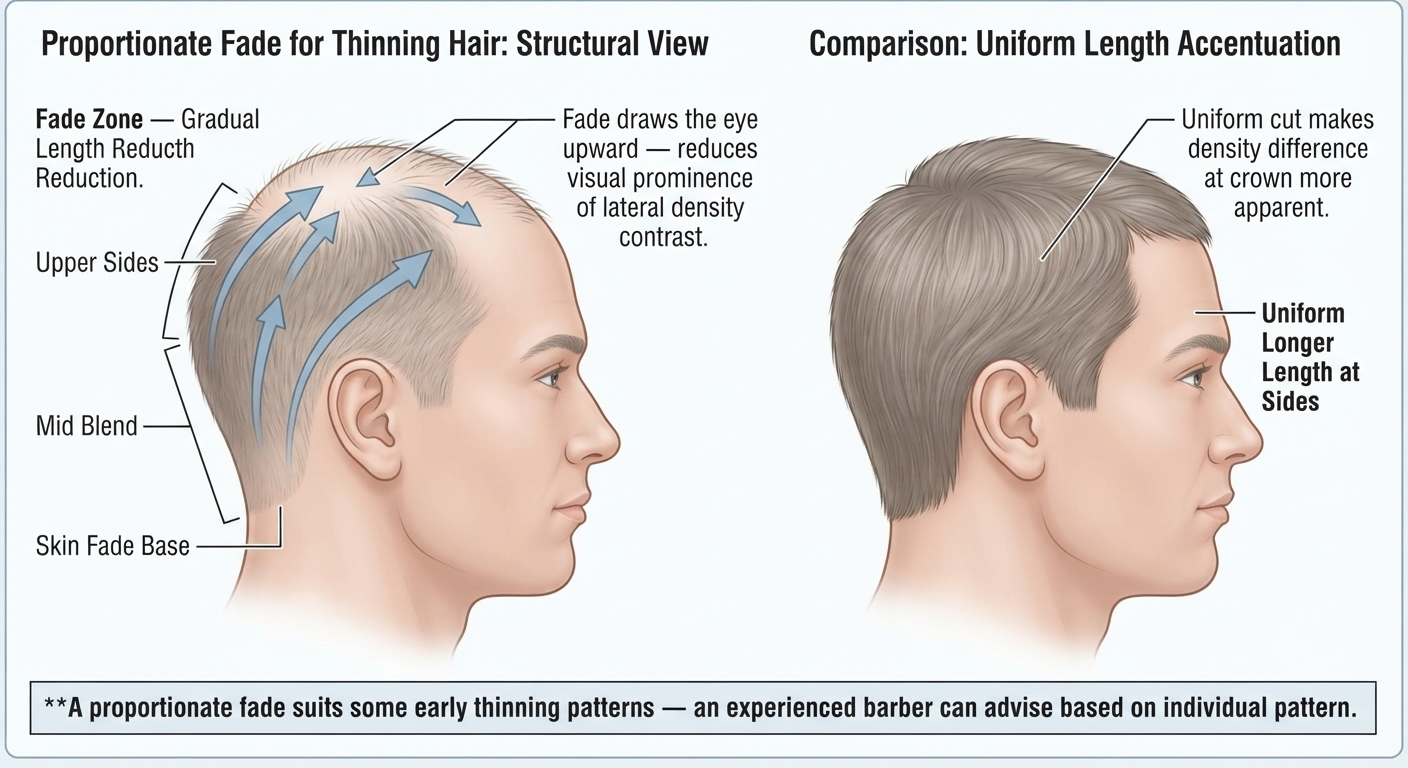
The fade should remain proportionate to the degree of thinning.
An experienced barber can often advise on what suits your individual hair pattern.
Should you shave your head?
For some men with advanced androgenetic alopecia, a closely shaved head becomes the simplest and most practical option.
It eliminates the contrast between thinning and non-thinning areas and requires very little maintenance.
This is a personal choice rather than a medical recommendation.
Many men prefer to retain whatever hair they have, while others find that a shaved style suits them well.
Hairstyles that may make thinning more obvious
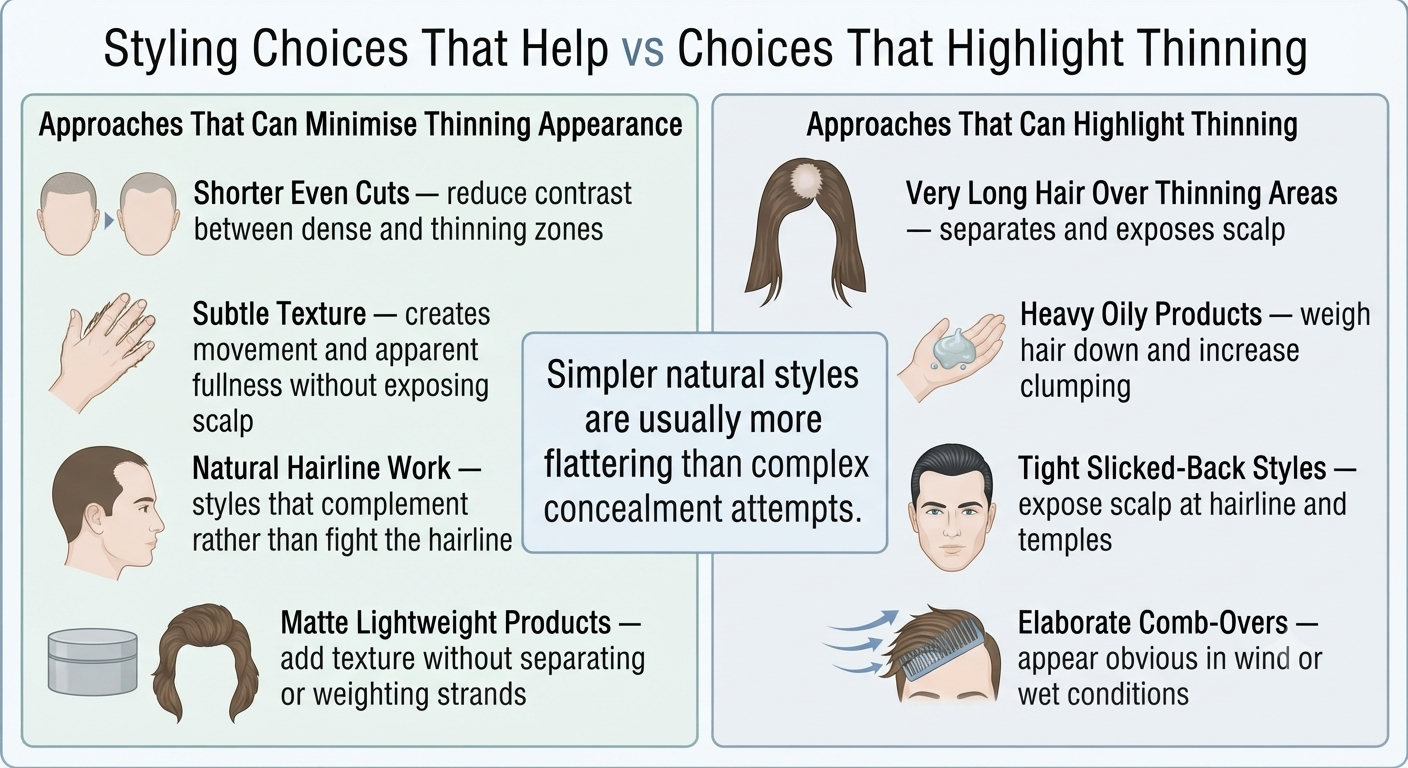
Certain styling choices can unintentionally highlight reduced density.
These include:
- Very long hair with significant thinning
- Heavy use of oily styling products that separate the hair
- Tight hairstyles that expose the scalp
- Attempts to create elaborate comb-overs
A simpler, more natural style is often the more flattering option.
Work with an experienced barber or stylist
A barber or hairstylist who regularly works with thinning hair can often recommend styles based on:
- Hair texture
- Hair thickness
- Growth direction
- Face shape
- Pattern of thinning
Bringing photographs of styles you like can help guide the discussion, but the final choice should take your own hair characteristics into account.
A haircut is not a treatment
Even the best haircut does not slow hair loss.
If thinning continues to progress, the hairstyle may need to change over time.
Anyone concerned about ongoing hair loss should consider medical assessment to identify the underlying cause and discuss appropriate treatment options.
Looking your best while managing hair loss
A good haircut cannot restore lost hair, but it can make existing hair look healthier, fuller and easier to manage.
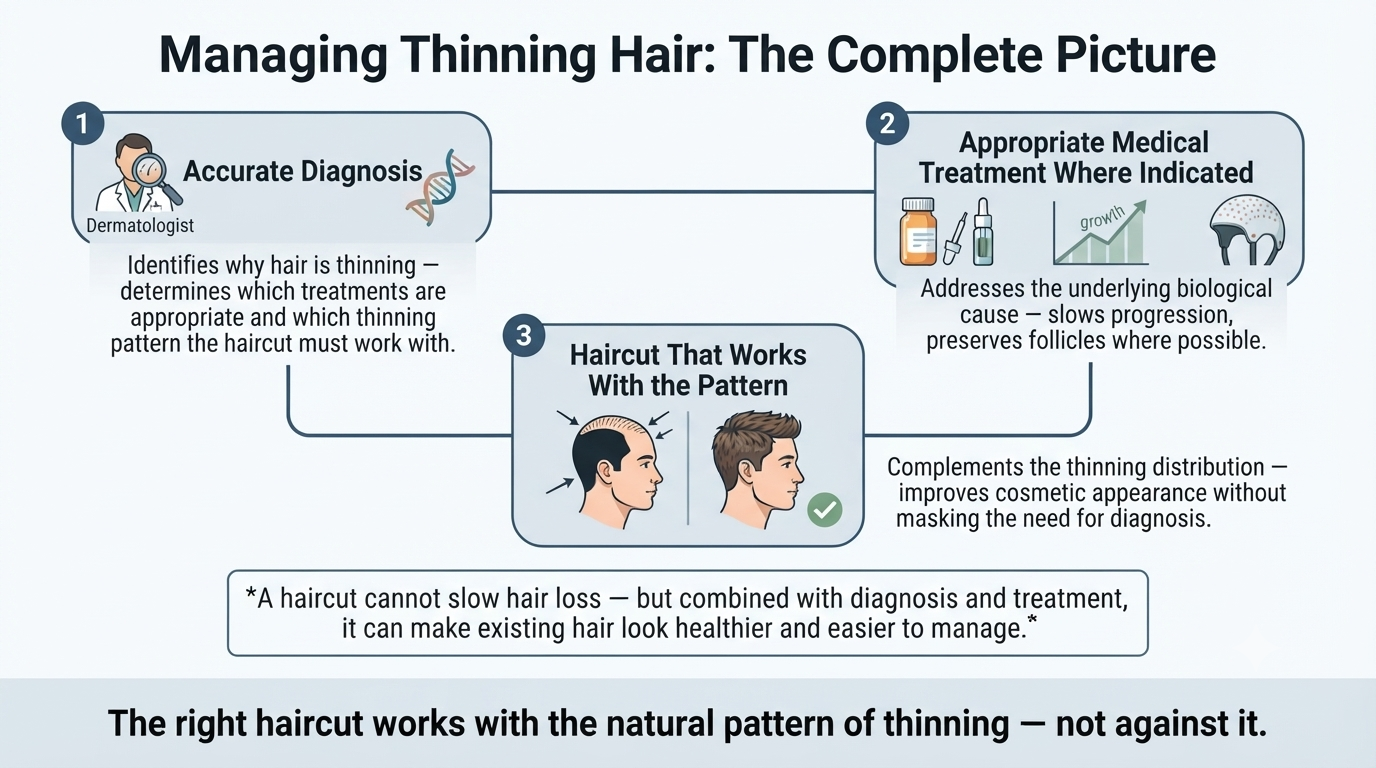
The most successful styles work with the natural pattern of thinning rather than trying to hide it. Combined with an accurate diagnosis and appropriate medical care where needed, the right haircut can become an important part of managing hair loss with confidence and realistic expectations.
Author: Dr. Priya Goswami
Medical review: Dr. Denis Broun
Next step
If you notice coverage changes without increased shedding, confirm what process is occurring.
Take the Hair Assessment to have a physician review your pattern, identify whether miniaturization is present, and determine appropriate staging and next steps.
Add Comment