One of the biggest challenges with minoxidil is that it works slowly.
When you look in the mirror every morning, small changes are almost impossible to notice.
That is why progress photographs are so useful.
They provide an objective record of what has changed over time and can reveal gradual improvements that might otherwise go unnoticed.
Just as importantly, they help set realistic expectations.
Why the mirror can be misleading
Hair grows only a little each month.
Even if treatment is working, the difference from one week to the next is usually too small to see.
Other factors can also affect how your hair looks on any given day, including:
- Lighting
- Hair length
- Styling
- Moisture
- Camera angle
Without consistent photographs, it is easy to overestimate or underestimate your progress.
What should you expect after three months?
The first three months are often the most frustrating.
Many people see very little visible improvement.
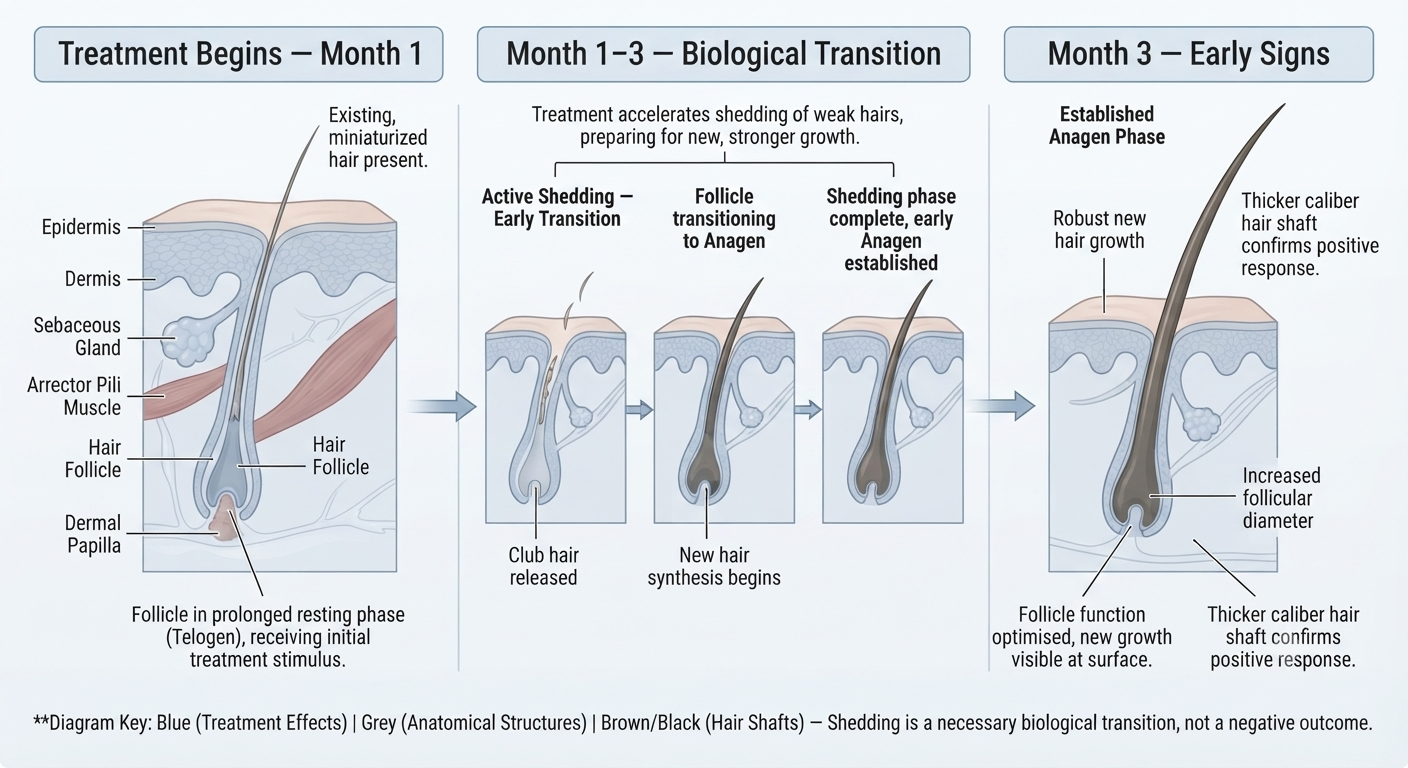
Some even notice increased shedding during the first several weeks.
This temporary shedding can occur because older hairs are replaced as follicles move into a new growth cycle.
By around three months, some people begin to notice:
- Less daily shedding
- Very fine new hairs in thinning areas
- Slight improvement in overall coverage
- Early thickening of existing hairs
Others may not notice any obvious visual change yet.
Neither outcome necessarily predicts the final result.
What does six months usually look like?
Six months is often the first point at which meaningful changes become easier to recognise.
Compared with baseline photographs, some people notice:
- Increased hair density
- Thicker individual hairs
- Reduced scalp visibility
- Better overall coverage at the crown
- Slower progression of hair loss
For many users, improvement remains gradual rather than dramatic.
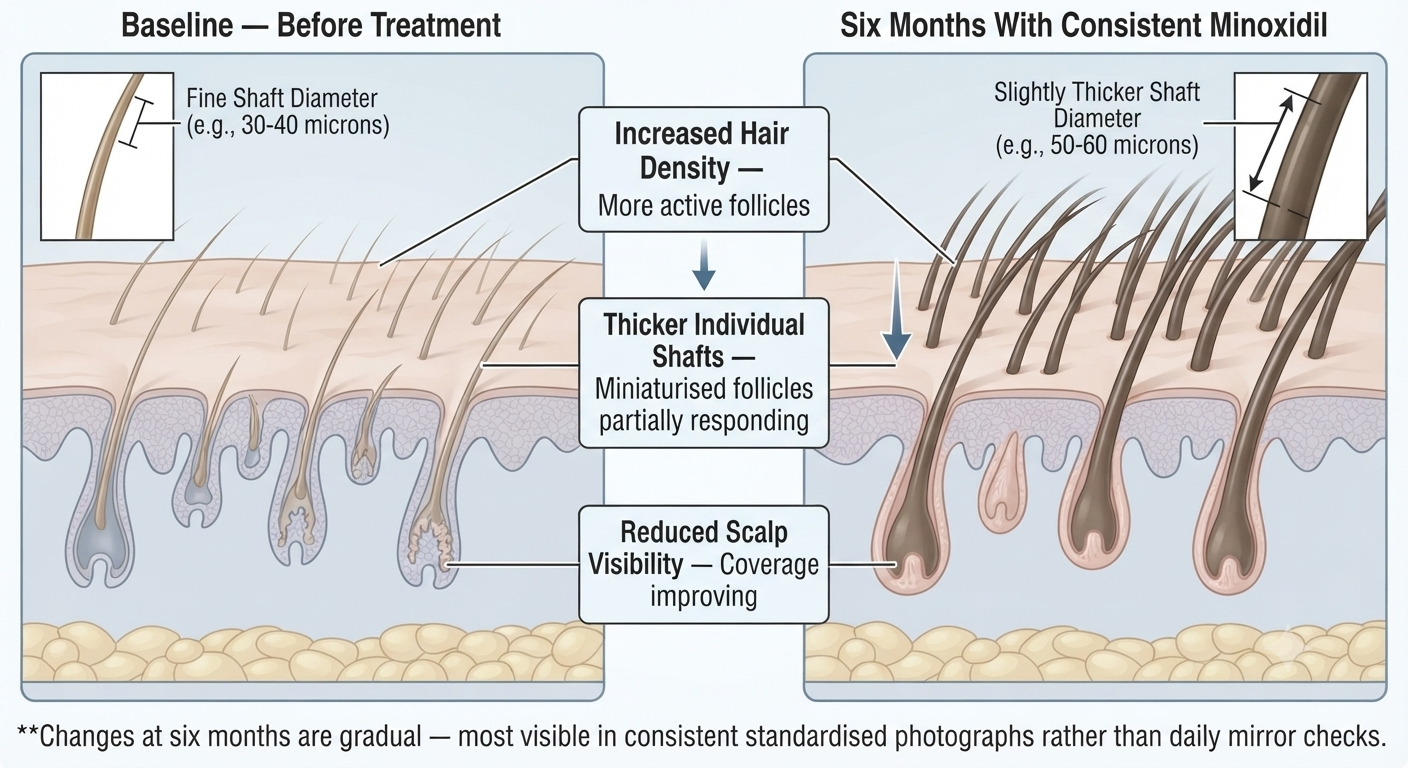
Hairlines tend to respond less consistently than the crown, although individual results vary.
What about twelve months?
Twelve months usually provides a much clearer picture of how well minoxidil is working.
Among people who respond well, photographs may show:
- Noticeably fuller hair
- Greater hair shaft thickness
- Improved density in previously thinning areas
- Better cosmetic coverage
Some people continue improving beyond twelve months, while others reach a plateau.
If there has been no measurable improvement after a year of consistent treatment, your healthcare professional may wish to review the diagnosis or discuss alternative options.
Why do results vary?
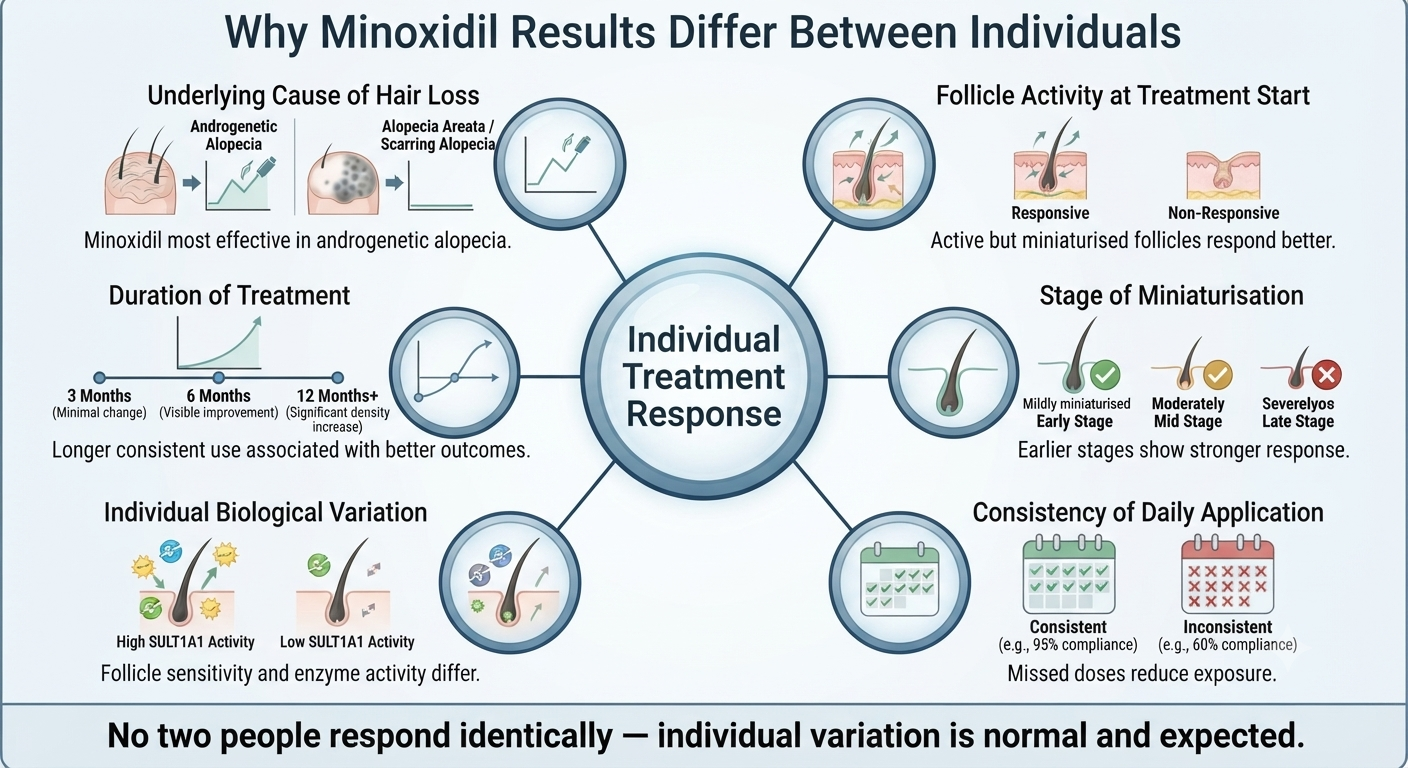
No two people respond identically.
Several factors influence the outcome, including:
- The underlying cause of hair loss
- How early treatment begins
- The extent of follicle miniaturisation
- Consistency of use
- Individual biological differences
Minoxidil generally works best when follicles are still active and producing at least some visible hair.
How should you take progress photographs?
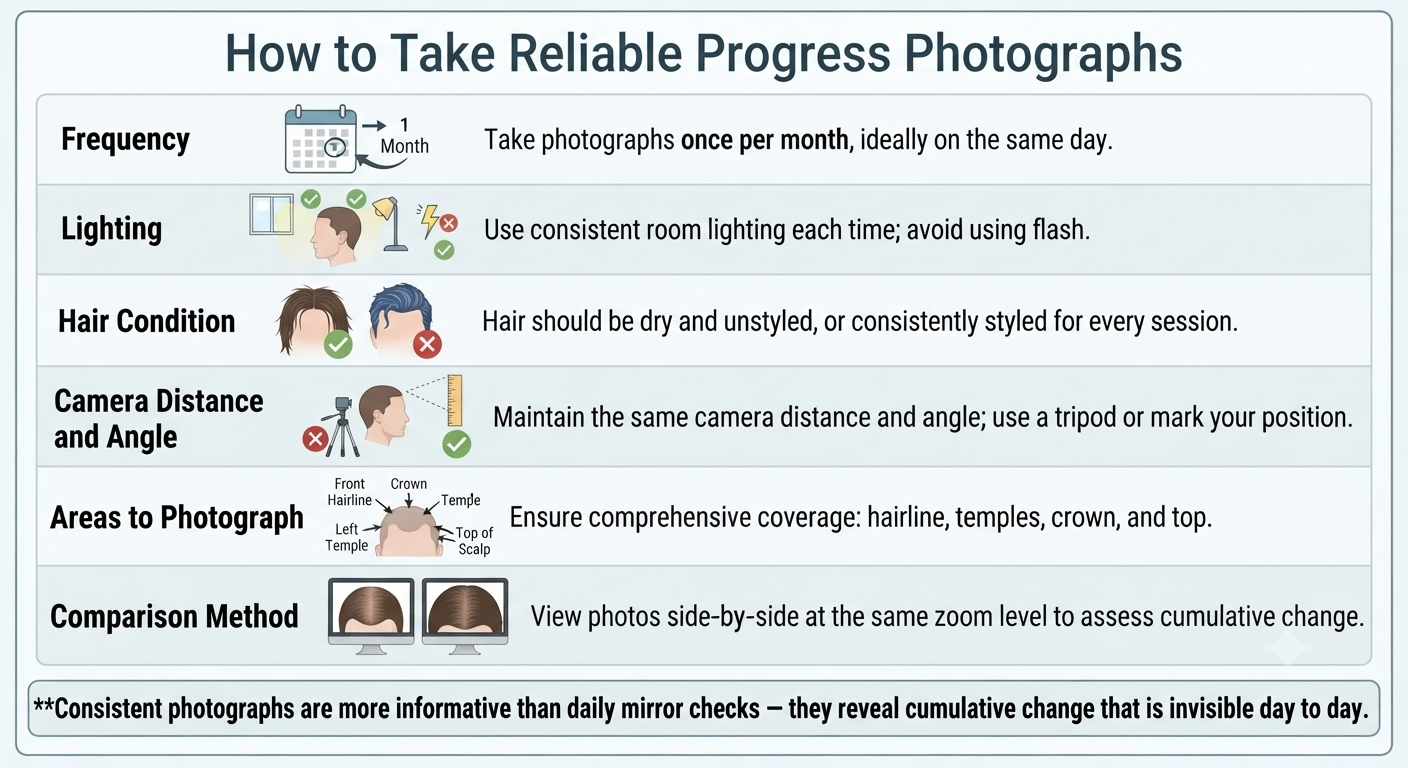
Consistency is more important than having expensive equipment.
Try to:
- Take photographs once each month.
- Use the same room and lighting.
- Keep the same hairstyle and hair length where possible.
- Photograph the same areas each time.
- Use the same camera distance and angle.
Many people find it helpful to photograph:
- The front hairline
- Both temples
- The crown
- The top of the scalp
These images provide a reliable comparison over time.
What should you avoid?
It is easy to become discouraged by comparing your results with photographs found online.
Remember that:
- Individual responses differ.
- Online images may represent unusually good outcomes.
- Lighting and styling can exaggerate apparent improvement.
- Some photographs are not taken under comparable conditions.
Your own baseline photographs are a much better measure of success than someone else’s results.
When should treatment be reviewed?
Treatment should generally be reviewed if:
- You have used minoxidil consistently for six to twelve months without clear improvement.
- Hair loss continues to progress rapidly.
- Side effects become difficult to tolerate.
- The diagnosis is uncertain.
In some cases, another cause of hair loss may be present, or a different treatment strategy may be more appropriate.
Measuring progress with perspective
Progress photographs are not about looking for overnight transformation.
They are about documenting small, cumulative changes that become meaningful over time.
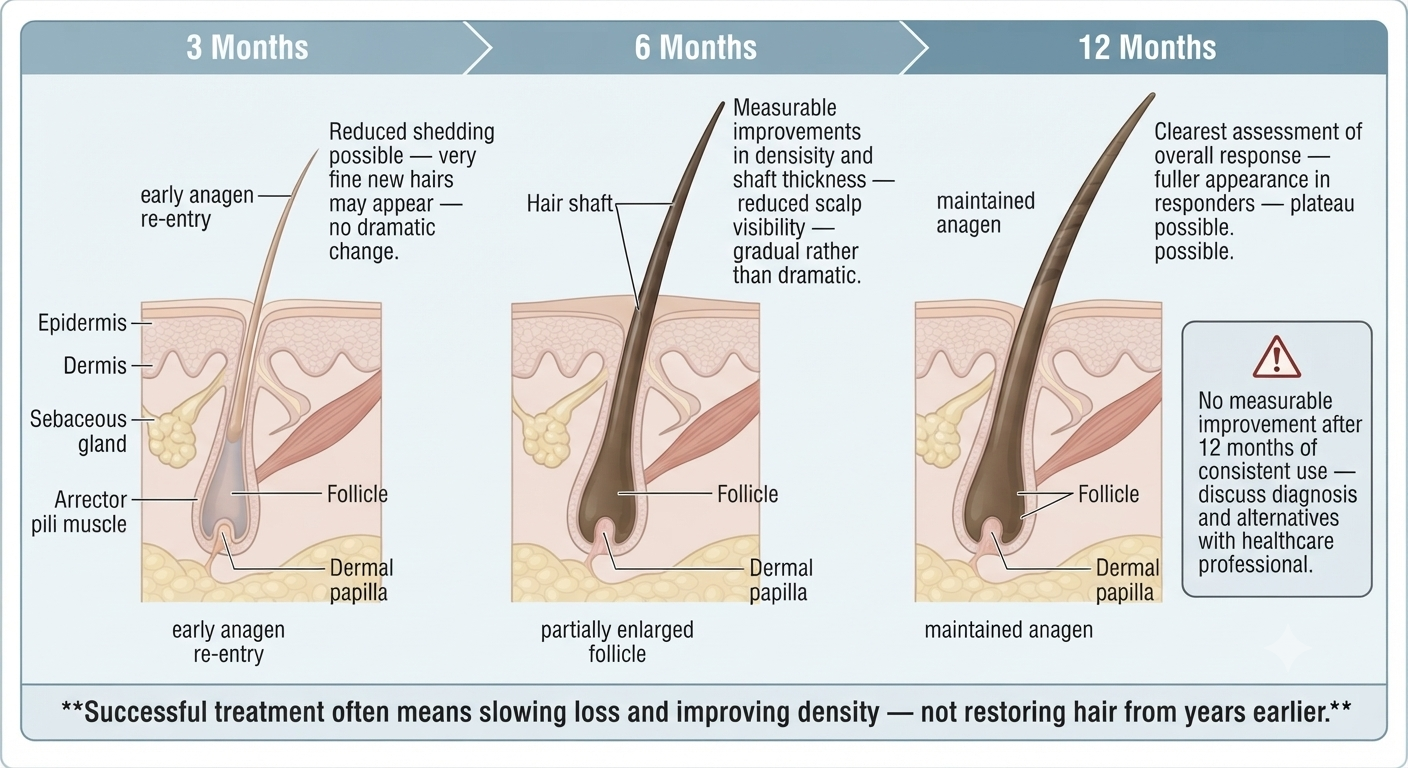
For many people, successful treatment means slowing further hair loss, preserving existing follicles and achieving gradual improvements in density rather than restoring the hair they had years earlier. Comparing well-standardised photographs at three, six and twelve months provides one of the most reliable ways to judge whether minoxidil is delivering those benefits.
Author: Dr. Priya Goswami
Medical review: Dr. Denis Broun
Next step
If you notice coverage changes without increased shedding, confirm what process is occurring.
Take the Hair Assessment to have a physician review your pattern, identify whether miniaturization is present, and determine appropriate staging and next steps.

Add Comment