Many people first notice traction alopecia around the hairline.
The temples appear thinner.
Small hairs begin breaking away.
The scalp becomes more visible where the hair used to feel full.
At first, it may seem like normal shedding.
In reality, repeated pulling on the hair can gradually damage the follicles beneath the skin.
The encouraging news is that early traction alopecia often improves. The challenge is recognising it before the damage becomes permanent.
What is traction alopecia?
Traction alopecia is hair loss caused by continuous mechanical tension.
Unlike genetic hair loss or autoimmune conditions, the problem is not primarily hormonal or immune-related.
Instead, the hair follicles are repeatedly placed under physical stress.
Over time, this stress disrupts the normal hair growth cycle.
If it continues for long enough, the follicle itself may become permanently damaged.
What causes it?
The condition is commonly associated with hairstyles that pull tightly on the scalp.
Examples include:
- Tight ponytails
- Braids
- Cornrows
- Buns worn under tension
- Hair extensions
- Weaves
- Certain religious or occupational hairstyles requiring prolonged tight styling
Traction alopecia can affect anyone, regardless of age, sex or ethnicity.
Early signs are often subtle
The condition usually develops gradually.
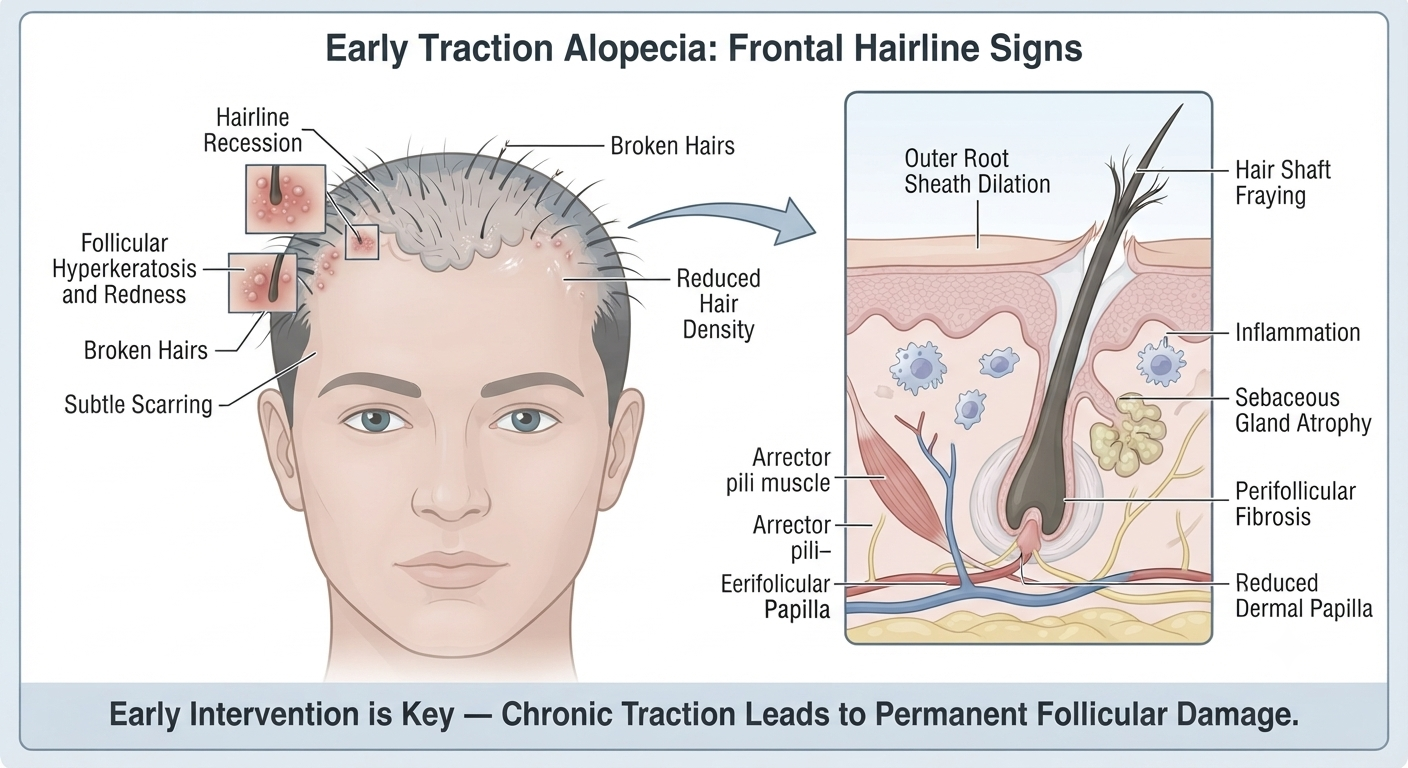
Common early features include:
- Tenderness after styling
- Small broken hairs around the hairline
- Thinning at the temples
- Redness around follicles
- Small bumps or irritation after tight hairstyles
These symptoms suggest that the follicles are under stress before significant hair loss develops.
How long does recovery take?
Recovery depends on whether the follicles are still healthy.
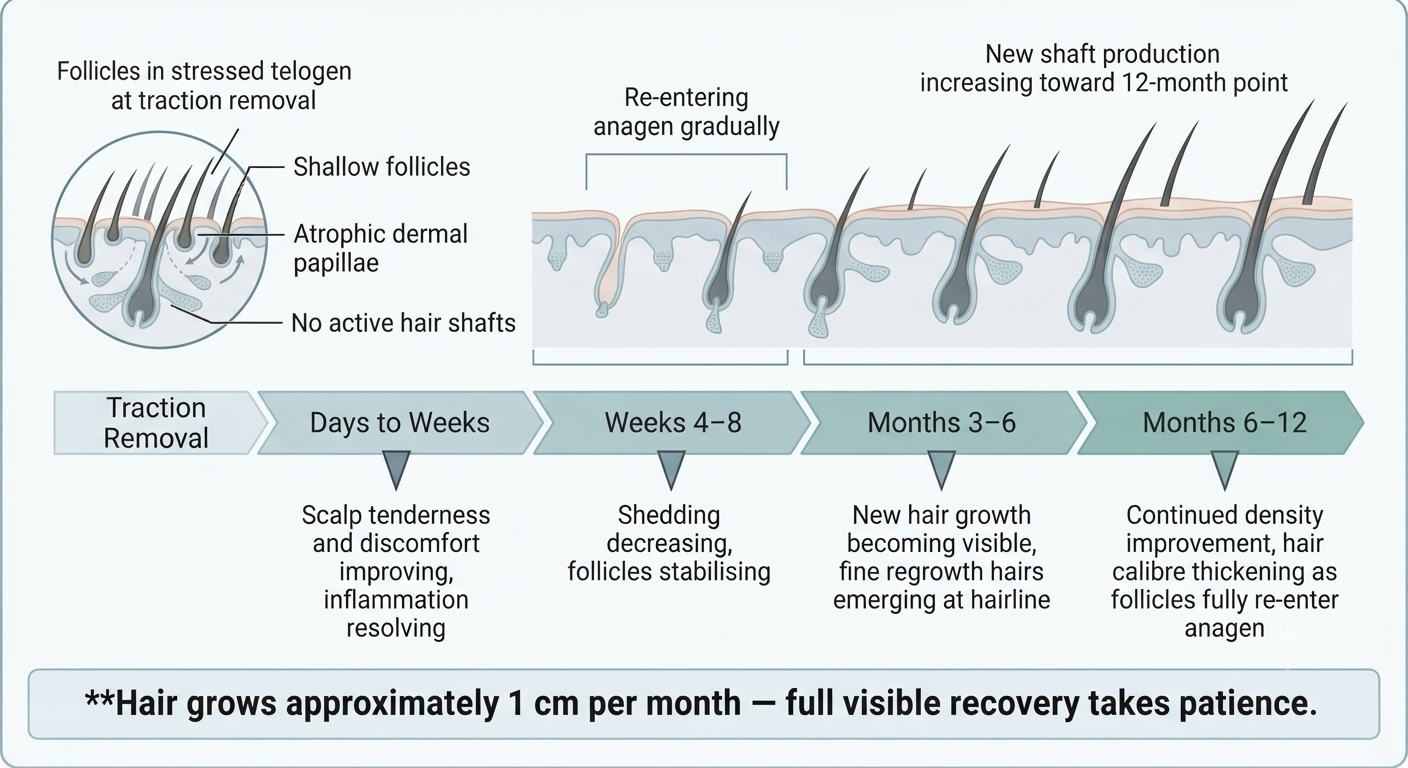
If traction is stopped early:
- Discomfort may improve within days or weeks.
- Hair shedding often decreases over several weeks.
- New growth may become visible after three to six months.
- Continued improvement may occur for up to twelve months.
Hair grows slowly, so visible recovery requires patience.
What affects the chance of regrowth?
Several factors influence recovery.
These include:
- How long the traction has been present
- How tightly the hair has been pulled
- Whether inflammation has developed
- Individual hair growth patterns
- Overall follicle health
People who stop tight hairstyles early generally have a much better chance of regrowth than those who continue placing stress on the follicles.
When does hair loss become permanent?
Unfortunately, traction alopecia is not always reversible.
Long-standing tension may eventually destroy the follicle and replace it with scar tissue.
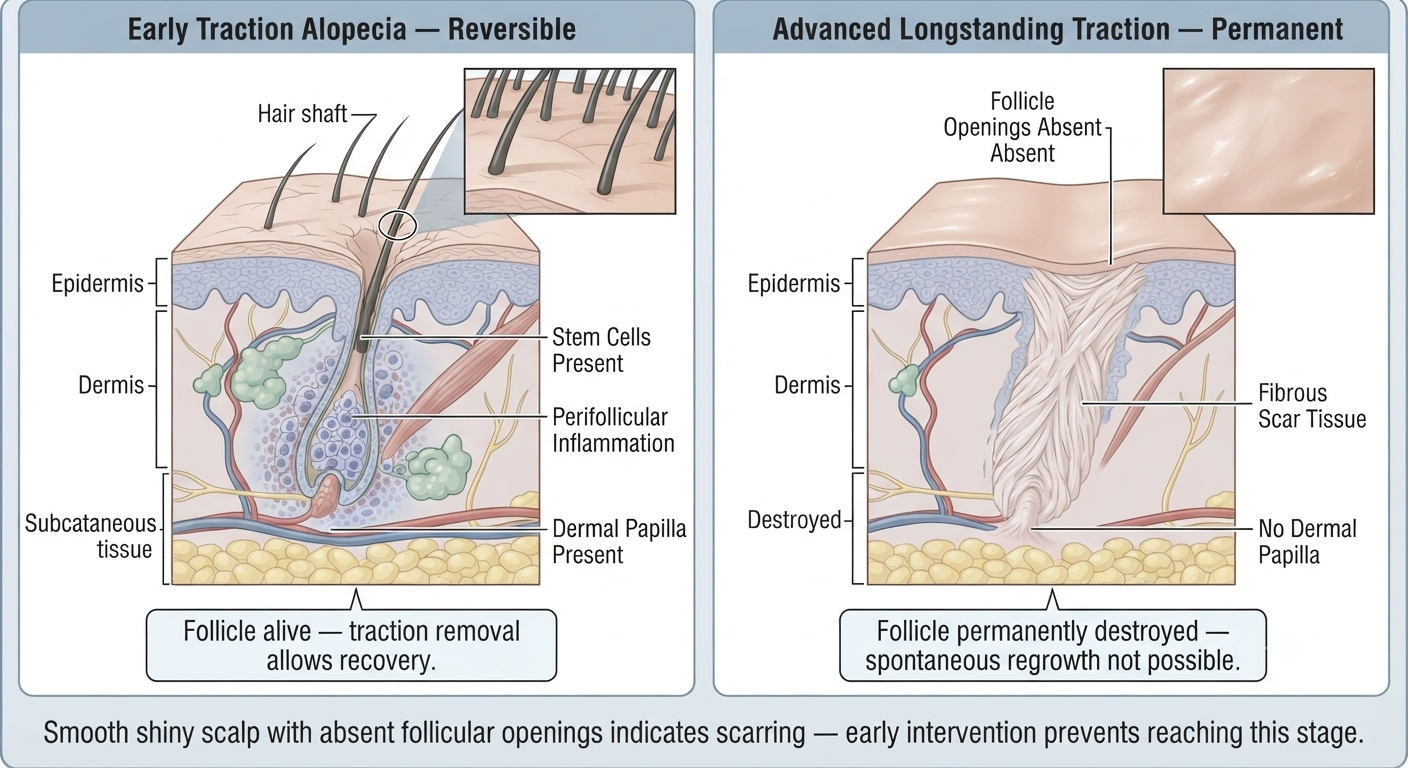
Signs suggesting more advanced disease include:
- Smooth shiny areas of scalp
- Absence of visible follicle openings
- Hair loss that remains unchanged despite removing traction for many months
Once true scarring develops, spontaneous regrowth is unlikely.
Are treatments available?
The first and most important treatment is removing the source of traction.
Additional management may include:
- Treating any associated scalp inflammation
- Gentle hair care
- Avoiding chemical treatments while the scalp recovers
- Medical therapies where appropriate, depending on the individual case
In advanced cases where follicles have been permanently lost, hair transplantation may be considered after careful assessment, provided the disease is no longer active.
Can traction alopecia happen again?
Yes.
Even after successful recovery, repeatedly returning to tight hairstyles can trigger further damage.
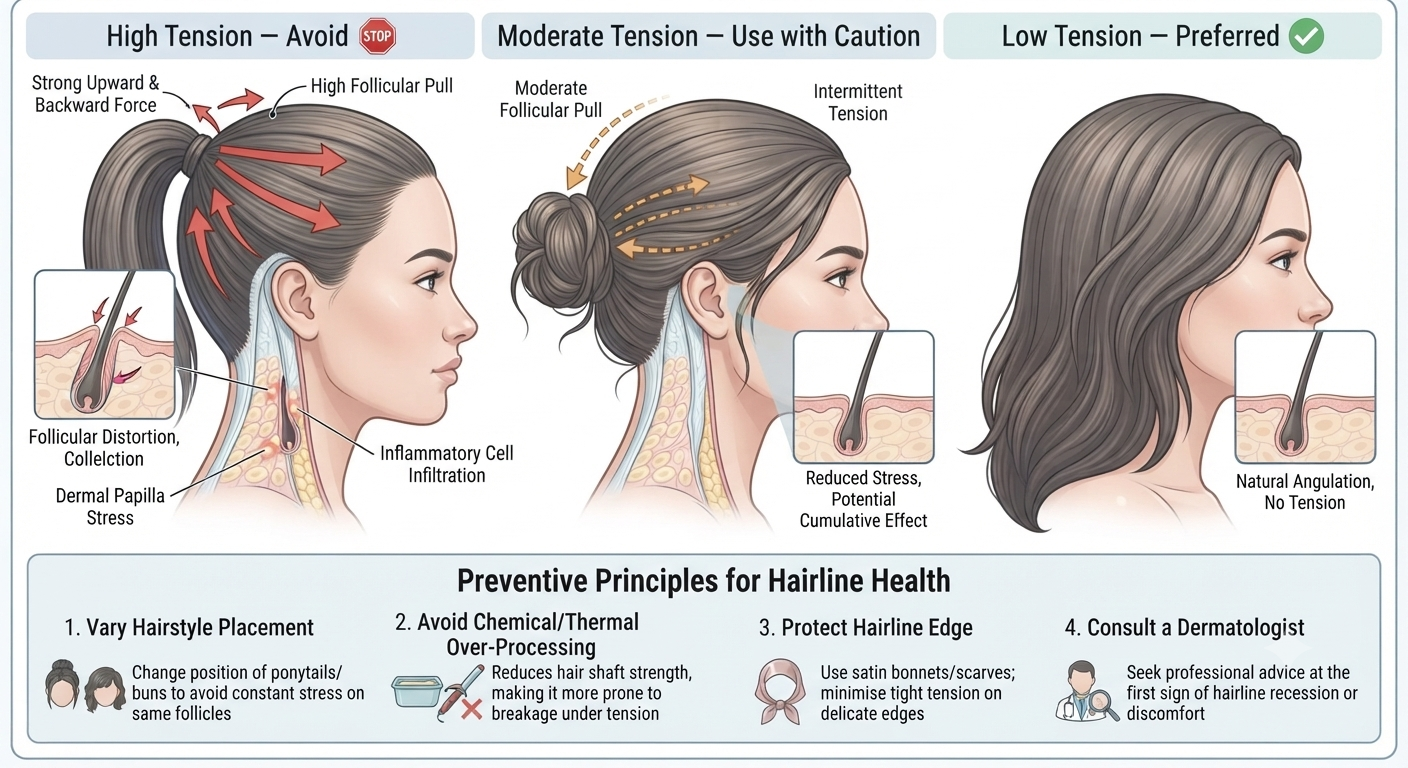
Preventive measures include:
- Wearing hairstyles with less tension
- Varying hairstyles regularly
- Avoiding hairstyles that cause pain or persistent tightness
- Removing extensions or braids before prolonged stress develops
Pain after styling should never be considered normal.
Knowing when to seek medical advice
Medical assessment is advisable if:
- Hair loss continues despite changing hairstyles.
- The scalp is painful or inflamed.
- Bald patches enlarge.
- There are signs of infection.
- Hair does not begin recovering after several months without traction.
Early diagnosis offers the greatest opportunity to preserve healthy follicles.
Acting before the damage becomes permanent
Traction alopecia is one of the few common forms of hair loss that is often preventable.
The key factor is timing.
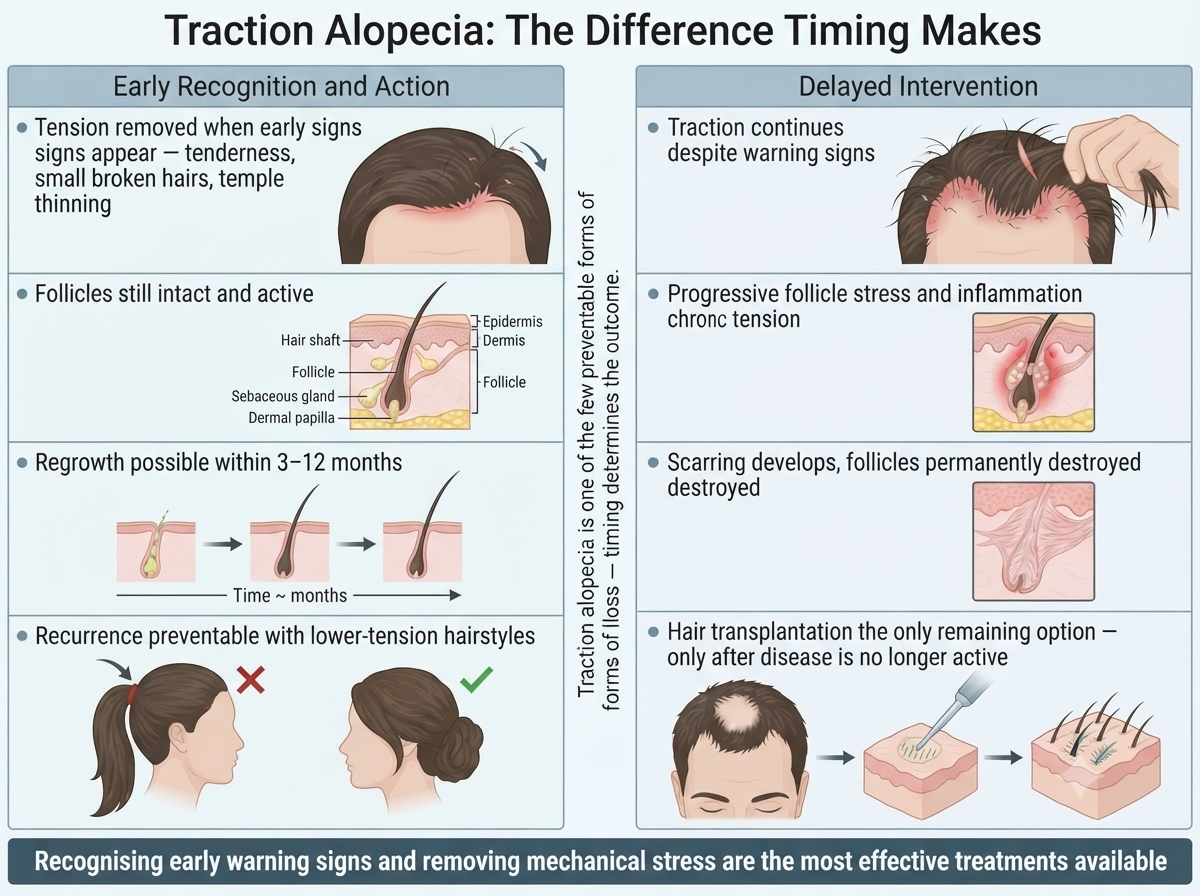
When excessive tension is recognised early and removed, many follicles can recover and normal hair growth may gradually return. If traction continues for years, however, permanent follicle damage becomes increasingly likely.
Recognising the early warning signs and reducing mechanical stress on the hair are often the most effective treatments available.
Author: Dr. Priya Goswami
Medical review: Dr. Denis Broun
Next step
If you notice coverage changes without increased shedding, confirm what process is occurring.
Take the Hair Assessment to have a physician review your pattern, identify whether miniaturization is present, and determine appropriate staging and next steps.

Add Comment