PRP has become one of the most talked-about treatments for hair loss.
Some clinics describe it as a way to “stimulate” hair follicles. Others present it as an alternative to medication or surgery.
So, what does the scientific evidence actually say?
The answer is encouraging, but also more cautious than many advertisements suggest.
Research indicates that PRP may improve hair growth for some people. It does not work equally well for everyone, and many important questions about the treatment remain unanswered.
What is PRP?
PRP stands for platelet-rich plasma.
The treatment begins with a small sample of your own blood.
The blood is placed into a centrifuge, which spins it at high speed to separate its different components.
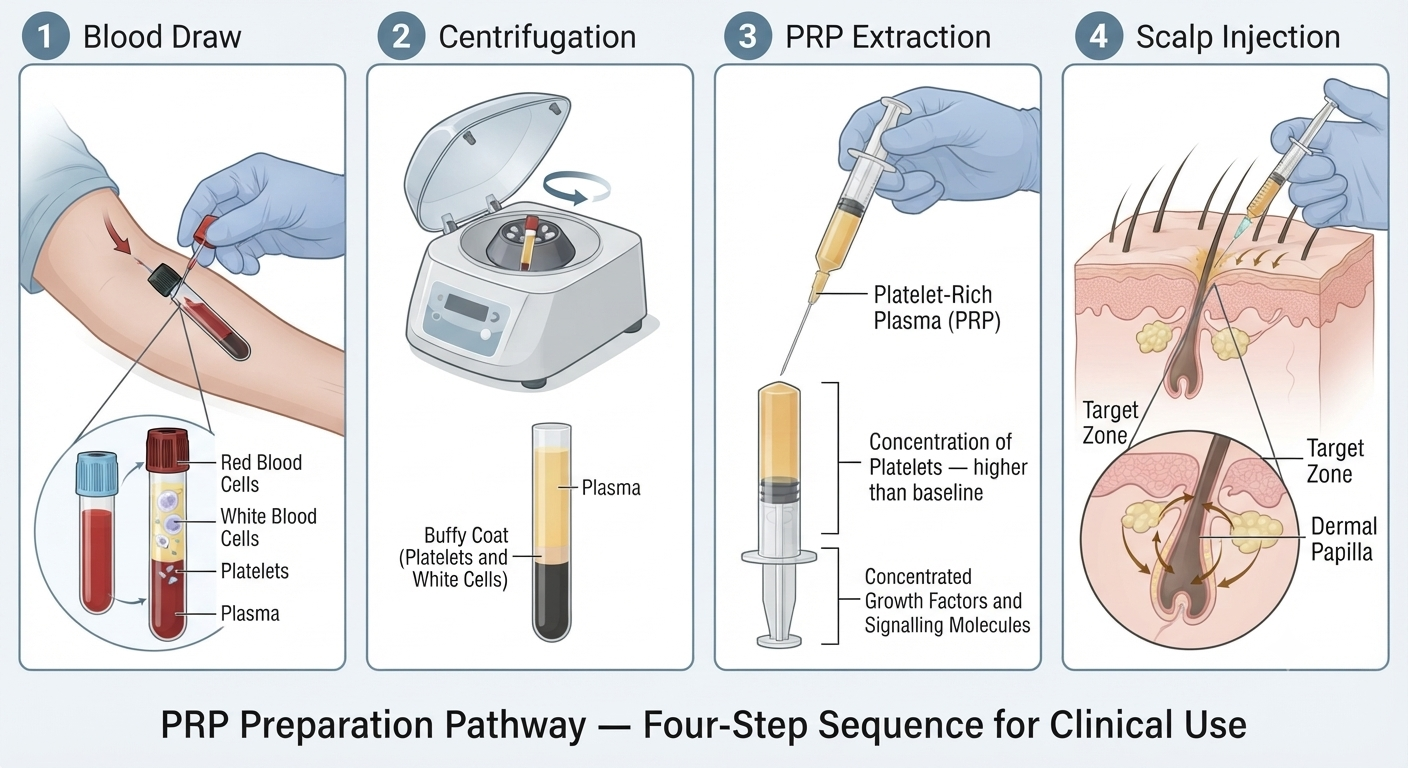
This process produces a concentrated layer of platelets that can then be injected into the scalp.
Because PRP comes from your own blood, it is considered an autologous treatment.
Why are platelets used?
Platelets are best known for helping blood clot after an injury.
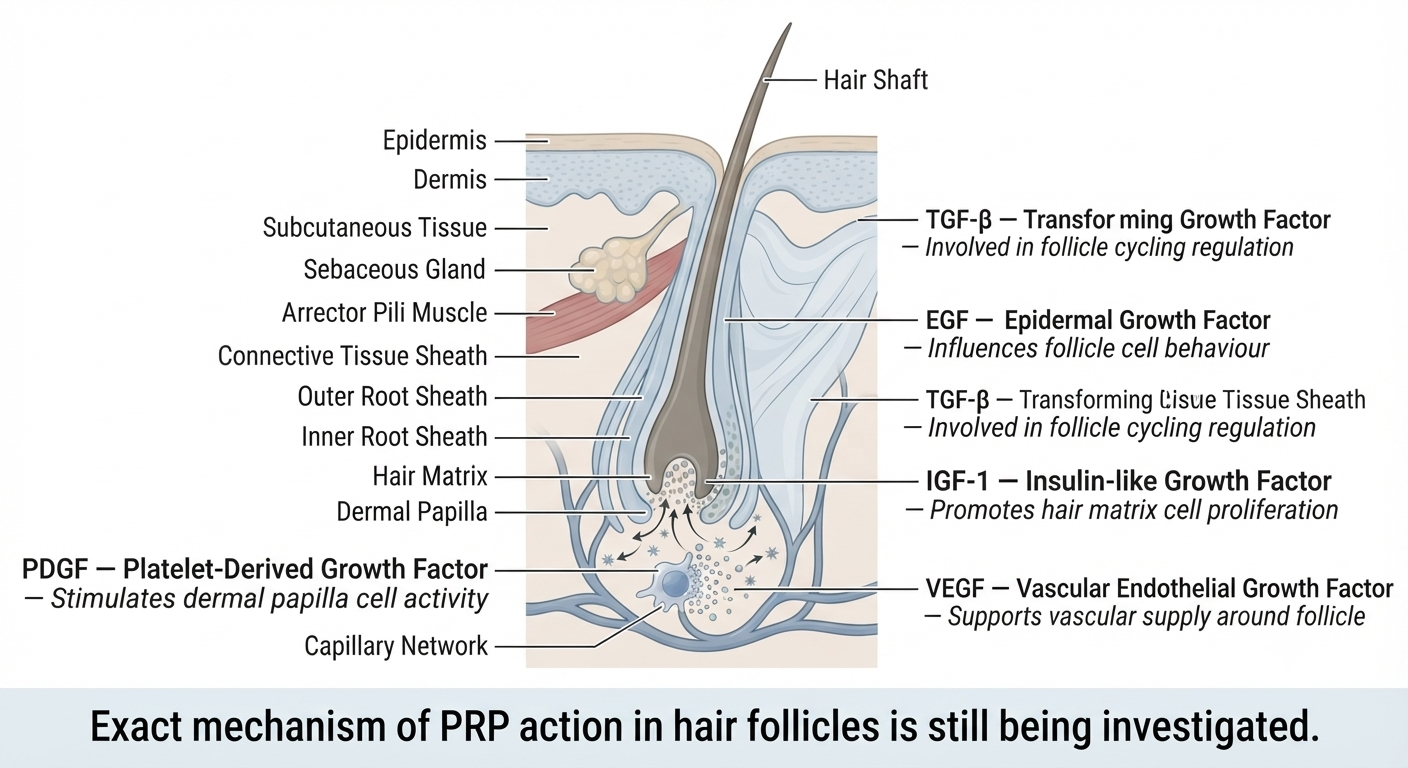
They also contain numerous growth factors and signalling molecules involved in tissue repair.
Researchers believe these substances may:
- Influence hair follicle activity
- Support the growth phase of the hair cycle
- Improve the environment surrounding hair follicles
- Encourage healthier follicle function
Exactly how PRP produces these effects is still being investigated.
What do clinical trials show?
Over the past decade, many clinical studies have evaluated PRP for androgenetic alopecia.
Although the methods differ, several consistent findings have emerged.
Compared with placebo, PRP has been associated with:
- Increased hair density
- Improved hair thickness
- Higher patient satisfaction
- Better photographic assessment scores in many studies
These improvements are generally modest to moderate rather than dramatic.
Importantly, not every participant responds to treatment.
Why are the results difficult to compare?
One challenge in PRP research is the lack of standardisation.
Different clinics may use:
- Different centrifuges
- Different platelet concentrations
- Different preparation methods
- Different injection techniques
- Different treatment schedules
This means that “PRP” in one study may not be identical to “PRP” in another.
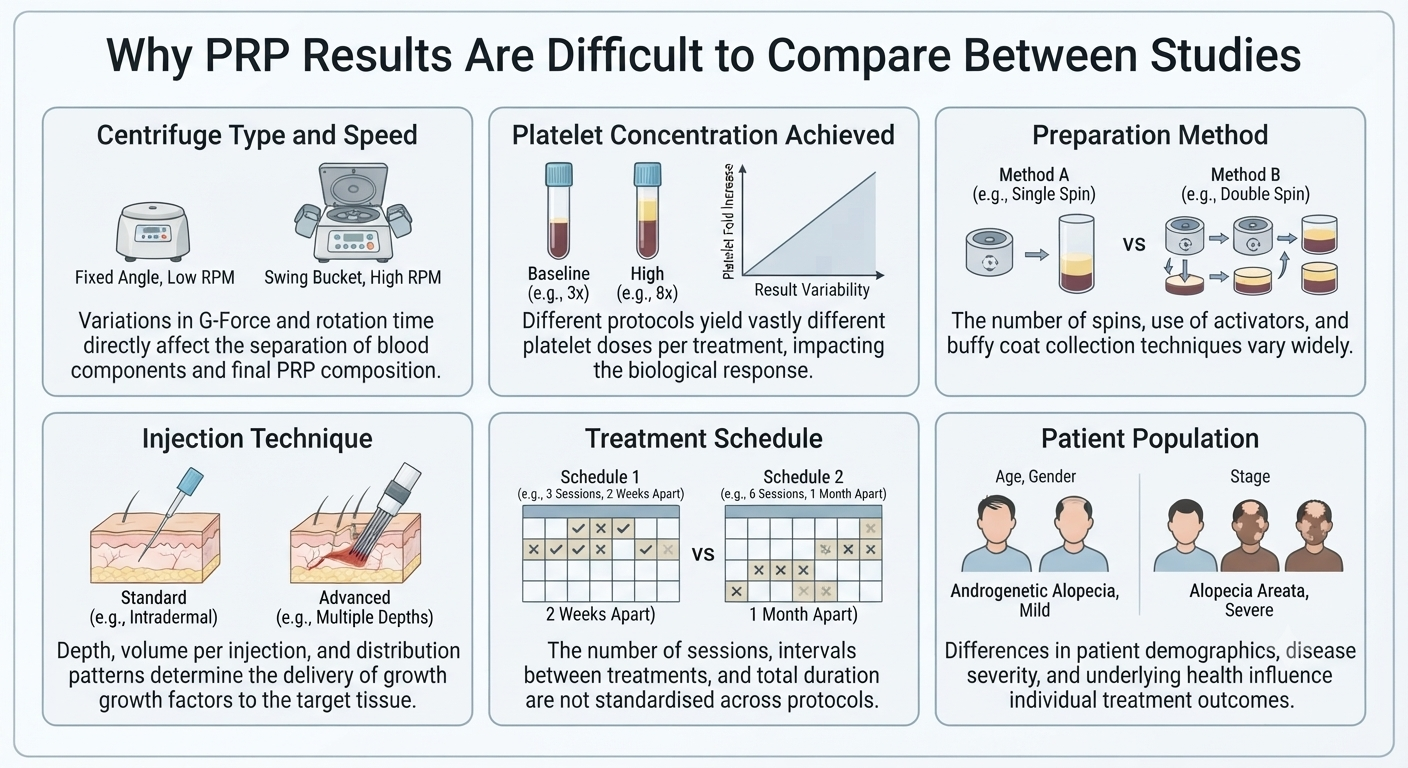
As a result, researchers cannot yet identify one universally accepted treatment protocol.
Who appears to benefit most?
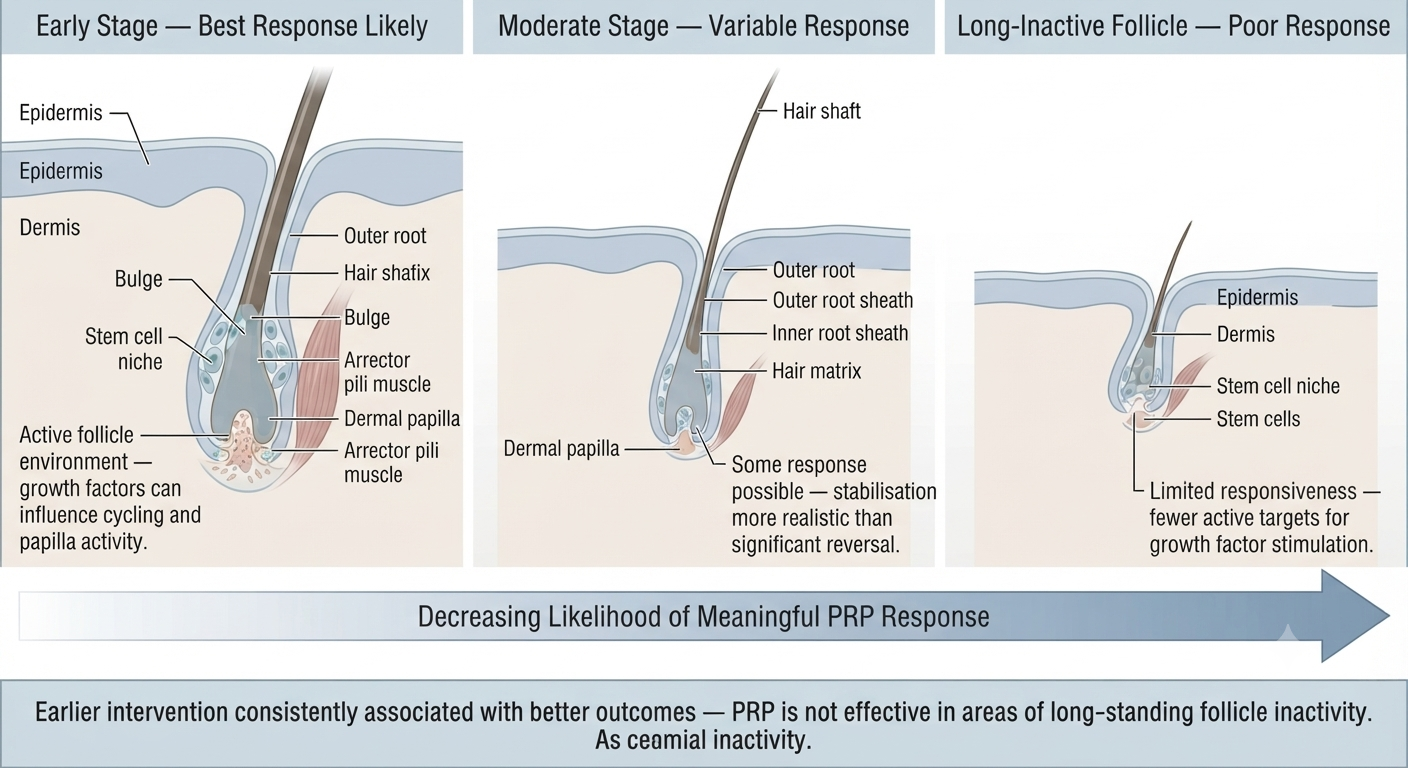
Current evidence suggests that PRP is more likely to help people who:
- Have early or moderate androgenetic alopecia
- Still have active hair follicles
- Begin treatment before extensive hair loss develops
PRP is generally less likely to restore hair in areas where follicles have been inactive for many years.
As with most hair loss treatments, earlier intervention often produces better outcomes.
Is PRP a replacement for other treatments?
Not necessarily.
Clinical practice often considers PRP as one component of an overall management plan rather than a stand-alone solution.
Depending on the diagnosis, treatment may also involve:
- Medical therapy
- Scalp care
- Lifestyle measures
- Surgical options in selected patients
The most appropriate approach depends on the underlying cause of hair loss rather than patient preference alone.
Are there risks?
Because PRP uses your own blood, allergic reactions are uncommon.
However, the procedure still involves injections and carries potential risks such as:
- Temporary discomfort
- Mild swelling
- Bruising
- Scalp tenderness
- Temporary headache
Serious complications are uncommon when the procedure is performed using appropriate sterile techniques.
How many treatments are usually needed?
There is no single schedule supported by all studies.
Many treatment protocols involve:
- An initial series of several sessions
- Maintenance treatments at intervals if improvement is achieved
The exact frequency depends on the treatment protocol and the individual’s response.
Questions worth asking before choosing PRP
If you are considering treatment, it is reasonable to ask:
- What type of hair loss do I have?
- Am I likely to benefit from PRP?
- How is your PRP prepared?
- How many sessions are recommended?
- How will progress be measured?
- What alternatives should also be considered?
A thorough consultation should explain both the potential benefits and the current limitations of the evidence.
What the evidence tells us today
PRP represents an interesting development in hair loss management, and clinical trials suggest it can improve hair density and thickness for some people with androgenetic alopecia.
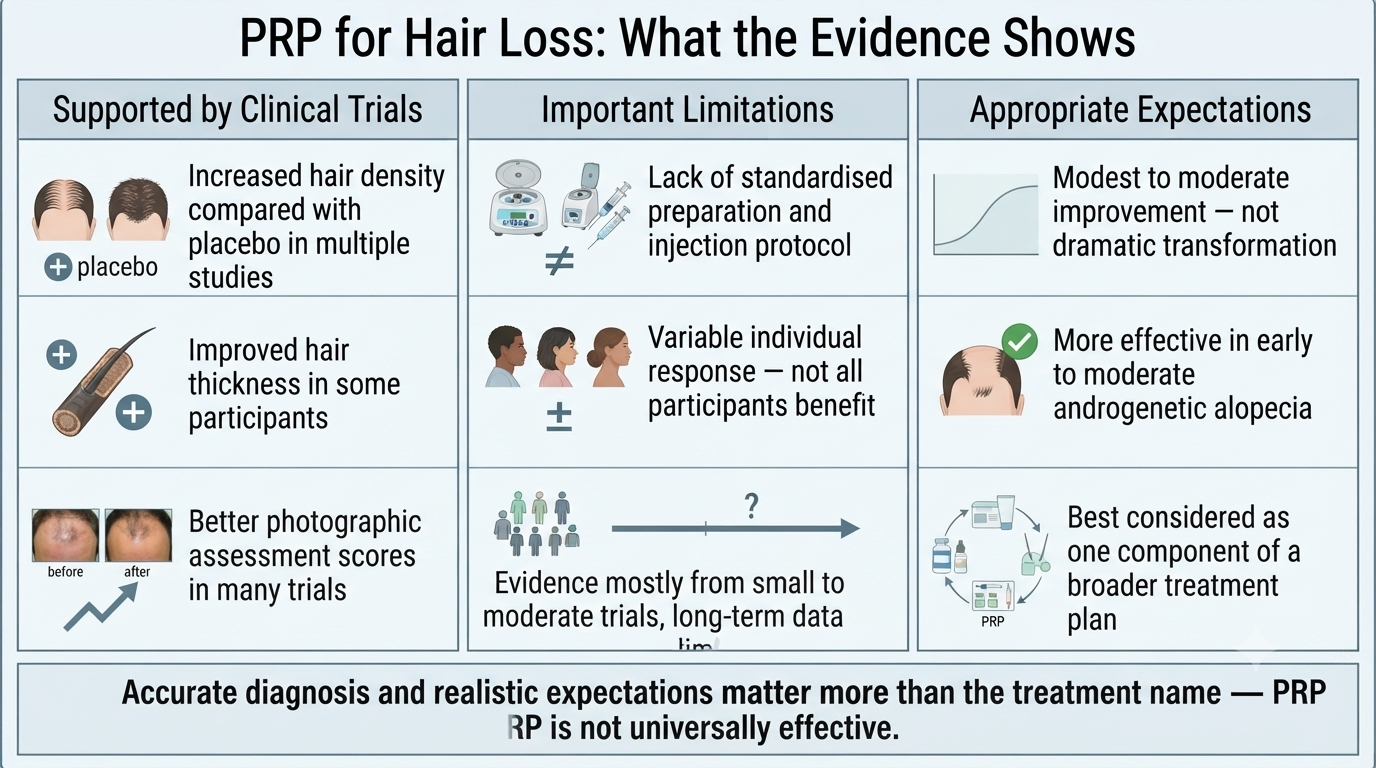
At the same time, it should not be viewed as a universally effective or guaranteed treatment. Differences between preparation methods, treatment protocols and individual responses mean that outcomes remain variable.
For appropriately selected patients, PRP may become a valuable part of a broader evidence-based treatment plan, but the decision should be guided by an accurate diagnosis and realistic expectations rather than marketing claims.
Author: Dr. Priya Goswami
Medical review: Dr. Denis Broun
Next step
If you notice coverage changes without increased shedding, confirm what process is occurring.
Take the Hair Assessment to have a physician review your pattern, identify whether miniaturization is present, and determine appropriate staging and next steps.

Add Comment