Many men notice their hair becoming less dense long before they see obvious bald patches.
The parting seems wider.
The scalp is easier to see under bright light.
Styling takes longer because the hair no longer has the same volume.
It is tempting to assume the cause is male pattern baldness.
Sometimes it is.
Sometimes it is not.
The first step towards effective treatment is understanding why the hair is thinning.
Step 1: Look at the pattern
The way hair becomes thinner often provides valuable clues.
Male pattern hair loss usually begins at:
- The temples
- The frontal hairline
- The crown
In contrast, thinning that affects the entire scalp evenly may suggest a different condition, such as telogen effluvium.
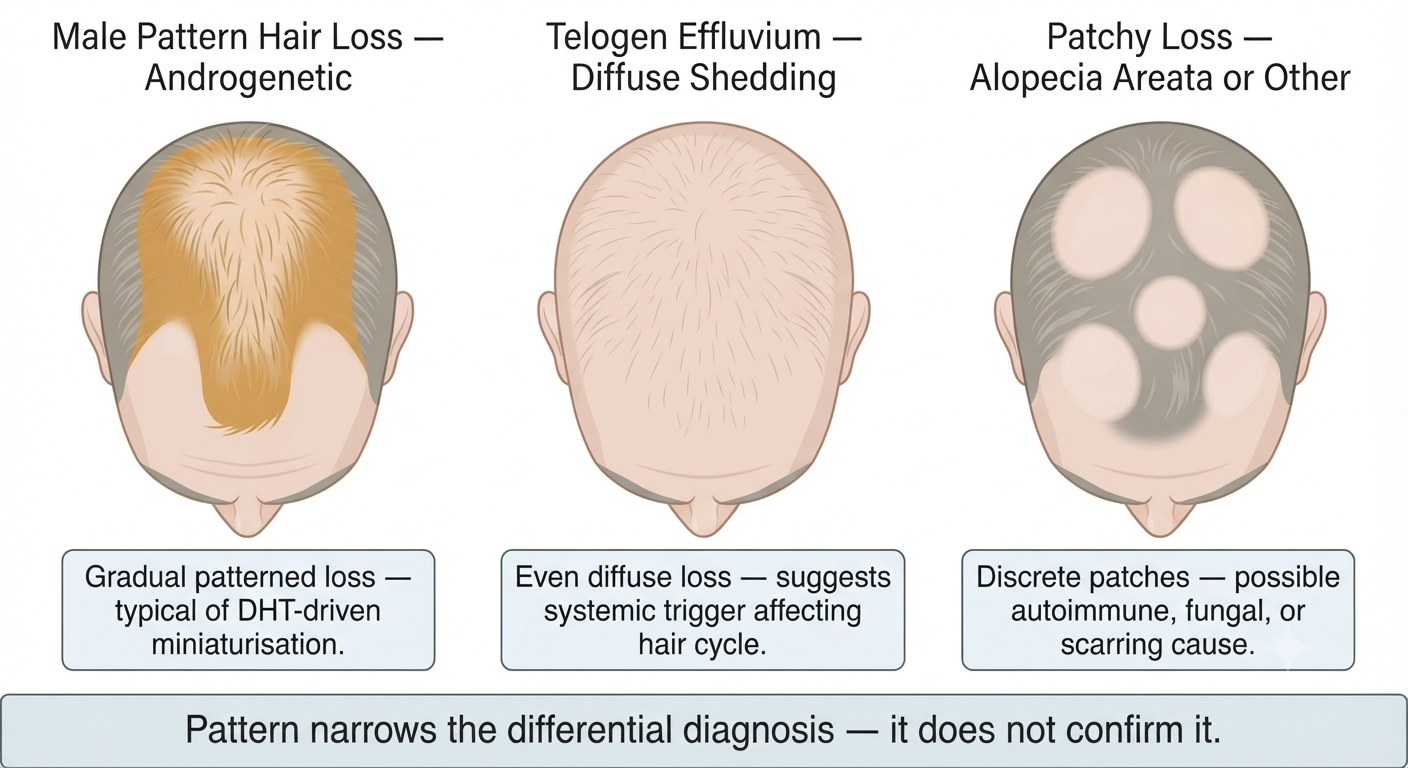
Patchy hair loss may point towards an autoimmune condition, fungal infection or another scalp disorder.
Pattern alone cannot confirm a diagnosis, but it helps narrow the possibilities.
Step 2: Think about when it started
The timeline is important.
Ask yourself:
- Did the thinning develop gradually over several years?
- Did it begin suddenly over a few weeks?
- Has it remained stable or continued progressing?
Gradual progression is more typical of androgenetic alopecia.
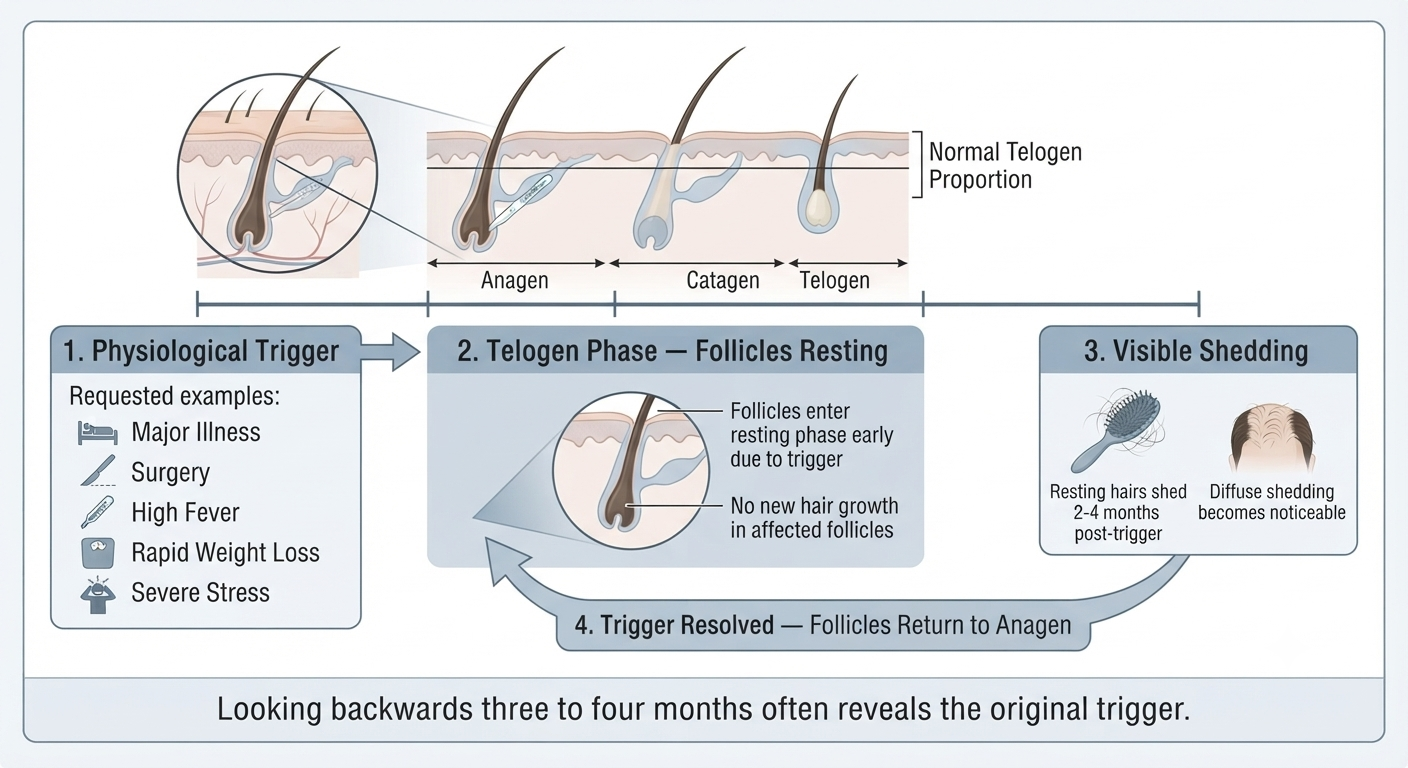
Sudden widespread shedding often suggests a temporary disturbance to the hair growth cycle.
Step 3: Look for recent triggers
Hair follicles respond to events affecting the whole body.
Possible triggers include:
- Major illness
- High fever
- Surgery
- Rapid weight loss
- Significant emotional stress
- Certain medications
These events may lead to increased shedding several months later, making the connection easy to miss.
Step 4: Pay attention to your scalp
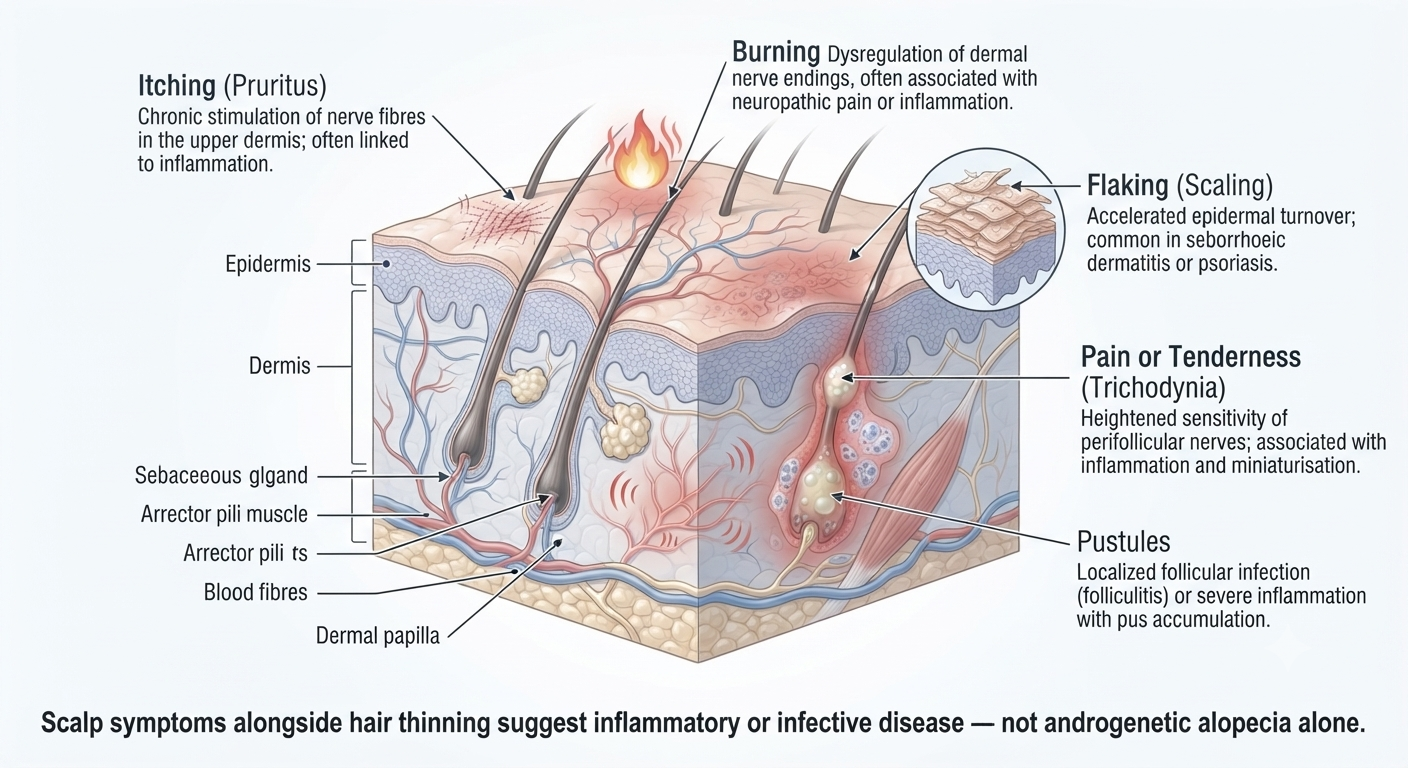
Hair thinning is not always the only symptom.
Notice whether you also have:
- Itching
- Burning
- Redness
- Flaking
- Pain
- Pimples or pustules
These features may indicate an inflammatory scalp condition that requires specific treatment.
Healthy hair begins with a healthy scalp.
Step 5: Review your medical history
Certain medical conditions increase the likelihood of hair thinning.
Examples include:
- Thyroid disorders
- Iron deficiency
- Autoimmune diseases
- Hormonal disorders
- Chronic illnesses
Family history also matters.
If close relatives have experienced male pattern hair loss, inherited androgenetic alopecia becomes more likely, although it is not the only possibility.
Step 6: Consider lifestyle factors
Lifestyle rarely causes androgenetic alopecia by itself, but it can influence overall hair health.
Consider whether there have been changes in:
- Diet
- Sleep
- Physical health
- Smoking
- Stress levels
Addressing these factors supports healthy hair growth, even when another underlying diagnosis is present.
Step 7: Know when medical tests may help
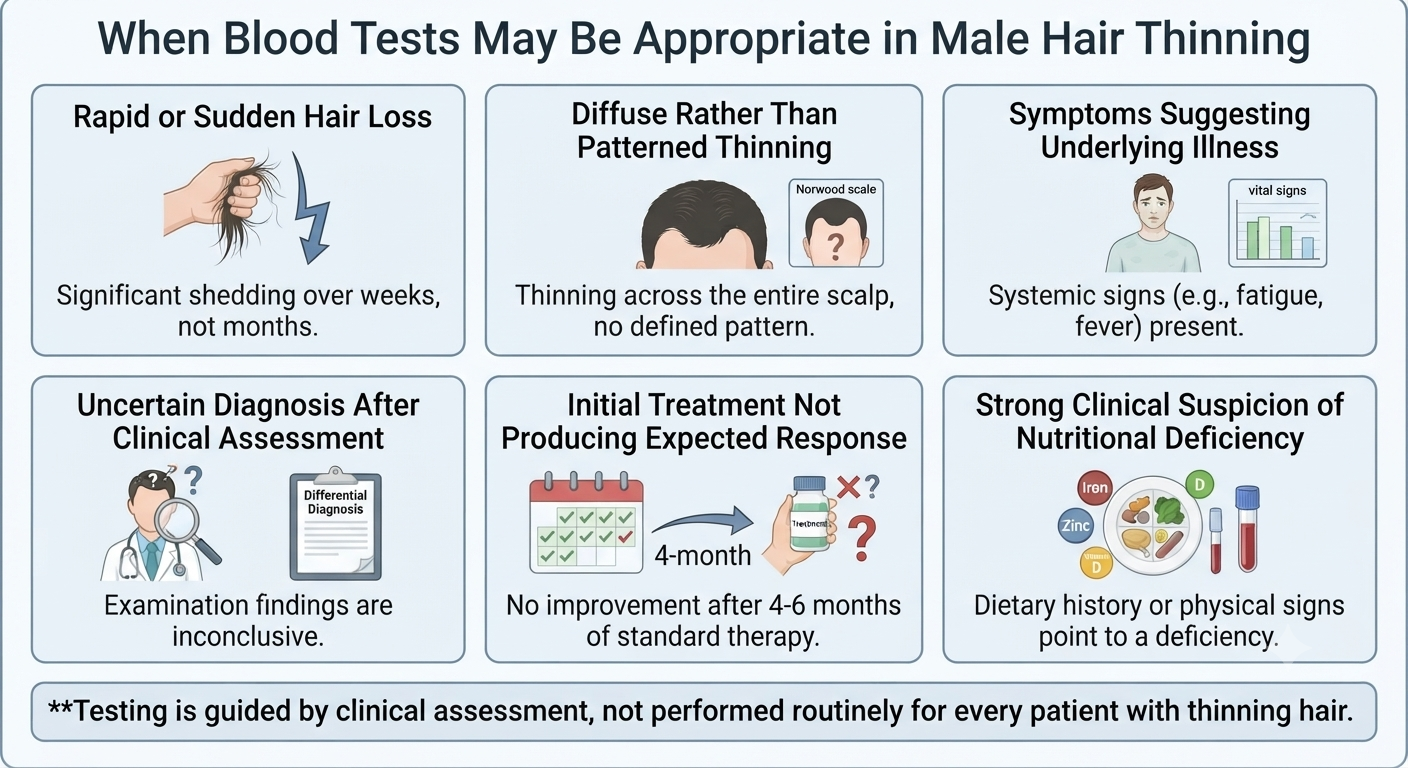
Not everyone requires blood tests.
However, investigations may be appropriate when:
- Hair loss develops rapidly.
- Thinning is diffuse rather than patterned.
- Other symptoms suggest an underlying illness.
- The diagnosis is uncertain.
- Initial treatment has not produced the expected response.
Testing is guided by the clinical assessment rather than performed routinely for every patient.
Matching the treatment to the diagnosis
The most common mistake is treating every type of hair thinning as though it were the same condition.
Different causes require different approaches.
For example:
- Androgenetic alopecia focuses on preserving susceptible follicles.
- Telogen effluvium often improves once the trigger has resolved.
- Nutritional deficiencies require correction of the underlying deficiency.
- Inflammatory scalp diseases require treatment of the inflammation.
Using the wrong treatment may delay improvement and allow the underlying condition to progress.
Don’t rely on photographs alone
Online photographs can be useful for recognising patterns, but they cannot replace a proper assessment.
Two men with very similar-looking hair may have completely different diagnoses.
The appearance alone rarely tells the whole story.
Finding the right answer first
Hair thinning is often the earliest visible sign that something has changed within the hair growth cycle.
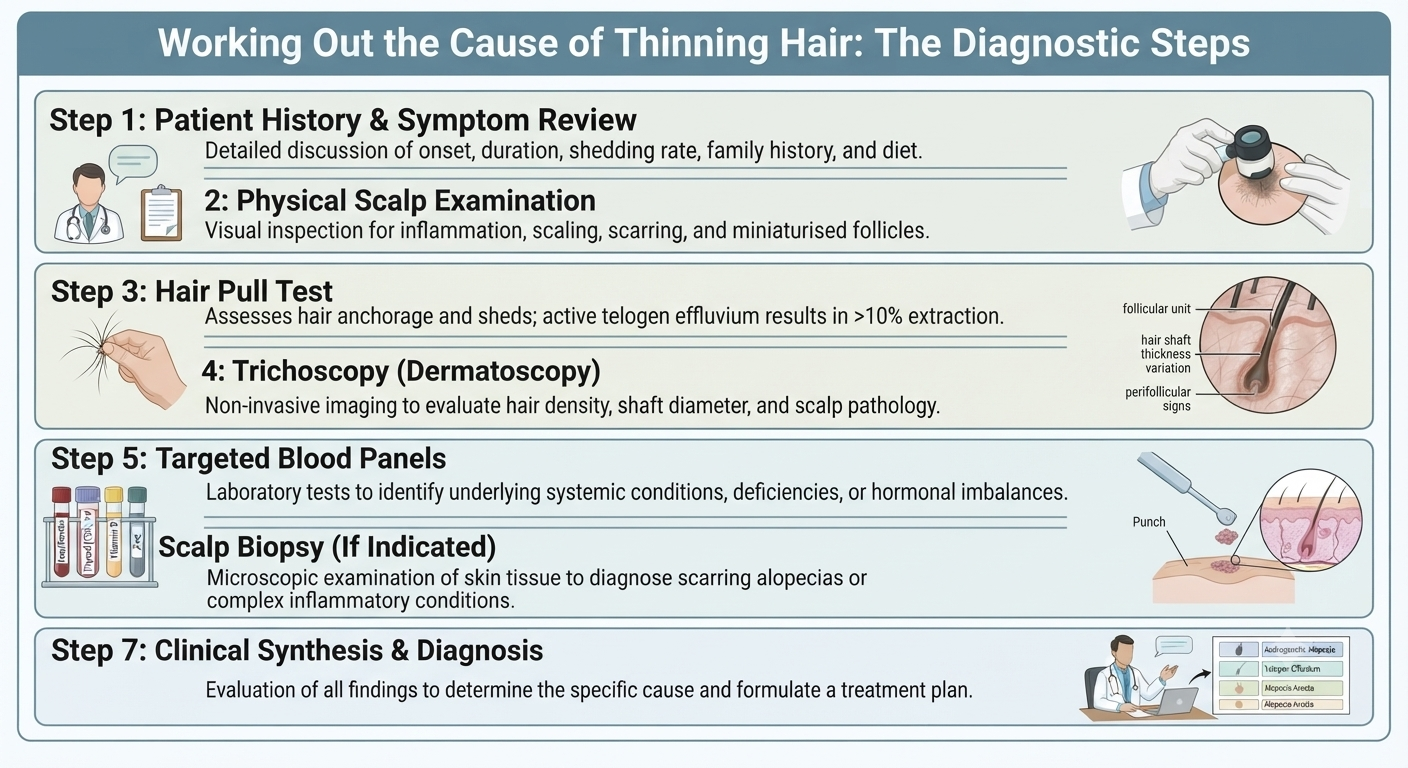
In many cases, the cause is androgenetic alopecia. In others, the explanation is temporary or medically reversible.
Working through the problem step by step, considering the pattern, timing, scalp health, medical history and possible triggers, provides a far more reliable path than assuming every case of thinning requires the same solution. An accurate diagnosis remains the foundation of effective long-term hair care.
Author: Dr. Priya Goswami
Medical review: Dr. Denis Broun
Next step
If you notice coverage changes without increased shedding, confirm what process is occurring.
Take the Hair Assessment to have a physician review your pattern, identify whether miniaturization is present, and determine appropriate staging and next steps.
Add Comment