Hair itself cannot feel pain.
Once a hair grows out of the scalp, it is made of dead protein cells.
So when people say, “My hair hurts,” what they are usually feeling is pain coming from the scalp beneath it.
Sometimes the discomfort is mild and only noticed when brushing the hair. Sometimes the scalp feels tender all day, even without touching it.
The good news is that scalp pain is often treatable once the underlying cause has been identified.
What does scalp pain feel like?
People describe scalp discomfort in many different ways.
Common sensations include:
- Tenderness when touching the scalp
- Burning
- Tingling
- Soreness
- Tightness
- A dull ache
- Pain when moving the hair
The exact feeling often provides useful clues about the underlying cause.
Inflammation is one of the most common reasons
Many scalp conditions cause inflammation.
When the skin becomes inflamed, nerve endings become more sensitive, making even gentle contact uncomfortable.
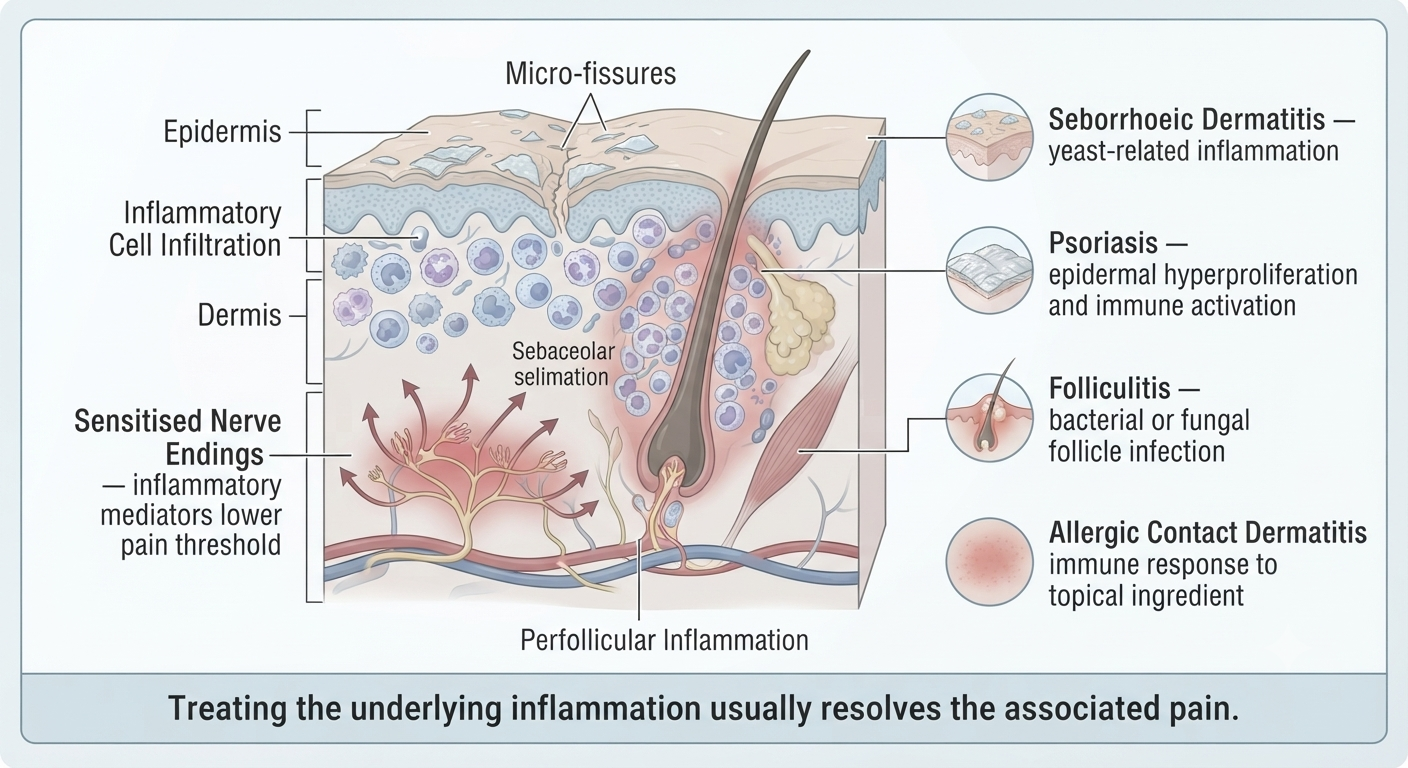
Conditions that commonly cause scalp inflammation include:
- Seborrhoeic dermatitis
- Psoriasis
- Eczema
- Folliculitis
- Allergic contact dermatitis
Treating the inflammation usually improves the pain as well.
Can hair loss make the scalp hurt?
Yes, in some cases.
Some people experiencing androgenetic alopecia or telogen effluvium report scalp tenderness or burning.
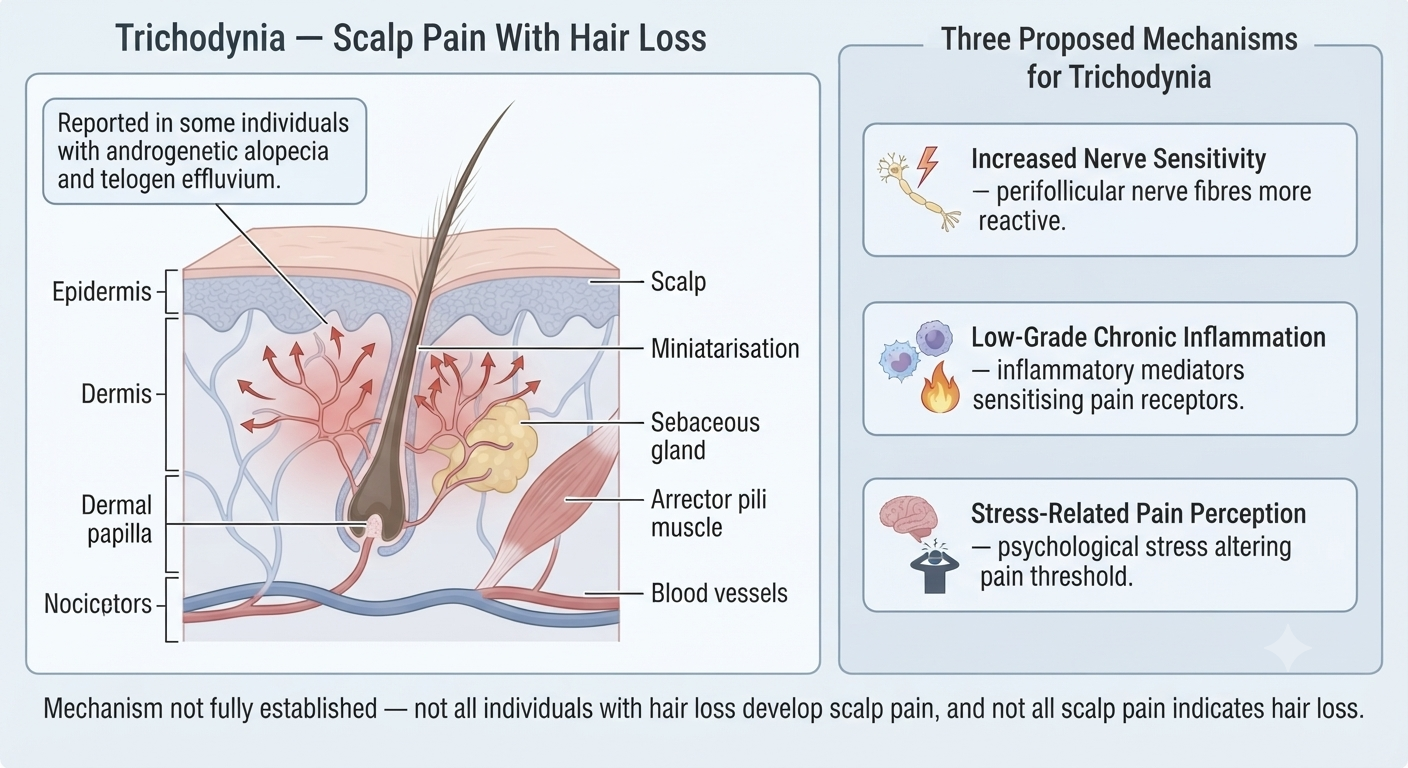
This symptom is often referred to as trichodynia.
Researchers are still investigating why it occurs.
Possible explanations include:
- Increased nerve sensitivity
- Low-grade inflammation
- Stress-related changes in pain perception
Not everyone with hair loss develops scalp pain, and not everyone with scalp pain has hair loss.
Tight hairstyles can strain the scalp
Hair that is pulled tightly for long periods places continuous tension on the follicles and surrounding skin.
Common examples include:
- Tight ponytails
- Braids
- Buns
- Hair extensions
Initially, this causes tenderness.
If maintained over months or years, repeated tension may contribute to traction alopecia, a form of hair loss caused by chronic pulling on the follicles.
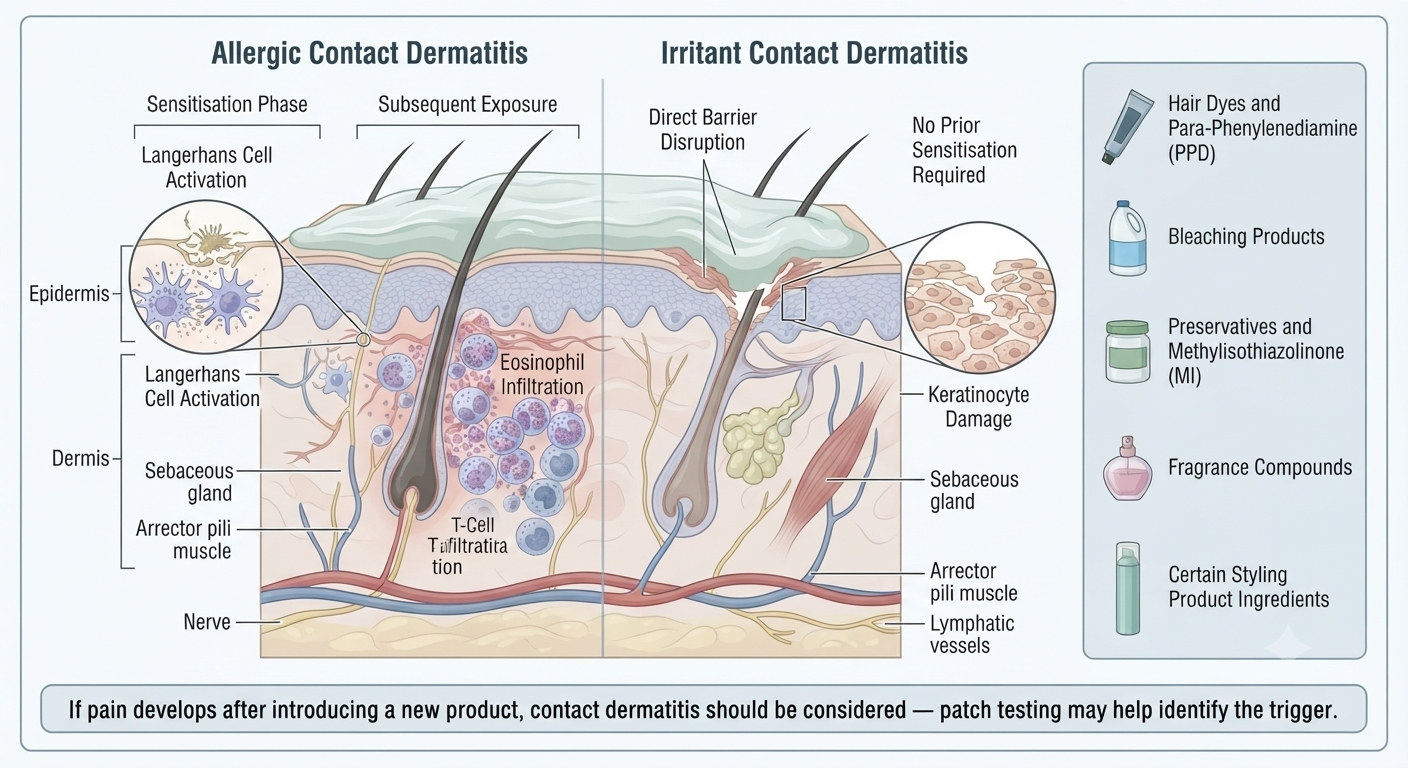
Hair products can trigger irritation
Sometimes the scalp reacts to ingredients rather than the hair itself.
Potential triggers include:
- Hair dyes
- Bleaching products
- Fragrances
- Preservatives
- Certain styling products
If pain develops shortly after introducing a new product, contact dermatitis should be considered.
Infections may cause pain
Bacterial or fungal infections of the scalp often produce more than tenderness alone.
Other symptoms may include:
- Redness
- Swelling
- Pus-filled spots
- Crusting
- Fever in more severe cases
These conditions require medical assessment because they may need specific treatment.
Could stress play a role?
Stress does not directly damage hair follicles in most people, but it may influence how pain is experienced.
Some individuals notice scalp tenderness during periods of significant emotional stress, particularly when accompanied by tension headaches or increased muscle tightness around the neck and scalp.
Stress should not automatically be assumed to be the cause, but it can sometimes contribute.
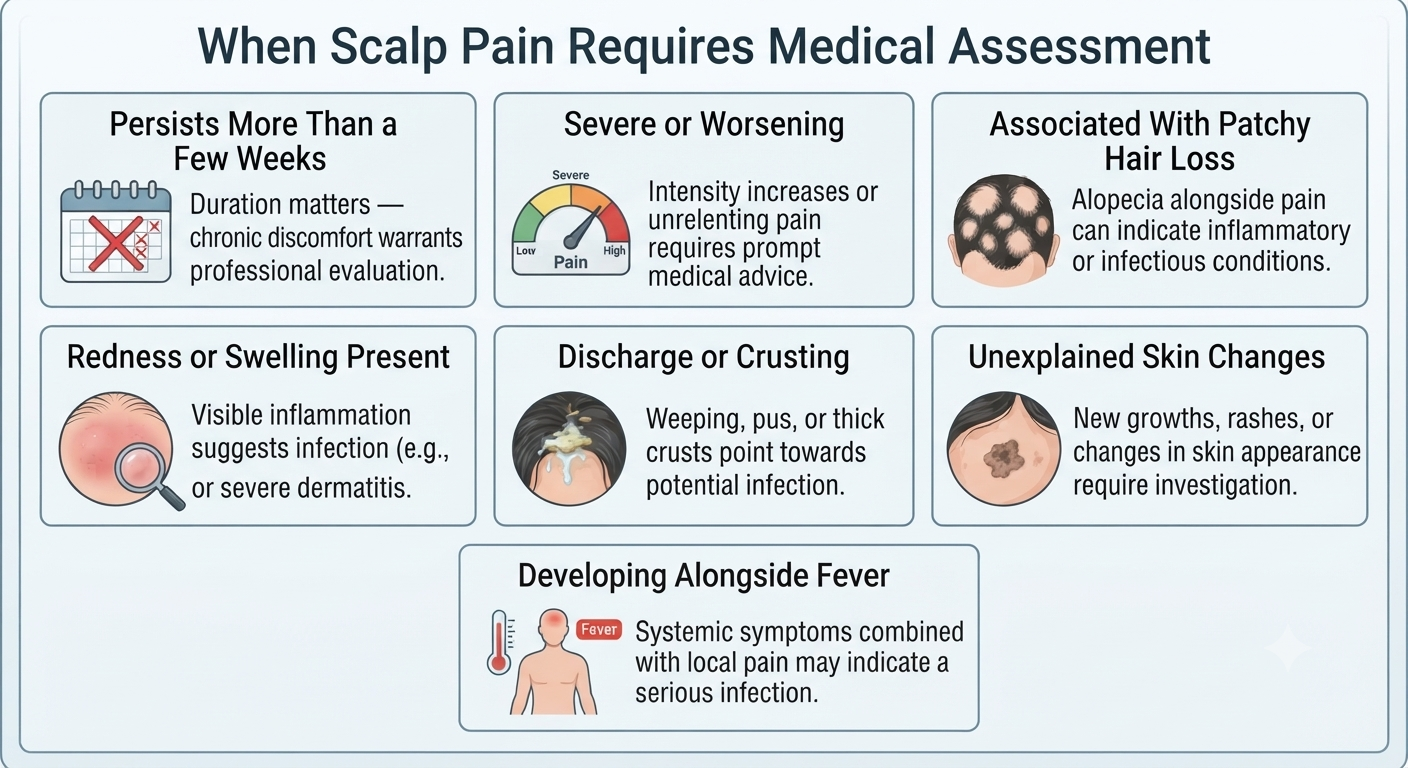
When should you seek medical advice?
Medical assessment is advisable if scalp pain:
- Persists for more than a few weeks
- Is severe
- Occurs with patchy hair loss
- Is associated with redness or swelling
- Produces discharge or crusting
- Develops alongside unexplained skin changes
These features may indicate an underlying condition that requires treatment rather than simple observation.
How is the cause identified?
A healthcare professional will usually ask about:
- When the pain began
- Whether hair loss is also present
- Recent illnesses
- New hair products
- Hair styling habits
- Other skin conditions
- Current medications
The scalp is then examined carefully for signs of inflammation, infection, scarring or other abnormalities.
In some cases, additional tests such as blood investigations or a scalp biopsy may be recommended.
Finding the source of the discomfort
Scalp pain is often unsettling because it can accompany visible changes in the hair.
However, the symptom itself does not point to a single diagnosis.
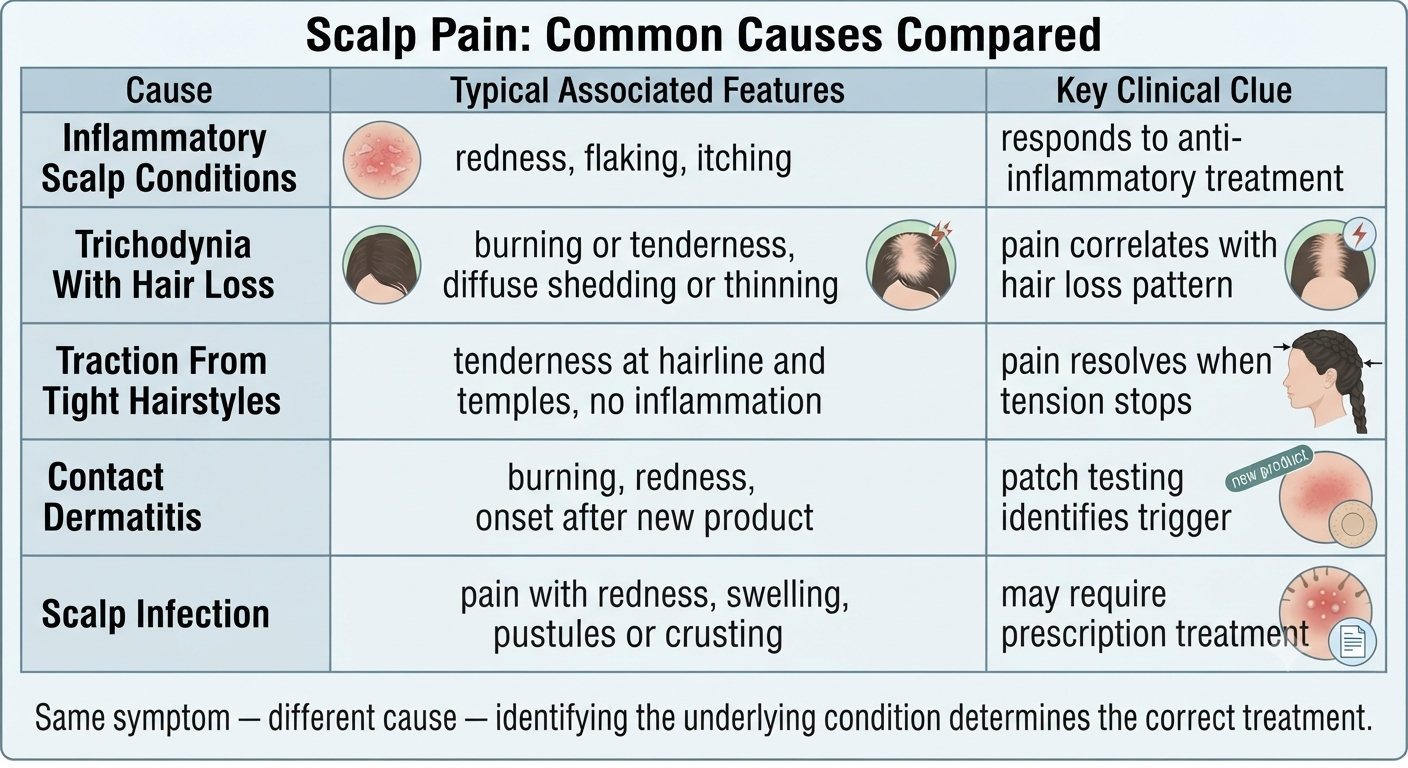
The same feeling may result from inflammation, irritation, mechanical tension, infection or certain forms of hair loss. Identifying the underlying cause is therefore far more important than trying to mask the discomfort. Once the correct diagnosis is made, treatment can be directed at the condition responsible rather than the symptom alone.
Author: Dr. Priya Goswami
Medical review: Dr. Denis Broun
Next step
If you notice coverage changes without increased shedding, confirm what process is occurring.
Take the Hair Assessment to have a physician review your pattern, identify whether miniaturization is present, and determine appropriate staging and next steps.
Add Comment