Minoxidil has been available for decades.
Despite that, one question still appears more than almost any other.
“Does it actually work?”
The short answer is yes.
The longer answer is that success depends on what you expect it to do, how early treatment begins and whether you continue using it consistently.
For many people, the biggest benefit is not dramatic regrowth. It is slowing or stopping further hair loss.
How does minoxidil work?
The exact mechanism is not completely understood.
Researchers believe minoxidil helps by:
- Prolonging the active growth phase of the hair cycle
- Increasing the size of miniaturised hair follicles
- Encouraging dormant follicles to re-enter the growth phase
- Improving the environment in which hair follicles function
These effects develop gradually.
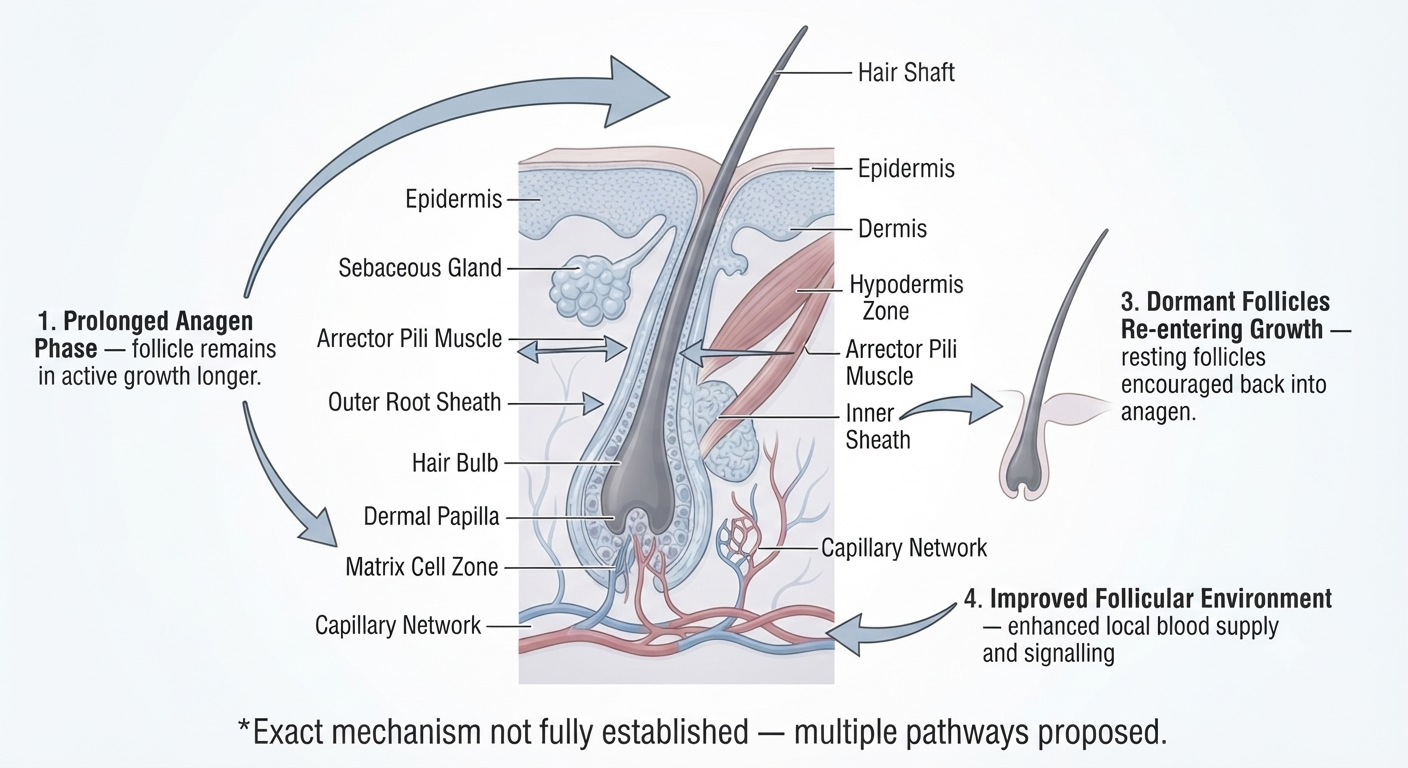
Hair follicles need time to complete their normal growth cycle before visible changes appear.
What do the clinical studies show?
Research over several decades has demonstrated that topical minoxidil is effective for many people with androgenetic alopecia.
Across clinical trials:
- Many users experience slower progression of hair loss.
- A substantial proportion develop measurable increases in hair count.
- Hair shafts often become thicker over time.
- Improvements are generally greater with continued use.
Response rates differ between studies because they involve different populations, treatment durations and methods of measuring success.
The important finding is that minoxidil consistently performs better than placebo in appropriately selected patients.
What does “success” mean?
This is where expectations often become unrealistic.
Success does not necessarily mean restoring the hairline you had at 18.
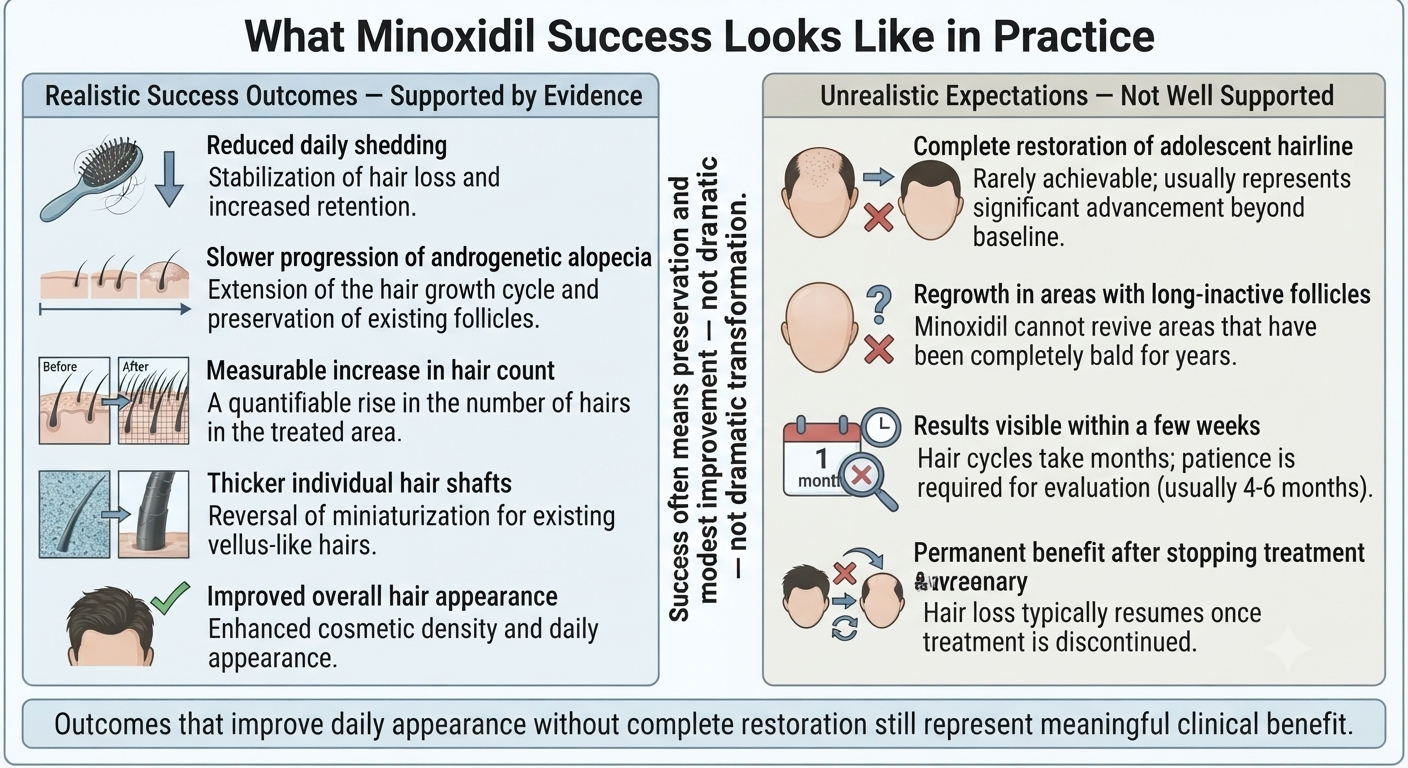
In medical studies, success may include:
- Reduced daily shedding
- Slower progression of hair loss
- Increased hair density
- Thicker individual hairs
- Improved overall appearance
These outcomes can make hair look noticeably fuller, even if complete regrowth does not occur.
Who responds best?
Although individual results vary, better outcomes are generally seen in people who:
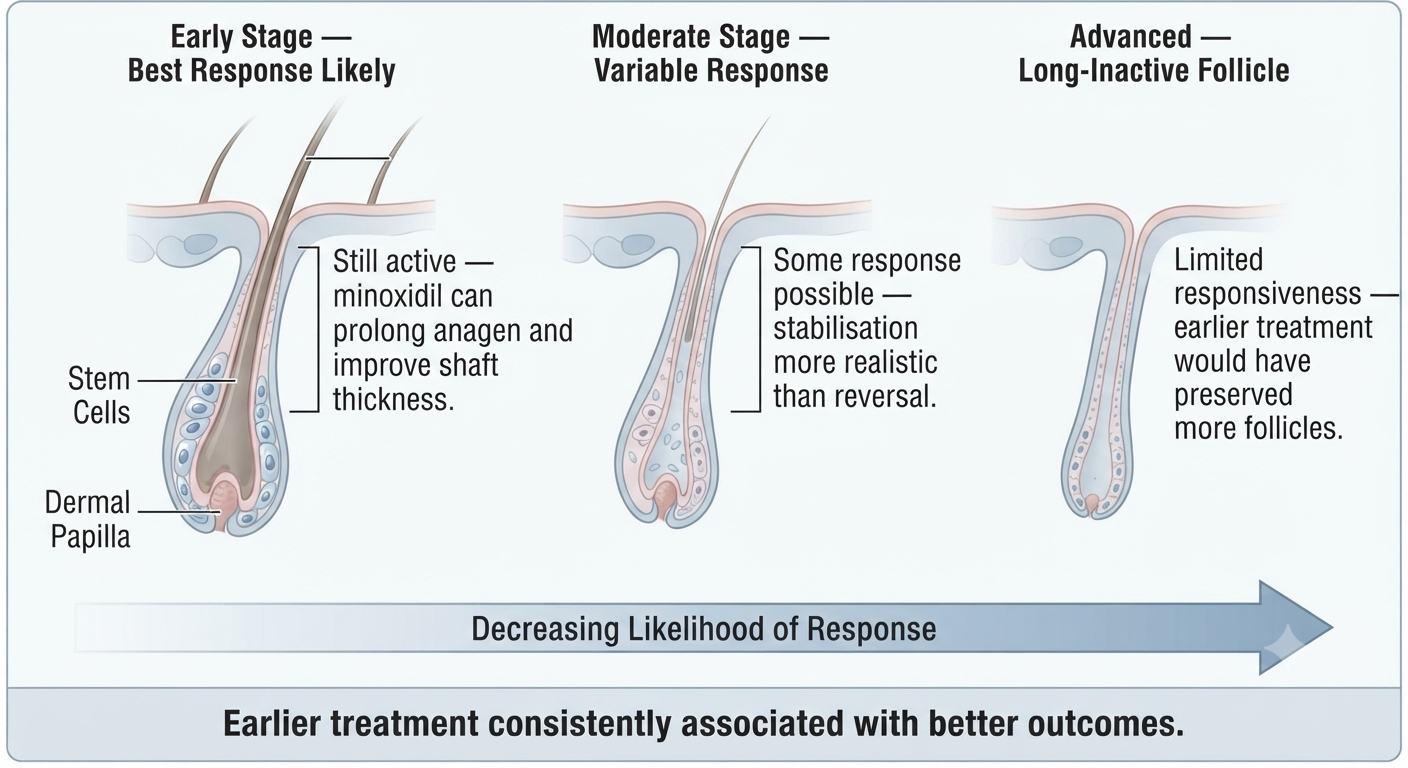
- Begin treatment early
- Have mild to moderate pattern hair loss
- Continue treatment consistently
- Apply the medicine correctly
- Have realistic expectations
Follicles that are still producing fine hairs are usually more likely to respond than areas where follicles have been inactive for many years.
Why does shedding sometimes increase first?
Some users notice increased shedding during the first several weeks.
This can be worrying.
In many cases, temporary shedding reflects older hairs being replaced as follicles transition into a new growth cycle.
Not everyone experiences this phase, and it does not automatically mean the treatment is failing.
If shedding is severe or continues for an extended period, medical review is appropriate.
How long does it take to see results?
Patience is essential.
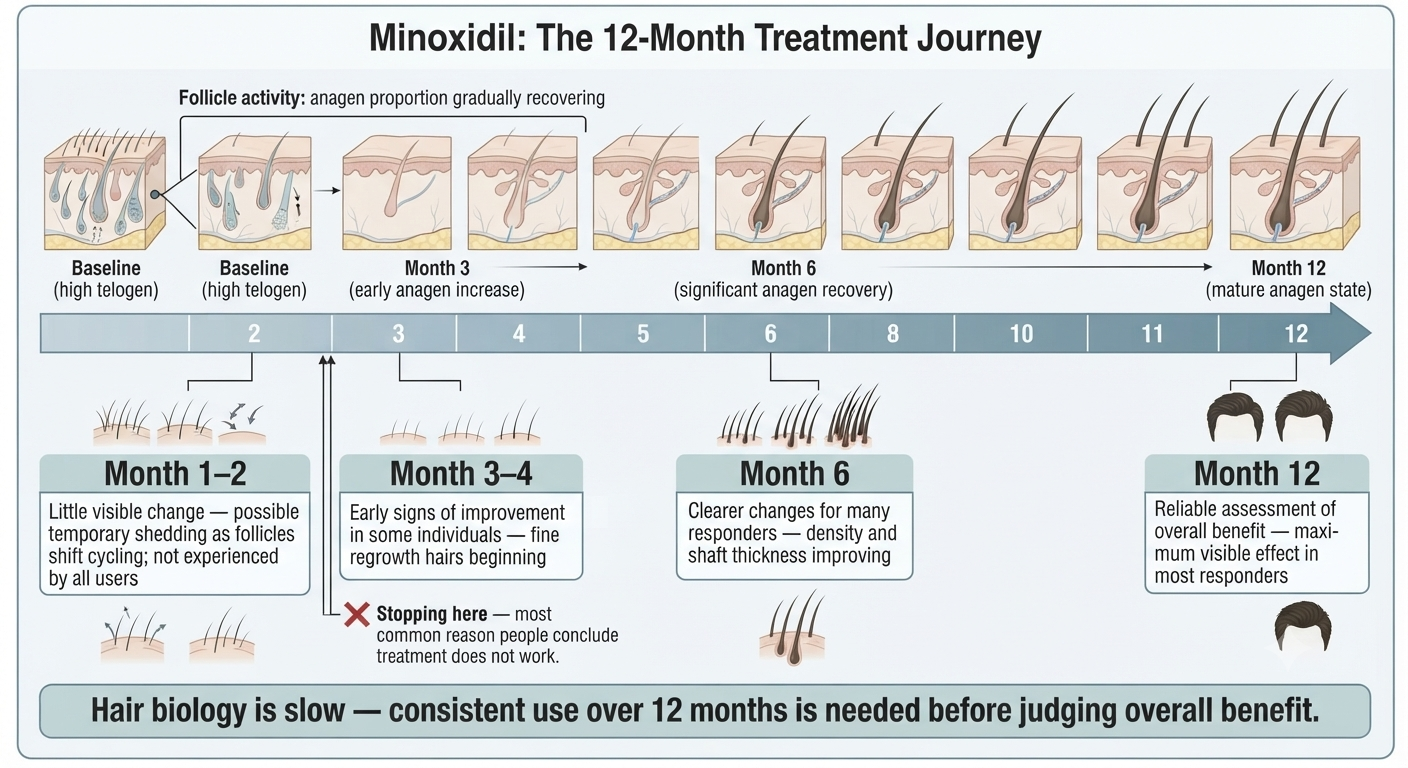
Typical timelines are:
- First two months: little visible change, sometimes temporary shedding
- Three to four months: early signs of improvement in some individuals
- Six months: clearer changes for many responders
- Twelve months: a more reliable assessment of overall benefit
Stopping treatment too early is one of the most common reasons people conclude that minoxidil “doesn’t work.”
Why might minoxidil not work?
Several factors can reduce the likelihood of success.
These include:
- An incorrect diagnosis
- Advanced hair loss with few remaining active follicles
- Inconsistent use
- Stopping treatment prematurely
- Hair loss caused by conditions other than androgenetic alopecia
Minoxidil is not a universal treatment for every form of hair loss.
A correct diagnosis remains the foundation of effective management.
Do the results last?
Minoxidil works while it is being used.
If treatment is discontinued, the follicles gradually return to their previous pattern of behaviour.
Any gains achieved during treatment are typically lost over several months, and hair loss usually resumes its underlying course.
This is why minoxidil is considered a long-term treatment rather than a short course.
Understanding the numbers
Success rates reported in research can vary because studies define success differently.
Some measure the number of new hairs. Others assess photographic improvement or patient satisfaction.
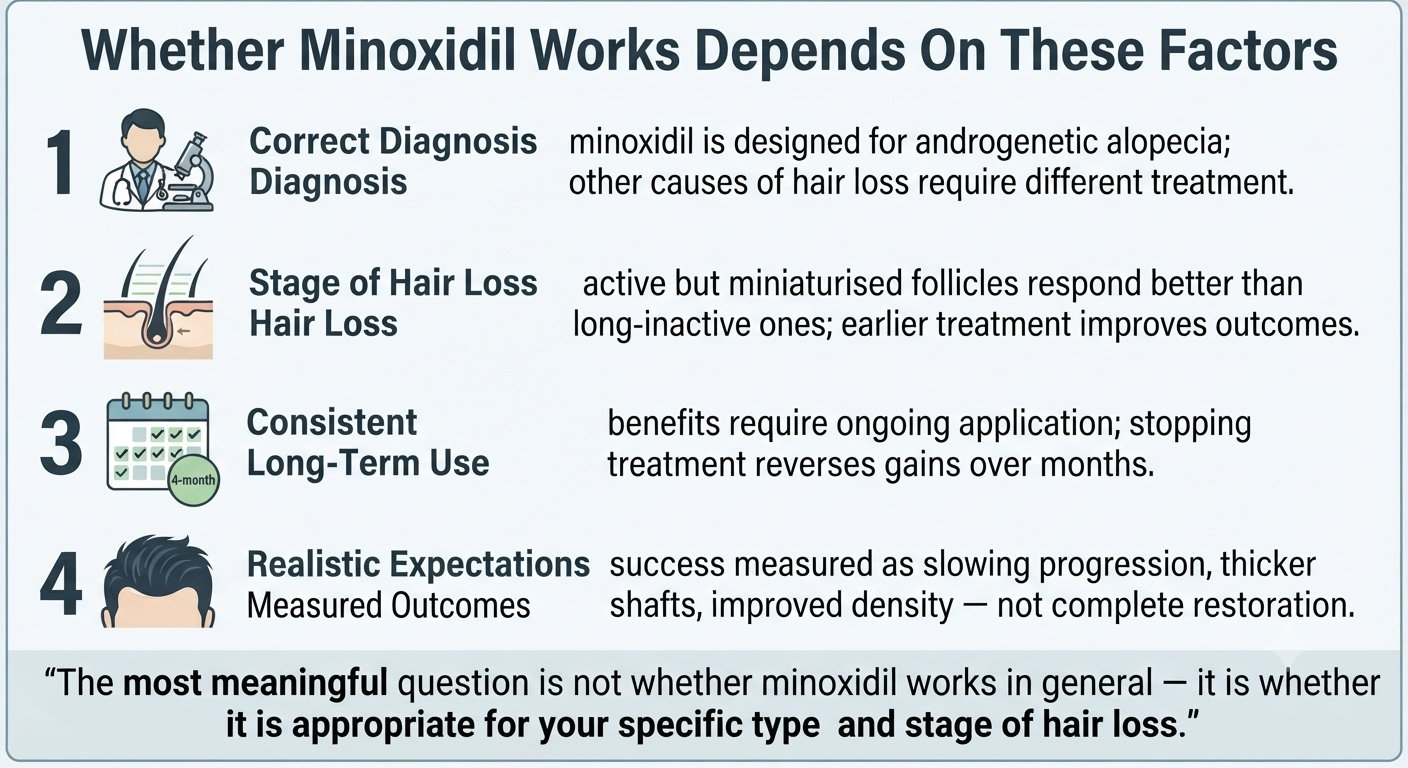
The consistent message across the evidence is that minoxidil benefits many, but not all, people with androgenetic alopecia.
The most meaningful question is not whether minoxidil works in general. It is whether it is appropriate for your specific type of hair loss. With an accurate diagnosis, realistic expectations and consistent long-term use, minoxidil remains one of the best-supported non-surgical treatments currently available.
Author: Dr. Priya Goswami
Medical review: Dr. Denis Broun
Next step
If you notice coverage changes without increased shedding, confirm what process is occurring.
Take the Hair Assessment to have a physician review your pattern, identify whether miniaturization is present, and determine appropriate staging and next steps.
Add Comment