Many photographs of hair transplants show dramatic “before and after” results.
What they rarely show is everything in between.
The swollen forehead.
The tiny scabs.
The temporary shedding.
The months of waiting.
Understanding the entire journey is just as important as seeing the final result. A hair transplant is not an instant transformation. It is a gradual biological process that unfolds over many months.
Knowing what to expect can help you make an informed decision before committing to surgery.
A hair transplant moves existing hair
One of the biggest misconceptions is that a transplant creates new hair.
It does not.
The procedure relocates healthy follicles from one part of the scalp to another.
Usually, these follicles come from the back and sides of the head because they are generally less sensitive to the hormonal changes responsible for androgenetic alopecia.
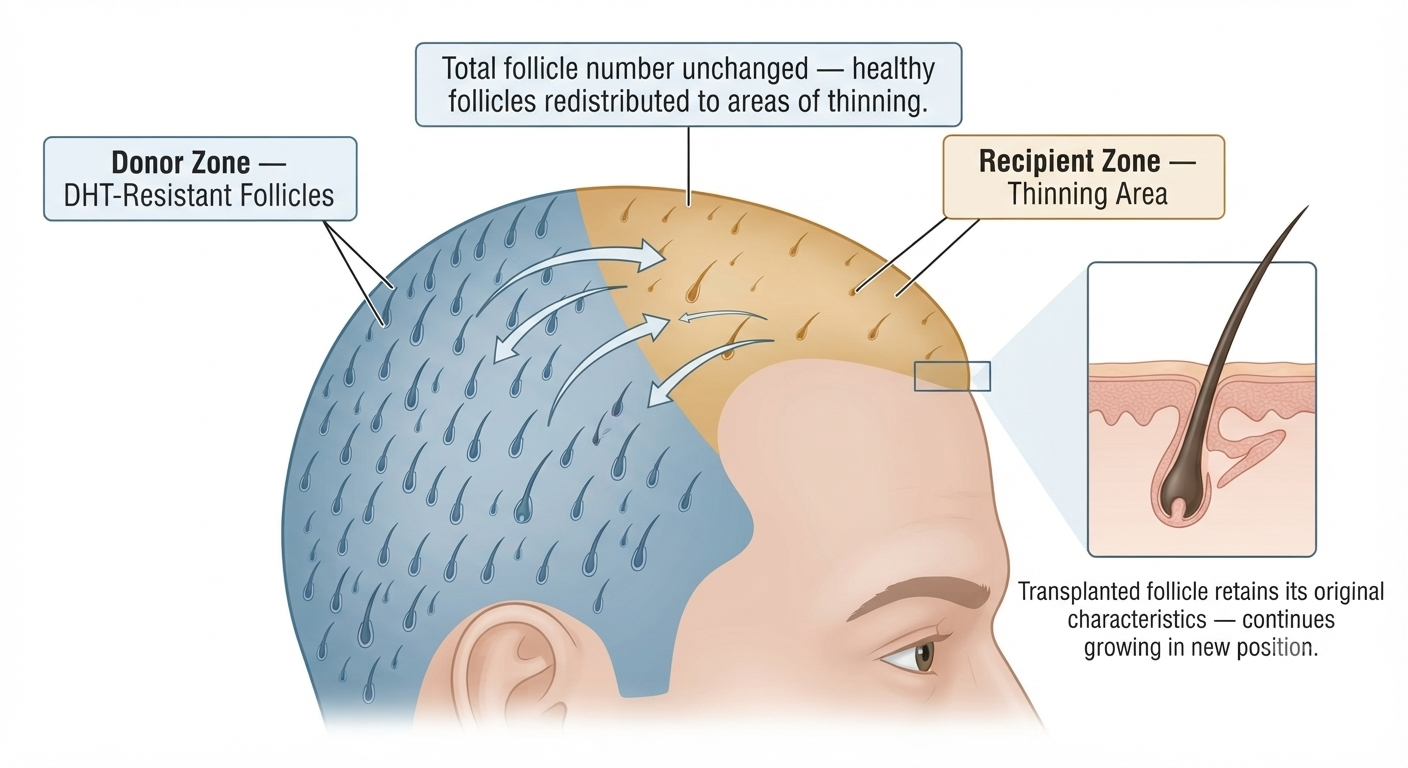
Once transplanted, these follicles continue growing in their new location.
The total number of hair follicles on the scalp does not increase.
What happens during the procedure?
Modern hair transplantation is usually performed under local anaesthetic.
The procedure involves two main stages:
- Harvesting healthy follicular units from the donor area.
- Placing those follicles into carefully planned recipient sites.
The angle, direction and spacing of each graft are important because they influence how natural the final result appears.
The procedure may take several hours depending on the number of grafts being transplanted.
What does the scalp look like afterwards?
Immediately after surgery, the treated area usually looks quite different from the polished photographs seen months later.
It is common to see:
- Tiny crusts around each transplanted graft
- Mild redness
- Swelling, particularly around the forehead
- A closely shaved donor area, depending on the technique used
These early changes are a normal part of healing.
Most crusts gradually disappear within one to two weeks.
Why do the transplanted hairs fall out?
Many patients become concerned when the newly transplanted hairs begin shedding.
This is expected.
The hair shafts often fall out during the first few weeks after surgery, while the follicles remain safely beneath the skin.
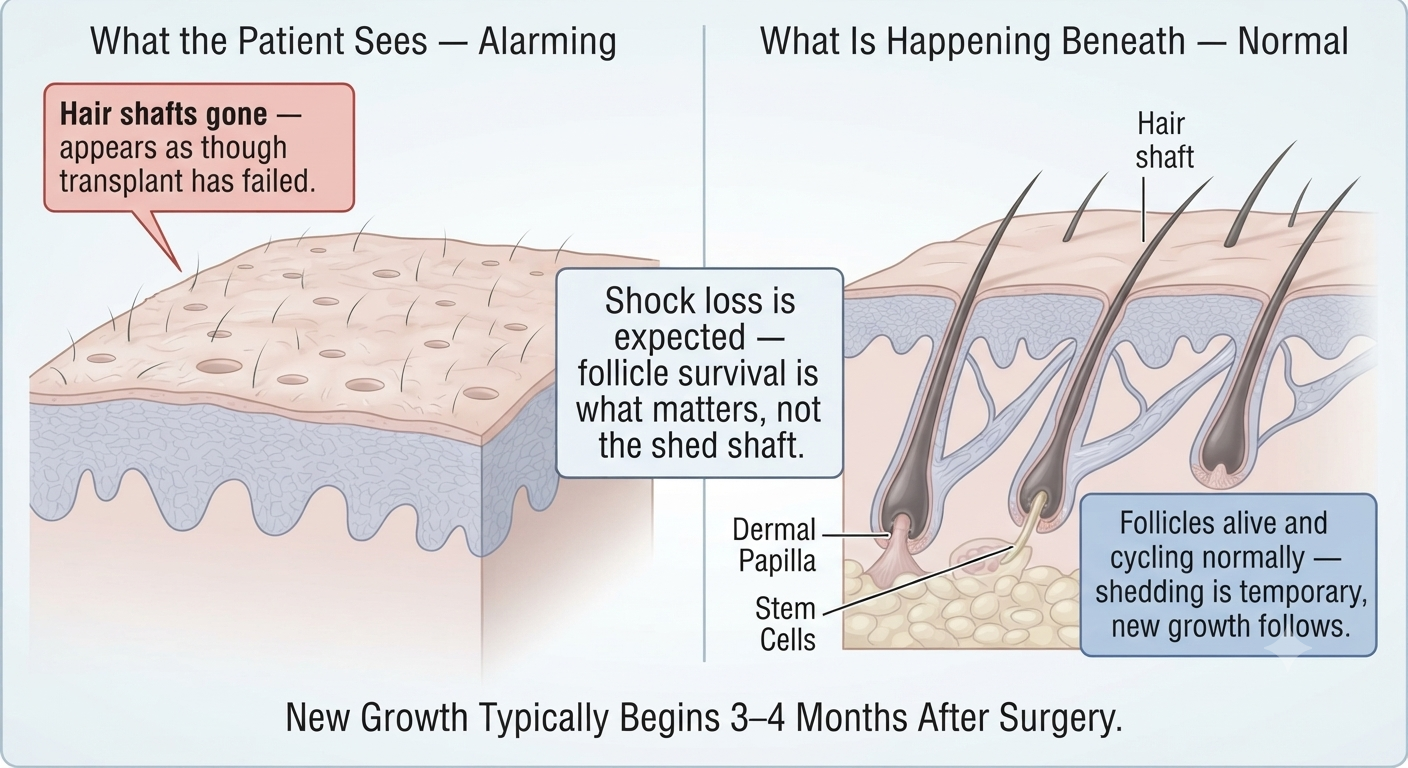
This temporary shedding is sometimes called shock loss.
The follicles then enter a resting phase before beginning to produce new hairs several months later.
When does new growth begin?
Hair grows slowly.
Most patients notice:
- Very little visible change during the first two to three months
- Early new growth between three and four months
- Progressive thickening between six and twelve months
- Continued maturation for up to eighteen months in some cases
Patience is an essential part of the process.
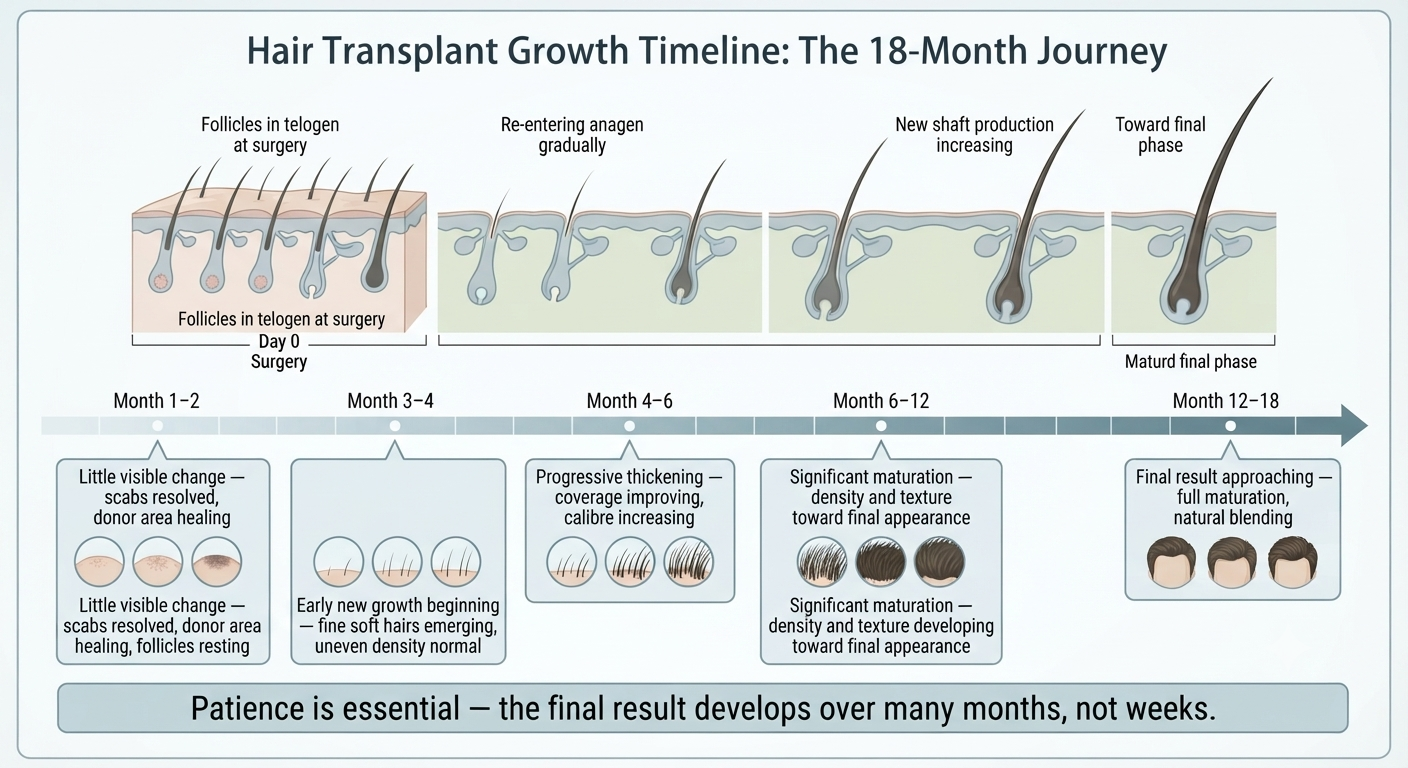
The final result develops gradually rather than appearing all at once.
Will it look completely natural?
Modern techniques can produce highly natural results when surgery is well planned.
However, a transplanted scalp is rarely identical to someone who has never experienced hair loss.
The outcome depends on factors such as:
- Donor hair density
- Hair shaft thickness
- Hair colour
- Hair curl
- The extent of existing hair loss
- The number of available grafts
The goal is usually to create the appearance of natural density rather than reproduce the original density present before hair loss began.
Can a transplant stop future hair loss?
No.
Hair transplantation moves follicles.
It does not prevent ongoing hair loss in untreated native hair.
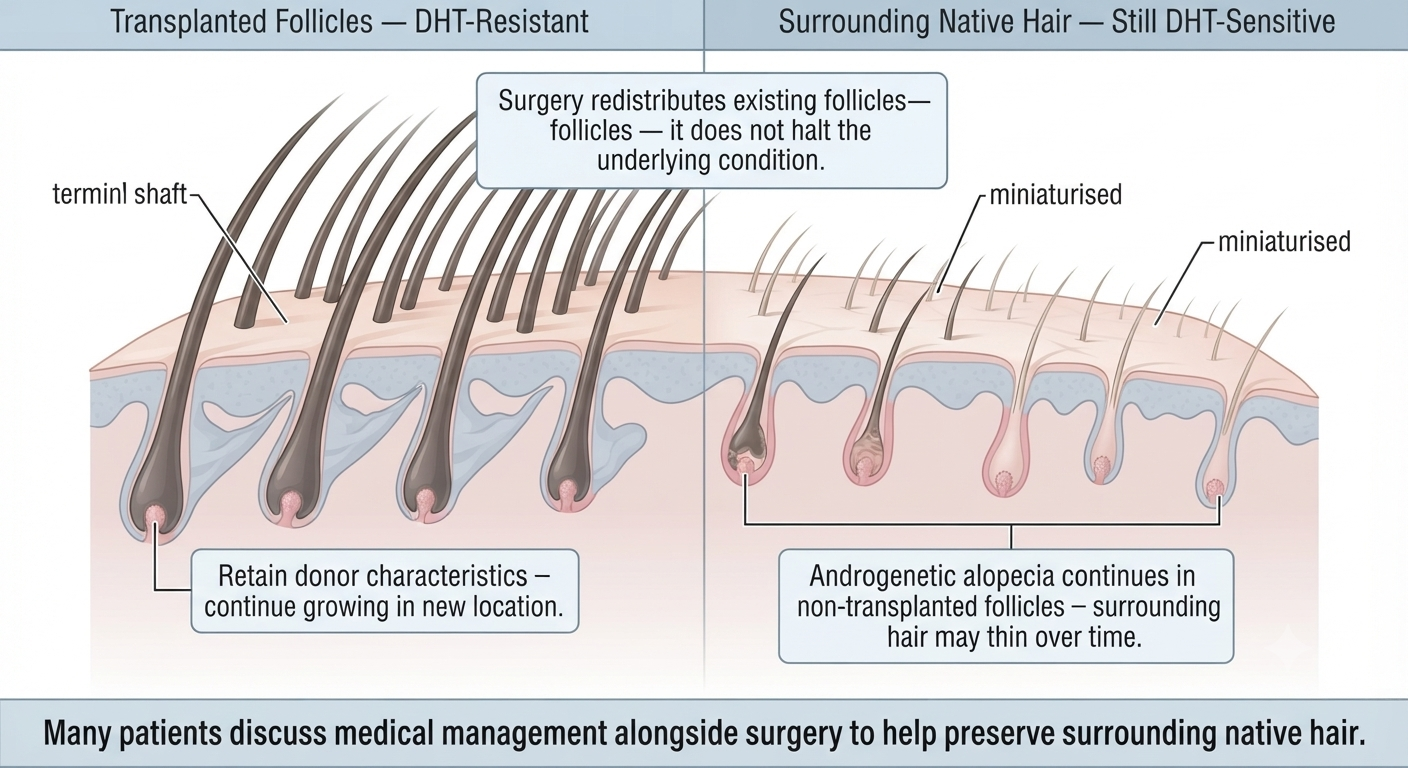
If androgenetic alopecia continues progressing, surrounding hair may become thinner over time.
This is one reason why many patients discuss medical management alongside surgery to help preserve existing hair.
Questions worth asking before surgery
A consultation should help you understand both the possibilities and the limitations.
Useful questions include:
- What type of hair loss do I have?
- Is my hair loss stable enough for surgery?
- How many grafts are recommended?
- What level of density is realistic?
- Could I require another procedure in the future?
- How should I care for my hair after surgery?
Clear answers help ensure expectations match what surgery can realistically achieve.
Seeing the whole journey
The most successful hair transplants are rarely the ones that promise perfection.
They are the ones planned with a long-term view of your hair loss, your available donor supply and your future appearance.
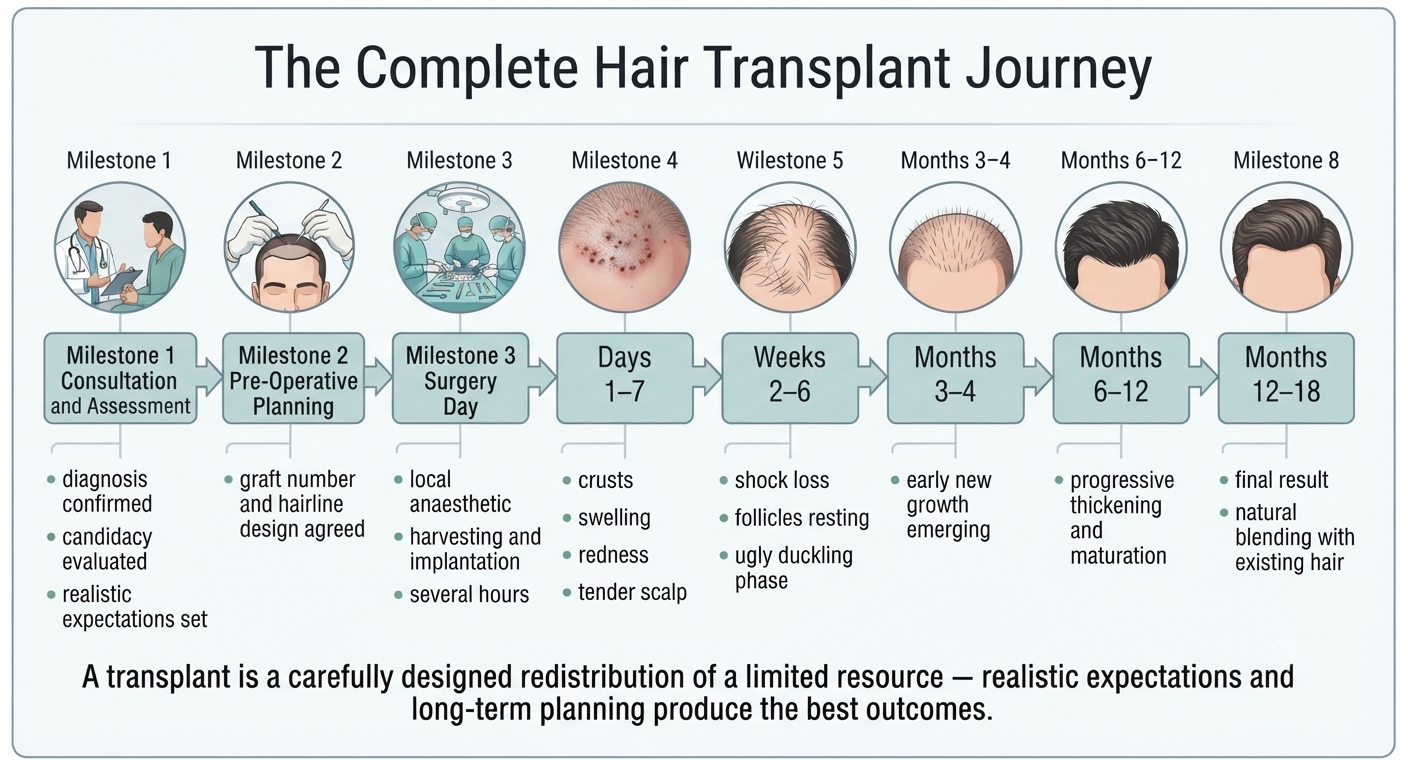
A transplant is not a quick cosmetic fix. It is a carefully designed redistribution of a limited resource. When expectations are realistic and the procedure is appropriate, the results can look natural, age well and provide lasting improvement in hair coverage.
Author: Dr. Priya Goswami
Medical review: Dr. Denis Broun
Next step
If you notice coverage changes without increased shedding, confirm what process is occurring.
Take the Hair Assessment to have a physician review your pattern, identify whether miniaturization is present, and determine appropriate staging and next steps.

Add Comment