Medical research brief
Rosemary oil has become one of the most popular natural remedies for hair loss. Interest increased after a small clinical trial published in 2015 found that rosemary oil produced similar improvements in hair count to 2% topical minoxidil over six months in people with androgenetic alopecia, although participants using rosemary oil reported less scalp itching. Since then, laboratory studies have suggested that rosemary may have anti-inflammatory, antioxidant and circulation-related effects that could influence hair follicles.
Despite these findings, the evidence remains limited. Only a small number of human clinical studies have been conducted, and there is currently insufficient evidence to conclude that rosemary oil is as effective as established medical treatments such as topical minoxidil or finasteride for androgenetic alopecia.
For people who wish to try rosemary oil, it should be viewed as a complementary option rather than a proven replacement for evidence-based treatments.
Article outline
- Why rosemary oil has attracted attention
- What research has found so far
- How rosemary oil may work
- How to apply it safely
- How often to use it
- Possible side effects
- Who should avoid it
- When medical treatment may be more appropriate
- Setting realistic expectations
How to use rosemary oil on your scalp: a research-informed guide
Few natural hair loss remedies have received as much attention as rosemary oil.
Search online and you’ll find countless videos claiming it can regrow hair naturally. Some people describe dramatic improvements. Others notice little difference.
The reality sits somewhere in between.
Unlike many home remedies, rosemary oil has been studied in humans. That makes it more interesting than many products marketed for hair growth. But the research is still relatively limited, and many of the claims made online go well beyond the available evidence.
If you’re considering using rosemary oil, it’s worth understanding what researchers actually know and what remains uncertain.
Why is rosemary oil thought to help hair growth?
Researchers believe rosemary oil may affect several biological processes involved in scalp health.
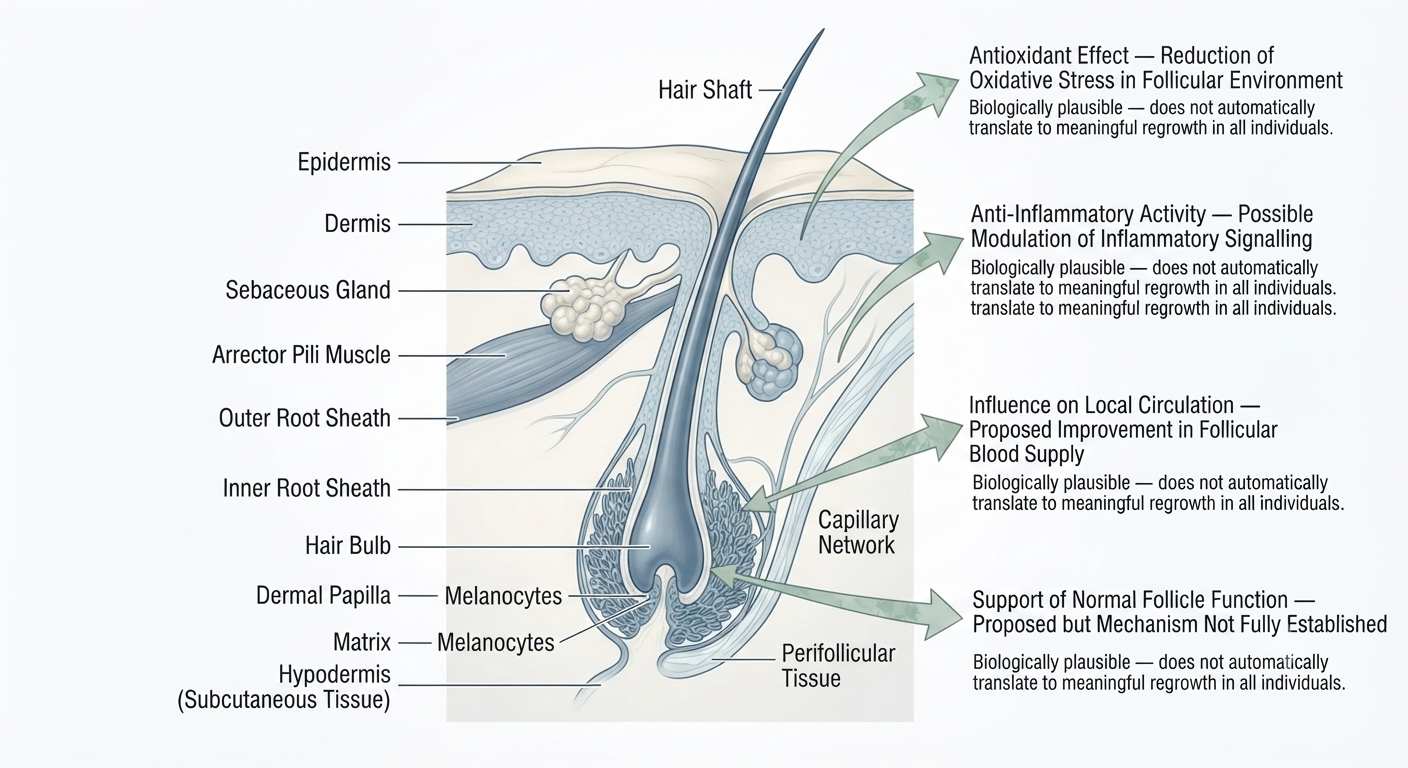
Laboratory studies suggest it may:
- Reduce oxidative stress
- Influence inflammatory pathways
- Improve local blood circulation
- Support normal follicle function
These mechanisms are biologically plausible, but they do not automatically translate into meaningful hair regrowth in every person.
Hair growth is influenced by genetics, hormones, age, overall health and the type of hair loss present. No topical oil can overcome every cause of hair loss.
What does the research show?
The most frequently cited study compared rosemary oil with 2% topical minoxidil in people with androgenetic alopecia.
After six months, both groups showed improvements in hair count, with no statistically significant difference between them. Participants using rosemary oil experienced less scalp itching than those using minoxidil.
While encouraging, this study has limitations.
It involved a relatively small number of participants, used only one formulation of rosemary oil and has not yet been replicated by multiple large independent trials.
Current evidence suggests rosemary oil may have potential, but it cannot yet be considered equivalent to established medical treatments.
Choosing the right product
Pure rosemary essential oil should never be applied directly to the scalp.
Essential oils are highly concentrated and may cause irritation or allergic reactions if used without dilution.
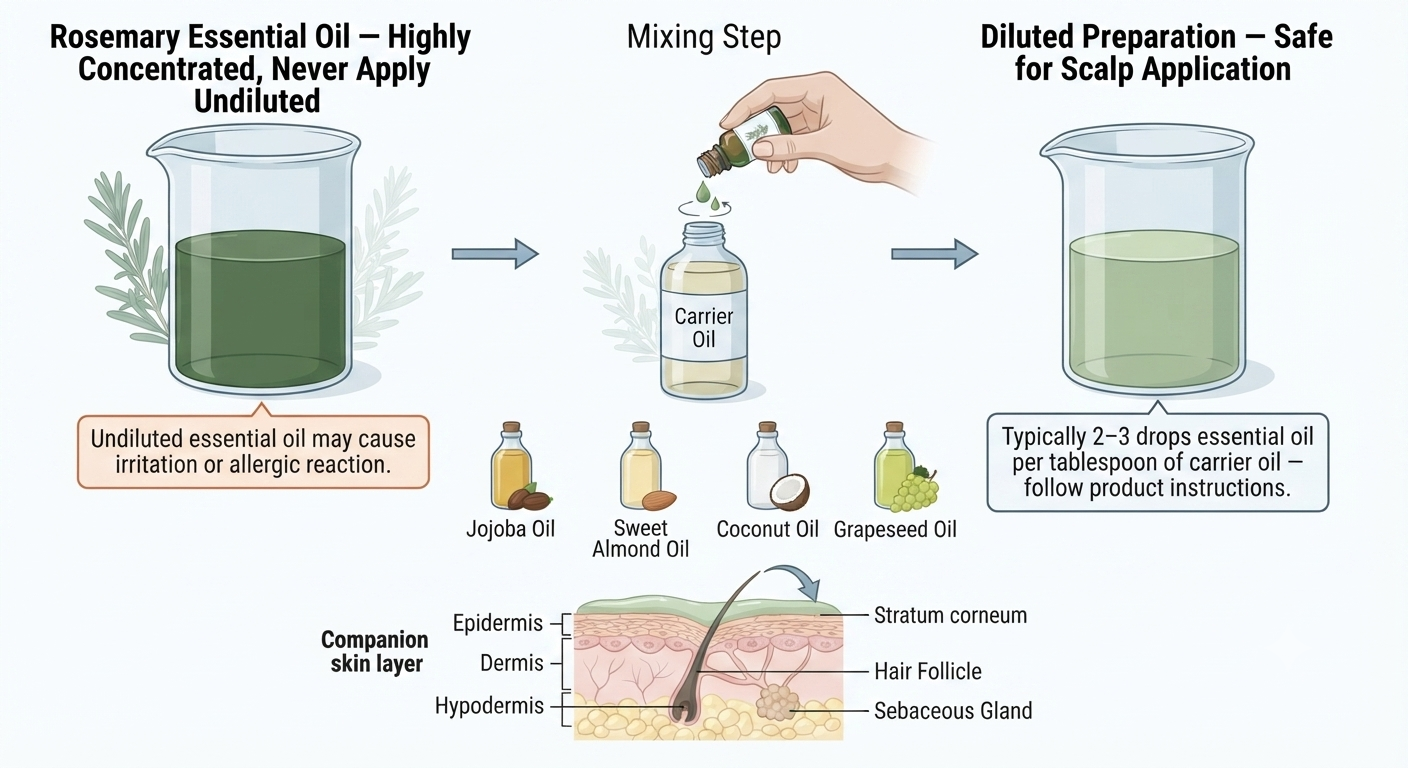
Instead, rosemary essential oil should be mixed with a carrier oil before application.
Common carrier oils include:
- Jojoba oil
- Sweet almond oil
- Coconut oil
- Grapeseed oil
Commercially prepared scalp oils may already contain rosemary oil at a safe concentration. Follow the manufacturer’s instructions if using one of these products.
How to apply rosemary oil safely
A simple approach is often the safest.
Apply a small amount of diluted rosemary oil to areas of thinning or the entire scalp if advised by your healthcare professional or product instructions.
Massage gently using your fingertips for a few minutes.
There is no evidence that vigorous massage produces better hair growth, and excessive rubbing may irritate the scalp.
Many people leave the oil on for several hours before washing it out with a gentle shampoo, although some leave it overnight if their skin tolerates it well.
How often should you use it?
There is no universally accepted schedule because research studies have used different protocols.
Many people choose to apply diluted rosemary oil two to four times each week.
Using larger amounts or applying it more frequently has not been proven to improve results.
Consistency is likely to matter more than frequency.
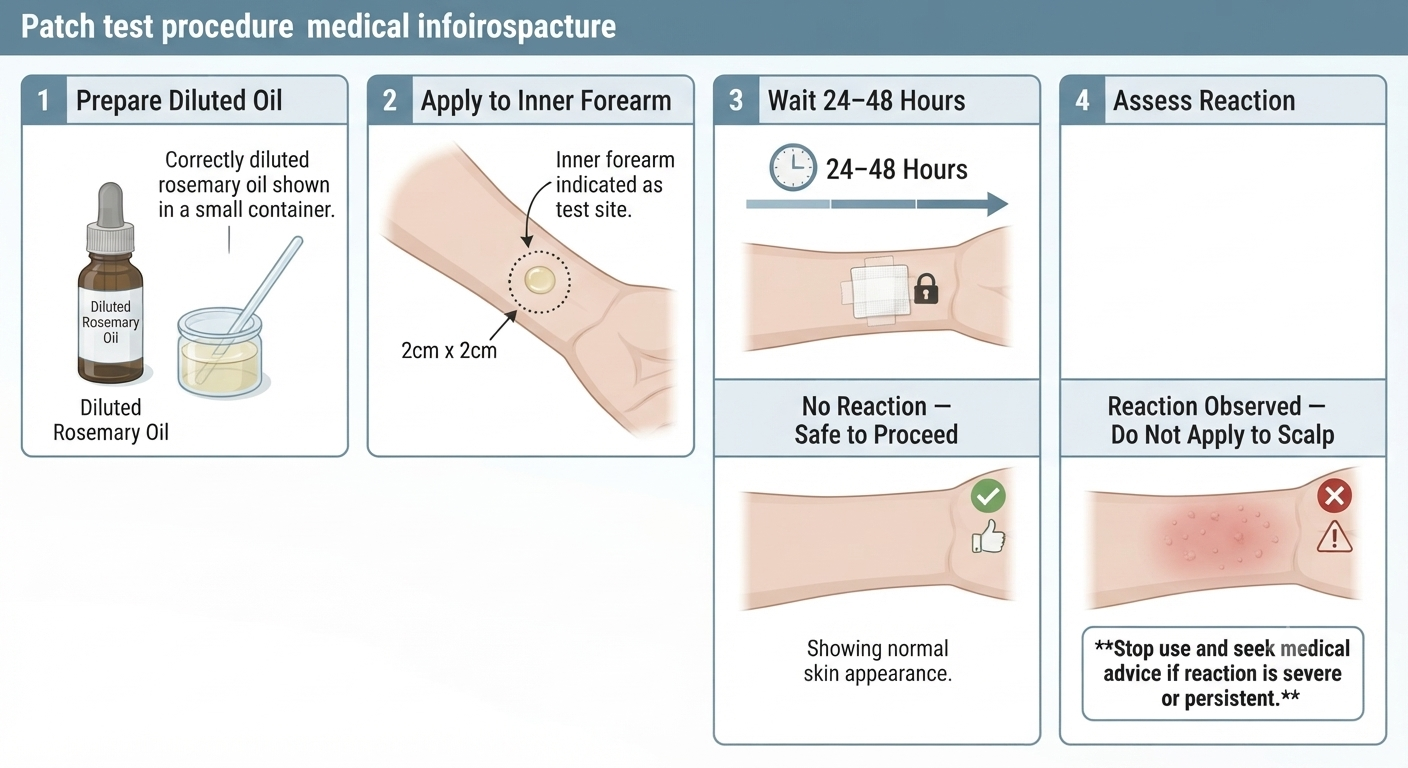
Always perform a patch test first
Even natural products can cause allergic reactions.
Before using rosemary oil on the scalp:
- Apply a small amount of diluted oil to an area of skin, such as the inside of the forearm.
- Wait 24 to 48 hours.
- Look for redness, itching, swelling or irritation.
If any reaction develops, avoid using the product on your scalp.
Possible side effects
Most side effects are mild and involve skin irritation.
These may include:
- Itching
- Burning
- Redness
- Dryness
- Contact dermatitis
If irritation develops after repeated use, stop using the product and seek medical advice if symptoms persist.
When rosemary oil may not be enough
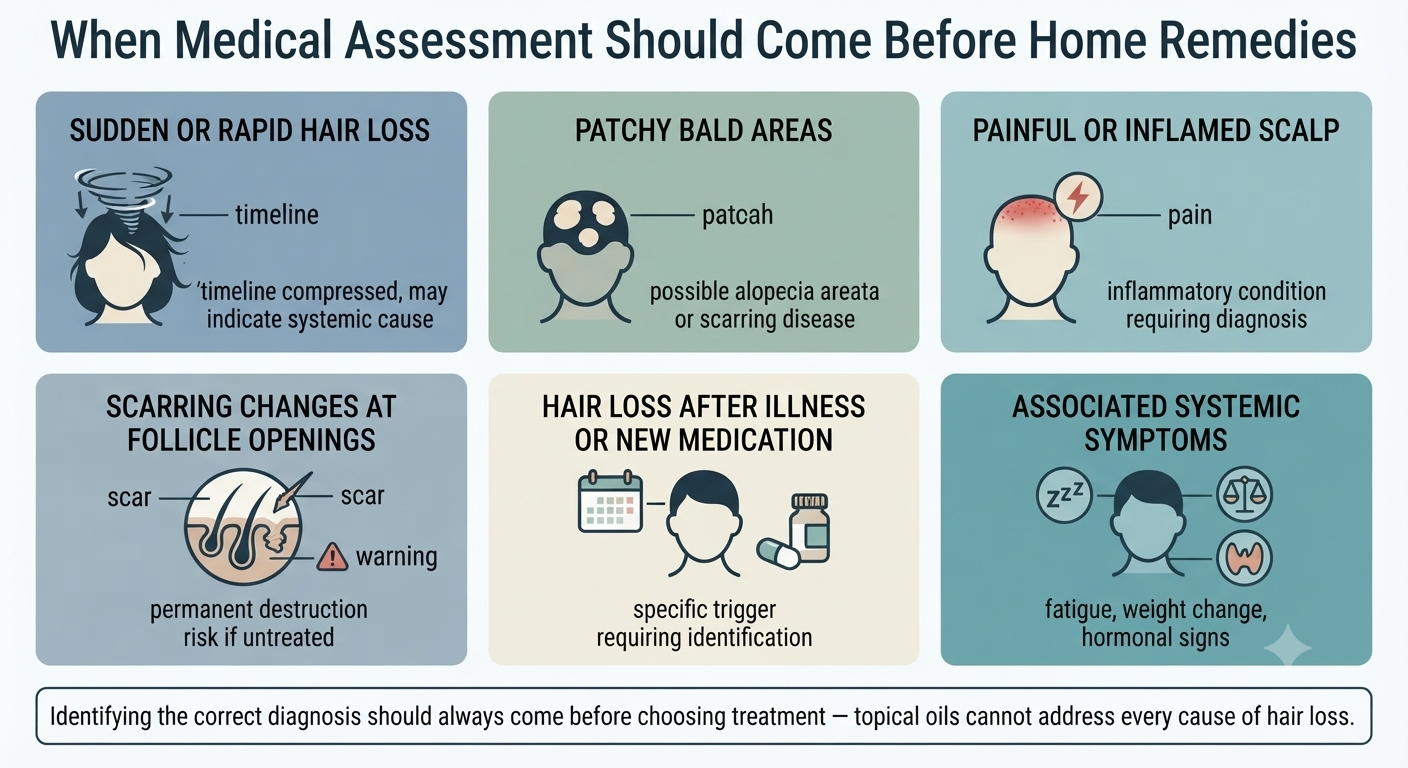
Not every type of hair loss responds to topical products.
If you have:
- Rapid or sudden hair loss
- Patchy bald areas
- Painful or inflamed scalp
- Scarring changes
- Hair loss after illness or medication
A medical assessment is more important than experimenting with home remedies.
Identifying the correct diagnosis should always come before choosing treatment.
A balanced perspective
Rosemary oil is one of the more promising natural ingredients studied for hair loss, but it should be viewed in context.
The available research suggests it may help some people, particularly with androgenetic alopecia, but the evidence remains limited compared with established medical treatments.
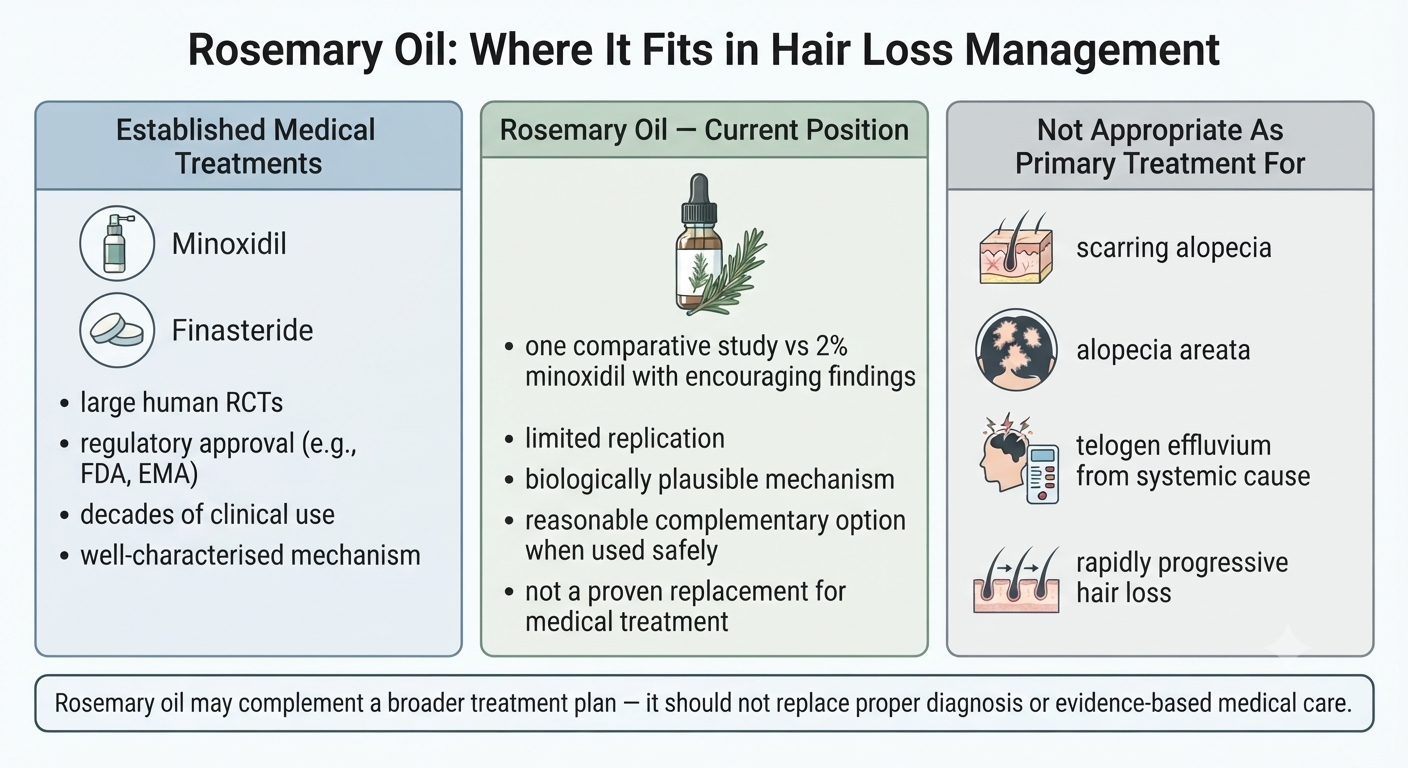
For people who prefer a natural approach or wish to complement a broader treatment plan, rosemary oil may be a reasonable option when used safely and consistently.
The key is to approach it with realistic expectations. Hair follicles change slowly, meaningful improvement takes months rather than weeks, and no natural product has been proven to reverse every form of hair loss.
Author: Dr. Priya Goswami
Medical review: Dr. Denis Broun
Next step
If you notice coverage changes without increased shedding, confirm what process is occurring.
Take the Hair Assessment to have a physician review your pattern, identify whether miniaturization is present, and determine appropriate staging and next steps.



Add Comment