Medical research brief
Dry scalp and dandruff are often mistaken for the same condition because both can cause visible flakes and itching. However, they have different underlying causes and may require different treatments.
Dry scalp develops when the skin lacks sufficient moisture. It may occur because of cold weather, frequent washing, harsh shampoos, ageing or certain skin conditions. Dandruff, on the other hand, is usually associated with an inflammatory response to Malassezia, a naturally occurring yeast that lives on the scalp. Excess oil production and individual susceptibility also contribute to dandruff.
Research shows that dandruff often responds well to medicated shampoos containing antifungal ingredients, while dry scalp is generally managed by restoring the skin barrier and reducing irritation. Correctly identifying the condition is an important first step, as using the wrong products may make symptoms worse.
Article outline
- Why dry scalp and dandruff are confused
- What causes a dry scalp
- What causes dandruff
- How to tell the difference
- Which treatments work for each condition
- Can either condition cause hair loss?
- When to see a healthcare professional
- Key points to remember
Dry scalp vs. dandruff: same flakes, very different problems
White flakes on your shoulders can be frustrating.
For many people, the immediate assumption is dandruff. Others think their scalp is simply dry. The truth is that both conditions can look remarkably similar, especially in the early stages.
But they are not the same problem.
Understanding which one you have can make the difference between finding relief and making the condition worse with the wrong treatment.
What is a dry scalp?
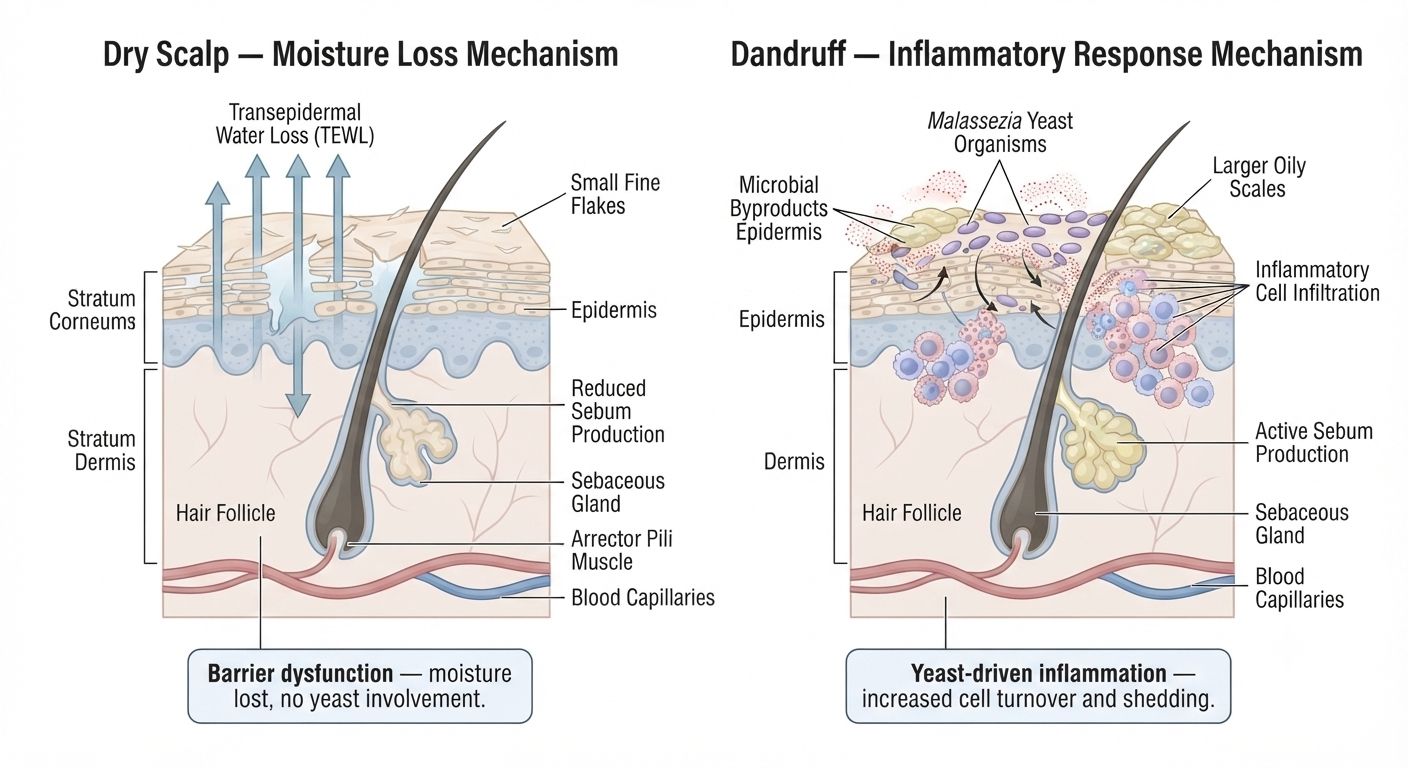
A dry scalp develops when the skin loses moisture.
Like the skin on your hands or face, the scalp relies on a healthy skin barrier to retain water. When that barrier becomes disrupted, the skin may become tight, itchy and flaky.
Common causes include:
- Cold or dry weather
- Frequent shampooing
- Harsh hair care products
- Hot showers
- Ageing skin
- Certain skin conditions, such as eczema
The flakes from a dry scalp are usually small, fine and dry. The scalp itself may feel tight rather than oily.
What causes dandruff?
Dandruff is a different condition.
It is thought to develop because some people react to Malassezia, a yeast that naturally lives on most people’s scalps. The yeast breaks down scalp oils, producing substances that can trigger irritation and increased shedding of skin cells in susceptible individuals.
This leads to visible flakes and itching.
People with dandruff often have normal or increased scalp oil rather than dryness.
How can you tell the difference?
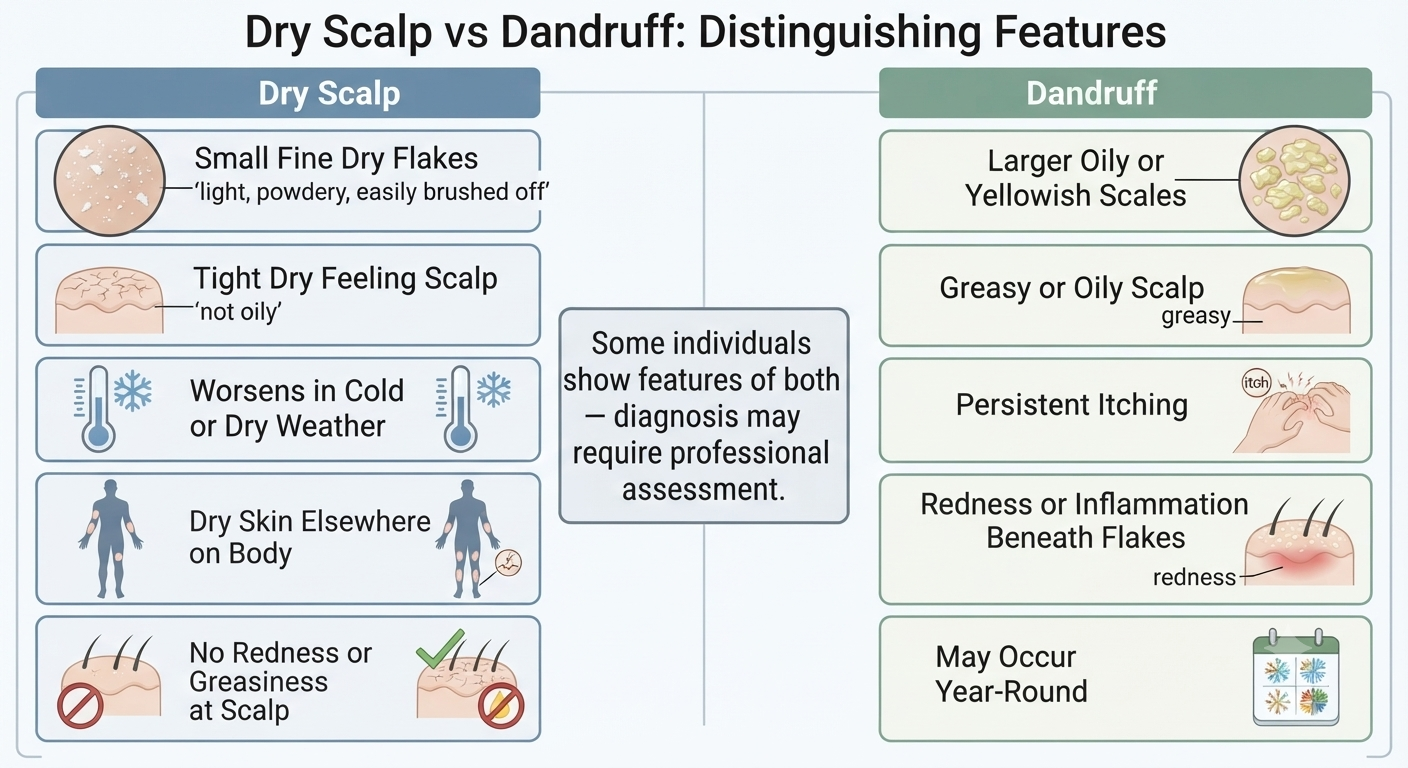
There is no single feature that confirms the diagnosis, but several clues can help.
Dry scalp
People with a dry scalp often notice:
- Small, light flakes
- Tight or dry-feeling skin
- Symptoms that worsen during winter
- Dry skin elsewhere on the body
Dandruff
Dandruff is more likely when there are:
- Larger flakes
- Oily or yellowish scales
- Persistent itching
- Greasy hair or scalp
- Redness beneath the flakes
Some people experience features of both conditions at the same time, making diagnosis more difficult.
Why using the wrong shampoo can be a problem
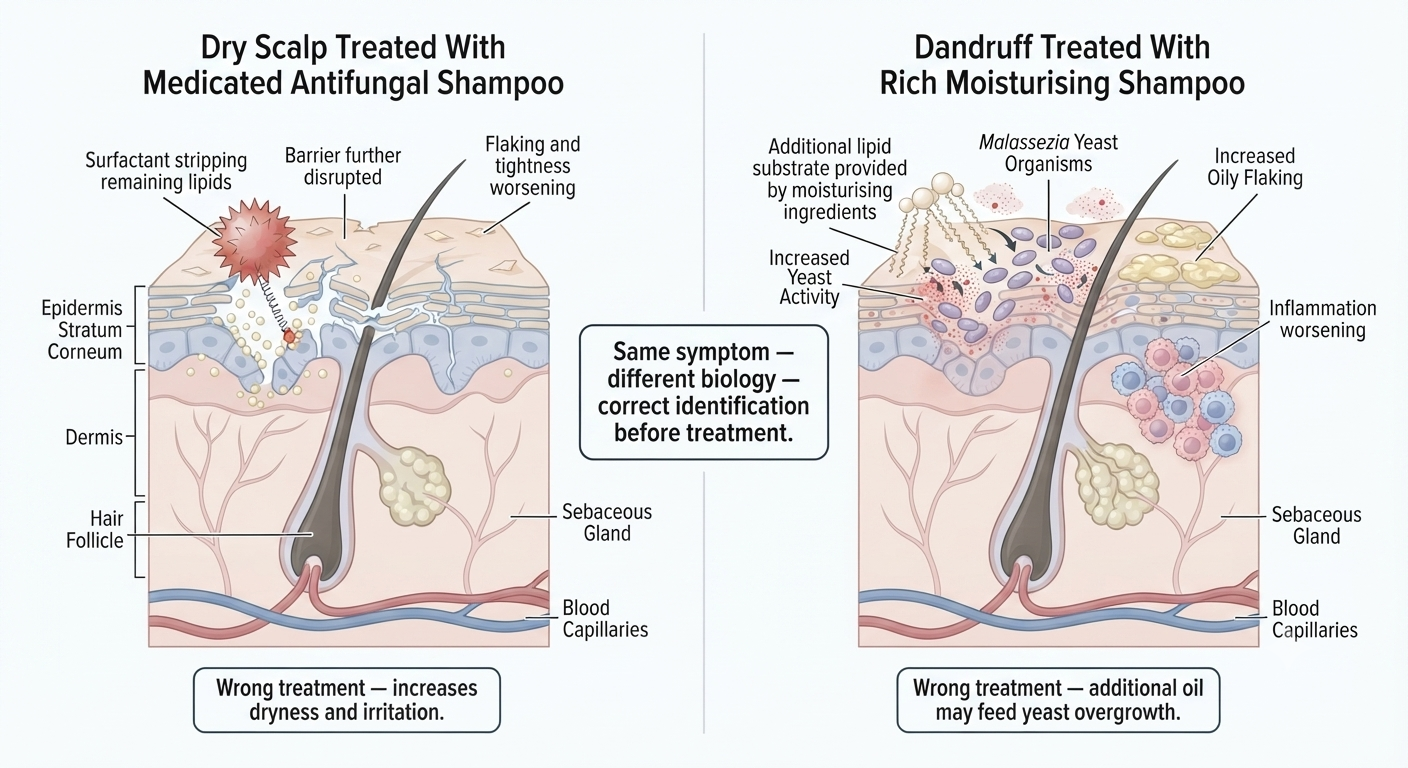
Many people buy an anti-dandruff shampoo as soon as flakes appear.
If the problem is actually a dry scalp, frequent use of certain medicated shampoos may increase dryness and irritation.
Similarly, switching to rich moisturising shampoos may not control dandruff if Malassezia overgrowth is the main issue.
This is why identifying the underlying cause matters more than treating every flake the same way.
How is a dry scalp treated?
The aim is to restore moisture and protect the skin barrier.
Helpful measures may include:
- Using a gentle shampoo
- Avoiding very hot water
- Reducing excessive washing if appropriate
- Limiting harsh styling products
- Using products designed for sensitive or dry scalps
If eczema or another skin condition is contributing, additional treatment may be required.
How is dandruff treated?
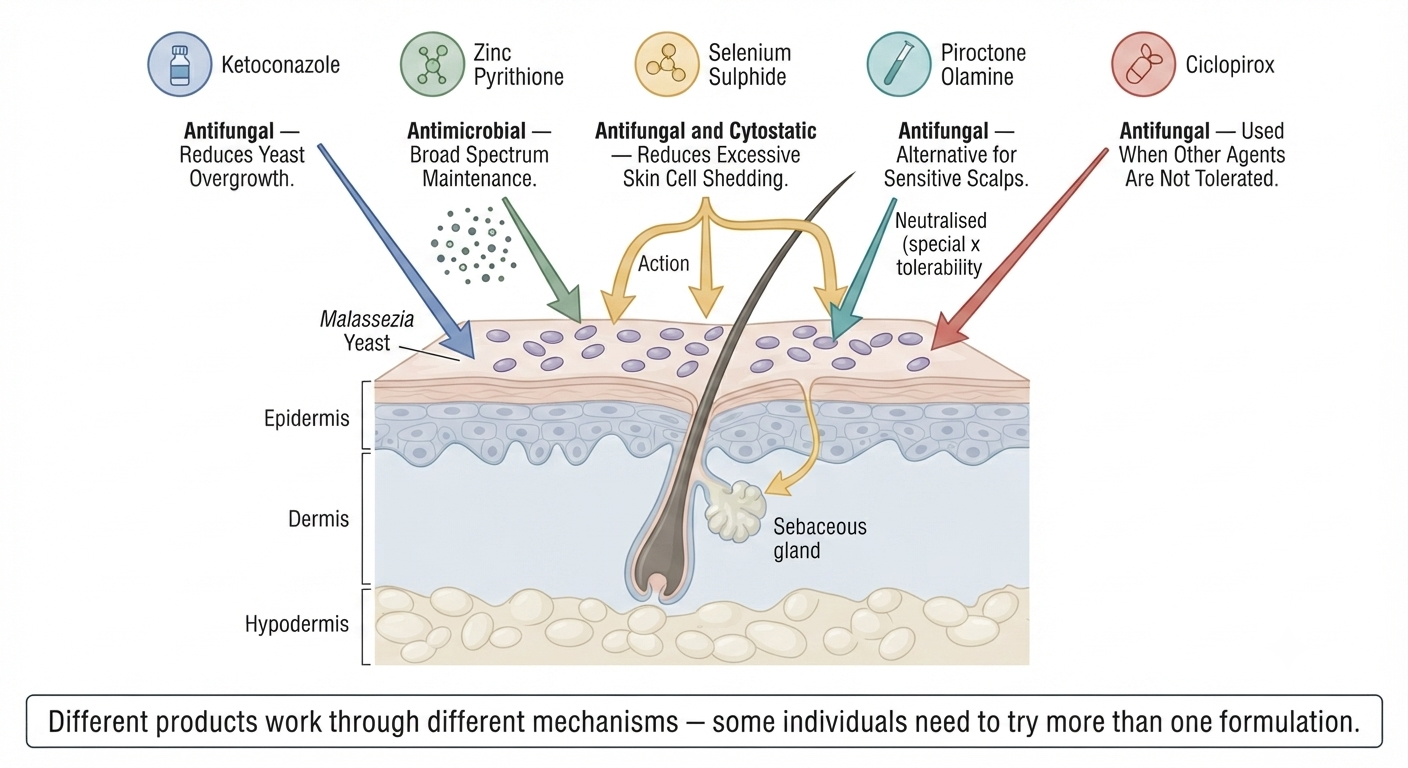
Dandruff often responds to shampoos containing ingredients that reduce yeast growth or calm inflammation.
Common active ingredients include:
- Ketoconazole
- Zinc pyrithione
- Selenium sulphide
- Piroctone olamine
- Ciclopirox
Different products work in different ways, and some people need to try more than one before finding the best option.
Symptoms often improve gradually over several weeks rather than after one or two washes.
Can either condition cause hair loss?
Neither simple dry scalp nor uncomplicated dandruff directly destroys hair follicles.
However, persistent inflammation, severe itching and repeated scratching can contribute to increased hair shedding in some people.
If hair loss is significant, continues despite treatment or is accompanied by patchy bald areas, another condition may be present.
When should you seek medical advice?
Consider seeing a healthcare professional if:
- Symptoms persist despite appropriate treatment
- The scalp becomes painful or swollen
- Thick crusts or widespread redness develop
- Hair loss becomes noticeable
- The diagnosis is uncertain
Conditions such as psoriasis, seborrhoeic dermatitis, fungal infections and eczema can resemble dandruff and require different management.
Keeping your scalp healthy
A healthy scalp provides the environment that hair follicles need to function normally.
Whether the problem is dryness or dandruff, early recognition and appropriate treatment are usually more effective than repeatedly changing products in the hope that one will work.
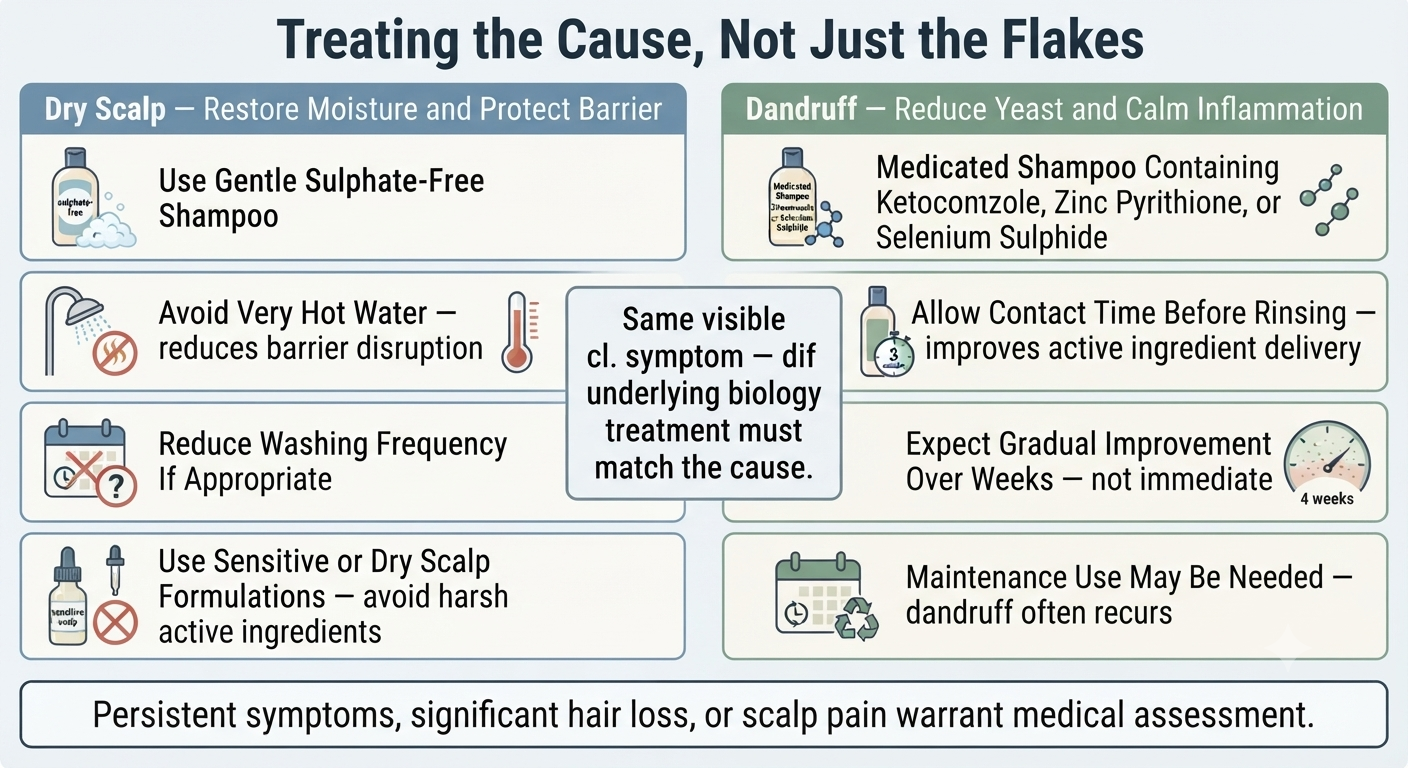
Flakes may look similar in the mirror, but the biology behind them is often quite different. Treating the underlying cause rather than the visible symptom is the best way to achieve lasting improvement.
Author: Dr. Priya Goswami
Medical review: Dr. Denis Broun
Next step
If you notice coverage changes without increased shedding, confirm what process is occurring.
Take the Hair Assessment to have a physician review your pattern, identify whether miniaturization is present, and determine appropriate staging and next steps.
Add Comment