A full beard has become an important part of personal style for many men. While some naturally grow dense facial hair, others struggle with patchy growth, uneven density or areas where hair never developed at all.
For some, this is simply genetic. For others, beard hair may have been lost after an injury, burn or previous surgery.
Beard hair transplantation offers a way to improve beard density using your own hair. It can produce impressive results, but like any surgical procedure, success depends on careful planning and realistic expectations.
Why might someone choose beard restoration?
The reasons vary.
Some men have naturally sparse facial hair because of genetics. Others have scars that prevent hair from growing normally. A few may have lost beard hair following trauma or previous medical treatment.
The procedure is designed to increase density or reshape the beard rather than create an entirely new appearance that does not suit the individual’s facial features.
How does a beard transplant work?
The procedure involves relocating healthy hair follicles from one part of the body to another.
In most cases, the donor hair comes from the back or sides of the scalp because these follicles tend to remain healthy throughout life.
Each follicular unit is carefully removed and then implanted into the beard area at specific angles and directions.
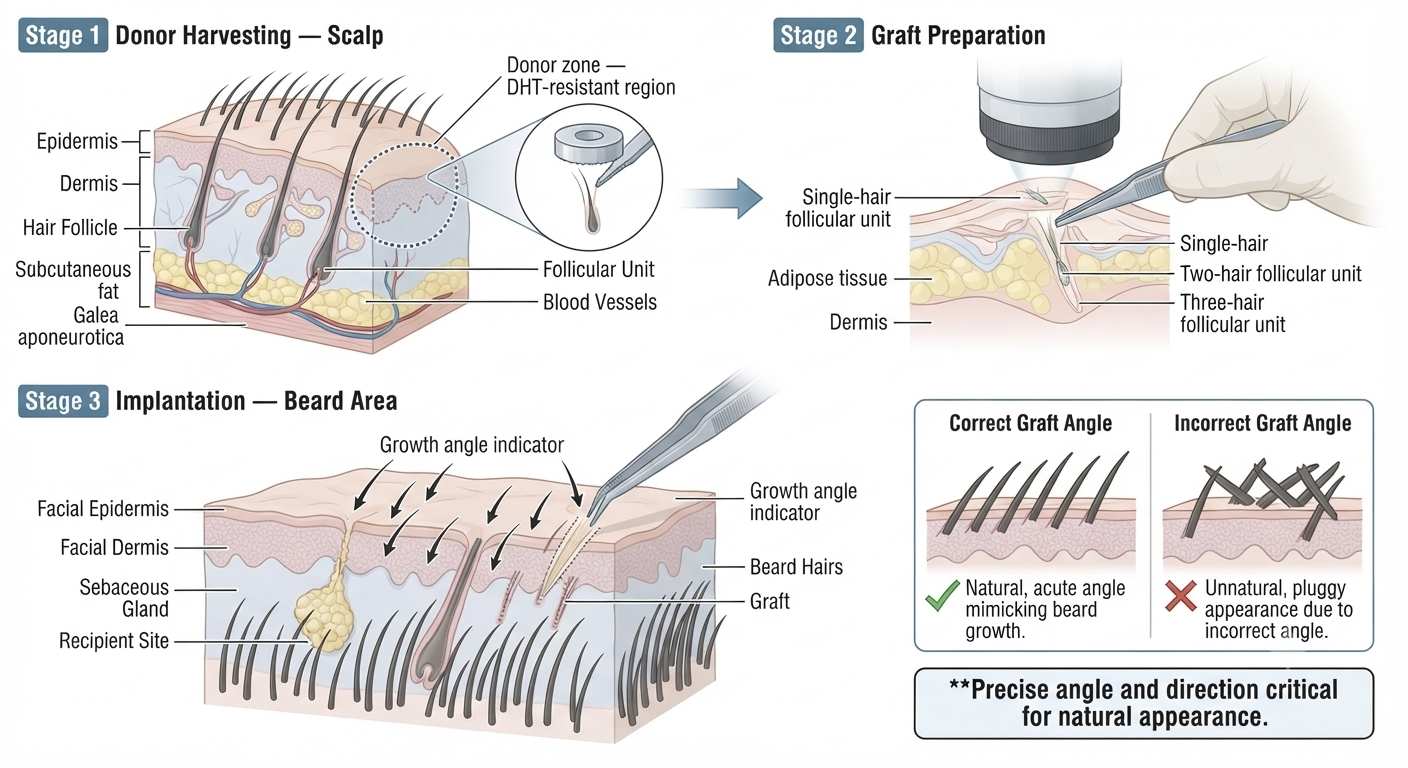
This planning is essential.
Unlike scalp hair, beard hairs emerge at very precise angles. Small differences in direction can affect whether the final result looks natural.
Who is a good candidate?
Suitable candidates often include men who:
- Have patchy beard growth due to genetics
- Have adequate donor hair on the scalp
- Have realistic expectations
- Are in good general health
- Have stable facial hair loss
Good donor hair is just as important as the area being treated.
Without enough healthy donor follicles, achieving adequate beard density may not be possible.
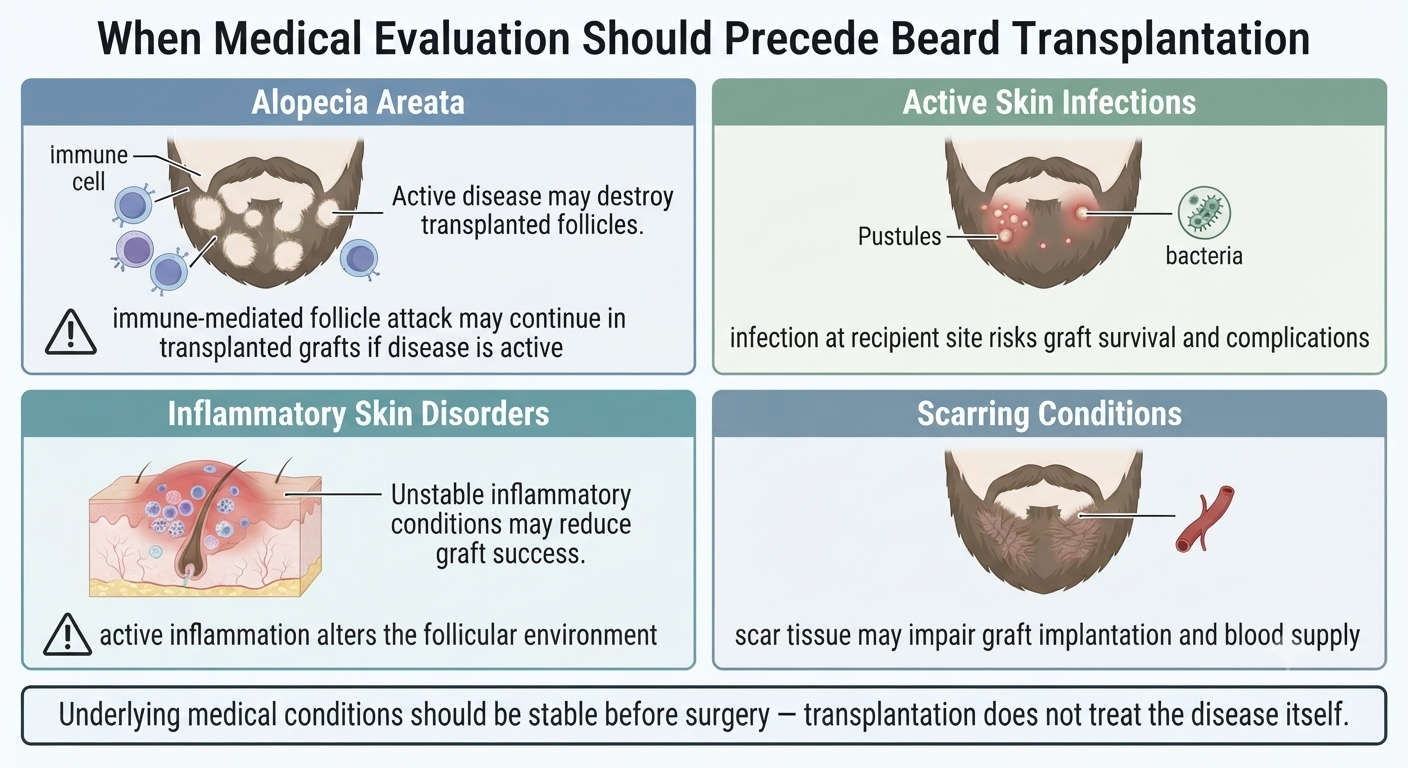
When surgery may not be the right choice
Not every patchy beard should be treated surgically.
Hair loss caused by active medical conditions may continue even after transplantation if the underlying disease is not controlled.
Examples include:
- Alopecia areata
- Active skin infections
- Certain inflammatory skin disorders
- Some scarring conditions
Your surgeon may recommend medical evaluation before considering transplantation.
What happens during the procedure?
Most beard transplants are performed under local anaesthetic.
The procedure generally includes:
- Preparing the donor area.
- Removing individual follicular units.
- Designing the beard shape.
- Creating tiny recipient sites.
- Implanting each graft individually.
Depending on the number of grafts required, surgery may take several hours.
Patients usually return home the same day.
What should you expect after surgery?
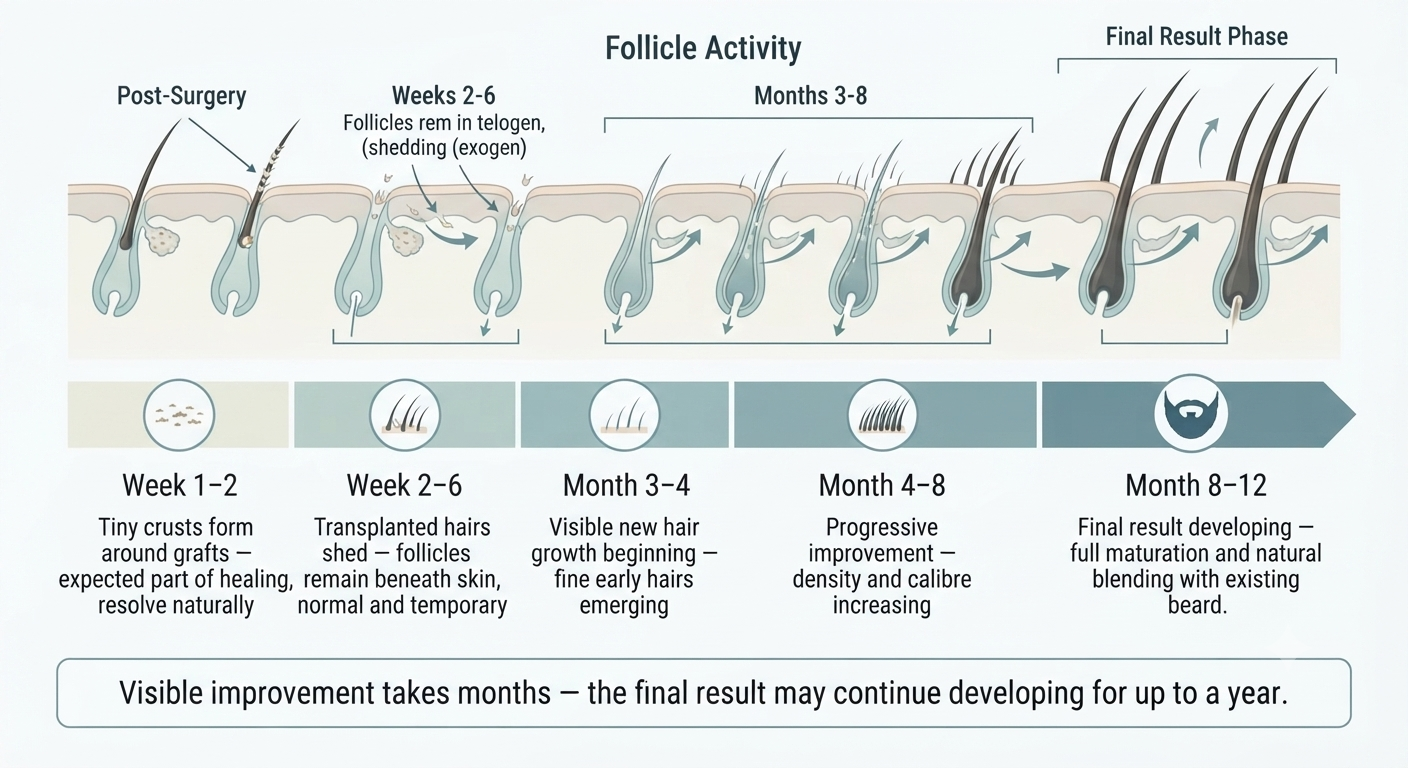
Recovery is gradual.
Tiny crusts commonly form around the transplanted follicles during the first week. These usually fall away naturally as healing progresses.
The transplanted hairs often shed within the first few weeks.
This can be surprising, but it is a normal part of the process.
The follicles remain beneath the skin and gradually begin producing new hairs over the following months.
Visible improvement often begins after three to four months, while the final result may continue developing for up to a year.
Are there risks?
Every surgical procedure carries some degree of risk.
Possible complications include:
- Temporary swelling
- Mild discomfort
- Infection
- Bleeding
- Small scars in the donor area
- Poor graft survival
- Uneven density
- Unnatural hair direction if graft placement is not carefully planned
Choosing an experienced surgical team helps reduce many of these risks.
Will the transplanted beard need trimming?
Yes.
Because the transplanted follicles usually originate from the scalp, they often retain many of the growth characteristics of scalp hair.
This means they may continue growing longer than natural beard hair and may require regular trimming as part of routine grooming.
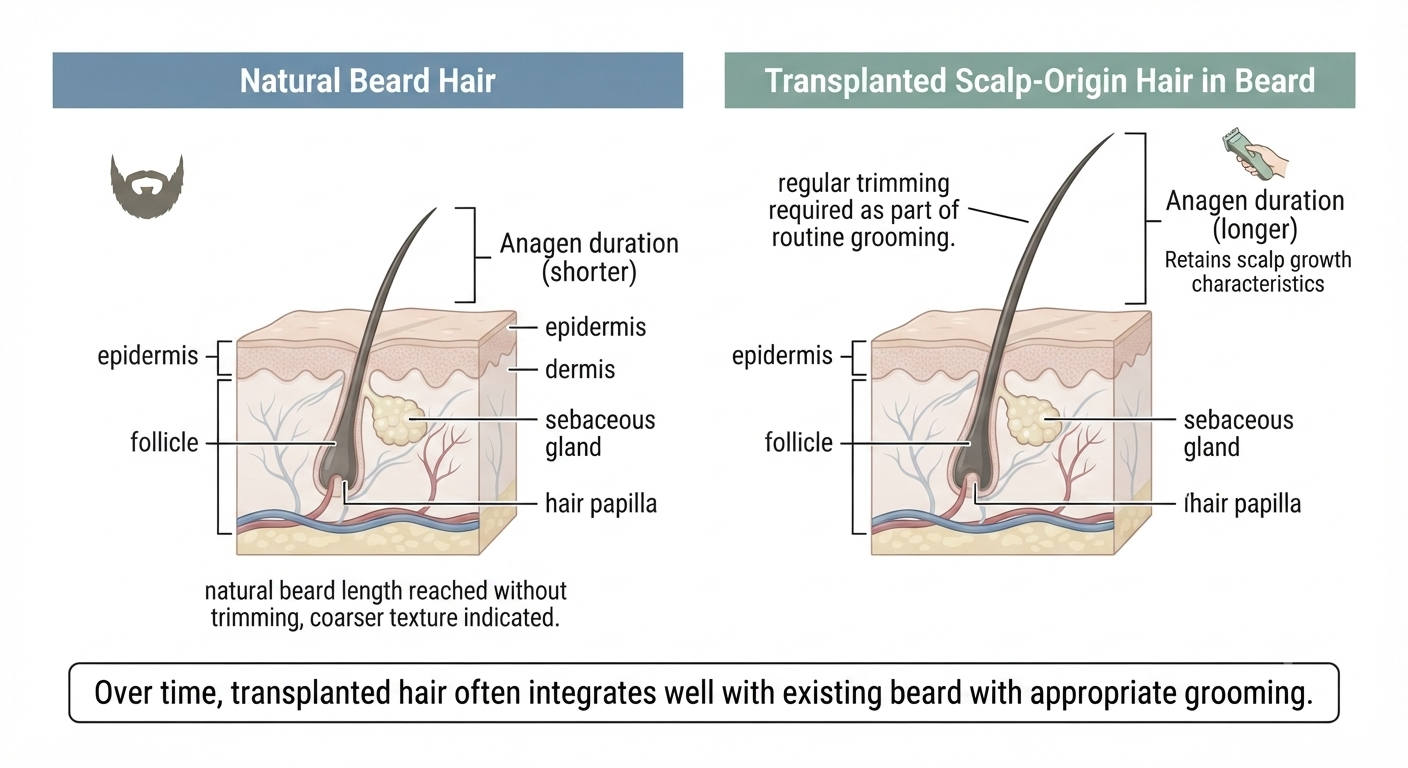
Over time, many patients find the transplanted hair blends well with their existing beard.
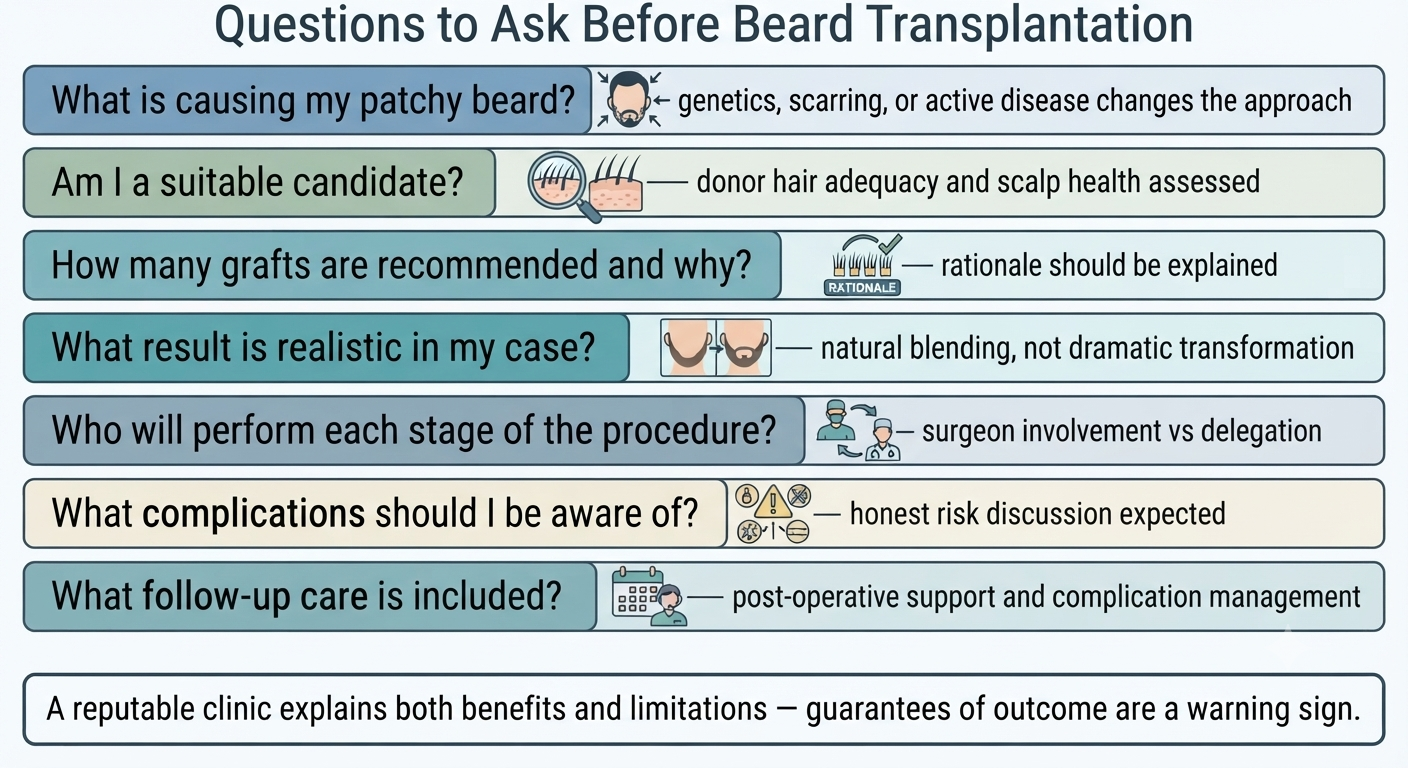
Questions worth asking before deciding
A consultation is an opportunity to understand whether surgery is appropriate for your situation.
Useful questions include:
- What is causing my patchy beard?
- Am I a suitable candidate?
- How many grafts are recommended?
- What result is realistic in my case?
- Who will perform the procedure?
- What complications should I be aware of?
- What follow-up care is included?
A reputable clinic should explain both the benefits and the limitations of the procedure without making guarantees.
Looking beyond the procedure
A successful beard transplant is not measured simply by the number of grafts placed.
The goal is a beard that suits your face, grows naturally and continues to look appropriate over time.
That outcome begins with an accurate diagnosis, careful surgical planning and realistic expectations rather than focusing only on before-and-after photographs.
Author: Dr. Priya Goswami
Medical review: Dr. Denis Broun
Next step
If you notice coverage changes without increased shedding, confirm what process is occurring.
Take the Hair Assessment to have a physician review your pattern, identify whether miniaturization is present, and determine appropriate staging and next steps.

Add Comment