Not long ago, most discussions about minoxidil focused on lotions and foams applied directly to the scalp.
Today, another option is attracting growing interest.
Low-dose oral minoxidil is increasingly being prescribed by dermatologists and hair specialists for certain patients with hair loss. It has become a topic of discussion because some people find it easier to take a tablet than to apply a topical treatment every day.
That growing interest has also created confusion. Is it better than topical minoxidil? Is it safer? Is it suitable for everyone?
The answer to each of those questions depends on the individual.
What is oral minoxidil?
Oral minoxidil is a tablet that was originally developed to treat severe high blood pressure.
Doctors later noticed that many patients taking the medicine developed increased hair growth on the scalp and other parts of the body. This unexpected observation eventually led researchers to investigate whether much lower doses could be used to treat hair loss.
Today, many hair specialists prescribe low-dose oral minoxidil for selected patients, although its use for hair loss is considered off-label in many regions.
Off-label prescribing means a medicine is being used for a condition that is not included in its official product licence, based on available scientific evidence and clinical judgement.
How does it work?
Researchers do not fully understand every mechanism involved.
Current evidence suggests that minoxidil helps prolong the growth phase of the hair cycle and may improve the environment surrounding hair follicles. This allows some miniaturised follicles to produce thicker and longer hairs over time.
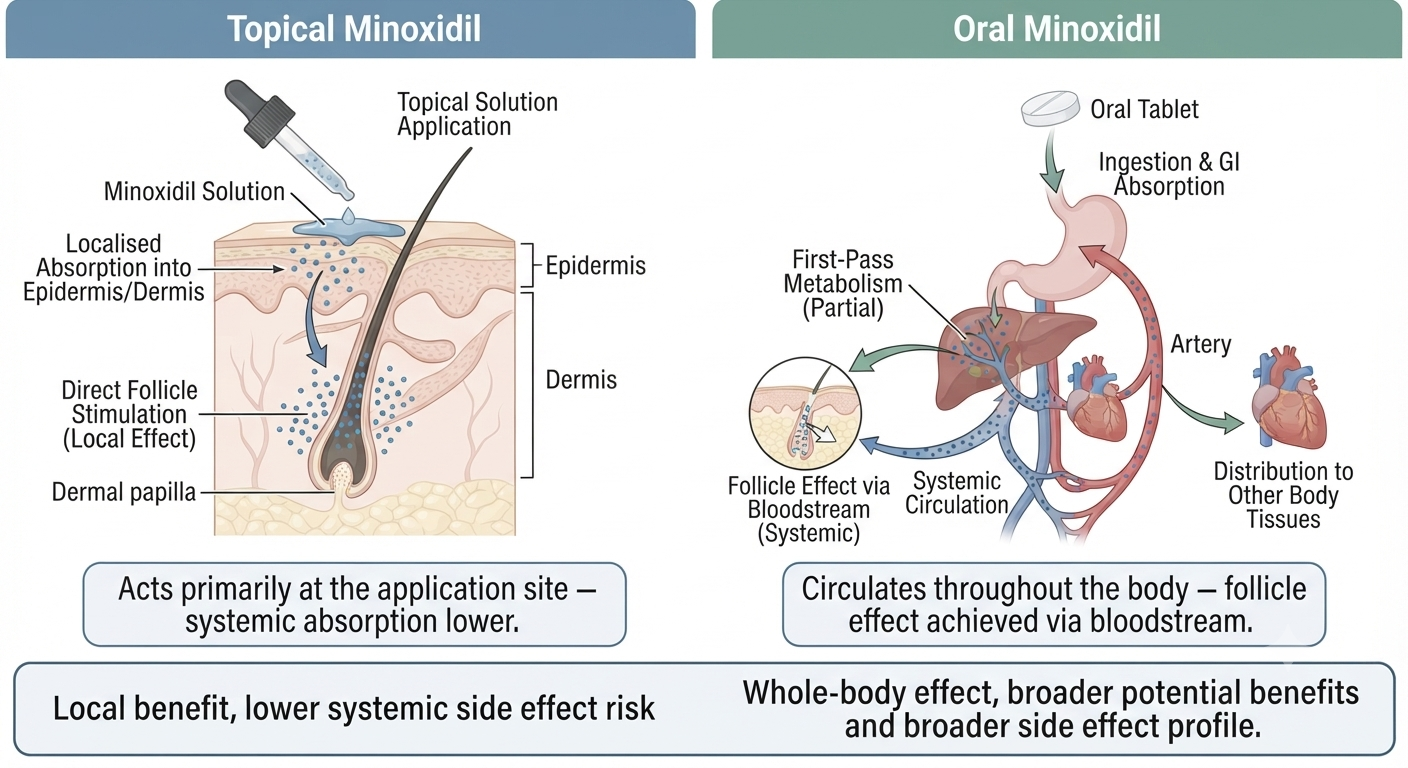
Unlike topical minoxidil, which is applied only to the scalp, oral minoxidil circulates throughout the body.
This whole-body effect explains both its potential benefits and its possible side effects.
Why are more doctors prescribing it?
Several reasons have contributed to its increasing use.
Some patients:
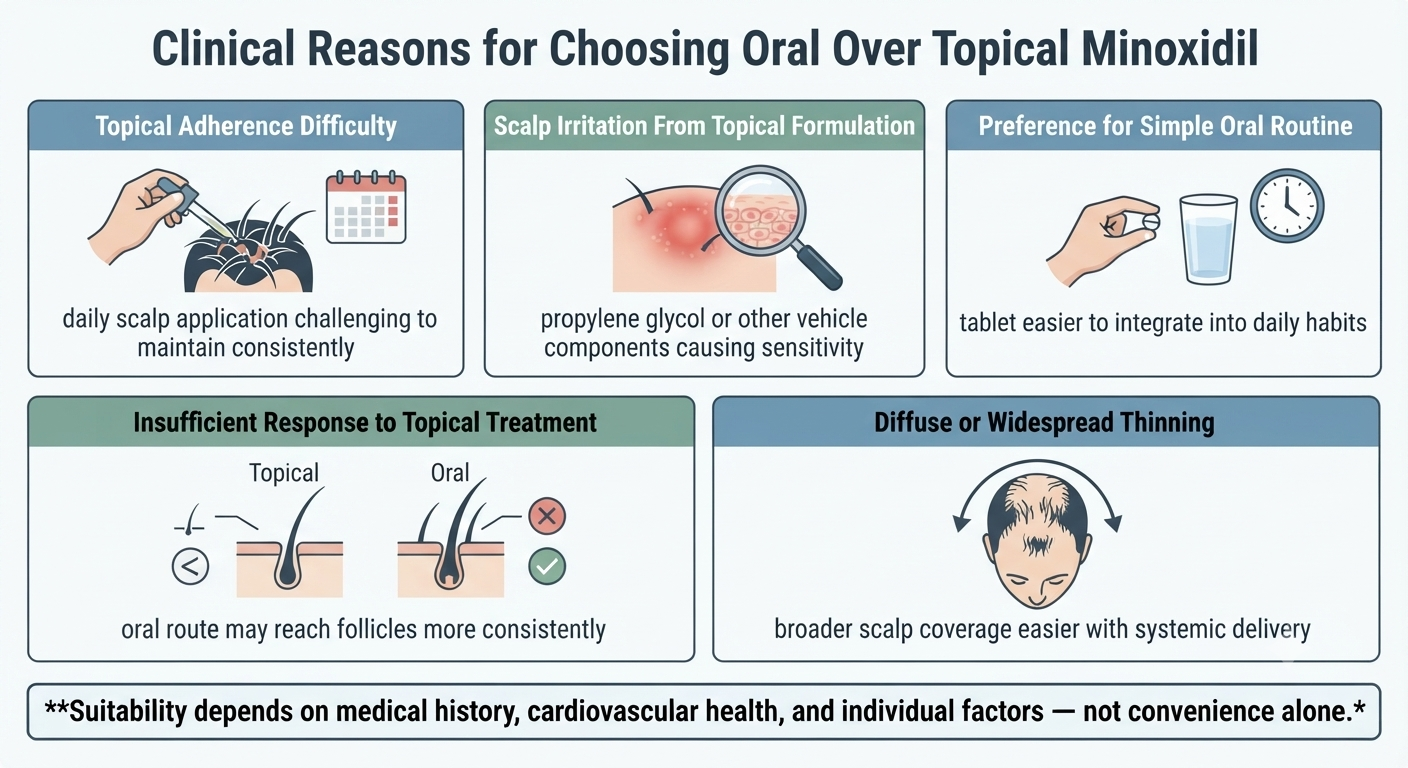
- Find topical products difficult to apply consistently.
- Experience scalp irritation from topical formulations.
- Prefer taking a daily tablet.
- Have not achieved satisfactory results with topical treatment alone.
Recent studies have also reported encouraging improvements in hair density in selected patients treated with low-dose oral minoxidil.
While these findings are promising, larger long-term studies are still being conducted.
Who may be a suitable candidate?
Low-dose oral minoxidil may be considered for some adults with:
- Male pattern hair loss
- Female pattern hair loss
- Certain cases of chronic hair shedding
- Patients unable to tolerate topical formulations
Whether it is appropriate depends on medical history, current medications and overall cardiovascular health.
Treatment should always be individualised.
What results should you expect?
Hair follicles respond slowly.
During the first few weeks, some people notice increased shedding before improvement begins. Although this can be worrying, temporary shedding is thought to reflect changes in the hair growth cycle rather than treatment failure.
Visible improvement often requires several months.
Maximum benefit may continue to develop over six to twelve months, depending on the individual and the type of hair loss being treated.
Possible side effects
Because oral minoxidil affects the whole body, monitoring is important.
Possible side effects include:
- Increased hair growth on the face or body
- Swelling of the ankles or feet
- Headache
- Light-headedness
- Faster heart rate
- Fluid retention
Most side effects reported with low-dose treatment are mild, but more significant reactions can occur in some individuals.
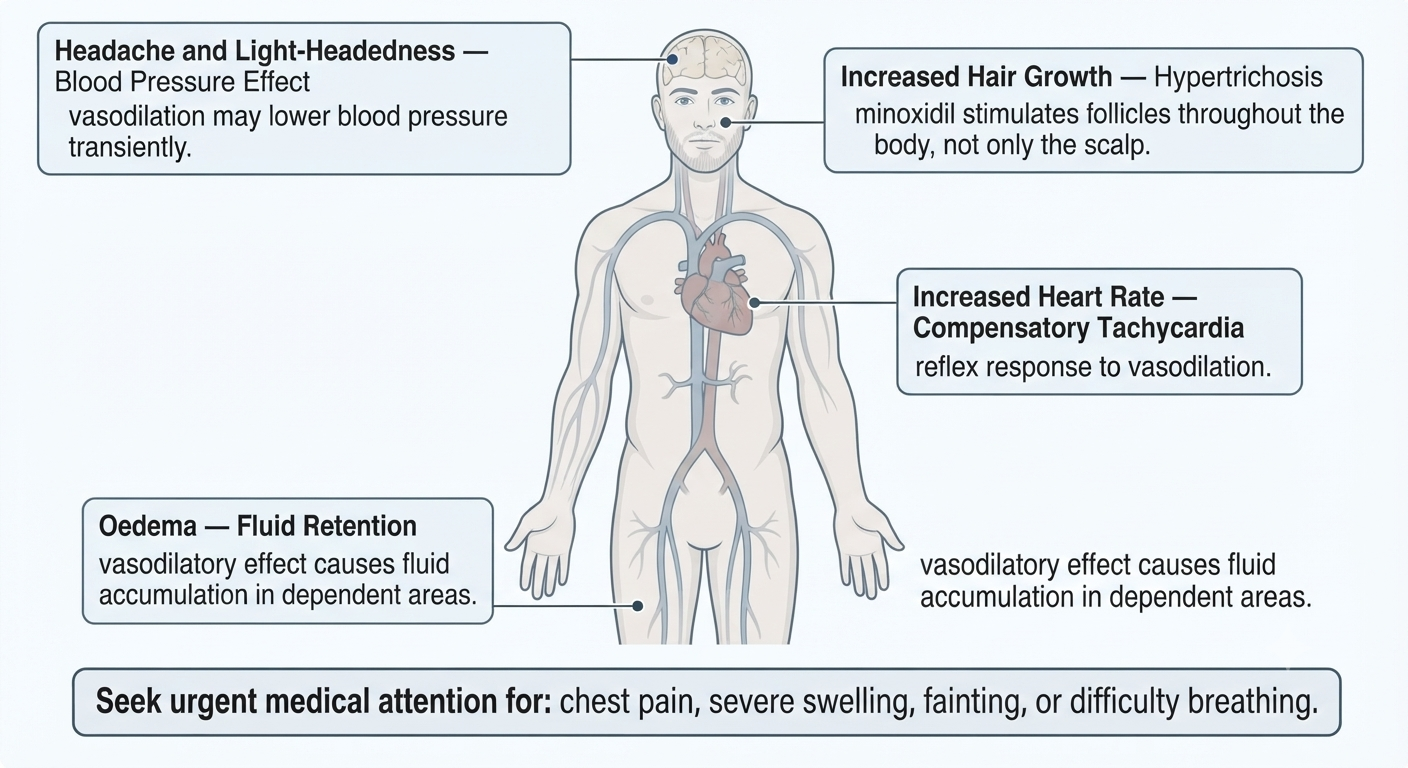
Anyone who develops chest pain, severe swelling, fainting or difficulty breathing should seek urgent medical attention.
Who should avoid oral minoxidil?
Oral minoxidil may not be appropriate for everyone.
People with certain heart conditions, uncontrolled blood pressure problems or other significant medical illnesses may require alternative treatment or specialist assessment.
Pregnancy and breastfeeding also require careful consideration before any hair loss treatment is prescribed.
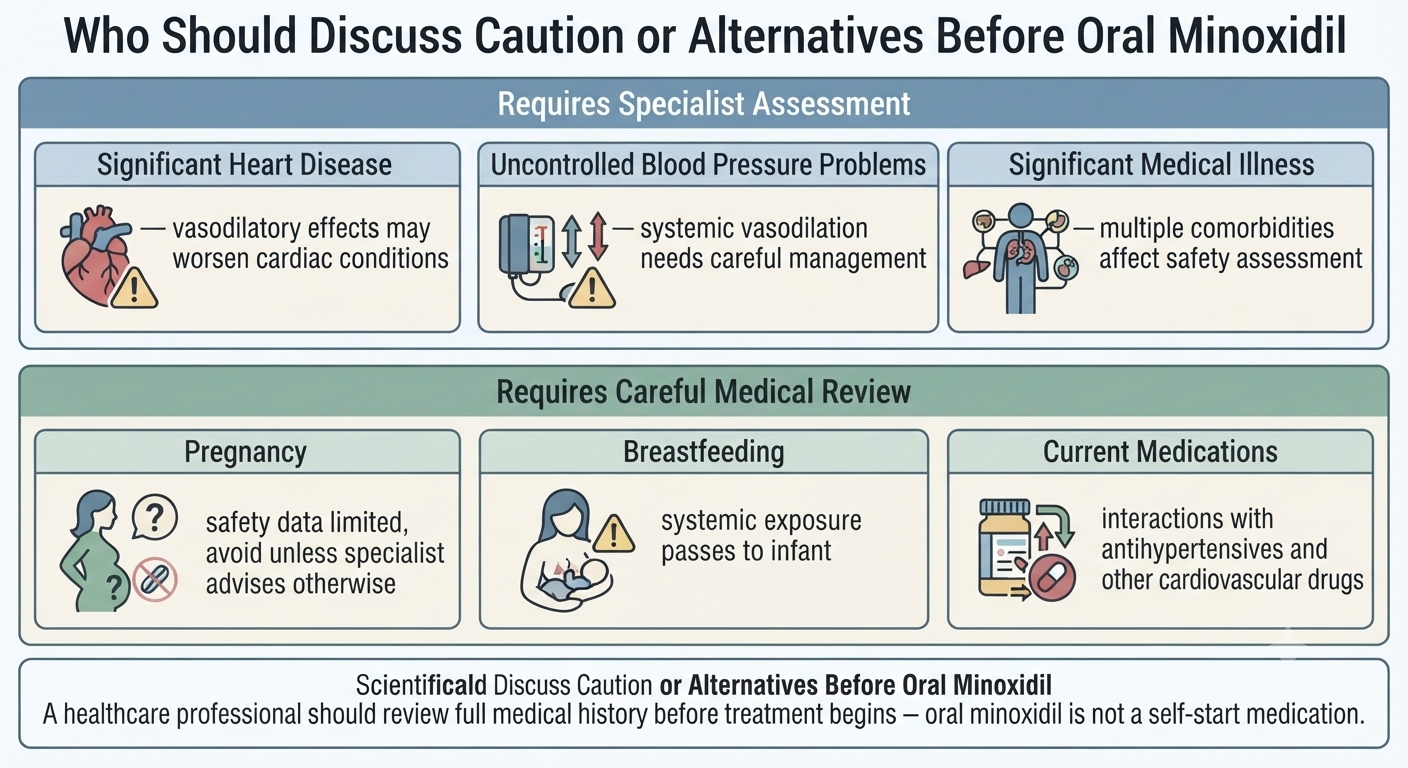
A healthcare professional should review your medical history before treatment begins.
Is it better than topical minoxidil?
There is no simple answer.
Some patients respond better to oral treatment, while others achieve excellent results with topical formulations.
The choice depends on several factors, including:
- The type of hair loss
- Previous response to treatment
- Lifestyle
- Personal preference
- Medical history
- Risk of side effects
One approach is not universally superior to the other.
A conversation worth having
Oral minoxidil has become an important addition to the range of treatments available for hair loss. Early evidence suggests that it can be effective for carefully selected patients, but it is not a treatment to start without medical guidance.
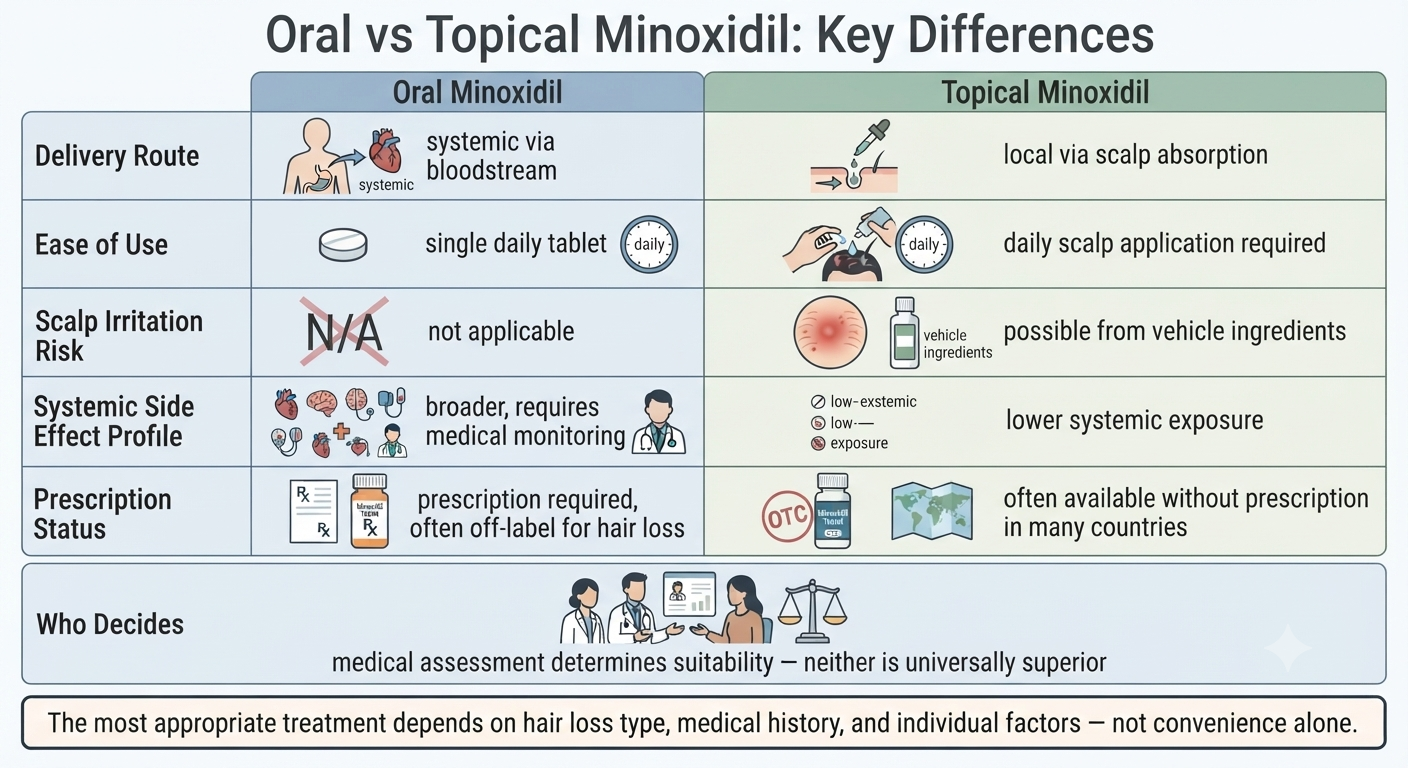
The most appropriate therapy depends not only on the medicine itself but also on understanding why the hair loss is happening in the first place.
A thorough assessment, realistic expectations and ongoing follow-up remain just as important as the treatment chosen.
Author: Dr. Priya Goswami
Medical review: Dr. Denis Broun
Next step
If you notice coverage changes without increased shedding, confirm what process is occurring.
Take the Hair Assessment to have a physician review your pattern, identify whether miniaturization is present, and determine appropriate staging and next steps.

Add Comment