One of the first questions people ask when considering a hair transplant is simple.
“How much does it cost?”
The answer is rarely straightforward.
Hair transplant surgery is not a standard product with a fixed price. Every patient has a different pattern of hair loss, different donor hair availability and different cosmetic goals. Two people sitting in the same consultation room may receive completely different treatment plans and very different quotations.
Understanding what influences the cost helps you make a more informed decision and avoid focusing only on the lowest price.
The number of grafts is one of the biggest factors
Most clinics estimate the procedure based on the number of grafts needed.
A graft is a naturally occurring group of one to several hair follicles removed from the donor area and transplanted into thinning or bald areas.
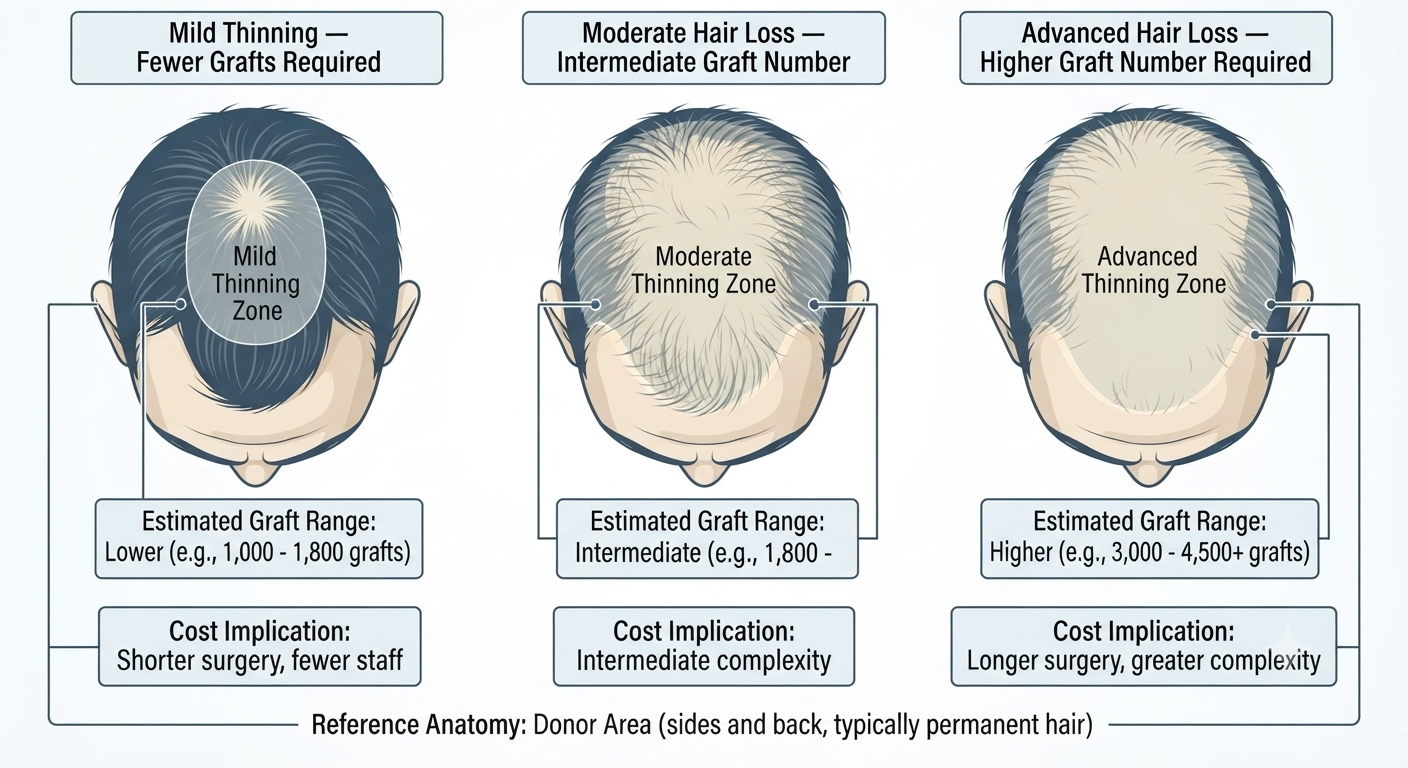
Someone with a small area of thinning may require relatively few grafts. Another person with advanced hair loss may need several thousand.
More grafts generally mean:
- Longer surgery
- More surgical staff
- Greater technical complexity
- Higher overall cost
The quotation should explain how the estimated graft number was determined rather than simply providing a total price.
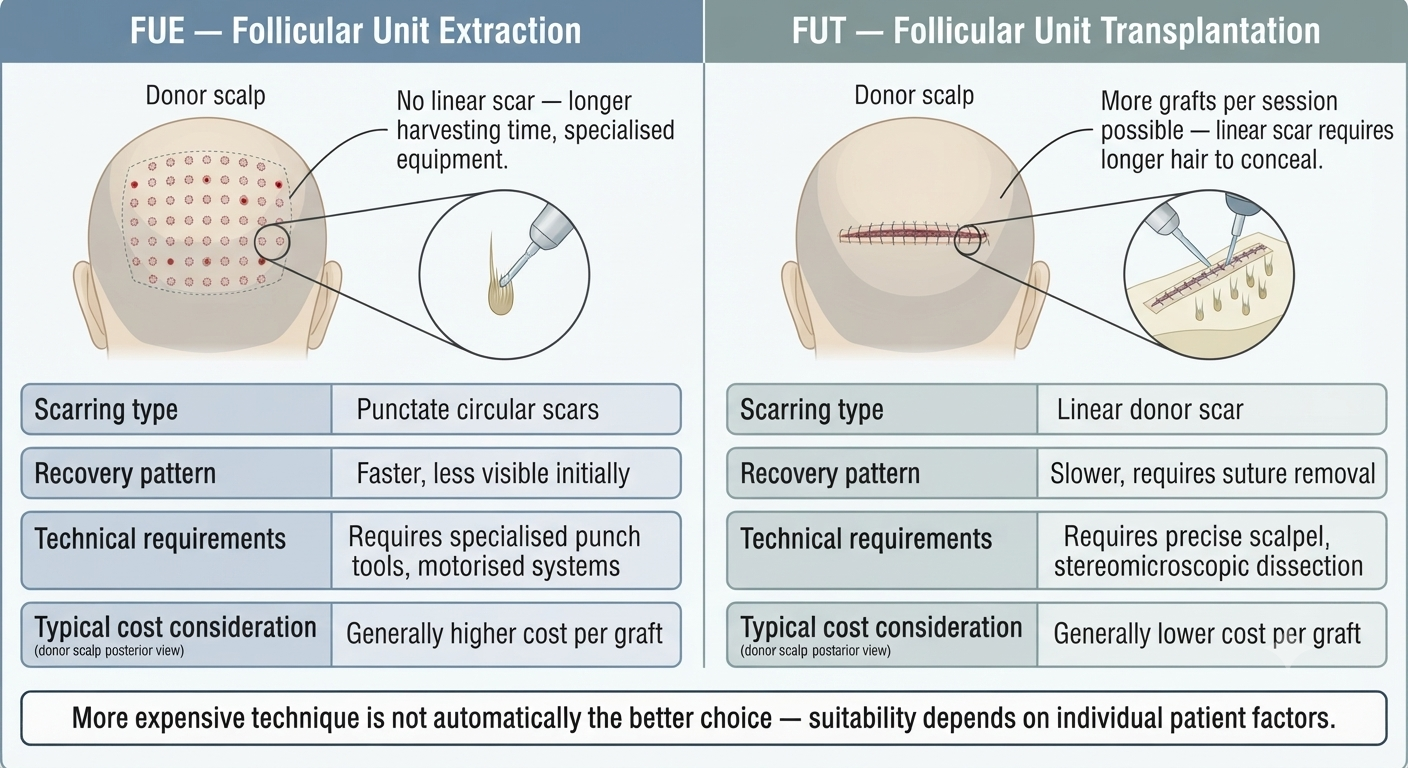
Surgical technique influences pricing
Modern hair transplantation is commonly performed using follicular unit extraction (FUE) or follicular unit transplantation (FUT).
Each technique has advantages, limitations and different technical requirements.
Some procedures involve additional technology or specialised equipment that may increase the overall cost. However, a more expensive technique is not automatically the better choice for every patient.
The most appropriate method depends on factors such as hair characteristics, donor area quality, previous surgery and future hair loss expectations.
Experience matters
Hair transplantation combines surgery with aesthetic judgement.
Creating a natural-looking hairline requires careful planning. The angle, direction and density of every graft contribute to the final appearance.
Experienced surgeons often invest years developing these skills.
Part of what patients pay for is not simply the procedure itself but the expertise involved in designing and performing it.
Location affects the price
Hair transplant costs vary considerably around the world.
Several factors influence this, including:
- Local operating costs
- Staff salaries
- Regulatory requirements
- Healthcare infrastructure
- Demand for treatment
Medical tourism has made surgery more accessible for many patients, but comparing prices between countries should involve more than converting currencies.
The quality of follow-up care, communication and long-term support should also be considered.
What is included in the quotation?
Not every clinic includes the same services.
Some quotations may include:
- Initial consultation
- Pre-operative assessment
- Surgery
- Anaesthesia
- Medications
- Follow-up appointments
- Post-operative care products
Others may charge separately for these items.
Before comparing prices, ask for a detailed breakdown so that you are comparing like with like.
Beware of unusually cheap offers
Very low prices can be appealing, particularly when large discounts are advertised.
However, unusually inexpensive packages may raise important questions.
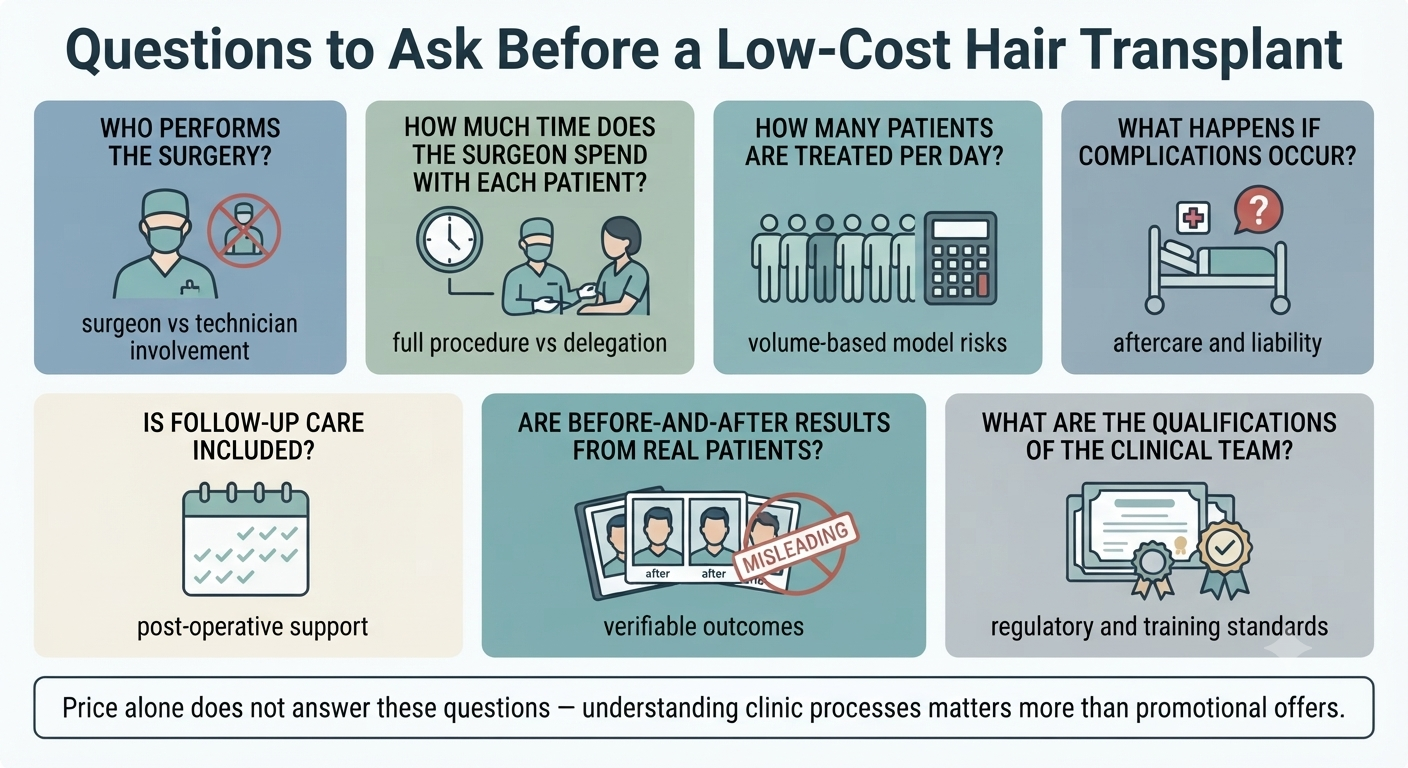
For example:
- Who performs the surgery?
- How much time does the surgeon spend with each patient?
- Is the procedure delegated largely to technicians?
- How many patients are treated each day?
- What happens if complications occur?
Price alone does not answer these questions.
Understanding the clinic’s processes is often more valuable than focusing on promotional offers.
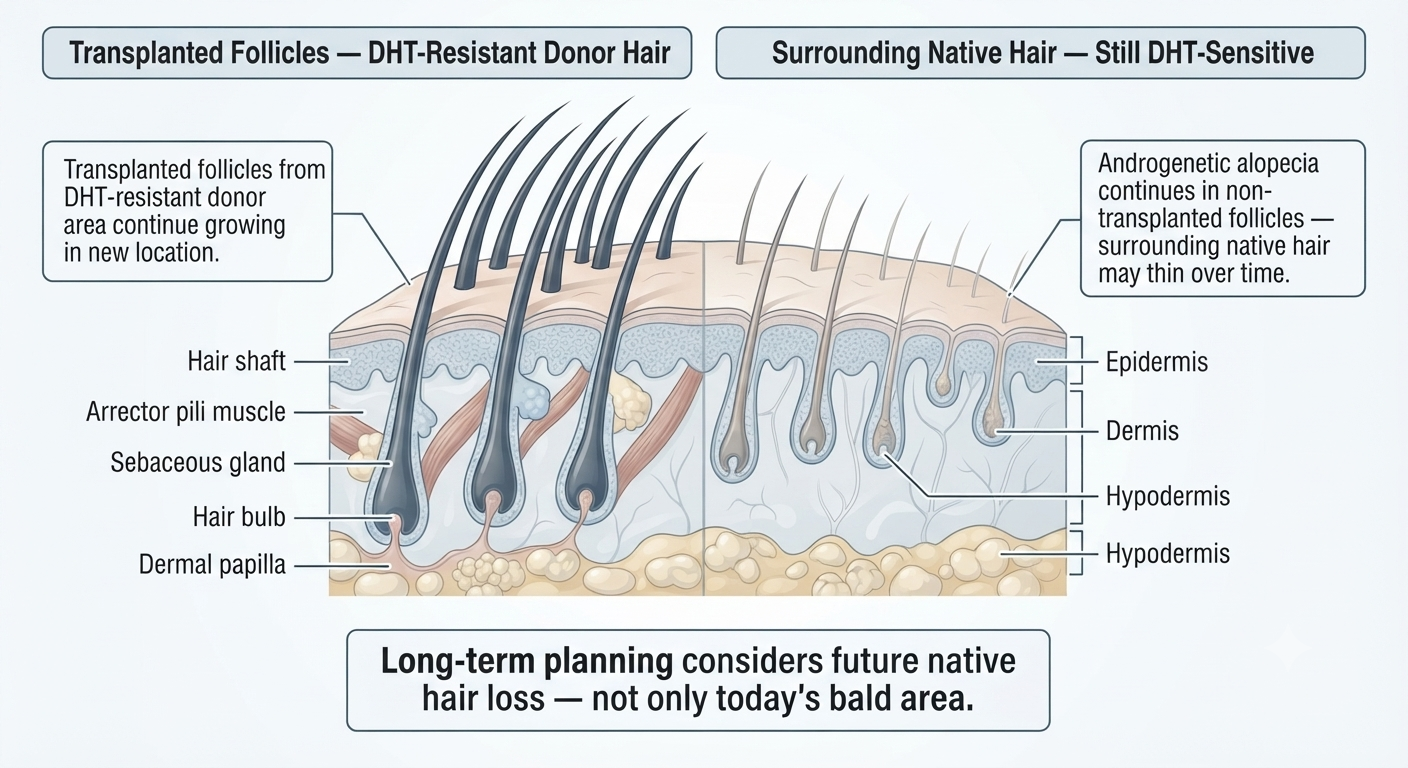
A transplant does not stop future hair loss
One common misunderstanding is that surgery permanently solves all hair loss.
A transplanted follicle can continue growing in its new location, but the surrounding native hair may continue to thin if androgenetic alopecia progresses.
For this reason, surgeons often discuss long-term planning rather than treating only today’s bald area.
A lower-cost procedure that fails to consider future hair loss may ultimately prove more expensive if further surgery becomes necessary.
Questions worth asking before committing
A consultation should leave you with a clear understanding of why a particular treatment plan has been recommended.
Helpful questions include:
- Am I a suitable candidate?
- How many grafts are recommended and why?
- Who will perform each stage of the procedure?
- What results are realistic in my case?
- What are the potential risks?
- What follow-up care is included?
- If I continue losing hair, what are my future options?
A reputable clinic should answer these questions openly without creating pressure to proceed.
Value is different from price
Choosing a hair transplant should not resemble shopping for the cheapest appliance.
The goal is not simply to buy grafts.
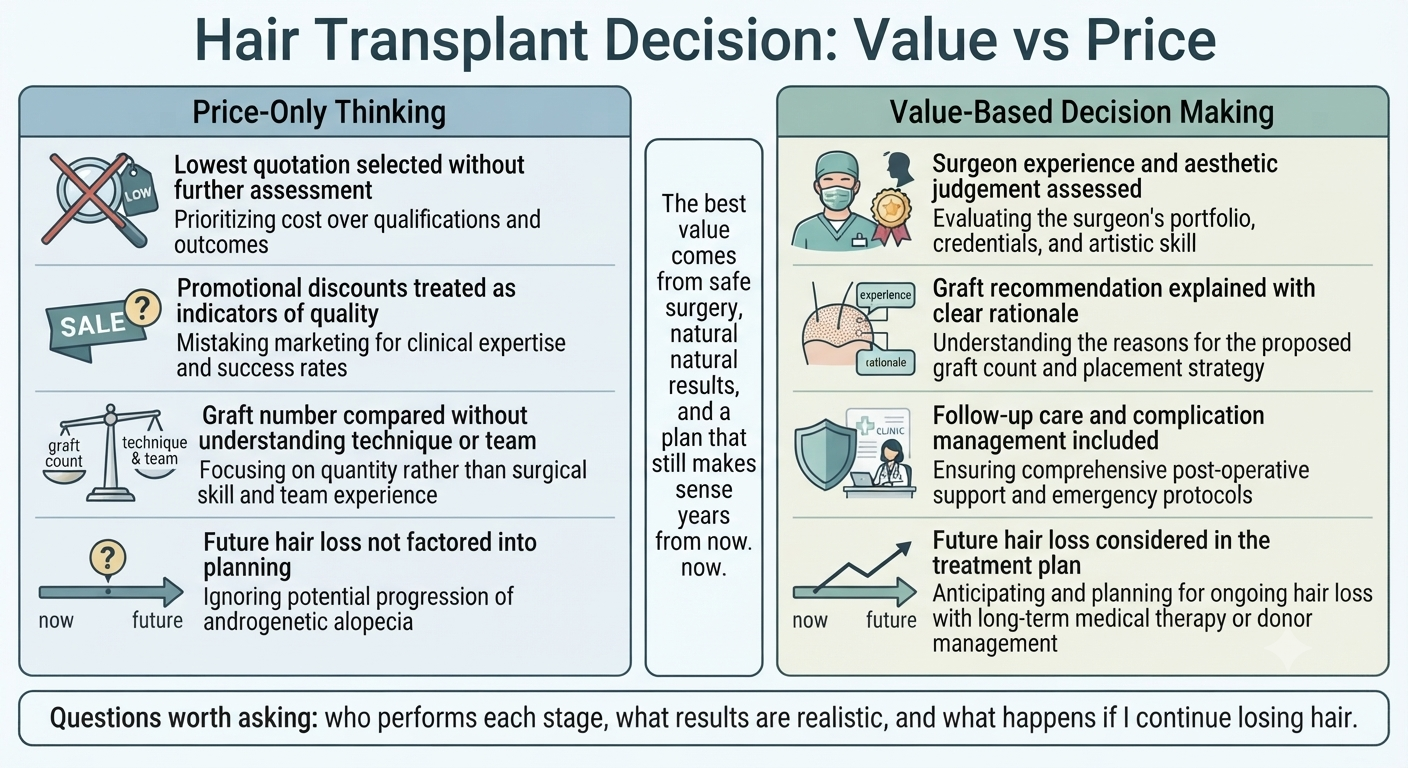
The goal is to achieve a safe procedure, a natural appearance and a treatment plan that still makes sense years from now.
The best value often comes from careful assessment, honest advice and realistic expectations rather than the lowest quotation on a website.
Author: Dr. Priya Goswami
Medical review: Dr. Denis Broun
Next step
If you notice coverage changes without increased shedding, confirm what process is occurring.
Take the Hair Assessment to have a physician review your pattern, identify whether miniaturization is present, and determine appropriate staging and next steps.


Add Comment