Many people searching for hair loss treatments eventually compare Nutrafol with finasteride.
At first glance, the comparison seems reasonable. Both are used by people hoping to improve hair growth. Both are widely discussed online. Both have generated thousands of reviews.
But medically, they belong in completely different categories.
Comparing them is a little like comparing a vitamin supplement with a blood pressure medicine. They may both relate to health, but they are designed to do very different jobs.
Understanding that difference makes it much easier to decide which approach may be appropriate.
A supplement is not the same as a medicine
The biggest distinction is how these products are intended to work.
Finasteride is a prescription medicine developed to treat androgen-related conditions. It acts on a specific enzyme involved in the production of dihydrotestosterone (DHT), a hormone that plays a central role in male pattern hair loss.
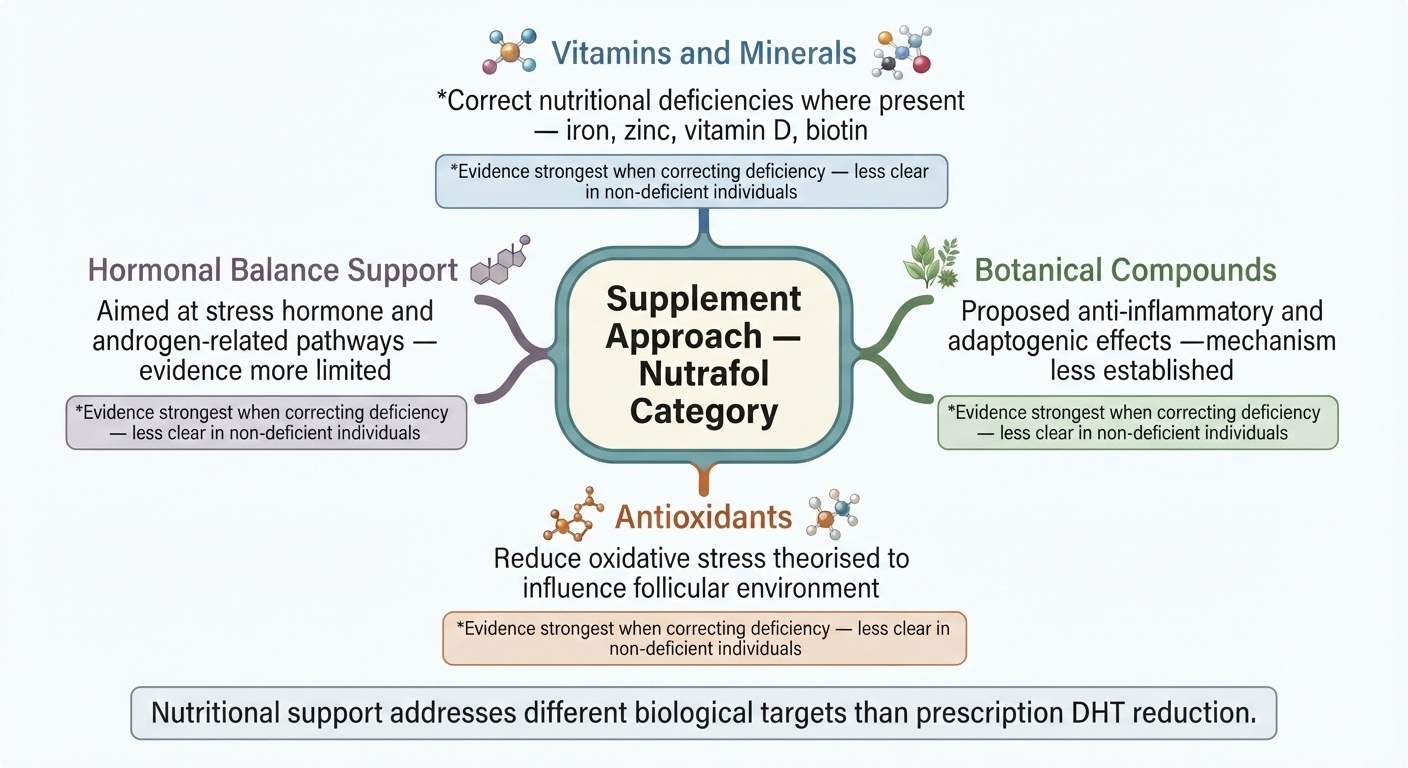
Nutrafol is a dietary supplement. Its ingredients are intended to support general hair health through nutrition and botanical compounds rather than directly targeting DHT.
That difference matters because androgenetic alopecia has a well-established biological mechanism. Supporting nutrition alone may not address the main driver of the condition.
How finasteride works
Male pattern baldness develops because genetically susceptible hair follicles become increasingly sensitive to DHT.
Over time, affected follicles become smaller. Each new hair grows thinner and shorter until some follicles eventually produce little or no visible hair.
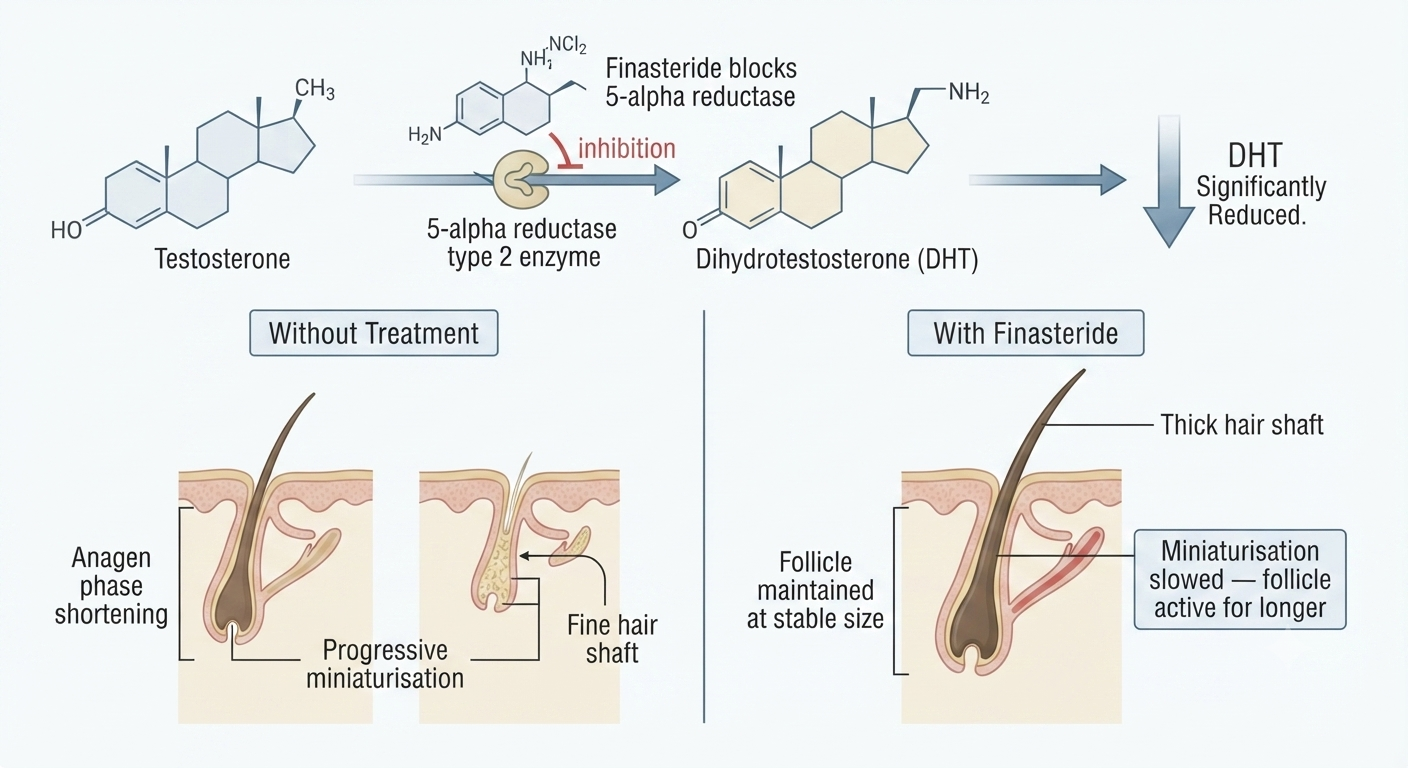
Finasteride reduces the conversion of testosterone into DHT. Lower DHT exposure allows many follicles to remain active for longer, slowing the miniaturisation process.
This does not permanently cure hair loss. The underlying genetic tendency remains.
What is inside Nutrafol?
Nutrafol contains a combination of ingredients that may include vitamins, minerals and plant-derived compounds, depending on the specific formulation.
These formulations are designed to address factors that may influence hair health, such as nutritional status, oxidative stress or inflammation.
For people with genuine nutritional deficiencies, correcting those deficiencies can improve hair growth.
However, most people with androgenetic alopecia do not develop hair loss because they lack vitamins.
That is why nutritional support and treatment of the underlying condition should not automatically be considered interchangeable.
What does the evidence show?
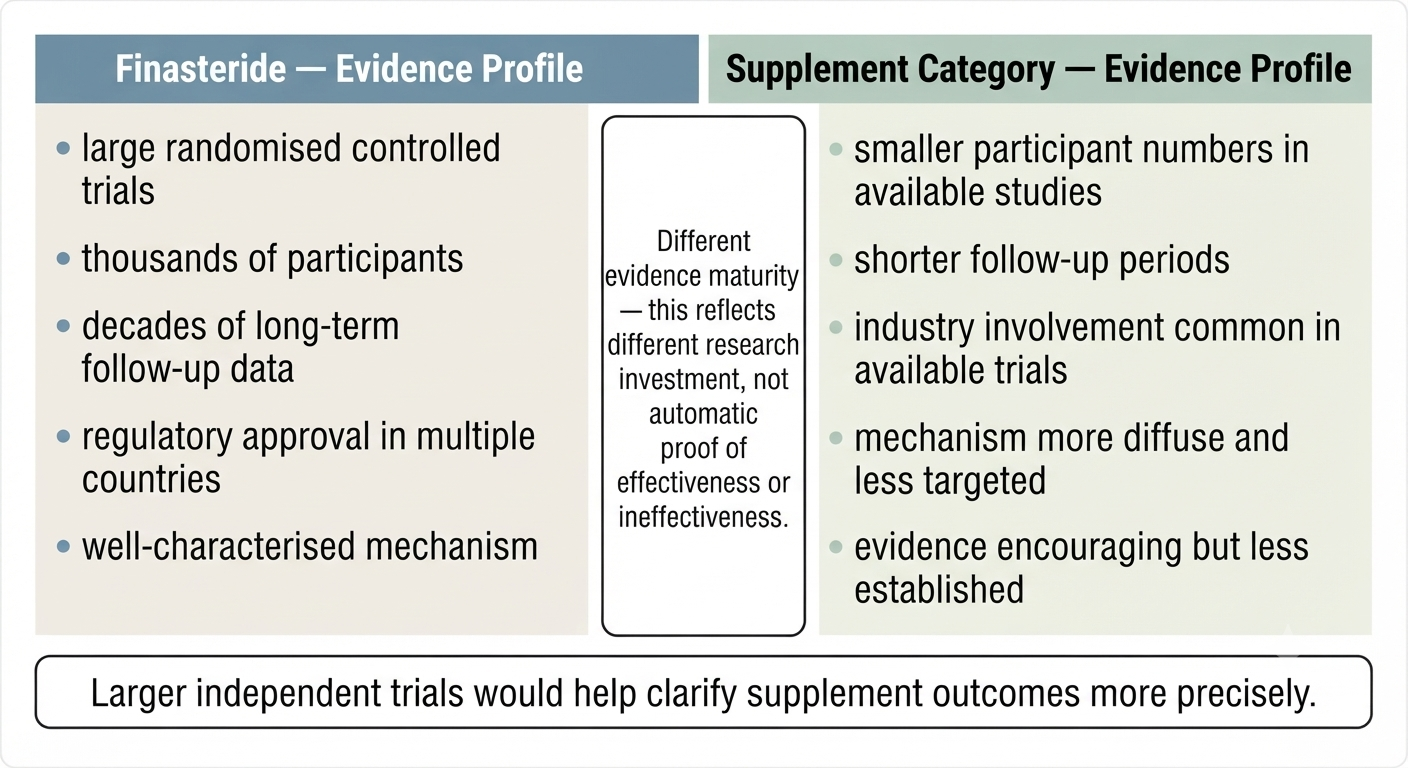
The evidence supporting finasteride is extensive.
Numerous clinical trials involving thousands of participants have demonstrated improvements in hair count, hair density and progression of male pattern hair loss.
The evidence for Nutrafol is more limited.
Some clinical studies have reported encouraging findings, particularly regarding reduced shedding or modest improvements in hair appearance. However, many of these studies have involved relatively small numbers of participants, shorter follow-up periods or industry involvement.
This does not mean the supplement is ineffective.
It means that the current evidence base is smaller and less established than that for prescription medicines.
Can they be compared directly?
Not really.
A direct comparison would require large, independent clinical trials comparing both products under identical conditions.
Those studies are currently limited.
As a result, it is difficult to conclude that one consistently performs better than the other across all patients.
Instead, they answer different clinical questions.
Finasteride aims to treat androgen-driven follicle miniaturisation.
Nutrafol aims to support overall hair health through nutritional and botanical ingredients.
Who might benefit from nutritional support?
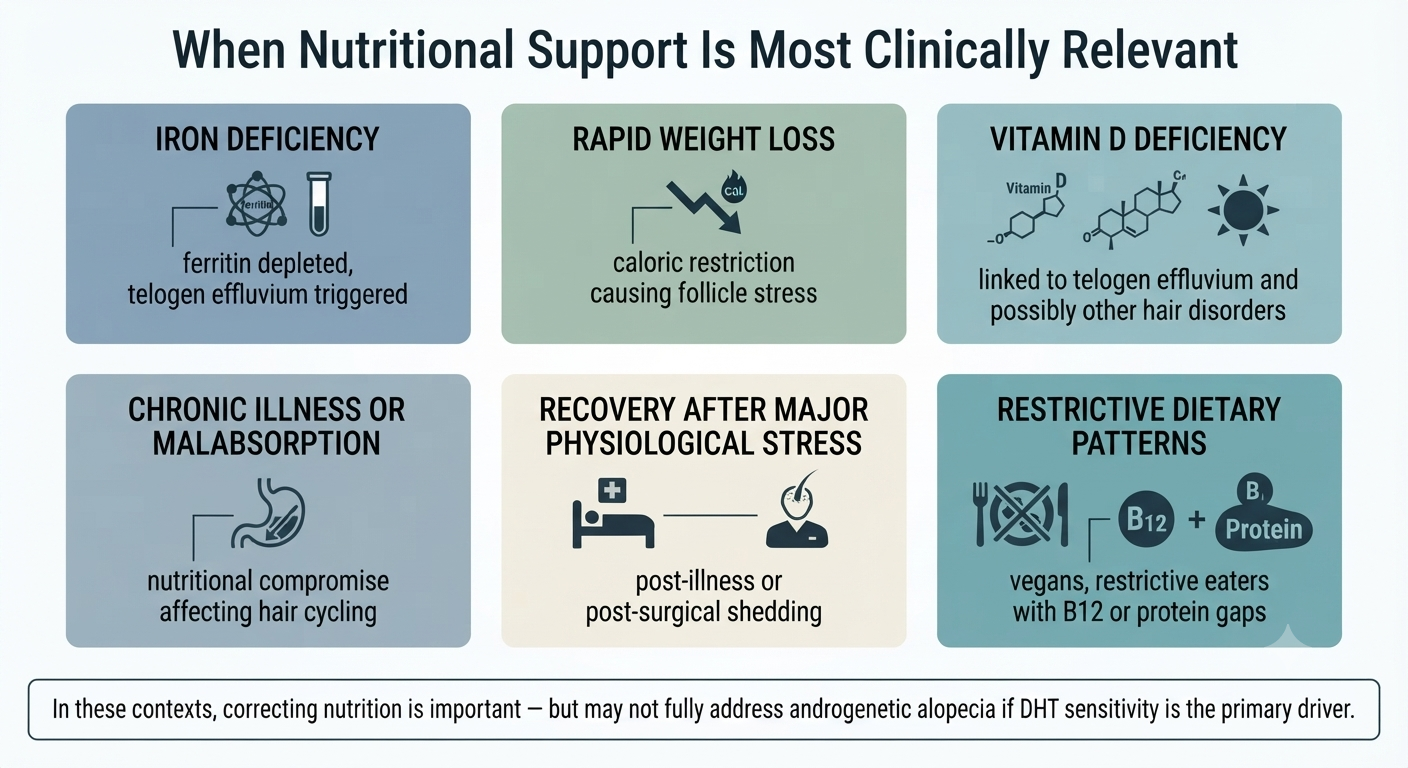
Nutrition becomes particularly important when hair loss is influenced by factors such as:
- Poor dietary intake
- Rapid weight loss
- Iron deficiency
- Certain vitamin deficiencies
- Chronic illness
- Recovery after major stress
In these situations, correcting nutritional problems can be an important part of treatment.
However, nutritional support alone may not fully address androgenetic alopecia if DHT sensitivity remains the dominant cause.
Why diagnosis matters
Hair loss is not one condition.
A person may have:
- Male pattern baldness
- Telogen effluvium
- Alopecia areata
- Thyroid disease
- Scalp inflammation
- Nutritional deficiency
- More than one condition at the same time
Two people with similar-looking thinning may require completely different management.
Starting any treatment without understanding the diagnosis may lead to disappointment.
Setting realistic expectations
No treatment guarantees complete hair restoration.
Some people respond well. Others experience modest improvement. Some notice mainly slower progression rather than dramatic regrowth.
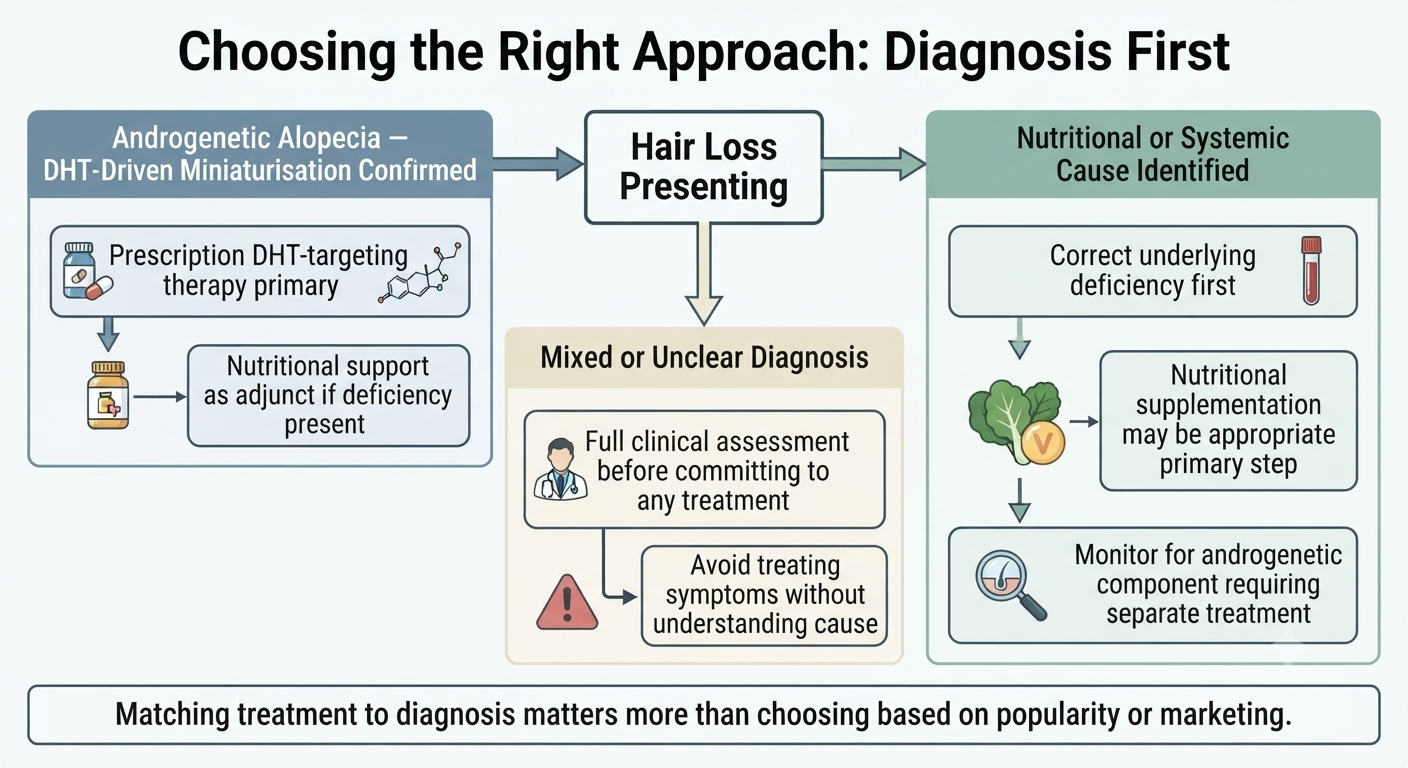
Supplements should not be expected to perform like prescription medicines simply because they are marketed for the same problem.
Likewise, medicines should not be viewed as a replacement for correcting genuine nutritional deficiencies or maintaining overall health.
The most effective approach usually begins with an accurate diagnosis, followed by treatment that matches the biological cause of the hair loss rather than choosing a product based solely on popularity.
Author: Dr. Priya Goswami
Medical review: Dr. Denis Broun
Next step
If you notice coverage changes without increased shedding, confirm what process is occurring.
Take the Hair Assessment to have a physician review your pattern, identify whether miniaturization is present, and determine appropriate staging and next steps.
Add Comment