For many men, hair loss begins gradually. A few extra hairs on the pillow. A widening parting. A receding hairline that becomes more noticeable in photographs. By the time treatment is considered, the process has often been underway for several years.
Minoxidil is one of the best-known treatments for male pattern hair loss. It has been available for decades and continues to be recommended because it has been studied more extensively than many newer products.
It is not a cure. It does not work for everyone. But for many men, it can help preserve existing hair and encourage some regrowth when started at the right stage.
What is minoxidil?
Minoxidil is a medicine that is applied directly to the scalp. It was originally developed for another medical purpose, but researchers noticed that some people experienced increased hair growth while using it.
This observation led to the development of topical formulations designed specifically for treating androgenetic alopecia, also known as male pattern baldness.
Today, it is available in several formulations and strengths depending on local regulations.
How does it work?
Scientists do not completely understand every aspect of how minoxidil works.
Current evidence suggests that it helps prolong the active growth phase of the hair cycle and may improve blood flow and signalling around the hair follicle. Over time, some miniaturised follicles begin producing thicker, longer hairs instead of progressively finer ones.
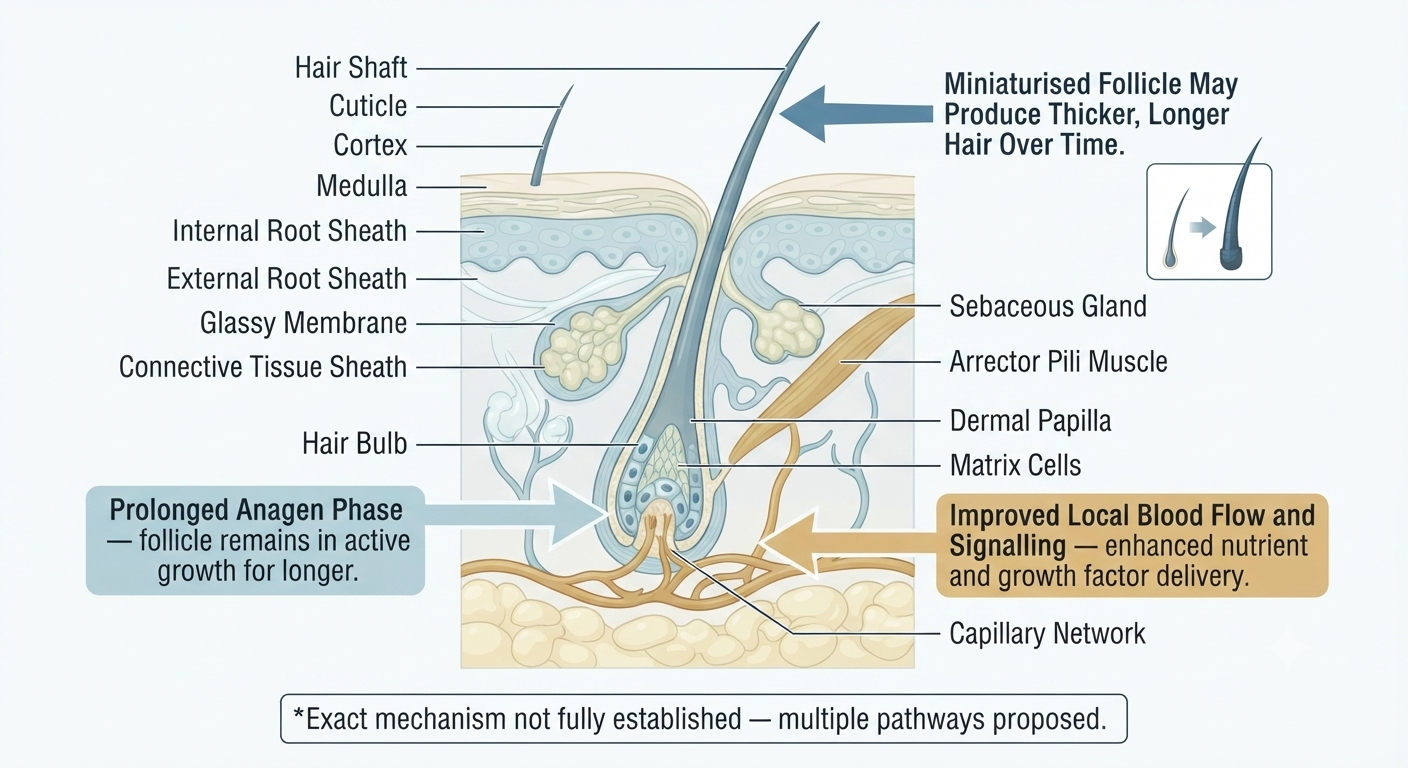
The effect is gradual because hair grows slowly. Each follicle follows its own cycle, so improvement appears over months rather than weeks.
Who is most likely to benefit?
Minoxidil tends to work best in men who:
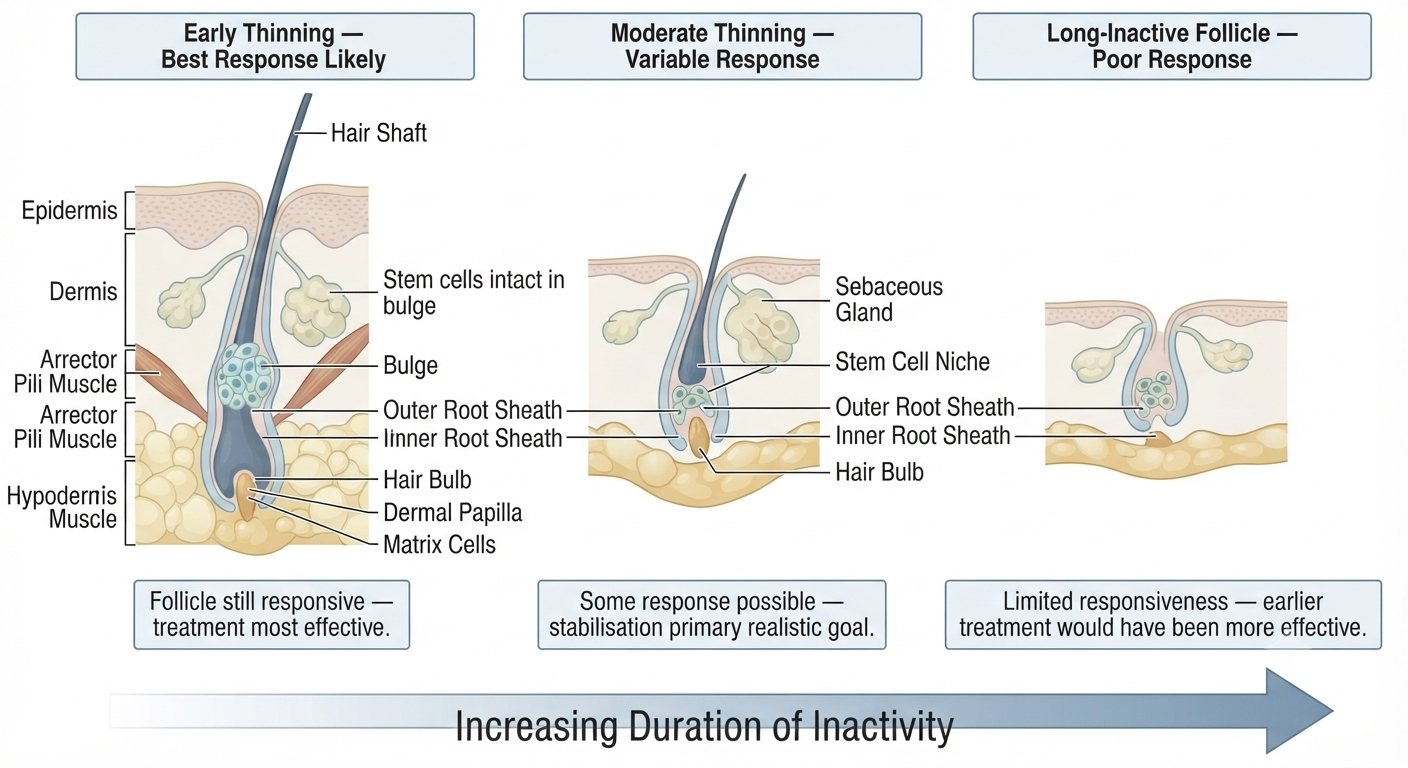
- Have early or moderate male pattern hair loss
- Still have functioning hair follicles
- Notice thinning rather than complete baldness
- Are willing to continue treatment consistently
It is generally less effective in areas where follicles have been inactive for many years.
The sooner treatment begins after noticeable thinning develops, the greater the chance that existing follicles can still respond.
What should you expect during the first few months?
Many men expect immediate improvement and become discouraged when nothing changes after a few weeks.
Hair simply does not grow that quickly.
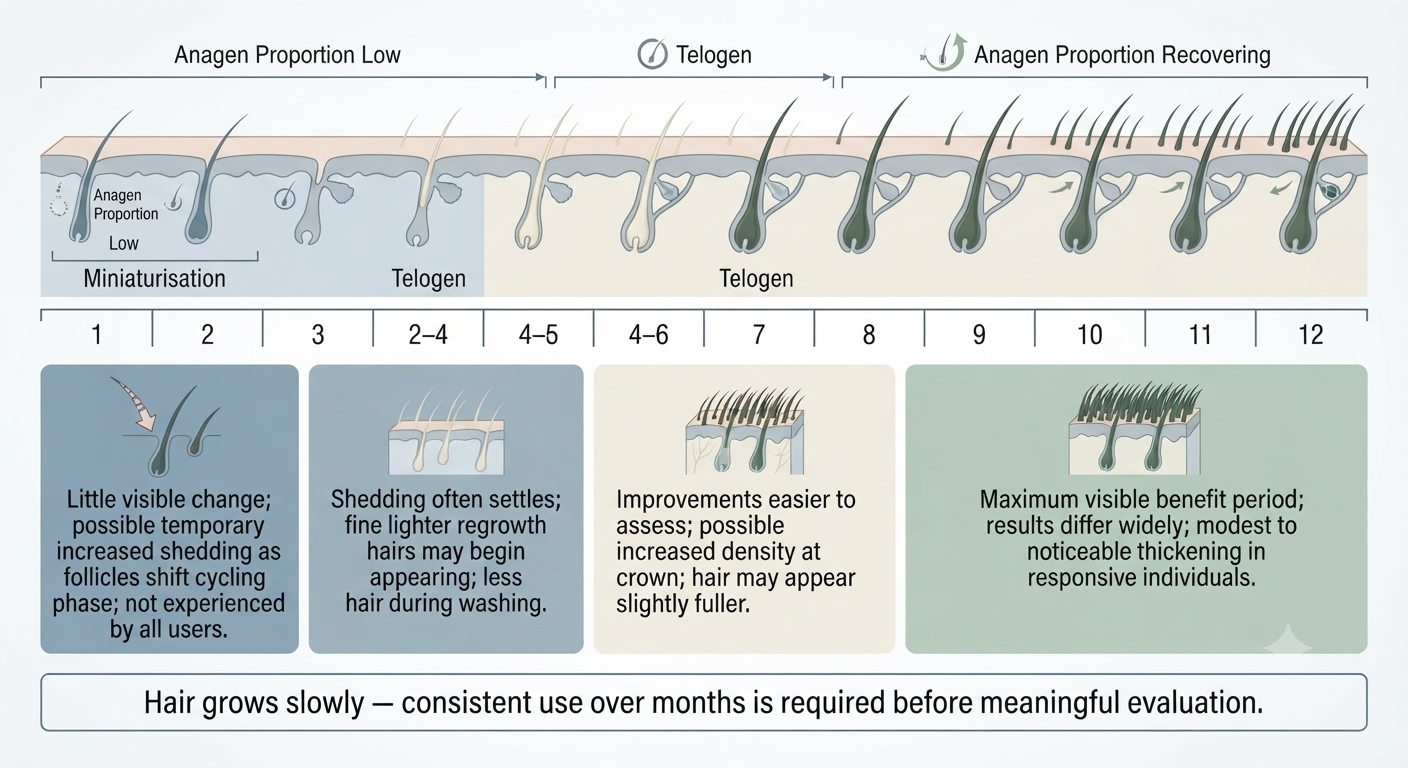
A typical pattern may look something like this:
First month
There may be little visible change. Some men experience increased shedding during the first few weeks. Although this can be alarming, it is thought to reflect older hairs being replaced as follicles enter a new growth cycle.
Not everyone experiences this.
Two to four months
Shedding often settles.
Some men begin noticing less hair falling during washing or brushing. Early regrowth may appear as fine, lighter hairs.
Four to six months
Improvements become easier to assess. Hair may appear denser, particularly around the crown.
Six to twelve months
This is usually the period when the maximum visible benefit becomes clearer. Some men achieve noticeable thickening, while others experience only modest improvement.
Results differ widely between individuals.
Using it correctly matters
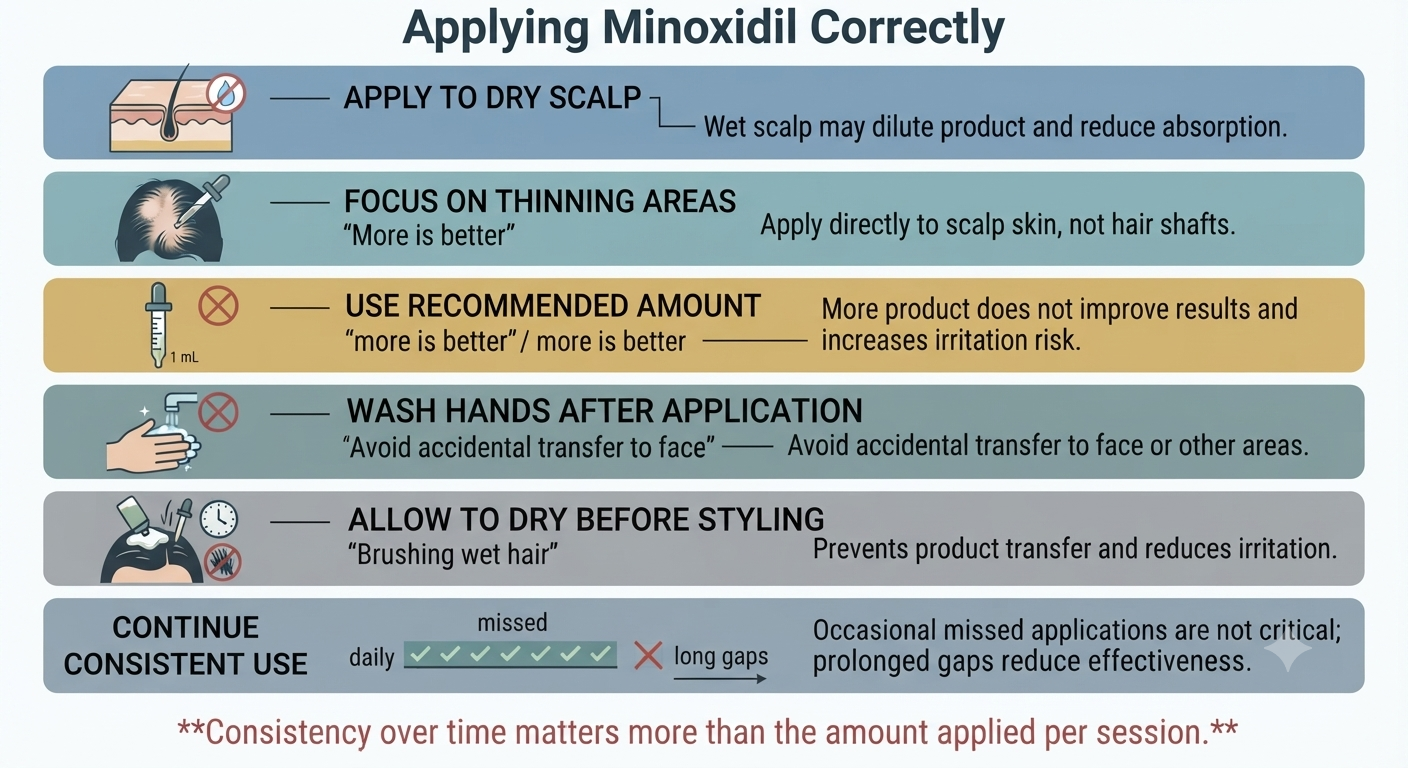
Consistency is more important than applying excessive amounts.
Applying more product than recommended is unlikely to improve results but may increase irritation.
Helpful practical advice includes:
- Apply only to a dry scalp unless instructed otherwise.
- Focus on areas of thinning rather than the hair itself.
- Wash your hands after application.
- Allow the product to dry before using styling products or going to bed if required by the formulation.
- Continue regular use even if early changes seem slow.
Missing applications occasionally is unlikely to cause immediate problems, but long periods without treatment may reduce effectiveness.
Common side effects
Most men tolerate topical minoxidil well.
Possible side effects include:
- Scalp irritation
- Dryness
- Itching
- Mild redness
- Flaking
Some formulations may cause irritation because of inactive ingredients rather than minoxidil itself.
Rarely, excessive application or accidental absorption may contribute to unwanted effects elsewhere in the body. Anyone who develops symptoms such as dizziness, swelling or palpitations should stop treatment and seek medical advice promptly.
Why doesn’t it work for everyone?
Hair loss is not a single disease.
Genetics, age, hormone sensitivity, inflammation, nutrition, underlying medical conditions and the degree of follicle miniaturisation all influence outcomes.
If follicles have already disappeared, topical treatment cannot recreate them.
This explains why two men with apparently similar hair loss may experience very different results.
Is it a lifelong treatment?
Male pattern hair loss is a long-term condition.
If treatment is stopped, the biological process responsible for androgenetic alopecia continues. Hair that was maintained because of treatment may gradually be lost over the following months.
This does not mean the medicine has stopped working. It reflects the ongoing nature of the underlying condition.
Should every man with hair loss use it?
Not necessarily.
Diffuse shedding, sudden hair loss, patchy bald areas, scalp inflammation or hair loss associated with illness may have causes other than male pattern baldness.
Starting treatment without understanding the diagnosis may delay appropriate care.
A proper assessment is especially important if hair loss develops rapidly, is accompanied by pain or itching, or begins unusually early.
Setting realistic expectations
One of the biggest reasons men become disappointed is not because treatment failed, but because expectations were unrealistic.
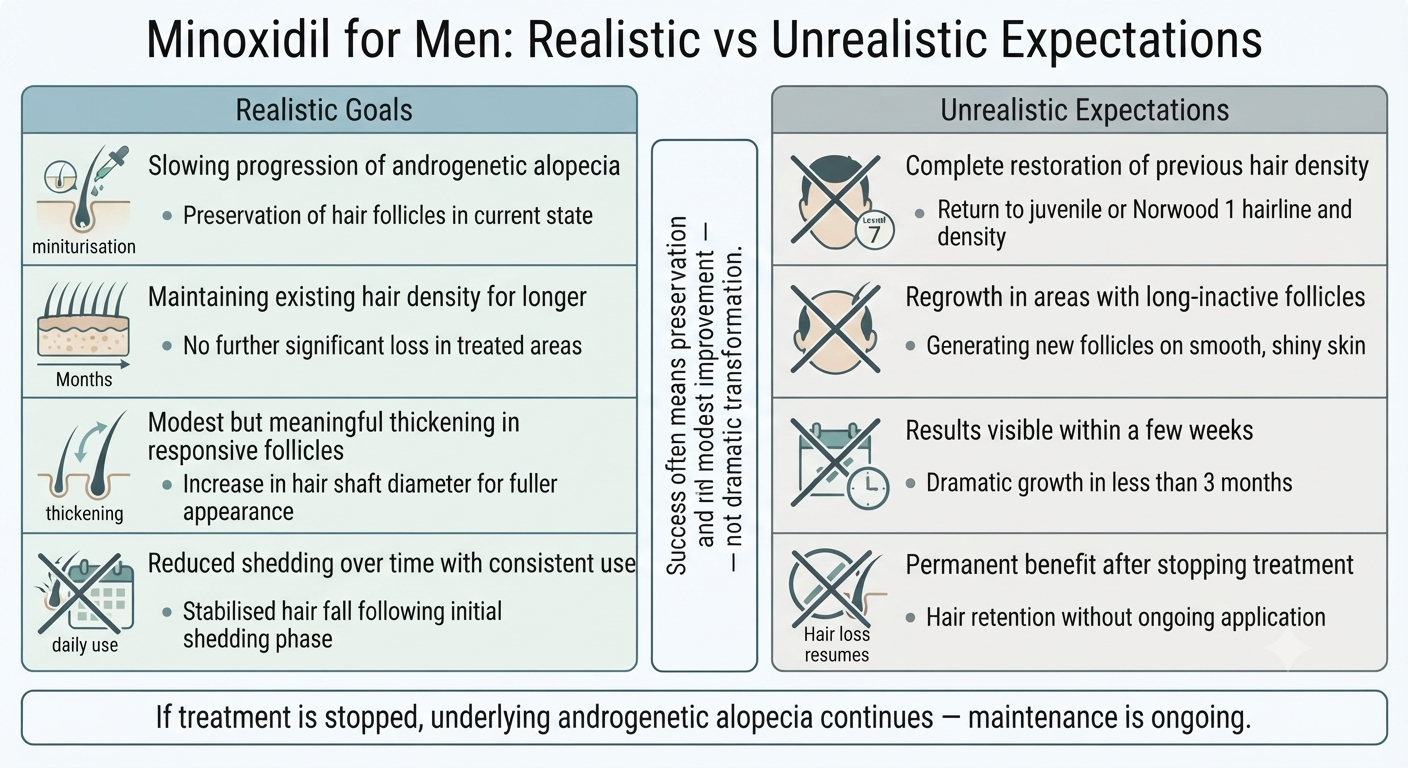
Minoxidil is designed to improve the environment around functioning hair follicles. It does not create entirely new follicles, reverse every type of hair loss or guarantee complete restoration of previous hair density.
For many men, success means slowing progression, maintaining existing hair for longer and achieving modest but meaningful improvements in thickness.
Those outcomes may not always be dramatic in photographs, but they can make a noticeable difference in everyday appearance over time.
Author: Dr. Priya Goswami
Medical review: Dr. Denis Broun
Next step
If you notice coverage changes without increased shedding, confirm what process is occurring.
Take the Hair Assessment to have a physician review your pattern, identify whether miniaturization is present, and determine appropriate staging and next steps.


Add Comment