People searching for ways to grow natural hair faster are often given endless lists of oils, supplements, masks, and homemade remedies. The language around hair growth can become unrealistic very quickly, especially online, where dramatic transformations are presented as if follicles can simply be forced into accelerated production.
Human hair biology does not work that way.
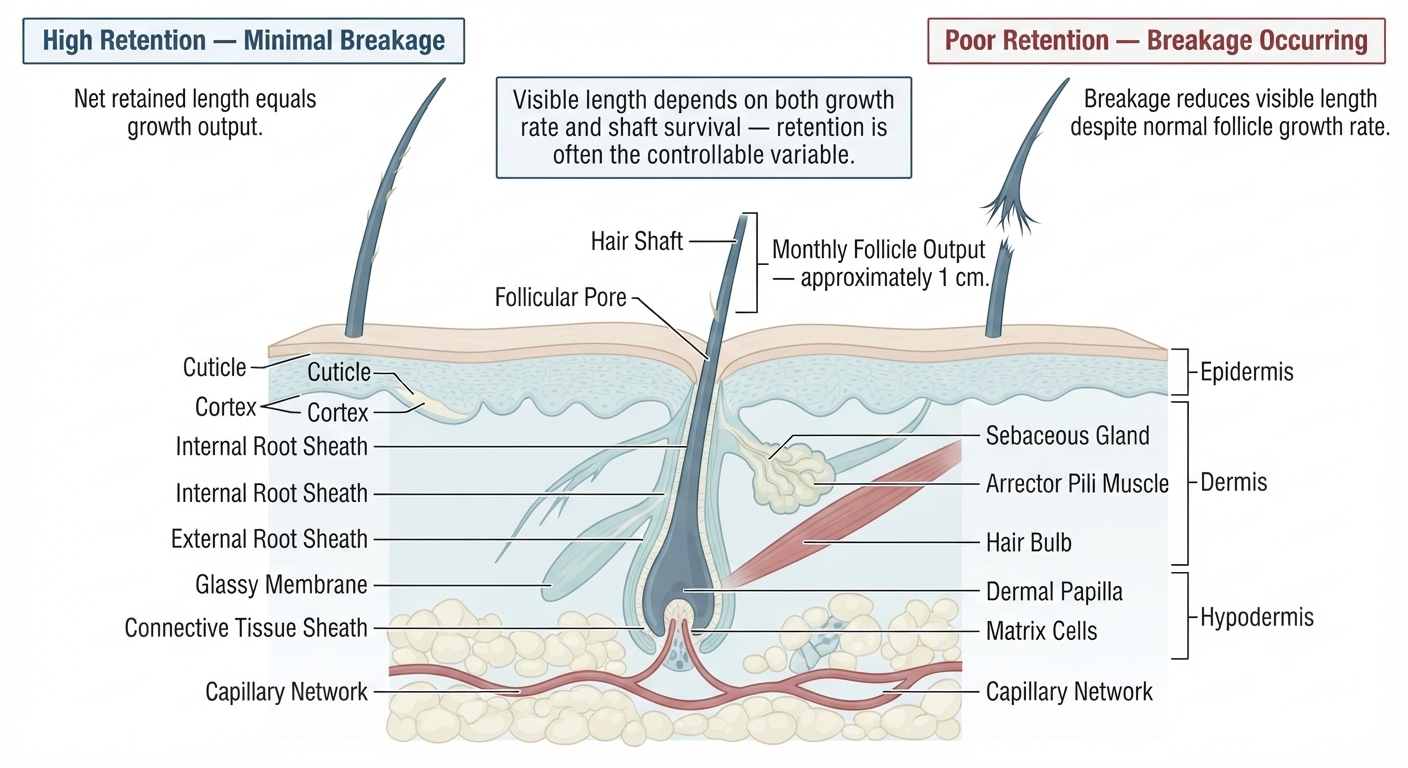
Hair growth rate is influenced largely by genetics, hormones, age, nutrition, and overall health. Most people cannot dramatically increase the speed at which follicles produce hair. What they can often improve is retention.
This distinction matters particularly for natural hair.
Many people with tightly curled or coily hair are capable of growing substantial length biologically, but breakage, dryness, and mechanical damage prevent visible length retention over time. In practical terms, retaining more hair often matters more than trying to force follicles to grow faster.
Natural hair grows at varying rates
There is no single universal growth rate for all hair types.
On average, scalp hair grows roughly:
One centimetre per month
Around half an inch per month
although individual variation is normal.
Natural hair does not inherently grow more slowly than straight hair. However, curl patterns can make growth appear less obvious because the hair coils rather than hanging downward visibly.
Shrinkage changes visual perception
One reason people underestimate natural hair growth is shrinkage.
Coily and tightly curled strands may contract substantially after drying, meaning several inches of actual length can appear much shorter visually.
This creates the impression that hair is “not growing” even when follicles are functioning normally.
Retention is often the real issue
Hair length depends on two separate processes:
How much hair grows
How much hair breaks
A person may produce normal growth from follicles while simultaneously losing length through breakage at the ends.
Improving retention therefore becomes central to maintaining longer natural hair.
Curved hair shafts are mechanically vulnerable
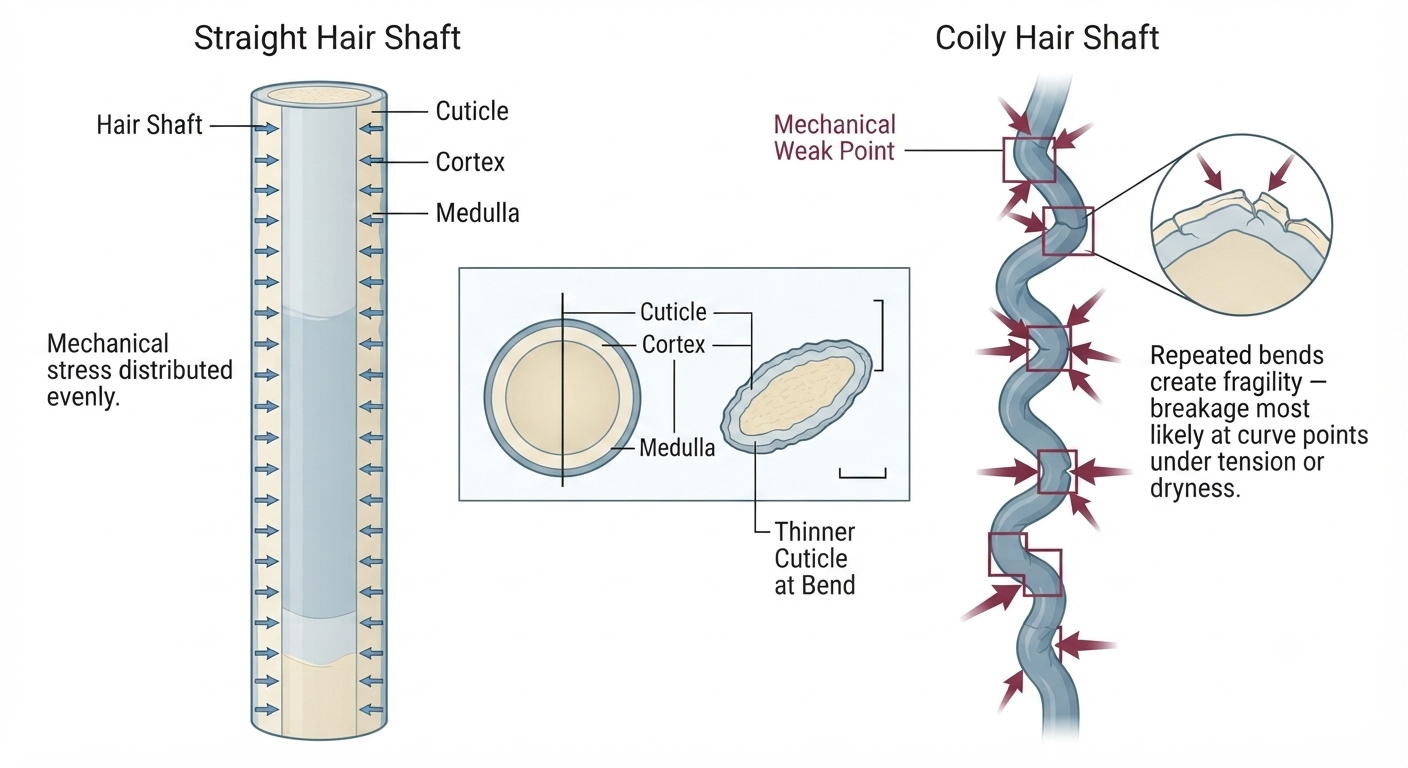
Curly and coily hair fibres bend repeatedly along the shaft.
These structural curves create points of mechanical weakness where breakage can occur more easily, especially when hair becomes dry or overmanipulated.
This vulnerability helps explain why protective handling matters so much in textured hair care.
Moisture management matters
Natural hair often struggles with dryness because scalp oils do not travel along tightly coiled strands as easily as they do along straight hair.
Dryness increases fragility and breakage risk.
Moisture retention strategies may include:
Gentle conditioning
Reduced heat exposure
Protective styling
Avoiding harsh detergents
The goal is maintaining flexibility in the shaft rather than creating excessively oily hair.
Excessive manipulation increases breakage
Frequent handling can gradually damage fragile strands.
Repeated:
Brushing
Detangling
Restyling
Tight tying
may contribute to cumulative breakage over time.
Low-manipulation routines often improve retention more effectively than constantly changing products.
Heat styling affects retention
Repeated high heat can weaken the hair shaft and alter protein structure.
This may increase:
Dryness
Splitting
Breakage
particularly in chemically processed or already fragile hair.
Occasional careful heat use is not automatically disastrous, but chronic high-temperature styling commonly reduces retention.
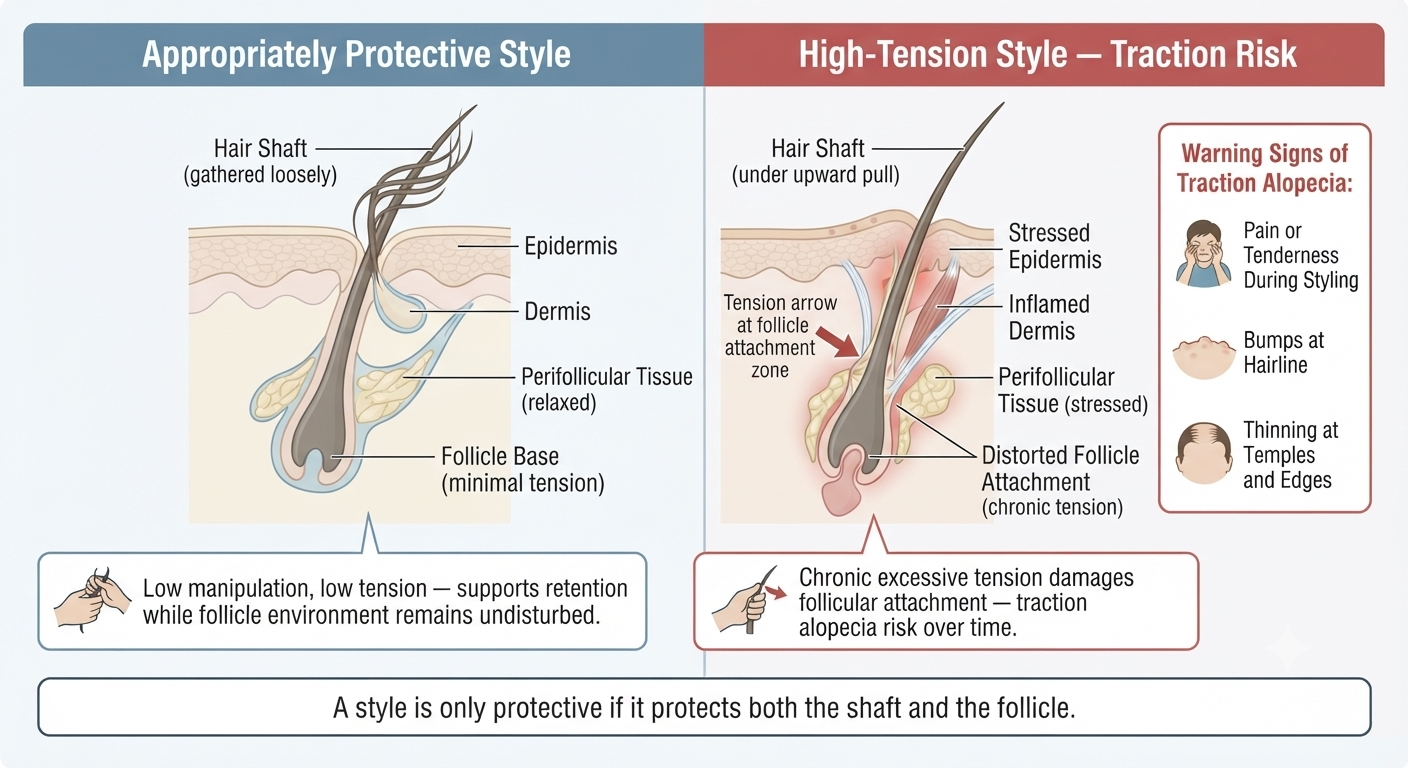
Tight hairstyles can damage follicles
Protective styles are useful when tension remains reasonable.
However, chronic excessive tension from:
Braids
Extensions
Ponytails
Loc maintenance
can contribute to traction alopecia.
Pain, bumps, or tenderness are signs a style is too tight.
Trimming does not accelerate follicle growth
A common myth claims trimming makes hair grow faster.
Hair growth occurs at the follicle beneath the scalp, not at the ends.
Trimming helps remove damaged split ends that may continue splitting upward, improving retention and appearance rather than altering growth rate itself.
Protein intake supports normal growth
Hair shafts are composed primarily of keratin protein.
Severe protein deficiency may impair growth and contribute to shedding.
Adequate dietary intake matters, but excessive protein consumption beyond normal nutritional needs does not appear to supercharge hair growth.
Nutritional deficiencies may contribute to shedding
Deficiencies involving:
Iron
Vitamin D
Zinc
Vitamin B12
can affect hair health in some individuals.
Correcting deficiencies may improve abnormal shedding, although this differs from pushing healthy follicles beyond their natural baseline.
Scalp oils are not miracle growth stimulants
Castor oil, rosemary oil, peppermint oil, and other botanical products are widely promoted online.
Some ingredients have limited preliminary evidence suggesting possible biological activity, but strong clinical proof remains limited for most natural oils marketed for rapid growth.
Many products mainly improve lubrication and reduce breakage rather than accelerating follicular production dramatically.
Scalp massage has limited evidence
Scalp massage is frequently promoted for circulation and growth.
A few small studies suggest possible effects on scalp tension or follicular signalling, but evidence remains modest.
Massage may help relaxation and scalp awareness, but expectations should stay realistic.
Protective styles help when used properly
Styles that reduce daily manipulation can support retention.
Examples include:
Twists
Braids
Buns
Wigs with careful scalp care
However, no protective style is truly protective if excessive tension, poor hygiene, or prolonged wear damages follicles.
Wash frequency varies individually
There is no single correct wash schedule for natural hair.
Some scalps tolerate infrequent washing well. Others develop buildup or inflammation if cleansing is delayed too long.
Healthy scalp maintenance matters more than rigid internet rules.
Breakage and shedding are different
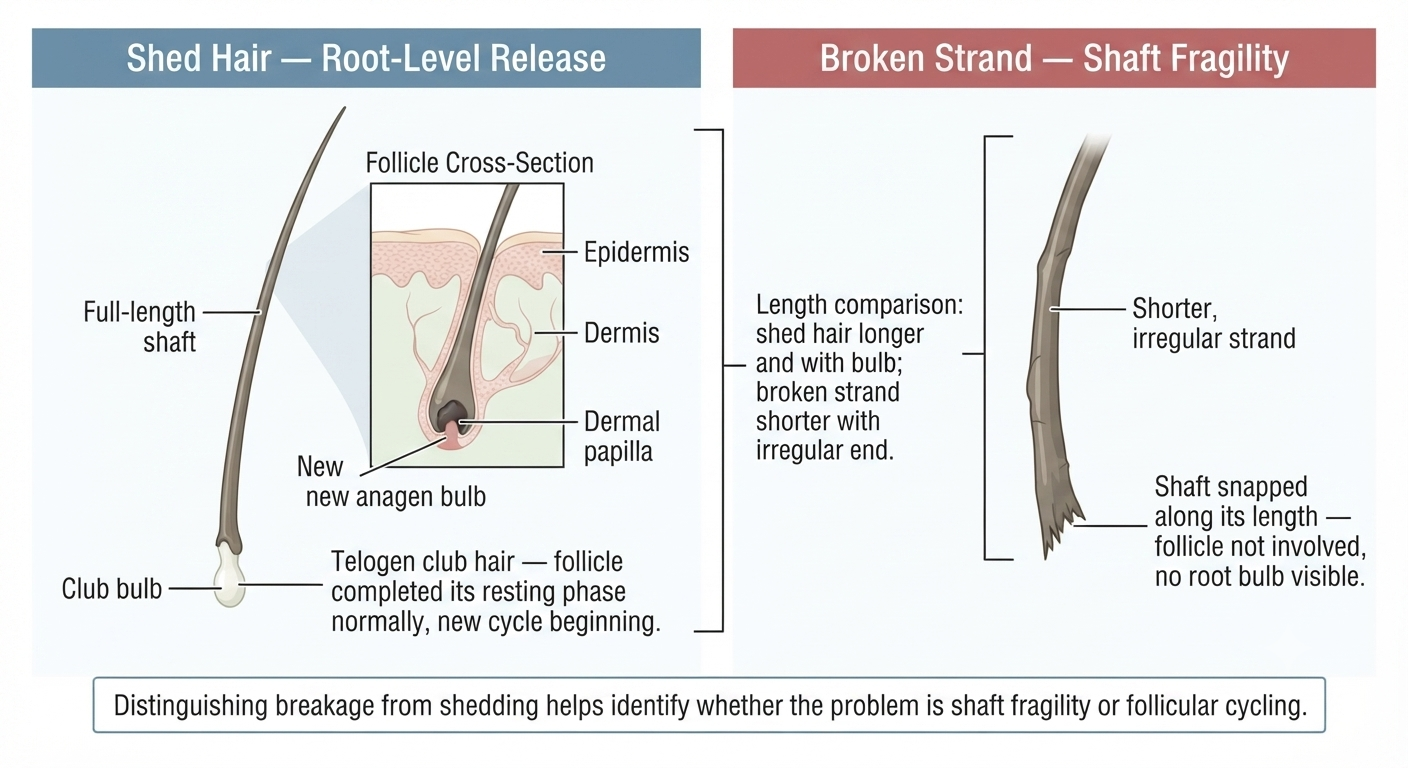
People sometimes confuse breakage with hair loss.
Broken strands are usually shorter and uneven. Shed hairs typically contain a small white bulb at one end.
Understanding this distinction helps identify whether the problem involves shaft fragility or follicular cycling.
Stress and illness can interrupt growth cycles
Telogen effluvium may occur after:
Illness
Psychological stress
Rapid weight loss
Surgery
Hormonal changes
This type of shedding affects all hair textures, including natural hair.
Genetics still influence maximum length
Hair growth duration varies genetically.
Some individuals naturally maintain extremely long hair easily because their anagen phase lasts longer. Others reach a shorter terminal length despite excellent care.
This is normal biological variation rather than personal failure.
Product accumulation can become counterproductive
Using large numbers of creams, oils, and butters simultaneously may create buildup without improving retention.
Overloaded hair can become difficult to cleanse properly, particularly if scalp inflammation develops underneath protective styles.
Hair growth timelines are slow
Healthy growth remains gradual even under ideal conditions.
Meaningful visible length changes often require:
Months
Years
Consistent low-damage care
rather than short-term product experimentation.
The bottom line
Growing natural hair “faster” is often less about dramatically increasing follicle speed and more about improving retention. Most follicles already grow at biologically normal rates, but dryness, breakage, excessive manipulation, heat damage, and traction commonly prevent visible length accumulation over time.
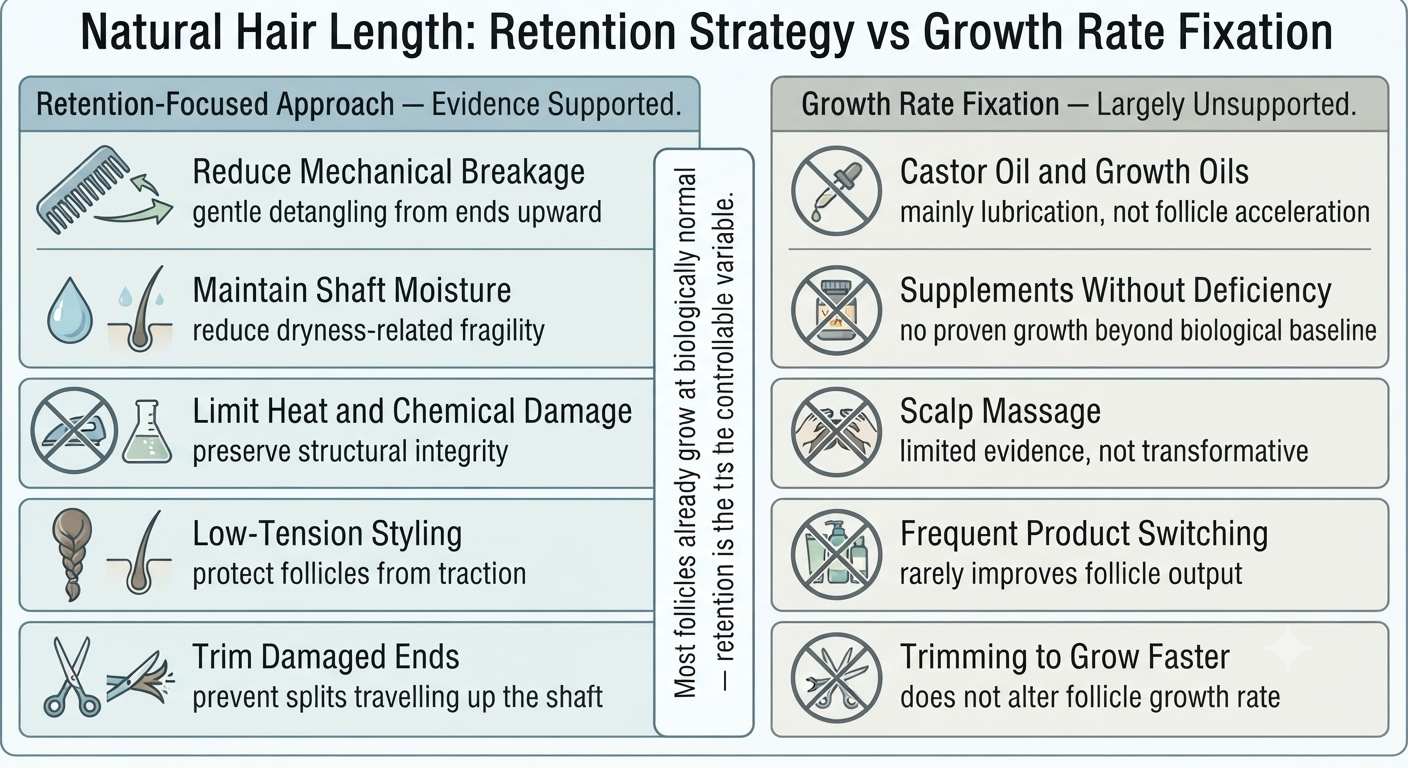
Gentle handling, balanced moisture management, proper nutrition, reduced tension, and realistic expectations are usually more important than heavily marketed growth products. Healthy natural hair growth is generally a long-term process built on consistency rather than rapid transformation claims.
Author: Dr. Priya Goswami
Medical review: Dr. Denis Broun
Next step
If you notice coverage changes without increased shedding, confirm what process is occurring.
Take the Hair Assessment to have a physician review your pattern, identify whether miniaturization is present, and determine appropriate staging and next steps.

Add Comment