Many shampoos claim to “soothe”, “balance”, “detoxify”, or “revitalise” the scalp. But when the scalp is genuinely inflamed, the important question is much simpler: which ingredients are actually treating something medically relevant?
Scalp inflammation is not one condition. It can involve dandruff, seborrhoeic dermatitis, psoriasis, eczema, contact dermatitis, folliculitis, fungal overgrowth, or inflammatory forms of alopecia. Different conditions respond to different ingredients.
This matters because people often buy products based on marketing rather than mechanism. A shampoo may smell herbal and feel cooling while doing very little for the actual inflammatory process. Another may look plain and medicinal while containing ingredients with meaningful evidence behind them.
Understanding what certain shampoo ingredients actually do helps separate cosmetic claims from treatments with a clearer medical purpose.
What scalp inflammation looks like
Inflammation does not always mean obvious redness.
Common signs include:
Itching
Burning
Tenderness
Flaking
Greasy scale
Dry scale
Red patches
Scalp soreness
Pustules
A tight or irritated feeling
Increased shedding associated with scalp discomfort
Sometimes inflammation is mild and intermittent. Sometimes it becomes severe enough to affect hair density indirectly through scratching, irritation, or inflammatory damage around follicles.
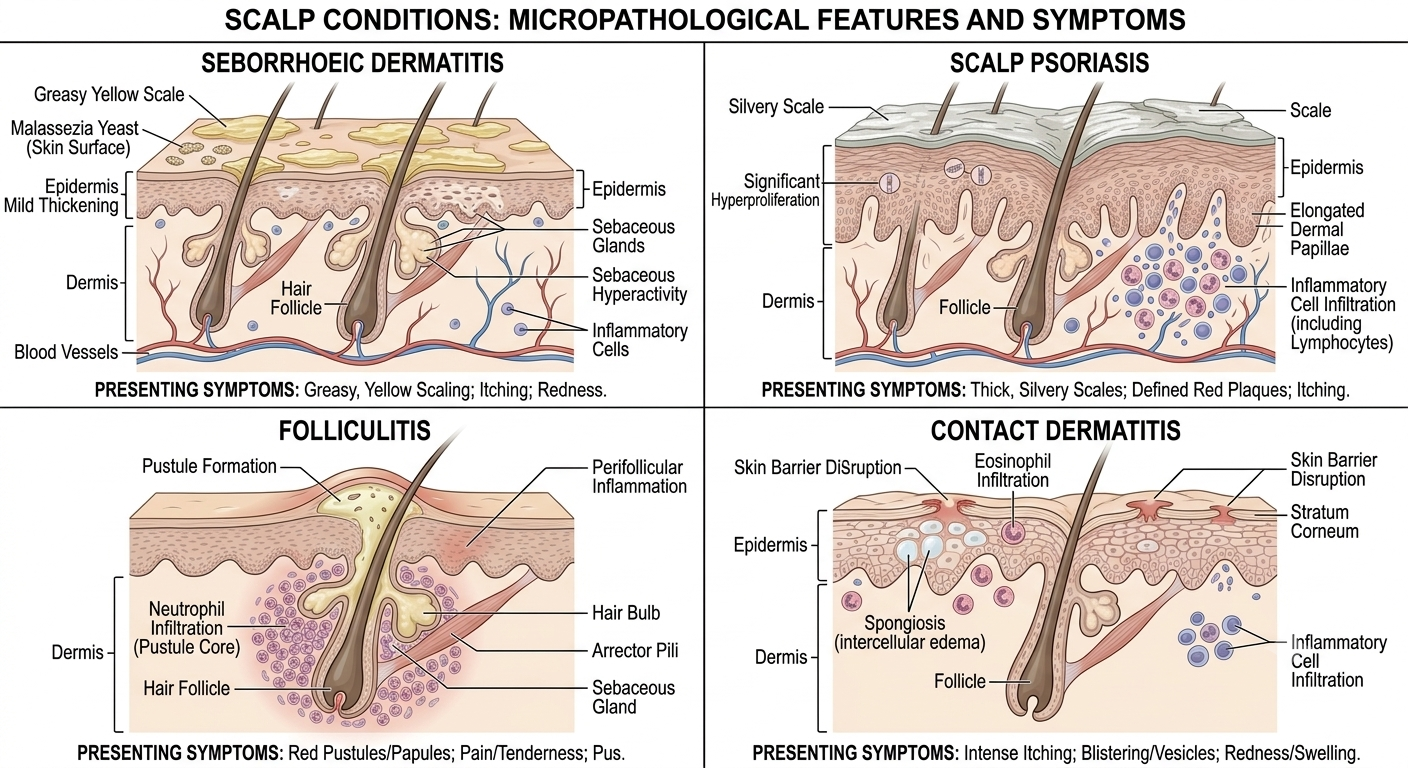
Persistent symptoms deserve proper assessment because some inflammatory scalp conditions can worsen over time if untreated.
Why shampoo matters in inflammatory scalp disease
A shampoo cannot solve every scalp problem. But it can play an important role because it delivers active ingredients directly to the scalp surface.
In some conditions, medicated shampoos help by:
Reducing fungal overgrowth
Lowering inflammation
Removing scale
Reducing oil buildup
Decreasing irritation
Improving the scalp environment
The key is that the active ingredient must match the problem.
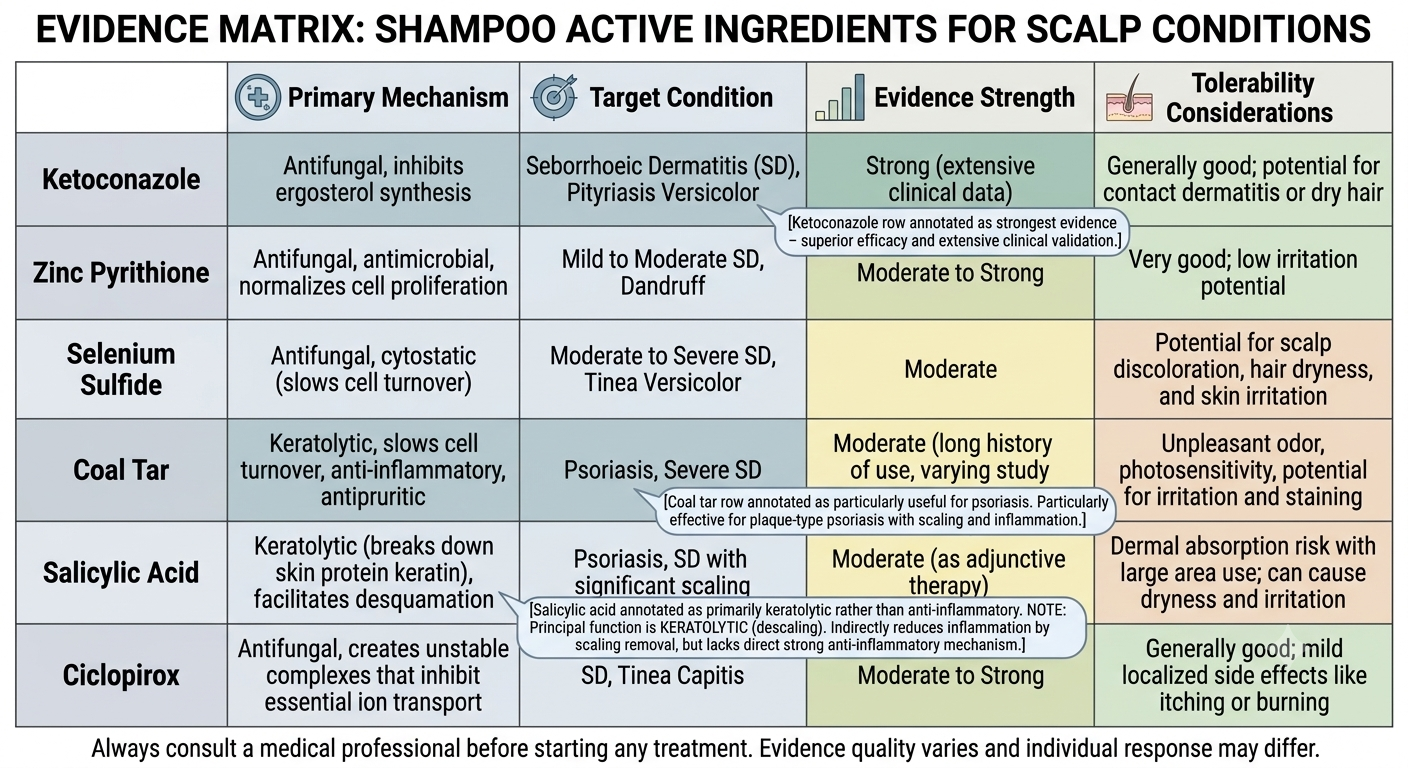
Ketoconazole: one of the most evidence-supported ingredients
Ketoconazole is one of the best-known medicated shampoo ingredients for inflammatory scalp conditions.
It is an antifungal agent commonly used in dandruff and seborrhoeic dermatitis. These conditions are associated with an inflammatory response involving Malassezia yeast, scalp oil, and skin barrier dysfunction.
Ketoconazole shampoos may help reduce:
Flaking
Itching
Greasy scale
Mild scalp inflammation
Some studies have also explored whether ketoconazole might have secondary benefits in androgenetic alopecia because inflammation can coexist with pattern hair loss. However, ketoconazole is not considered a primary hair regrowth treatment in the same category as minoxidil or finasteride.
The strength of the shampoo matters. In many countries, lower concentrations are available over the counter while stronger versions may require pharmacy supervision or prescription.
Zinc pyrithione: commonly used for dandruff control
Zinc pyrithione has been widely used in anti-dandruff shampoos for years.
It has antifungal and antimicrobial properties and may help reduce scaling and irritation associated with dandruff and mild seborrhoeic dermatitis.
Some people tolerate zinc pyrithione shampoos better than stronger medicated options, especially for long-term maintenance.
However, effectiveness varies between individuals. One person may respond well while another finds little improvement.
Selenium sulfide: useful, but sometimes irritating
Selenium sulfide is another ingredient commonly used for dandruff and seborrhoeic dermatitis.
It helps reduce fungal activity and slows skin cell turnover. In some people it works well for heavy flaking or greasy scale.
But it can also cause irritation, dryness, or changes in hair texture in certain users. Some people dislike the smell or residue. It may also affect colour-treated hair.
As with many medicated shampoos, the balance between effectiveness and tolerability matters.
Coal tar: old-fashioned, but still medically relevant
Coal tar shampoos are less fashionable today, but they remain useful in some inflammatory scalp conditions, particularly psoriasis.
Coal tar helps slow excessive skin cell turnover and may reduce scaling and itch.
The drawbacks are practical rather than purely medical. Coal tar products can smell strong, stain fabrics, and feel cosmetically unpleasant to some users. For that reason, many people stop using them despite improvement.
Still, the ingredient itself has a long medical history and should not be dismissed simply because it lacks modern marketing appeal.
Salicylic acid: more about scale removal
Salicylic acid helps loosen and remove scale.
This can be useful when thick buildup prevents other ingredients from reaching the scalp effectively. Psoriasis and severe seborrhoeic dermatitis sometimes produce dense scale that traps inflammation underneath.
Salicylic acid shampoos are therefore often used as supportive treatments rather than stand-alone anti-inflammatory therapies.
Overuse can dry or irritate sensitive scalps, especially if combined with harsh cleansing routines.
Ciclopirox: another antifungal option
Ciclopirox is another antifungal ingredient sometimes used in medicated scalp treatments.
Like ketoconazole, it targets fungal involvement in dandruff and seborrhoeic dermatitis. Some patients respond better to one antifungal than another.
The existence of multiple options matters because scalp conditions are not identical from person to person. Treatment sometimes requires adjustment based on response and tolerance.
Sulfur and sulfur combinations
Sulfur-containing shampoos are occasionally used for seborrhoeic dermatitis, folliculitis, or oily inflammatory scalp conditions.
Sulfur has antimicrobial and keratolytic properties, meaning it may help reduce microbial growth and loosen excess skin debris.
Some formulations combine sulfur with salicylic acid.
These products are less cosmetically elegant than many commercial shampoos, but they may still be useful in selected cases.
Ingredients that mainly soothe rather than treat
Many shampoos contain ingredients marketed as calming or soothing:
Aloe vera
Chamomile
Oat extract
Tea tree oil
Peppermint
Niacinamide
Panthenol
Some may reduce subjective irritation or improve scalp comfort. But evidence quality is usually much weaker compared with established medicated ingredients.
This does not mean they are useless. They may help support the skin barrier or reduce mild irritation. But they should not automatically be viewed as treatments for significant inflammatory scalp disease.
Tea tree oil deserves special caution because it can trigger allergic or irritant contact dermatitis in some individuals, especially at higher concentrations.
Fragrance matters more than people realise
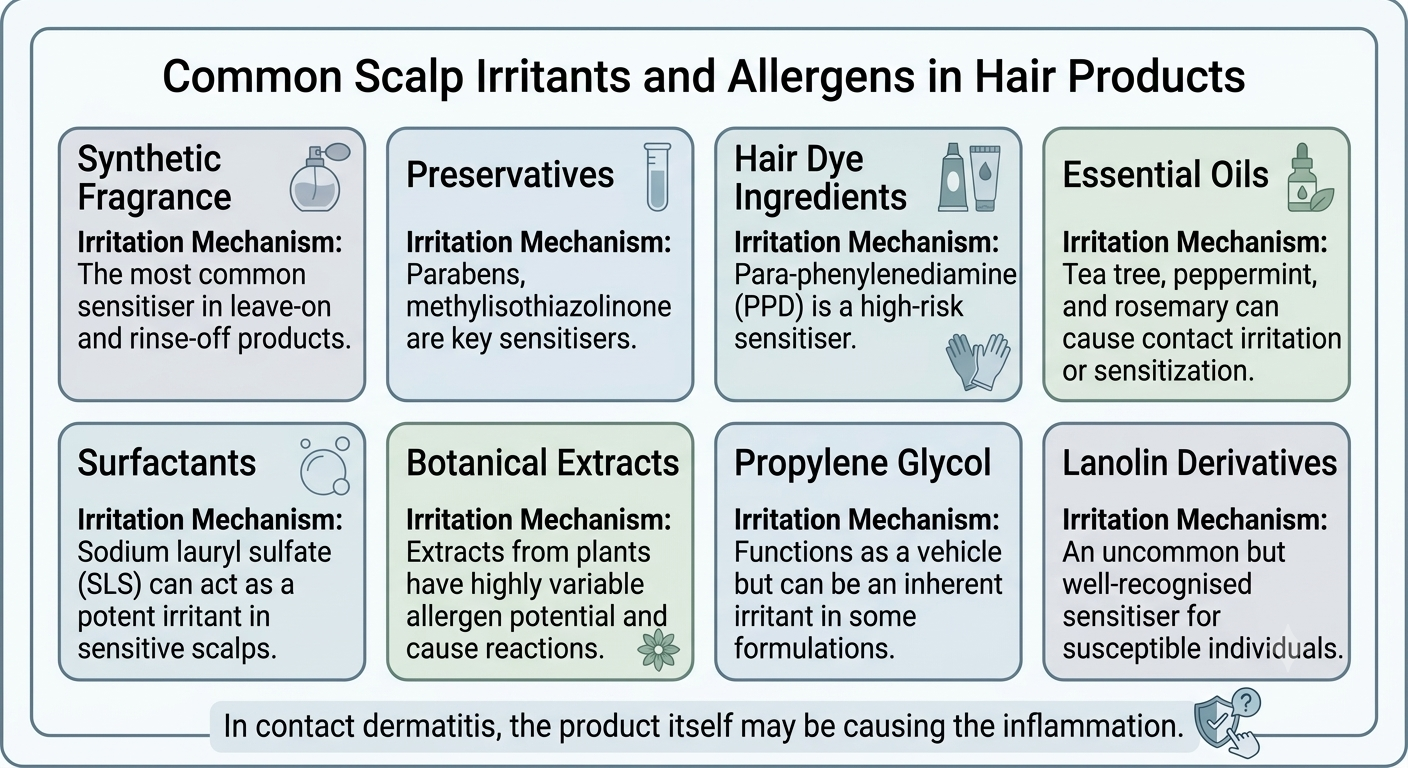
Fragrance is a common irritant in sensitive skin conditions.
People with inflamed scalps sometimes focus heavily on “active ingredients” while overlooking fragrance exposure from shampoos, styling products, oils, sprays, or dry shampoo.
A heavily fragranced product may worsen irritation even if it contains beneficial ingredients elsewhere in the formula.
In sensitive or eczema-prone scalps, fragrance-free or lower-fragrance products may reduce irritation risk.
“Natural” anti-inflammatory shampoos are not always gentle
Natural marketing can create false reassurance.
Essential oils and botanical extracts can still cause:
Irritation
Allergy
Burning
Contact dermatitis
Peppermint oil, rosemary oil, eucalyptus oil, and tea tree oil all have the potential to irritate sensitive skin despite their popularity online.
The scalp does not care whether an irritant is natural or synthetic.
Contact dermatitis from hair products is common
Sometimes the shampoo itself is causing the inflammation.
People may react to:
Fragrance
Preservatives
Hair dye ingredients
Essential oils
Surfactants
Botanical extracts
Signs of contact dermatitis may include:
Burning
Persistent itching
Redness
Flaking
Tenderness
Symptoms worsening after washing or product application
In these situations, repeatedly switching between heavily marketed “scalp health” shampoos can make the problem worse.
Patch testing by a dermatologist may be useful when allergic contact dermatitis is suspected.
Medicated shampoos are not instant treatments
People often expect overnight improvement.
But inflammatory scalp conditions usually require consistent treatment over time. Some shampoos need to remain on the scalp for several minutes before rinsing to allow active ingredients to work effectively.
Using a medicated shampoo once every few weeks while switching constantly between cosmetic products may not produce meaningful improvement.
At the same time, overuse can irritate the scalp further. Frequency recommendations depend on the ingredient, the condition being treated, and individual tolerance.
Shampoo alone is sometimes not enough
This is important.
If scalp inflammation is significant, shampoo may only be part of the treatment plan.
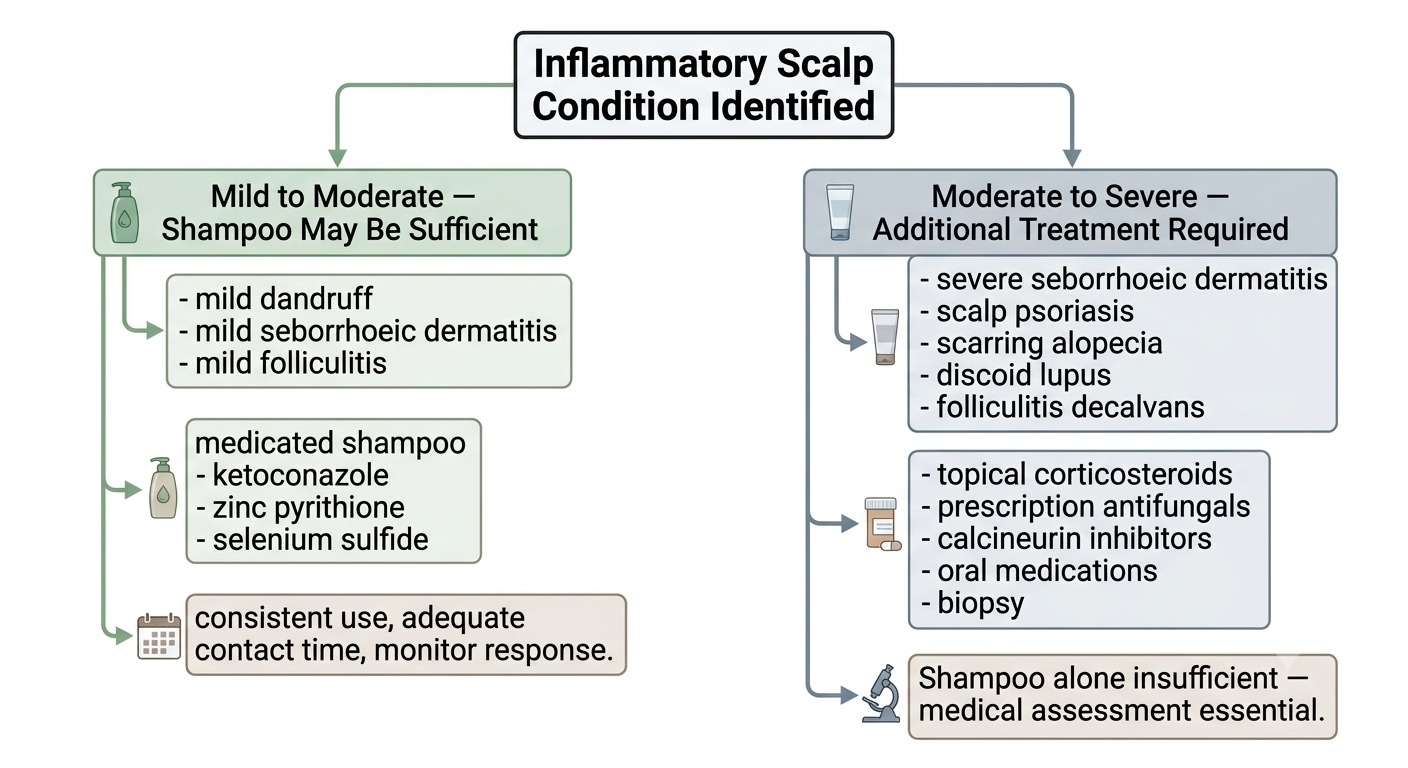
Some conditions require:
Topical corticosteroids
Prescription antifungals
Calcineurin inhibitors
Oral medications
Biopsy
Patch testing
Management of underlying disease
Scalp psoriasis, scarring alopecias, severe seborrhoeic dermatitis, folliculitis decalvans, and discoid lupus are examples where shampoo alone may be insufficient.
Persistent inflammation deserves proper diagnosis rather than endless product experimentation.
Hair shedding and inflammation can overlap
Inflammatory scalp conditions may increase shedding indirectly.
Inflammation can disrupt the scalp environment, increase scratching, damage fragile hairs, or coexist with androgenetic alopecia.
This sometimes creates confusion because people assume every anti-inflammatory shampoo is also a hair regrowth treatment.
Reducing inflammation may improve scalp comfort and reduce inflammation-related shedding, but it does not necessarily reverse genetic hair loss.
Marketing terms that mean very little
Terms like:
Scalp detox
Follicle energising
Root activating
Microcirculation boosting
Scalp revitalising
often have no standard medical definition.
A product may sound scientific while containing very little evidence-supported anti-inflammatory activity.
This is why the ingredient list matters more than the branding language.
When to see a dermatologist
Medical assessment is important if scalp inflammation includes:
Pain
Burning
Bleeding
Pustules
Rapid hair loss
Scarring appearance
Thick plaques
Patchy bald areas
Loss of eyebrows or lashes
Symptoms not improving with routine treatment
Some inflammatory scalp diseases can lead to permanent follicle damage if diagnosis is delayed.
The bottom line
The ingredients in scalp inflammation shampoos matter far more than the marketing.
Ketoconazole, zinc pyrithione, selenium sulfide, coal tar, salicylic acid, ciclopirox, and sulfur-based formulations all have clearer medical roles in specific inflammatory scalp conditions. Their usefulness depends on the diagnosis, severity, and individual scalp tolerance.
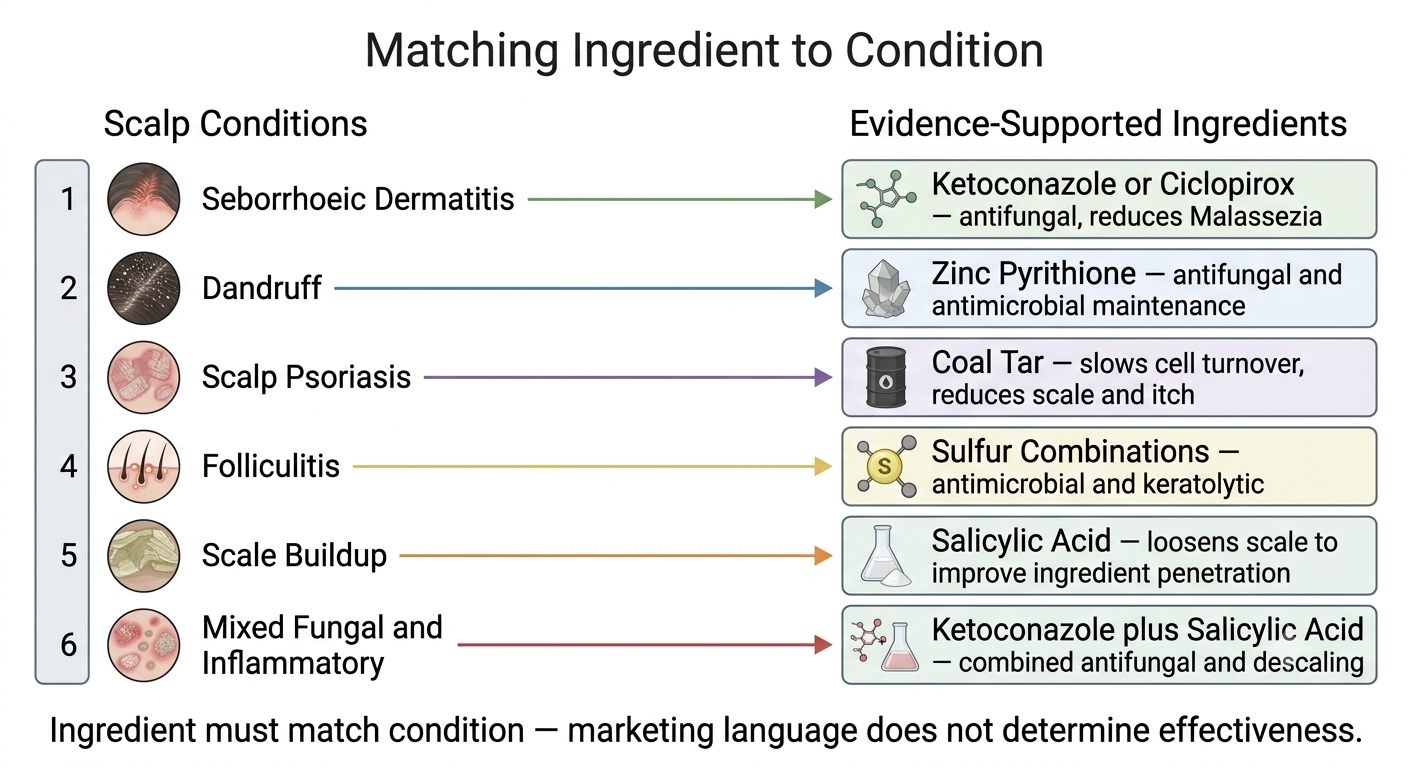
By contrast, many heavily marketed “scalp health” shampoos rely mainly on soothing claims, fragrance, or cosmetic effects rather than meaningful anti-inflammatory action.
A shampoo can be genuinely helpful when the ingredient matches the condition. But persistent scalp inflammation deserves proper medical assessment, especially when associated with pain, scaling, or hair loss.
Author: Dr. Priya Goswami
Medical review: Dr. Denis Broun
Next step
If you notice coverage changes without increased shedding, confirm what process is occurring.
Take the Hair Assessment to have a physician review your pattern, identify whether miniaturization is present, and determine appropriate staging and next steps.

Add Comment