Many men searching for hair advice are not only worried about hair loss. They also want faster growth.
The questions are understandable. Can diet speed up growth? Do scalp massages help? What about supplements, oils, cold water rinses, inversion methods, or specialised shampoos?
The honest answer is that hair growth speed is largely determined by biology. There are some ways to support healthy growth conditions and reduce breakage, but there are clear limits to how much faster human hair can grow.
Most products marketed as “hair growth accelerators” either exaggerate modest effects or confuse faster growth with improved retention.
Those are not the same thing.
How fast does men’s hair normally grow?
Scalp hair grows in cycles rather than continuously at the same rate forever.
During the active growth phase, called anagen, scalp hair typically grows around 1 to 1.25 centimetres per month on average. That works out to roughly 12 to 15 centimetres per year, though there is natural variation.
Some men grow hair slightly faster than average. Others grow more slowly.
Growth speed is influenced by:
Genetics
Age
Hormones
General health
Nutrition
Ethnicity
Hair cycle duration
The American Academy of Dermatology notes that scalp hair growth is gradual and varies from person to person.
This matters because many people expect dramatic changes in a matter of weeks. Hair biology simply does not move that quickly.
Growth rate and hair retention are different things
One of the biggest misunderstandings in hair care is confusing growth speed with length retention.
A man may believe his hair “stops growing” when the real issue is that the ends keep breaking off at the same rate the roots are producing new length.
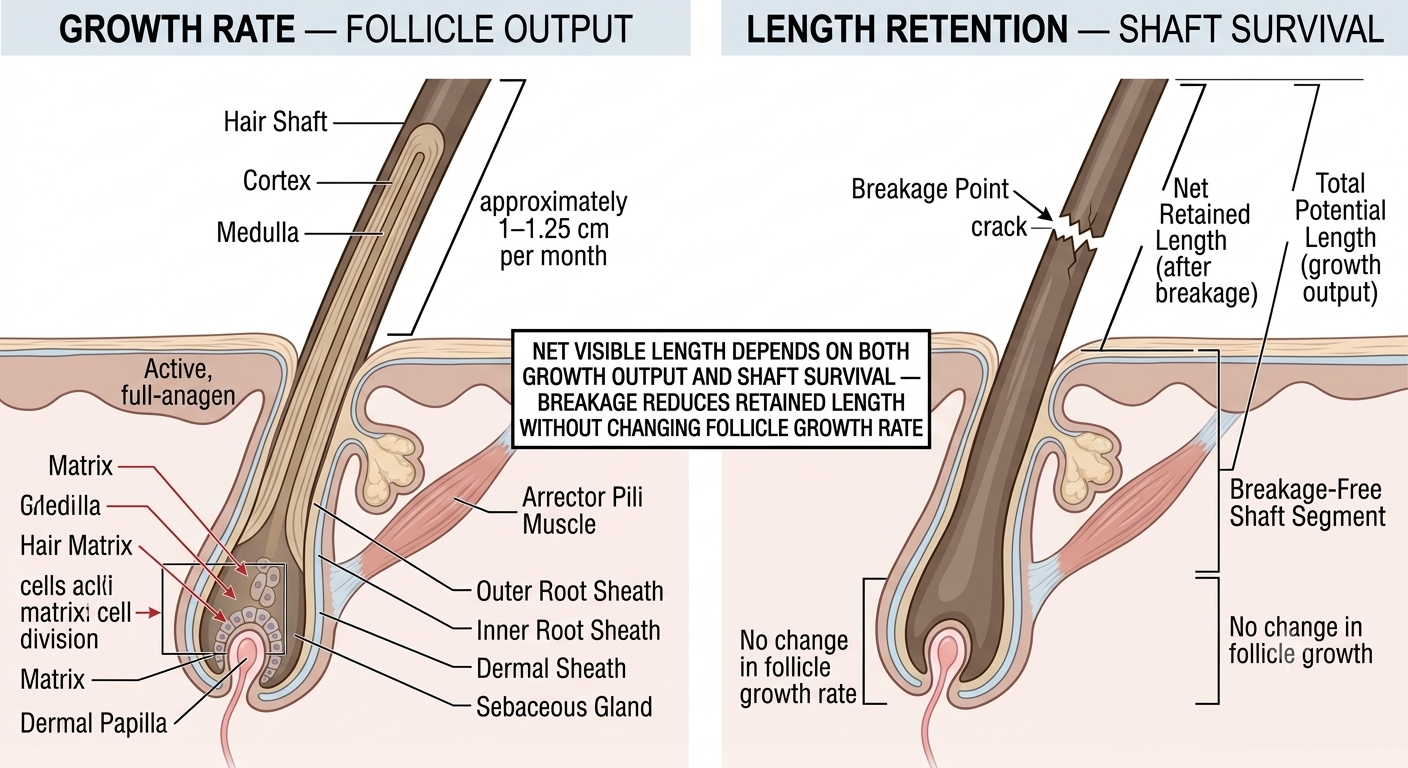
This is especially common in men with:
Bleached hair
Frequent heat styling
Long hairstyles
Curly or textured hair
Heavy friction from hats or helmets
Chemical damage
Reducing breakage often creates the appearance of faster growth because more length survives over time.
That is not the same as changing the biological growth rate of the follicle itself.
Genetics matter more than most products
Hair growth rate is strongly influenced by genetics.
Some men naturally have:
Longer anagen phases
Faster visible growth
Thicker individual hairs
Higher density
Others have shorter growth cycles or slower visible length accumulation.
There is no proven method that dramatically overrides a genetically programmed growth rate in healthy individuals.
This is why many “rapid hair growth” products produce disappointing results despite strong marketing claims.
Can nutrition make hair grow faster?
Nutrition matters for normal hair function, but only up to a point.
Hair follicles are metabolically active structures that require adequate:
Protein
Iron
Zinc
Vitamin D
Certain B vitamins
Essential fatty acids
Deficiencies can impair hair growth or increase shedding. Correcting a deficiency may improve hair quality and restore more normal growth behaviour.
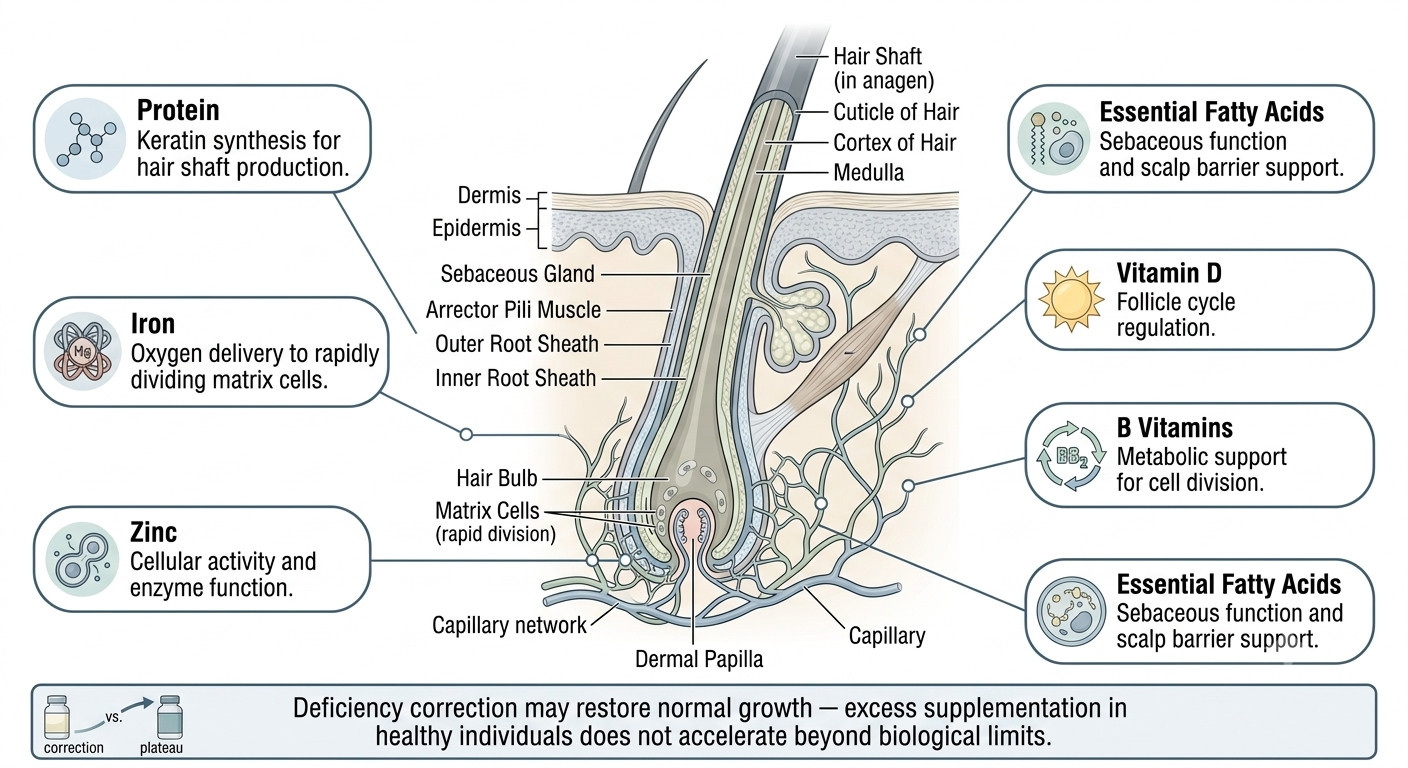
But this is different from pushing already healthy follicles into “supercharged” growth.
In someone without nutritional deficiency, excessive supplementation usually does not create dramatic acceleration.
More is not automatically better.
Protein matters more than many people realise
Hair is largely composed of keratin, a structural protein.
Severe protein deficiency can affect hair quality, density, and growth. Crash dieting and restrictive eating patterns may contribute to shedding or slower recovery after hair cycling disturbances.
However, most men eating a reasonably balanced diet in developed countries are not severely protein deficient.
Protein powders and collagen supplements are often marketed aggressively for hair growth, but evidence for meaningful acceleration in otherwise healthy individuals remains limited.
Does scalp massage help?
Scalp massage is frequently promoted online as a natural hair growth method.
The theory is that massage may increase blood flow or mechanical stimulation around follicles. A few small studies have suggested possible modest effects, but evidence remains limited and not definitive.
Importantly, even optimistic findings do not suggest dramatic transformation.
Gentle massage is unlikely to harm most people if done carefully. But aggressive rubbing, scratching, or repeated mechanical stress may irritate sensitive scalps or worsen traction in fragile hair.
Massage should not be viewed as a substitute for evidence-based treatment in conditions like androgenetic alopecia.
Minoxidil may help some men grow hair more effectively
Minoxidil is one of the few treatments with meaningful evidence for promoting hair growth activity in androgenetic alopecia.
It does not simply “speed up” hair like fertiliser for plants. Instead, it appears to influence follicle cycling and prolong the anagen phase in some follicles.
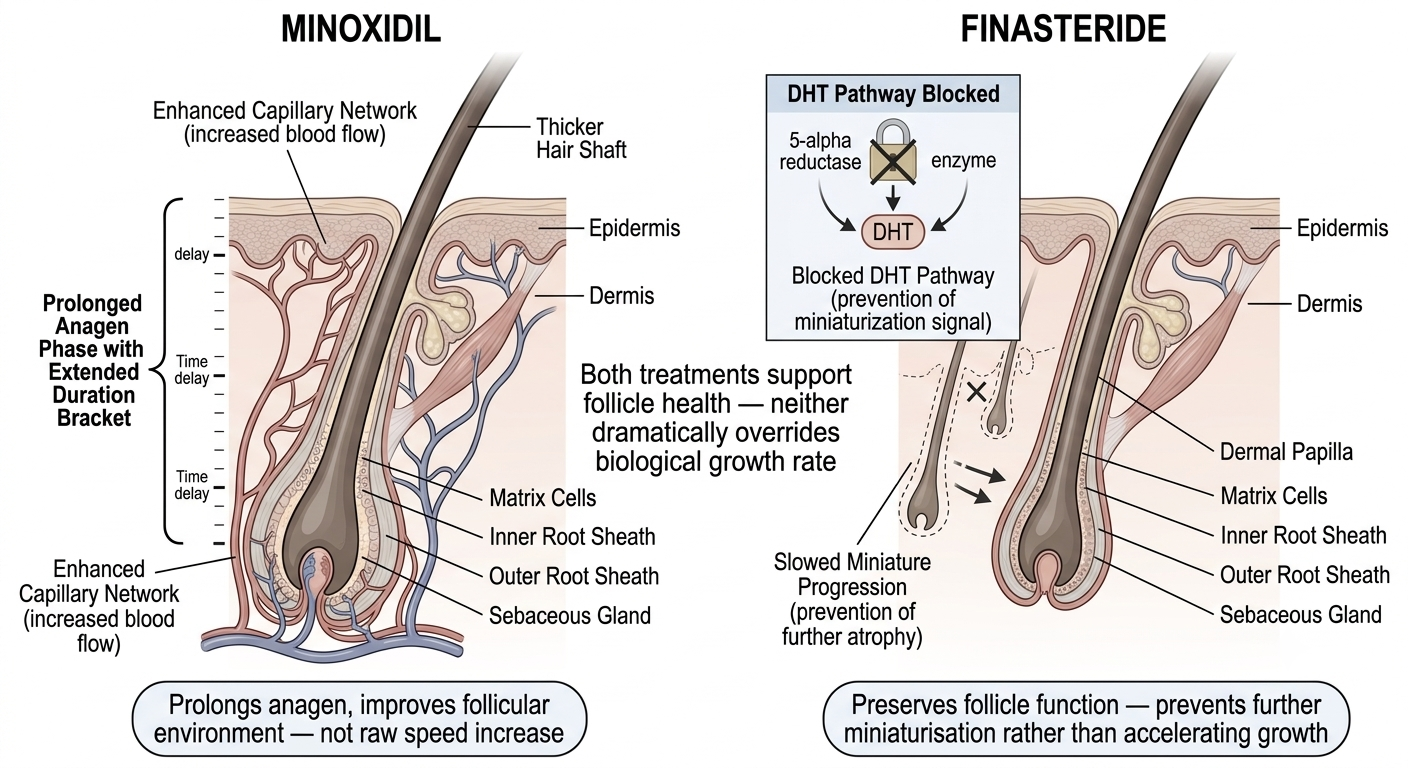
Men using minoxidil may experience:
Improved density
Longer growth duration
Thicker miniaturised hairs
Reduced progression of pattern loss
Results vary considerably. Some men respond well. Others see modest benefit or stabilisation only.
Minoxidil also requires ongoing use to maintain effects.
Finasteride is about preservation more than speed
Finasteride works differently.
It reduces conversion of testosterone to dihydrotestosterone, or DHT, which contributes to follicle miniaturisation in genetically susceptible men.
By slowing miniaturisation, finasteride may allow follicles to maintain healthier growth cycles. Some men notice increased density over time.
But again, this is not usually a dramatic increase in raw growth speed. It is more about preserving follicle function.
Hair growth oils are heavily overstated online
Rosemary oil, peppermint oil, castor oil, and various herbal blends are widely promoted online.
The evidence is mixed and often limited.
Rosemary oil has some preliminary research suggesting possible benefit in androgenetic alopecia, though studies remain relatively small. Peppermint oil is frequently discussed because of one animal study, but robust human evidence is lacking.
Castor oil is especially surrounded by myths. There is no strong evidence that it significantly accelerates human scalp hair growth.
Some oils may improve lubrication, reduce breakage, or enhance cosmetic appearance. That is different from substantially increasing follicle growth speed.
Hair growth shampoos usually do less than people expect
Shampoos marketed for faster growth are extremely common.
Most spend only a short time on the scalp before rinsing away. This limits how much influence they are likely to have on deep follicle biology.
Certain medicated shampoos may improve scalp conditions that indirectly affect hair quality or shedding, particularly when inflammation or dandruff is present.
But cosmetic shampoos promising dramatic accelerated growth should be approached cautiously.
They often improve texture, volume, or manageability more than actual growth rate.
Hormones influence male hair growth in complex ways
Hormones affect hair differently depending on body location.
Androgens stimulate beard and body hair growth in men while contributing to scalp follicle miniaturisation in androgenetic alopecia.
This creates confusion because men sometimes assume higher testosterone always means more scalp hair growth. Biology is more complicated than that.
Men genetically sensitive to DHT may actually lose scalp hair more progressively despite normal androgen levels.
Stress and illness can interrupt growth cycles
Hair follicles respond to physiological stress.
Severe illness, surgery, fever, major emotional stress, rapid weight loss, or nutritional disruption can trigger telogen effluvium, a condition where increased numbers of follicles shift into the resting phase.
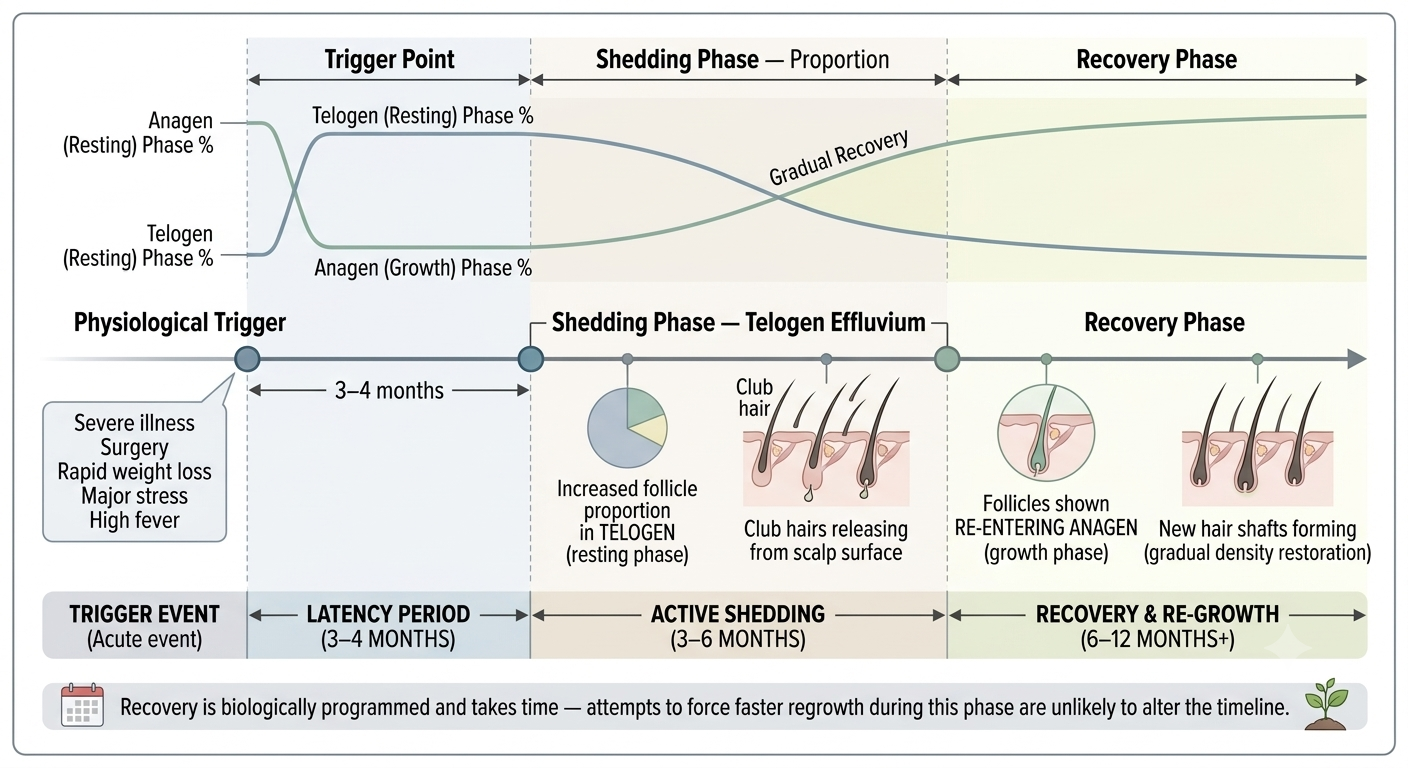
This may create noticeable shedding several months after the trigger.
During recovery, hair usually resumes normal cycling gradually. But the process takes time.
People often try to force faster regrowth during this phase, even though the follicles are already biologically programmed to recover slowly.
Age changes hair behaviour too
Hair growth often changes subtly with age.
Older men may notice:
Reduced density
Finer texture
Slower apparent growth
Increased fragility
More visible scalp
This reflects changes in follicle biology, hormone sensitivity, and hair cycle dynamics over time.
Ageing hair may therefore appear to “grow slower” even if monthly growth rate changes are relatively modest.
Sleep, smoking, and overall health still matter
While lifestyle changes cannot override genetics dramatically, general health does influence hair quality.
Poor sleep, smoking, chronic stress, heavy alcohol use, anabolic steroid misuse, and severe dietary restriction may negatively affect hair health indirectly.
Supporting general health helps create better conditions for normal follicle function, even if it does not transform growth speed.
What usually helps most is preserving the hair you already grow
This is the part many marketing campaigns avoid.
For most men, the biggest visible improvement comes not from dramatically faster growth, but from:
Reducing breakage
Reducing shedding
Protecting follicle health
Managing androgenetic alopecia early
Avoiding excessive chemical damage
Maintaining scalp health
Healthy retention creates the appearance of better growth over time.
Be realistic about timelines
Hair changes happen slowly.
Most meaningful treatments require months before visible effects can be assessed properly. Social media trends often create unrealistic expectations by suggesting dramatic changes in days or weeks.
Biology does not operate at internet speed.
Any product claiming explosive growth in extremely short timeframes deserves scepticism.
When slow growth may deserve medical assessment
Sometimes growth concerns reflect an underlying issue.
Medical assessment may be worthwhile if hair changes are associated with:
Sudden shedding
Fatigue
Weight changes
Patchy loss
Scalp inflammation
New medications
Restrictive dieting
Hormonal symptoms
Rapid texture changes
Hair problems are sometimes signs of broader medical conditions rather than isolated cosmetic issues.
The bottom line
Men cannot dramatically override the biological limits of hair growth speed. Genetics, hormones, age, and follicle cycling play major roles in determining how fast scalp hair grows.
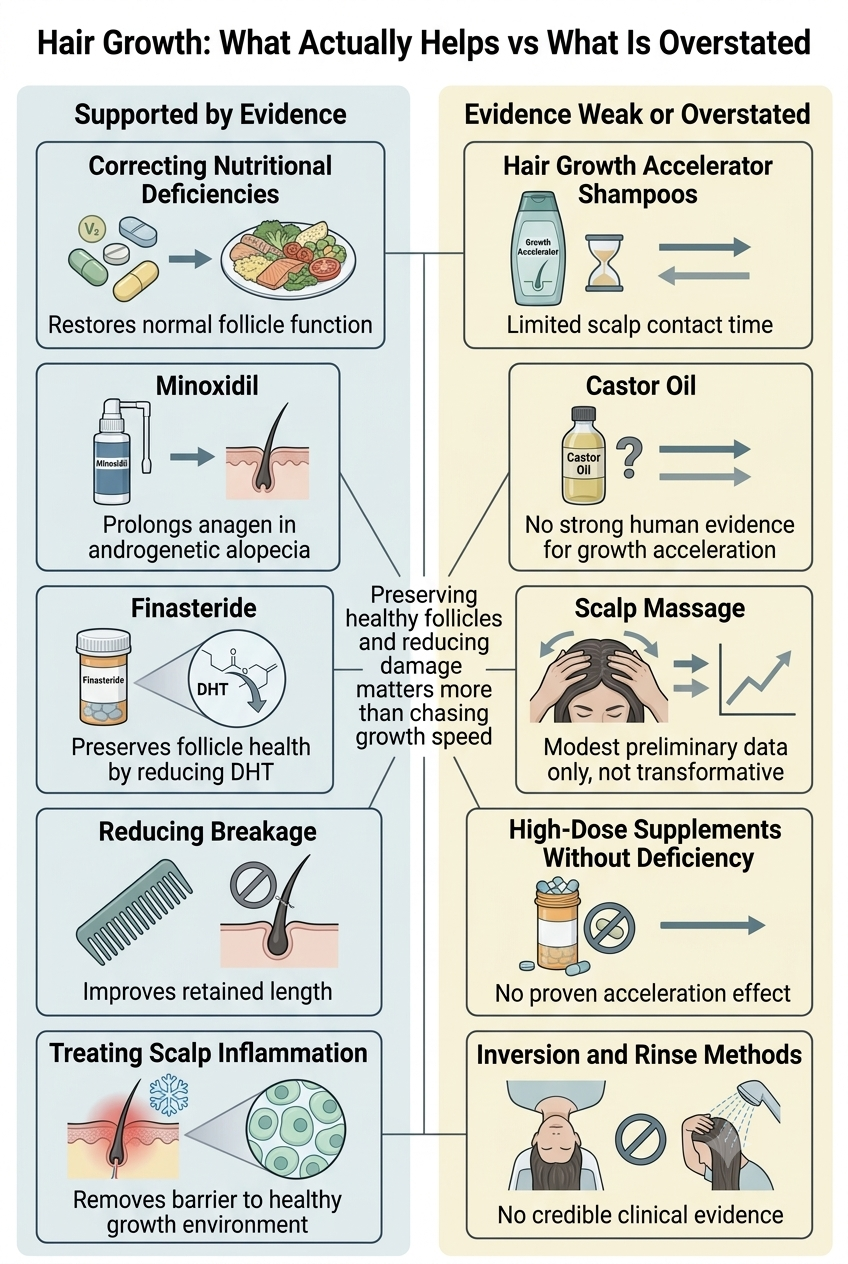
Good nutrition, scalp care, medical treatment for underlying conditions, and reducing breakage can all help support healthier growth and better retention. But most products marketed as rapid growth solutions overpromise what current evidence actually supports.
In practice, preserving healthy follicles and minimising unnecessary damage usually matters more than chasing unrealistic growth acceleration. Hair tends to improve through consistency, patience, and proper diagnosis rather than miracle products.
Author: Dr. Priya Goswami
Medical review: Dr. Denis Broun
Next step
If you notice coverage changes without increased shedding, confirm what process is occurring.
Take the Hair Assessment to have a physician review your pattern, identify whether miniaturization is present, and determine appropriate staging and next steps.
Add Comment