Type “hair growth” into almost any social media platform and castor oil will appear sooner or later.
Some people describe remarkable regrowth. Others recommend applying it overnight every week. Videos often suggest it can reverse thinning naturally without medicines or surgery.
It’s an attractive idea.
Unfortunately, the science doesn’t currently support many of these claims.
That doesn’t mean castor oil has no place in hair care. It simply means its benefits are often misunderstood.
What is castor oil?
Castor oil is extracted from the seeds of the castor plant.
It is a thick vegetable oil rich in ricinoleic acid, along with smaller amounts of other fatty acids.
These compounds help make castor oil an effective moisturiser, which is why it has long been used in cosmetic and skincare products.
Its thick consistency also gives hair a smoother, shinier appearance after application.
Why do people believe it grows hair?
Several theories have been proposed.
Some suggest castor oil improves blood circulation in the scalp. Others believe its anti-inflammatory properties create a healthier environment for hair follicles.
While these ideas are biologically plausible, they have not been confirmed by well-designed clinical trials in people with common forms of hair loss.
At present, there is no convincing evidence that castor oil directly stimulates dormant hair follicles or reverses follicular miniaturisation.
What benefits does castor oil offer?
Although evidence for hair growth is limited, castor oil can still be useful in certain situations.
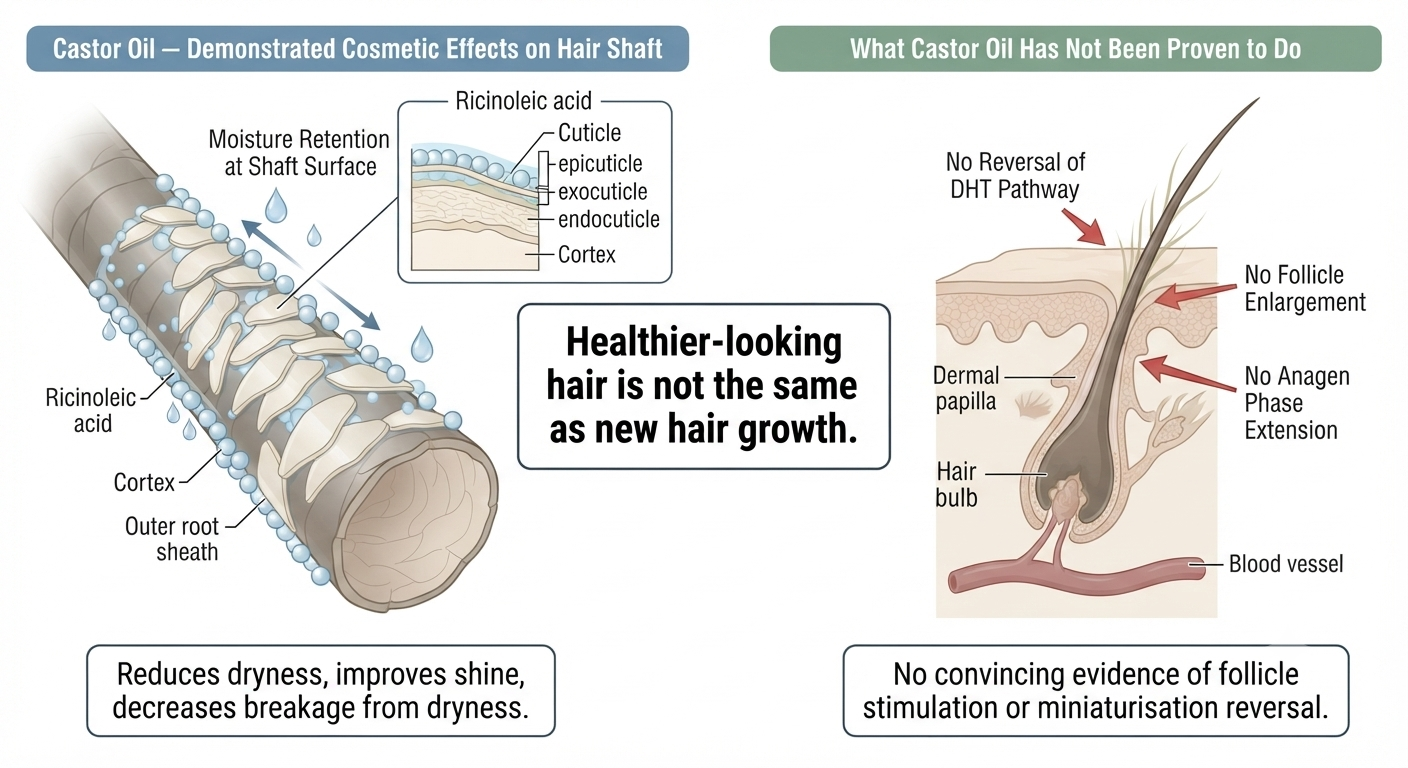
It may help:
- Reduce dryness of the hair shaft
- Improve shine
- Decrease friction between hair fibres
- Make hair feel softer
- Reduce breakage caused by dryness
These improvements can make hair appear healthier and fuller.
However, healthier-looking hair should not be confused with new hair growth.
Hair breakage is different from hair loss
This distinction is important.
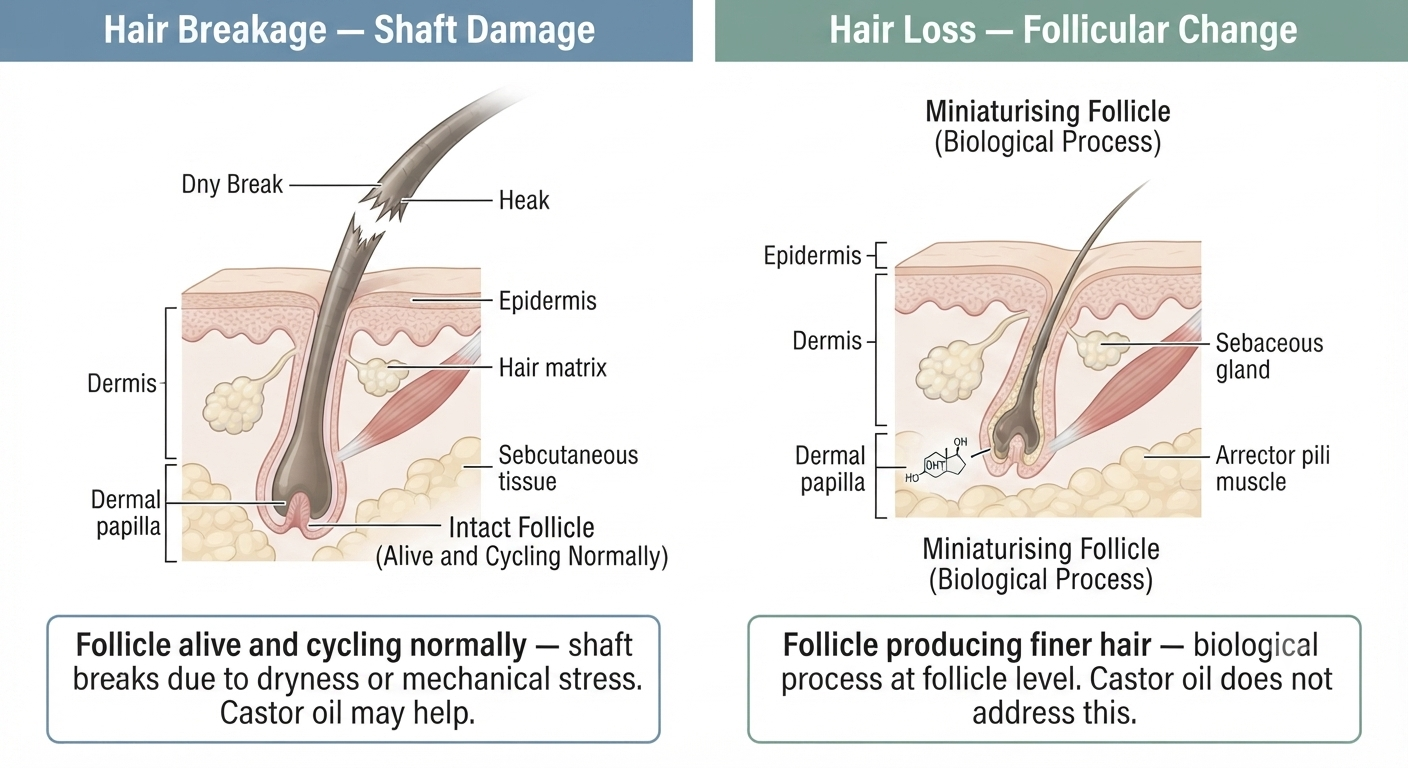
Hair breakage occurs when existing hairs become damaged and snap.
Hair loss involves changes within the hair follicle itself.
Castor oil may help protect the hair shaft from excessive dryness and reduce breakage in some people.
It has not been proven to change the biological processes responsible for androgenetic alopecia or most other medical causes of hair loss.
Can castor oil help the scalp?
A healthy scalp supports healthy hair.
Because castor oil helps reduce moisture loss from the skin, some people with mild scalp dryness may find it soothing.
However, people with dandruff, seborrhoeic dermatitis or other inflammatory scalp conditions should not assume that castor oil will treat the underlying problem.
In some cases, applying heavy oils may even worsen symptoms by trapping dead skin cells or making cleansing more difficult.
Are there any risks?
Natural products are not automatically risk-free.
Possible side effects include:
- Scalp irritation
- Allergic contact dermatitis
- Itching
- Redness
- Greasy hair that is difficult to wash
Very rarely, severe hair matting has been reported after the use of castor oil. Although uncommon, this highlights the importance of using the product sensibly.
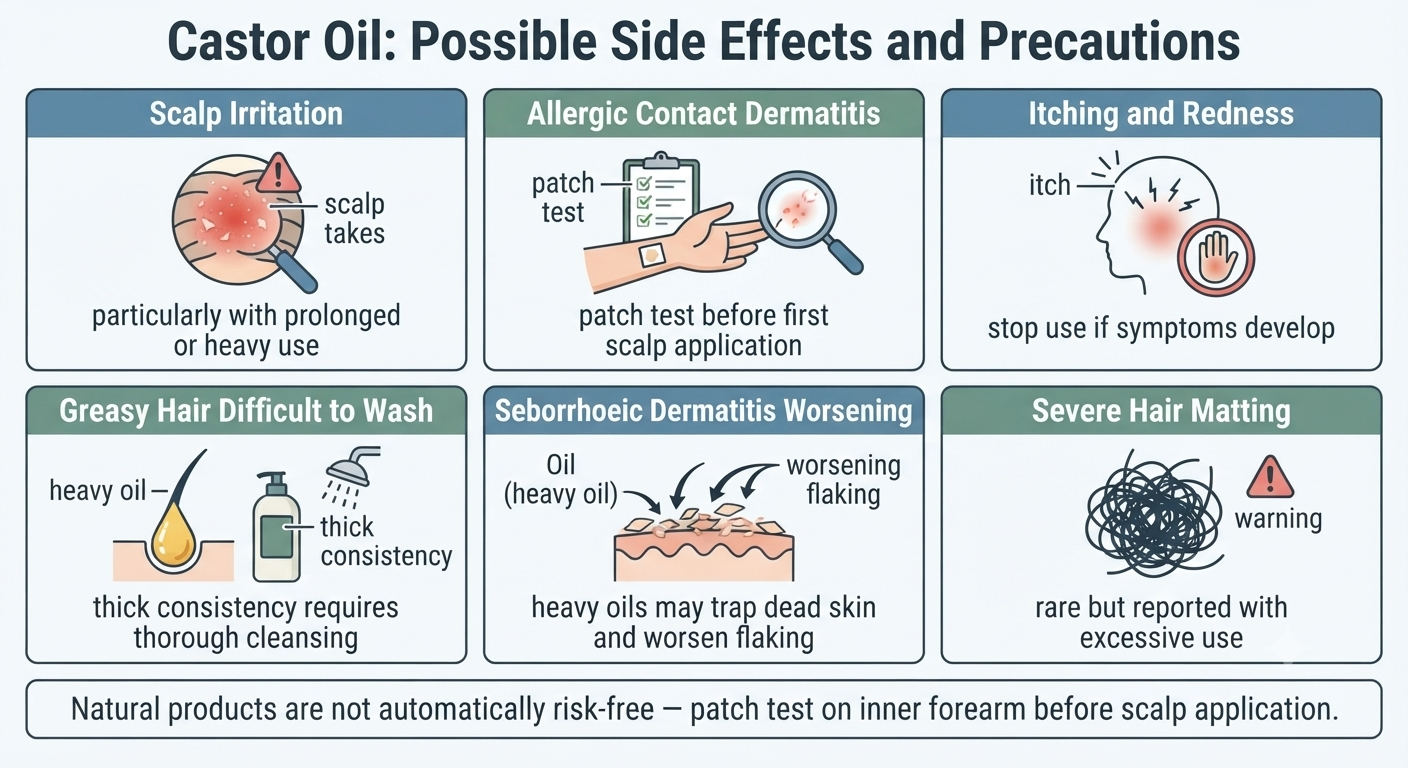
If irritation develops, stop using the oil and seek medical advice if symptoms persist.
How should you use castor oil?
If you would like to try castor oil as part of your hair care routine:
- Apply a small amount to the scalp or hair lengths.
- Massage gently without vigorous rubbing.
- Leave it on for the recommended time or according to your preference.
- Wash thoroughly with a gentle shampoo.
- Begin with occasional use rather than daily application.
Because castor oil is very thick, using large amounts rarely provides additional benefit and can make hair difficult to cleanse.
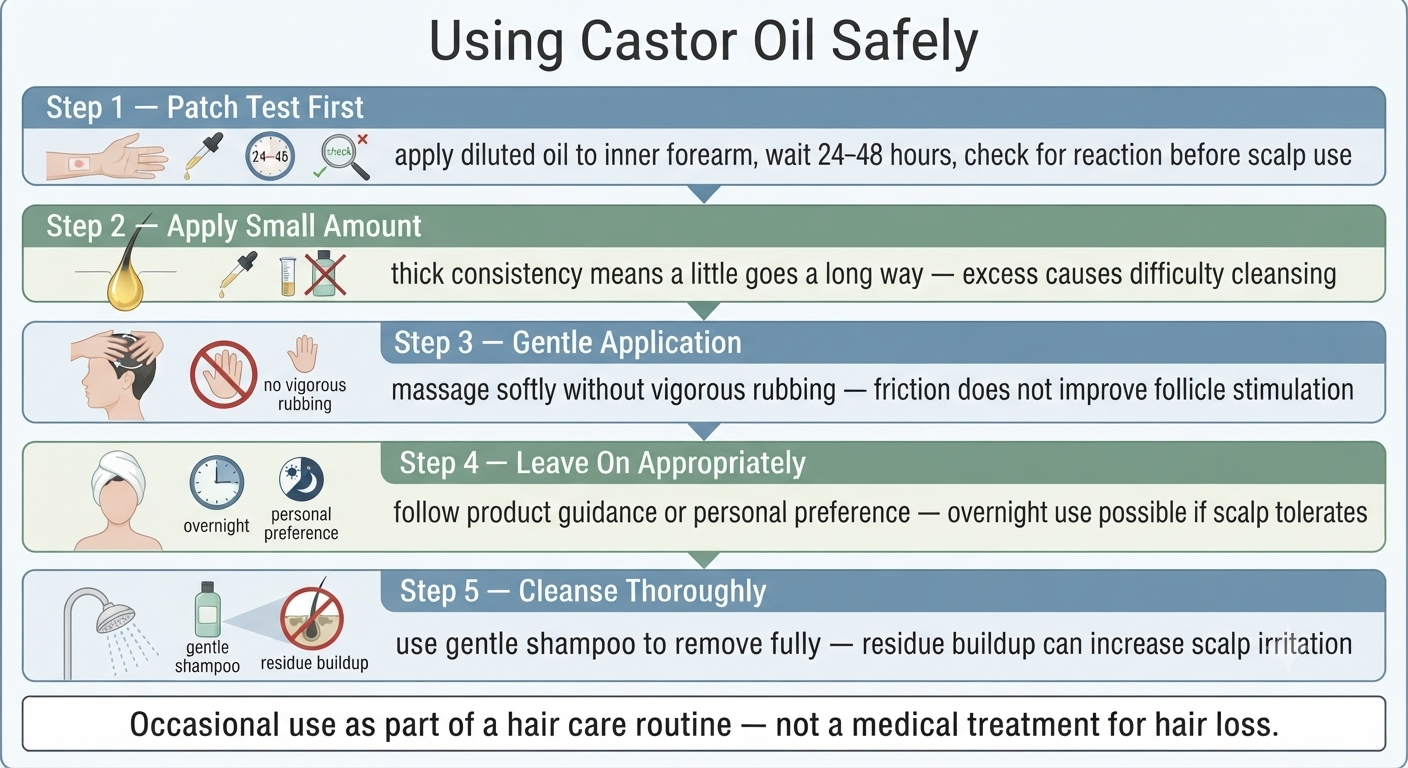
A patch test on a small area of skin before first use is also advisable.
When is castor oil unlikely to be enough?
If your hair loss is caused by:
- Male or female pattern hair loss
- Alopecia areata
- Thyroid disease
- Nutritional deficiency
- Certain medications
- Scarring scalp disorders
Castor oil alone is unlikely to address the underlying cause.
Persistent or progressive hair loss deserves a proper medical assessment rather than relying solely on home remedies.
Keeping expectations realistic
Castor oil has earned a place in many hair care routines because it conditions the hair well and may improve its appearance.
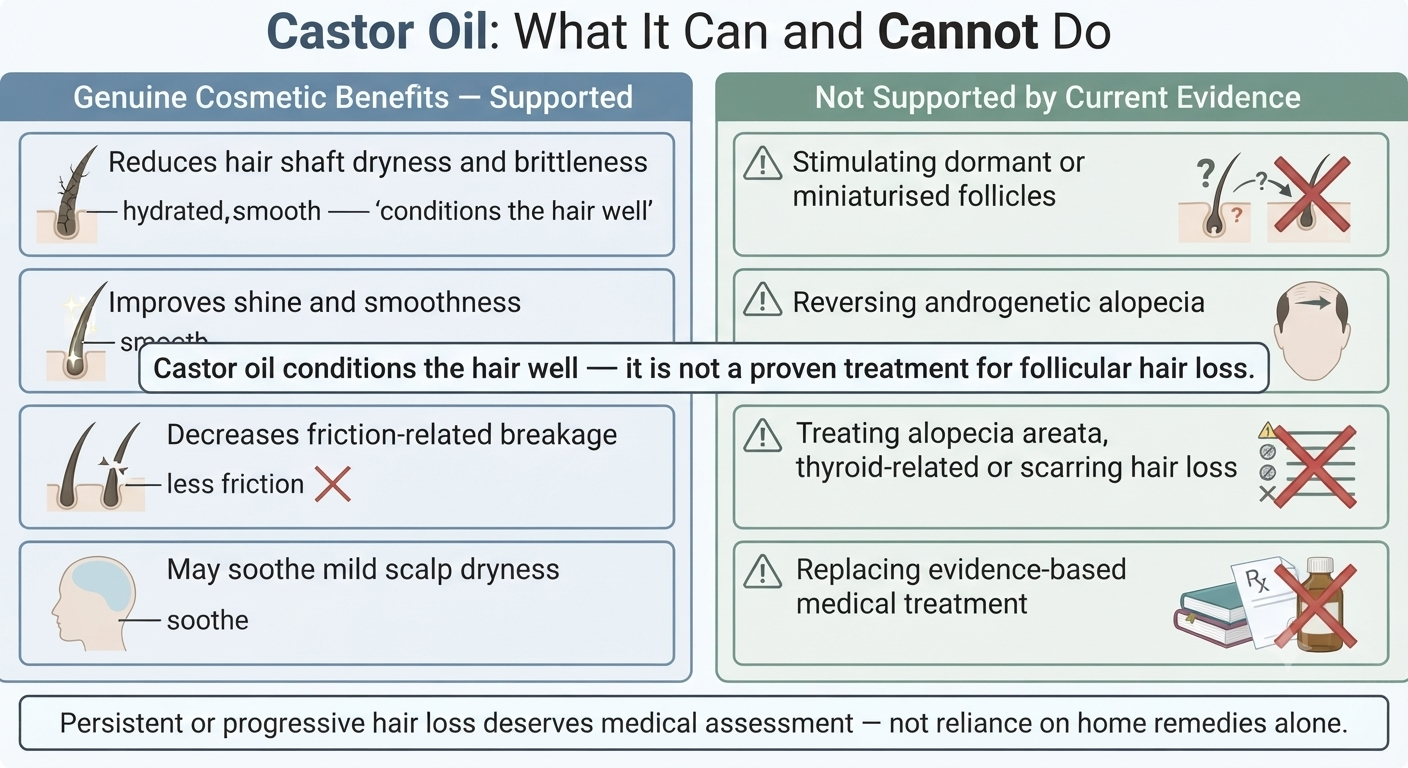
That benefit is genuine for some people.
What current research does not support is the idea that castor oil can reliably regrow hair, reverse male or female pattern baldness or replace evidence-based medical treatment.
Healthy-looking hair and new hair growth are not always the same thing. Understanding that difference helps you choose treatments based on evidence rather than expectation.
Author: Dr. Priya Goswami
Medical review: Dr. Denis Broun
Next step
If you notice coverage changes without increased shedding, confirm what process is occurring.
Take the Hair Assessment to have a physician review your pattern, identify whether miniaturization is present, and determine appropriate staging and next steps.
Add Comment