One of the biggest misunderstandings about hair loss is that every hair that falls out is gone forever.
That isn’t how hair normally works.
Healthy hair is constantly growing, resting, shedding and growing again. Every follicle follows its own timetable, which is why you don’t lose all your hair at once.
Once you understand this cycle, many things about hair loss suddenly make more sense. Why treatments need months to work. Why shedding can actually happen after starting treatment. And why panic after seeing hairs in the shower is often unnecessary.
Stage one: the growth phase
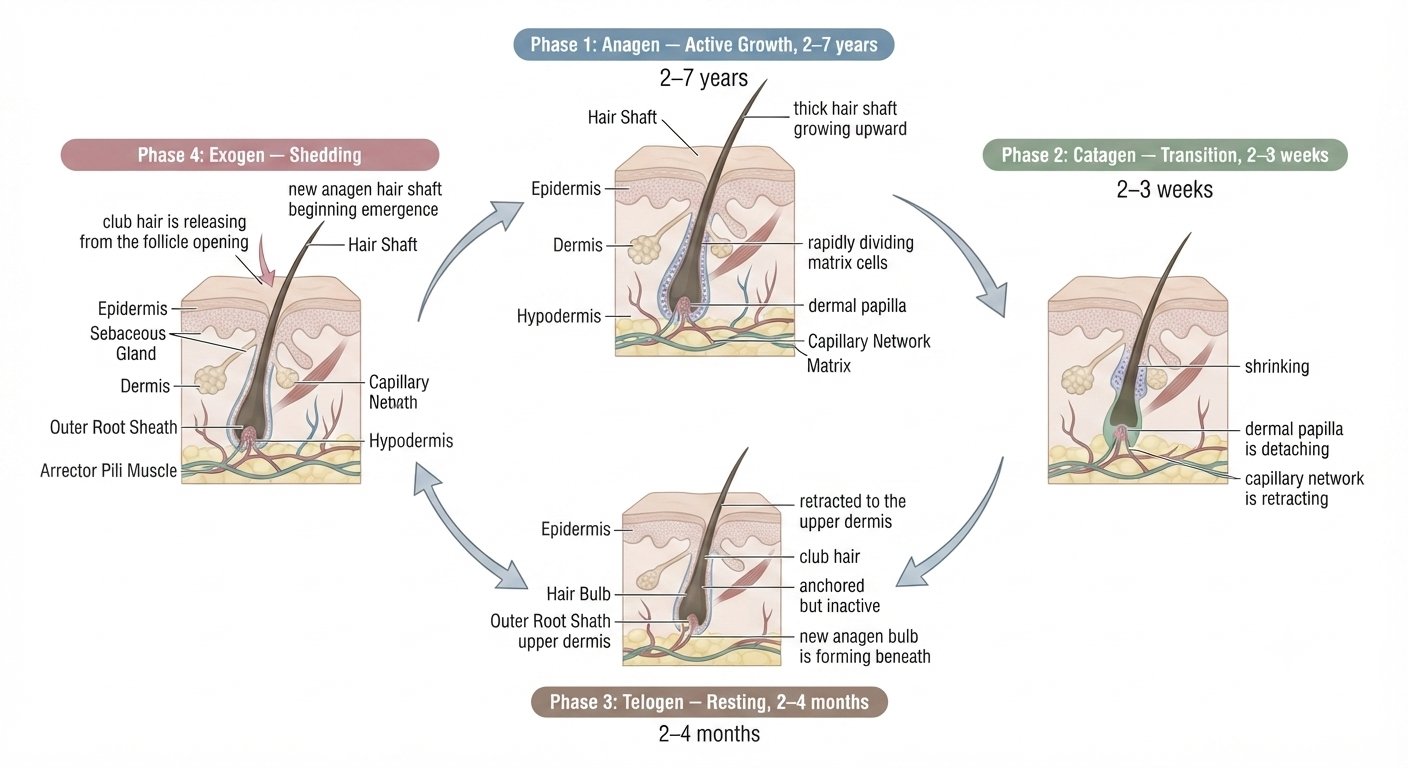
The first stage is called the anagen phase.
This is when the follicle actively produces a hair fibre.
For scalp hair, this phase usually lasts between two and seven years, although genetics largely determine its exact length.
The longer a follicle remains in anagen, the longer the hair can grow.
This is why some people can grow hair well below their shoulders, while others struggle to grow it beyond a certain length.
Stage two: the transition phase
The catagen phase is much shorter.
It lasts only a few weeks.
During this period, the follicle stops actively producing hair and begins preparing for its resting stage.
Only a small percentage of scalp hairs are in catagen at any given time.
Stage three: the resting phase
Next comes the telogen phase.
The follicle is inactive, but the hair remains in place.
This stage usually lasts around two to four months.
Eventually, the old hair is released, allowing the follicle to begin producing a new one.
Stage four: shedding
The final stage is often referred to as exogen.
This is when the old hair falls out naturally.
Many people assume that shedding means something is wrong.
In reality, losing approximately 50 to 100 hairs each day is considered normal for most healthy adults.
Those hairs are simply reaching the end of their natural cycle.
Why different hairs are in different stages
Every follicle works independently.
If all scalp hairs entered the resting phase together, everyone would periodically become bald before regrowing their hair.
Instead, follicles are spread across different stages of the cycle.
This keeps overall hair density relatively stable throughout life.
What happens in male and female pattern hair loss?
Androgenetic alopecia changes the normal cycle rather than stopping it altogether.
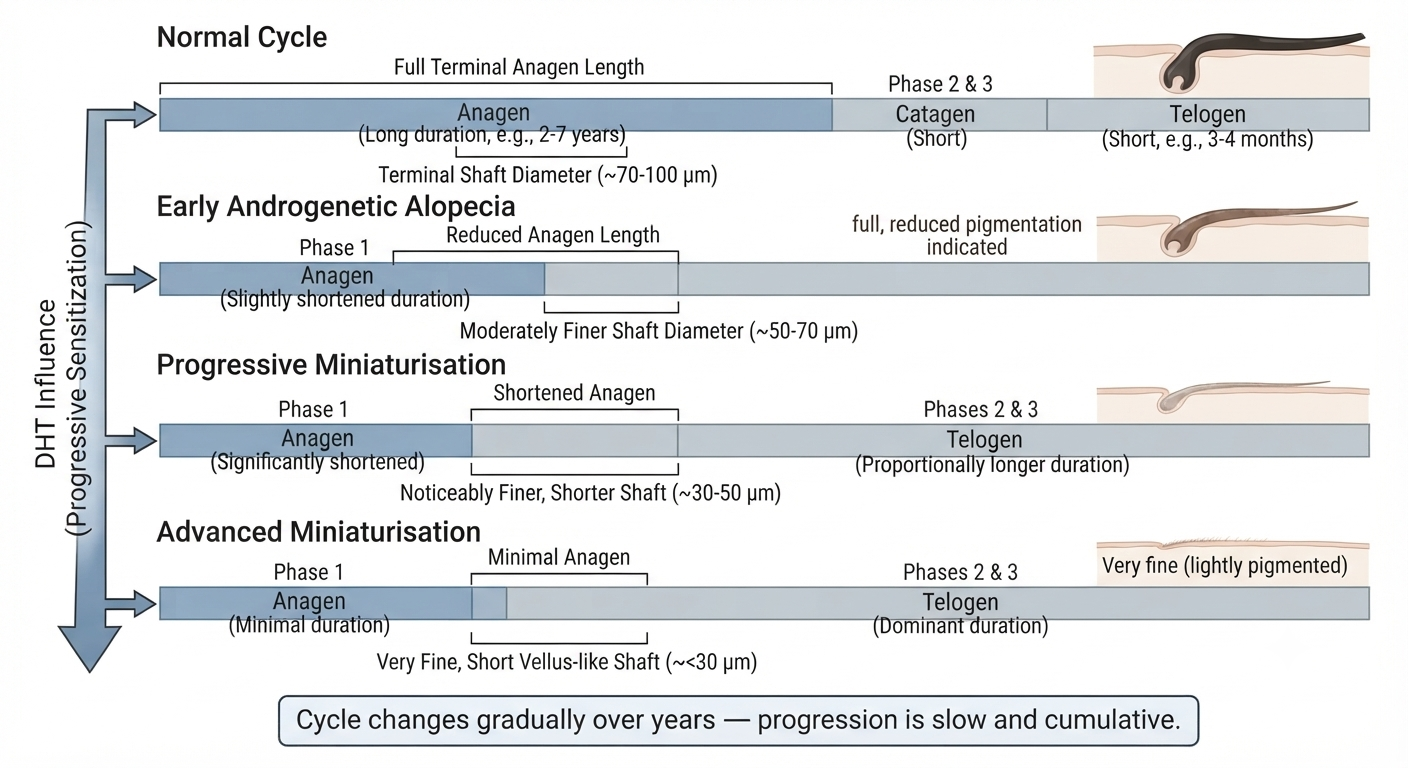
The growth phase gradually becomes shorter.
Each new hair grows for less time than the one before.
At the same time, follicles become smaller through a process called miniaturisation.
The result is progressively thinner, shorter hairs until some follicles eventually produce almost invisible hairs.
Why does telogen effluvium cause sudden shedding?
Telogen effluvium works differently.
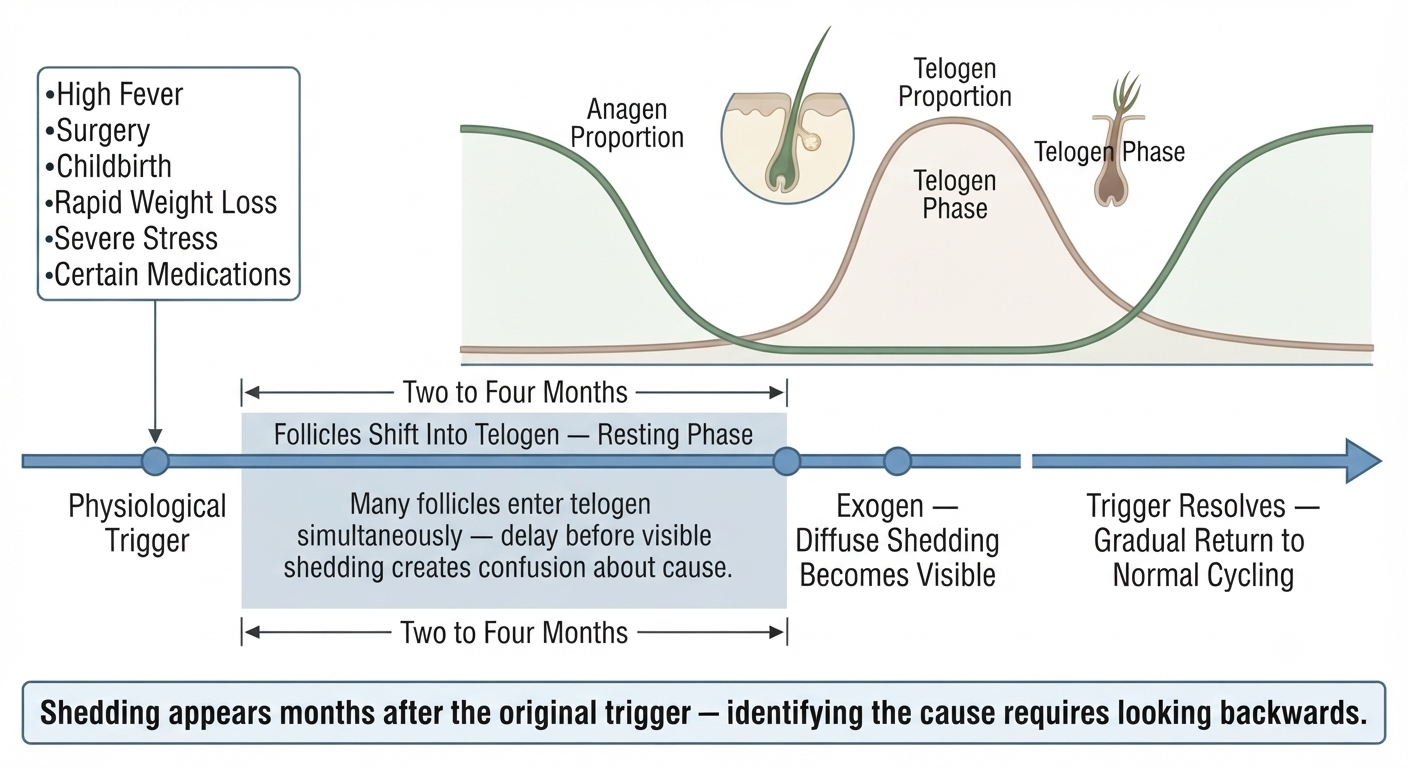
Instead of gradual miniaturisation, many follicles enter the resting phase at the same time.
Several months later, those hairs are shed together.
Common triggers include:
- High fever
- Major surgery
- Childbirth
- Rapid weight loss
- Significant emotional stress
- Certain medications
Because shedding occurs months after the trigger, people often struggle to identify the original cause.
Why treatments require patience
Many people stop treatment because they expect visible improvement within a few weeks.
Hair biology doesn’t work that quickly.
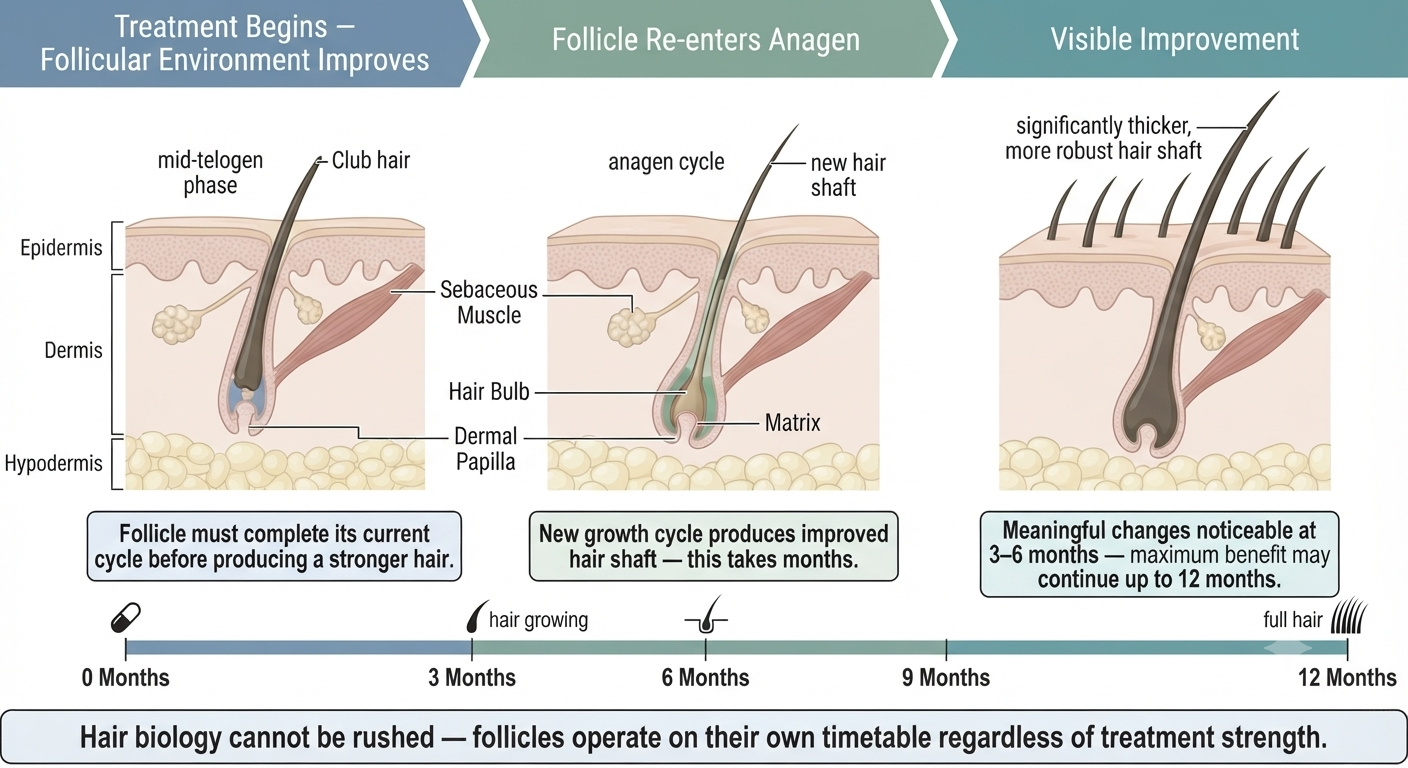
Even if a treatment immediately improves the follicle’s environment, the follicle still has to complete its existing cycle before producing stronger hair.
Most evidence-based treatments require at least three to six months before meaningful changes become noticeable.
Maximum improvement may continue for up to a year.
Can the cycle return to normal?
Sometimes it can.
If temporary factors such as nutritional deficiencies, illness or stress have disrupted the cycle, follicles often recover once those problems are corrected.
In chronic conditions such as androgenetic alopecia, treatment aims to improve the cycle and slow further deterioration rather than permanently eliminating the underlying genetic tendency.
When should you be concerned?
Normal shedding becomes more concerning when you notice:
- Rapid thinning over a short period
- Large amounts of hair coming out consistently
- Patchy bald areas
- Scalp pain or inflammation
- Hair that fails to regrow after shedding
These situations deserve medical assessment because different causes require different approaches.
Understanding the cycle changes expectations
The hair growth cycle explains why successful treatment is rarely dramatic overnight.
Hair follicles operate according to their own biological timetable. They cannot be rushed by stronger products, larger doses or frequent changes in treatment.
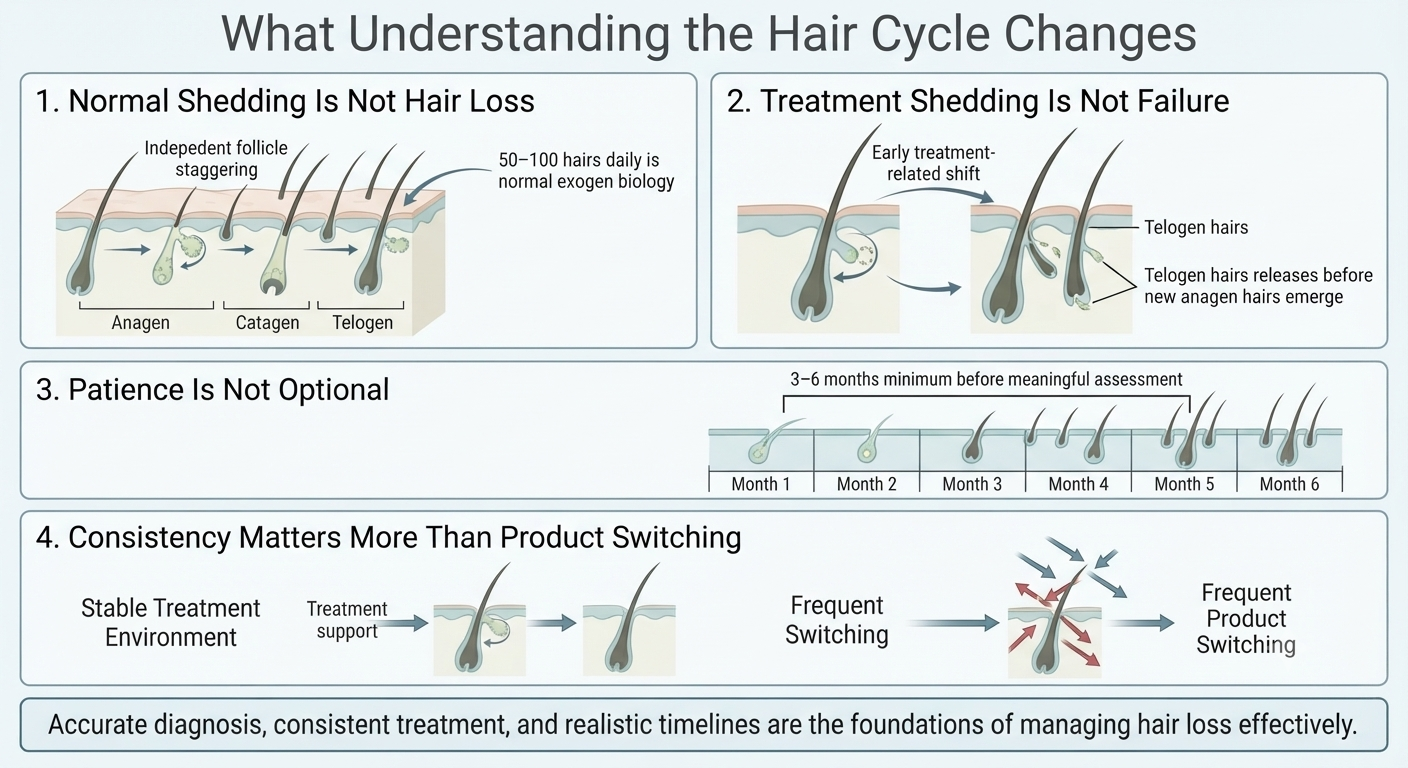
Patience, consistency and an accurate diagnosis remain the foundations of managing hair loss effectively. Once you understand how the cycle works, it becomes much easier to judge progress realistically and avoid abandoning treatment too soon.
Author: Dr. Priya Goswami
Medical review: Dr. Denis Broun
Next step
If you notice coverage changes without increased shedding, confirm what process is occurring.
Take the Hair Assessment to have a physician review your pattern, identify whether miniaturization is present, and determine appropriate staging and next steps.
Add Comment