Red light scalp massagers have become increasingly visible in the hair loss market. These devices combine low level light therapy with physical scalp massage, often packaged into handheld brushes, vibrating combs, helmets, or wearable caps.
The marketing usually promises several things at once. Improved circulation. Follicle stimulation. Reduced shedding. Better absorption of hair products. Faster growth.
But combining multiple ideas into one device does not automatically mean the science behind each claim is equally strong.
Some aspects of red light therapy are supported by limited but legitimate evidence. Other claims surrounding scalp massagers remain far less proven. Understanding where the evidence is stronger and where it becomes speculative is important before investing in these devices.
Most devices combine two separate concepts
Red light scalp massagers typically merge:
Low level light therapy
Mechanical scalp stimulation
These are biologically different interventions.
The light component attempts to influence follicular cellular activity through specific wavelengths of red light. The massage component aims to mechanically stimulate the scalp and increase local blood flow.
Manufacturers often blend the claims together even though the evidence for each mechanism differs considerably.
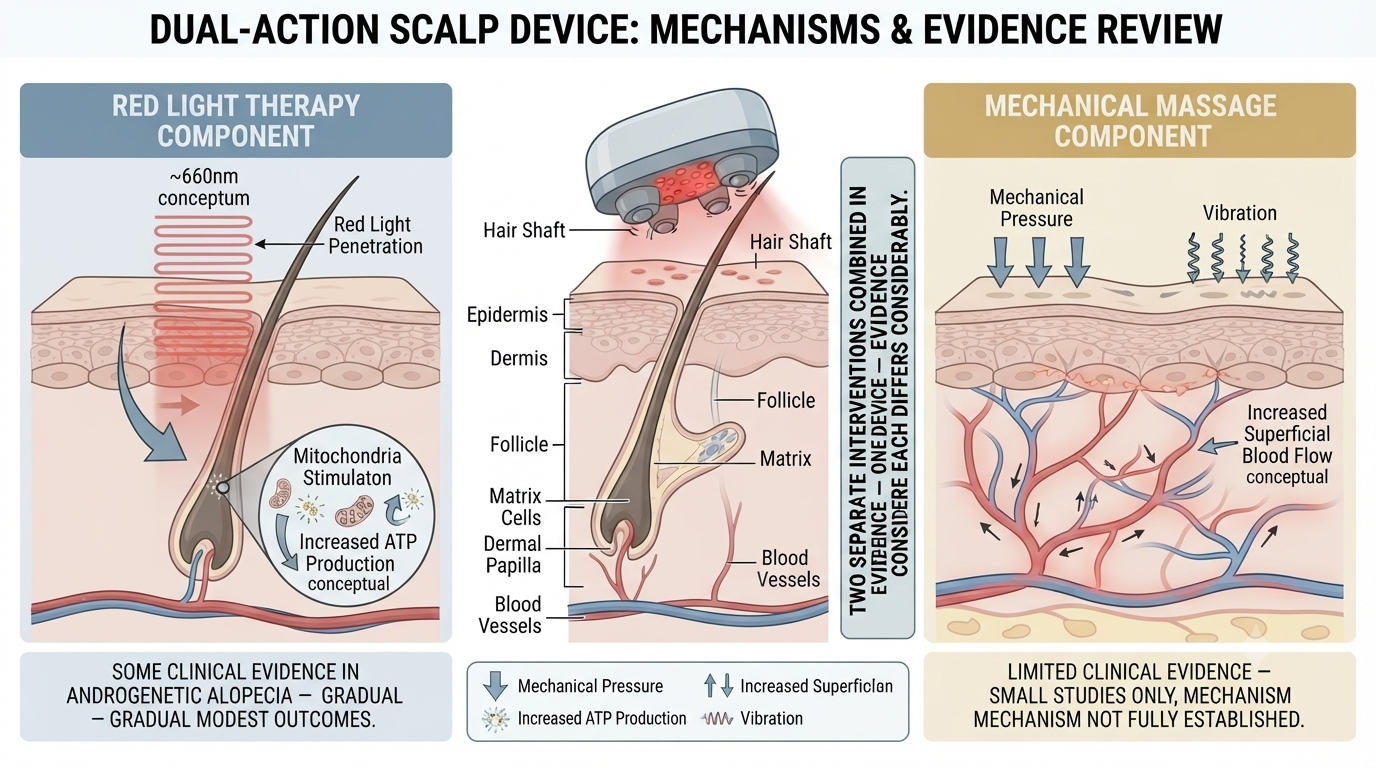
Low level light therapy has some evidence in androgenetic alopecia
Red light therapy itself, often called low level laser therapy or LLLT, has been studied most extensively in androgenetic alopecia.
Some clinical studies suggest certain devices may modestly improve:
Hair density
Hair thickness
Shedding patterns
particularly in mild to moderate pattern hair loss.
However, outcomes are usually gradual and moderate rather than dramatic.
Device quality varies enormously
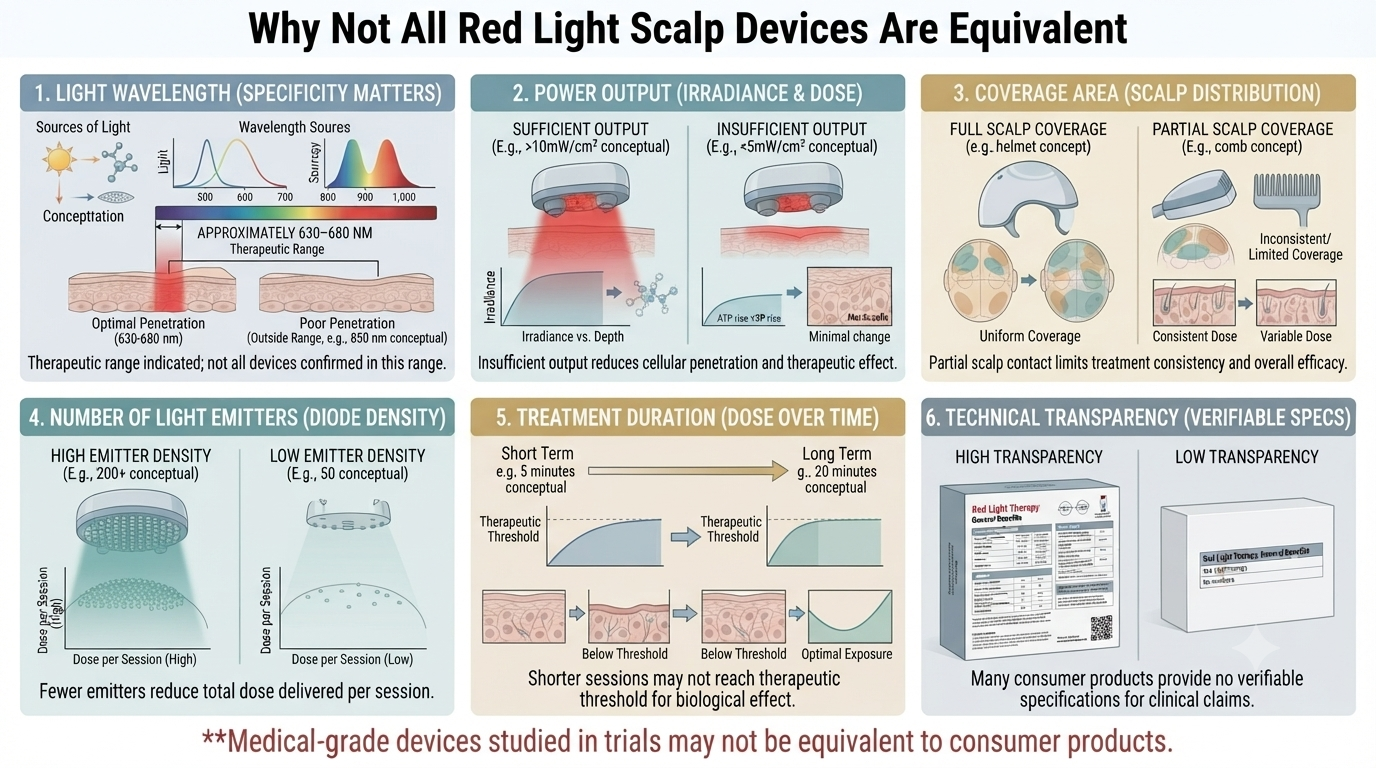
One major problem when evaluating red light scalp massagers is the lack of standardisation.
Devices vary in:
Light wavelength
Power output
Coverage area
Number of light emitters
Treatment duration
Consistency of scalp contact
Some products may deliver therapeutic light ranges more effectively than others. Many consumer devices provide little technical transparency.
Massage itself is less well studied
Scalp massage has become widely associated with hair growth online, but the scientific evidence remains limited.
A few small studies suggest mechanical stretching forces may potentially influence follicular biology. However, the evidence base is much weaker than many social media claims imply.
Massage may improve comfort and scalp awareness, but strong evidence for substantial regrowth remains lacking.
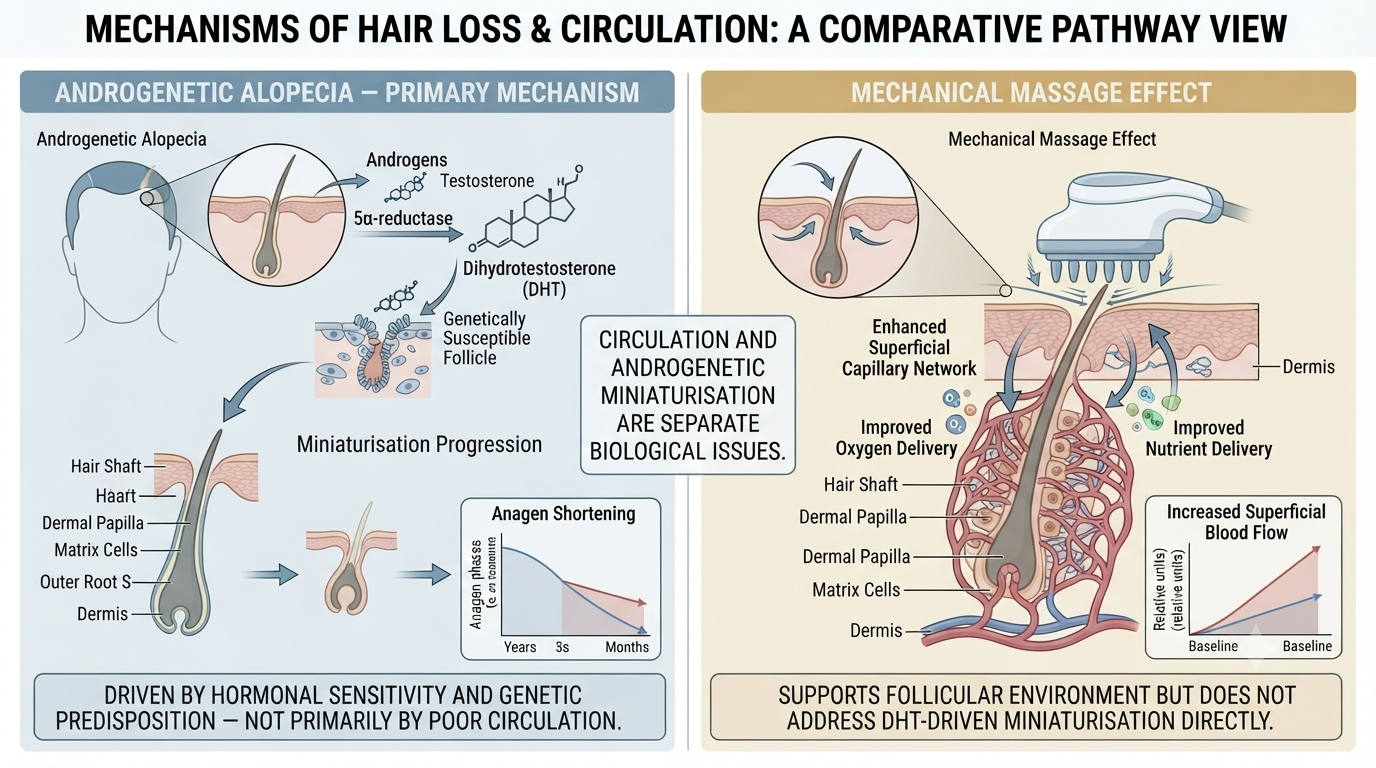
Increased blood flow is not automatically equivalent to hair growth
Many advertisements focus heavily on circulation.
Improved blood flow sounds intuitively beneficial, but hair loss biology is more complicated than simple oxygen delivery.
For example, androgenetic alopecia primarily involves hormone-sensitive follicular miniaturisation rather than poor scalp circulation alone.
Increasing blood flow does not necessarily reverse that process directly.
Most studies examine light therapy, not combined devices
Another limitation is that many supportive studies evaluate formal LLLT devices rather than consumer scalp massagers specifically.
This distinction matters.
A vibrating red light brush sold online may not deliver the same treatment parameters as medical-grade laser devices studied in clinical trials.
Consumers often assume all “red light” products are equivalent when they are not.
Results tend to be modest
When benefits occur, they are generally subtle.
Possible outcomes may include:
Reduced shedding
Slightly fuller appearance
Improved density in thinner areas
People expecting reversal of advanced baldness are unlikely to achieve those results through scalp massagers alone.
Consistency matters more than intensity
Most light-based hair treatments rely on repeated long-term use.
Occasional use is unlikely to produce measurable changes.
Protocols often involve several sessions weekly over multiple months before any visible improvement appears.
This affects real-world effectiveness because adherence commonly declines over time.
The psychological appeal is understandable
Part of the popularity of scalp massagers comes from their non-pharmaceutical image.
Many people prefer:
Drug-free approaches
Home treatments
Devices perceived as “natural”
especially if they are hesitant about medications such as finasteride.
The ritual of scalp massage may also create a sense of actively managing the condition, which psychologically feels reassuring.
Some devices make unrealistic claims
A recurring issue in the industry is exaggerated marketing.
Claims about:
“Reactivating dead follicles”
“Guaranteed regrowth”
“Permanent reversal”
are not supported by current evidence.
Hair follicles that are completely destroyed, especially in scarring alopecia, cannot simply be revived by massage or red light exposure.
Safety is generally favourable
Most red light scalp devices appear relatively safe when used appropriately.
Reported side effects are usually mild and may include:
Temporary scalp irritation
Dryness
Headache in some users
Mechanical massage should remain gentle, particularly in people with active inflammation or fragile hair.
Scarring alopecia requires caution
People with inflammatory scarring alopecias should be cautious about aggressive scalp stimulation.
Conditions involving active inflammation may worsen with excessive friction or mechanical irritation.
Medical diagnosis matters before beginning repeated scalp manipulation.
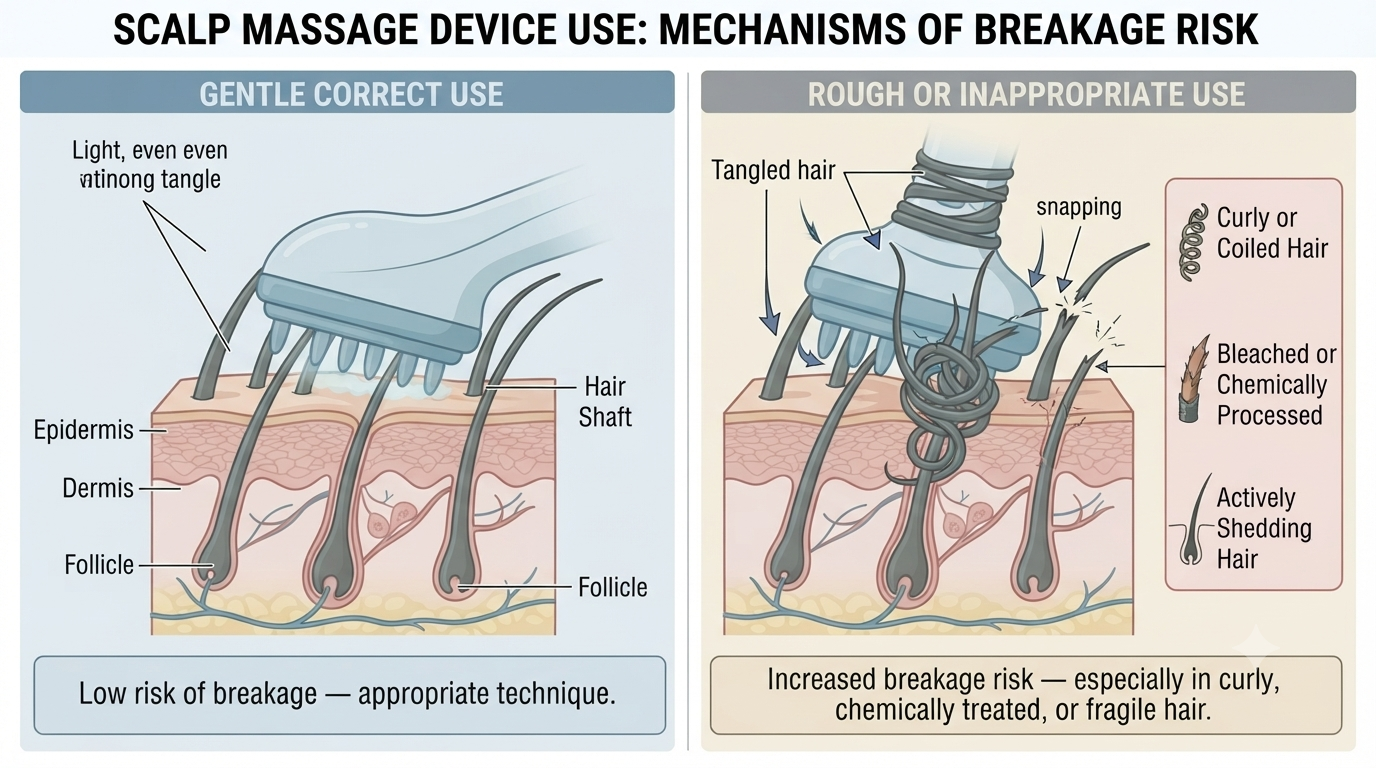
Hair breakage can increase with rough use
Some massage devices use rubber nodes or vibrating components that may tangle or stress fragile hair.
This is particularly relevant for:
Curly hair
Chemically treated hair
Bleached hair
Actively shedding hair
Poor device design may increase breakage rather than improve hair appearance.
Red light does not replace established treatments
For androgenetic alopecia, the strongest evidence still supports treatments such as:
Minoxidil
Finasteride in men
Certain anti-androgen therapies in women
Red light devices may potentially serve as adjunctive treatments rather than replacements.
Cost effectiveness is debatable
Many scalp massagers are expensive relative to the modest evidence supporting them.
Consumers are often paying for:
Convenience
Technology branding
Cosmetic appeal
rather than proven superiority over standard therapies.
Whether the investment feels worthwhile depends partly on expectations and financial priorities.
Placebo effects likely play some role
Hair loss treatments are particularly vulnerable to placebo effects because changes occur slowly and perception of density is subjective.
Lighting, styling, hair length, and expectation all influence how people judge progress.
This does not mean all benefits are imaginary, but it does complicate interpretation of anecdotal success stories.
Product absorption claims are largely speculative
Some devices claim massage improves penetration of topical products.
While mechanical stimulation may theoretically influence absorption slightly, robust clinical evidence supporting major enhancement effects remains limited.
These claims often exceed the available research.
Photography can exaggerate outcomes
Before-and-after marketing images frequently use:
Different lighting
Hair fibres
Changed styling
Different angles
This makes objective assessment difficult.
Clinical hair counts are more reliable than cosmetic photographs alone.
The bottom line
Red light scalp massagers combine low level light therapy with mechanical scalp stimulation, but the scientific evidence supporting these combined devices is uneven. There is some evidence that properly designed low level light therapy may modestly improve androgenetic alopecia in certain individuals, although results are usually gradual and limited.
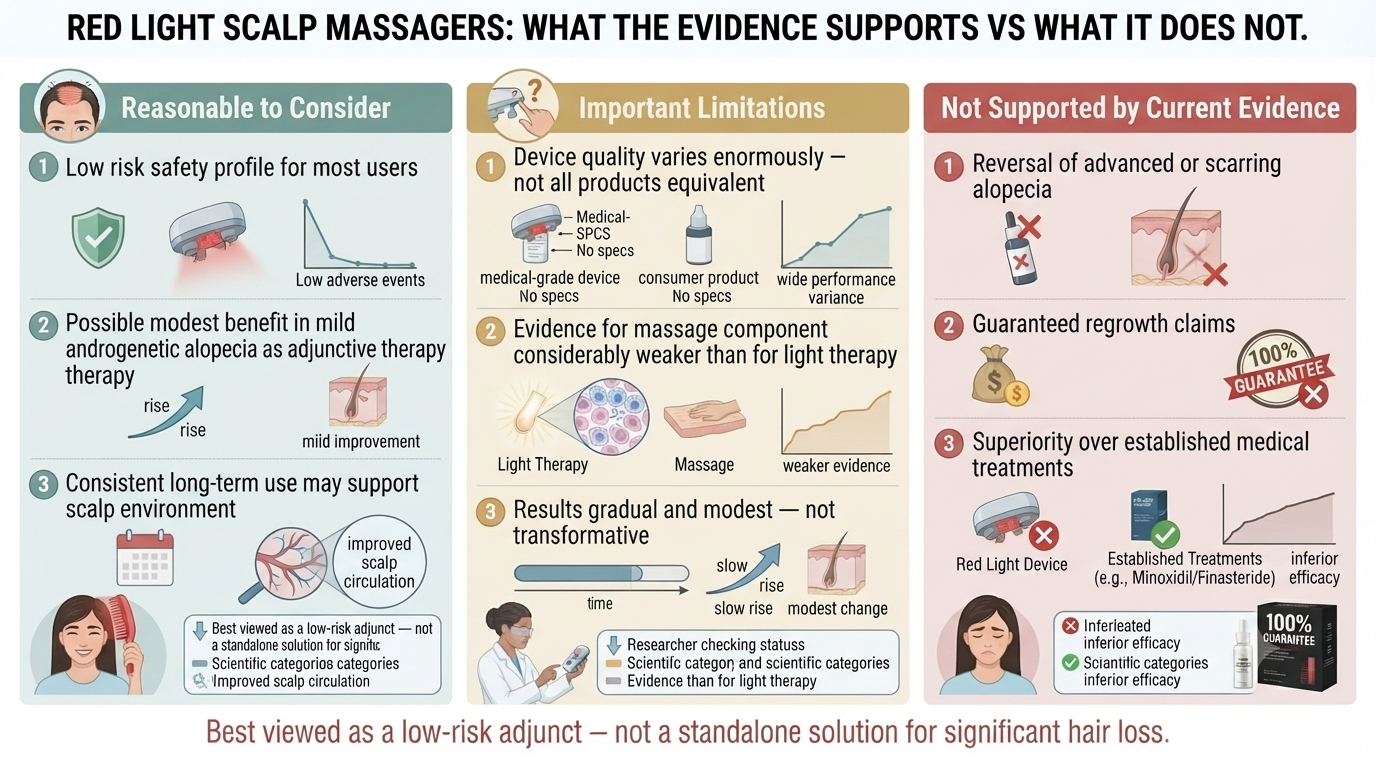
The evidence for scalp massage itself is considerably weaker, and many commercial claims exceed what current research supports. Device quality varies widely, and not all red light products deliver clinically meaningful treatment parameters.
For people with realistic expectations, these devices may serve as a low-risk adjunctive option. They are less convincing as standalone solutions for significant or advanced hair loss, particularly when underlying medical conditions remain undiagnosed.
Author: Dr. Priya Goswami
Medical review: Dr. Denis Broun
Next step
If you notice coverage changes without increased shedding, confirm what process is occurring.
Take the Hair Assessment to have a physician review your pattern, identify whether miniaturization is present, and determine appropriate staging and next steps.
Add Comment