Hair thinning behind the ears is not one of the most commonly discussed hair loss patterns, which is exactly why it often causes confusion. Many people notice reduced density in this area unexpectedly while tying their hair back, getting a haircut, or examining photographs from the side.
Sometimes the cause is harmless and mechanical. In other cases, it may point toward inflammatory scalp disease, traction, autoimmune conditions, or broader patterns of follicular thinning.
The location matters because different hair disorders affect different scalp regions preferentially. Hair loss behind the ears is therefore not a diagnosis itself but a clinical clue.
Understanding the possible causes helps explain when the finding is relatively benign and when medical evaluation becomes more important.
The area behind the ears is mechanically vulnerable
The scalp behind the ears experiences more physical stress than many people realise.
This region is repeatedly exposed to:
Friction from mask straps
Eyeglass arms
Helmet straps
Headphones
Pillow contact
Tight hairstyles
Chronic mechanical irritation may contribute to breakage or traction-related thinning over time.
Traction alopecia commonly affects this region
Traction alopecia develops from repeated tension placed on the follicles.
While the frontal hairline receives most attention, the area behind the ears is also vulnerable because many hairstyles pull tightly along the sides of the scalp.
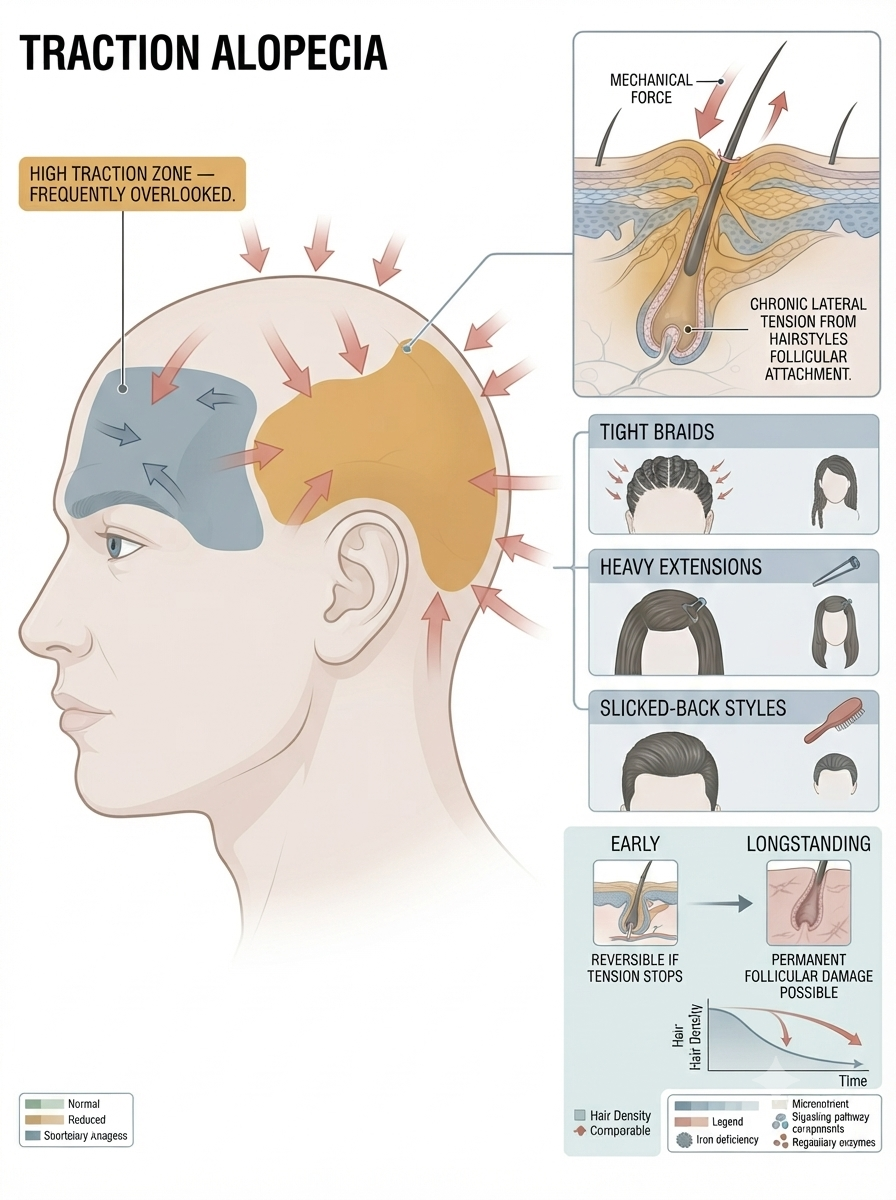
Risk factors include:
Tight ponytails
Braids
Extensions
Protective styles under tension
Repeated slicked-back hairstyles
Early traction alopecia may improve if tension stops. Longstanding traction can eventually lead to permanent follicular damage.
Friction can cause localised breakage
Not all apparent thinning behind the ears reflects true follicular loss.
Hair shafts may break repeatedly in this area because strands rub against:
Collars
Scarves
Hats
Bedding
Curly and chemically treated hair may be especially vulnerable to this kind of mechanical fragility.
In these cases, follicles remain alive even though density appears reduced.
Seborrhoeic dermatitis may involve the sides of the scalp
Seborrhoeic dermatitis commonly affects areas rich in sebaceous glands, including regions around and behind the ears.
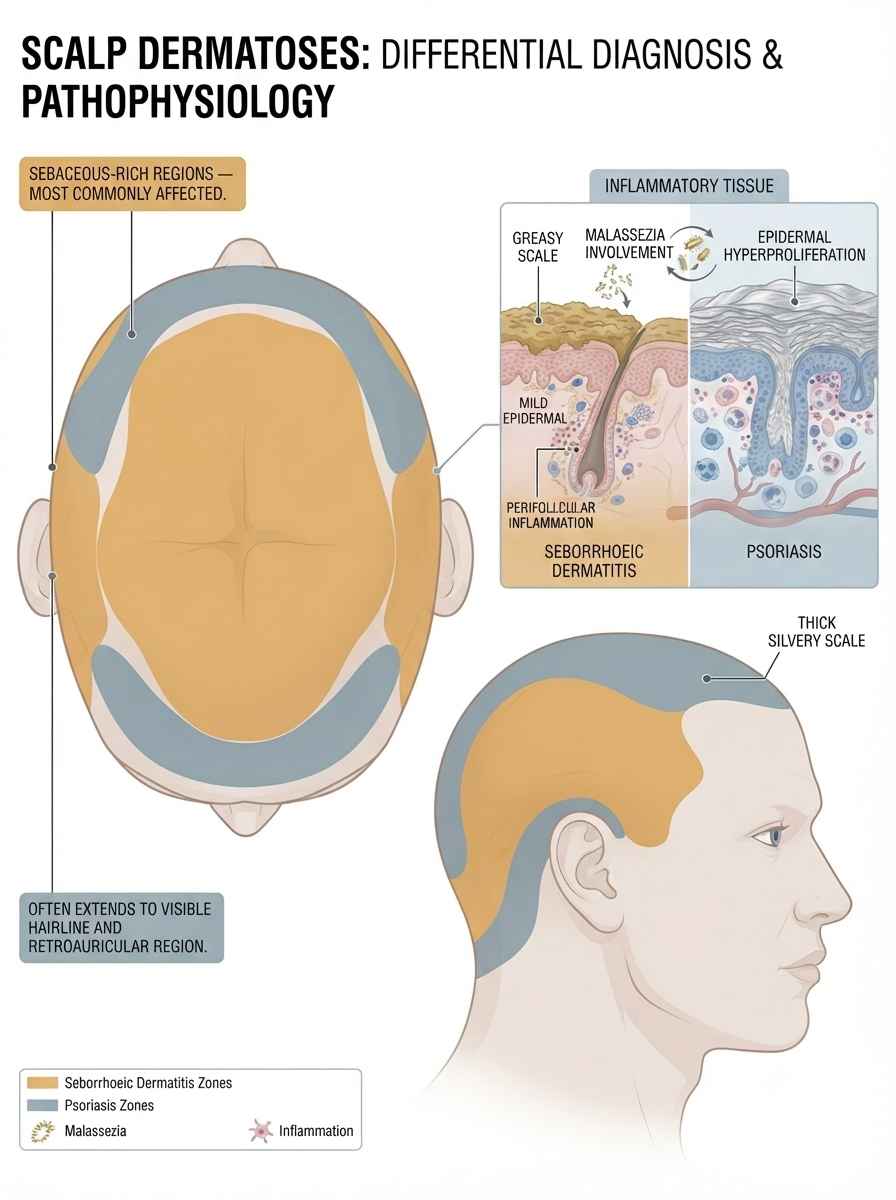
Symptoms may include:
Redness
Flaking
Itching
Greasy scale
Inflammation
Chronic inflammation may increase shedding temporarily, although seborrhoeic dermatitis itself does not usually destroy follicles permanently.
Psoriasis can affect the scalp margins
Scalp psoriasis sometimes extends behind the ears and along the hairline.
The resulting inflammation and scaling may contribute to:
Temporary shedding
Hair fragility
Local irritation
In most cases, follicles recover once inflammation improves.
However, aggressive scratching and chronic irritation may worsen breakage.
Alopecia areata occasionally appears behind the ears
Alopecia areata can affect almost any scalp region.
Smooth round patches behind the ears may go unnoticed initially because the area is less visible during daily grooming.
This autoimmune condition often develops suddenly and may involve additional patches elsewhere on the scalp or body.
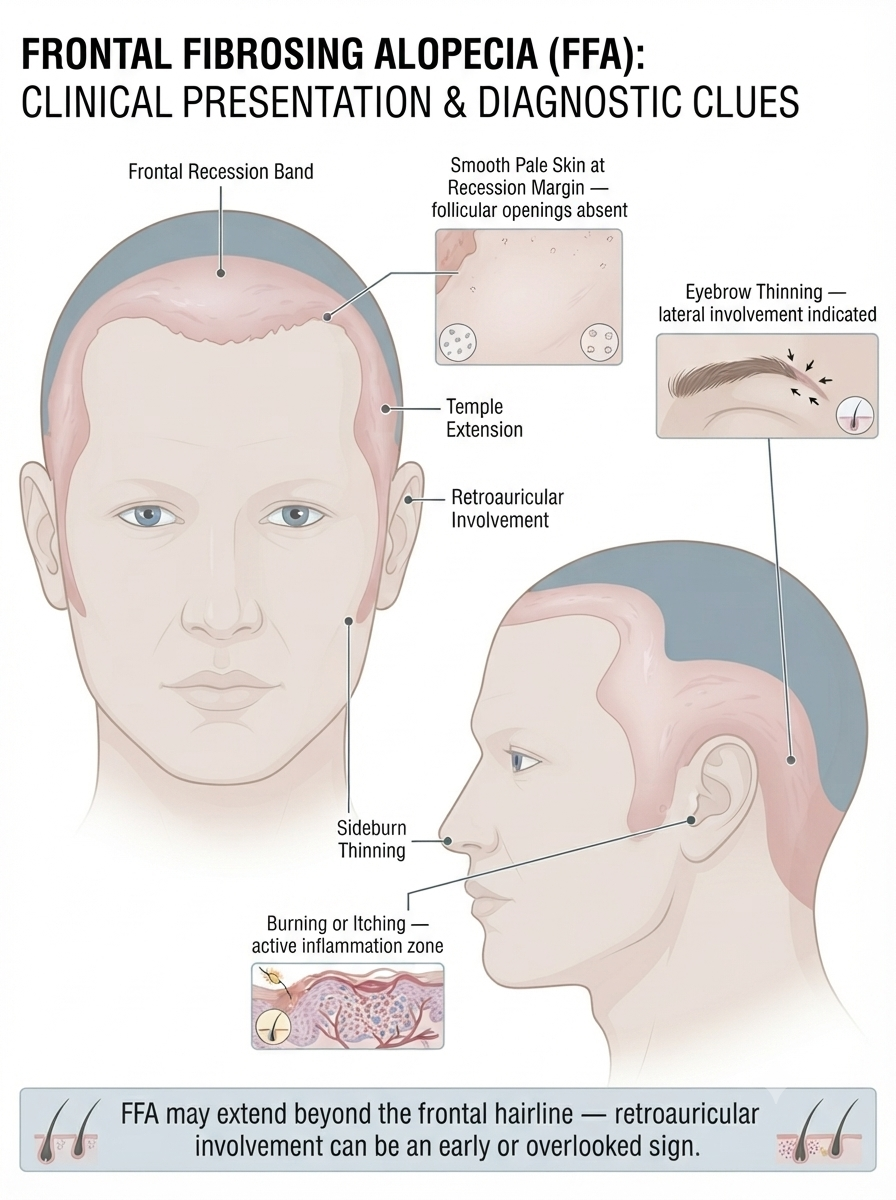
Frontal fibrosing alopecia may extend around the ears
Frontal fibrosing alopecia, a scarring alopecia most commonly affecting women, sometimes extends beyond the frontal hairline.
In some cases, thinning develops:
Around the temples
Behind the ears
Along the sideburn regions
Associated eyebrow thinning and loss of follicular openings may provide diagnostic clues.
Because this condition can permanently scar follicles, early assessment matters.
Hair loss behind the ears may reflect diffuse thinning overall
Sometimes the area behind the ears is not uniquely affected at all.
Instead, generalised thinning across the scalp becomes more noticeable there because:
The hair is finer naturally
Density is lower in that region
The scalp contour exposes thinning more clearly
Diffuse conditions such as telogen effluvium or female pattern hair loss may therefore appear especially visible behind the ears.
Nutritional deficiency can contribute indirectly
Iron deficiency, severe calorie restriction, and protein deficiency may contribute to diffuse shedding that includes the sides of the scalp.
Again, the location itself may not indicate a specific diagnosis but rather one visible manifestation of broader follicular stress.
Tight mask use became a newer source of friction
During periods of prolonged mask wearing, some dermatologists observed increased irritation and breakage around the ears from repetitive strap friction.
This usually caused shaft damage rather than true permanent alopecia, although overlapping traction could worsen the appearance.
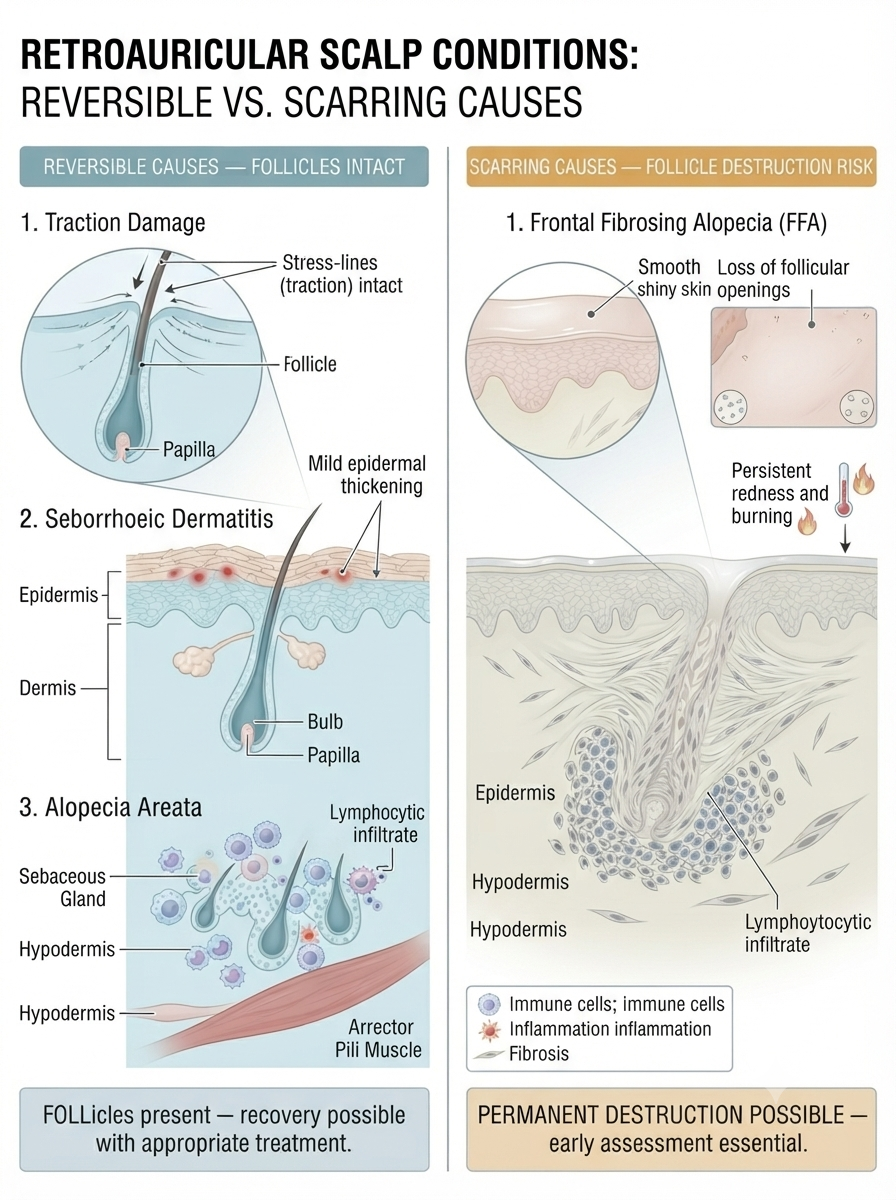
Scarring alopecia deserves particular attention
One important distinction in hair loss evaluation is whether follicles remain intact.
Signs that may suggest possible scarring disease include:
Smooth shiny skin
Loss of follicular openings
Burning or pain
Persistent redness
Progressive expansion
Scarring alopecias require earlier intervention because destroyed follicles may not regrow.
Infections may occasionally be responsible
Fungal infections such as tinea capitis can sometimes affect scalp margins or areas behind the ears.
Possible features include:
Scaling
Broken hairs
Patchy thinning
Inflamed skin
Tender lymph nodes in severe cases
Although more common in children, scalp fungal infections can also occur in adults.
Hairstyles influence side scalp tension
Many people focus only on frontal hairline tension without considering how hairstyles redistribute force across the sides of the scalp.
Styles that feel comfortable centrally may still create chronic pulling behind the ears.
Alternating hairstyles and reducing constant tension can help reduce ongoing mechanical stress.
Trichoscopy can clarify the diagnosis
Dermatologists often use trichoscopy to examine suspicious thinning areas under magnification.
This helps distinguish between:
Broken hairs
Miniaturisation
Inflammation
Scarring changes
Autoimmune patterns
Magnified examination is often especially useful in subtle or unusual hair loss distributions.
Breakage may create uneven texture
When breakage is the main issue, people often notice:
Short uneven strands
Fraying
Difficulty retaining length
rather than completely smooth bald areas.
This distinction helps separate shaft fragility from disorders destroying follicles themselves.
Hair products are not always the solution
People frequently respond to localised thinning by trying oils or growth serums without understanding the cause.
If friction, inflammation, autoimmune disease, or traction is involved, cosmetic products alone may not meaningfully address the underlying problem.
Pain or itching should not be ignored
Hair loss associated with:
Tenderness
Burning
Persistent itch
Scalp redness
deserves medical assessment because these symptoms suggest active inflammation rather than purely cosmetic thinning.
Early evaluation improves treatment options
Some causes of hair loss behind the ears are reversible. Others become harder to treat once follicular damage progresses.
The earlier the underlying mechanism is identified, the more likely effective management becomes.
The bottom line
Hair loss behind the ears can result from several different causes including traction alopecia, friction-related breakage, seborrhoeic dermatitis, psoriasis, alopecia areata, diffuse shedding disorders, and occasionally scarring alopecia.
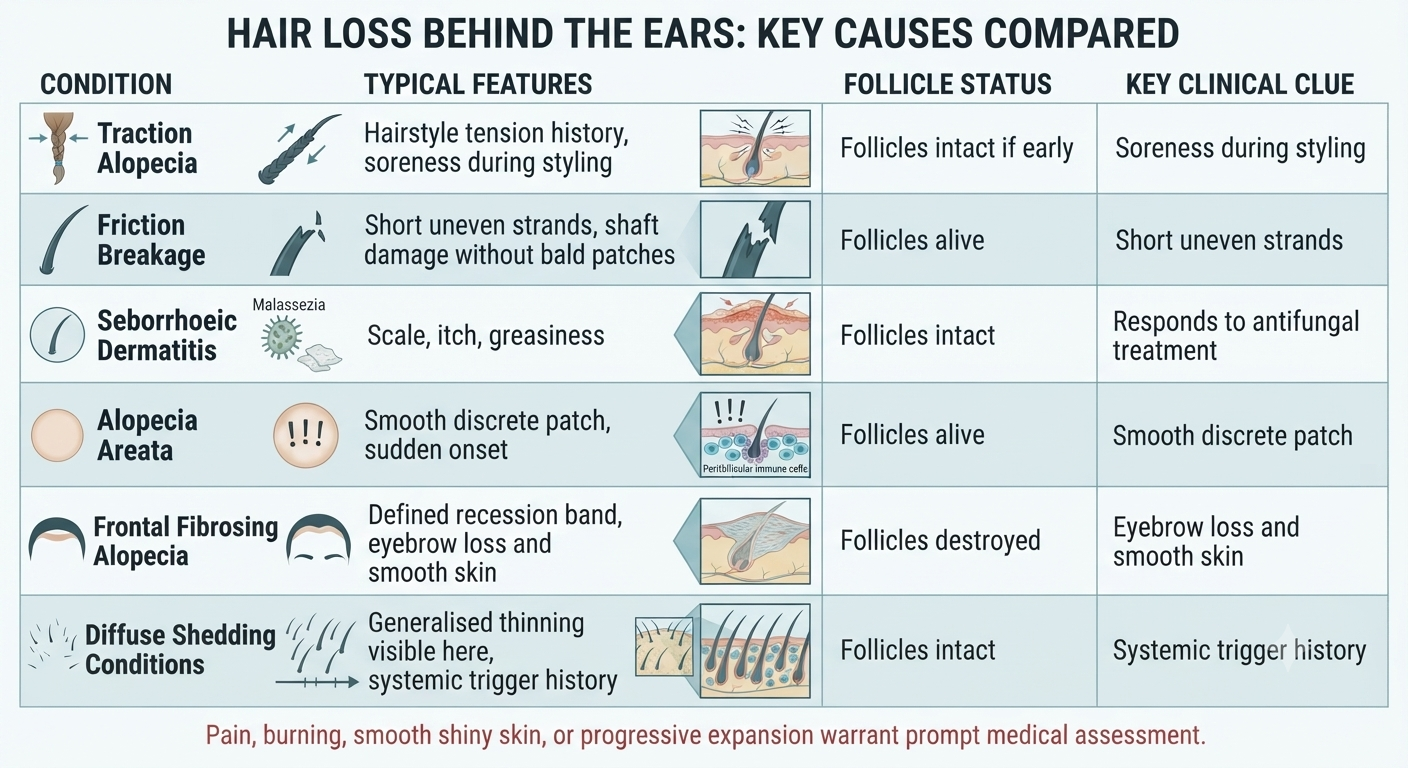
Because this region experiences substantial mechanical stress and may also reflect inflammatory or autoimmune scalp disease, the pattern should not automatically be dismissed as cosmetic. Associated symptoms such as redness, pain, itching, or smooth shiny skin increase the importance of proper evaluation.
The location itself is not a diagnosis, but it can provide an important clue about what may be affecting the follicles underneath.
Author: Dr. Priya Goswami
Medical review: Dr. Denis Broun
Next step
If you notice coverage changes without increased shedding, confirm what process is occurring.
Take the Hair Assessment to have a physician review your pattern, identify whether miniaturization is present, and determine appropriate staging and next steps.
Add Comment