Low level laser therapy, often shortened to LLLT, is one of the more unusual treatments now marketed for hair loss. Unlike medications that alter hormones or directly stimulate follicles chemically, LLLT uses red light exposure directed at the scalp.
The theory sounds simple. Certain wavelengths of light may influence cellular activity within the follicle and encourage healthier hair growth cycles.
But the real question is not whether the concept sounds plausible. It is whether the evidence actually supports meaningful clinical benefit.
The answer is more nuanced than many advertisements suggest.
There is some evidence that LLLT may help certain forms of hair loss, particularly androgenetic alopecia. At the same time, the research has limitations, the magnitude of improvement varies, and many unanswered questions remain regarding devices, treatment schedules, and long term outcomes.
What LLLT actually is
LLLT refers to low intensity light therapy delivered through devices such as:
Laser caps
Helmets
Combs
Headbands
Most devices use red light wavelengths in a specific range, commonly around 630 to 680 nanometres, although exact specifications differ between manufacturers.
The treatment is non-invasive and does not heat or damage tissue in the way high energy lasers used in surgery do.
The proposed mechanism remains partly theoretical
Researchers believe LLLT may influence follicular activity through effects on cellular energy production.
One leading theory involves stimulation of mitochondria, the energy-producing structures inside cells.
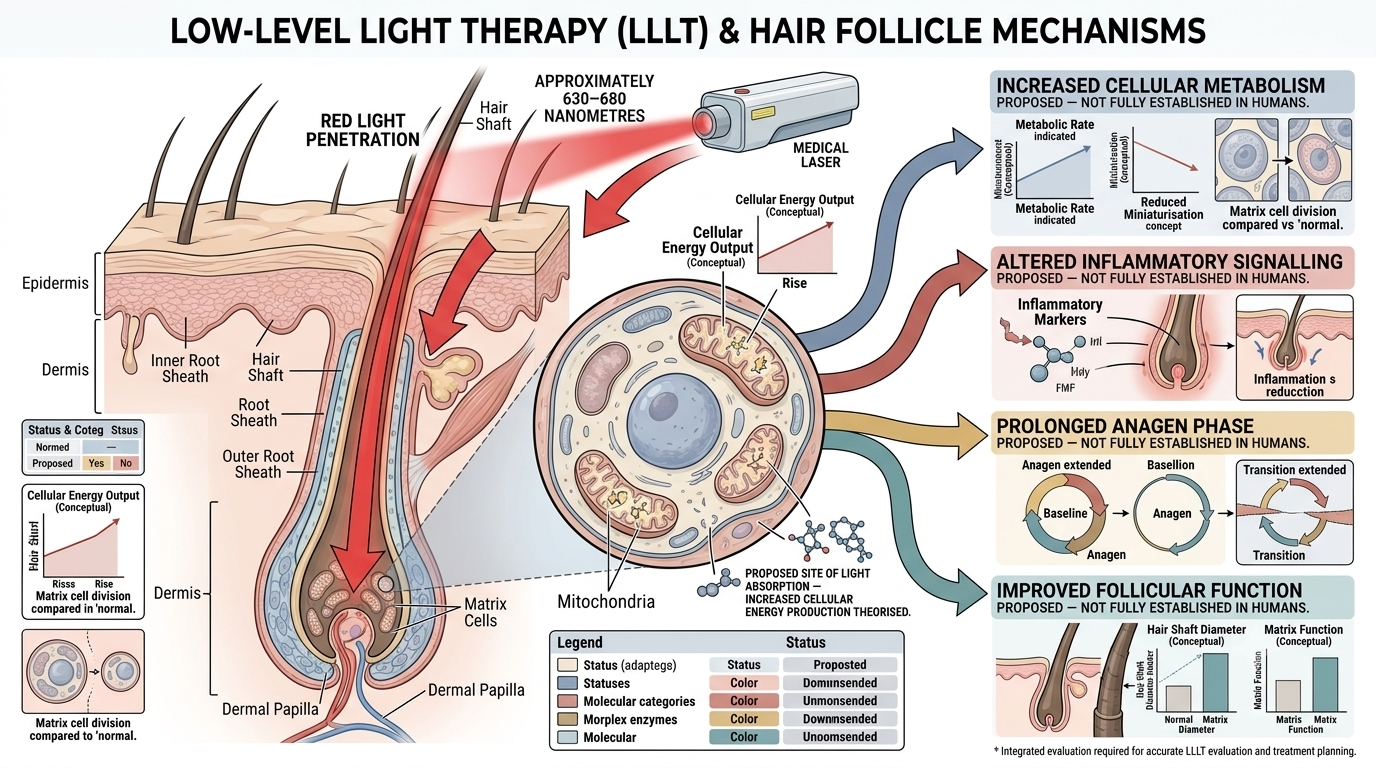
Possible downstream effects may include:
Increased cellular metabolism
Altered inflammatory signalling
Prolongation of the growth phase of hair
Improved follicular function
However, much of this remains mechanistic theory rather than fully established biological fact.
Most evidence focuses on androgenetic alopecia
The strongest evidence for LLLT relates to androgenetic alopecia, also called male and female pattern hair loss.
Several studies suggest some users experience:
Modest increases in hair density
Reduced shedding
Improved hair thickness
However, results vary substantially between individuals and between studies.
Evidence quality is mixed
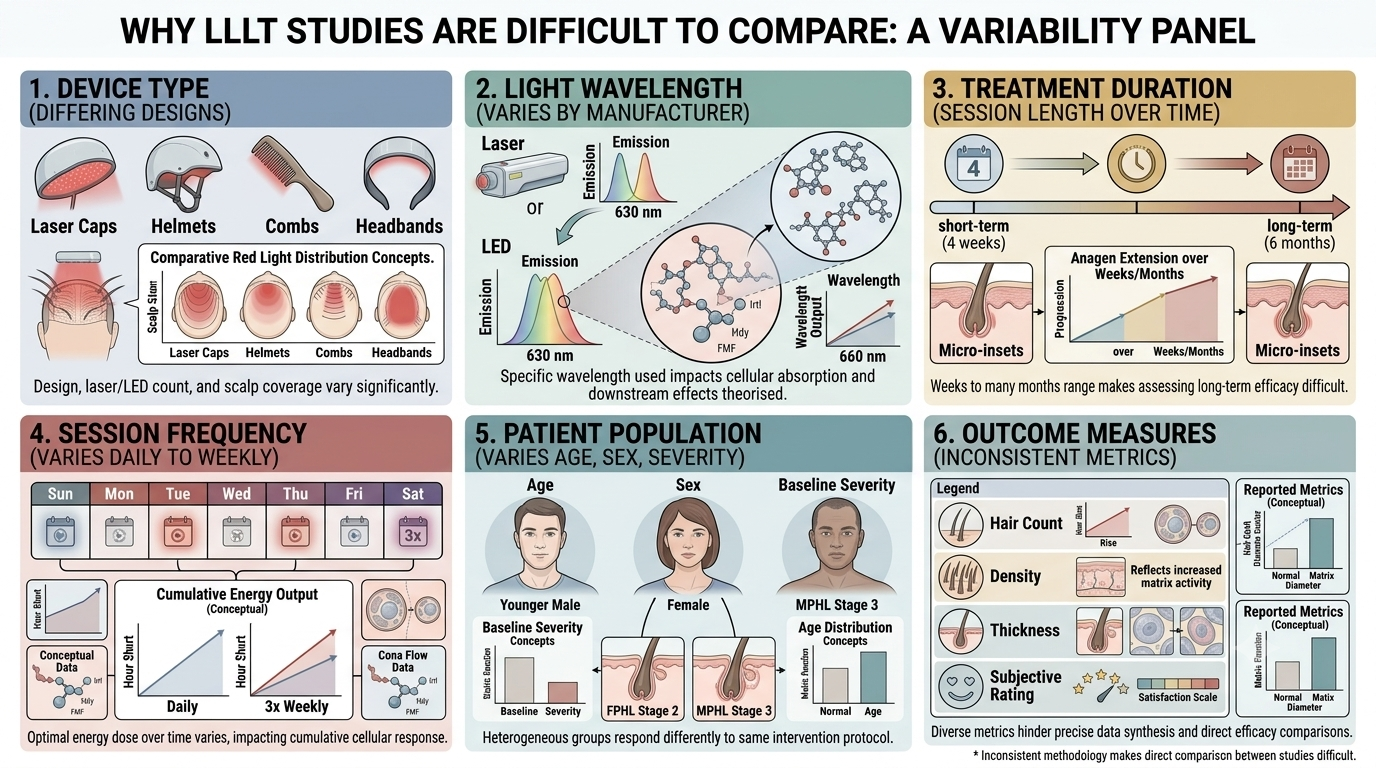
One challenge when reviewing LLLT research is inconsistency in study design.
Different studies use different:
Devices
Light wavelengths
Treatment durations
Session frequencies
Patient populations
Outcome measures
This makes direct comparison difficult.
Some studies are relatively small, industry funded, or short term. While positive findings exist, the evidence base is not as robust as many marketing campaigns imply.
LLLT appears relatively safe
One reason LLLT has gained popularity is its generally favourable safety profile.
Serious side effects appear uncommon.
Reported issues are usually mild and may include:
Temporary scalp irritation
Dryness
Headache in some users
Unlike medications such as finasteride, LLLT does not appear associated with systemic hormonal effects.
Improvement tends to be modest
Perhaps the most important practical point is that LLLT is not typically associated with dramatic regrowth.
When benefit occurs, it is usually incremental rather than transformative.
People expecting restoration of severe baldness are often disappointed.
The treatment appears more realistic for:
Early thinning
Maintenance
Adjunctive therapy alongside established treatments
rather than advanced hair restoration.
It does not work equally well for all hair loss conditions
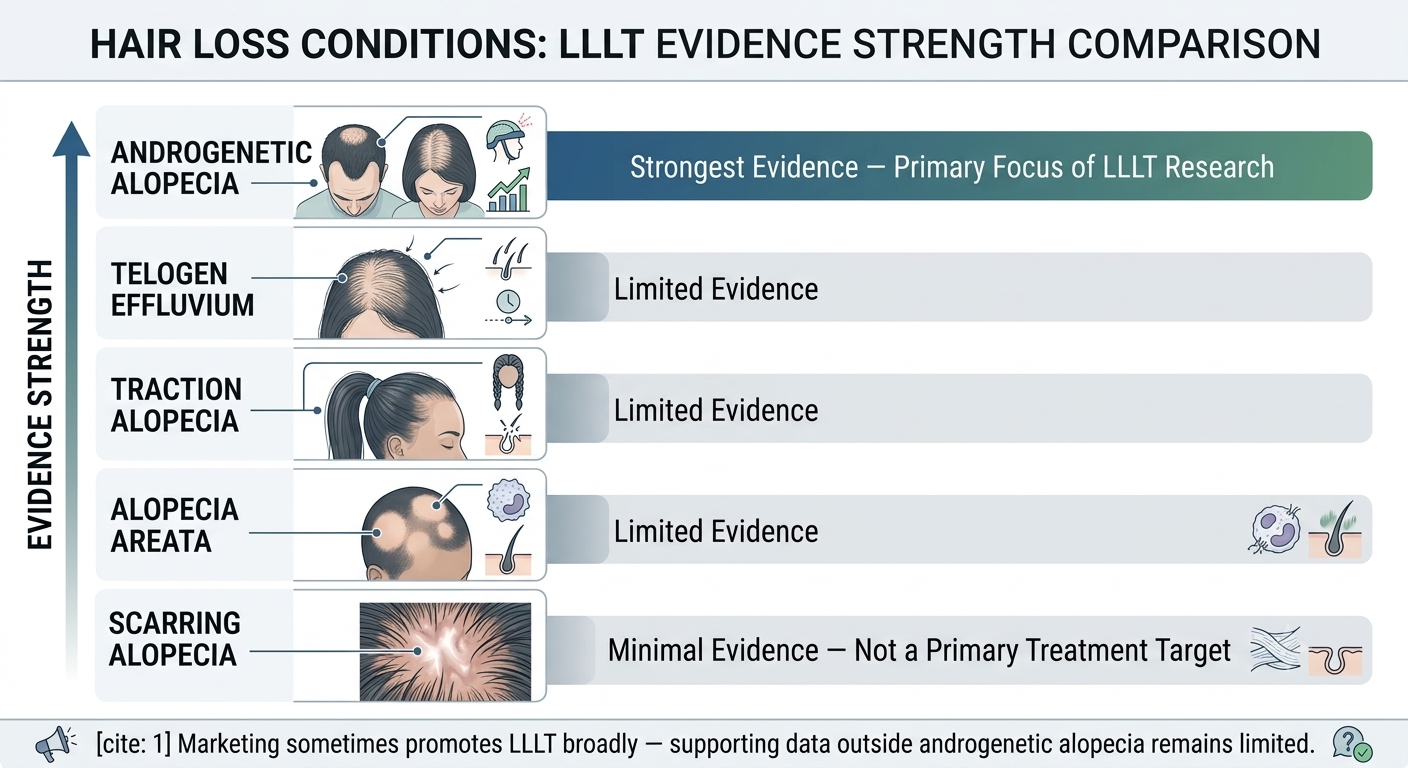
Evidence supporting LLLT is strongest in androgenetic alopecia.
There is far less evidence for:
Scarring alopecia
Alopecia areata
Traction alopecia
Telogen effluvium
Some clinics market LLLT broadly for almost every hair disorder, but the supporting data outside pattern hair loss remains limited.
Device quality varies considerably
Not all LLLT devices are equivalent.
Commercial products differ in:
Light wavelength
Power output
Coverage area
Treatment consistency
This creates a major challenge for consumers because marketing language often exceeds the available evidence.
More expensive devices are not automatically more effective.
FDA clearance does not mean proven superiority
Some LLLT devices have received FDA clearance for hair loss.
This is frequently misunderstood.
FDA clearance generally means the device has demonstrated reasonable safety and some evidence of effectiveness compared with a predicate device. It does not mean the treatment is superior to standard therapies or supported by definitive long term evidence.
Time commitment is substantial
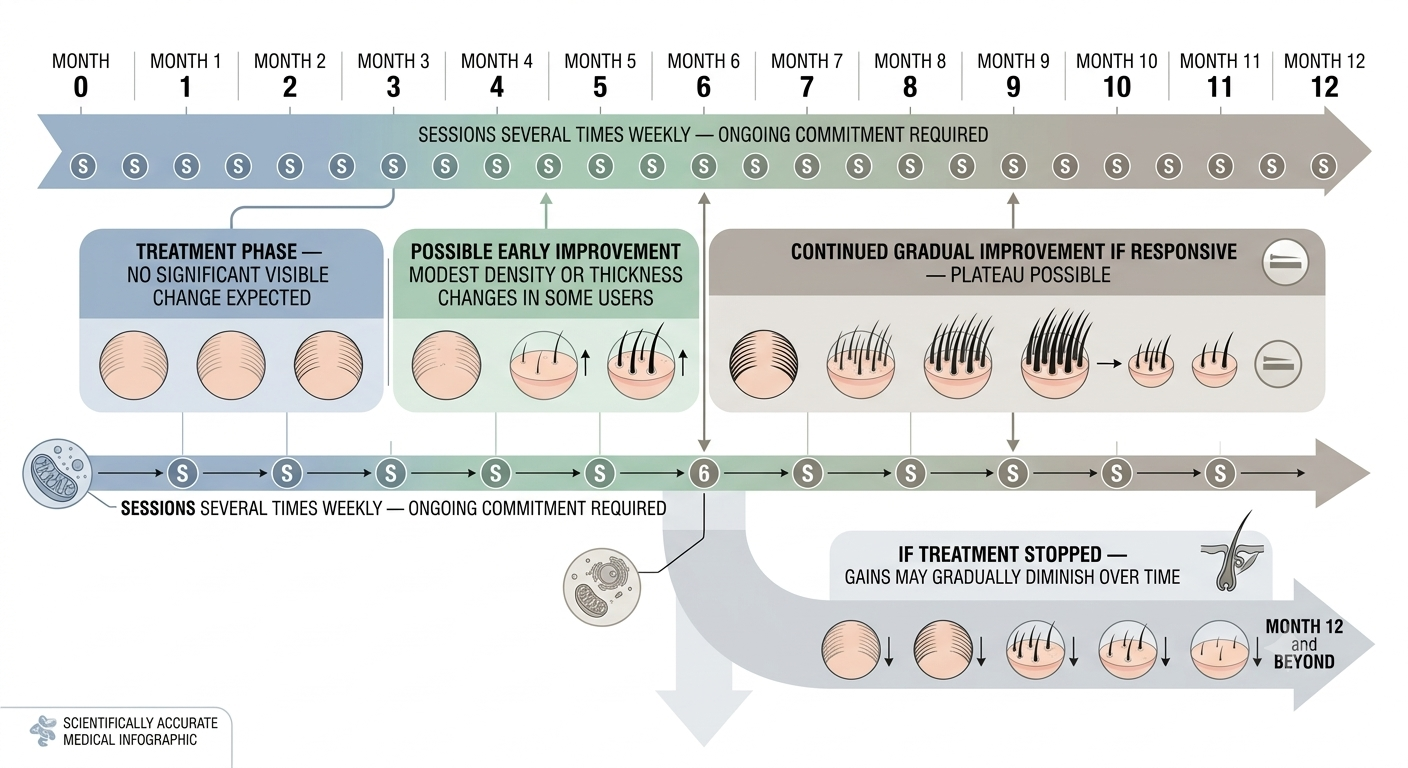
LLLT requires ongoing repeated use.
Typical protocols involve treatments several times weekly for months before visible improvement may occur.
Stopping therapy may eventually allow any gains to diminish over time.
This long-term commitment affects real-world adherence considerably.
Results are slow
Hair follicles cycle gradually.
Even when LLLT works, visible improvement usually takes several months.
People expecting rapid change within a few weeks are likely to become frustrated.
This delayed timeline is similar to other evidence-based hair loss treatments.
Combination therapy is common
In clinical practice, LLLT is often used alongside other treatments such as:
Minoxidil
Finasteride
Spironolactone in women
Hair transplantation
This makes it difficult to isolate exactly how much benefit the light therapy itself contributes.
Some positive studies are industry funded
A recurring issue in the literature is manufacturer involvement.
Industry-funded studies are not automatically invalid, but they do increase the importance of cautious interpretation and independent replication.
The field would benefit from larger independent trials with standardised methodologies.
Home devices dominate the market
Most modern LLLT products are designed for home use.
This convenience partly explains their commercial success.
However, the rise of direct-to-consumer marketing has also led to exaggerated claims suggesting guaranteed regrowth or universal effectiveness, which the evidence does not support.
LLLT is not a substitute for diagnosis
People sometimes purchase laser devices before understanding the cause of their hair loss.
This can delay proper diagnosis of conditions such as:
Scarring alopecia
Iron deficiency
Thyroid disease
Autoimmune disorders
Light therapy cannot correct every underlying cause of thinning.
Expectations matter
The people most satisfied with LLLT tend to be those with realistic expectations.
The treatment may modestly improve density or stabilise progression in selected individuals, particularly in earlier androgenetic alopecia.
It is less likely to reverse advanced baldness dramatically.
Cost is an important consideration
High quality laser devices can be expensive.
Because treatment often continues long term, cost effectiveness becomes relevant, especially when compared with more established therapies supported by larger evidence bases.
For some people, the convenience and low side effect profile justify the expense. For others, the benefit may feel too modest relative to the cost.
Visible hair improvement does not prove follicle reversal
One subtle point often missed in marketing discussions is that cosmetic improvement does not necessarily mean full biological reversal of the underlying process.
Hair may appear thicker or denser without fundamentally stopping androgenetic miniaturisation long term.
This distinction matters when evaluating realistic outcomes.
The bottom line
Low level laser therapy has some evidence supporting its use in androgenetic alopecia, particularly for mild to moderate pattern hair loss. Studies suggest it may modestly improve hair density and thickness in some individuals, and its safety profile appears generally favourable.
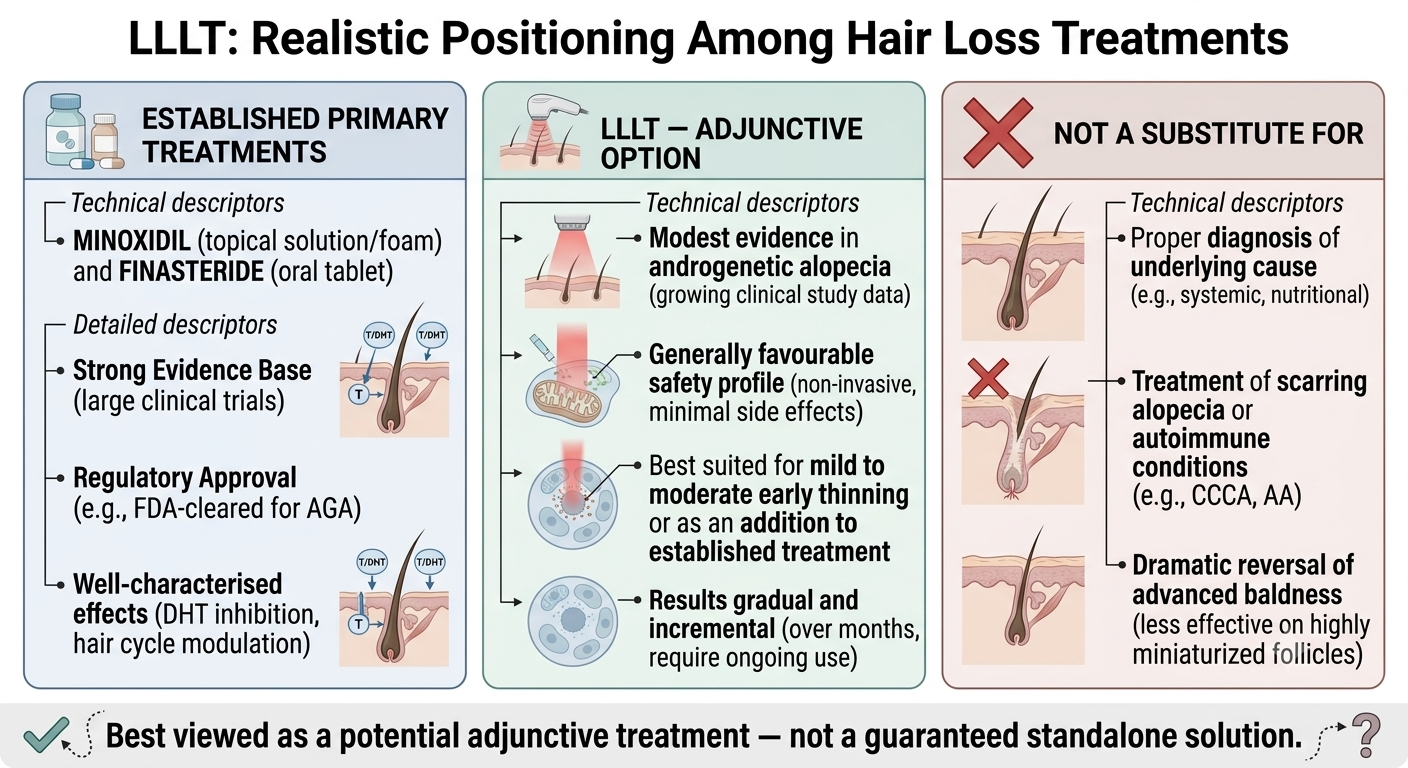
However, the evidence remains mixed, devices vary considerably, and results are usually gradual and modest rather than dramatic. LLLT is best viewed as a potential adjunctive treatment rather than a guaranteed standalone solution.
As with any hair loss intervention, accurate diagnosis matters first. Light therapy may help certain conditions, but it cannot replace proper medical evaluation or treat every cause of thinning.
Author: Dr. Priya Goswami
Medical review: Dr. Denis Broun
Next step
If you notice coverage changes without increased shedding, confirm what process is occurring.
Take the Hair Assessment to have a physician review your pattern, identify whether miniaturization is present, and determine appropriate staging and next steps.
Add Comment