Hair follicles depend heavily on hormonal signalling. When thyroid hormone levels fall too low, the effects are not limited to energy, metabolism, or weight. The hair cycle itself may also become disrupted.
This is why hair thinning is a recognised symptom of hypothyroidism.
For some people, shedding develops gradually and diffusely. Others notice dry, coarse hair that breaks more easily or seems unable to grow properly. The eyebrows may thin as well, particularly along the outer edges.
At the same time, thyroid disease is often oversimplified online. Not every person with hair loss has hypothyroidism. And treating the thyroid does not automatically restore hair density overnight.
Still, thyroid function remains one of the most important medical areas doctors evaluate in unexplained diffuse thinning.
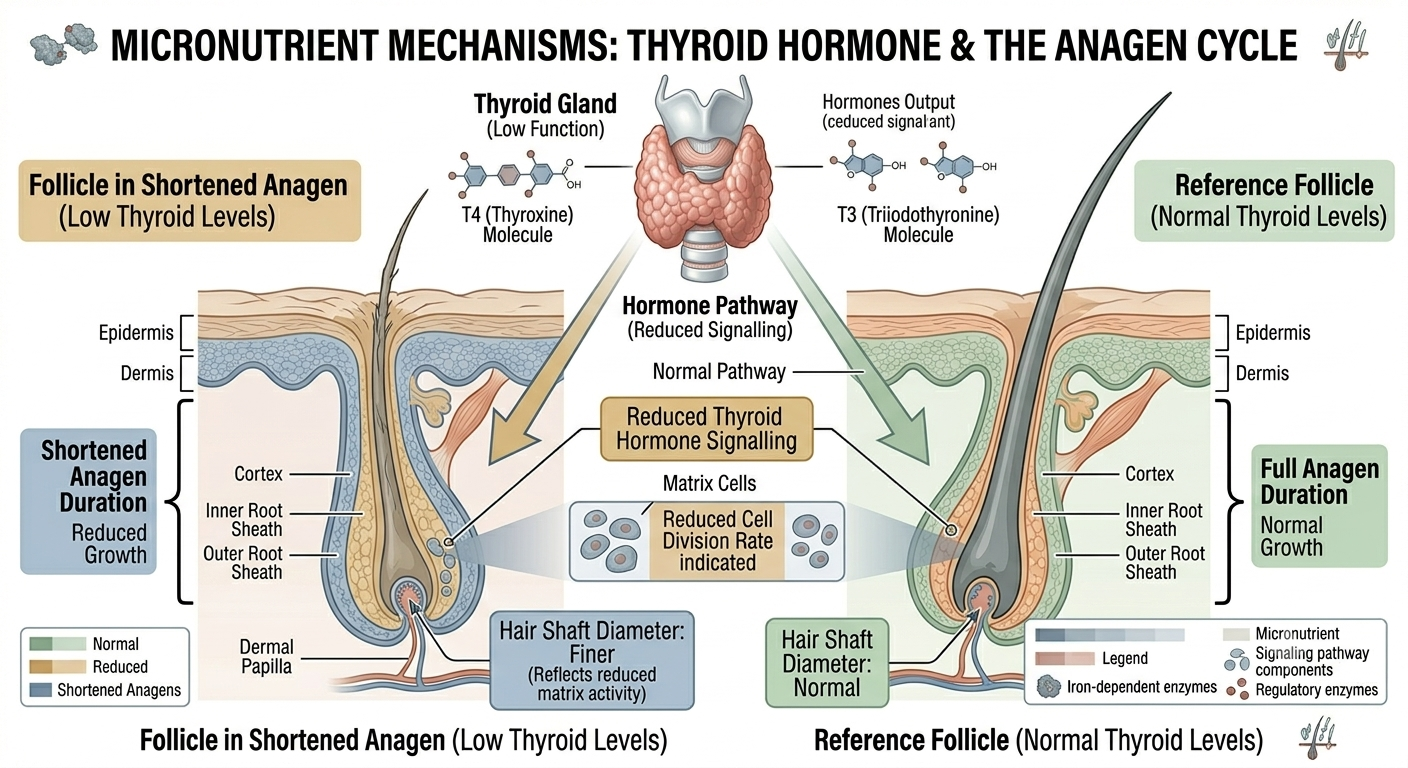
Thyroid hormones influence the hair cycle
Hair follicles cycle through phases of active growth, transition, and rest.
Thyroid hormones help regulate these processes.
When hormone levels become insufficient, follicles may spend less time in the growth phase and more time entering resting or shedding stages. Hair production may slow, and strands may become finer or weaker.
Because follicles respond slowly, visible changes usually develop gradually rather than suddenly.
Hair loss in hypothyroidism is usually diffuse
Unlike patchy autoimmune hair loss, hypothyroid-related thinning typically affects the scalp diffusely.
Common features may include:
Increased shedding
Reduced hair density
Dry brittle texture
Loss of shine
Coarser strands
Slower growth
People often describe their hair as feeling “different” before dramatic thinning becomes obvious.
Eyebrow thinning can be an important clue
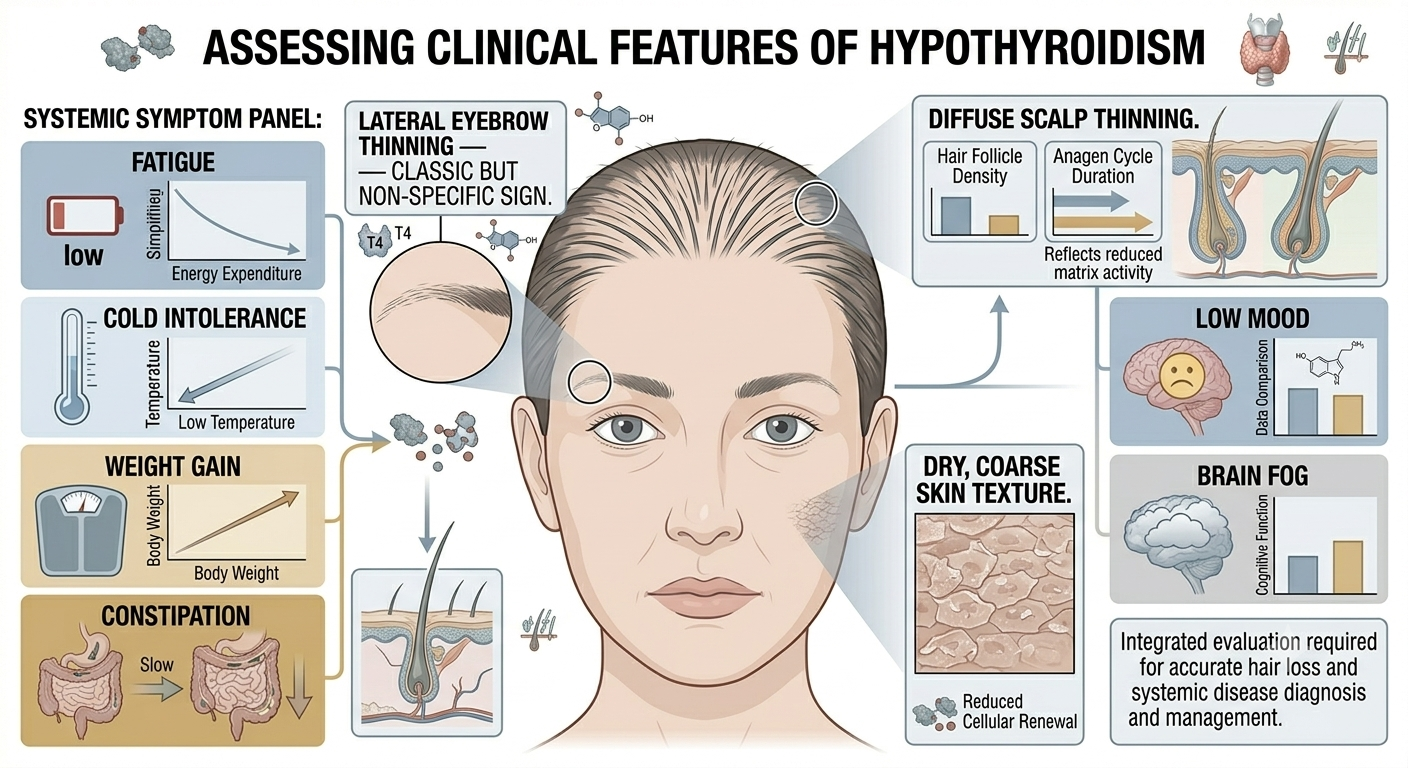
One classic feature associated with hypothyroidism is thinning of the outer third of the eyebrows.
This sign is not exclusive to thyroid disease and does not appear in every patient, but when present alongside fatigue and scalp thinning, it may raise suspicion for thyroid dysfunction.
Severe hypothyroidism affects more than the hair
Hair changes rarely occur in isolation.
Other symptoms of hypothyroidism may include:
Fatigue
Cold intolerance
Weight gain
Dry skin
Constipation
Low mood
Brain fog
Menstrual irregularities
Because these symptoms develop slowly, some individuals do not immediately recognise them as signs of illness.
Hair shedding may resemble telogen effluvium
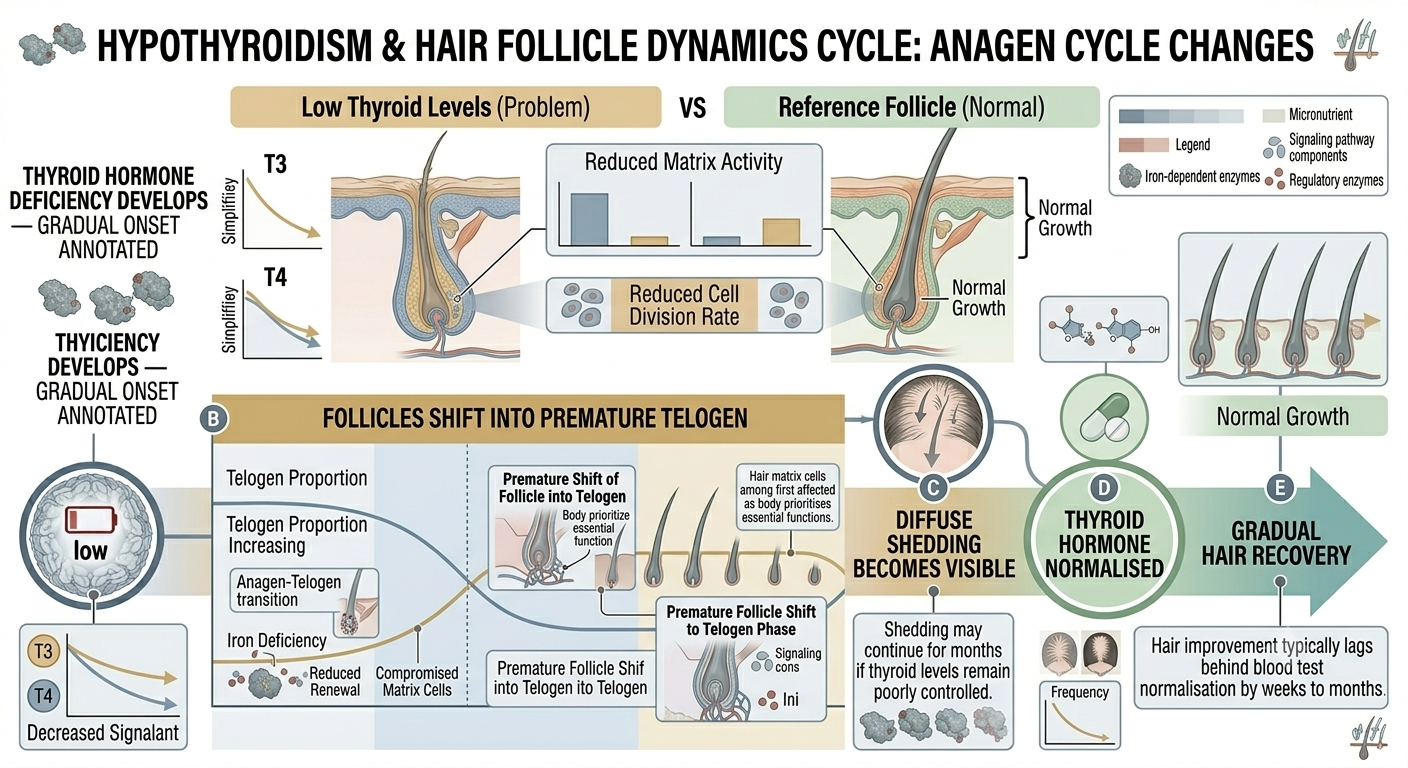
Hypothyroidism often contributes to telogen effluvium, a condition where more follicles shift into the resting phase prematurely.
This creates diffuse shedding across the scalp rather than sharply defined bald areas.
The shedding may continue for months if thyroid hormone levels remain poorly controlled.
Autoimmune thyroid disease is common
Many hypothyroid cases result from Hashimoto’s thyroiditis, an autoimmune condition in which the immune system attacks the thyroid gland.
Autoimmune diseases sometimes overlap. People with autoimmune thyroid disease may also have increased risk of other autoimmune conditions affecting the hair, including alopecia areata.
This can complicate the clinical picture.
Hair texture changes matter too
People often focus only on visible thinning, but thyroid disease may also alter the quality of the hair itself.
Hypothyroid hair commonly becomes:
Dry
Rough
Fragile
Coarse
Some people experience increased breakage in addition to shedding.
This distinction matters because breakage and follicular thinning are not identical processes.
Low thyroid hormone slows body processes broadly
Hypothyroidism reduces metabolic activity throughout the body.
Hair follicles are highly active structures requiring constant cell division and protein synthesis. When metabolism slows, follicles may no longer maintain normal growth dynamics efficiently.
The body effectively prioritises more essential systems over hair production.
Thyroid treatment can improve hair shedding
Correcting hypothyroidism often improves hair health over time.
As thyroid hormone levels normalise, follicles may gradually return toward healthier cycling patterns.
This can reduce excessive shedding and improve texture.
However, recovery is usually slow.
Hair recovery may lag behind blood test improvement
One common frustration is that hair often improves later than other symptoms.
Energy levels may begin recovering weeks before noticeable hair changes occur.
This delay reflects normal follicular biology. Hair cycles move slowly, and visible regrowth takes time.
People sometimes expect immediate reversal once medication begins, but meaningful improvement may require several months.
Not all hair loss reverses completely
Treating hypothyroidism may improve shedding significantly, but outcomes vary.
If thyroid dysfunction has been longstanding or overlaps with other conditions such as androgenetic alopecia, complete restoration of previous density may not occur.
Again, hair loss is often multifactorial rather than caused by one issue alone.
Both hypothyroidism and hyperthyroidism affect hair
Interestingly, excessive thyroid hormone can also disrupt hair cycling.
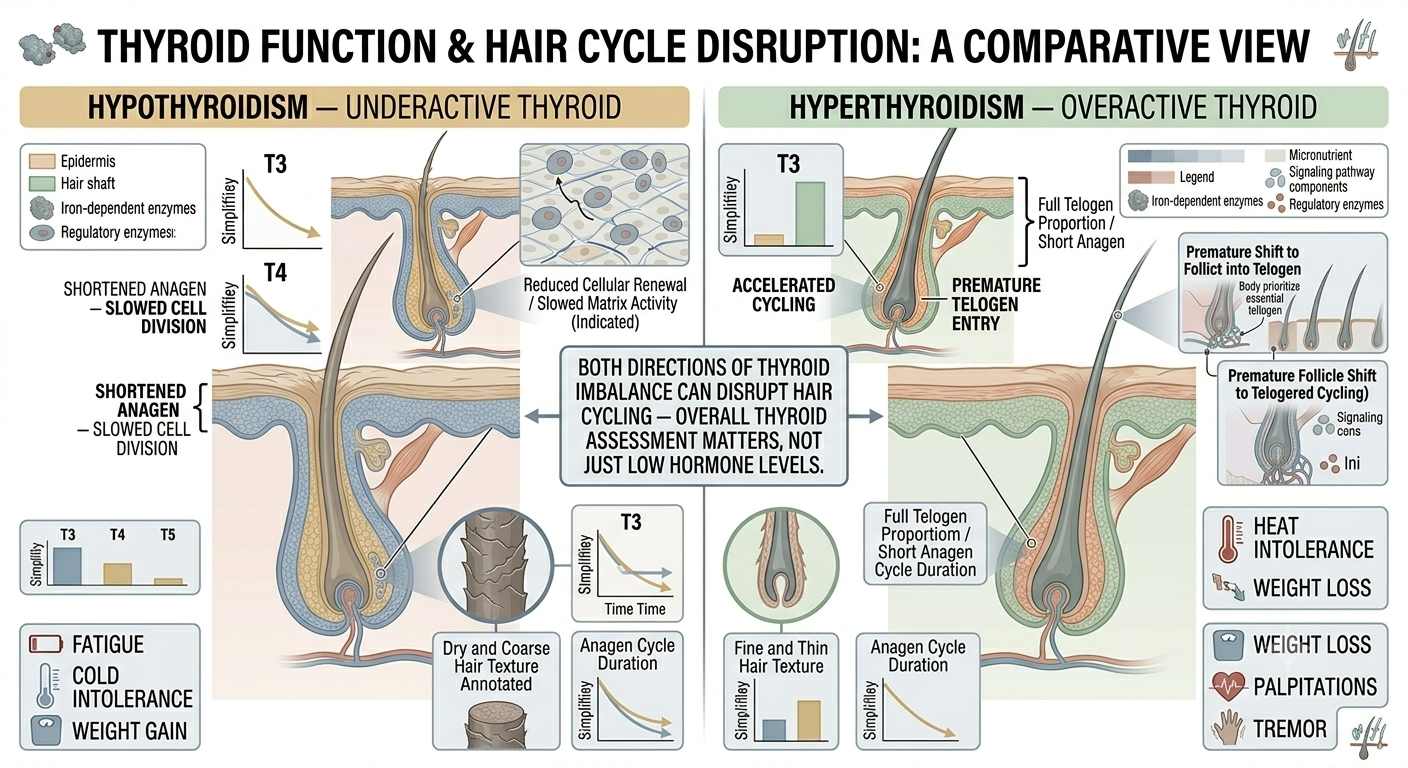
Hyperthyroidism may likewise cause diffuse thinning or increased shedding, although associated symptoms differ and may include:
Heat intolerance
Weight loss
Palpitations
Anxiety
Tremor
This is why doctors typically assess overall thyroid function rather than assuming only low hormone levels matter.
Overreplacement may also affect hair
Taking excessive thyroid medication can potentially contribute to shedding if hormone levels become too high.
This is one reason thyroid replacement therapy requires monitoring rather than self-adjustment.
Hair symptoms alone do not reliably indicate whether medication dosage is correct.
Iron deficiency may coexist
Hypothyroidism and iron deficiency frequently overlap, particularly in women.
Both conditions can contribute to:
Fatigue
Diffuse hair loss
Reduced hair quality
Doctors therefore often investigate ferritin and thyroid function together during hair loss assessment.
Hair supplements cannot correct thyroid disease
Cosmetic products and supplements marketed for hair growth do not treat the underlying hormonal dysfunction of hypothyroidism.
If thyroid disease is contributing significantly, addressing the endocrine problem itself is more important than relying solely on shampoos or oils.
Stress and thyroid disease may interact
Chronic illness itself can create physiological stress that further destabilises hair cycling.
Some individuals therefore experience overlapping telogen effluvium on top of direct hormonal effects.
This partly explains why shedding patterns vary widely between patients with apparently similar laboratory results.
Diagnosis requires blood testing
Hypothyroidism cannot be diagnosed reliably based on hair symptoms alone.
Doctors typically assess:
TSH levels
Free T4
Sometimes thyroid antibodies
Interpretation depends on the broader clinical picture rather than one isolated symptom.
Persistent thinning deserves broader evaluation
Even when hypothyroidism is identified, doctors may still assess for additional contributors to hair loss.
Possible overlapping causes include:
Female pattern hair loss
Nutritional deficiency
Stress-related shedding
Medication effects
Autoimmune disease
Hair disorders often involve more than one mechanism simultaneously.
The bottom line
Hypothyroidism can contribute to diffuse hair thinning, increased shedding, dry texture, and eyebrow loss because thyroid hormones play an important role in regulating follicle activity and hair cycling.
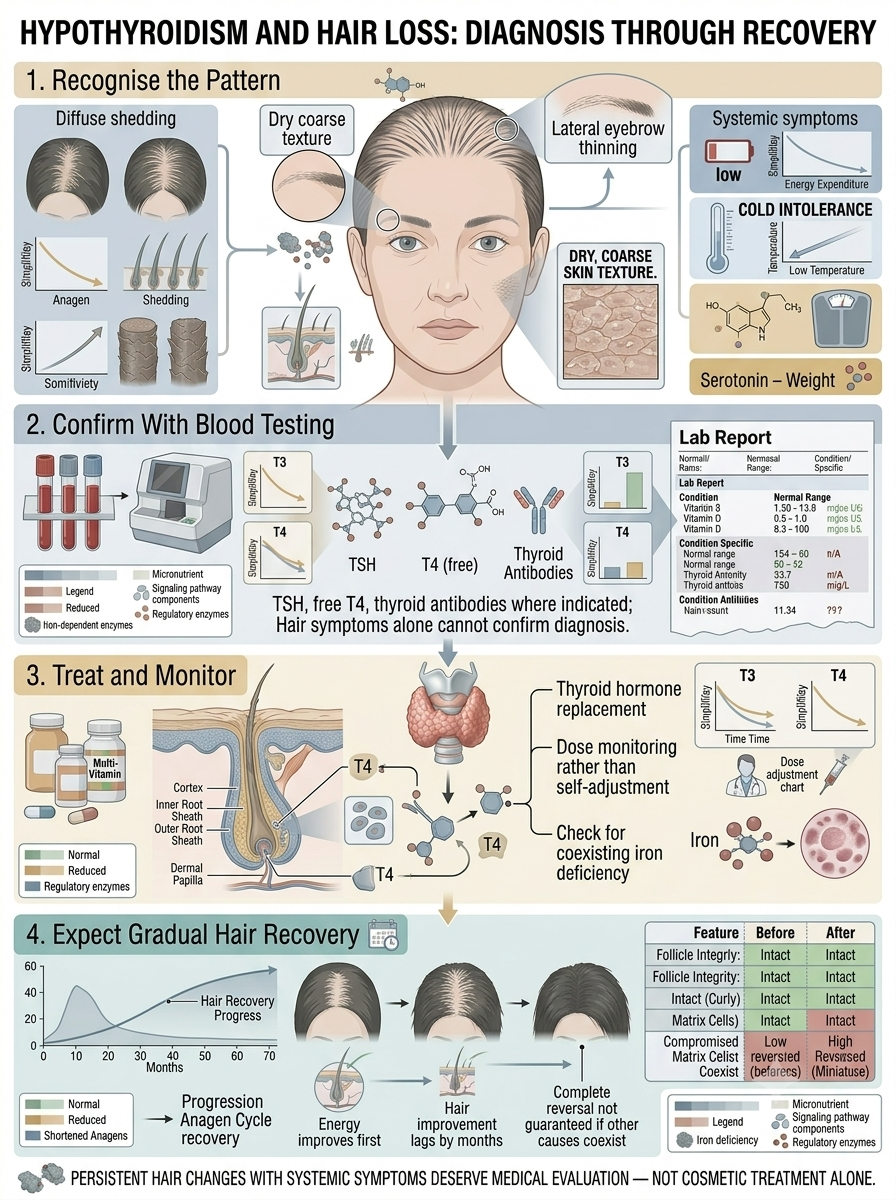
Treating the thyroid often improves hair health gradually, particularly when hypothyroidism is identified early and managed effectively. However, recovery typically takes months rather than weeks, and complete reversal is not guaranteed if other forms of hair loss are also present.
Because thyroid disease affects the body broadly, persistent hair changes alongside fatigue, cold intolerance, or other systemic symptoms deserve proper medical evaluation rather than cosmetic treatment alone.
Author: Dr. Priya Goswami
Medical review: Dr. Denis Broun
Next step
If you notice coverage changes without increased shedding, confirm what process is occurring.
Take the Hair Assessment to have a physician review your pattern, identify whether miniaturization is present, and determine appropriate staging and next steps.
Add Comment