Hair thinning can be difficult to assess in any person, but curly hair introduces additional complexity. Curl patterns naturally create volume, density variation, shrinkage, and uneven scalp visibility. As a result, early thinning may go unnoticed for longer or, in some cases, normal scalp visibility may be mistaken for hair loss.
This creates a frustrating situation for many people with textured or curly hair. They may sense something has changed while photographs and casual observation appear inconclusive. Others may only discover significant thinning after substantial density has already been lost.
The challenge is not simply cosmetic. Certain forms of hair loss are more common in people with tightly curled hair, particularly when grooming practices, traction, or inflammatory scalp disease are involved.
Understanding why diagnosis becomes harder with curly hair helps explain why proper assessment matters.
Curl patterns naturally affect scalp visibility
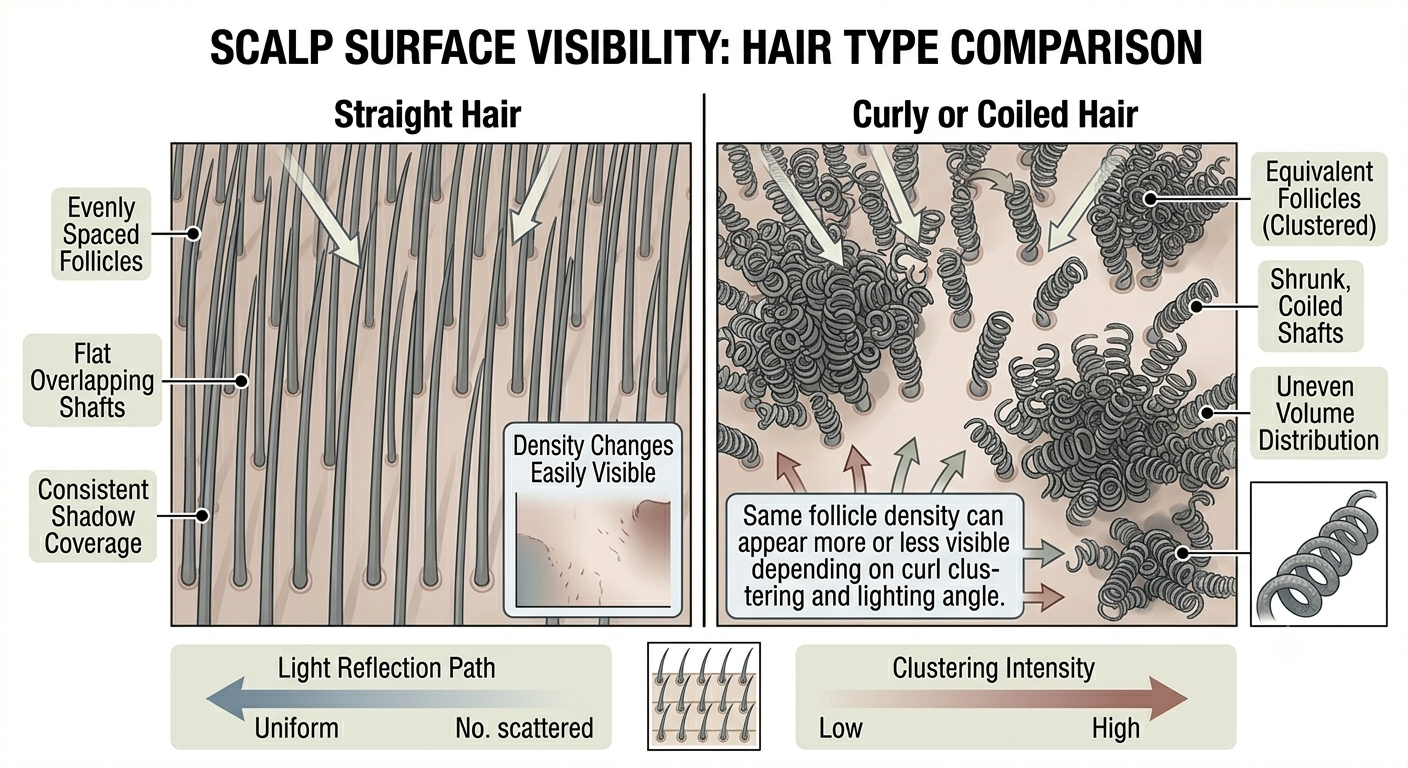
Straight hair lies relatively flat, making density changes easier to observe early. Curly hair behaves differently.
Curly and coiled strands:
Cluster together
Create uneven volume
Shrink away from their full length
Cast shadows across the scalp
This means the scalp may become visible in some lighting conditions even when follicle density remains normal.
At the same time, genuine thinning can sometimes stay concealed beneath existing curl volume until loss becomes more advanced.
Breakage and follicular thinning are not the same thing
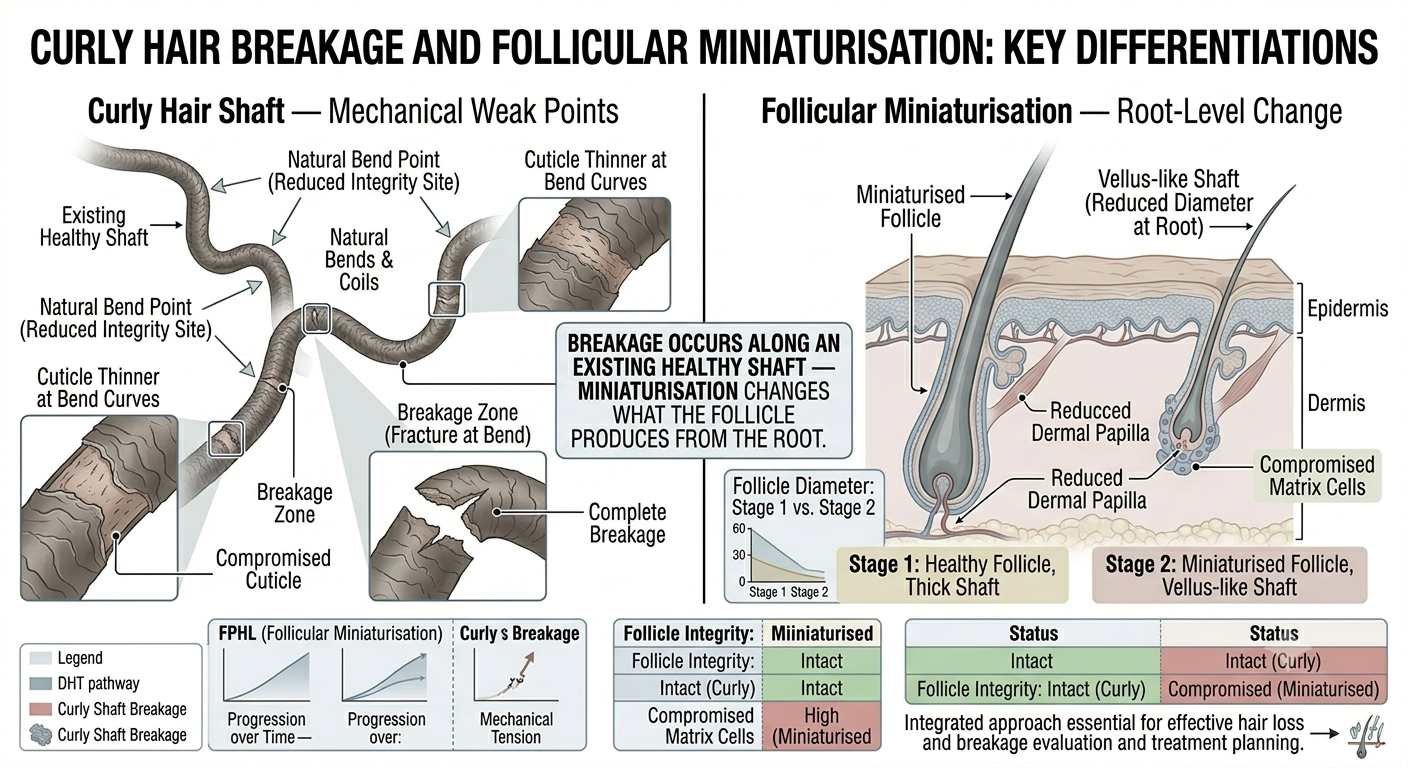
One major diagnostic challenge in curly hair is separating breakage from true hair loss.
Curly hair is structurally more vulnerable to shaft fragility because bends along the fibre create points of mechanical weakness.
People may notice:
Short uneven hairs
Reduced fullness
Difficulty retaining length
Frizz
Dryness
These changes may result from shaft breakage rather than follicles producing fewer hairs.
However, both processes can occur simultaneously.
Traction alopecia is especially important to recognise
Traction alopecia develops from repeated tension on the follicles.
This form of hair loss is particularly relevant in people with curly or tightly coiled hair because certain protective or styling practices may place chronic stress on the hairline and scalp.
Risk factors include:
Tight braids
Heavy extensions
Slicked-back styles
Tight ponytails
Weaves under tension
Early traction alopecia may be reversible. Longstanding traction can eventually lead to permanent follicular damage.
Central scalp thinning deserves careful evaluation
Thinning at the crown or centre of the scalp may raise concern for several possible conditions.
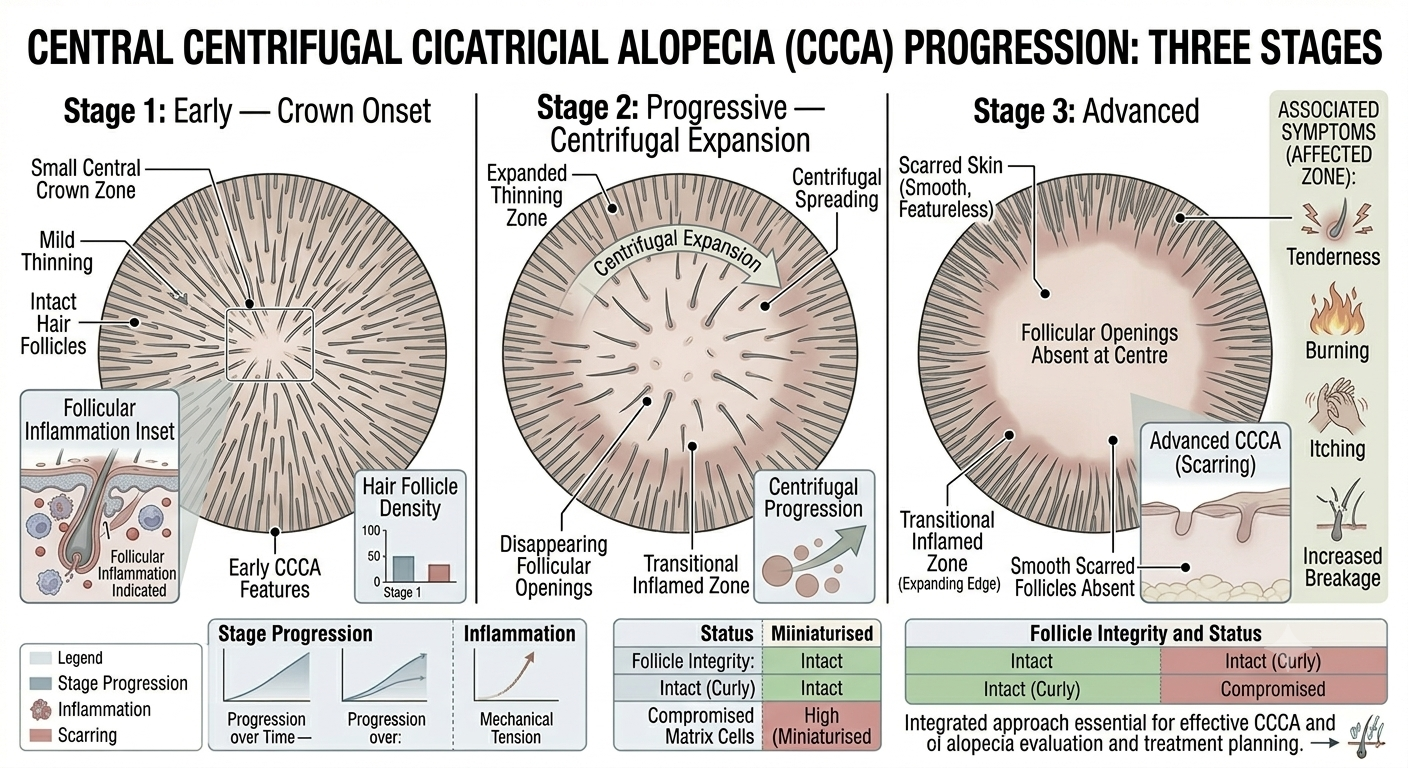
One particularly important diagnosis in Black women is central centrifugal cicatricial alopecia, or CCCA.
CCCA is a scarring alopecia that often begins near the crown and gradually expands outward.
Symptoms may include:
Tenderness
Burning
Itching
Increased breakage
Progressive thinning
Because scarring alopecia can permanently destroy follicles, early recognition matters significantly.
Washing frequency can affect assessment
People with curly hair often wash less frequently to preserve moisture and reduce breakage.
This changes how shedding appears.
Instead of seeing small daily shedding amounts, hairs may accumulate and release together during washing or detangling sessions. The resulting volume can feel alarming even when total shedding remains within normal biological range.
At the same time, genuine excessive shedding may become harder to quantify accurately.
Curl products can temporarily mask thinning
Volumising creams, gels, oils, and styling methods can create the appearance of fuller density.
This may delay recognition of progressive follicular loss.
Diffuse thinning sometimes becomes noticeable only when:
Part lines widen
The scalp reflects more light
Ponytail volume decreases
Curl definition changes
The gradual nature of these changes can make diagnosis emotionally and clinically difficult.
Hair density naturally varies across ethnic groups
Hair density and follicle distribution vary naturally among populations.
Some people with tightly curled hair have fewer follicles per square centimetre compared with certain straight-haired populations, despite the hair appearing visually fuller because of curl volume.
This means scalp visibility alone does not automatically indicate disease.
Clinical context matters.
Inflammation may be harder to spot
Scalp redness and inflammatory signs are not always easy to detect visually beneath dense curls or tightly coiled hair.
People may instead report indirect symptoms such as:
Tenderness
Burning
Itching
Pain during styling
These symptoms should not be ignored, especially when accompanied by progressive thinning.
Female pattern hair loss still occurs in curly hair
Androgenetic alopecia affects people across all hair textures.
Women with curly hair may develop:
Widening part lines
Reduced crown density
Diffuse thinning
However, the visual presentation may differ because curls continue creating some apparent volume even as follicles miniaturise.
Diagnosis may therefore occur later than in straighter hair types.
Hair care practices sometimes overlap with disease
Certain grooming habits may contribute to fragility or traction, but this should not lead to oversimplified assumptions blaming individuals for their hair loss.
People with curly hair often use protective styles because textured hair is inherently more vulnerable to dryness and breakage.
The relationship between styling practices and hair disorders is therefore nuanced rather than simply “good” or “bad” hair care.
Scalp examination remains essential
Accurate diagnosis often requires close scalp examination rather than relying on photographs alone.
Doctors may assess:
Follicular openings
Miniaturisation
Scalp inflammation
Broken hairs
Scarring changes
Magnified examination through trichoscopy is especially helpful.
Hair shedding patterns still provide clues
Different shedding patterns suggest different diagnoses.
Diffuse shedding may point toward:
Telogen effluvium
Nutritional deficiency
Hormonal changes
Patchy loss may suggest:
Alopecia areata
Traction
Scarring disease
Crown-centred thinning with symptoms may raise concern for CCCA.
Pattern recognition remains important regardless of curl type.
Relaxers and chemical treatments may complicate the picture
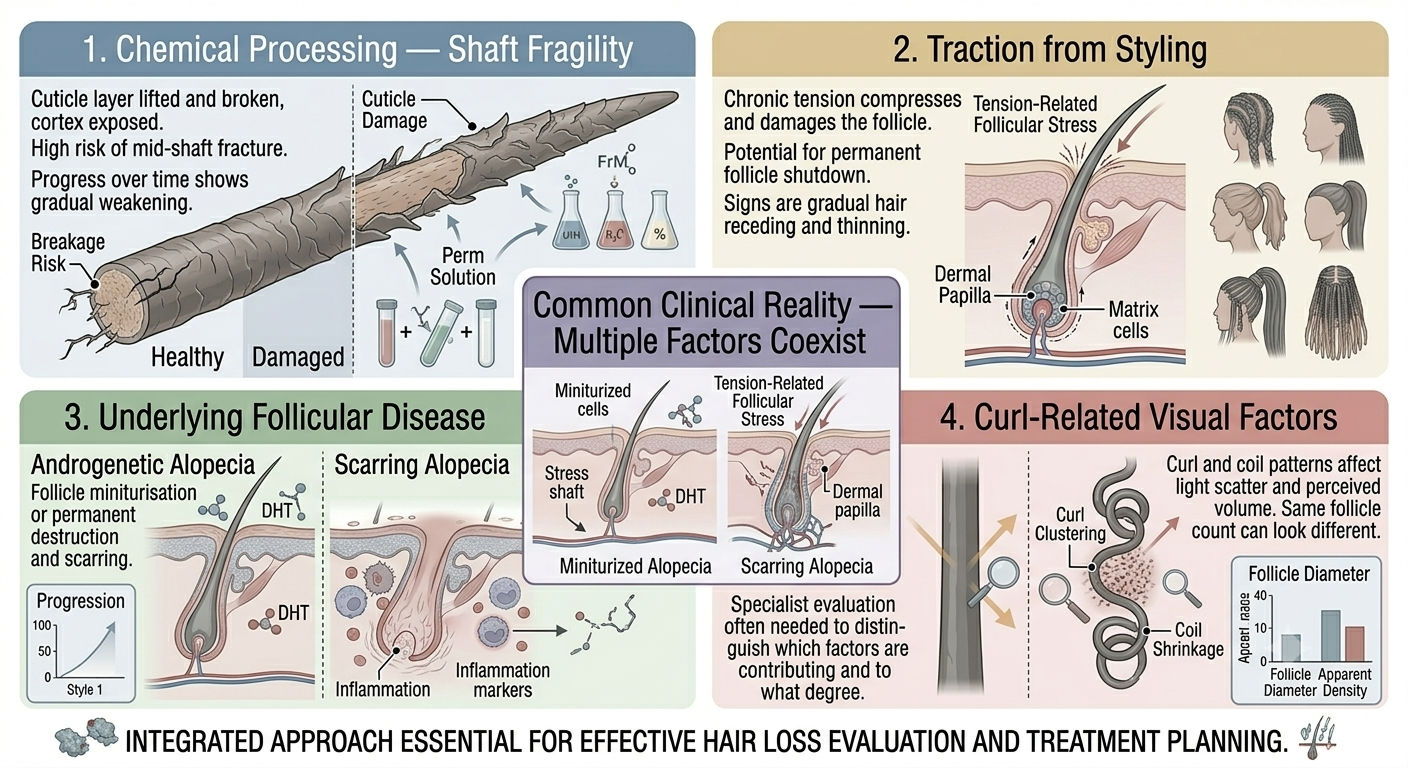
Chemical straightening treatments can increase shaft fragility and breakage.
In some individuals, repeated chemical processing overlaps with underlying follicular disease, making diagnosis more complicated.
Distinguishing between:
Breakage
Traction
Inflammation
Miniaturisation
sometimes requires specialist evaluation.
Delayed diagnosis can affect outcomes
One reason early assessment matters is that some conditions remain treatable primarily before permanent follicular damage develops.
Scarring alopecias in particular may progress quietly beneath hairstyles or retained curl volume.
By the time thinning becomes visually dramatic, follicular destruction may already be advanced.
Psychological impact is often underestimated
Hair carries strong cultural, social, and personal significance, particularly in communities where hair texture and styling are closely tied to identity.
Thinning in curly hair may therefore feel emotionally devastating even when medically mild.
People may avoid social situations, alter grooming habits, or experience significant anxiety long before diagnosis occurs.
Online advice is frequently oversimplified
Internet discussions about curly hair thinning often reduce everything to:
“Moisture”
“Growth oils”
“Protective styling”
While hair care absolutely matters, medical causes such as androgenetic alopecia or scarring disease cannot be solved solely with cosmetic products.
Persistent thinning deserves proper evaluation.
The bottom line
Diagnosing hair thinning in curly hair is often harder because curls naturally alter scalp visibility, conceal density changes, and increase the likelihood of breakage being mistaken for true hair loss. At the same time, certain important conditions such as traction alopecia and central centrifugal cicatricial alopecia may occur more commonly in people with tightly curled or coiled hair.
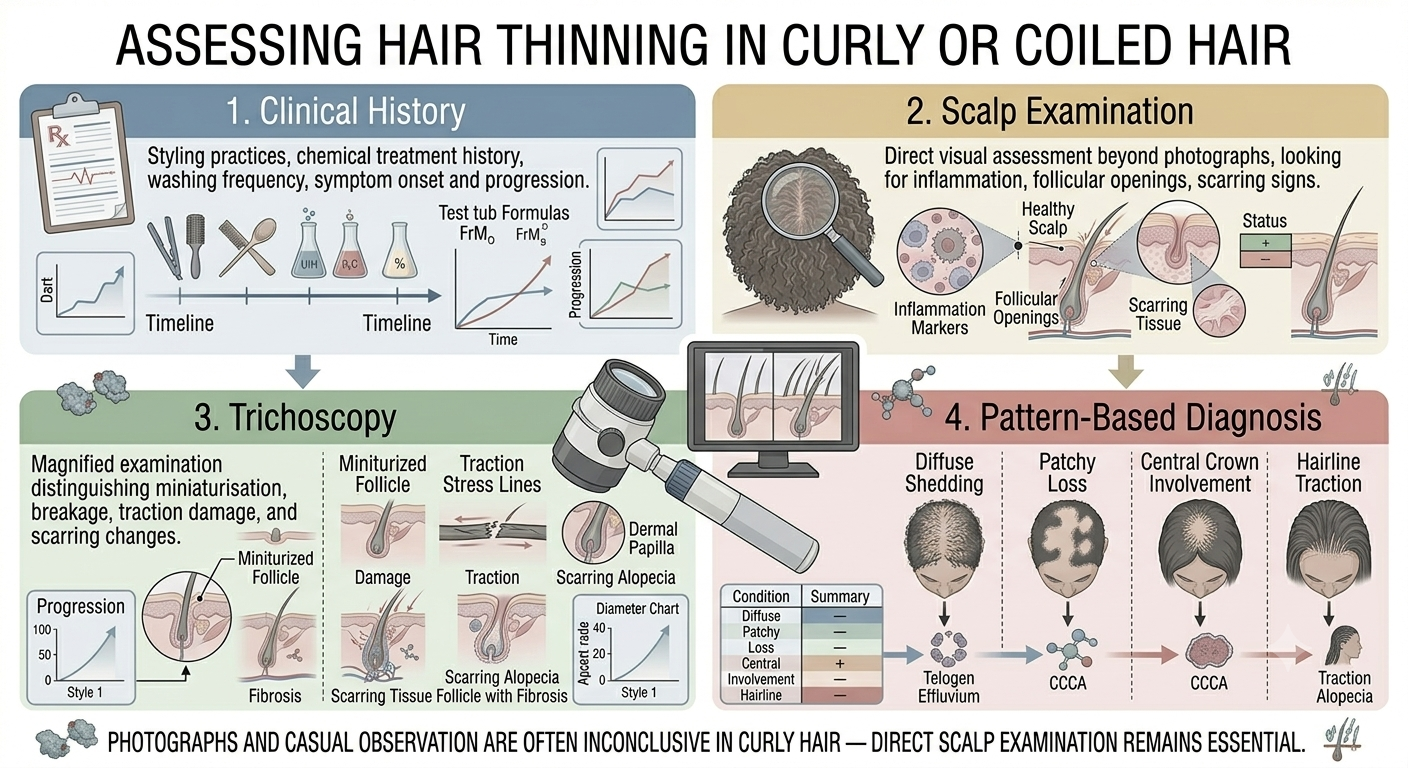
Distinguishing between shaft breakage, inflammatory disease, and follicular thinning matters because treatment and long-term outcomes differ significantly. Careful scalp examination and early assessment are often essential, especially when thinning progresses or symptoms such as tenderness, burning, or itching appear.
Author: Dr. Priya Goswami
Medical review: Dr. Denis Broun
Next step
If you notice coverage changes without increased shedding, confirm what process is occurring.
Take the Hair Assessment to have a physician review your pattern, identify whether miniaturization is present, and determine appropriate staging and next steps.

Add Comment