Many women notice something unexpected a few months after giving birth.
Hair begins collecting in the shower drain.
The hairbrush fills more quickly than usual.
Loose hairs seem to appear everywhere, on clothes, pillows and even wrapped around the baby’s fingers.
It can be alarming.
Fortunately, in most cases this is a normal part of recovery after pregnancy rather than permanent hair loss.
Understanding why it happens can make the experience much less worrying.
Why does pregnancy affect hair?
Hair is constantly cycling through periods of growth, rest and shedding.
During pregnancy, higher levels of oestrogen keep more hair follicles in the active growth phase for longer than usual.
As a result:
- Less hair is shed.
- Hair often feels fuller.
- Many women notice increased volume.
This extra fullness is temporary.
It reflects changes in the hair cycle rather than the creation of new follicles.
What changes after childbirth?
Following delivery, hormone levels fall rapidly.
Hair follicles that remained in the growth phase during pregnancy begin returning to their normal cycle.
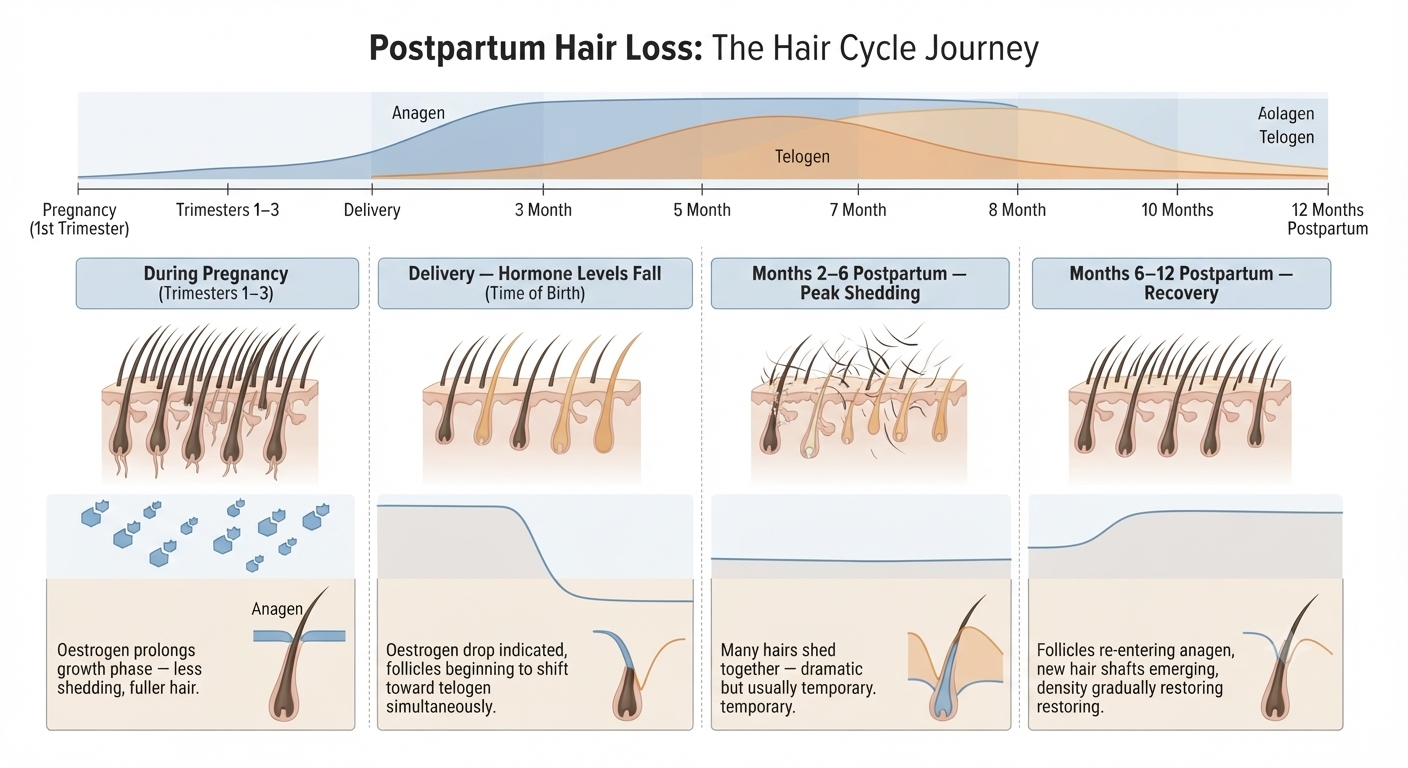
Instead of shedding gradually over many months, many hairs enter the resting phase together.
Several weeks later, those hairs begin to fall out.
This process is known as postpartum telogen effluvium.
When does shedding usually begin?
The timing is fairly predictable.
Most women notice increased shedding:
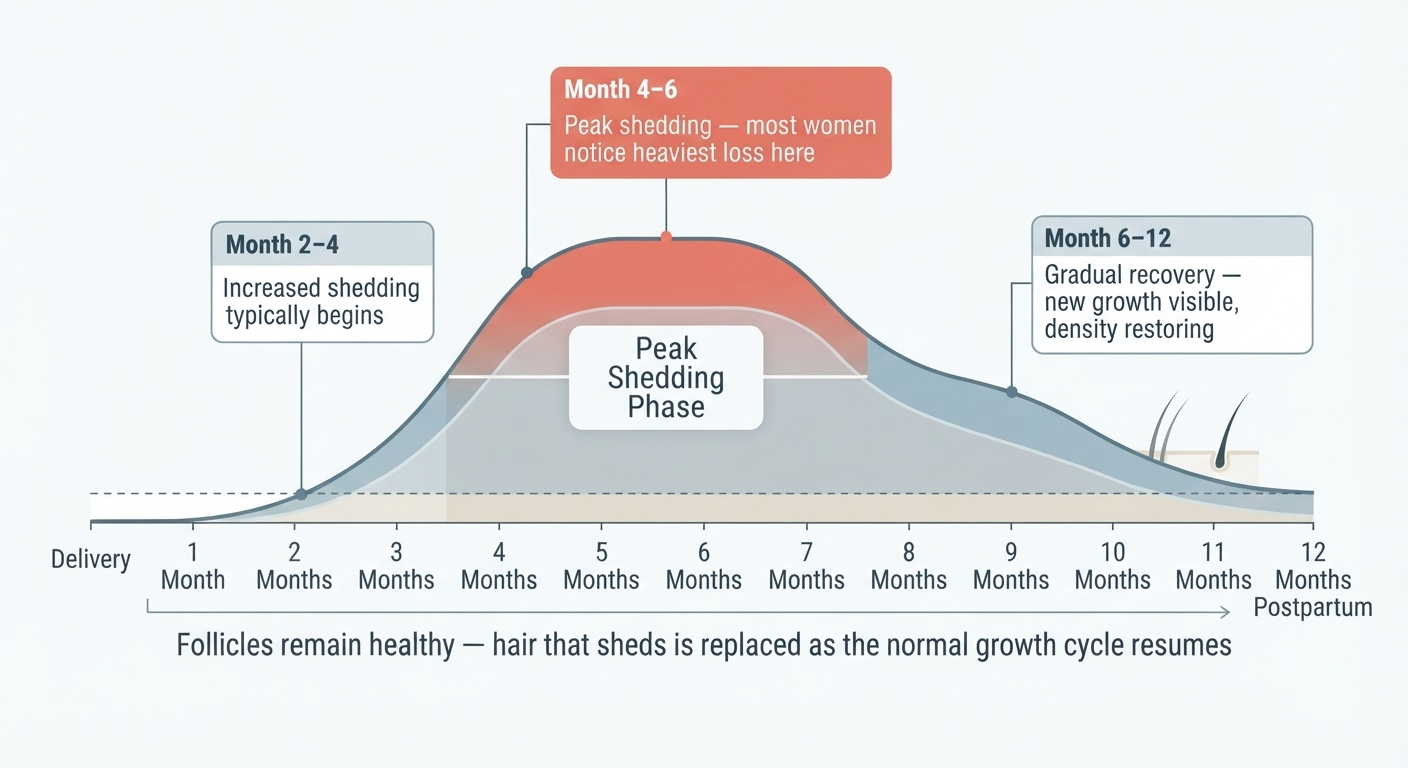
- Between two and four months after giving birth.
- With peak shedding around four to six months.
- Gradual improvement over the following months.
Because the shedding starts well after delivery, many people initially wonder whether something else is causing the problem.
How much hair loss is normal?
The amount varies from person to person.
Some women notice only mild thinning.
Others experience much heavier shedding that makes their hair feel significantly less dense.
Despite the dramatic appearance, the follicles usually remain healthy.
The hair that is shed is generally replaced as the normal growth cycle resumes.
Does breastfeeding cause hair loss?
Current evidence suggests that breastfeeding itself is not the direct cause of postpartum hair shedding.
The primary trigger is the hormonal shift that occurs after pregnancy.
However, the physical demands of caring for a newborn, changes in sleep, nutrition and overall health may influence how recovery feels and how noticeable the shedding becomes.
Can anything make postpartum shedding worse?
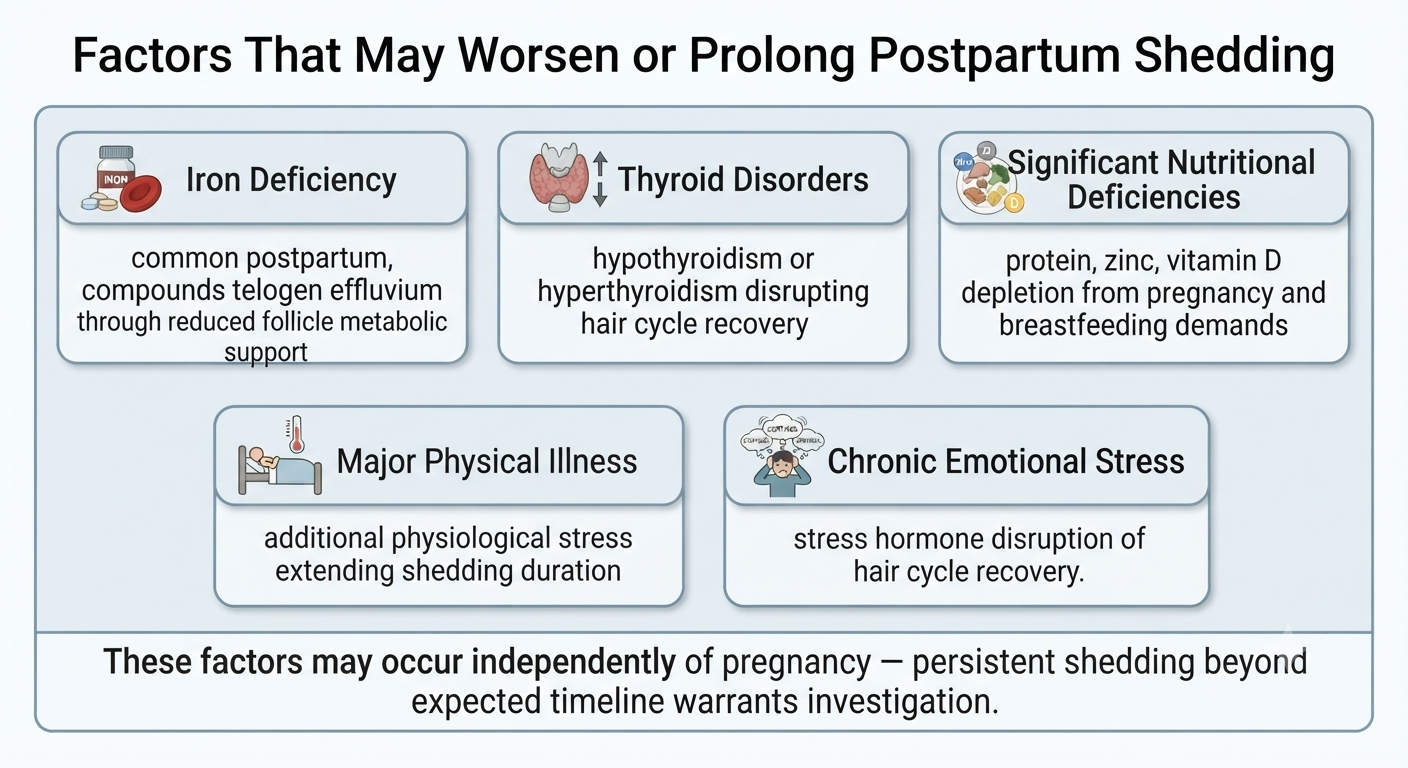
Several factors may contribute to prolonged or more noticeable hair loss.
These include:
- Iron deficiency
- Thyroid disorders
- Significant nutritional deficiencies
- Major physical illness
- Ongoing emotional stress
These conditions may occur independently of pregnancy and should not automatically be attributed to postpartum hormonal changes.
Should you change your hair care routine?
Gentle hair care is usually recommended while shedding is ongoing.
Helpful measures include:
- Using a mild shampoo.
- Avoiding excessive heat styling.
- Limiting hairstyles that pull tightly on the hair.
- Brushing gently.
- Eating a balanced diet with adequate protein and essential nutrients.
These measures support overall hair health but do not immediately stop the natural shedding process.
Will the hair grow back?
For most women, yes.
As follicles re-enter the growth phase, new hairs gradually emerge.
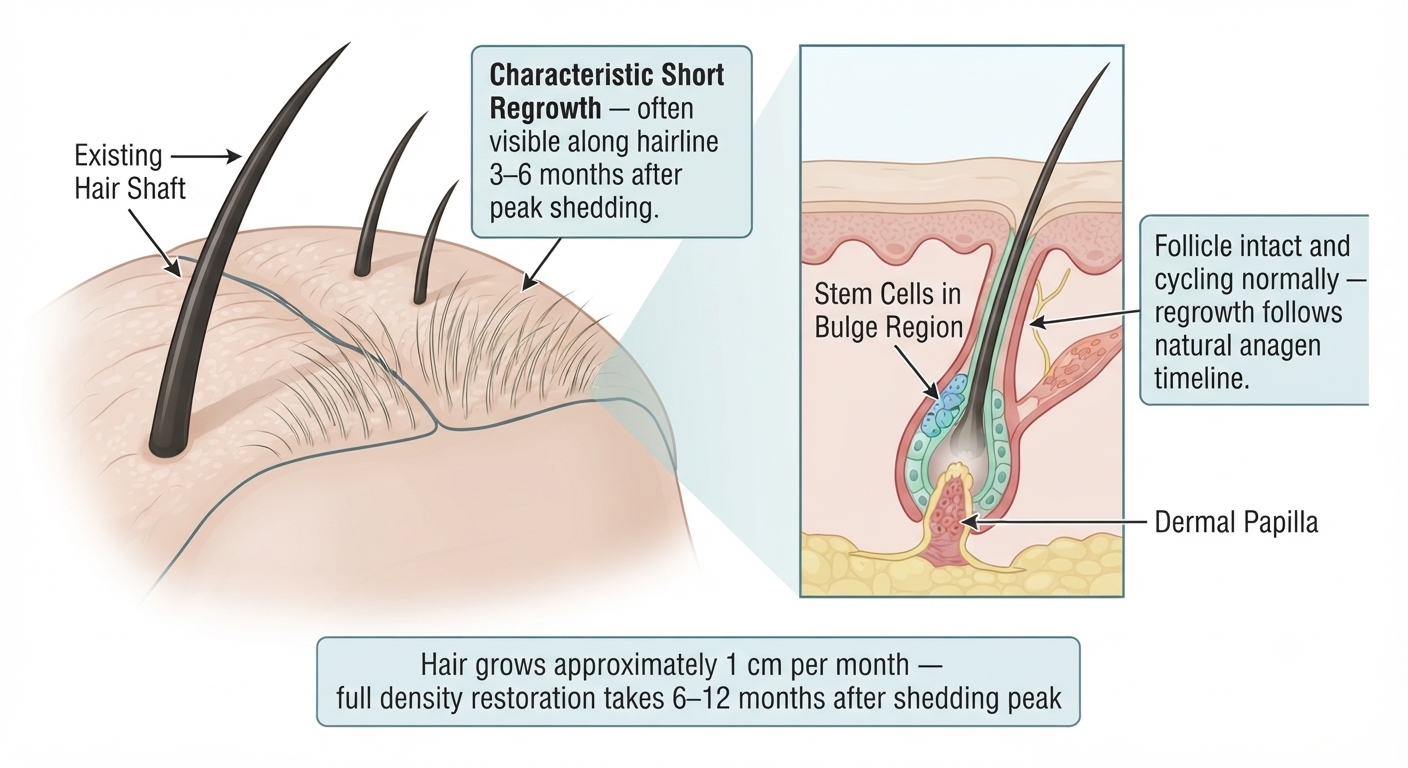
Because hair grows slowly, recovery takes time.
Many women begin noticing shorter new hairs around the hairline several months after shedding peaks.
Complete recovery often occurs within six to twelve months after delivery, although some individuals require a little longer.
When should you seek medical advice?
Medical assessment is advisable if:
- Hair loss continues beyond one year after childbirth.
- Shedding is extremely severe.
- Bald patches develop.
- The scalp becomes painful or inflamed.
- Hair continues becoming progressively thinner instead of stabilising.
- Symptoms such as fatigue, weight changes or intolerance to cold suggest thyroid disease or another medical condition.
These features may indicate that another cause of hair loss is present.
Looking forward with confidence
Postpartum hair loss often feels dramatic because so many hairs enter the shedding phase at the same time.
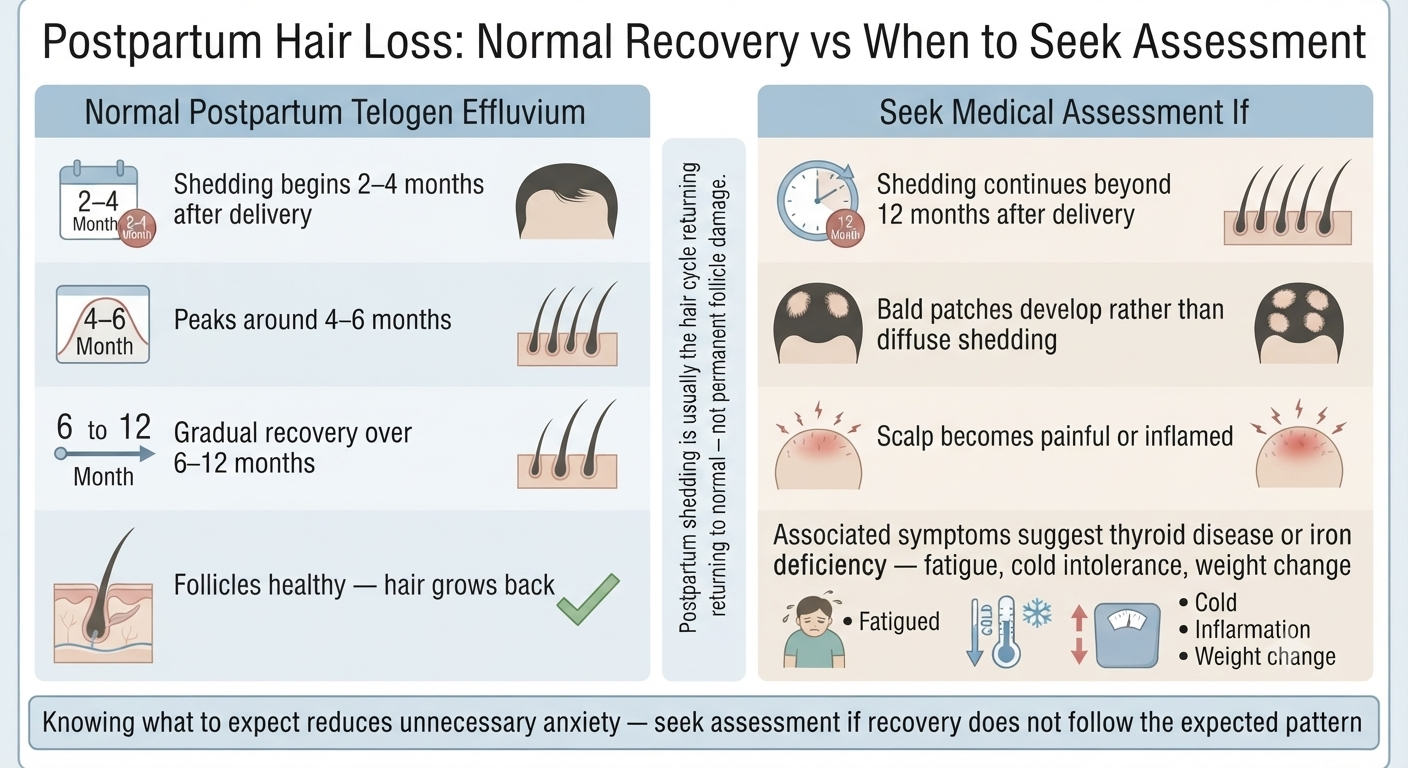
In reality, it usually represents the hair cycle returning to its normal rhythm after pregnancy rather than permanent damage to the follicles.
Knowing what to expect, taking good care of your overall health and seeking medical advice if recovery does not follow the expected pattern can help ensure that temporary shedding is not mistaken for a more persistent hair disorder.
Author: Dr. Priya Goswami
Medical review: Dr. Denis Broun
Next step
If you notice coverage changes without increased shedding, confirm what process is occurring.
Take the Hair Assessment to have a physician review your pattern, identify whether miniaturization is present, and determine appropriate staging and next steps.
Add Comment