Hair fibres are widely used cosmetic products designed to make thinning hair appear denser instantly. They work by attaching small coloured keratin-like particles to existing hair strands, reducing scalp visibility and creating the illusion of fuller coverage.
For many people, they can be genuinely useful.
However, hair fibres are not equally straightforward across all hair types and textures. Black hair in particular presents specific cosmetic and practical considerations that are often overlooked in generic product advice.
Texture, curl pattern, scalp contrast, styling practices, and colour matching all influence how natural the final result appears.
Understanding these details matters because even effective concealment products can look artificial if they are not used with the realities of textured hair in mind.
Hair fibres are cosmetic concealers, not treatments
One important distinction should be clear from the beginning.
Hair fibres do not treat hair loss biologically.
They do not:
Regrow follicles
Reverse miniaturisation
Reduce inflammation
Prevent progression
Instead, they improve the visual appearance of density by coating existing hairs and reducing the contrast between scalp and hair.
For many users, that cosmetic benefit alone can still meaningfully improve confidence.
Black hair often creates stronger scalp contrast
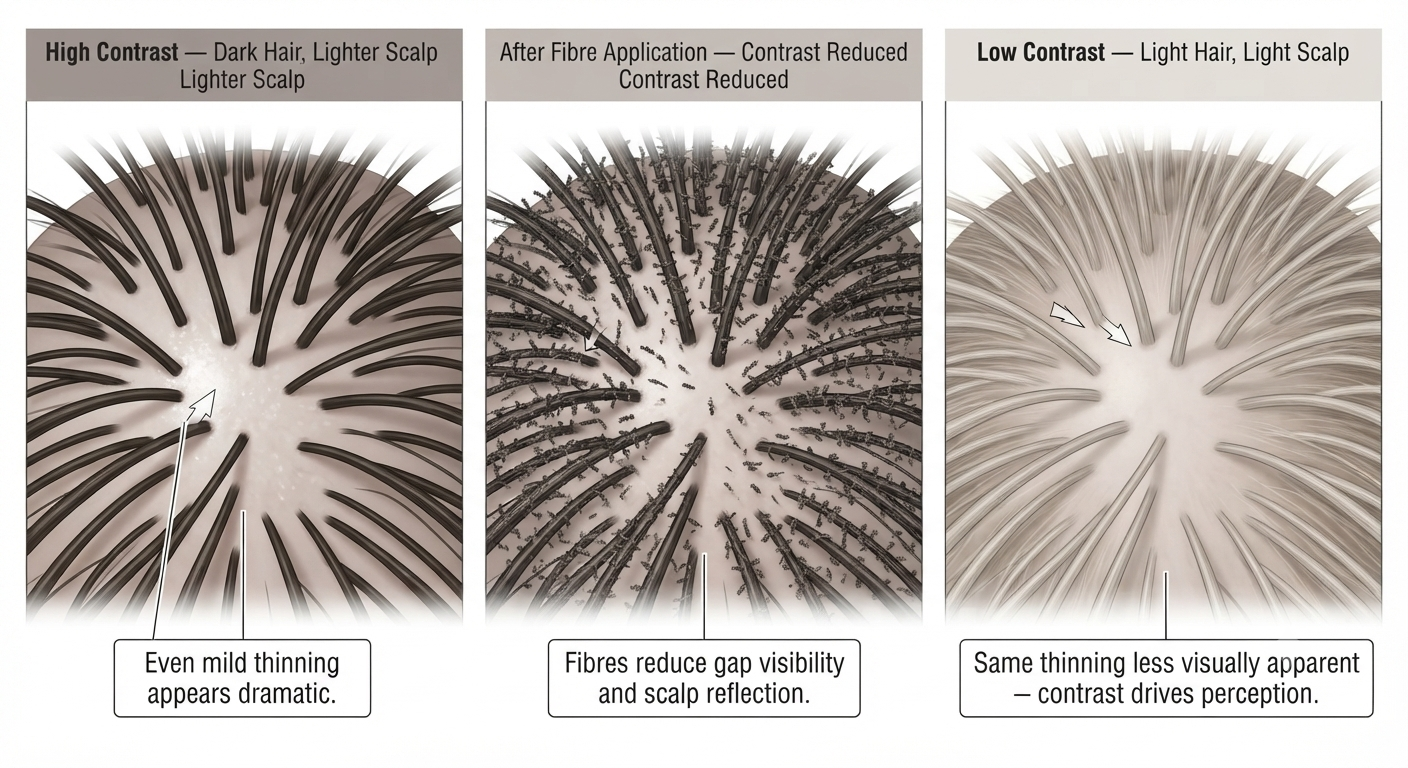
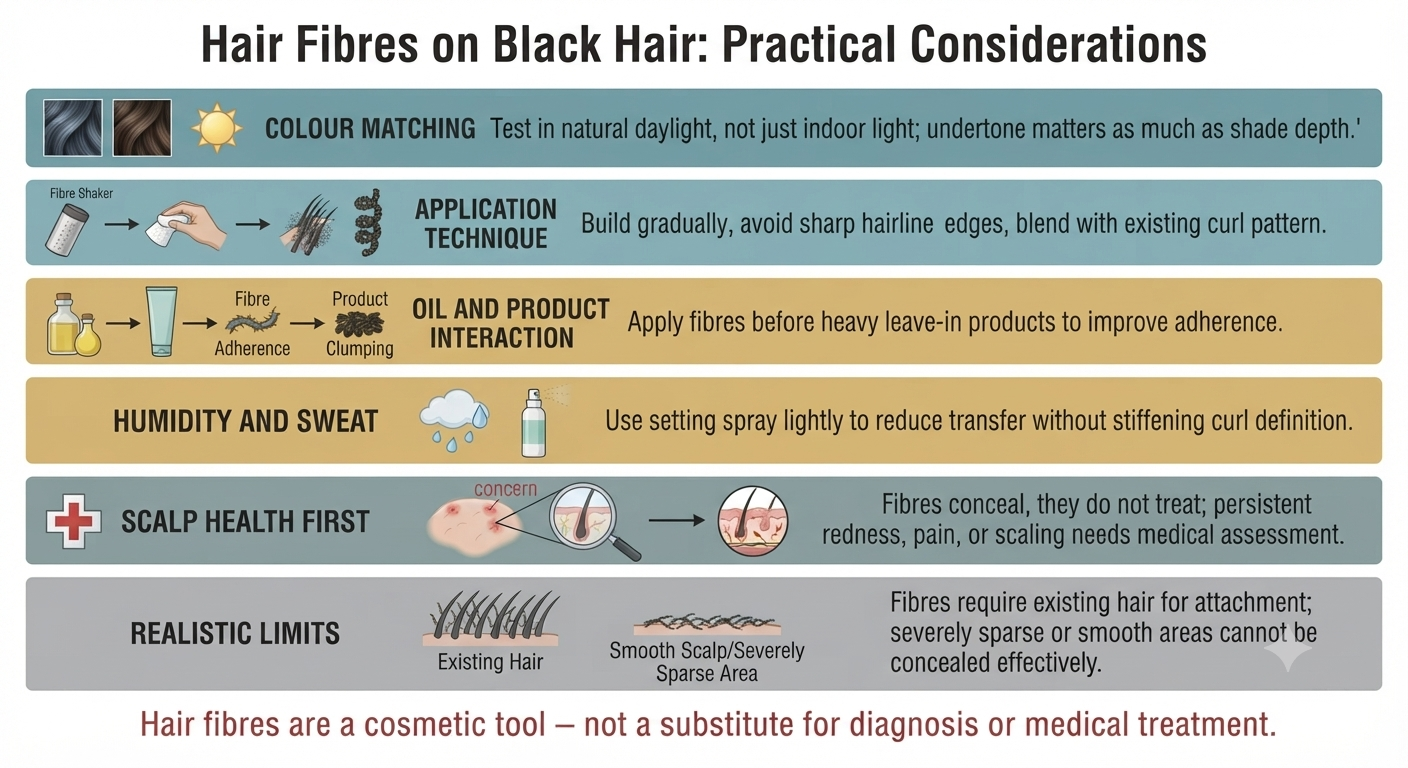
One reason thinning can appear especially noticeable in Black hair is the contrast between dark hair shafts and lighter visible scalp.
This contrast can make even relatively mild thinning appear more dramatic under bright lighting or flash photography.
Hair fibres help primarily by reducing this visual contrast.
Curl pattern changes how fibres distribute
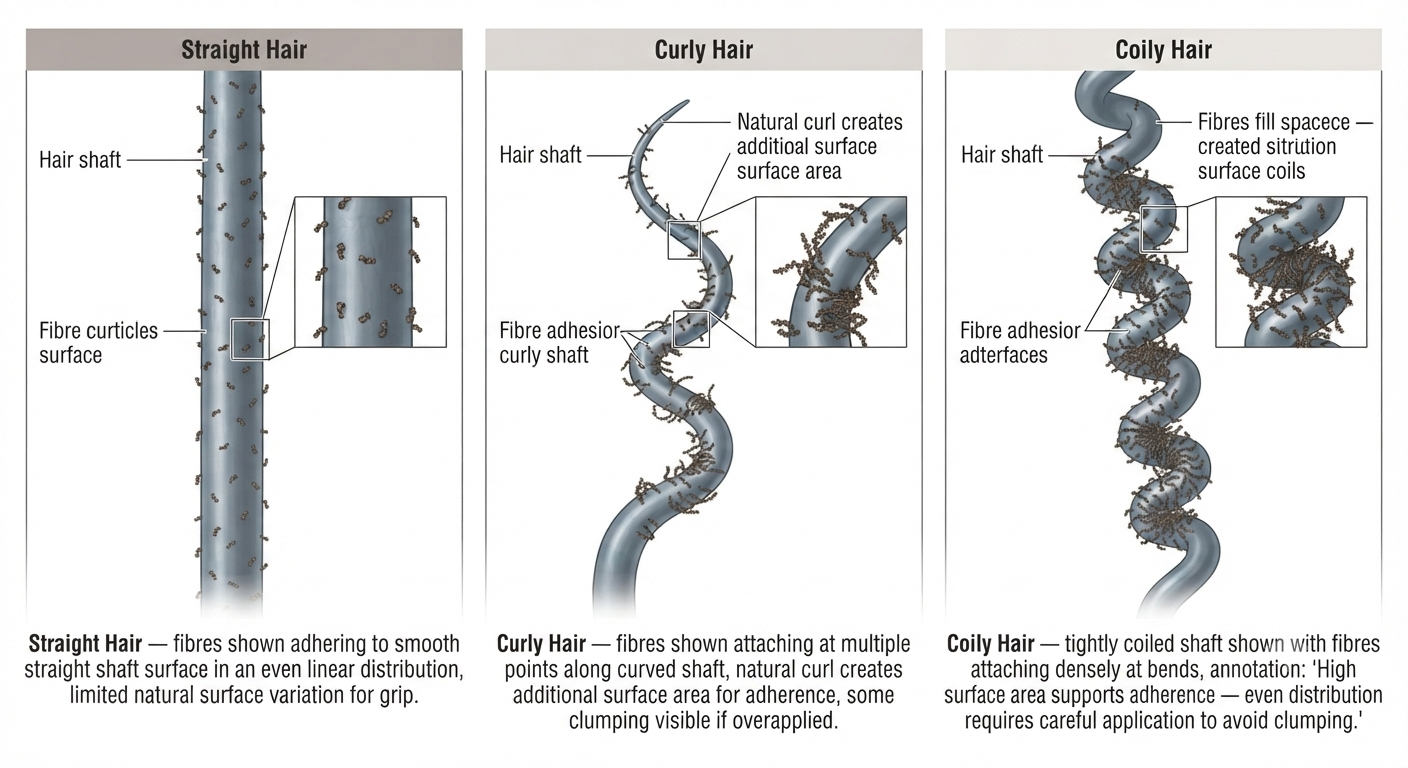
Curly and coily hair behaves differently from straight hair.
Textured strands naturally cluster, twist, and create variable spacing across the scalp. This affects how fibres settle and adhere.
In some cases, textured hair can actually help fibres integrate more naturally because curls provide more surface area for attachment.
In other cases, uneven clumping may occur if products are overapplied.
Colour matching requires more precision than many expect
Not all “black” fibre shades are identical.
Some products lean:
Warm brown
Cool black
Soft black
Jet black
Grey-black
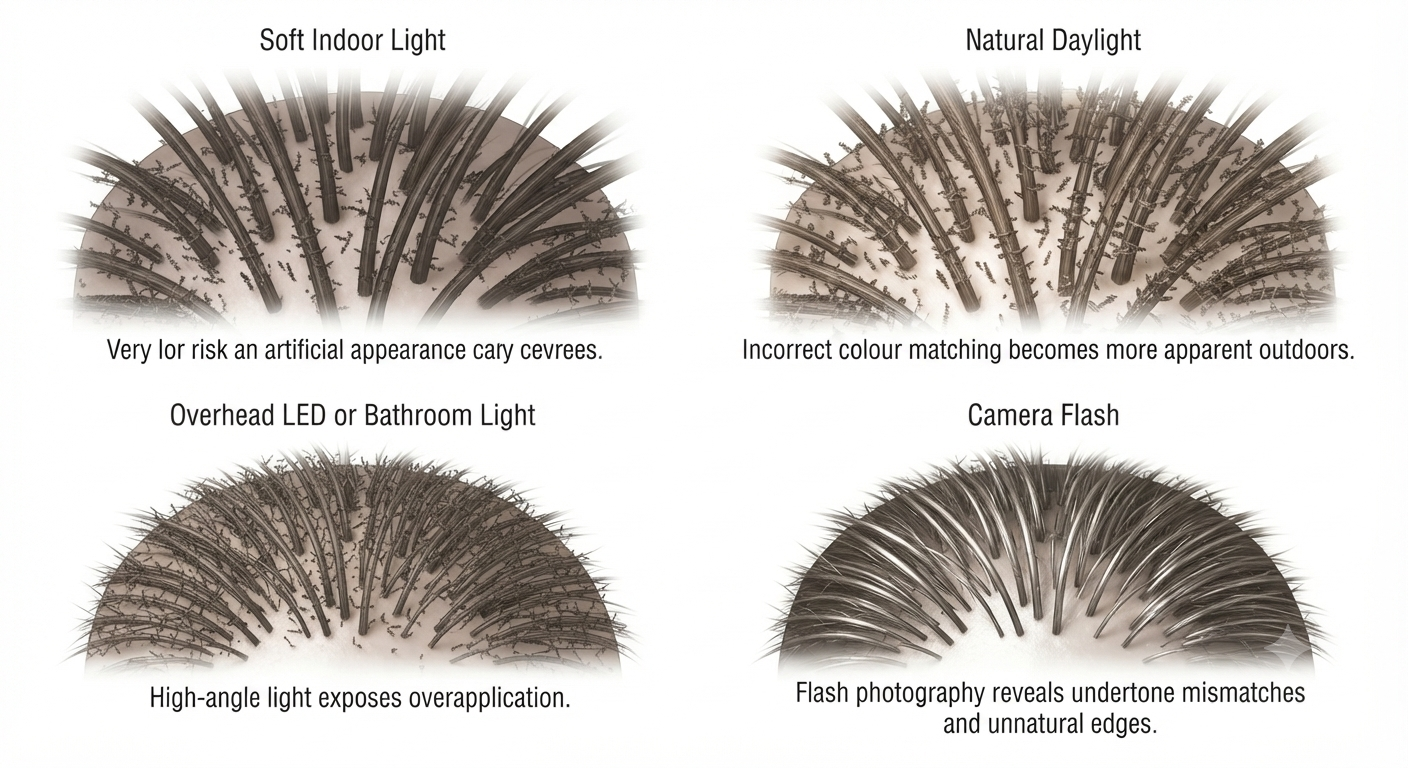
An incorrect undertone can become visible under daylight or camera flash.
This matters particularly because Black hair itself varies substantially in tone and reflectivity.
The scalp itself may have natural colour variation
Scalp tone also affects cosmetic blending.
Areas with lighter scalp visibility may still appear obvious if fibre colour creates too sharp a contrast or if coverage becomes patchy.
Some users combine fibres with scalp tinting products for more natural blending.
Fibres work best when hair is still present
Hair fibres require existing strands for attachment.
They work best in areas with:
Diffuse thinning
Reduced density
Miniaturised hairs
They work poorly on completely bald shiny skin because there are no shafts for the fibres to grip.
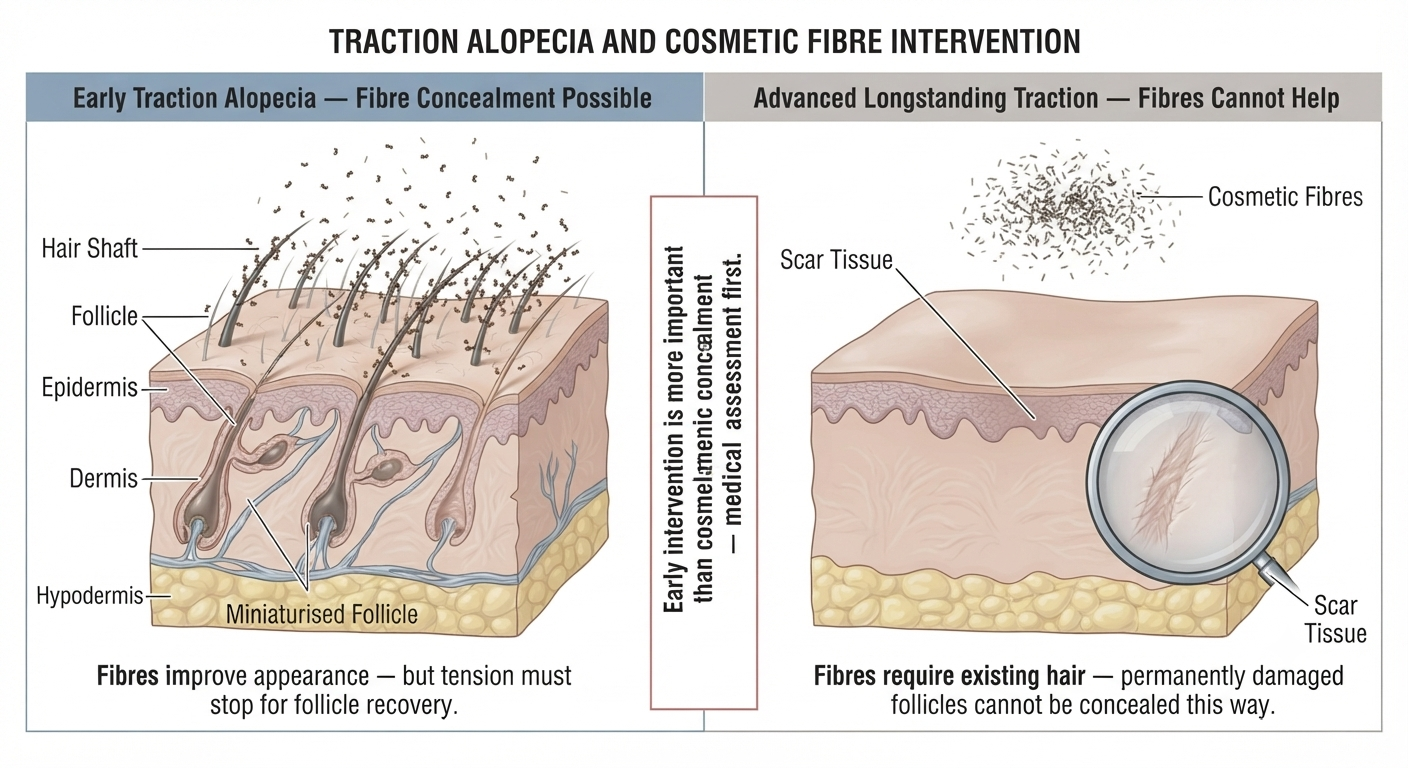
This limitation is important in advanced traction alopecia or longstanding scarring alopecia.
Traction alopecia is particularly relevant in Black patients
Traction alopecia disproportionately affects Black women due to chronic tension from certain hairstyles.
Hair fibres may temporarily camouflage thinning edges or side scalp reduction, but they cannot restore follicles already permanently damaged by prolonged traction.
Early intervention remains more important than concealment alone.
Fibres may interact differently with hair oils
Many textured hair routines include oils, creams, and moisturising products.
Excess oil on the hair shaft or scalp can reduce fibre adherence and increase clumping.
Heavy leave-in products may therefore interfere with cosmetic performance.
This creates a practical balance between maintaining moisture and achieving natural fibre attachment.
Sweat and humidity can affect wearability
Humidity and perspiration may influence how fibres behave throughout the day.
This is particularly relevant during:
Exercise
Warm weather
Protective styling under wigs
Scalp sweating
Higher quality products often resist movement better, but no fibre product is completely immune to moisture-related transfer.
Protective hairstyles complicate application
Braids, twists, locs, and weaves change scalp visibility patterns.
Fibres may help camouflage visible part lines or sparse edges, but application can become technically more difficult depending on hairstyle structure.
The products generally work best where loose natural hair remains accessible.
Hairline application requires restraint
One common mistake is applying excessive fibres directly along the frontal hairline.
Overapplication may create:
A painted appearance
An unnaturally sharp edge
Visible powder accumulation
Subtle gradual blending usually looks more convincing than aggressively filling every visible gap.
Fibre sprays and fixatives vary in usefulness
Many brands recommend setting sprays to improve longevity.
These can help reduce transfer, but excessive spray may stiffen textured hair or alter curl definition.
The balance between hold and natural movement matters cosmetically.
Lighting changes the appearance dramatically
Hair fibres often look different under:
Natural daylight
Bathroom lighting
Camera flash
Direct overhead lighting
A result that appears excellent indoors may look noticeably artificial outdoors if colour matching or density application is incorrect.
Testing products under multiple lighting conditions helps avoid surprises.
Fibre transfer is possible
Despite marketing claims, some transfer can occur onto:
Pillowcases
Hands
Hats
Headscarves
particularly if the scalp becomes sweaty or the product is overapplied.
This does not make fibres ineffective, but realistic expectations matter.
Curly density can sometimes mask thinning naturally
One advantage of textured hair is that volume itself may help disguise mild thinning.
Strategic styling sometimes reduces the need for heavy fibre use altogether.
This is especially true when thinning is diffuse rather than concentrated in sharply defined areas.
Scalp inflammation should not be ignored
People with active scalp disease should be cautious about relying solely on cosmetic concealment.
Conditions such as:
Central centrifugal cicatricial alopecia
Seborrhoeic dermatitis
Psoriasis
Folliculitis
may require medical treatment rather than repeated cosmetic coverage.
Persistent redness, pain, scaling, or tenderness deserves assessment.
Some fibres contain irritants
Fragrance and preservatives in certain products may irritate sensitive scalps.
Patch testing can be helpful, especially in individuals already dealing with inflammatory scalp conditions.
Psychological benefit can still be meaningful
Although fibres are cosmetic rather than medical, the emotional effect should not be dismissed.
Hair loss often affects confidence, self-image, and social comfort. Temporary cosmetic improvement may therefore have real psychological value even when it does not alter follicular biology.
The bottom line
Hair fibres can be effective cosmetic tools for Black hair, particularly in cases of mild to moderate diffuse thinning where existing strands remain present for attachment. Textured hair may sometimes help fibres blend naturally, but curl pattern, scalp contrast, oils, humidity, and colour matching all influence the final appearance.
These products work best as concealment strategies rather than biological treatments. They cannot reverse traction alopecia, scarring conditions, or advanced follicular loss. Careful application, realistic expectations, and attention to scalp health remain essential for achieving natural-looking results safely.
Author: Dr. Priya Goswami
Medical review: Dr. Denis Broun
Next step
If you notice coverage changes without increased shedding, confirm what process is occurring.
Take the Hair Assessment to have a physician review your pattern, identify whether miniaturization is present, and determine appropriate staging and next steps.
Add Comment