An oily scalp is one of the most common hair complaints, yet it is also one of the most misunderstood. Many people notice increased oil production alongside thinning hair and naturally assume the excess sebum itself is causing follicles to fail.
The reality is more complicated.
Sebum and hair loss are connected, but not always in the way social media or product marketing suggests. Oily scalp conditions may overlap with certain forms of hair loss, contribute indirectly to inflammation, or worsen cosmetic appearance. But sebum alone is rarely the sole reason someone becomes bald.
Understanding what sebum actually does helps separate legitimate biology from exaggerated claims about “clogged follicles” and detox shampoos.
Sebum is a normal biological substance
Sebum is an oily substance produced by sebaceous glands attached to hair follicles.
Its functions include:
Lubricating hair shafts
Reducing water loss
Supporting skin barrier function
Protecting scalp skin
Without sebum, the scalp and hair would become excessively dry and fragile.
Oil production itself is therefore not inherently harmful.
Sebaceous glands are hormonally influenced
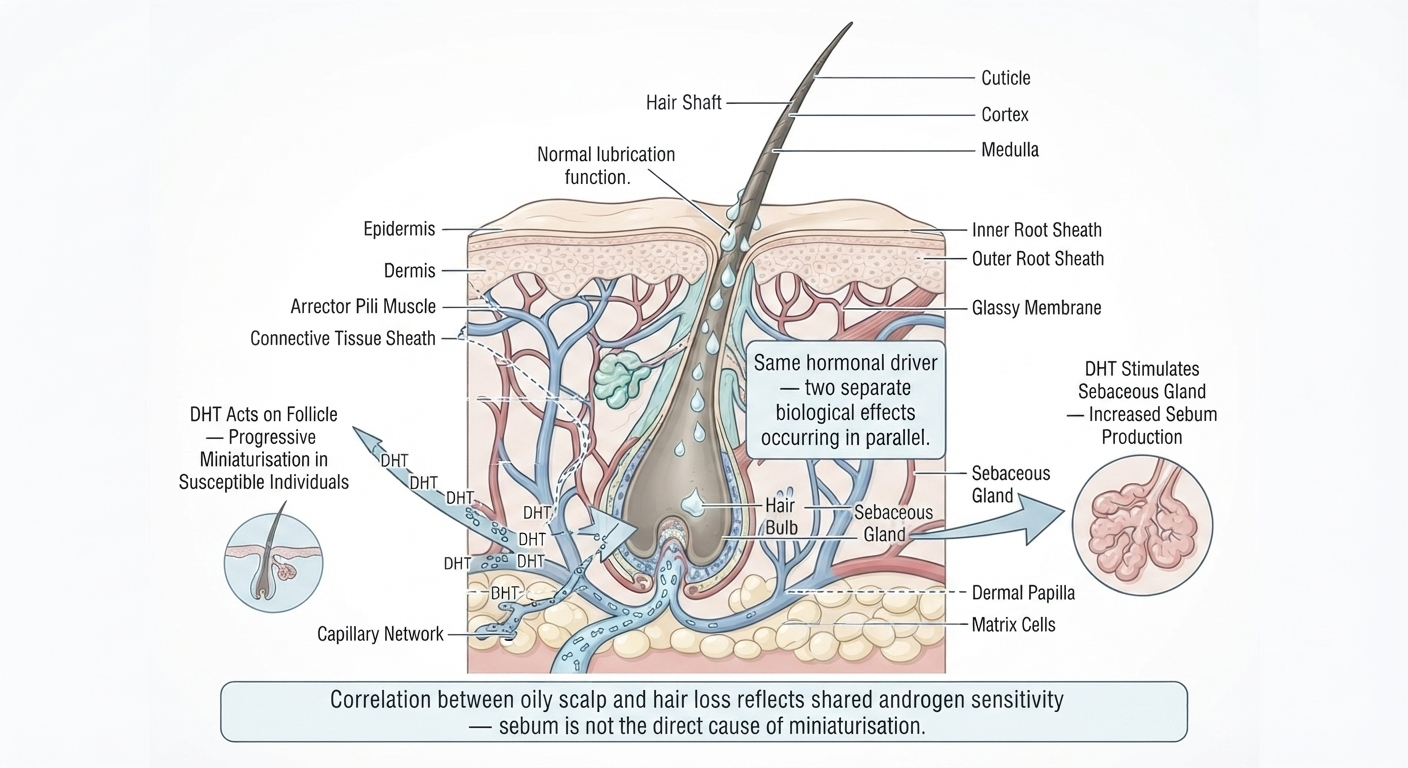
Sebum production is strongly influenced by androgens, particularly dihydrotestosterone, often shortened to DHT.
This matters because androgenetic alopecia is also hormone sensitive.
As a result, oily scalp and pattern hair loss frequently occur together. But correlation does not necessarily mean the oil itself is directly destroying follicles.
Androgenetic alopecia is not simply “greasy scalp disease”
One common misconception is that excess oil blocks follicles and causes male or female pattern hair loss directly.
Current evidence does not support this simplified explanation.
Androgenetic alopecia primarily involves genetically sensitive follicles gradually miniaturising under hormonal influence. Sebum production may increase in parallel because the same hormones affect sebaceous glands.
The thinning process itself is more complex than clogged pores.
Sebum may worsen scalp inflammation in some people
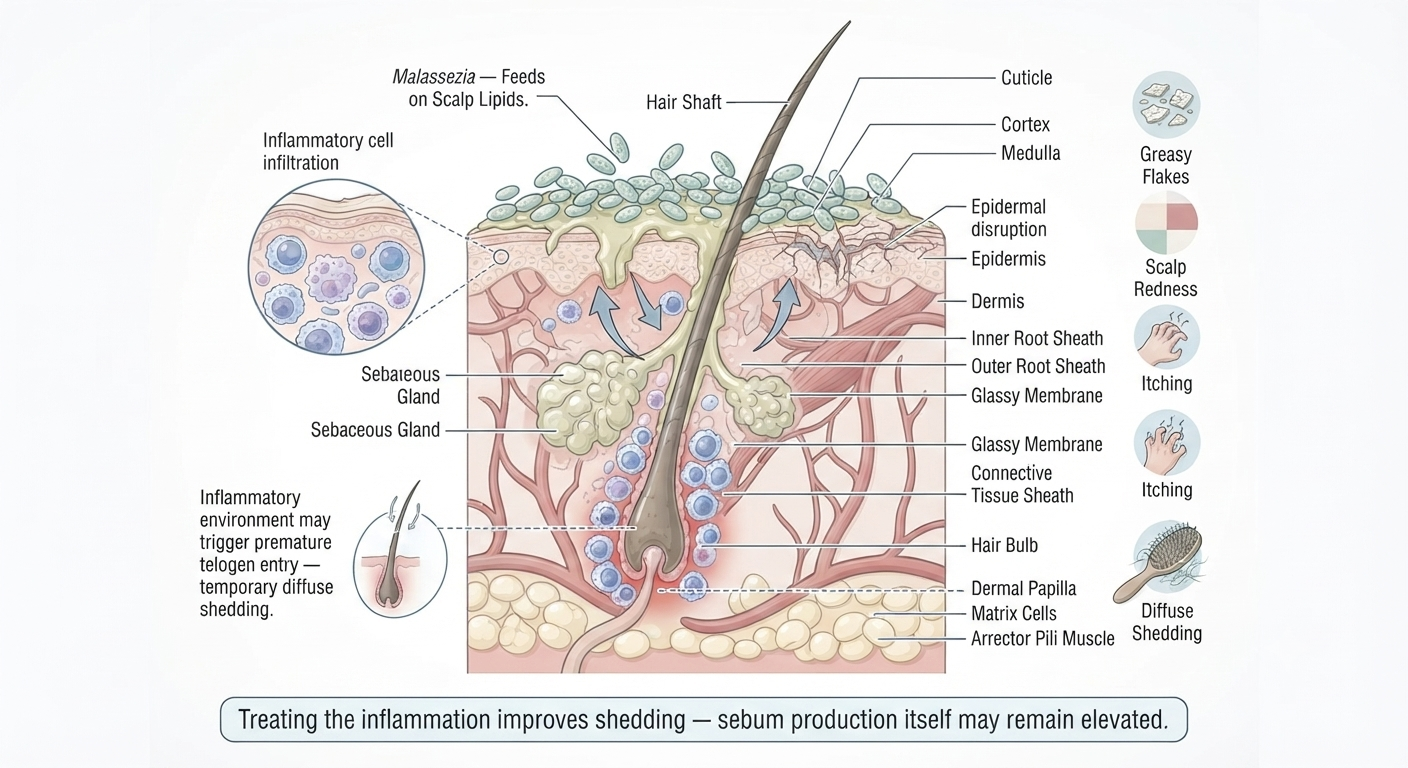
Although sebum is not usually the primary cause of hair loss, excess oil can contribute indirectly to scalp irritation and inflammation.
This is particularly relevant in conditions such as seborrhoeic dermatitis.
Inflammation may lead to:
Itching
Redness
Flaking
Temporary increased shedding
The inflammatory environment rather than the oil alone becomes the more important issue.
Seborrhoeic dermatitis commonly overlaps with oily scalp
Seborrhoeic dermatitis is strongly associated with oily areas of skin.
The condition involves inflammatory reactions linked partly to Malassezia yeast, which feeds on scalp lipids.
Symptoms may include:
Greasy flakes
Scalp redness
Itching
Diffuse shedding
Treating the inflammation often improves shedding even though sebum production itself may remain relatively high.
Oil can make thinning appear worse cosmetically
An oily scalp often causes hair strands to cluster together.
This reduces visible volume and increases scalp visibility, making thinning appear more severe even when actual density has not changed substantially.
This cosmetic effect explains why some people feel their hair loss worsens dramatically after the scalp becomes greasy.
Follicles are not literally “suffocated” by oil
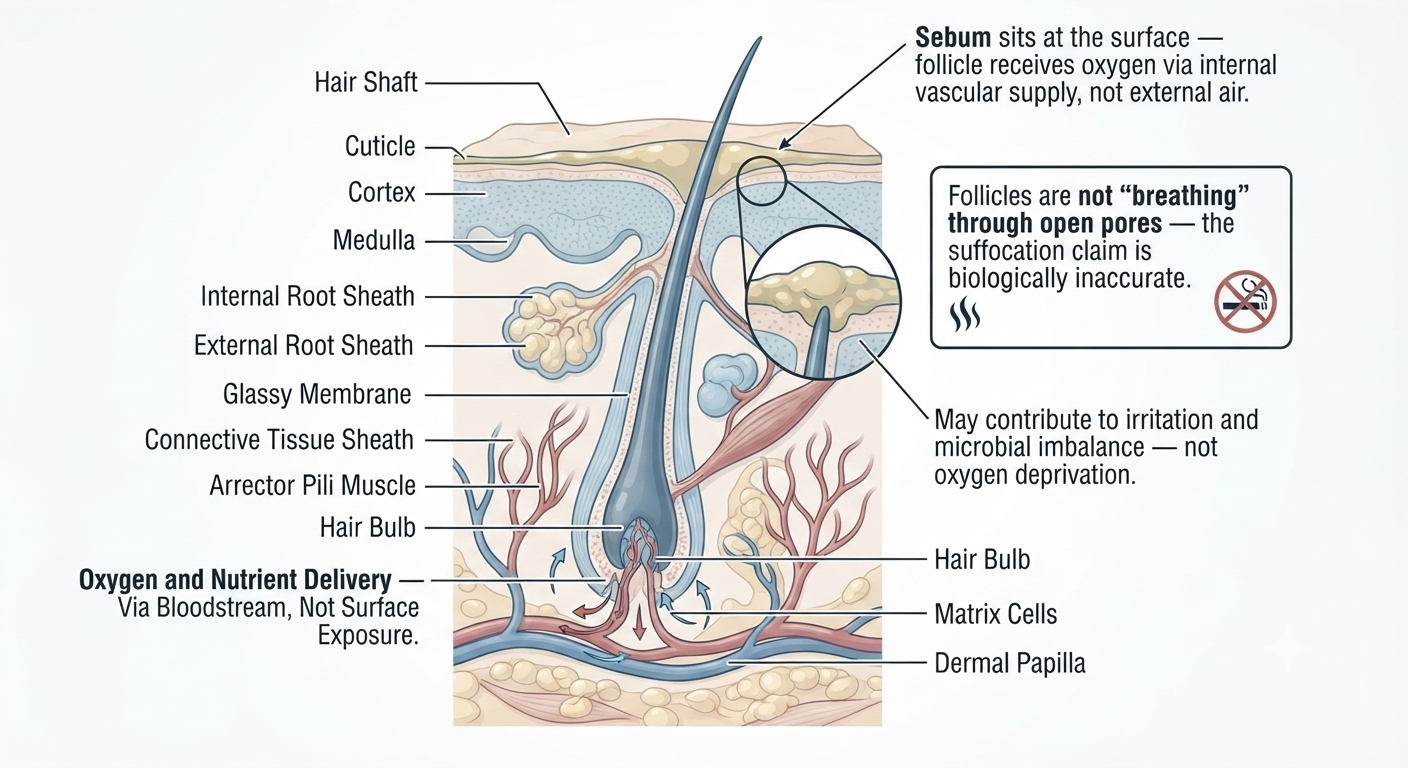
The idea that sebum completely blocks oxygen from reaching follicles is not biologically accurate.
Hair follicles are living structures supplied by blood vessels beneath the skin surface, not externally “breathing” through open pores in the way some advertisements imply.
Excess oil may contribute to irritation or microbial imbalance, but the suffocation theory is oversimplified.
Frequent harsh washing can create other problems
People distressed by scalp oil often overcompensate with aggressive washing or harsh shampoos.
This may lead to:
Scalp irritation
Barrier disruption
Dryness
Increased breakage
In some individuals, irritation itself can worsen scalp discomfort and shedding perception.
Acne-prone skin and oily scalp often coexist
Sebum production varies genetically.
People with oily skin elsewhere on the body frequently also experience:
Greasy scalp
Scalp acne
Folliculitis tendencies
Again, this reflects sebaceous gland activity rather than guaranteed follicular destruction.
Folliculitis may involve oily scalp environments
Scalp folliculitis refers to inflammation around follicles and sometimes overlaps with excess oil production.
Symptoms may include:
Tender bumps
Pustules
Itching
Crusting
Chronic inflammation may contribute to localised shedding if severe or prolonged.
Diet probably influences sebum less than people expect
Online discussions often blame specific foods for oily scalp and hair loss.
While hormones, insulin signalling, and metabolic health may influence sebum production to some degree, strong evidence linking individual foods directly to scalp oiliness remains limited.
The relationship is unlikely to be as simple as eliminating one ingredient.
Some medicated shampoos help indirectly
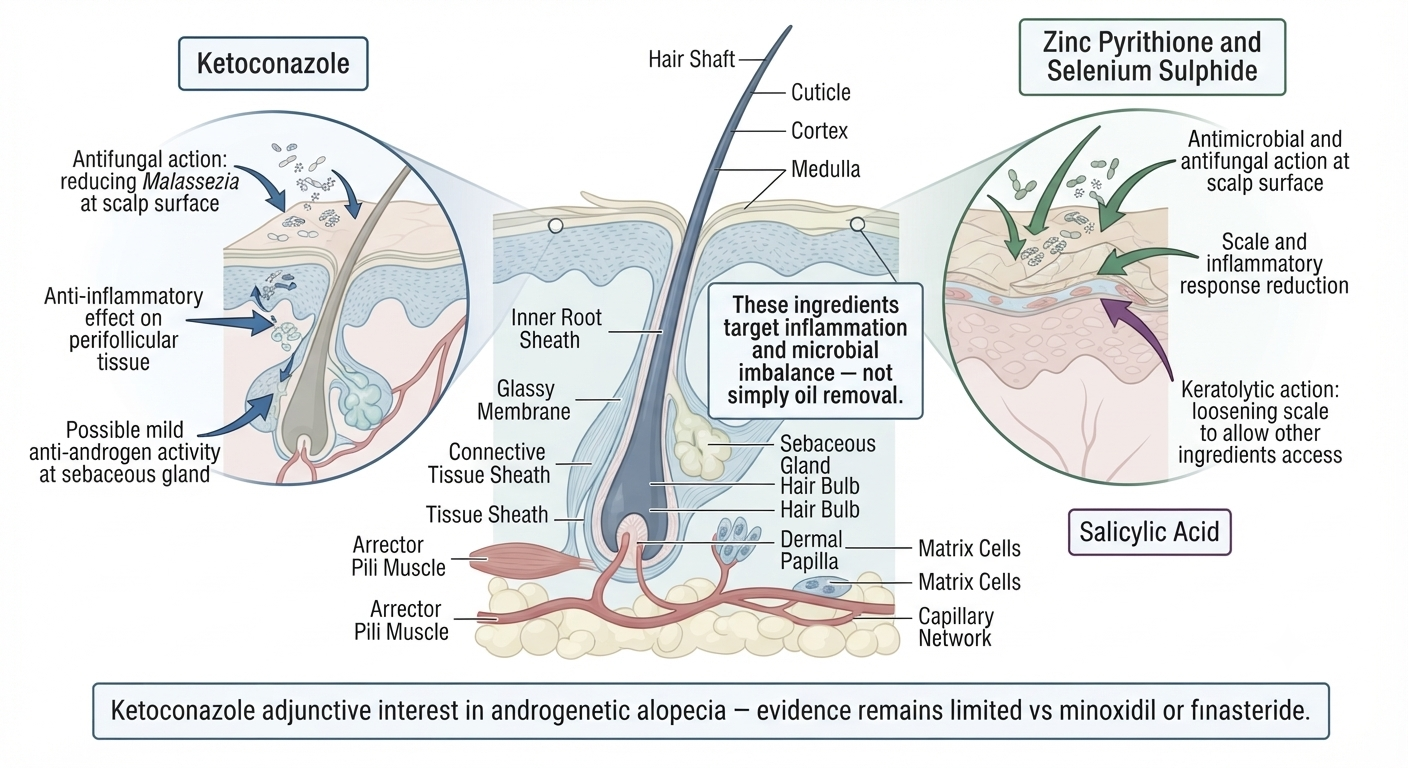
Certain shampoos may improve scalp conditions associated with excess oil and inflammation.
Common active ingredients include:
Ketoconazole
Selenium sulphide
Zinc pyrithione
Salicylic acid
These ingredients target inflammation, yeast overgrowth, or scale rather than simply “removing oil.”
Ketoconazole has attracted particular interest
Ketoconazole shampoos are often discussed in hair loss communities because they may provide anti-inflammatory effects and possibly weak anti-androgen activity.
Evidence remains limited compared with established treatments such as minoxidil or finasteride, but some clinicians use ketoconazole as an adjunctive therapy in androgenetic alopecia.
Excessive dryness is not healthier
A completely stripped, dry scalp is not automatically healthier than an oily one.
Sebum plays an important protective role. The goal is balance rather than elimination of all oil production.
Washing frequency should suit the individual
There is no universal ideal washing schedule.
Some people with oily scalps benefit from frequent washing. Others develop irritation with overcleansing.
Appropriate frequency depends on:
Sebum production
Hair texture
Scalp sensitivity
Physical activity
Concurrent scalp conditions
Hair texture affects oil distribution
Straight hair often appears greasy faster because sebum travels more easily along smooth shafts.
Curly and coily hair distribute oil differently, sometimes leaving the scalp oily while the lengths remain relatively dry.
This changes how excess sebum is experienced cosmetically.
Stress and hormones may influence oil production
Stress hormones and hormonal fluctuations may alter sebaceous gland activity in some individuals.
This partly explains why scalp oiliness sometimes fluctuates during periods of illness, stress, or hormonal change.
Oil itself is not proof of permanent hair loss
Many people with very oily scalps never develop significant alopecia.
Likewise, many individuals with advanced androgenetic alopecia do not have dramatically oily skin.
The relationship exists, but it is not absolute or simple.
The bottom line
Excess sebum does not directly “suffocate” hair follicles or independently cause most forms of permanent hair loss. However, oily scalp conditions may contribute indirectly through inflammation, seborrhoeic dermatitis, folliculitis, and cosmetic exaggeration of thinning.
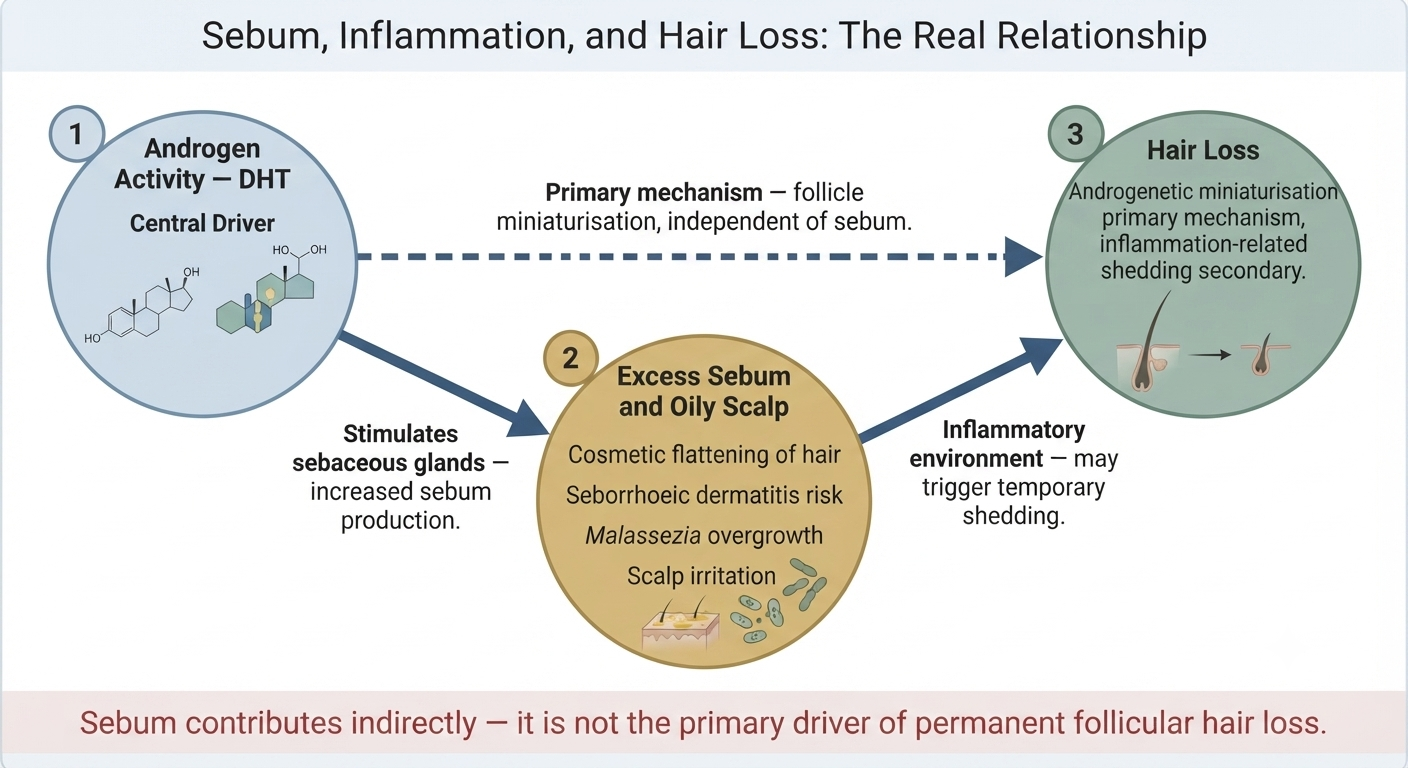
Sebum production and androgenetic alopecia often occur together because both are influenced by hormones, particularly androgens. That overlap can make the relationship appear more direct than it truly is.
Managing oily scalp conditions sensibly may improve comfort, scalp health, and the appearance of density, but treating underlying hair loss usually requires a broader medical approach than simply removing oil.
Author: Dr. Priya Goswami
Medical review: Dr. Denis Broun
Next step
If you notice coverage changes without increased shedding, confirm what process is occurring.
Take the Hair Assessment to have a physician review your pattern, identify whether miniaturization is present, and determine appropriate staging and next steps.
Add Comment