Hair health is closely tied to nutrition, but the relationship is often oversimplified online. Many articles reduce the topic to “superfoods” or miracle ingredients that supposedly accelerate growth dramatically.
Real follicle biology is less glamorous.
Hair follicles require a steady supply of protein, energy, vitamins, minerals, and fatty acids to function normally. Severe nutritional deficiency can absolutely contribute to shedding, fragility, and impaired growth. But no single food can override genetics, reverse advanced androgenetic alopecia, or create unlimited hair growth.
Diet matters most when it supports overall follicular function consistently over time.
Understanding what specific nutrients actually do helps separate evidence-based nutrition from cosmetic marketing.
Hair follicles are highly active structures
Hair follicles divide rapidly during the growth phase.
This process requires:
Protein synthesis
Cellular energy
Hormonal regulation
DNA replication
Tissue repair
When the body experiences nutritional stress, follicles may shift prematurely into resting phases because hair production is biologically non-essential compared with organs such as the heart or brain.
Protein is fundamental for hair production
Hair shafts are composed primarily of keratin protein.
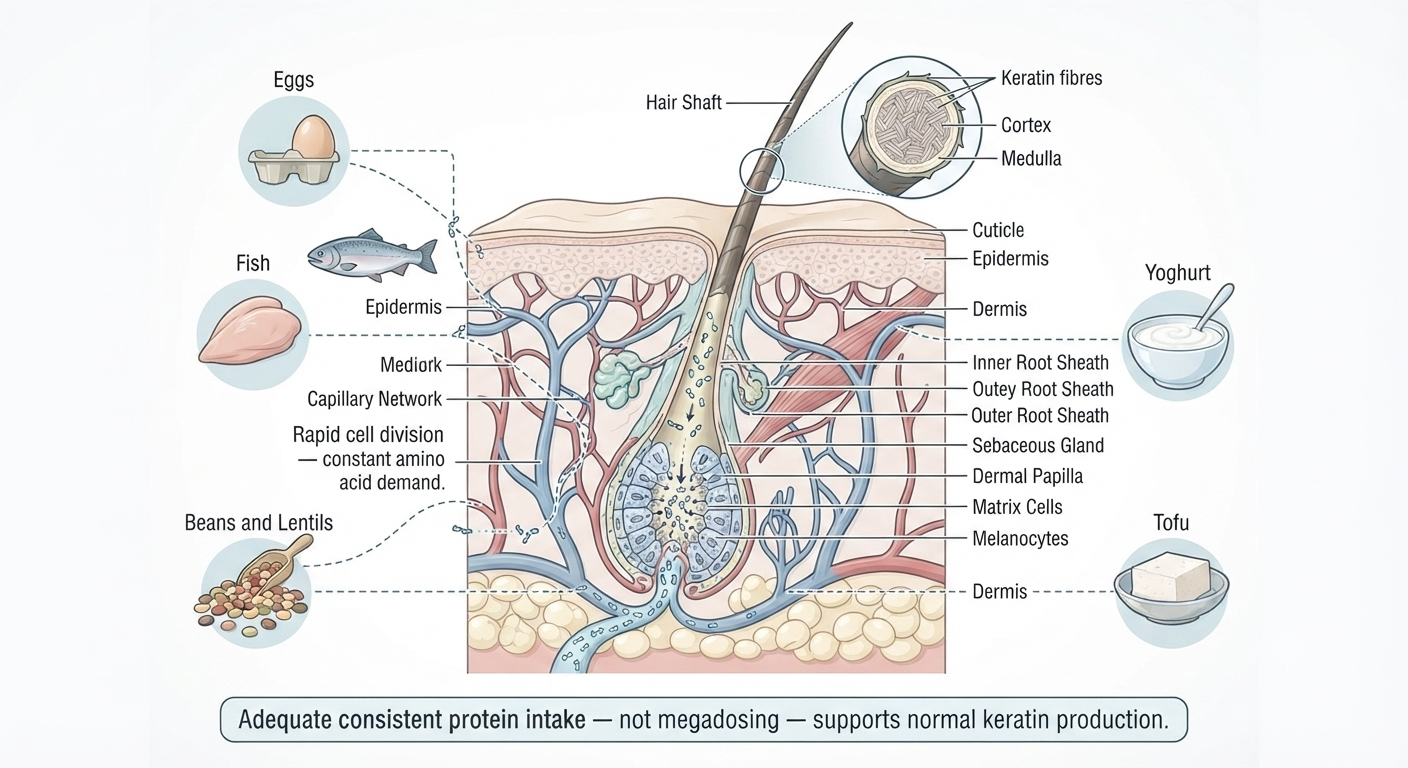
Insufficient protein intake can contribute to:
Diffuse shedding
Reduced growth
Fragile strands
Thinner hair
Protein deficiency severe enough to affect hair is more likely during:
Restrictive dieting
Eating disorders
Rapid weight loss
Certain gastrointestinal illnesses
Good dietary protein sources include:
Eggs
Fish
Poultry
Yoghurt
Beans
Lentils
Tofu
The goal is adequate consistent intake rather than excessive consumption.
Eggs provide several hair-related nutrients
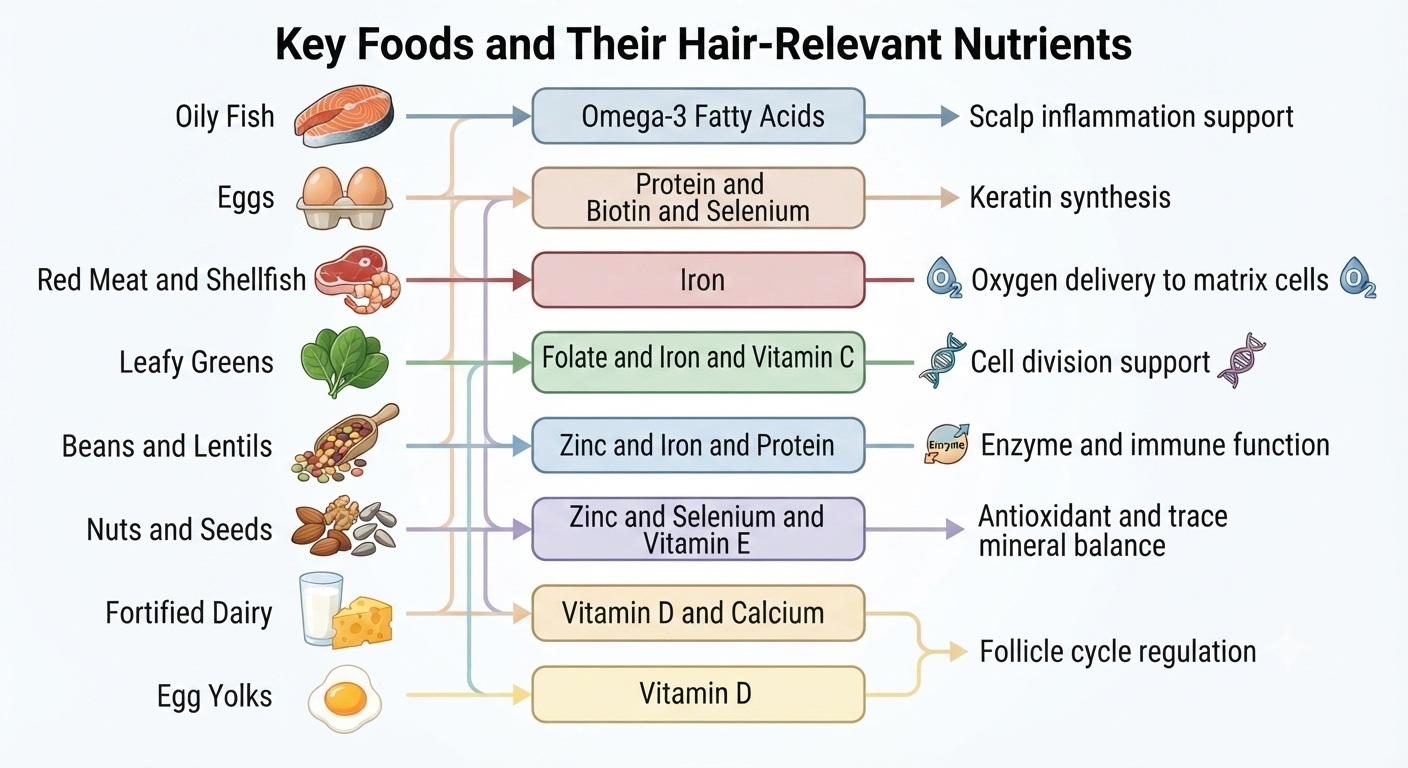
Eggs are often discussed in hair nutrition because they contain:
Protein
Biotin
Iron
Selenium
Biotin deficiency can contribute to thinning, although true deficiency remains relatively uncommon in healthy individuals.
Eggs are useful nutritionally, but eating large quantities does not automatically produce faster hair growth.
Oily fish provides omega-3 fatty acids
Salmon, sardines, and mackerel contain omega-3 fatty acids that may help support scalp and skin health.
Some studies suggest omega-3 intake could potentially influence inflammation and hair density modestly, although evidence remains limited.
Fatty fish also provides:
Protein
Vitamin D
Selenium
all relevant to broader follicular health.
Iron-rich foods matter particularly for women
Low iron stores are one of the most common medically relevant nutritional findings in diffuse hair shedding.
Iron-rich foods include:
Red meat
Lentils
Beans
Spinach
Shellfish
Animal-derived iron is generally absorbed more efficiently than plant-derived iron.
Vitamin C helps improve absorption from plant sources.
Leafy greens support multiple systems
Foods such as spinach and kale provide:
Folate
Iron
Vitamin C
Antioxidants
These nutrients contribute to normal tissue maintenance and blood formation, which indirectly supports follicular function.
However, leafy greens alone cannot compensate for severe underlying hair disorders.
Nuts and seeds provide trace minerals
Walnuts, almonds, pumpkin seeds, and sunflower seeds contain nutrients linked to hair biology, including:
Zinc
Selenium
Vitamin E
Healthy fats
Zinc deficiency in particular may contribute to shedding in some individuals.
As with most nutrients, balance matters more than extreme intake.
Vitamin D remains important
Vitamin D deficiency has been associated with several forms of hair loss, including alopecia areata and telogen effluvium.
Dietary sources include:
Oily fish
Egg yolks
Fortified dairy products
However, sunlight exposure often contributes more significantly to vitamin D status than food alone.
Legumes support plant-based diets
Beans and lentils provide:
Protein
Iron
Zinc
Biotin
For people following vegetarian or vegan diets, legumes are often important contributors to nutritional adequacy relevant to hair health.
Severe calorie restriction commonly affects hair
One of the most overlooked dietary contributors to shedding is simply inadequate energy intake.
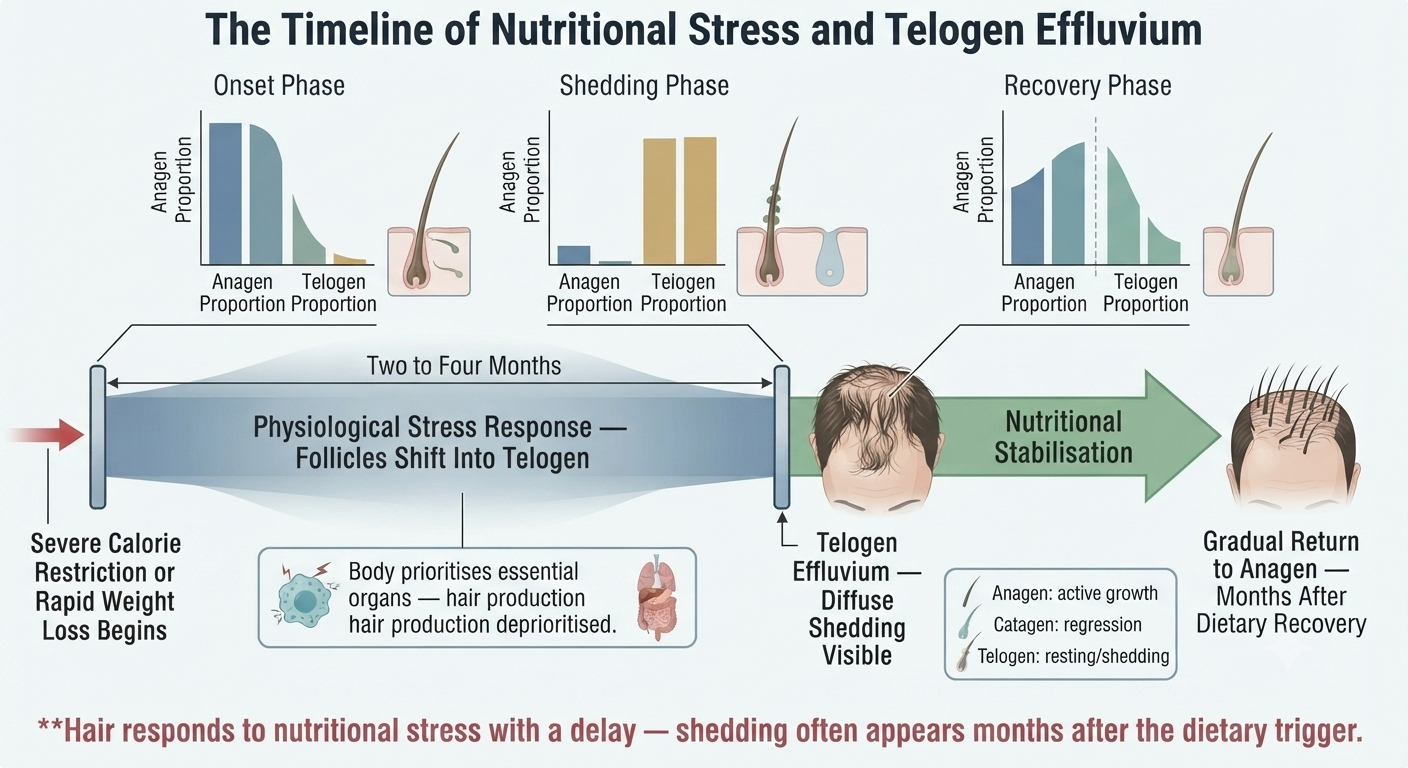
Rapid weight loss diets can trigger telogen effluvium because follicles interpret sudden caloric restriction as physiological stress.
This often leads to diffuse shedding several months after the dieting period begins.
Hair responds slowly to nutritional change
Even when nutritional deficiencies are corrected, hair recovery is gradual.
Follicles cycle slowly. Visible improvement may take several months because new growth requires time to emerge and mature.
This delay causes many people to abandon sensible dietary changes prematurely.
Collagen supplements remain controversial
Collagen products are heavily marketed for hair health.
While collagen provides amino acids involved in connective tissue structure, robust evidence showing dramatic hair growth benefits remains limited.
The body ultimately breaks dietary proteins into amino acids regardless of whether they originate from collagen or other protein sources.
Extreme supplementation can become harmful
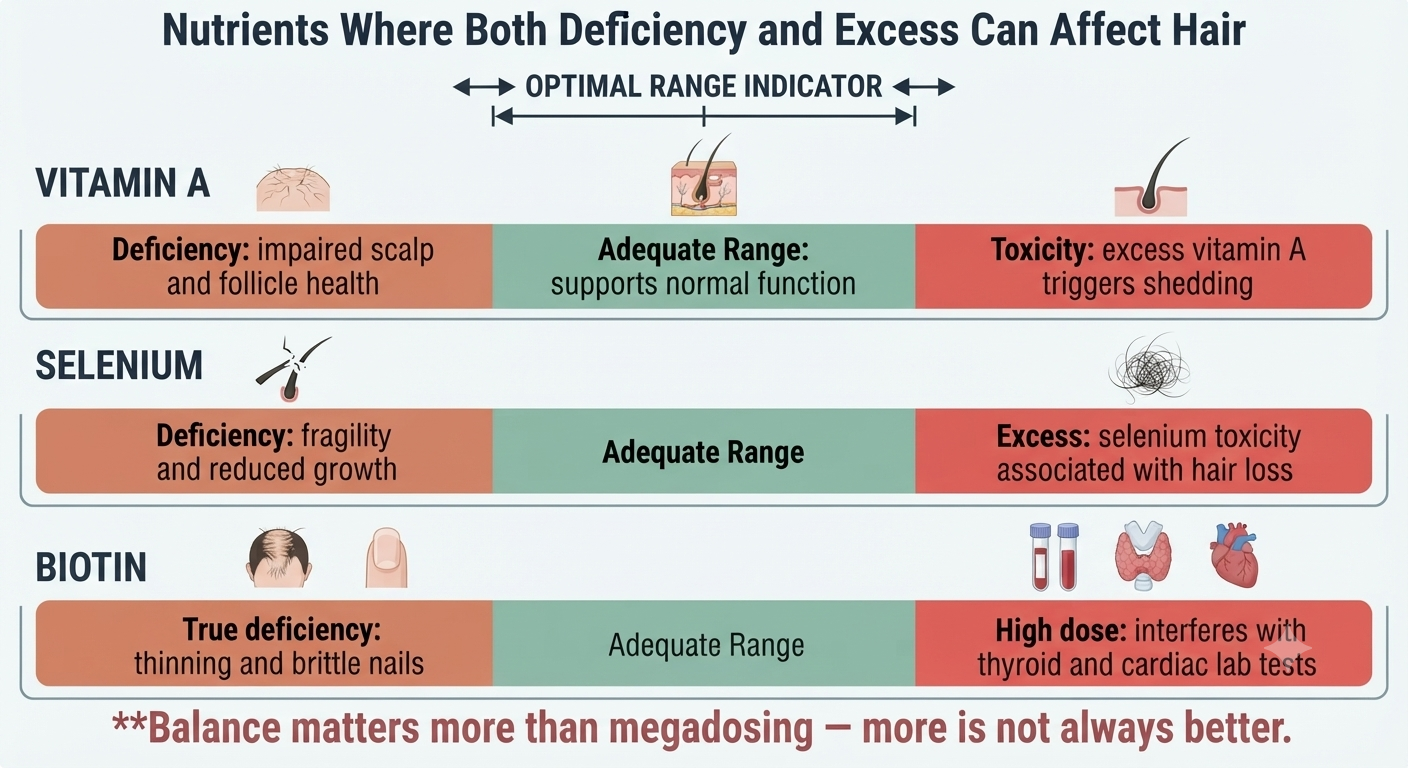
More nutrients are not always better.
Excessive intake of certain substances, including:
Vitamin A
Selenium
may actually contribute to hair shedding.
This is one reason indiscriminate supplement stacking can become counterproductive.
Mediterranean-style diets may support scalp health indirectly
Dietary patterns rich in:
Vegetables
Fish
Olive oil
Legumes
Whole grains
may help reduce systemic inflammation and support cardiovascular health.
Although not specifically “hair diets,” these eating patterns may create conditions favourable for healthier follicular function overall.
Hydration affects hair texture more than growth
Dehydration can influence scalp comfort and hair shaft appearance, but drinking excessive water does not accelerate follicular growth rates.
Hydration supports general physiological function rather than acting as a direct hair stimulant.
Crash diets commonly trigger shedding
Hair follicles are sensitive to abrupt physiological change.
Very low calorie diets and rapid body composition changes frequently precede telogen effluvium.
This type of shedding often begins several months after the triggering nutritional stress.
Processed foods are not direct causes of baldness
Online discussions sometimes falsely claim that sugar, dairy, or processed foods directly “cause” hair loss.
The evidence for these claims is weak.
Poor dietary patterns may contribute indirectly through metabolic health, inflammation, or nutritional imbalance, but hair disorders are rarely caused by one food category alone.
Nutrition cannot override strong genetics
People with androgenetic alopecia sometimes hope dietary optimisation alone will fully reverse hereditary thinning.
Good nutrition supports follicular health, but it cannot fully counteract genetically driven hormonal miniaturisation in most cases.
This distinction is important for realistic expectations.
Blood testing is sometimes useful
In persistent diffuse shedding, doctors may investigate nutritional contributors through tests such as:
Ferritin
Vitamin D
Vitamin B12
Zinc
Full blood count
This helps identify genuine deficiencies rather than relying on guesswork.
Hair health reflects overall health
Hair often responds to broader systemic wellbeing.
Nutritional adequacy, stable eating patterns, sufficient protein intake, and avoidance of severe dietary restriction are generally more important than chasing fashionable “hair foods.”
The bottom line
Diet plays a meaningful role in follicle health because hair production depends on adequate protein, vitamins, minerals, and energy availability. Foods rich in iron, protein, omega-3 fatty acids, zinc, vitamin D, and other essential nutrients may help support normal hair growth and reduce deficiency-related shedding.
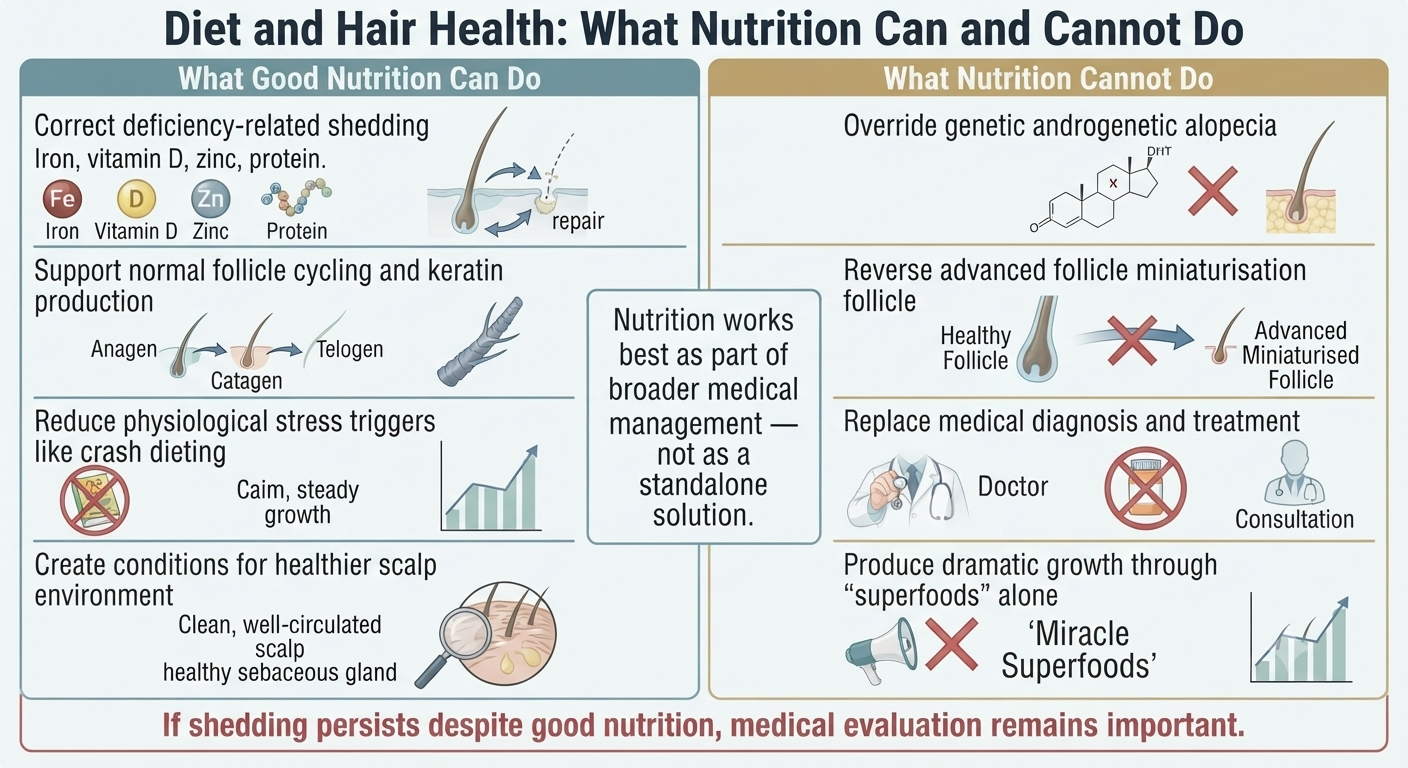
However, no single food can dramatically override genetics or cure all forms of hair loss. Hair nutrition works best as part of broader medical and lifestyle management rather than as a standalone solution driven by marketing claims about “superfoods.”
Author: Dr. Priya Goswami
Medical review: Dr. Denis Broun
Next step
If you notice coverage changes without increased shedding, confirm what process is occurring.
Take the Hair Assessment to have a physician review your pattern, identify whether miniaturization is present, and determine appropriate staging and next steps.
Add Comment