Many people are surprised to discover that finasteride comes in more than one strength.
Some receive a prescription for a 1mg tablet. Others notice that 5mg tablets are available and wonder whether taking the larger dose will produce faster or better hair growth.
It’s a reasonable question.
The answer, however, is not as simple as “more medicine equals more results.”
For most men with androgenetic alopecia, current evidence suggests that the lower dose is usually the appropriate choice.
Why are there two doses?
The different strengths exist because they were developed for different medical conditions.
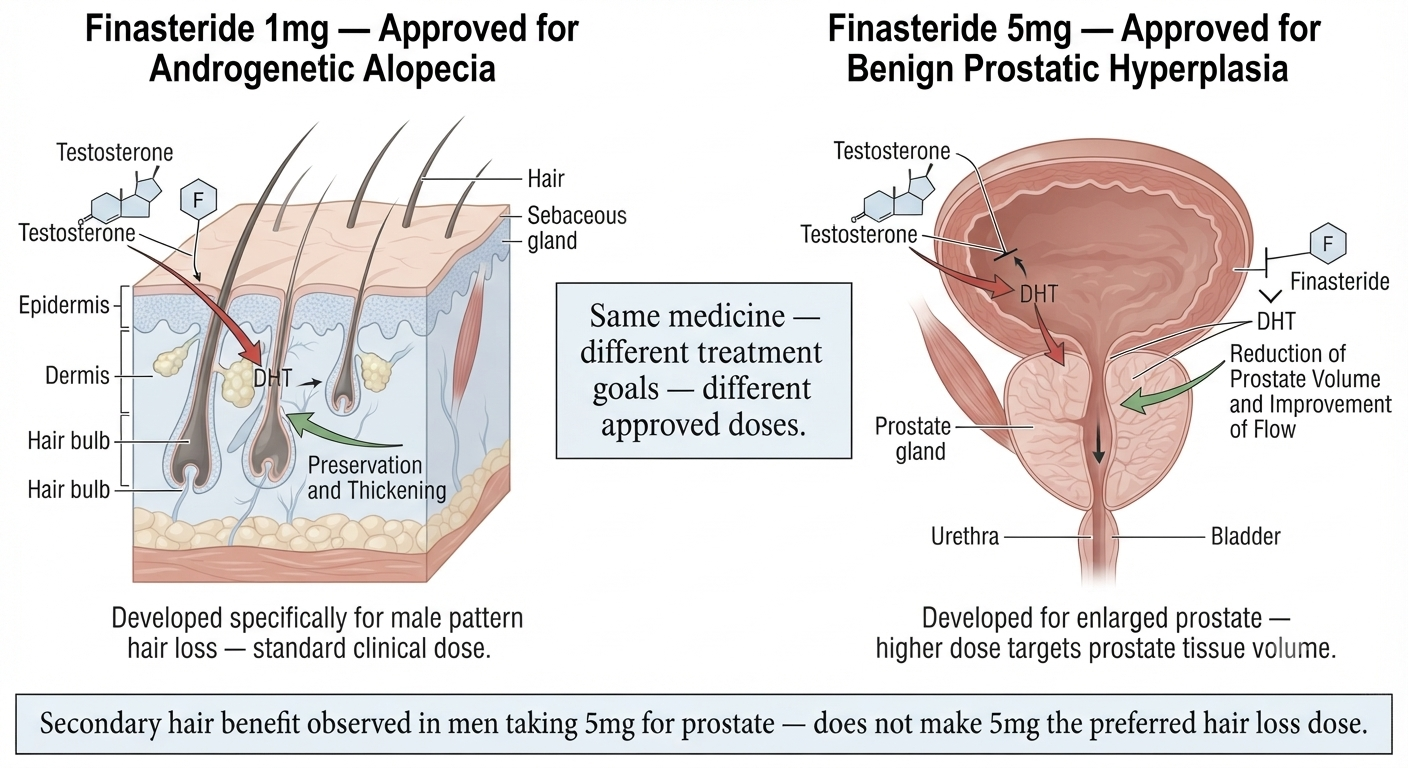
The 5mg tablet was introduced to treat benign prostatic hyperplasia, commonly known as an enlarged prostate.
Later, researchers found that a much lower daily dose was also effective for male pattern hair loss.
That research led to the development and approval of the 1mg dose specifically for androgenetic alopecia in many countries.
Although the medicine is the same, the treatment goals are different.
How does finasteride work?
Finasteride blocks an enzyme called 5-alpha reductase type II.
This enzyme converts testosterone into dihydrotestosterone (DHT).
In genetically susceptible hair follicles, DHT contributes to gradual miniaturisation. Over time, follicles produce thinner, shorter hairs until some eventually stop producing visible hair.
By lowering DHT levels, finasteride helps slow this process and allows many follicles to remain active for longer.
What does the research show?
Clinical studies have compared different doses of finasteride.
The findings are remarkably consistent.
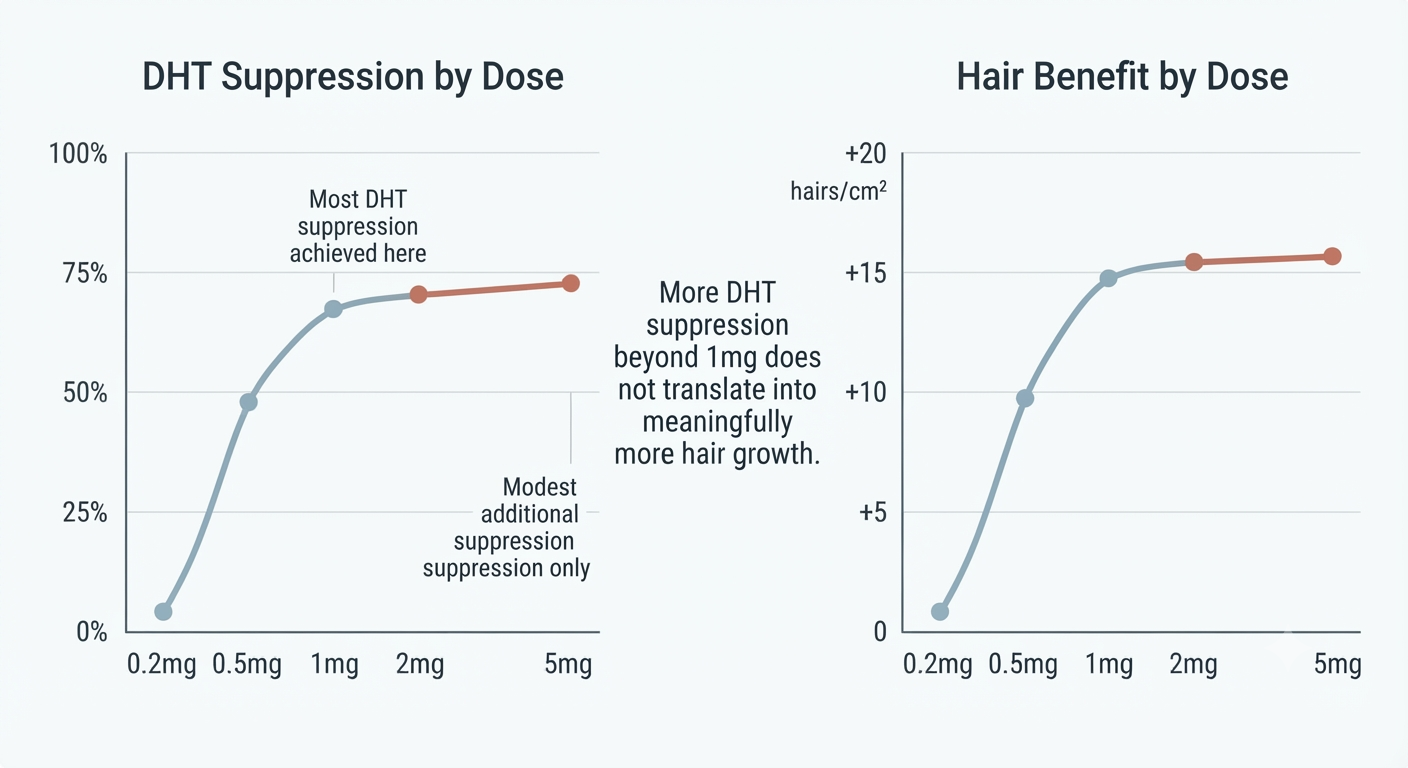
A daily dose of 1mg produces substantial suppression of DHT and has demonstrated meaningful improvements in hair count and slowing of hair loss in many men.
Increasing the dose to 5mg lowers DHT slightly further, but this has not translated into consistently better hair growth in clinical studies.
In other words, most of the benefit appears to be achieved at the lower dose.
Why more is not always better
Many medicines have an optimal dose.
Once that level is reached, increasing the dose may produce very little additional benefit while increasing exposure to potential side effects.
Finasteride appears to follow this pattern in the treatment of androgenetic alopecia.
Taking five times the amount does not mean five times the hair growth.
For most patients, the biological response reaches an effective plateau at approximately 1mg daily.
What about side effects?
Like any prescription medicine, finasteride can cause side effects.
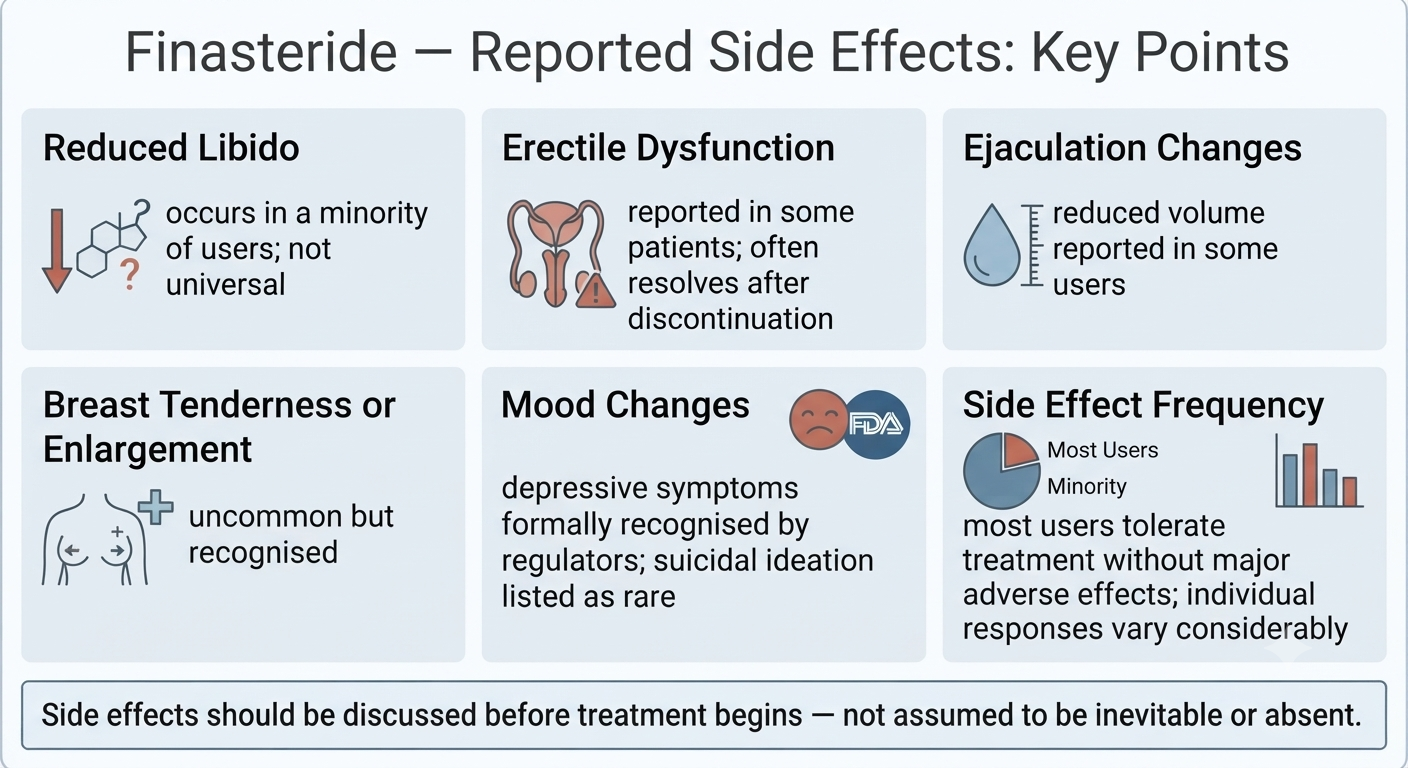
Reported effects may include:
- Reduced libido
- Erectile dysfunction
- Changes in ejaculation
- Breast tenderness or enlargement
- Mood changes in some individuals
Most people tolerate treatment well, and reported side effects occur in a minority of patients. However, the possibility should always be discussed before treatment begins.
Research has not conclusively shown that every individual experiences more side effects at 5mg than at 1mg, but greater overall exposure to the medicine is one reason why higher doses are not routinely used for hair loss.
Who might receive 5mg?
Some men take 5mg because they are being treated for an enlarged prostate.
If they also have androgenetic alopecia, they may notice benefits for their hair as a secondary effect.
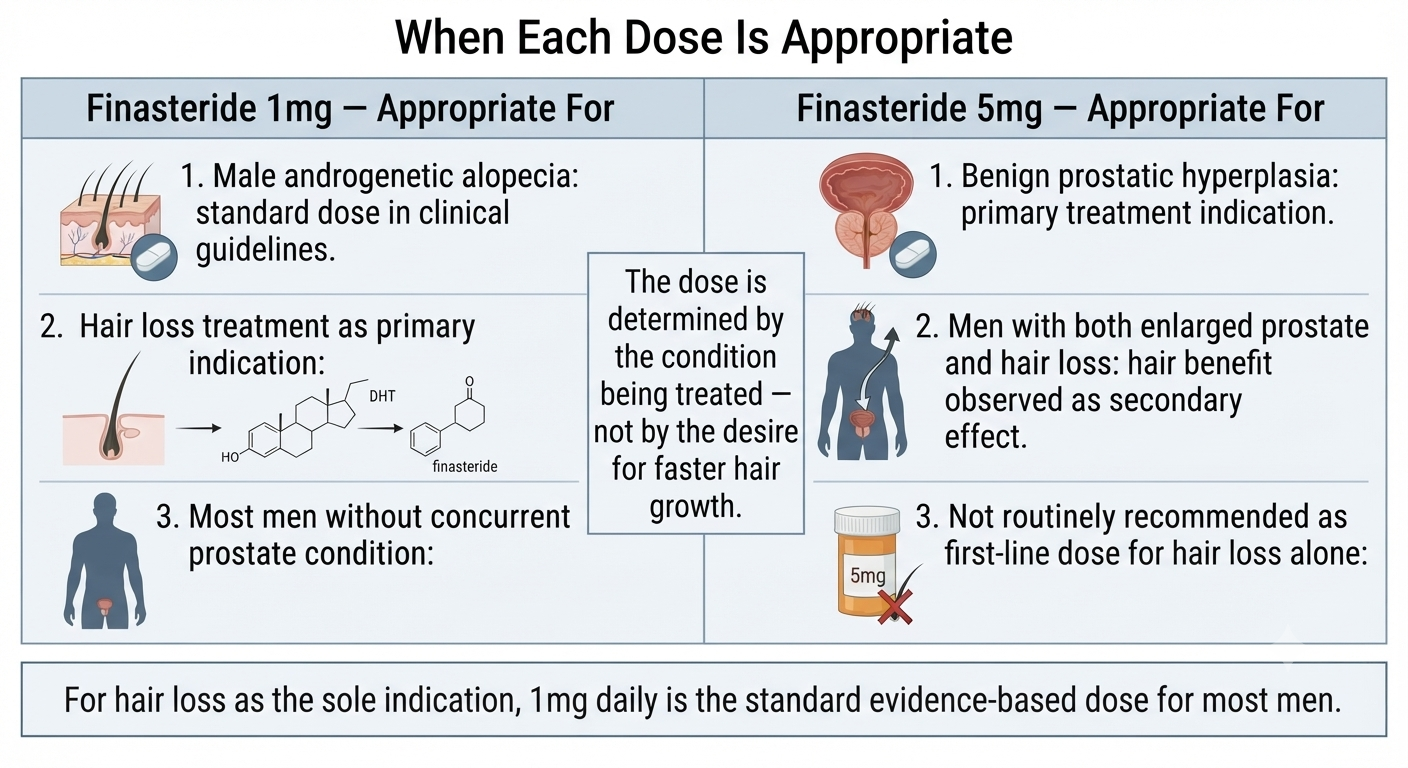
This does not mean that 5mg is considered the preferred dose for treating hair loss alone.
The reason for prescribing the higher strength is usually the prostate condition rather than the scalp.
Does the same advice apply to women?
Hair loss in women is more complex.
Finasteride is not routinely used for female pattern hair loss, and recommendations differ according to age, menopausal status and reproductive considerations.
Women should not assume that the dosing used for male pattern hair loss automatically applies to them.
Treatment decisions require individual medical assessment.
Should you split a 5mg tablet?
Some people consider dividing a 5mg tablet into smaller pieces.
Whether this is appropriate depends on local prescribing practices, tablet formulation and advice from the prescribing clinician.
Medication should not be altered without professional guidance.
Choosing the right dose
The goal of treatment is not to take the largest possible dose.
It is to take the dose that provides the best balance between effectiveness and safety for the condition being treated.
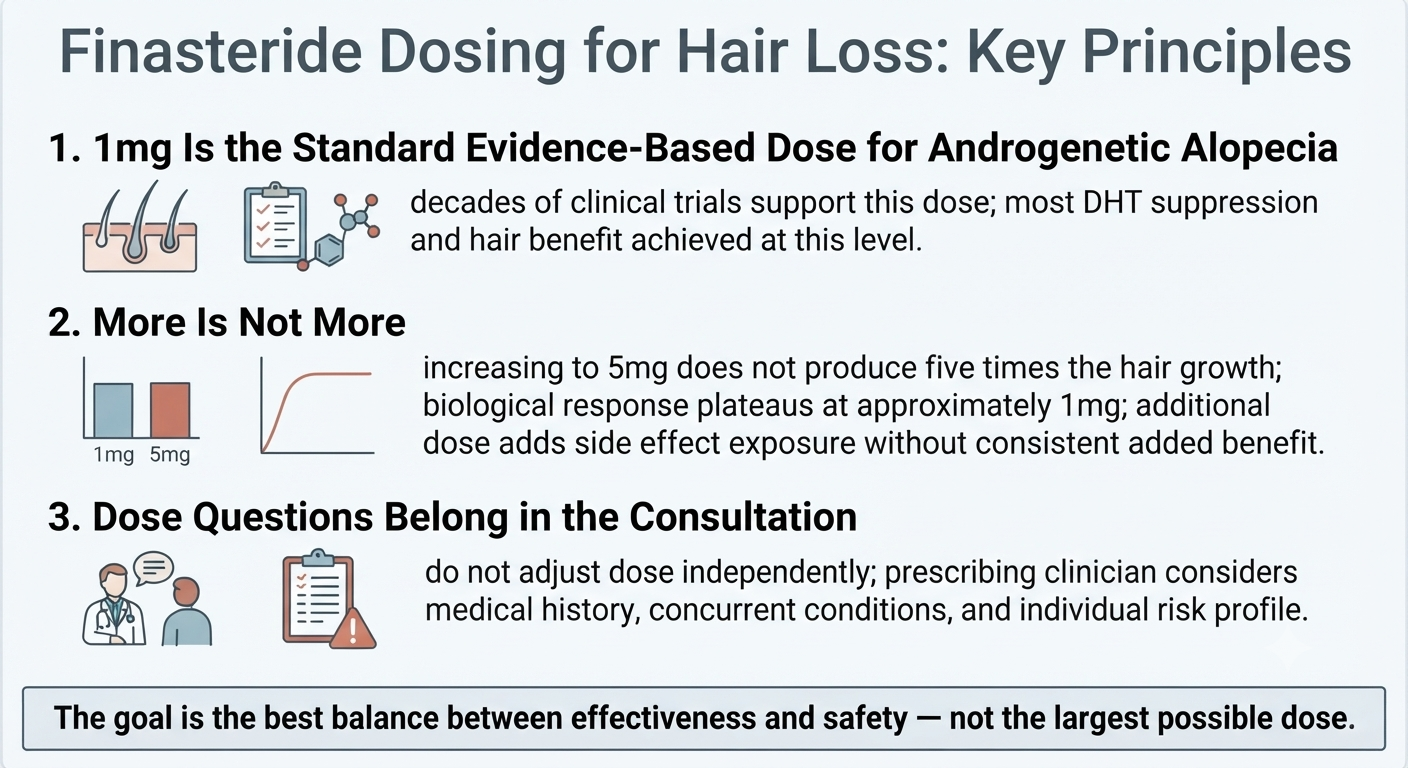
For androgenetic alopecia, decades of clinical research support 1mg daily as the standard dose for most men.
If questions arise about dosing, side effects or expected results, they are best discussed before treatment begins rather than after changing the dose independently.
Author: Dr. Priya Goswami
Medical review: Dr. Denis Broun
Next step
If you notice coverage changes without increased shedding, confirm what process is occurring.
Take the Hair Assessment to have a physician review your pattern, identify whether miniaturization is present, and determine appropriate staging and next steps.
Add Comment