Many people think the decision is simple.
If you’re losing hair, you have a transplant.
In reality, experienced hair transplant surgeons often spend more time deciding whether someone should have surgery than discussing how to perform it.
A hair transplant can produce excellent results in carefully selected patients. It can also produce disappointing outcomes if performed for the wrong reasons or at the wrong stage of hair loss.
The consultation is therefore designed to answer one important question:
Will surgery still look good years from now, not just a few months after the procedure?
The diagnosis comes first
Before discussing graft numbers or hairlines, a surgeon needs to know why the hair loss is happening.
Hair transplantation is most commonly performed for:
- Male pattern hair loss
- Female pattern hair loss in selected patients
- Stable scar-related hair loss
- Some cases of eyebrow or beard restoration
It is generally not the first treatment for conditions such as:
- Alopecia areata
- Active scarring alopecias
- Ongoing inflammatory scalp disease
- Temporary shedding disorders such as telogen effluvium
If the underlying condition has not been correctly diagnosed, surgery may not solve the problem.
The donor area is just as important
Every transplanted hair must come from somewhere.
Most donor follicles are taken from the back and sides of the scalp because these areas are usually more resistant to androgenetic alopecia.
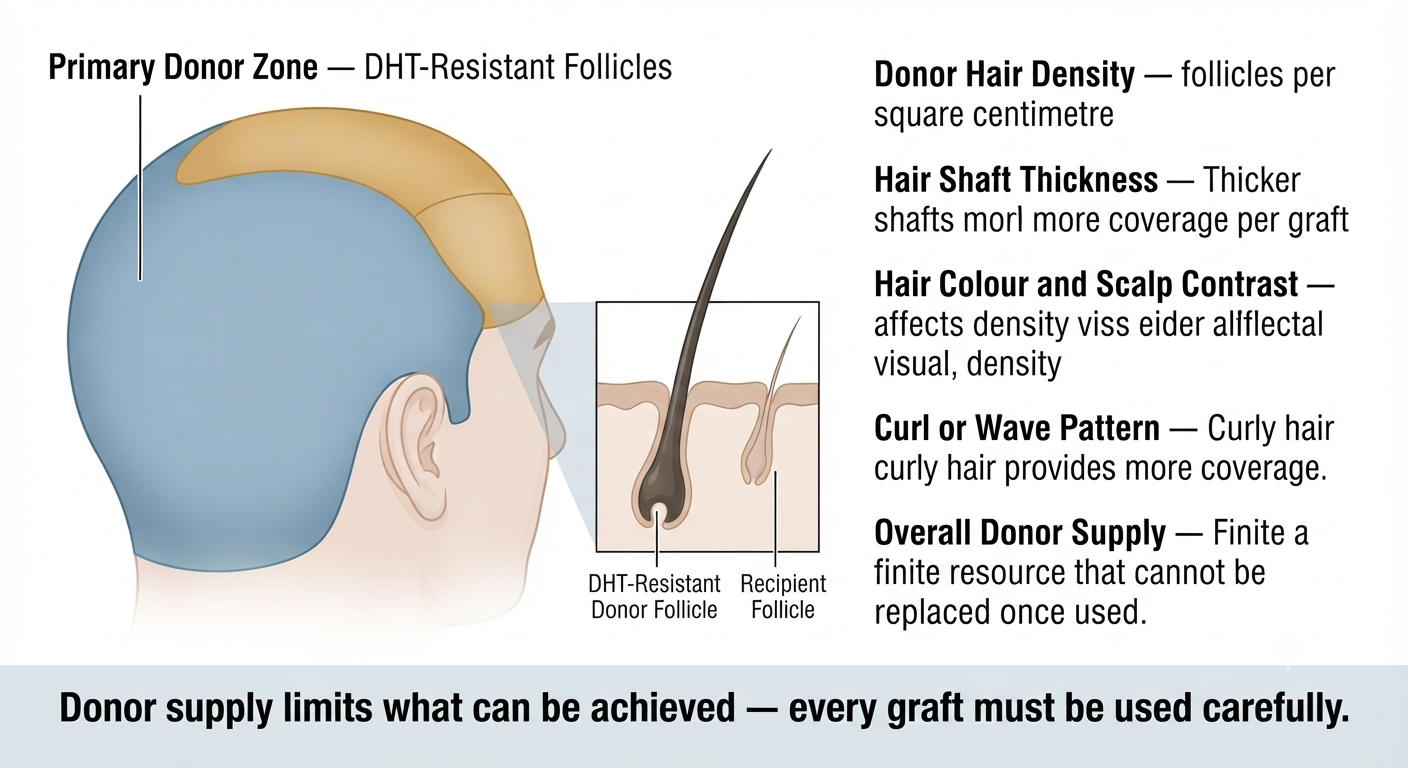
During assessment, the surgeon considers:
- Donor hair density
- Hair shaft thickness
- Hair colour
- Curl or wave pattern
- Overall scalp laxity if FUT is being considered
A limited donor supply means every graft must be used carefully.
Donor hair is a finite resource that cannot be replaced once transplanted.
How stable is the hair loss?
Timing matters.
Someone whose hair loss is progressing rapidly may continue losing native hair after surgery.
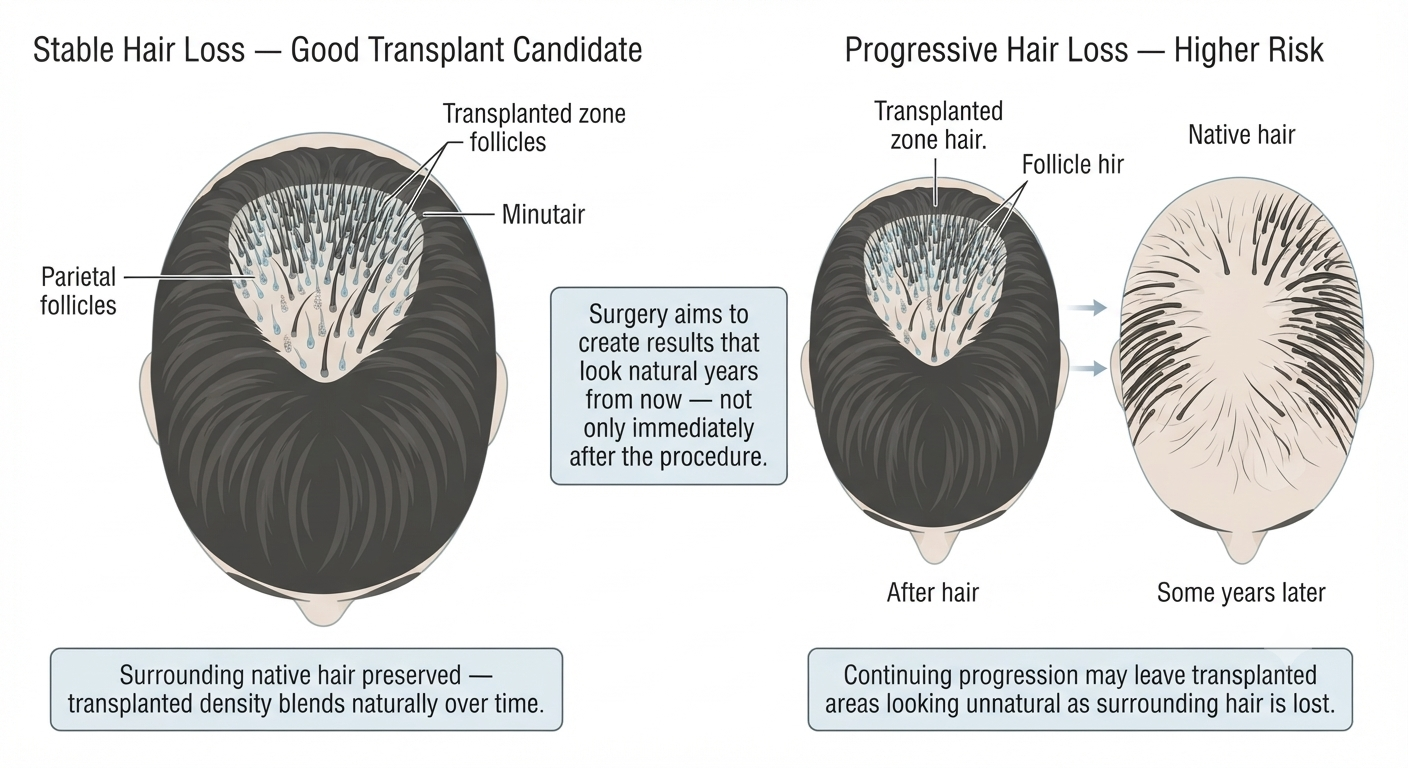
This can leave transplanted areas looking isolated while surrounding hair becomes thinner.
For this reason, surgeons often assess:
- How long hair loss has been present
- Whether the pattern appears stable
- Family history
- Previous treatments
- Likely future progression
The aim is to create a result that continues to look natural over time.
Does age matter?
Age alone does not determine suitability.
However, very young patients require particularly careful assessment.
Hair loss that begins in the late teens or early twenties may continue progressing for many years.
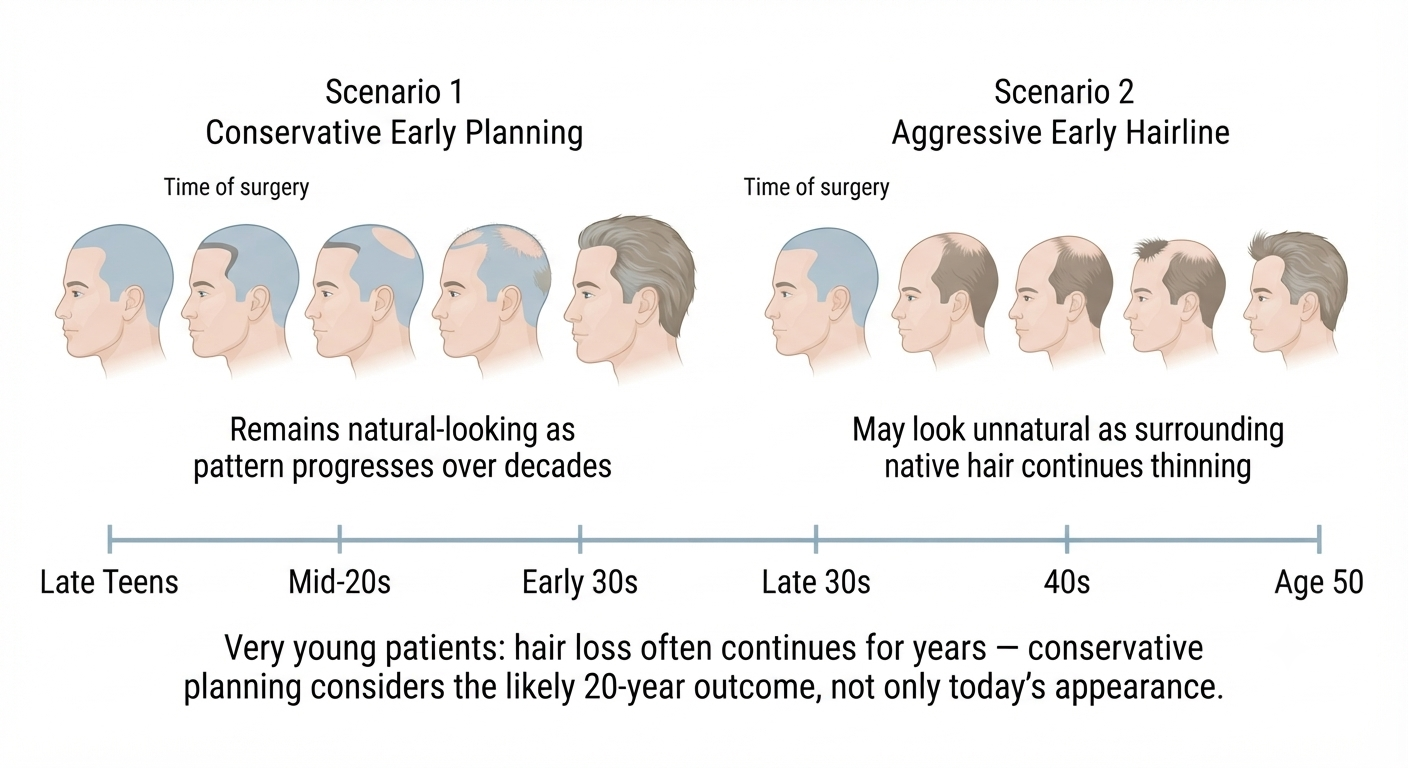
Designing a low, youthful hairline too early may create challenges if further hair loss develops later.
Many surgeons prefer conservative planning that takes future changes into account.
General health is also considered
Although hair transplantation is usually performed under local anaesthetic, it is still a surgical procedure.
The consultation typically includes questions about:
- Medical history
- Current medications
- Smoking
- Bleeding disorders
- Previous scalp surgery
- Skin conditions
These factors help determine both safety and expected healing.
What about expectations?
Perhaps the most important assessment has nothing to do with the scalp.
It involves understanding what the patient hopes to achieve.
Hair transplantation improves the appearance of hair density.
It does not create unlimited hair.
The available donor supply places natural limits on what can be achieved.
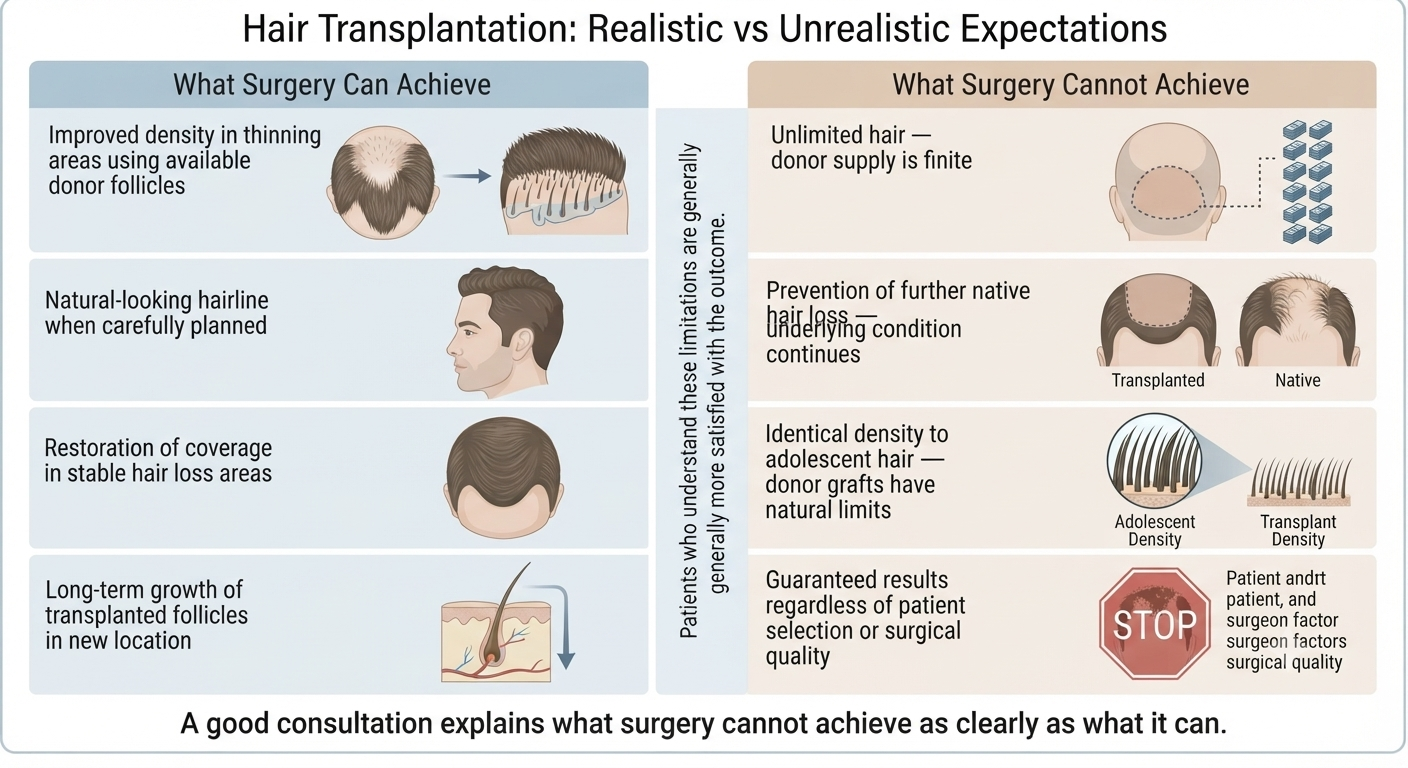
A good consultation explains:
- What is realistically possible
- What density can be expected
- Whether multiple procedures may be needed
- What surgery cannot achieve
Patients who understand these limitations are generally more satisfied with the outcome.
How can you prepare for a consultation?
Before meeting a surgeon, it is helpful to think about:
- When the hair loss started
- How quickly it has progressed
- Any previous treatments
- Medical conditions
- Medications you take
- Family history of hair loss
Bringing older photographs can also help demonstrate how the pattern has changed over time.
Questions worth asking
A thorough consultation should leave you with a clear understanding of your options.
Useful questions include:
- What type of hair loss do I have?
- Am I a suitable candidate now?
- Is my donor area sufficient?
- How many grafts are likely to be needed?
- What result is realistic?
- Could my hair loss continue after surgery?
- Should I consider medical treatment before or after transplantation?
The best candidates are not always the ones with the most hair loss
A successful hair transplant depends on careful planning rather than simply replacing missing hair.
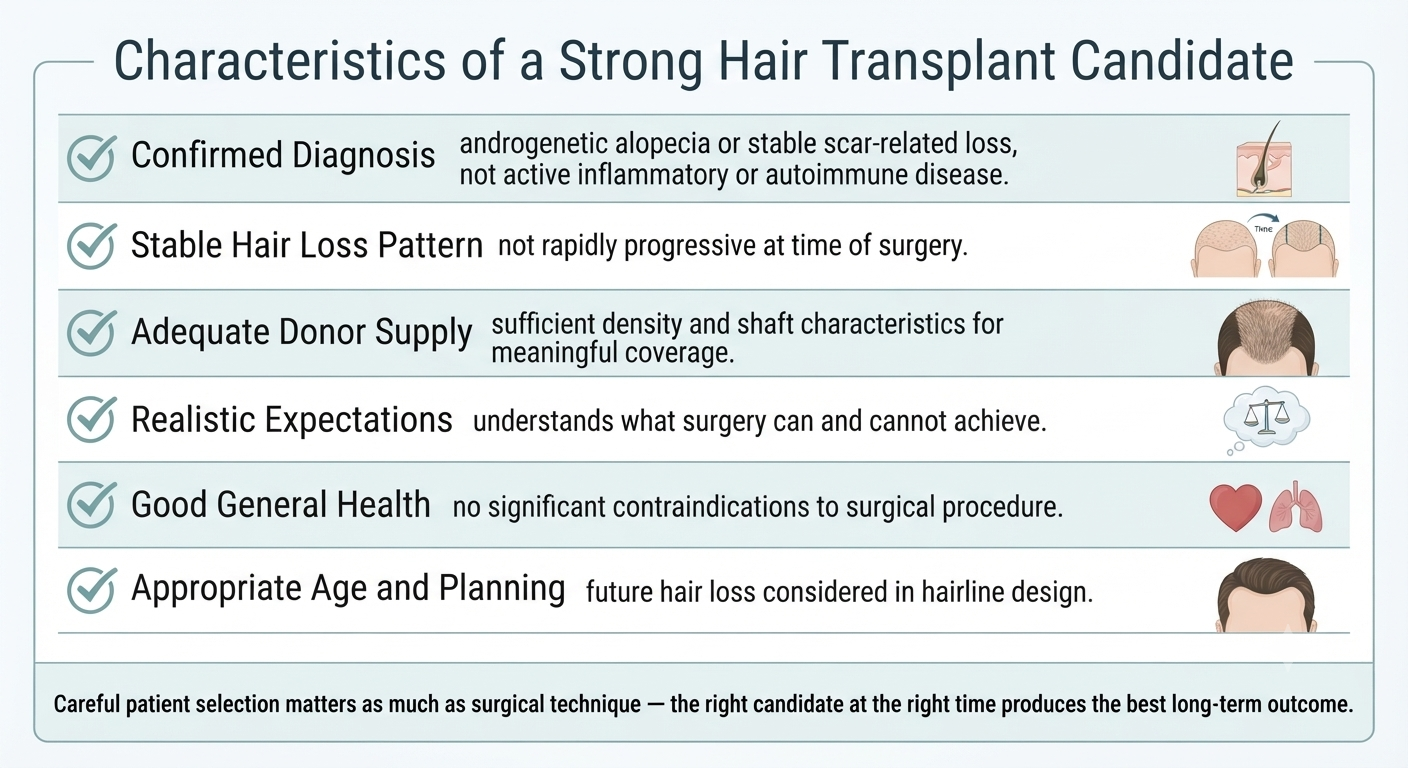
The strongest candidates are usually those with a confirmed diagnosis, stable hair loss, an adequate donor supply and realistic expectations about what surgery can achieve.
Choosing the right time and the right patient is often just as important as the surgical technique itself.
Author: Dr. Priya Goswami
Medical review: Dr. Denis Broun
Next step
If you notice coverage changes without increased shedding, confirm what process is occurring.
Take the Hair Assessment to have a physician review your pattern, identify whether miniaturization is present, and determine appropriate staging and next steps.

Add Comment