Many people use the terms “hair shedding” and “hair thinning” interchangeably. In reality, they describe two different biological processes. Understanding the distinction is important because the causes, timing, and implications are not always the same.
Seeing hair on a pillow, in the shower, or in a hairbrush does not automatically mean that permanent hair loss is occurring. At the same time, noticeable thinning can develop even when daily shedding appears relatively normal.
Hair follicles continuously move through cycles of growth, transition, and rest. Changes in these cycles affect how much hair is shed and how dense the hair appears on the scalp.
The normal hair growth cycle
Each hair follicle functions independently.
During the growth phase, known as the anagen phase, the follicle actively produces a hair shaft. This phase can last several years on the scalp.
After this period, the follicle enters a short transition stage followed by a resting phase called the telogen phase. At the end of the telogen phase, the hair is released and naturally sheds from the scalp.
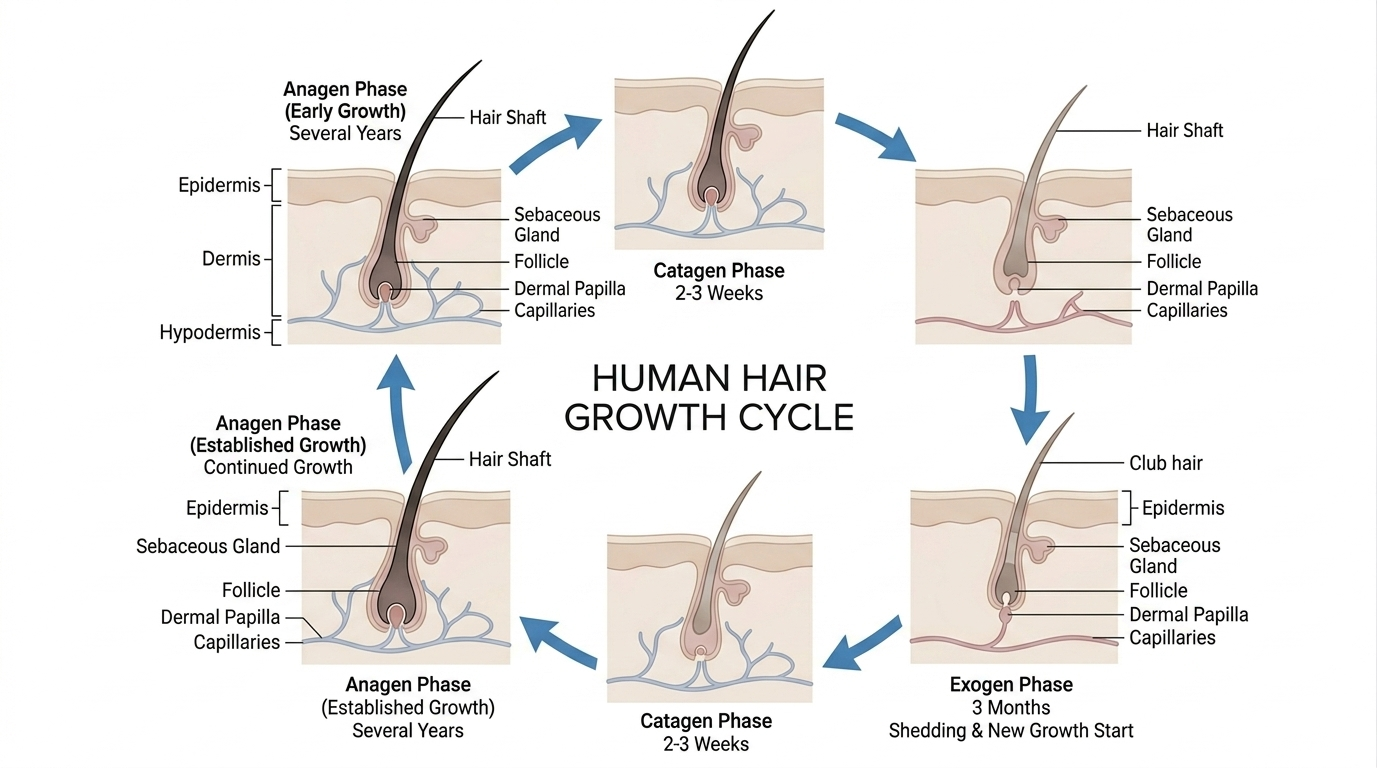
A new growth cycle then begins.
Because follicles cycle independently, shedding occurs gradually every day as part of normal scalp biology.
Normal daily shedding
A healthy scalp normally sheds hair continuously.
Most individuals lose approximately 50 to 100 hairs per day. These hairs are replaced by new hairs entering the next growth cycle.
Normal shedding usually goes unnoticed because the number of hairs entering the growth phase balances the number of hairs leaving the resting phase.
This process does not reduce visible hair density.
What hair shedding means
Hair shedding refers to the release of hairs from follicles that have entered the resting phase of the cycle.
Increased shedding occurs when a larger number of follicles enter the telogen phase simultaneously. Several months later, these resting hairs are released from the scalp.
This process is commonly seen in telogen effluvium.
Increased shedding is often diffuse, meaning it occurs across the entire scalp rather than in specific areas.
Triggers of increased shedding
Several physiological events can disrupt the balance of the hair cycle.
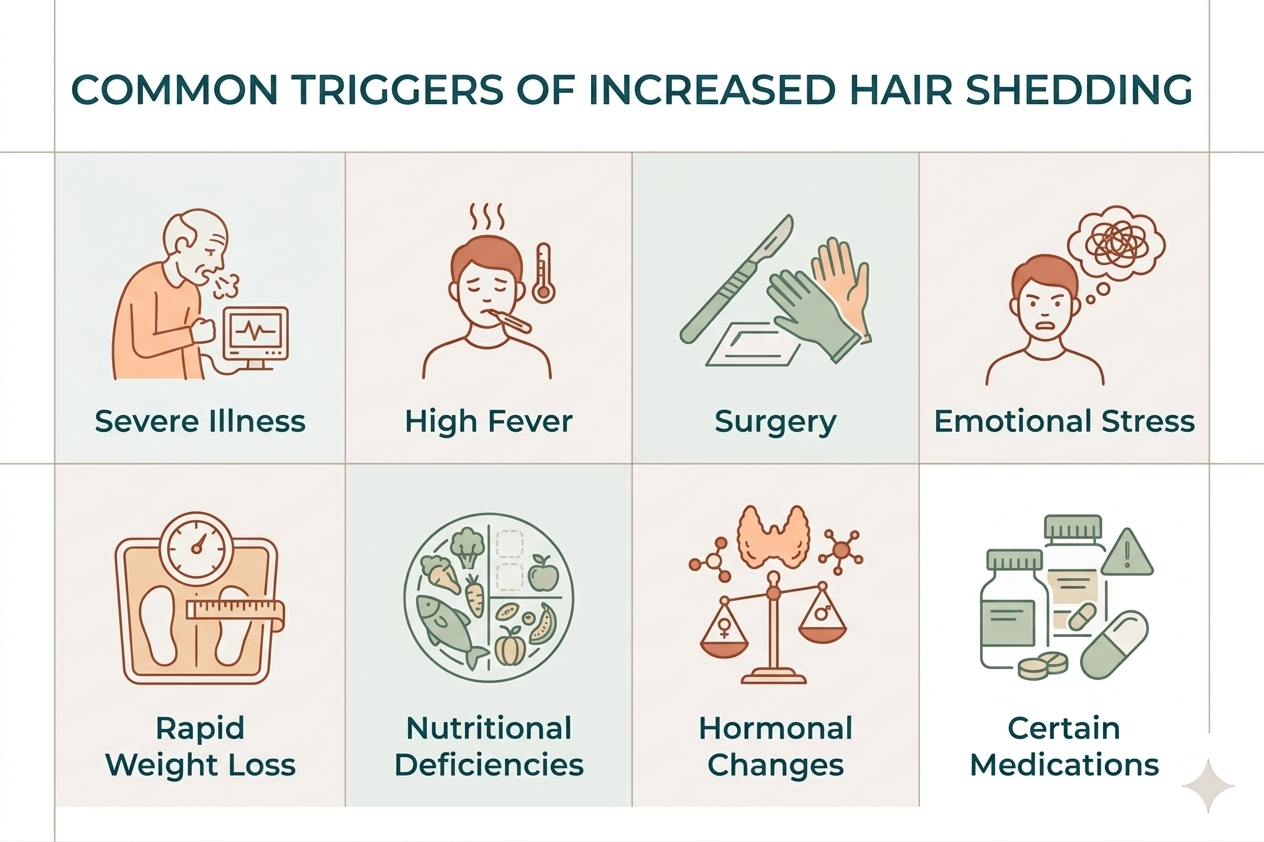
Common triggers include:
- severe illness
- high fever
- surgery
- significant emotional stress
- rapid weight loss
- nutritional deficiencies
- hormonal changes
- certain medications
When these events occur, many follicles may shift prematurely into the resting phase.
Because the telogen phase lasts several months, shedding usually appears after a delay.
What hair thinning means
Hair thinning refers to a reduction in visible hair density or hair shaft thickness.
This may occur because:
- individual hairs become finer
- follicles produce shorter hairs
- fewer hairs actively grow in a given area
- follicles gradually miniaturise over time
Hair thinning often develops slowly and progressively.
Unlike temporary shedding, thinning usually reflects changes occurring within the follicle itself.
Follicle miniaturisation
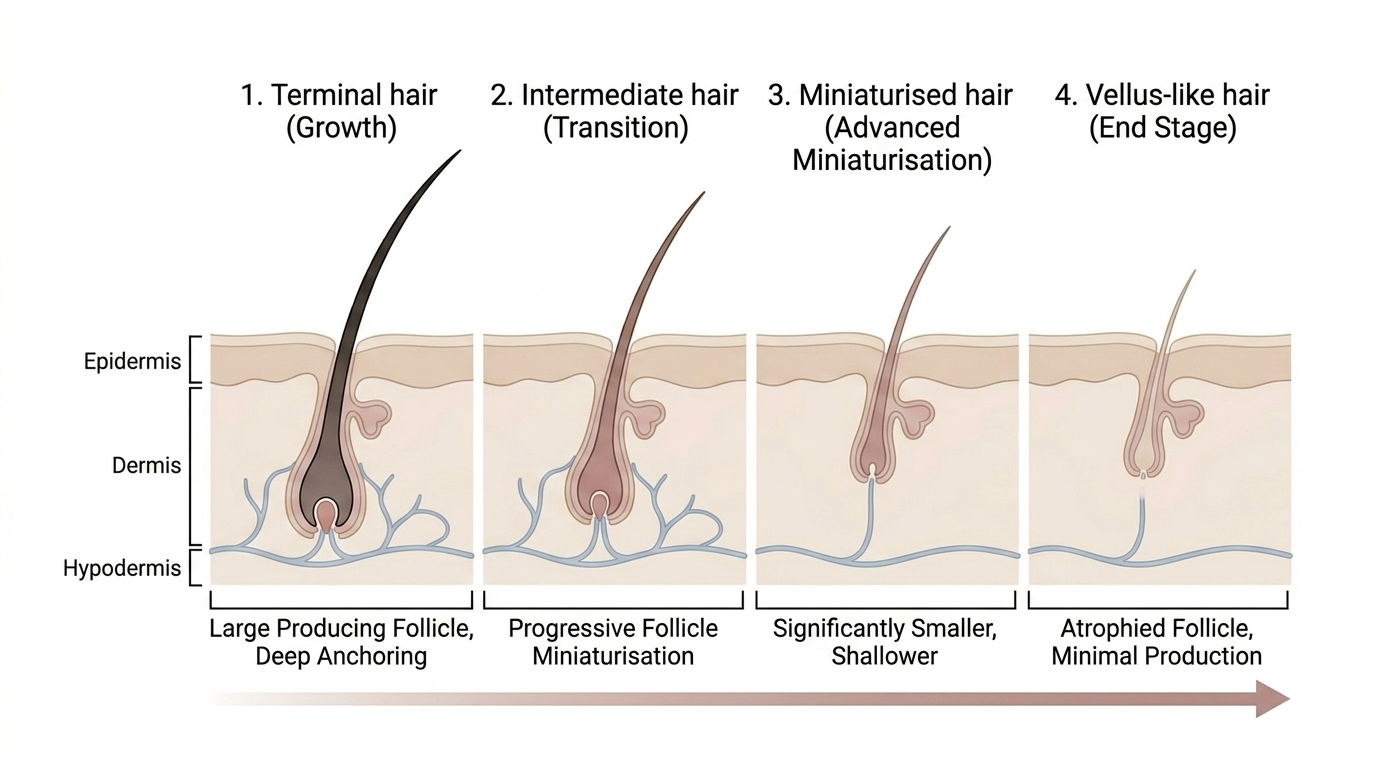
In androgenetic alopecia, also known as male or female pattern hair loss, follicles gradually become smaller over successive growth cycles.
This process is known as miniaturisation.
Miniaturised follicles produce thinner and shorter hairs with each cycle. Over time, thick terminal hairs are replaced by finer hairs that provide less scalp coverage.
As this process continues, visible hair density decreases.
Thinning without excessive shedding
One important point is that thinning can occur even when shedding appears normal.
In androgenetic alopecia, the number of hairs shed each day may remain relatively stable. The change occurs because the replacement hairs become progressively finer.
As a result, the scalp may appear thinner even without dramatic increases in daily hair fall.
Diffuse thinning versus shedding
Diffuse thinning and diffuse shedding may appear similar initially, but they involve different biological mechanisms.
Diffuse shedding usually reflects a temporary disturbance of the hair cycle. The follicles remain capable of producing normal hair once the cycle stabilises.
Diffuse thinning often reflects gradual follicle changes that reduce hair thickness over time.
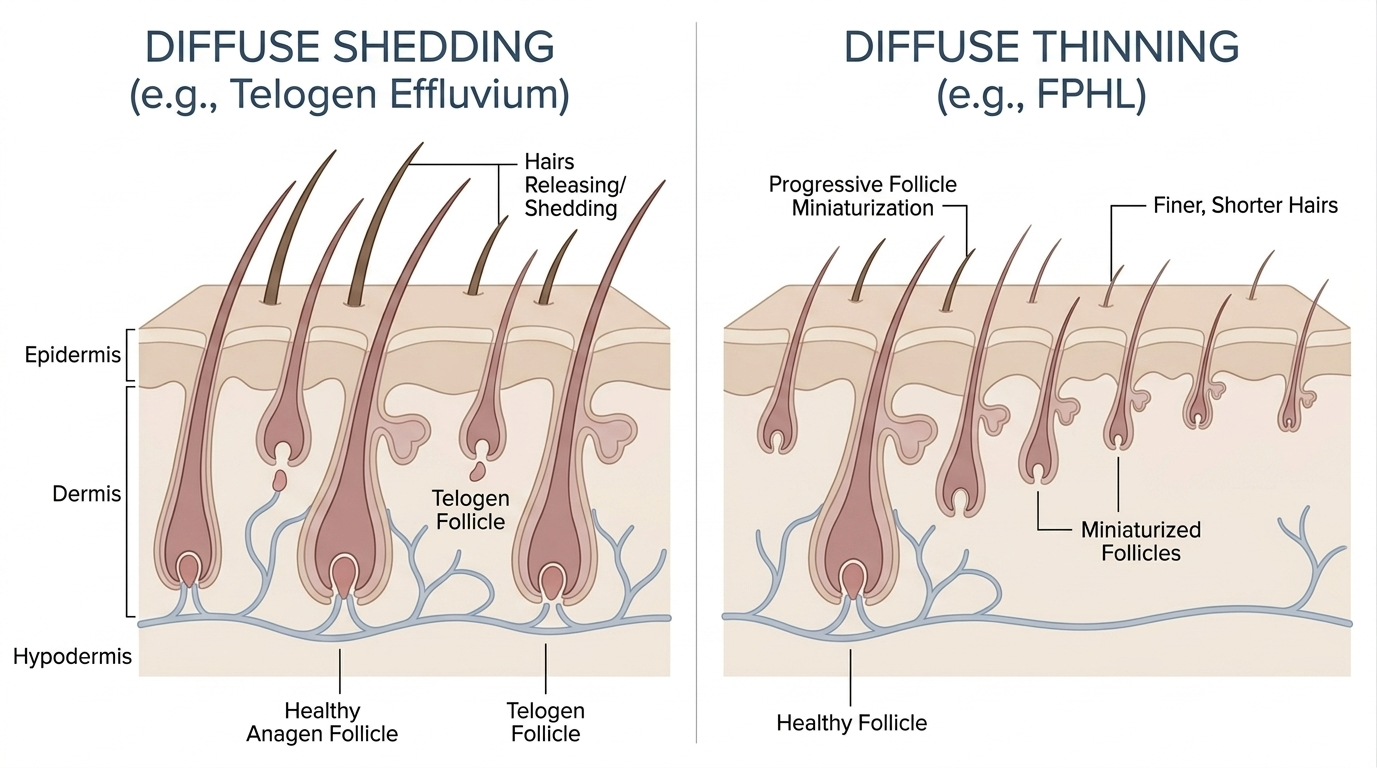
Understanding whether the primary issue is shedding or thinning helps place hair changes into context.
Why the distinction matters
Hair shedding often reflects a temporary shift in the hair cycle.
Hair thinning usually reflects gradual structural or functional changes within hair follicles.
Although the two processes may occur together, distinguishing between them helps explain:
- the timing of hair changes
- the pattern of hair loss
- whether follicles are producing normal hair
- whether the process is temporary or progressive
A biological perspective
Hair shedding and hair thinning are different processes that affect the appearance of hair in different ways.
Shedding reflects changes in the timing of the hair growth cycle and usually involves the release of resting hairs. Thinning reflects changes in follicle behaviour that reduce hair thickness and scalp coverage over time.
Recognising this distinction helps explain why visible hair changes can occur gradually, suddenly, or through a combination of both mechanisms.
Author: Dr. Priya Goswami
Medical review: Dr. Denis Broun
Next step
If you notice coverage changes without increased shedding, confirm what process is occurring.
Take the Hair Assessment to have a physician review your pattern, identify whether miniaturization is present, and determine appropriate staging and next steps.
Add Comment