Hair follicles are highly active biological structures. During the growth phase of the hair cycle, cells within the follicle divide rapidly and continuously produce the hair shaft. This activity requires energy, oxygen, nutrients, and precise biological signalling.
The blood supply surrounding the follicle plays a central role in supporting these processes. Without an adequate vascular network, follicles cannot maintain normal growth activity.
Understanding how blood supply affects hair growth helps explain both normal follicle biology and why certain conditions may influence hair density or hair quality.
Hair follicles are metabolically active
The lower part of the follicle, particularly during the growth phase, is one of the most metabolically active tissues in the body.
Cells within the hair bulb divide continuously to produce the growing hair shaft.
This process requires:
- oxygen
- amino acids
- glucose
- vitamins
- minerals
- growth signals
These substances are delivered through small blood vessels surrounding the follicle.
The dermal papilla and blood vessels
At the base of the follicle lies a specialised structure called the dermal papilla.
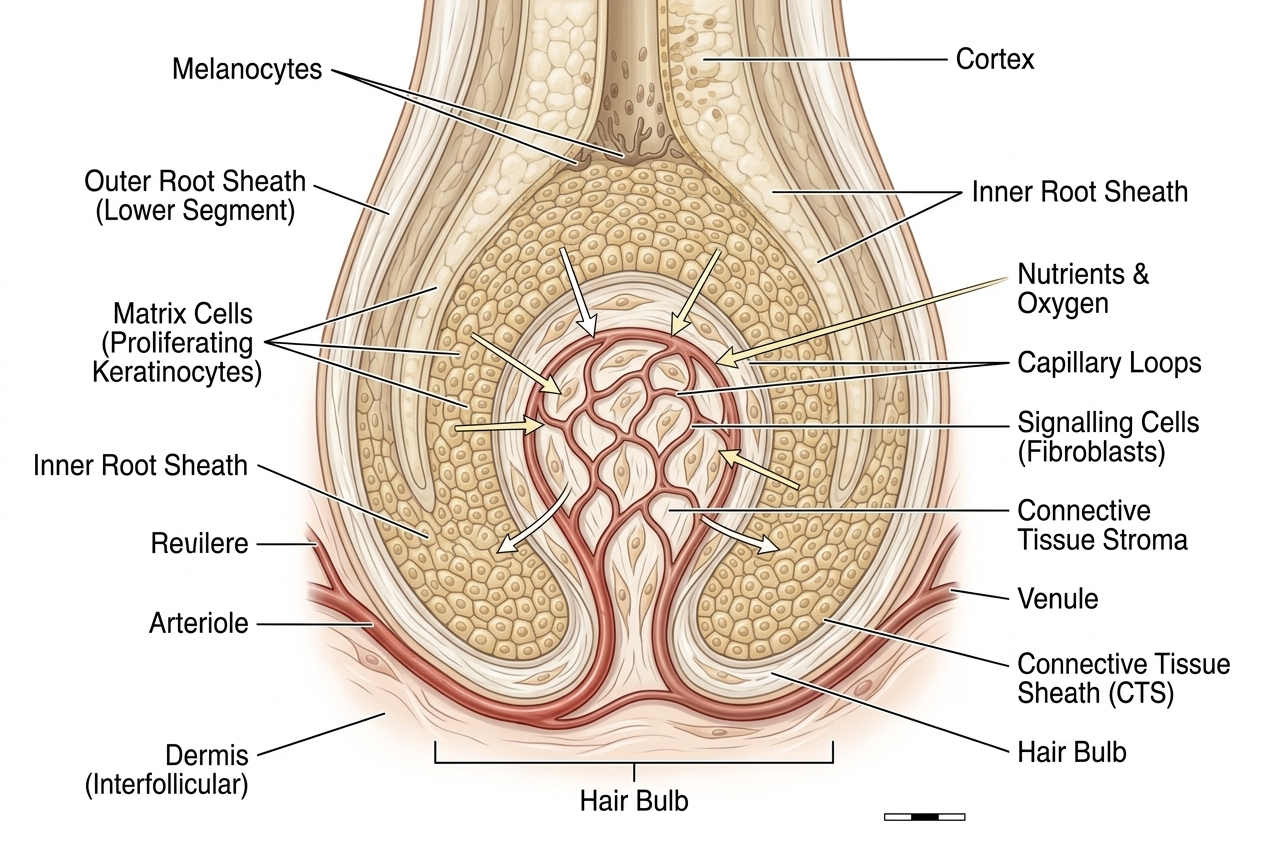
The dermal papilla contains:
- capillaries
- signalling cells
- connective tissue components
It acts as a communication centre regulating:
- follicle growth
- hair cycle timing
- hair shaft production
Blood vessels within the dermal papilla provide the nutrients and oxygen required for follicular activity.
The growth phase requires strong circulation
During the anagen phase, follicles enlarge and become highly active.
Blood flow to the follicle increases to support:
- rapid cell division
- keratin production
- pigmentation processes
- structural growth of the hair shaft
Healthy circulation helps maintain:
- follicle size
- growth duration
- hair thickness
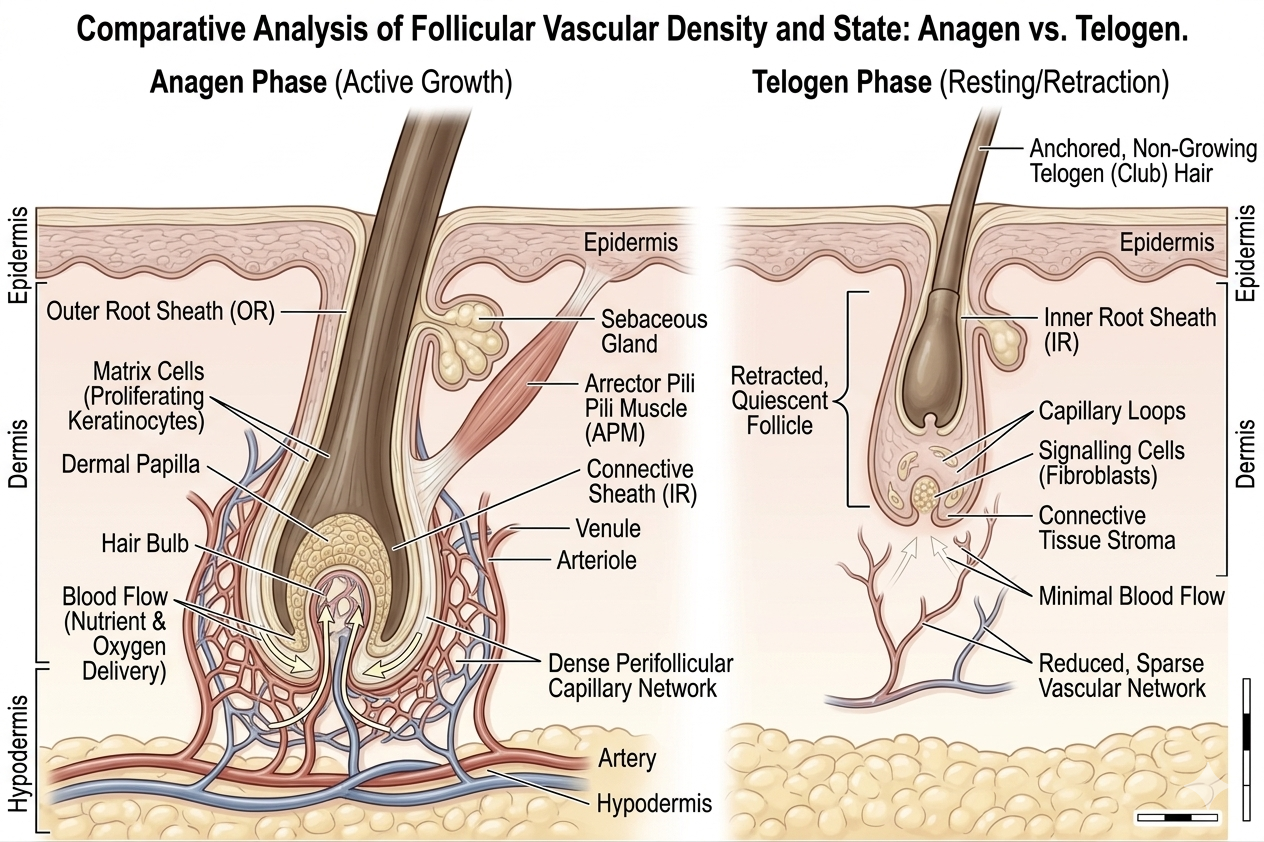
Reduced blood flow can affect follicles
When circulation is impaired, follicles may receive:
- less oxygen
- fewer nutrients
- altered biological signals
This can influence:
- hair shaft quality
- growth cycle duration
- follicle activity
In some situations, reduced blood supply may contribute to:
- thinner hairs
- slower growth
- increased resting phases
Blood supply alone does not explain pattern hair loss
A common misconception is that androgenetic alopecia occurs simply because the scalp receives “poor circulation.”
This is not accurate.
Male and female pattern hair loss primarily reflect:
- genetic predisposition
- hormonal sensitivity
- follicle miniaturisation
However, blood flow may still influence the follicular environment and affect how well follicles function within that biological context.
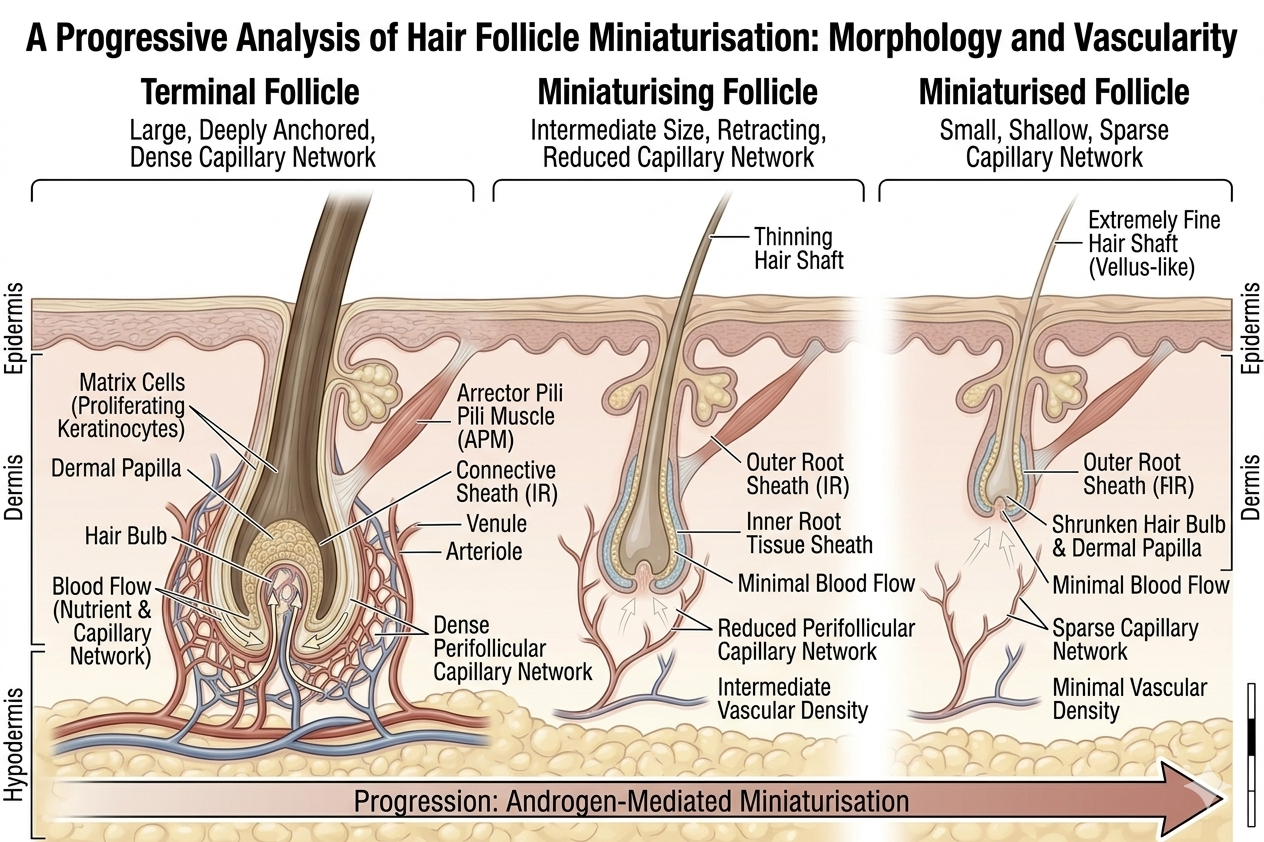
Miniaturised follicles often have reduced vascular support
As follicles miniaturise, the surrounding vascular network may also become smaller.
Miniaturised follicles:
- require less metabolic support
- produce finer hairs
- remain active for shorter periods
Reduced vascular support therefore appears more likely to be a consequence of miniaturisation rather than the original cause.
Inflammation can alter follicular circulation
Inflammatory scalp conditions may affect local blood flow around follicles.
Inflammation can:
- alter capillary function
- disrupt signalling pathways
- damage surrounding tissues
Conditions such as:
- seborrhoeic dermatitis
- psoriasis
- scarring alopecias
may influence the follicular environment partly through inflammatory changes affecting local circulation.
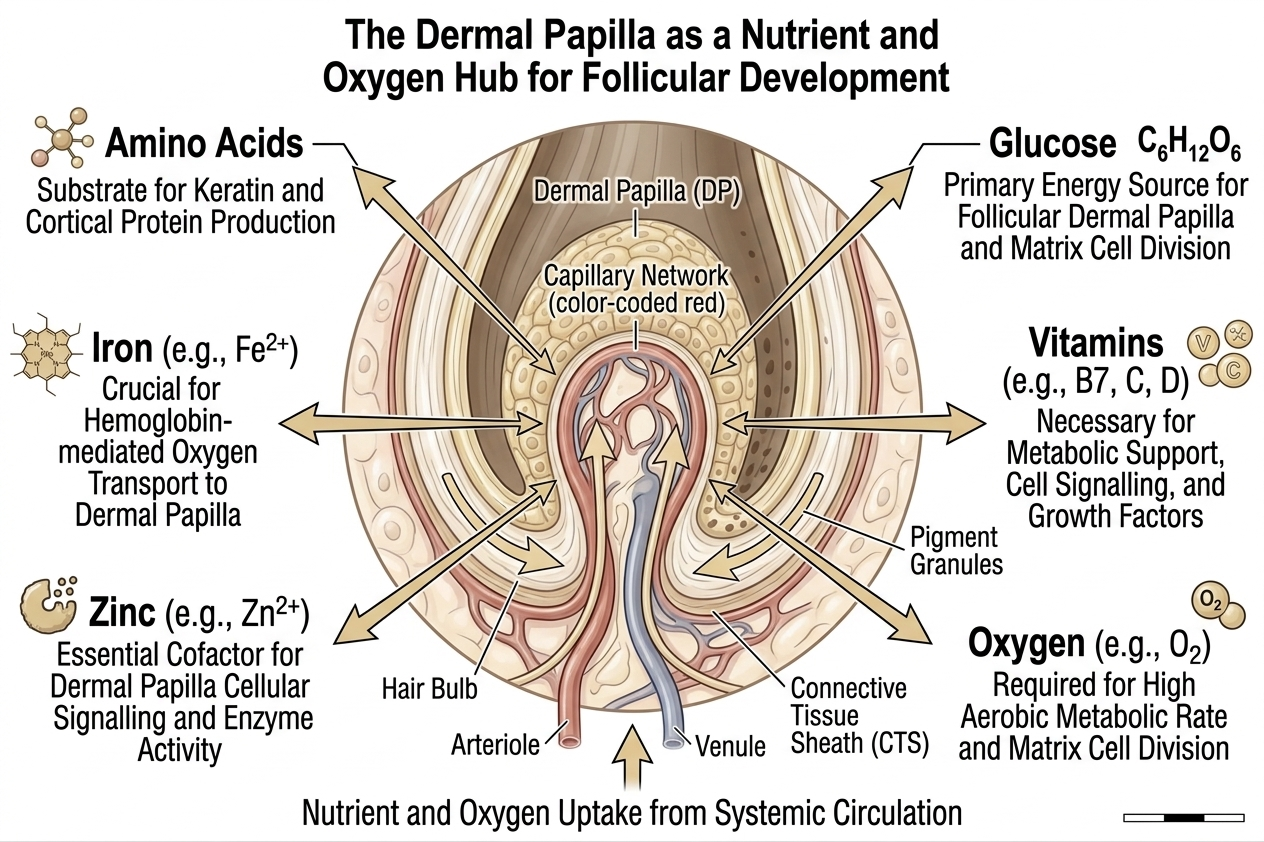
Oxygen and nutrient delivery are essential
Hair follicles depend on steady nutrient availability.
Important nutrients delivered through the bloodstream include:
- amino acids for keratin production
- iron for oxygen transport
- zinc for cellular activity
- vitamins involved in metabolism and growth
Deficiencies in these nutrients may affect:
- growth rate
- hair quality
- shedding patterns
Why some treatments target circulation
Certain hair treatments influence blood flow around follicles.
For example, topical vasodilators increase local circulation and may:
- prolong the growth phase
- enlarge miniaturised follicles
- improve follicular activity in some individuals
However, their effects extend beyond circulation alone and involve multiple biological pathways.
Scalp massage and circulation
Scalp massage temporarily increases superficial blood flow.
Although massage may:
- improve scalp comfort
- reduce tension
- transiently increase circulation
there is limited evidence that massage alone can reverse established androgenetic alopecia.
Nonetheless, maintaining general scalp health may support the follicular environment.
Systemic circulation and overall health
Hair growth reflects overall physiological health.
Conditions affecting circulation systemically, such as:
- vascular disease
- severe illness
- smoking-related vascular changes
may indirectly influence follicle function.
Good cardiovascular health supports efficient nutrient and oxygen delivery throughout the body, including the scalp.
A supportive but not isolated factor
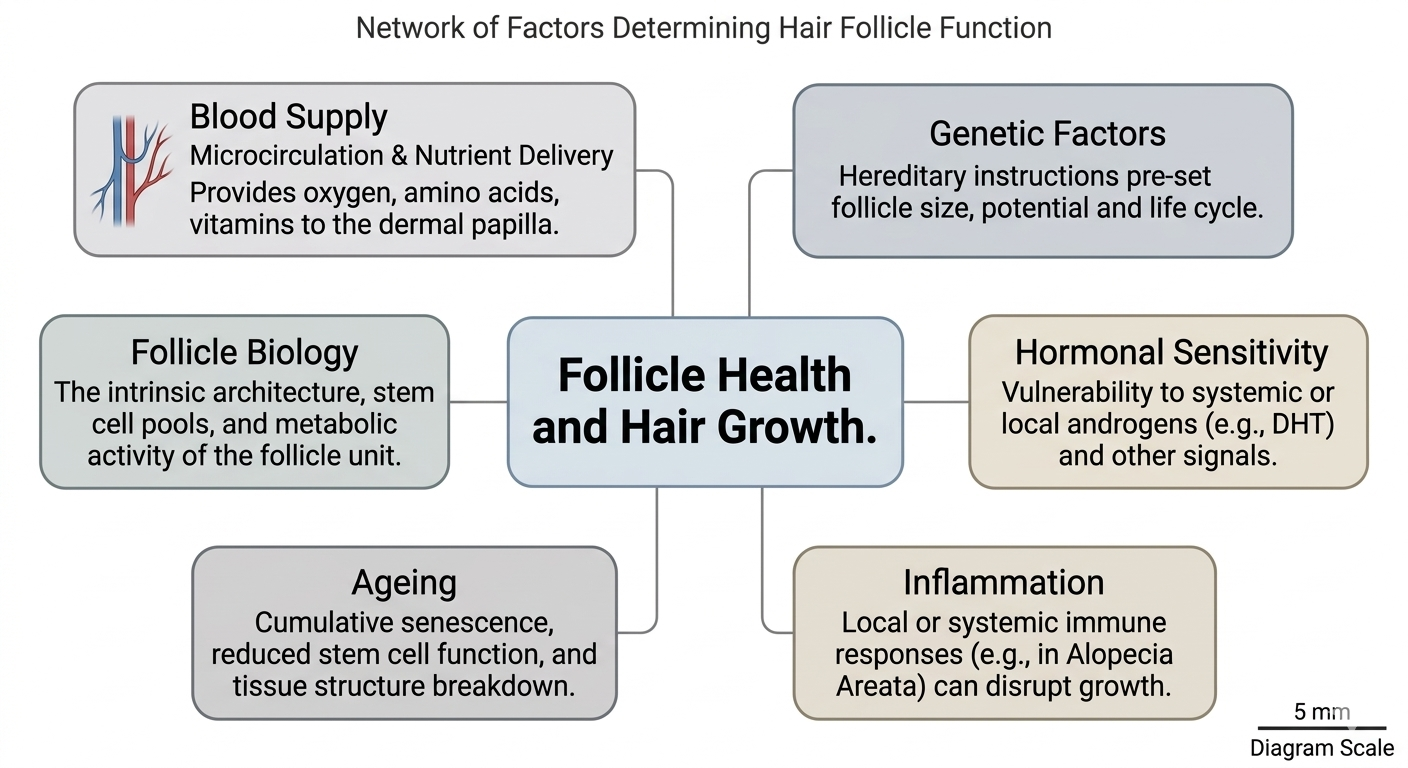
Blood supply is essential for normal hair growth because follicles require continuous metabolic support during the growth phase.
Healthy circulation helps deliver:
- oxygen
- nutrients
- growth factors
- regulatory signals
However, circulation alone does not determine whether hair loss occurs. Genetic factors, hormonal sensitivity, inflammation, ageing, and follicle biology all interact to influence how follicles behave over time.
Understanding the role of blood supply helps place hair growth within the broader context of scalp biology and overall physiological health.
Author: Dr. Priya Goswami
Medical review: Dr. Denis Broun
Next step
If you notice coverage changes without increased shedding, confirm what process is occurring.
Take the Hair Assessment to have a physician review your pattern, identify whether miniaturization is present, and determine appropriate staging and next steps.

Add Comment