Many people first notice hair thinning under bright lighting rather than in normal daily conditions.
Hair that appears full indoors may suddenly seem thinner:
- under sunlight
- beneath bathroom lighting
- in photographs
- under overhead LEDs
- during video calls
This often creates anxiety because the difference can appear dramatic. In reality, lighting conditions strongly influence how scalp visibility is perceived.
The interaction between light, scalp contrast, hair density, and hair shaft thickness plays a major role in how noticeable thinning appears.
Hair works as a form of scalp coverage
Scalp hair provides visual coverage by:
- blocking light
- reducing scalp reflection
- creating shadow and texture
- diffusing contrast between skin and hair
When density decreases, more light reaches the scalp surface.
The scalp then becomes easier to see, especially under direct illumination.
Bright light increases scalp reflection
The scalp naturally reflects light.
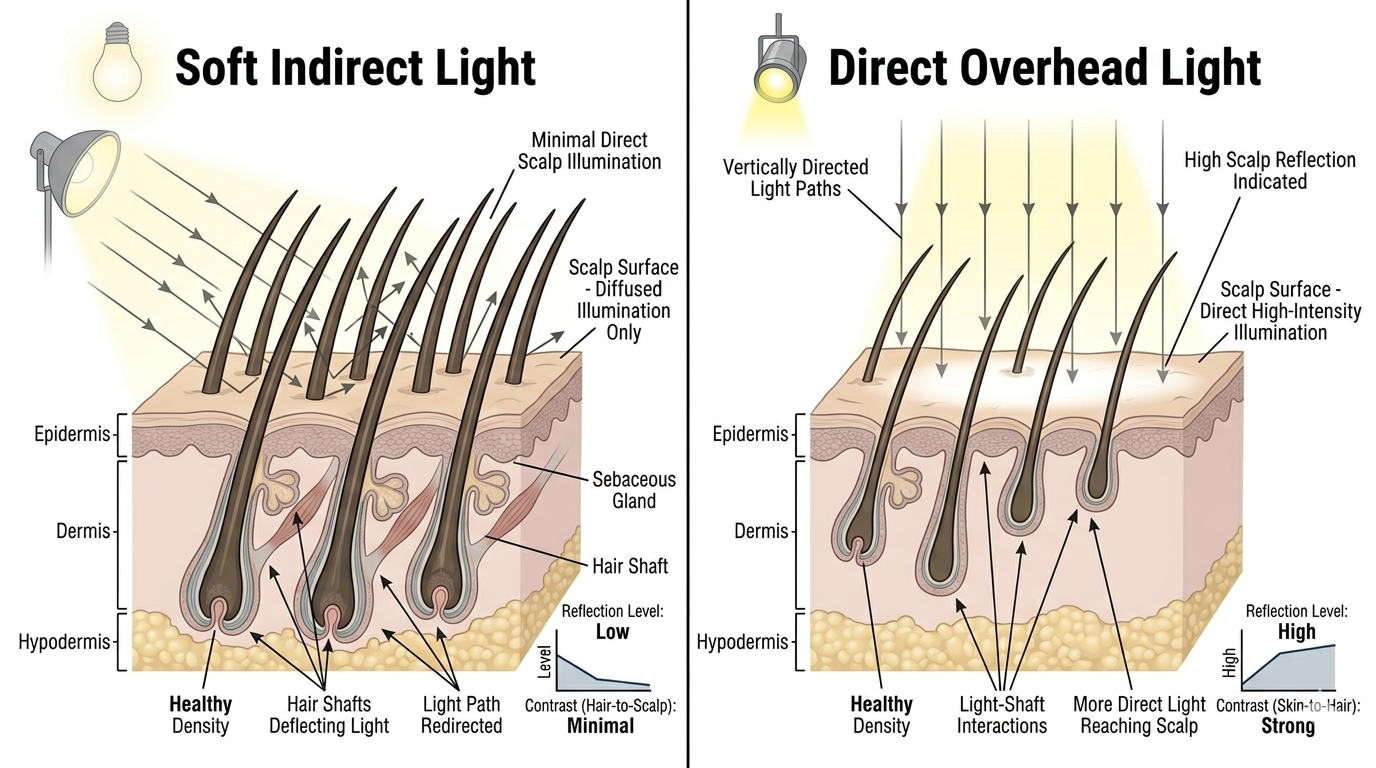
Under strong lighting:
- reflected brightness increases
- contrast between scalp and hair becomes stronger
- gaps between hairs appear more visible
This effect is particularly noticeable in:
- white bathroom lighting
- midday sunlight
- flash photography
- overhead lighting environments
Even mild thinning may appear more pronounced in these conditions.
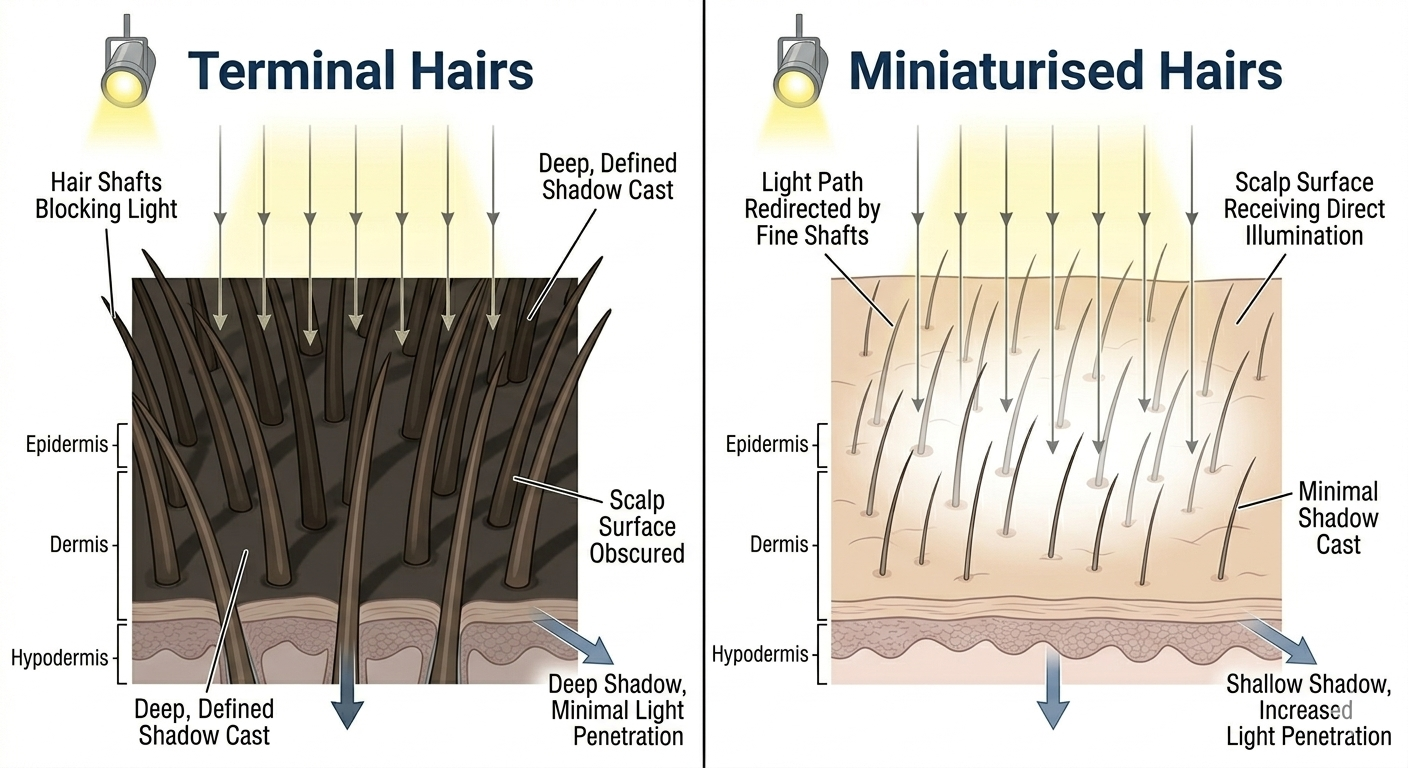
Fine hairs block less light
Miniaturised hairs are thinner and provide less visual coverage.
Although these hairs may still be present, they:
- cast weaker shadows
- occupy less physical space
- allow more scalp visibility between strands
As follicles miniaturise, the scalp reflects increasing amounts of light through the hair layer.
Wet or oily hair worsens visibility
Hair that clumps together exposes larger sections of scalp.
This commonly occurs when hair is:
- wet
- oily
- flattened by sweat
- compressed by hats or helmets
Bright lighting exaggerates this effect because light penetrates more easily between grouped strands.
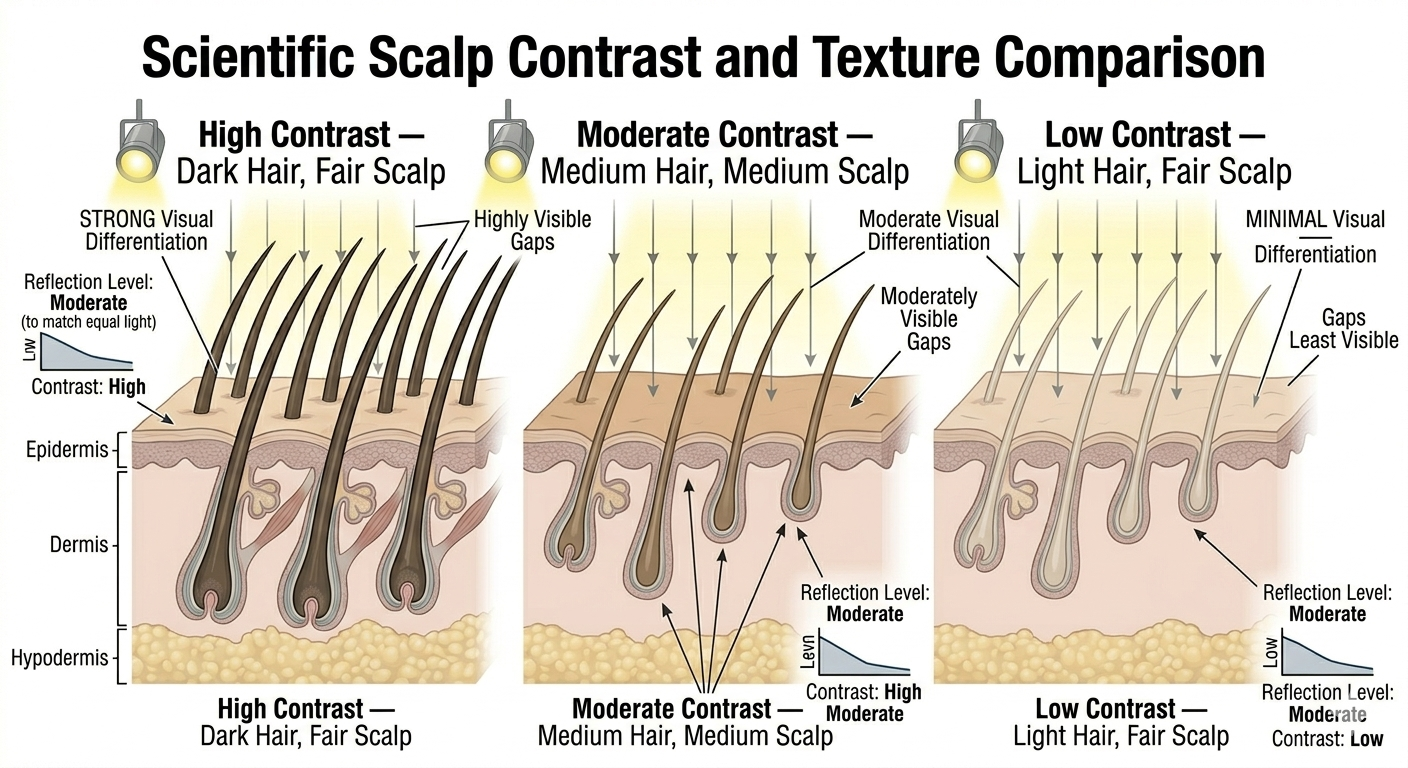
Dark hair and light scalp create stronger contrast
Hair thinning is often more noticeable when there is high colour contrast between hair and scalp.
Examples include:
- dark hair with fair scalp skin
- black hair under intense lighting
- straight hair lying flat against the scalp
The stronger the contrast, the easier it becomes for the eye to detect areas of reduced density.
Curly and textured hair may conceal thinning longer
Hair texture influences how much scalp remains visible.
Curly or voluminous hair:
- creates more lift
- diffuses light more effectively
- increases apparent coverage
Straight, fine hair tends to separate more easily under bright lighting, making thinning more apparent earlier.
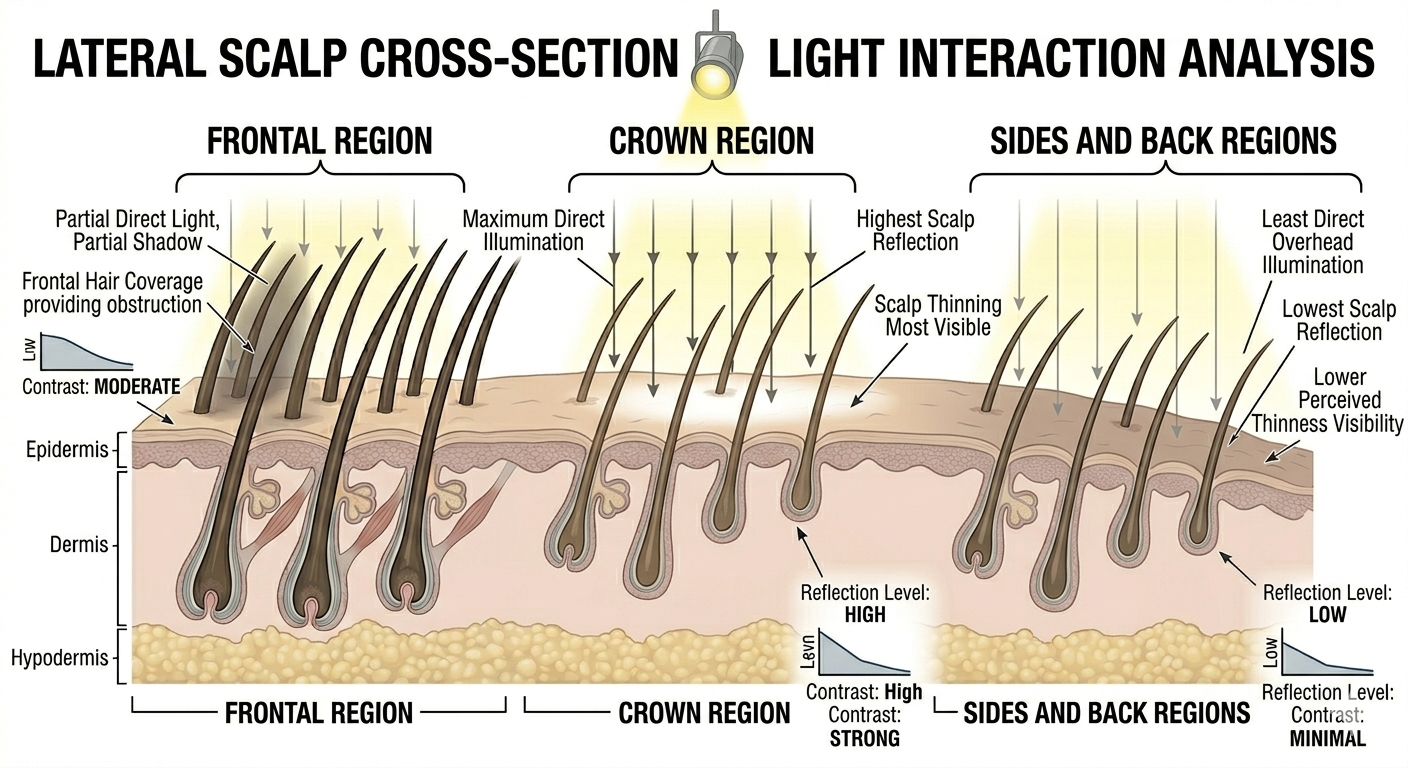
Crown thinning is especially noticeable
The crown receives direct overhead light.
As a result:
- reduced density becomes easier to detect there
- scalp reflection increases quickly
- photographs often reveal thinning earlier in this area
Many people first recognise thinning through crown photographs taken under bright lighting conditions.
Hair diameter affects visual density
Visual fullness depends not only on hair count but also on shaft thickness.
Thicker hairs:
- overlap more effectively
- block more light
- create better scalp coverage
When shaft diameter decreases, the overall appearance of density falls even if many follicles are still active.
Camera angles and digital imaging exaggerate thinning
Modern phone cameras:
- sharpen contrast
- increase exposure
- enhance scalp reflection
- capture overhead perspectives
This can make thinning appear worse in photographs than in mirrors.
Video calls and high-resolution cameras often reveal scalp visibility that people had not previously noticed.
Lighting changes perception dramatically
The same individual may appear:
- to have minimal thinning in soft indoor light
- moderate thinning in daylight
- significant scalp visibility under direct overhead lighting
This variability is largely optical.
Hair appearance changes substantially depending on:
- light intensity
- direction of illumination
- moisture levels
- hairstyle
- scalp oil content
Early thinning is often first noticed this way
In early androgenetic alopecia:
- miniaturisation develops gradually
- density reduction may initially be mild
- normal indoor conditions may still conceal thinning
Bright light frequently becomes the first condition that exposes the underlying reduction in scalp coverage.
Increased visibility does not always mean rapid hair loss
Seeing more scalp under bright light does not necessarily indicate severe or rapidly progressing hair loss.
Often it reflects:
- early miniaturisation
- reduced shaft diameter
- altered light reflection
- scalp-to-hair contrast
However, persistent increases in scalp visibility over time may indicate progressive thinning.
Light reveals what density once concealed
Thinning hair becomes more visible under bright light because reduced hair coverage allows more illumination to reach and reflect from the scalp surface.
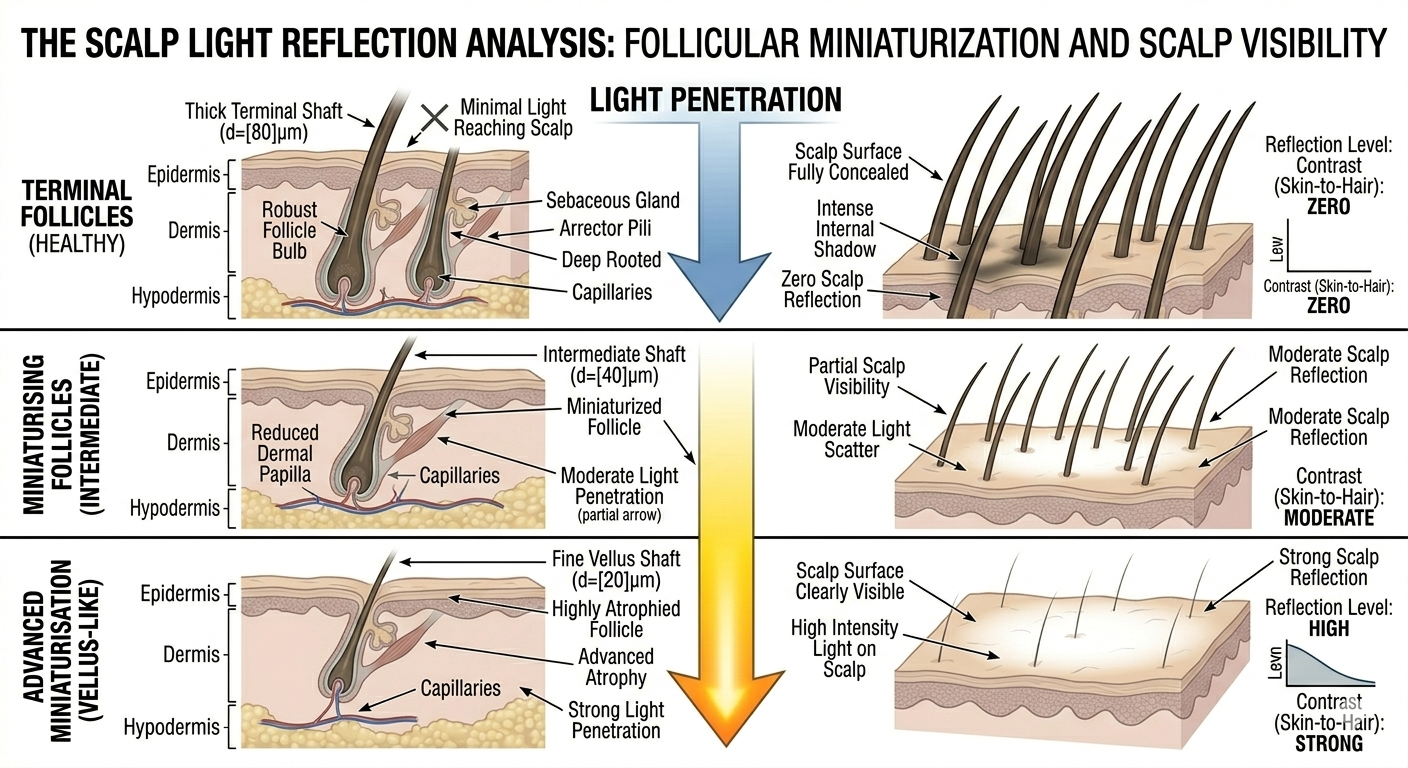
As follicles produce finer hairs and density gradually decreases, strong lighting enhances scalp contrast and exposes areas that may remain hidden under softer conditions.
This optical effect is one of the earliest ways many people recognise progressive hair thinning.
Author: Dr. Priya Goswami
Medical review: Dr. Denis Broun
Next step
If you notice coverage changes without increased shedding, confirm what process is occurring.
Take the Hair Assessment to have a physician review your pattern, identify whether miniaturization is present, and determine appropriate staging and next steps.

Add Comment