Long, fine hair can look soft and elegant, but it often behaves very differently from thicker hair types. It tangles more easily, loses volume faster, shows breakage sooner, and may become visibly sparse even when the actual number of hairs on the scalp is normal.
Fine hair is not automatically unhealthy. Hair texture is largely genetic. Some people naturally produce smaller diameter hair fibres throughout life. Problems tend to appear when fine hair is combined with other factors such as chemical processing, heat styling, hormonal hair loss, nutritional deficiency, menopause, or repeated mechanical damage.
Length also changes the equation. The longer the hair shaft becomes, the older and more weathered the ends are. Fine strands have less structural bulk to tolerate friction, heat, bleaching, brushing, and tension over time. This means long, fine hair usually benefits from a more careful routine than thicker or shorter hair.
The aim is not to make fine hair become thick hair. That is not biologically realistic. The goal is to reduce breakage, preserve density, minimise flattening, and keep the hair manageable without overloading it.
Fine hair versus thinning hair
These terms are often confused, but they are not the same.
Fine hair refers to the diameter of each individual strand. A person may have many hairs on the scalp, but each strand is naturally small and delicate.
Thinning hair refers to reduced density. There are fewer growing hairs overall, often because of shedding, follicle miniaturisation, or medical hair loss.
Some people have fine hair with excellent density. Others have coarse hair that is thinning. Many people with androgenetic alopecia gradually develop both thinning and finer hair texture because miniaturised follicles produce progressively narrower hairs.
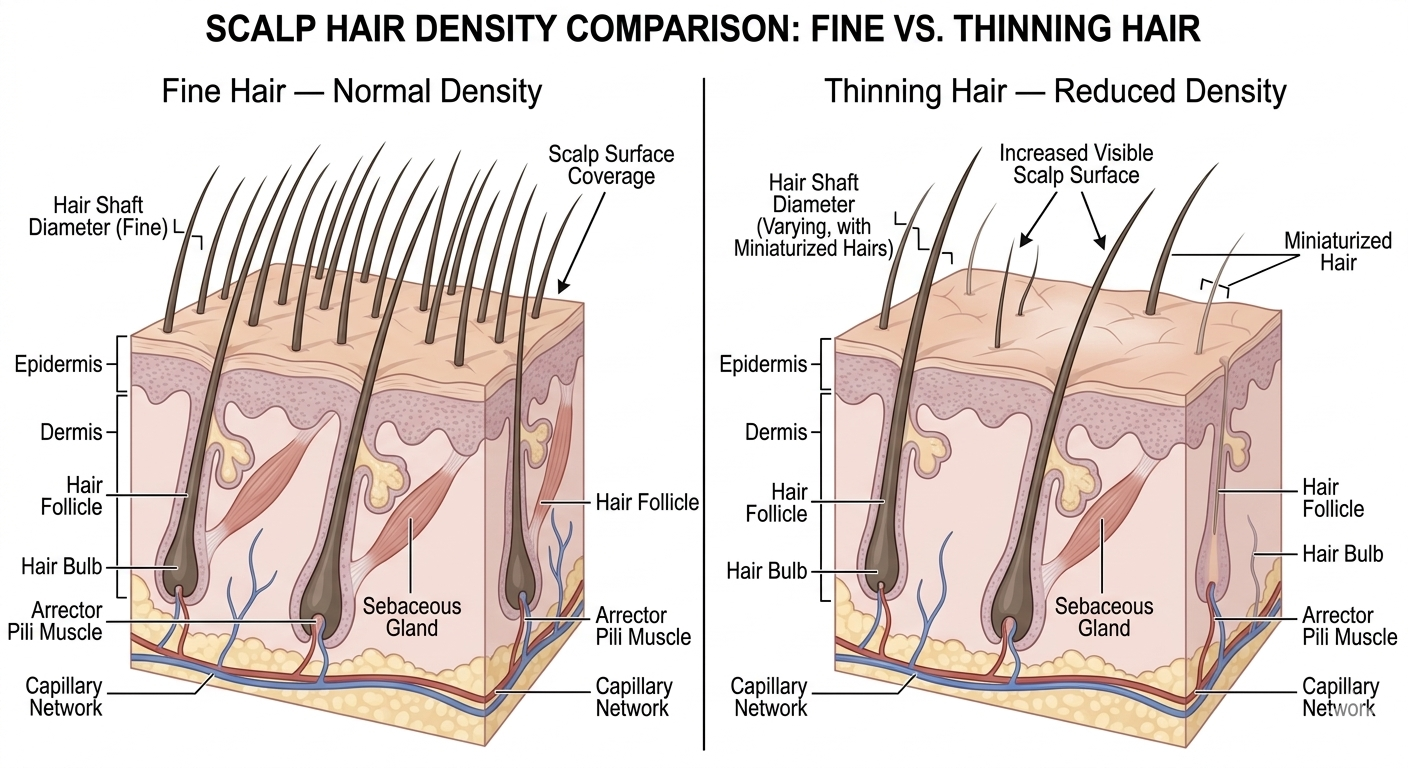
Understanding the difference matters because some styling and treatment approaches are aimed at improving volume, while others target active hair loss.
Why long fine hair becomes fragile more easily
Fine hair has less internal structural mass than coarse hair. That means there is simply less material available to resist friction and tension.
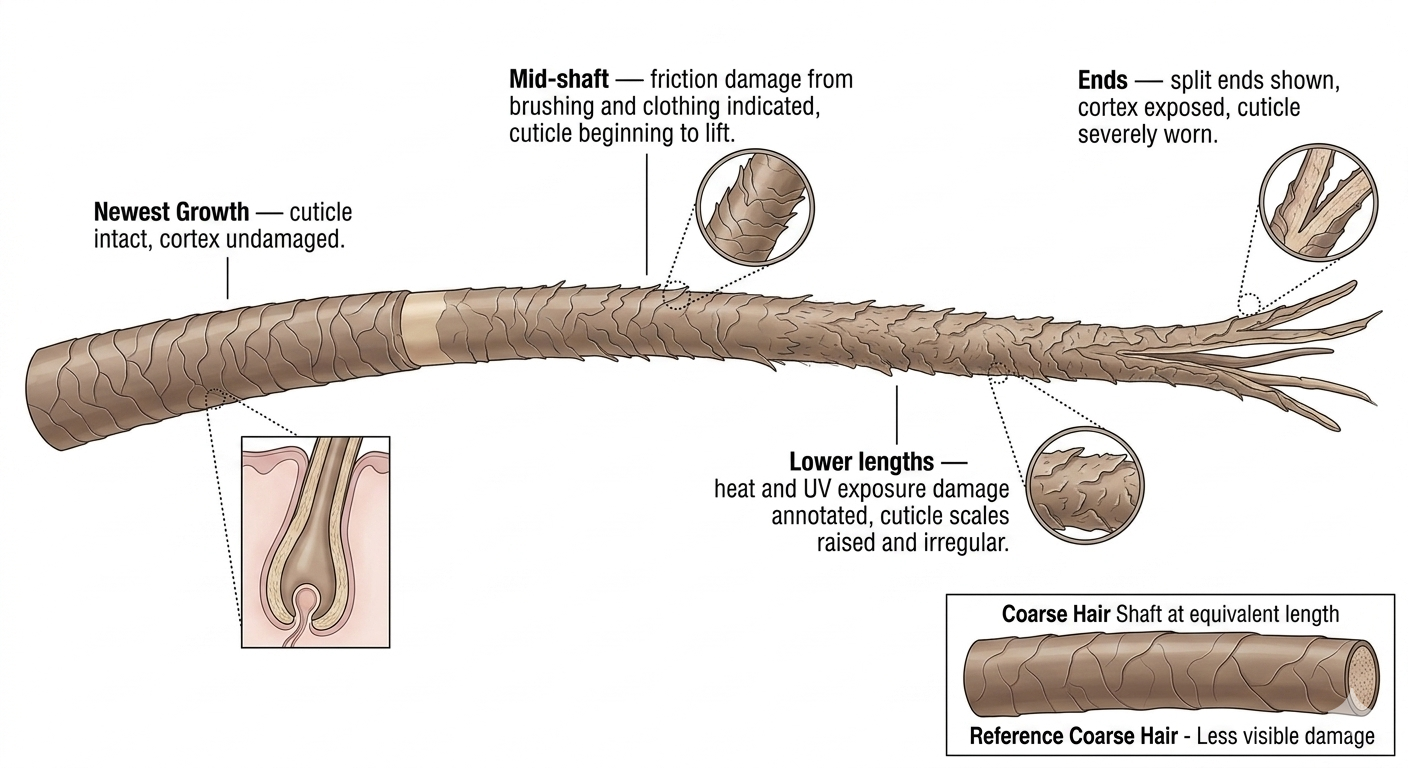
As hair grows longer, the ends are exposed to:
- Brushing
- Washing
- Heat
- Sunlight
- Friction from clothing
- Pillow friction
- Chemical processing
- Tight hairstyles
Over months and years, the cuticle becomes worn. Split ends develop more easily. Breakage becomes more visible because fine hair does not hide irregularities well.
This is why some people feel their hair “stops growing” at a certain point. In reality, the follicles may still be producing length normally, but the ends are breaking at a similar rate.
Washing routines matter more than many people realise
Fine hair often becomes oily faster because smaller strands are weighed down more easily by sebum. At the same time, over washing with harsh shampoos can leave the lengths dry and fragile.
The solution is usually not washing less aggressively forever. It is choosing gentler cleansing methods.
Focus shampoo on the scalp rather than scrubbing the lengths. The foam passing through the hair during rinsing is usually enough to clean the ends.
Very heavy shampoos marketed for “repair” can flatten fine hair. On the other hand, strongly clarifying shampoos used too frequently may increase dryness and tangling.
Finding balance is more important than chasing dramatic claims on packaging.
Conditioner should be lighter, not absent
Many people with fine hair avoid conditioner because they fear flatness. Unfortunately, this often increases tangling and breakage.
Conditioner reduces friction. That matters especially in long hair.
The key is choosing the right amount and texture. Lightweight conditioners applied mainly to the mid lengths and ends are often more suitable than dense masks covering the entire scalp and root area.
Hair that tangles repeatedly during brushing usually needs more slip, not less.
Leave in conditioners can also help if used sparingly. A small amount distributed through the ends may reduce friction without collapsing volume.
Brushing techniques make a major difference
Mechanical damage is one of the biggest problems in long fine hair.
Aggressive brushing stretches fragile strands and can snap the shaft. Wet hair is particularly vulnerable because it becomes more elastic and easier to damage.
Detangle slowly. Start at the ends and work upward in sections. Holding the hair above knots reduces pulling at the scalp.
Flexible detangling brushes or wide toothed combs are often better tolerated than rigid brushes with strong tension. The best tool varies between hair types, but the technique matters more than branding.
Repeated brushing throughout the day does not stimulate meaningful hair growth. Excessive brushing may actually worsen wear on delicate strands.
Heat styling requires more caution
Fine hair heats quickly. That means it may reach damaging temperatures faster than coarse hair.
Straighteners, curling irons, and hot brushes can create visible smoothness in the short term while quietly increasing brittleness over time.
Some signs of heat damage are worth knowing. Rough ends usually indicate cuticle wear from repeated exposure. Increased tangling suggests surface damage to the hair shaft. Hair snapping during styling points to deeper structural weakness. Loss of elasticity often reflects protein disruption within the fibre. Wispy broken pieces around the lengths are a sign of combined mechanical and thermal injury.
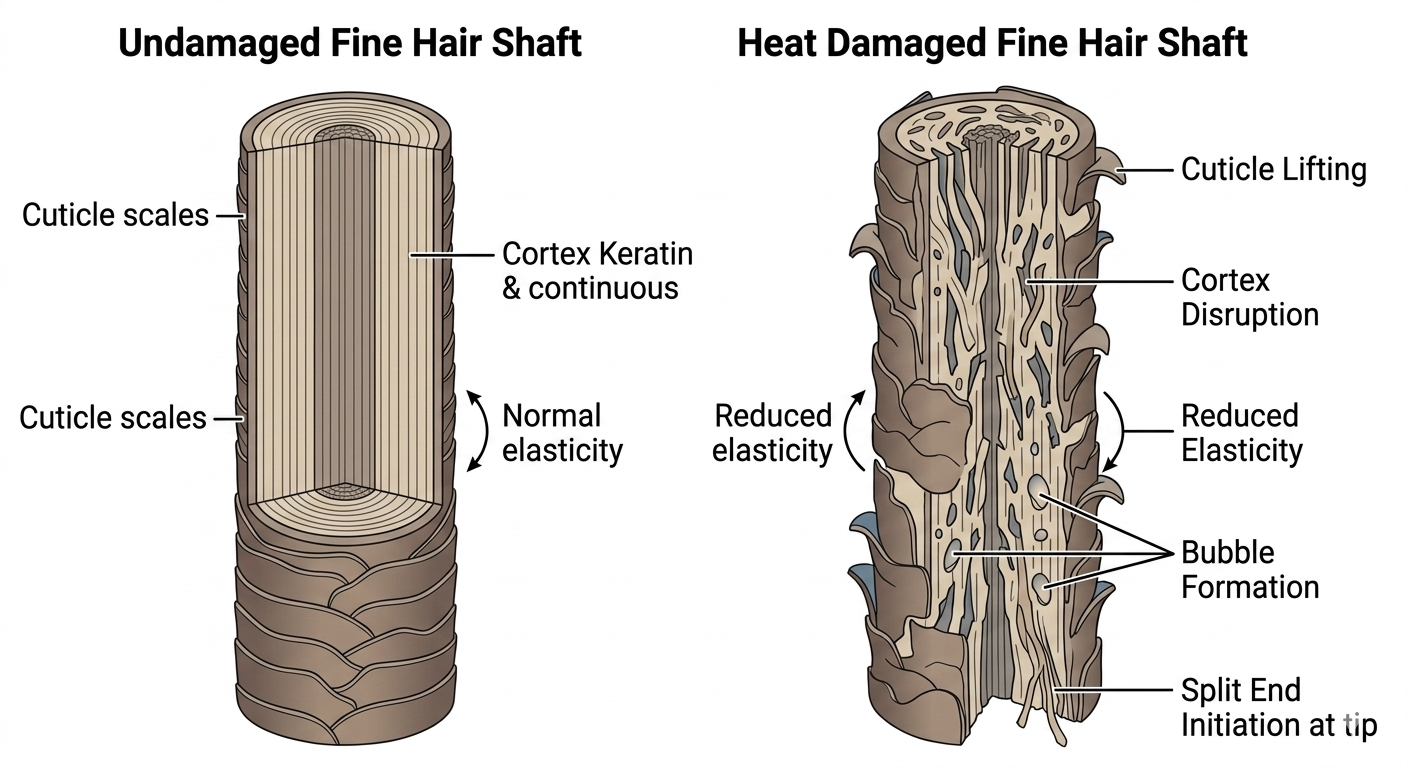
Using lower temperatures matters. So does reducing frequency. Heat protectants may reduce some damage, but they do not make high heat harmless.
Air drying partway before blow drying can reduce total heat exposure. Keeping the dryer moving rather than concentrating heat on one area also helps.
Tight hairstyles can quietly reduce density
Long fine hair is often tied up for convenience, especially when it tangles easily. But constant tension can create gradual stress on the follicles.
Tight ponytails, sleek buns, extensions, and repeated traction around the hairline may contribute to traction alopecia over time.
This becomes more concerning if there is already underlying androgenetic alopecia or menopause related thinning.
Low tension styles are safer. Soft hair ties are preferable to thin elastics that grip tightly and snap strands.
Sleeping with tightly secured hair may also increase friction and breakage overnight.
Colouring and bleaching need realistic limits
Fine hair usually tolerates chemical processing less well than coarse hair.
Bleaching in particular can leave fine strands extremely vulnerable because the hair shaft has less structural reserve to begin with. Repeated bleaching combined with heat styling is a common reason long fine hair begins to look sparse at the ends.
If colouring is important personally or professionally, less aggressive approaches may help:
- Longer intervals between sessions
- Avoiding repeated overlap on old lengths
- Lower volume developers where appropriate
- Prioritising scalp health
- Reducing simultaneous heat damage
Hair can still be coloured carefully, but long fine hair generally has a lower threshold before visible damage appears.
Haircuts matter more than many expect
One common mistake is avoiding trims for too long in an attempt to preserve length. Severely split or frayed ends tend to continue splitting upward, creating thinner looking lengths overall.
Regular small trims often preserve the appearance of fullness better than holding onto damaged ends indefinitely.
Certain haircut structures can also create the illusion of more density. Heavy over layering, however, may make fine hair appear stringy or sparse.
Blunt or softly textured cuts often maintain stronger visual density at the perimeter.
Volume products can become counterproductive
Fine hair products are often marketed aggressively around volume. Some are genuinely useful. Others mainly create temporary texture while increasing dryness or stiffness.
Powders, dry shampoos, texturising sprays, and salt sprays may improve lift temporarily, but excessive buildup can increase tangling and scalp irritation.
Heavy residue also makes some people wash more aggressively, which can create a cycle of friction and damage.
Scalp health still matters more than dramatic styling effects.
Nutrition and health still influence hair quality
Fine hair can become noticeably more fragile when health factors are affecting the follicles.
Iron deficiency, thyroid disease, rapid weight loss, restrictive dieting, hormonal change, severe stress, and illness can all increase shedding or reduce hair quality.
If long fine hair suddenly becomes much thinner, duller, or more fragile, the issue may not be purely cosmetic.
Medical assessment may be appropriate if there is:
- Increased shedding
- Widening part line
- Sudden density reduction
- Scalp symptoms
- Fatigue or systemic symptoms
- Menstrual irregularity
- Rapid breakage without clear chemical cause
Not every case requires blood tests, but significant changes deserve attention.
Fine hair and androgenetic alopecia
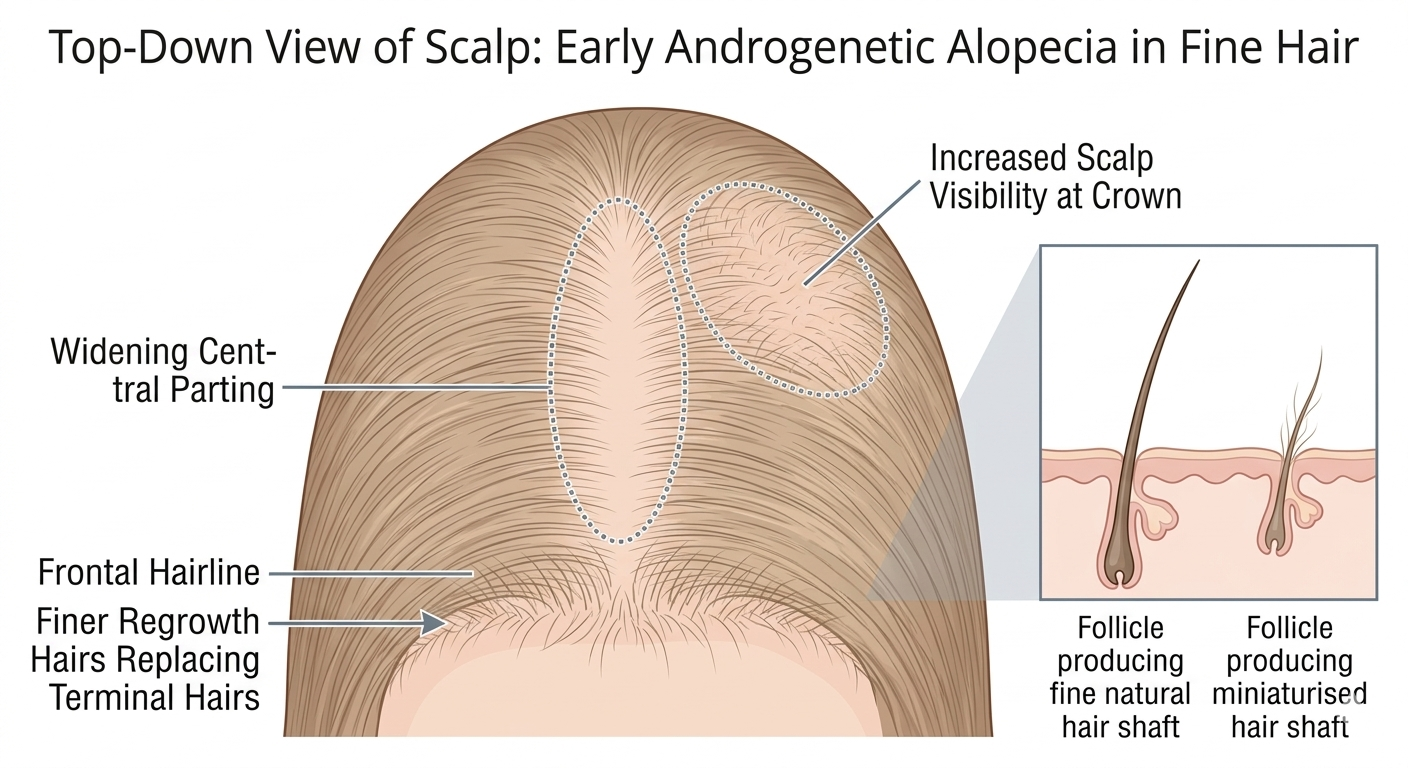
Fine hair can make early androgenetic alopecia more visible because reduced density shows through quickly.
Miniaturisation often appears first as:
- Reduced ponytail thickness
- Increased scalp visibility under light
- Finer regrowth hairs
- Wider central parting
- Loss of volume near the crown
In these situations, styling changes alone may not be enough. Treatments such as minoxidil or other medically appropriate therapies may be considered depending on diagnosis, sex, age, and medical history.
Cosmetic care and medical treatment often work best together rather than as competing approaches.
Sleep and friction
Nighttime friction is easy to underestimate.
Long fine hair rubbing repeatedly against rough fabric can increase tangling and breakage. Some people notice improvement by using smoother pillowcases or loosely securing the hair overnight.
Very tight wrapping or sleeping in restrictive styles can create new tension problems, so the aim is reduced friction rather than tight control.
A practical routine for long fine hair
The most useful routine is usually simple and consistent.
Cleanse the scalp gently but regularly. Condition the lengths enough to reduce friction. Detangle carefully. Limit unnecessary heat. Avoid chronic tension. Keep chemically processed hair within realistic limits. Trim damaged ends before splitting progresses extensively.
Most importantly, judge the hair honestly. If the issue is breakage, the strategy differs from active follicle miniaturisation or medical shedding.
How to interpret this
Long fine hair is not inherently weak or unhealthy, but it has less tolerance for repeated stress than thicker hair types. Small habits matter more because the strands are less forgiving.
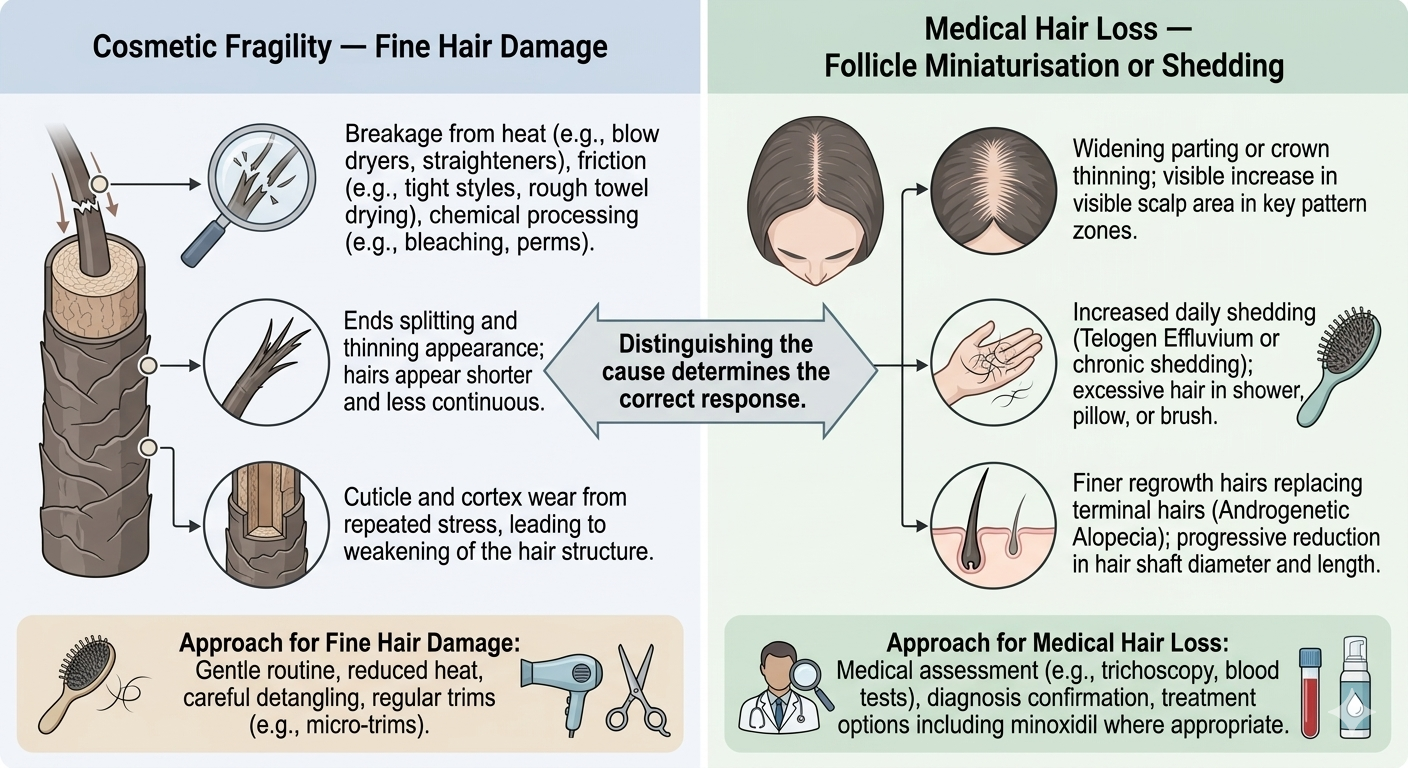
The goal is not to chase dramatic transformation products or impossible thickness claims. It is to preserve the quality and density that already exist while reducing avoidable damage. When thinning, shedding, or miniaturisation are also present, a medical assessment may help distinguish cosmetic fragility from an underlying hair disorder.
Author: Dr. Priya Goswami
Medical review: Dr. Denis Broun
Next step
If you notice coverage changes without increased shedding, confirm what process is occurring.
Take the Hair Assessment to have a physician review your pattern, identify whether miniaturization is present, and determine appropriate staging and next steps.
Add Comment