Hair thinning in women is often dismissed as cosmetic. Many women are told it is simply part of ageing, stress, hormones, or modern life. Some are advised to wait and see if it improves on its own. Others spend years trying supplements, oils, shampoos, or social media trends before getting a proper diagnosis.
But female pattern hair loss is a real medical condition. And timing matters more than many people realise.
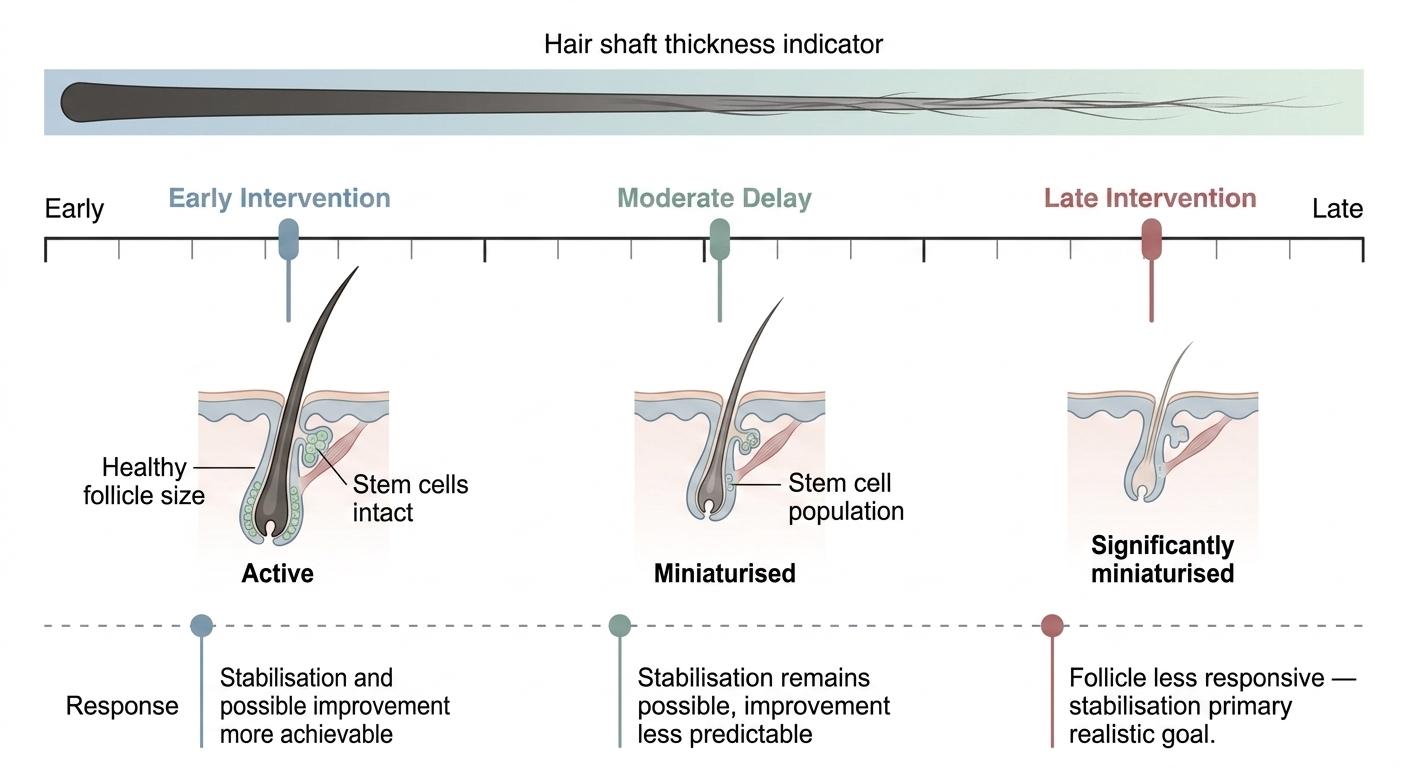
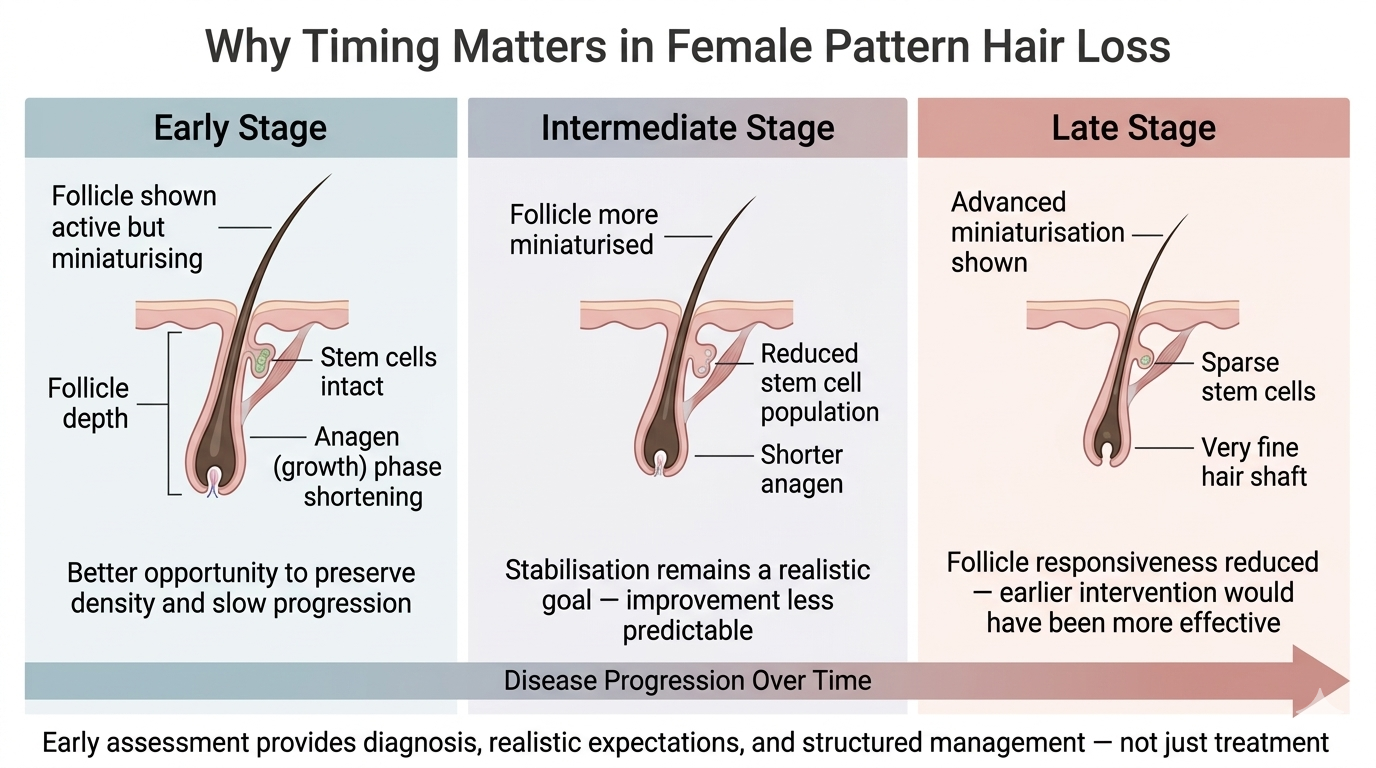
Hair follicles change gradually over time. In the earlier stages, affected follicles may still be capable of producing stronger, thicker hairs if treatment starts soon enough. Later on, the follicles may become increasingly miniaturised and less responsive. This is one reason dermatologists often encourage earlier assessment rather than delaying treatment until the thinning becomes severe.
Early treatment does not guarantee dramatic regrowth. Hair medicine is rarely that simple. But earlier intervention may improve the chances of stabilising hair density and slowing further progression.
What female pattern hair loss actually is
Female pattern hair loss is also called female androgenetic alopecia. It is one of the most common causes of long term hair thinning in women.
Unlike many men, women usually do not develop complete baldness. Instead, there is often gradual thinning over the top of the scalp, widening of the parting, or reduced density around the crown. The frontal hairline is often partly preserved, although this varies.
The condition develops because some hair follicles become progressively smaller over time. Dermatologists call this follicular miniaturisation. The hairs produced by these follicles become thinner, shorter, and less pigmented.
Hair growth happens in cycles. Normally, follicles spend a long period in active growth, called the anagen phase. In pattern hair loss, this growth phase gradually shortens. More hairs enter resting and shedding phases earlier than expected.
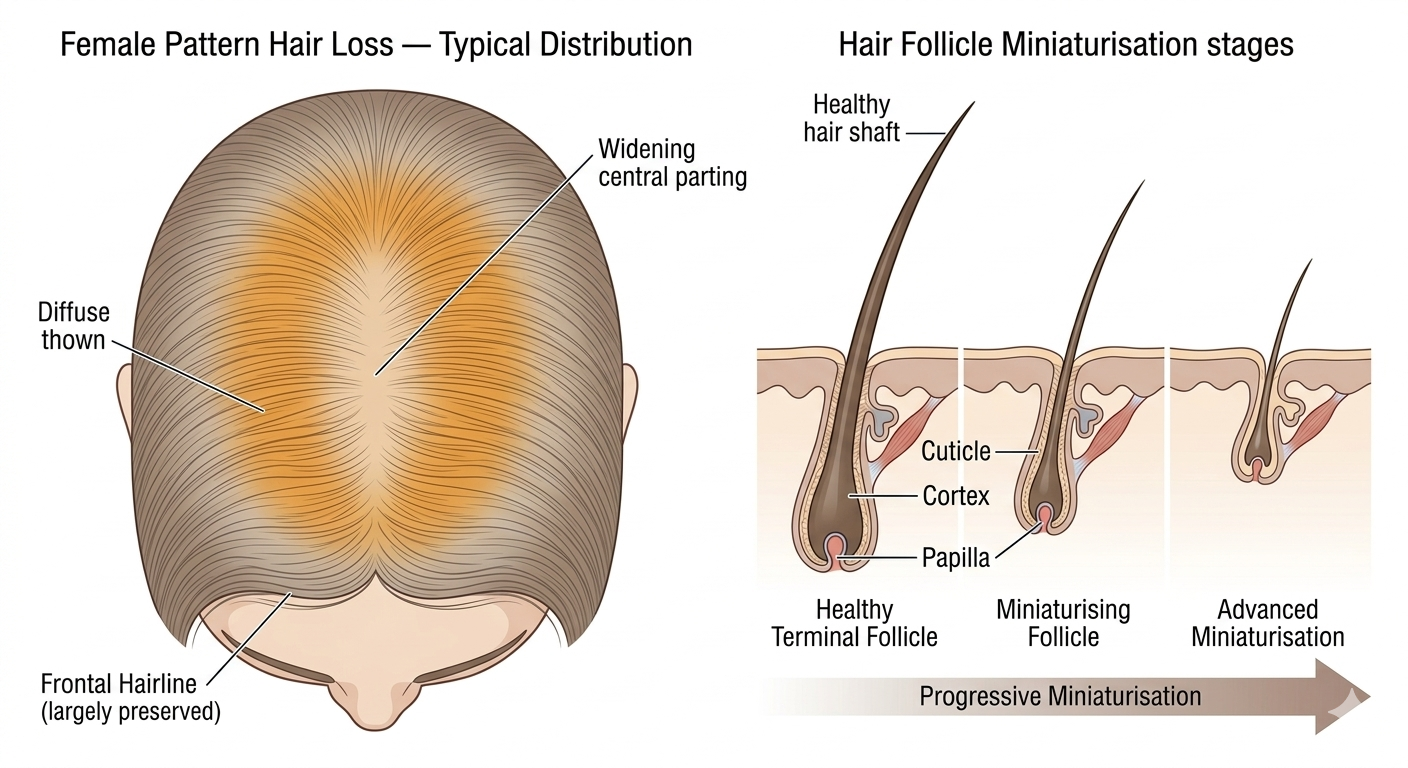
The exact biological drivers are still being studied. Genetics clearly plays a major role. Hormonal influences may contribute, although many women with female pattern hair loss have normal androgen levels on blood testing.
Why diagnosis is often delayed in women
Women frequently seek help later than men for several reasons.
First, the thinning can be subtle at the beginning. Many women notice extra scalp visibility only under bright light or in photographs.
Second, diffuse thinning is easier to hide with styling changes, hair fibres, or volumising products. This can delay medical assessment.
Third, hair loss in women is often normalised socially. Some women are reassured repeatedly that the problem is temporary when it may actually be progressive.
Another issue is that female hair loss has multiple possible causes. A woman may have female pattern hair loss alongside iron deficiency, thyroid disease, menopause related changes, telogen effluvium, inflammatory scalp disease, or traction damage from hairstyles. Without proper assessment, the underlying picture can be missed.
What happens if treatment is delayed
Hair follicles do not disappear overnight. The process is gradual.
In earlier stages, many follicles are still active but weakened. These follicles may respond better to treatment aimed at prolonging growth phases or reducing miniaturisation.
Over time, however, the density of healthy terminal hairs may continue to decline. The scalp becomes more visible. Styling becomes harder. Ponytail volume decreases. Some women begin avoiding certain lighting conditions or social situations because of distress about the appearance of the scalp.
It is important to speak honestly about the emotional impact. Hair loss can affect confidence, body image, social comfort, and mental wellbeing. Research has shown that women with hair loss may experience increased anxiety, reduced quality of life, and emotional distress compared with unaffected individuals.
Delayed treatment may also reduce the degree of improvement that is realistically achievable later. Stabilisation is often easier than reversal.
Early treatment is not only about regrowth
One of the biggest misunderstandings about hair treatment is the idea that success only means obvious regrowth.
In reality, slowing progression is often an important goal.
If treatment helps preserve density for several years, that can still represent a meaningful clinical benefit. Many women would prefer maintaining their current hair density over gradual worsening.
This is particularly important because female pattern hair loss is usually chronic. There is currently no permanent cure that completely stops the underlying biological tendency.
Treatment is therefore often focused on long term management rather than dramatic short term transformation.
Which treatments are commonly used early
Topical minoxidil remains one of the best studied first line treatments for female pattern hair loss.
It appears to help prolong the active growth phase and may improve follicle size in some individuals. Results vary, and treatment usually takes several months before visible improvement can be judged properly.
Low dose oral minoxidil is increasingly discussed in specialist practice, although it is often prescribed off label and requires medical supervision because systemic side effects are possible.
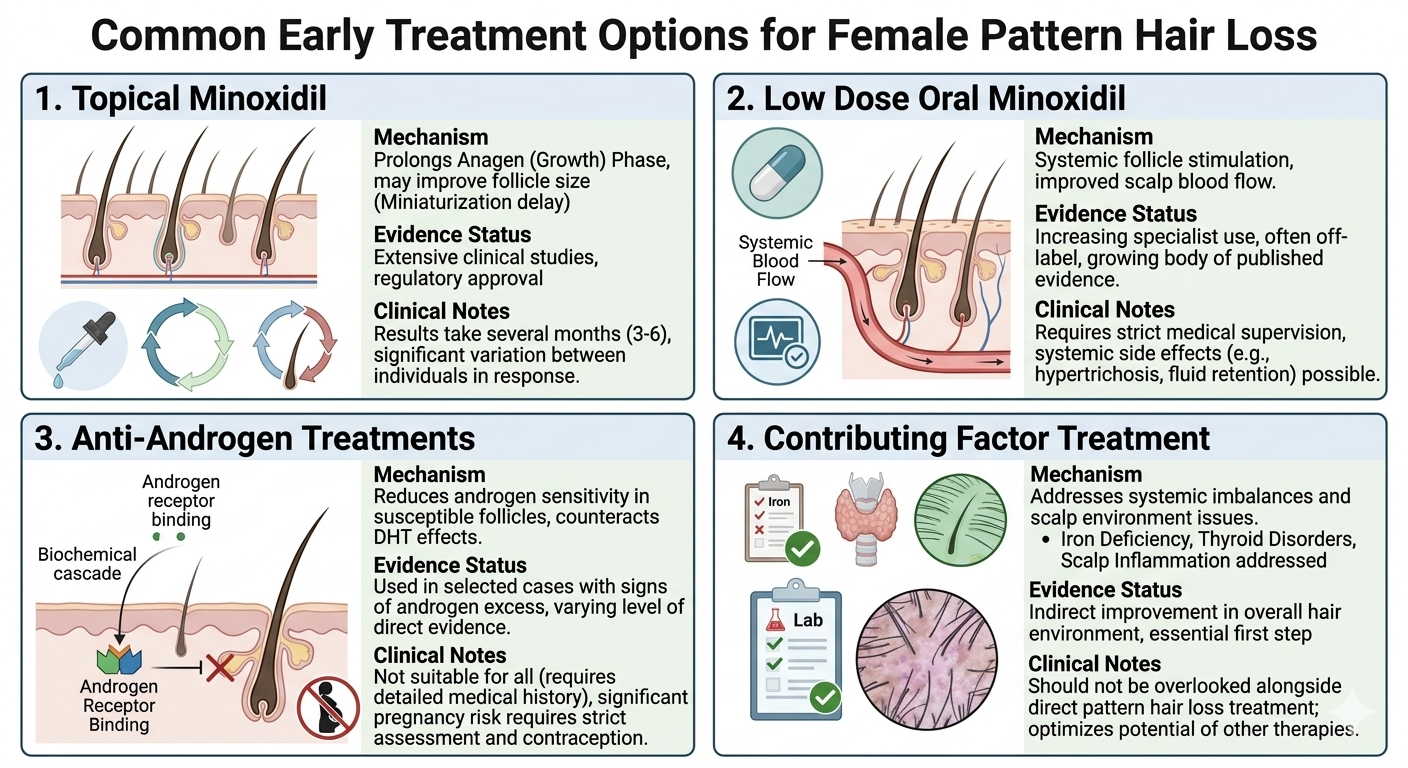
Some women may also be considered for anti androgen treatments such as spironolactone, particularly when there are signs of androgen sensitivity such as acne or excess facial hair. These medicines are not suitable for everyone and require careful medical assessment, especially regarding pregnancy risk.
Treatment of contributing factors can also matter. Iron deficiency, nutritional problems, inflammatory scalp conditions, and traction damage should not be ignored.
Why internet advice can delay proper care
Many women spend years trying unproven approaches before receiving evidence based treatment.
The internet is full of claims about miracle oils, detoxes, collagen powders, biotin gummies, onion juice, rosemary water, or aggressive scalp treatments. Some products may improve cosmetic appearance temporarily. Others may help scalp comfort. But marketing often exaggerates the evidence.
This creates a problem. Women may delay medical evaluation because they believe the next supplement or trend will solve the issue naturally.
Hair loss medicine is frustrating partly because there are few guaranteed solutions. That uncertainty makes people vulnerable to bold promises. Unfortunately, strong marketing language is not the same as strong scientific evidence.
Earlier assessment may reveal other conditions
Another reason early medical review matters is that not all hair loss is female pattern hair loss.
Patchy hair loss may suggest alopecia areata. Scalp redness, scaling, burning, or pain may point toward inflammatory or scarring alopecias. Sudden heavy shedding may reflect telogen effluvium after illness, stress, childbirth, surgery, or nutritional deficiency.
Some forms of scarring alopecia can permanently damage follicles if not recognised early enough. In those situations, delaying assessment may increase the risk of irreversible hair loss.
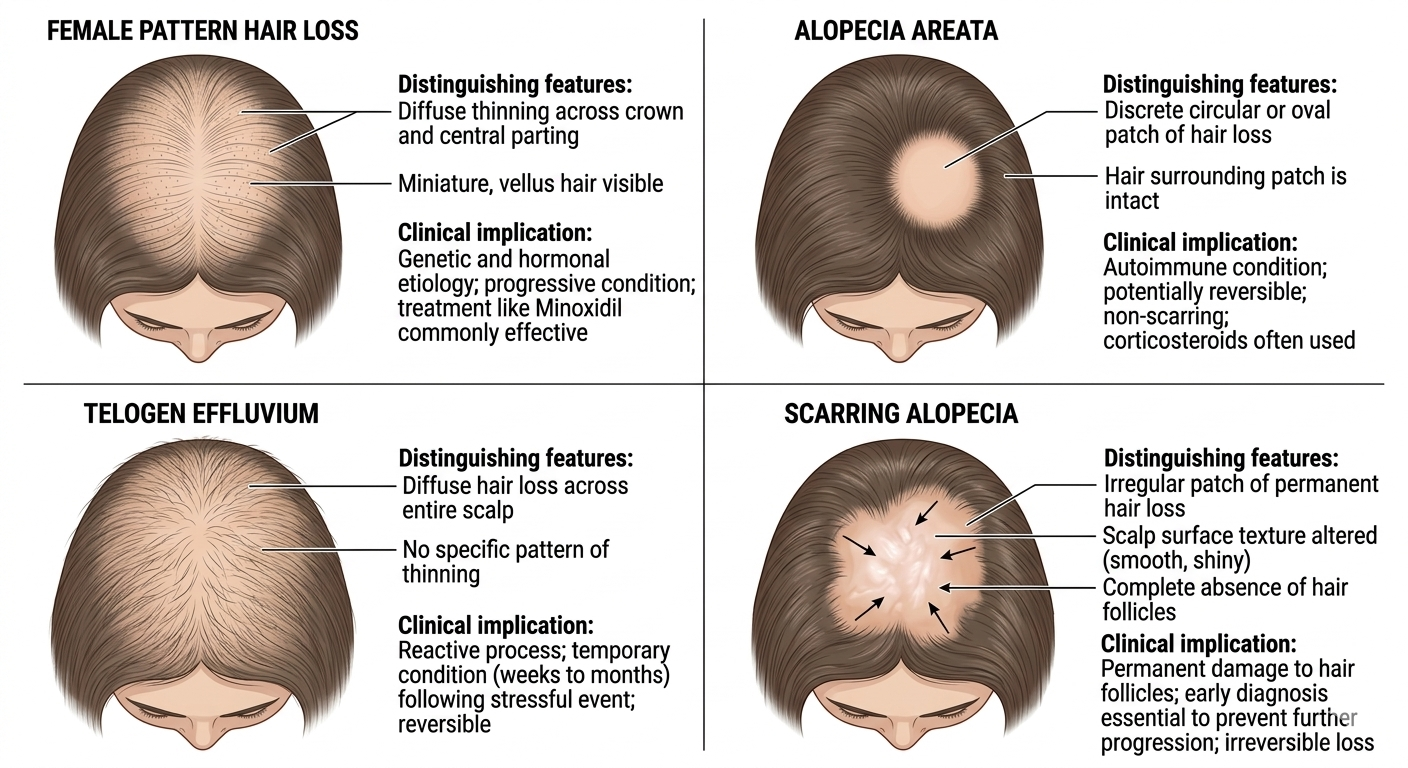
This is why persistent thinning deserves proper examination rather than endless self treatment.
What realistic expectations look like
Good hair medicine involves realistic expectations from the beginning.
Treatment may improve density in some women. Others mainly achieve slower progression. Some experience only modest visible change despite consistent treatment.
Photographs can be misleading because lighting, styling, and hair fibres dramatically affect appearance.
Results also depend on factors such as age, duration of hair loss, underlying diagnosis, treatment adherence, genetic susceptibility, and overall scalp health.
A realistic goal is often healthier looking density and improved stability rather than complete restoration of previous hair volume.
The psychological side of waiting
Many women delay treatment because they feel guilty about seeking help for hair loss. Some worry they will appear vain. Others believe they should simply accept the change.
But hair is closely linked with identity, self image, and social confidence across many cultures. Emotional distress around hair loss is medically valid and should not be dismissed.
There is also a psychological burden that comes from watching gradual progression over years. Some women later say they wish they had sought specialist advice earlier, even if only to understand the diagnosis properly.
Early assessment can provide clarity, realistic expectations, and a structured management plan rather than uncertainty and constant experimentation.
When to seek medical advice
Persistent thinning lasting several months deserves medical review, especially if there is:
- Widening of the central parting
- Increased scalp visibility
- Sudden excessive shedding
- Hair loss with scalp pain or itching
- Patchy bald areas
- Eyebrow loss
- Menstrual irregularities
- Signs of hormonal imbalance
- Family history of pattern hair loss
- Progressive reduction in hair density
A dermatologist may use scalp examination, dermoscopy, blood tests, or occasionally biopsy to clarify the diagnosis.
The bottom line
Female pattern hair loss is usually progressive, which is why early treatment often matters more than people expect. The earlier stages may offer a better opportunity to preserve follicle function and slow ongoing thinning.
This does not mean every woman needs immediate medication at the first sign of shedding. Hair loss has many causes, and proper diagnosis is essential. But long delays based on internet trends, embarrassment, or false reassurance can make management harder later.
The goal of treatment is not perfection. In many cases, it is preservation, stabilisation, and gradual improvement over time.
For women experiencing persistent thinning, early medical assessment may provide something important even before treatment begins: a clearer understanding of what is happening and what realistic options actually exist.
Author: Dr. Priya Goswami
Medical review: Dr. Denis Broun
Next step
If you notice coverage changes without increased shedding, confirm what process is occurring.
Take the Hair Assessment to have a physician review your pattern, identify whether miniaturization is present, and determine appropriate staging and next steps.

Add Comment