Finding hair on a pillow, in the shower drain, or on a hairbrush often leads people to assume that something is wrong. In reality, a certain amount of hair shedding is a normal part of the hair growth cycle. Hair is continuously renewed throughout life, and shedding plays an important role in this natural process.
Understanding when hair shedding is normal helps place everyday hair loss into context and makes it easier to recognise when a change in shedding may require further attention.
The renewal process of hair
Hair follicles operate in repeating cycles. During the growth phase, known as the anagen phase, the follicle actively produces a hair shaft. This stage can last several years on the scalp.
After this period, the follicle enters a brief transitional stage known as the catagen phase, lasting approximately two to three weeks, during which the follicle shrinks and separates from its blood supply. It then enters the resting stage called the telogen phase, which typically lasts around three months. At the end of this resting phase, the existing hair is released and a new growth cycle begins.
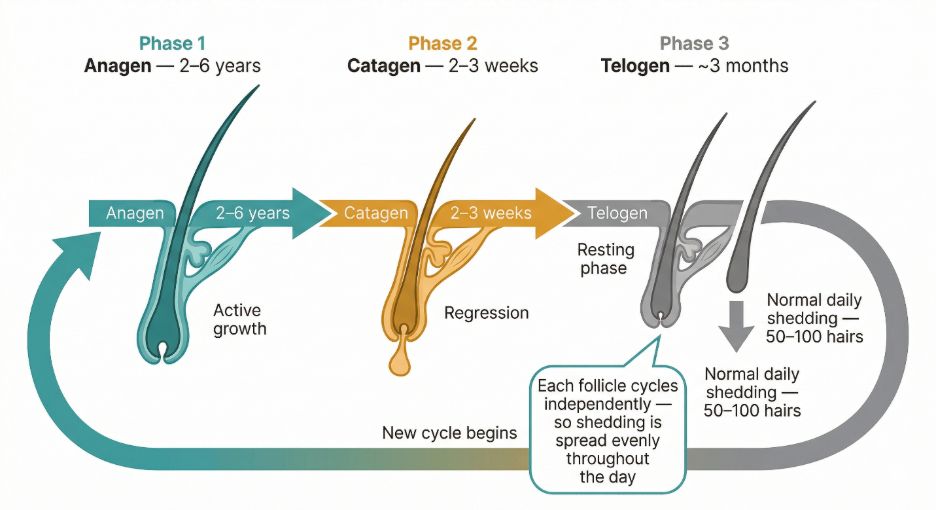
Because each follicle moves through these phases independently, the scalp is constantly renewing hair while maintaining overall coverage.
Shedding is therefore a normal part of this renewal process.
Typical daily hair shedding
Most individuals shed between 50 and 100 hairs per day as part of the normal hair cycle.
This number may vary slightly between individuals depending on hair density, hair length, and daily grooming habits. People with longer hair may notice shedding more easily simply because the strands are more visible.
Even though hair shedding occurs daily, it usually does not affect the overall appearance of the scalp because new hairs are continuously growing from the same follicles.
Why shedding becomes noticeable
Hair shedding may appear more noticeable under certain circumstances.
Washing or brushing the hair can collect hairs that were already loose and ready to shed. This can create the impression that large amounts of hair are falling out at once, even though the shedding may have occurred gradually throughout the day.
Individuals with thick or long hair may also observe larger numbers of strands during washing or styling simply because the hairs accumulate in one place.
These observations can sometimes make normal shedding appear more dramatic than it actually is.
Seasonal variations in shedding
Some people notice mild seasonal changes in hair shedding.
During certain times of the year, a slightly larger proportion of follicles may enter the resting phase of the hair cycle. This may lead to a temporary increase in shedding.
Although the reasons for these seasonal patterns are still being studied, they are generally considered a normal variation in the behaviour of hair follicles.
In most cases, the hair cycle returns to its usual rhythm without noticeable changes in hair density.
Changes during hormonal transitions
Hormonal changes can also influence the hair growth cycle.
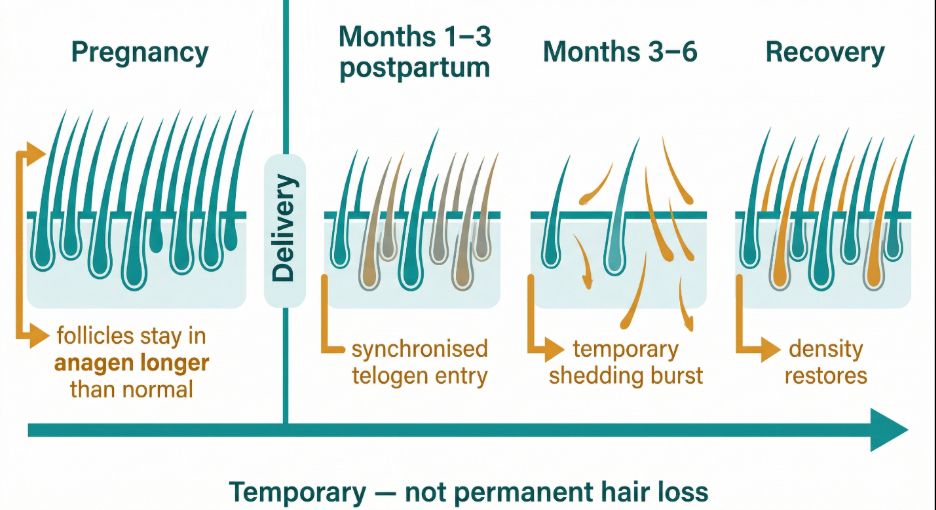
One commonly observed example occurs after childbirth. During pregnancy, many follicles remain in the growth phase longer than usual. After delivery, some of these follicles shift into the resting phase at roughly the same time.
Several months later, increased shedding may occur as these hairs are released. This phenomenon is temporary and reflects a shift in the hair cycle rather than permanent hair loss.
Other hormonal transitions during life may also influence how follicles behave.
When shedding may indicate a change
Although daily hair shedding is normal, certain changes may suggest that the hair growth cycle has been disrupted.
For example, if shedding increases significantly and persists for several months, it may indicate that a larger number of follicles have entered the resting phase simultaneously. This pattern can occur in conditions such as telogen effluvium.
Other forms of hair loss may present differently. Some conditions lead to gradual thinning rather than increased shedding, while others may cause well-defined areas of hair loss.
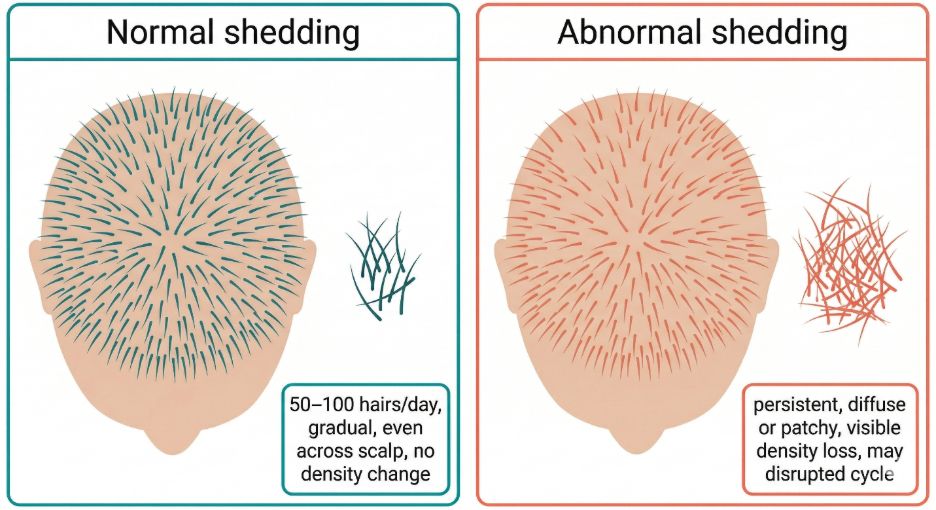
Observing how the hair changes over time can provide useful information about whether the shedding is part of the normal cycle.
Factors that influence hair shedding
Hair follicles respond to many biological signals from the body.
Illness, significant physical stress, nutritional changes, and hormonal fluctuations can all influence the timing of the hair growth cycle. When these factors affect a large number of follicles at once, the balance between growth and shedding may temporarily change.
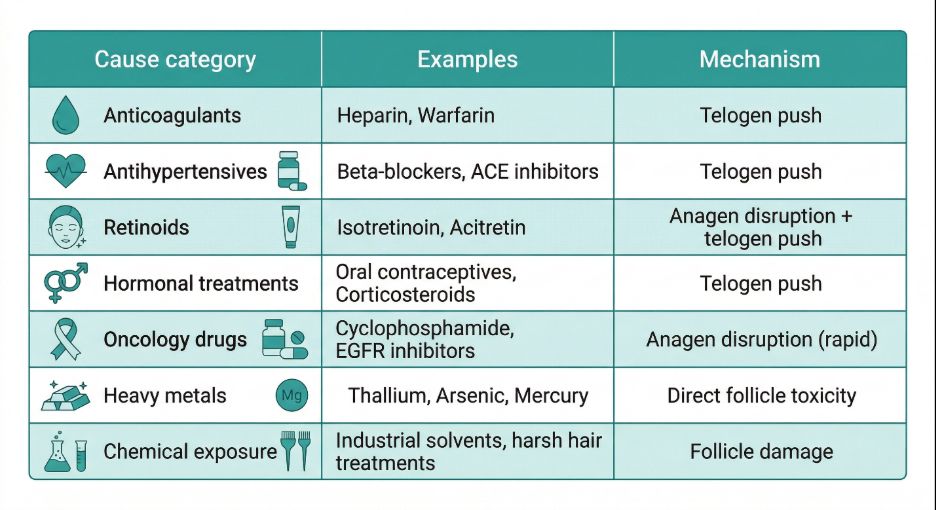
Certain medications are a recognised cause of increased shedding. These include anticoagulants such as heparin and warfarin, beta-blockers and other antihypertensive agents, retinoids, hormonal treatments, and oncology drugs. Chemotherapy agents can disrupt the anagen phase directly, causing more immediate shedding. In most medication-related cases, shedding begins weeks to months after the drug was introduced, reflecting the delayed nature of the telogen phase.
Chemical exposures can also trigger abnormal shedding. Heavy metals including thallium, arsenic, and mercury are well-established causes, and exposure may occur through occupational contact or environmental contamination. Harsh chemical hair treatments may similarly impair follicle function. Identifying and removing the causative substance is the first step in allowing the cycle to normalise.
In many situations, the follicles remain healthy and eventually return to their normal cycle once the triggering factor resolves.
A broader understanding of hair shedding
Hair shedding is a natural part of the hair growth cycle and occurs continuously as older hairs are replaced by new ones. The presence of loose hairs during washing or brushing does not necessarily indicate a problem.
What matters more is the overall pattern of hair change. Normal shedding occurs gradually and does not significantly alter the density of the scalp.
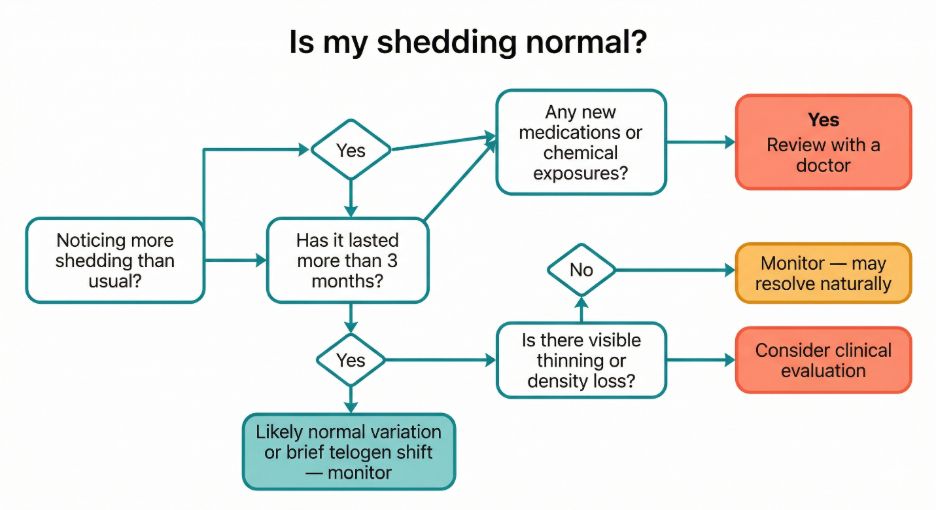
By understanding how the hair cycle operates, it becomes easier to distinguish between routine shedding and changes that may reflect a disruption in the growth cycle.
Author: Dr. Priya Goswami
Medical review: Dr. Denis Broun
Next step
If you notice coverage changes without increased shedding, confirm what process is occurring.
Take the Hair Assessment to have a physician review your pattern, identify whether miniaturization is present, and determine appropriate staging and next steps.

Add Comment